
Review · TOKYO
Tokyo Castle & Imperial PalaceーShogun Walking Tour
Tokyo’s past is hiding in plain sight. This two-hour walk turns the Imperial Palace grounds into a readable story about shoguns, samurai, emperors, and castle defense. I like the focused route through surviving gates and guardhouses, and I like the way guides such as K, Keiko, Ai, and Shin use old layouts, photographs, and clear stories to make the ruins easier to understand. The main drawback is that the tour is conducted in English only, and some parts of the route are exposed to sun, steep slopes, and stairs.
At $23.88 per person, this is a sensible way to get more from a place you could visit without a guide. The gardens are free, but the castle’s walls and empty foundations do not explain themselves. I would book this early in a Tokyo stay, especially if you want a quick grounding in the Edo period before visiting other historic sites.
Key points at a glance
- The route follows Edo Castle’s defenses: See Sakurada Tatsumi Yagura, massive gates, stone walls, and three different guardhouses.
- Samurai history gets practical: You learn who guarded the castle, where they stood, and how rank shaped their duties.
- The former main tower is now a ruin: The Edo Castle tower site gives you a clear sense of what was lost and what survives.
- Ninomaru Garden provides a quiet finish: Seasonal plants, a koi pond, and traditional design soften the military focus.
- Guides add the real value: K, Keiko, Ai, Shin, Tomo, Anju, and others have been praised for clear explanations, humor, patience, and visual aids.
- Plan for a sunny walk: Bring water, wear comfortable shoes, and avoid carrying knives or alcohol because of the palace security check.
Why Edo Castle makes a good first Tokyo history lesson

Tokyo can feel so modern that its shogun-era story gets buried under train lines, towers, and office blocks. The Imperial Palace grounds offer a useful correction. Beneath the clipped trees and broad paths is the former center of political power for the Tokugawa shoguns, the military rulers who controlled Japan for more than two centuries.
This tour works because it explains the site in the order you encounter it. You do not simply look at a wall and hear a date. You learn why a gate was built that way, who waited inside it, and how a visitor might have moved through the castle centuries ago.
The focus is not the Emperor’s private residence. That area is closed to the public. Instead, you walk through public sections of the former Edo Castle and the East Gardens of the Imperial Palace, where surviving structures and foundations provide the evidence.
I especially like this approach for a first visit. You get a basic framework for the shogun, samurai, and imperial system without committing to a full-day museum program. The pace is active but not rushed, with roughly two hours on foot and time to stop for photographs.
More Castle and Palace History Tours in Japan
- Tokyo: Imperial Palace and Shogun Historical Walking Tour
★ 5.0 · 2,251 reviews - Tokyo Castle & Imperial PalaceーShogun Walking Tour
★ 4.7 · 1,068 reviews - Tokyo: Imperial Palace Japanese History Walking Tour
★ 4.9 · 987 reviews
Meeting at Wadakura Fountain Park
The meeting point is Starbucks Coffee in Wadakura Fountain Park, at 3-1 Kōkyogaien in Chiyoda City. It is near public transportation, and you should arrive with enough time to identify the guide and settle in before the walk begins.
The experience uses a mobile ticket, which keeps the practical side simple. Have the ticket ready on your phone, and remember that entry to the Imperial Palace grounds includes a security check. Knives and alcohol are not allowed, so leave those items behind.
The advertised group size is up to 10, which is a strong advantage for a walking tour built around conversation. Smaller groups make it easier to hear explanations beside a gate or ask a question without holding up a large crowd. The booking information also gives a maximum of 60 participants, so group size may vary by departure. If a small group is important to you, confirm the arrangement before booking.
The tour is in English only. That matters because the experience depends on spoken explanation rather than signs alone. The guides praised most often, including K, Keiko, Ai, Shin, Yuuki, and Tomo, are described as clear, lively, and able to answer questions. One poor experience involved weak English and an early departure, so language ability can affect your enjoyment.
Sakurada Tatsumi Yagura: beginning with the castle’s defenses
The first major stop is Sakurada Tatsumi Yagura, a surviving turret from the Edo period. You begin with the castle’s security system, which is a smart choice. It gives the rest of the walk a purpose: every gate, wall, and guardhouse becomes part of a plan to protect the shogun.
The guide explains how the turret helped watch and defend the grounds. The tour’s larger claim is that Edo Castle was Japan’s largest fortress and was never breached. You will hear how its design made entry difficult, using layers of walls, gates, controlled movement, and stationed guards.
This is one of the better stops for photographs, but do not expect a preserved interior tour. The value is in seeing the remaining structure and understanding its role. Without explanation, a turret can look like a handsome old building. With context, it becomes part of a carefully arranged defense.
Otemon Gate and the logic of controlled entry
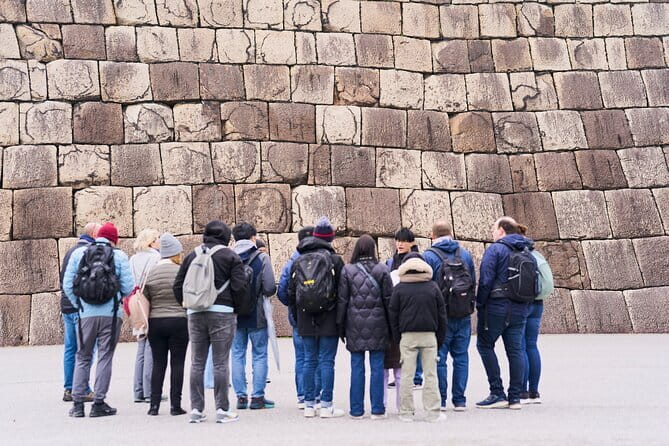
At Kokyo Otemon Gate, the route reaches two massive gates and stone walls from the original castle. This is where the guide explains how the entrance worked as a defensive problem rather than a simple doorway.
The scale of the masonry helps you picture the authority of Edo Castle. A gate this imposing was not only practical. It also made power visible. You can expect the guide to point out how the approach and gate arrangement slowed movement and gave guards advantages over anyone trying to force a way inside.
This stop is brief, about 10 minutes, but it sets up the next section well. You are not walking through a complete castle. You are reading fragments, and the guide’s job is to connect those fragments.
More History Walking Tours in Japan
- Tokyo: Shinjuku Historical Walking Tour & Secret Backstreets
★ 5.0 · 530 reviews - Imperial Palace East Garden and Edo Castle Walking Tour in Tokyo
★ 5.0 · 510 reviews - Asakusa: A Big-picture History Walk to Know Japan
★ 4.6 · 77 reviews - Asakusa: 3.5-hour Big-picture History Walk
★ 4.7 · 39 reviews
Three guardhouses, three levels of samurai duty
The Constable Guardhouse, Hyakunin Bansho Guardhouse, and Obansho Guardhouse form the most useful sequence on the tour. Together, they show that samurai service was not one uniform job.
The Constable Guardhouse was used by lower-ranking samurai. Here, you learn who these men were and why this particular position mattered. It gives the military system a human scale. The castle depended not only on famous commanders, but also on ordinary guards carrying out assigned duties.
Hyakunin Bansho was a larger post where many samurai were stationed. Its name and function help explain the scale of castle security. You can picture a busy guard position rather than a lone sentry waiting beside a wall.
At Obansho, near the inner gate, the discussion turns to higher-ranking samurai and their responsibilities. This change in rank is important. The route lets you see how status was built into the castle itself, with different posts controlling access closer to the shogun.
I find this section more useful than a general lecture about samurai armor or sword fighting. It explains a working system. You learn where people stood, what they protected, and how the castle organized authority.
Fujimi-yagura and the vanished castle tower
Fujimi-yagura is an old watchtower overlooking the grounds. The guide explains its role and why it was distinctive. Like Sakurada Tatsumi Yagura, it reminds you that the castle was designed for observation as much as ceremony.
The tour then moves toward the former main tower site in the East Gardens. This is the spot where Edo Castle’s central tower once stood. Today, you see the ruin and the remaining foundations rather than a grand rebuilt keep.
That absence is part of the appeal. The missing tower forces you to use your imagination, while the guide explains why it is no longer standing. You get a clearer idea of how much of the original complex has disappeared and how much survives in walls, stonework, turrets, and ground plans.
A useful tip: take your time with the visual aids if your guide brings them. Keiko has been praised for using laminated images of former layouts, guard towers, and the imperial family. Those pictures can make the empty site easier to read, especially if you have never studied Japanese castle design.
Kokyo Sannomaru Shozokan and the castle in miniature
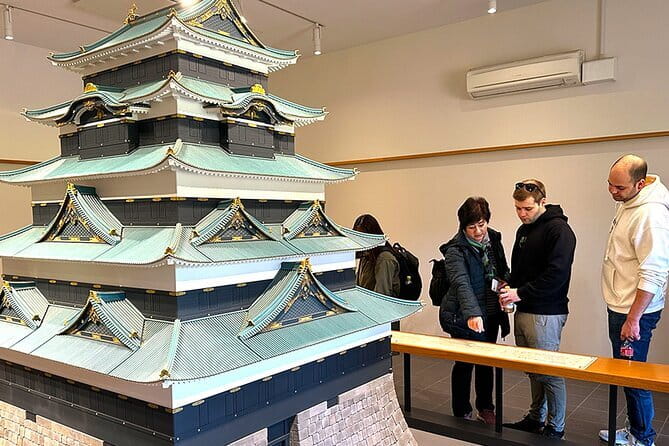
The Kokyo Sannomaru Shozokan stop adds a different kind of evidence. You can see a scale model of the former Edo Castle and visit a souvenir shop with palace-related goods.
The model is valuable because the present-day grounds are spread out and incomplete. A miniature view helps you understand the scale and arrangement of the former castle. It can also clarify how the gates and guardhouses fit together.
This is a short stop, around 10 minutes, so do not expect a long museum visit. Think of it as a visual reset before heading into the gardens. The shop is a minor extra rather than a reason to book the tour, but it gives you a chance to browse palace-themed items.
The East Gardens and the former main tower site

The East Gardens of the Imperial Palace are the most scenic part of the route. They occupy the former castle grounds, so you get a blend of open garden space, old stone, and historical remains.
The Edo Castle ruin is the main historical point here. The guide explains why the main tower is gone and what the remaining foundations tell you. This is where the broad story of Japan’s political system comes into focus. Edo Castle was the center of shogun power, while the imperial system continued across a much longer span of Japanese history.
The tour presents Japan’s imperial legacy as roughly 2,600 years, while also explaining the more specific story of the shoguns and the Edo period. That distinction matters. The Emperor and the shogun were not interchangeable roles, and the walk helps separate imperial tradition from military government.
The gardens are open and exposed, with limited shade along parts of the route. On hot days, bring water and sun protection. One guide handed out sweets and cooling menthol napkins during a very hot walk, but you should still prepare as if the weather will be demanding.
Ninomaru Garden: a gentler end to a military story
Ninomaru Garden changes the mood. After gates, walls, guard posts, and castle foundations, you reach a traditional Japanese garden with seasonal plants and a pond containing koi.
I like this contrast. The tour does not leave you with only war, rank, and defense. The garden shows the quieter side of the former castle grounds and gives you time to slow down. The pond and planting are also among the most attractive parts of the walk for photographs.
The garden stop lasts about 15 minutes. That is enough to appreciate the setting, though not enough for a long, unhurried garden visit. If your main interest is Japanese garden design, you may want a separate visit elsewhere. Here, the garden works best as the final chapter of the castle story.
How the guides shape the experience
The content is solid, but the guide makes the difference. The strongest praise has gone to guides who combine facts with stories and answer questions without turning the walk into a lecture.
K is repeatedly described as funny, passionate, and clear in English. Keiko has used laminated images to explain former layouts and guard towers. Ai has been praised for an enthusiastic presentation, while Shin is noted for answering questions easily and giving detailed explanations of the Edo period and Imperial grounds.
Other guides, including Tomo, Anju, Yuuki, Yuta, Nana, Mayuko, Dai, Frankie, and Mako, have also been described as friendly, patient, and well prepared. One guide even helped a participant join at the last minute after another guide failed to appear. Those details suggest a local team with varied personalities, rather than a single scripted presentation.
Still, no walking tour is perfect for everyone. One participant felt the garden could be visited without a guide and left early because the English was difficult to follow. If you prefer silent sightseeing or already know Japanese history well, you may find the price unnecessary. If you want the grounds explained in plain language, the guide is the main reason to pay.
Is $23.88 good value?
At $23.88, I consider this good value for a two-hour guided walk in central Tokyo. The palace grounds themselves do not charge admission at these stops, so you are paying for interpretation, organization, and company rather than entry tickets.
That distinction is important. You can walk through parts of the area on your own, but you may miss why the guardhouses were positioned as they were or how the castle’s defenses worked. The tour turns free access into a structured history lesson.
The value is strongest for first-time visitors, families, and anyone trying to understand the shogun era before visiting other Japanese castles or museums. It is weaker for visitors who want an extended garden visit, a tour of the Emperor’s residence, or access to castle interiors.
Free cancellation is available if you cancel at least 24 hours before the start time. Any cancellation or change inside that window is not refundable.
Practical advice before you go
Wear comfortable shoes. The route includes walking, steep slopes, and stairs, and the two-hour duration is long enough for poor footwear to become a problem.
Bring water, especially in warm weather. A hat or umbrella can help because much of the route is exposed to the sun. The walk has included a comfort break during the two-hour period, but you should not treat that as a substitute for preparing properly.
Keep your phone charged because your ticket is mobile. Do not bring knives or alcohol because of the security check at the Imperial Palace.
The tour description says it concludes in front of the ginkgo-lined avenue stretching toward Tokyo Station, while the end point is also given as the original meeting point. Check the exact departure instructions so you know where to finish and how to continue your day.
Who should book this tour?
Book it if you want an efficient introduction to Tokyo’s shogun and imperial past, prefer learning by walking, and value a guide who can connect ruins to real historical roles. It is particularly useful early in your visit, when the Edo period and samurai system may still feel like a jumble of names.
Families can also benefit because the route has clear visual points: gates, walls, guardhouses, watchtowers, a scale model, and koi. The small-group format, when available, should make questions easier.
Skip it if you want to enter the Emperor’s residence, spend hours in a garden, or explore at your own pace without commentary. Also think twice if you are visiting during intense heat and are not comfortable with exposed walking, stairs, and slopes.
For most visitors, I would book it. The price is modest, the route covers more than a simple garden stroll, and a good guide can make Edo Castle’s scattered remains suddenly make sense.
FAQ
How long does the Tokyo Castle and Imperial Palace Shogun Walking Tour last?
The tour lasts approximately two hours.
Where does the tour begin?
It begins at Starbucks Coffee in Wadakura Fountain Park, 3-1 Kōkyogaien, Chiyoda City, Tokyo 100-0002, Japan.
Where does the tour end?
The activity information gives the meeting point as the end point, while the route description says it concludes near the ginkgo-lined avenue stretching toward Tokyo Station. Check the exact instructions before departure.
Is the tour conducted in English?
Yes. The tour is conducted in English only, and Japanese-language support is not available.
Is the Emperor’s residence open to the public?
No. The Emperor’s residence is not open to the public on this tour.
Are there security checks?
Yes. You must pass a security check to enter the Imperial Palace grounds. Knives and alcohol are not allowed.
Is the tour suitable for most people?
Most people can participate, but the route includes steep slopes and stairs. Comfortable footwear is recommended.
What is the cancellation policy?
You can receive a full refund if you cancel at least 24 hours before the experience begins. Cancellations or changes made less than 24 hours before the start time are not accepted for a refund.
More History Walking Tours in Tokyo
- History and Hauntings of Salem Guided Walking Tour
★ 5.0 · 14,564 reviews - Lisbon: History, Stories and Lifestyle Walking Tour
★ 4.8 · 10,902 reviews - Boston: Freedom Trail History Small Group Walking Tour
★ 5.0 · 6,450 reviews - Historic Charleston Guided Sightseeing Walking Tour
★ 5.0 · 6,216 reviews
More Castle and Palace History Tours in Tokyo
- Tokyo: Edo Castle & East Garden of the Imperial Palace Tour
★ 4.7 · 112 reviews - Tokyo: Imperial Palace, the history of Japan (ENGLISH GUIDE)
★ 5.0 · 77 reviews - Kyoto: Nijo Castle World Heritage Guided Tour with Admission
★ 4.9 · 37 reviews - Edinburgh: Edinburgh Castle Guided History Tour with Tickets
★ 4.8 · 9,933 reviews
Just added around Tokyo
- Tokyo: Mount Fuji Private Full-Day Trip with Hotel Pickup★ 5.0 · 18 reviews
- Private Tour Through the Tokyo National Museum & Ukiyo-e★ 4.7 · 17 reviews
- Tokyo: Imperial Palace, the history of Japan (ENGLISH GUIDE)★ 5.0 · 77 reviews
- Tokyo: Customized Private Historical Guided Photoshoot Tour★ 5.0 · 25 reviews
- Tokyo: Edo Castle & East Garden of the Imperial Palace Tour★ 4.7 · 112 reviews
- Tokyo: Nagano Snow Monkeys and Zenkoji Tour with Temples★ 4.9 · 19 reviews
- Kyoto: Nijo Castle World Heritage Guided Tour with Admission★ 4.9 · 37 reviews
- Historic Kanda Sake Tasting at Tokyo’s Oldest Shop (1596)★ 4.9 · 33 reviews
Castle & Palace History Tours, compared.

Edinburgh Castle Guided History Tour with Tickets
Read our review →
Venice’s Best: Basilica, Doge’s Palace, Gondola & History Gallery
Read our review →
Imperial Palace and Shogun Historical Walking Tour
Read our review →
Saadian Tombs & Bahia Palace, Medina Guided Tour
Read our review →
Charleston historical walking tour with a Professor of History at The Citadel
Read our review →
Abu Dhabi Grand Mosque, Palace, and Heritage Village
Read our review →
Buda Castle District Dark History, Legends and Vampire Night Tour
Read our review →
Tokyo Castle & Imperial PalaceーShogun Walking Tour
Read our review →Browse the lists this tour appears in