Review · HONSHU
Kyoto: Nijo Castle World Heritage Guided Tour with Admission
Power still echoes through Nijo Castle. This 90-minute tour makes Kyoto’s famous palace easier to read, pairing shogun-versus-Emperor history with a close look at gates, corridors, gardens, and the celebrated nightingale floors. I especially like the small group, limited to 10 people, and the way the tour connects the building to the end of Tokugawa rule. The main consideration is time: 90 minutes gives you a focused introduction, but not an unhurried look at every garden path and corner of the grounds.
The meeting point outside Exit 1 of Nijōjō-mae Station is simple to find, and admission is included in the $40 price. Guides including Nao, Naoya, Uta, Benjamin, and Alexander have been praised for clear English, good storytelling, useful local suggestions, and patience with questions. You must remove your shoes inside Ninomaru Palace, and the mostly flat route is helpful, though the palace visit may be less comfortable for anyone who dislikes going barefoot.
Key points to know before you go
- The palace was built for display, not battle: Tokugawa power appears in the scale, decoration, gates, and carefully controlled approach.
- You hear the nightingale floors firsthand: The boards chirp underfoot, a clever warning system designed to expose unwanted movement.
- The tour reaches a turning point in Japanese history: You visit the room linked to Tokugawa Yoshinobu’s 1867 return of authority to the Emperor.
- The group is capped at 10 people: That leaves more room for questions and personal attention than a large coach tour.
- The gardens add a welcome change of pace: Koi swim through the moats, and the grounds offer some of the castle’s best photo opportunities.
- The tour costs $40 and lasts 90 minutes: That is fair value if you want context and help noticing details you could easily miss alone.
Why Nijo Castle tells a story of power
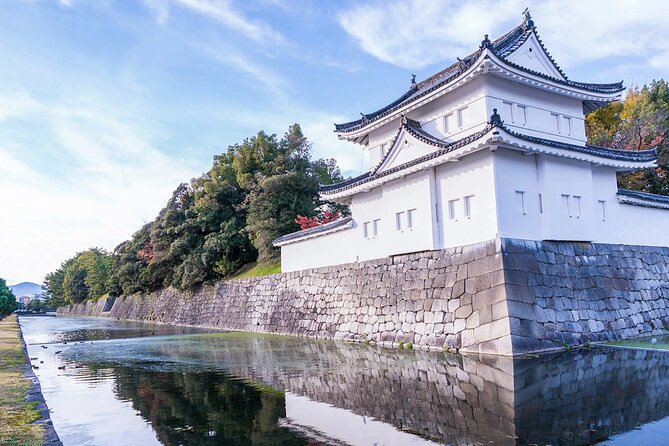
Nijo Castle can look, at first glance, like a grand palace set among handsome gardens. The sharper story is political. The Tokugawa shoguns ruled Japan from Edo, now Tokyo, yet built this lavish compound only a short distance from the Emperor’s residence in Kyoto.
That choice sent a message without requiring a battle. The shogun had the military authority, money, and confidence to place a grand residence beside the imperial court. You are not simply walking through an old castle. You are following a careful display of control.
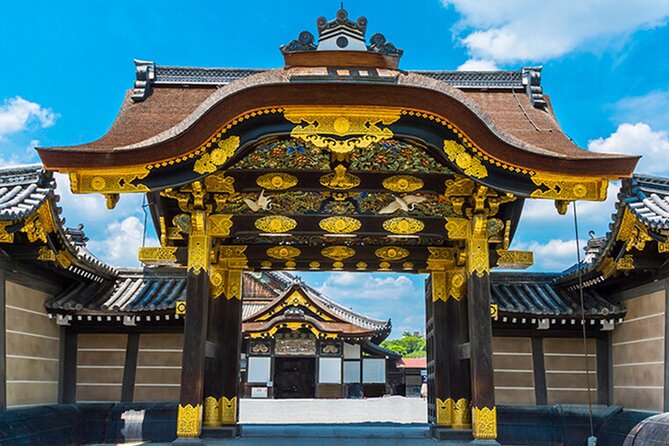
Your guide helps you read the site as a piece of political theater. The gates, approach roads, palace rooms, and changes in floor height all helped visitors understand where they stood in the social order. The building was designed to impress and intimidate, even when everyone inside was smiling politely.
This is where a guide adds real value. Alone, you might admire the painted panels and polished wood, then move on. With someone explaining the intended effect of each space, the castle becomes easier to understand. You begin to notice how architecture can speak before anyone says a word.
More Castle and Palace History Tours in Japan
- Tokyo: Imperial Palace and Shogun Historical Walking Tour
★ 5.0 · 2,251 reviews - Tokyo Castle & Imperial PalaceーShogun Walking Tour
★ 4.7 · 1,068 reviews - Tokyo: Imperial Palace Japanese History Walking Tour
★ 4.9 · 987 reviews
Meeting at Nijōjō-mae Station
The tour begins outside Exit 1 of Nijōjō-mae Station. Look for a guide holding a Local Guide Stars sign. Starting at the station keeps the arrival straightforward, and the tour returns to the same castle area at the end.
You do not need to spend time arranging separate admission. The ticket is included, which makes the $40 price easier to assess. You pay for the entry itself, but also for a structured explanation of a site that rewards background knowledge.
The small-group format matters from the first minutes. With no more than 10 people, you can hear the guide more easily and ask questions without stopping a large crowd. The group may be smaller still. On some departures, one participant has effectively received a private tour, while a family group was able to set its own pace and ask questions throughout.
That flexibility is useful for mixed ages. One family with children aged 8 and 13, along with older relatives, found the guide able to adjust to their pace. The experience is not described as a rushed march from one photo stop to another.
Entering a castle designed to intimidate
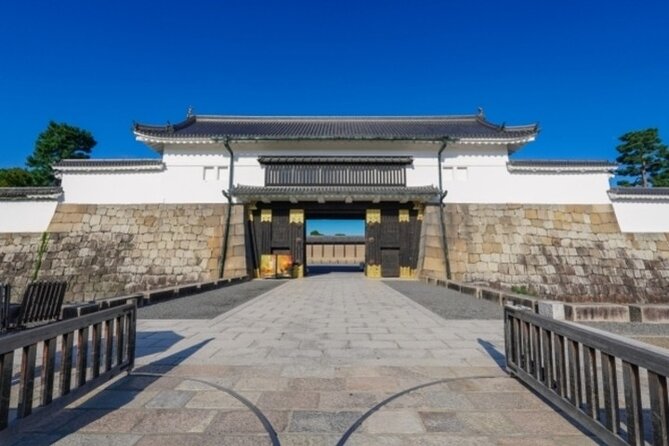
The first part of the walk introduces Nijo Castle as a place of controlled movement. You pass through spaces that were made to guide your eyes, slow your approach, and set the tone before you even reached the main palace.
The point was not simply defense. Nijo Castle certainly needed protection, but the tour focuses on another purpose: making the shogun’s authority visible. Gates and corridors helped create a sense that access was granted carefully and that rank mattered at every step.
You may find that the best details are not the grandest ones. A slight change in floor height, the amount of decoration in a room, or the way one passage leads into another can reveal a strict social system. The palace did not treat every visitor alike, and its design made that hierarchy clear.
This is also the part of the tour where the route’s mostly flat terrain helps. You can pay attention to the explanation rather than worrying about a demanding walk. Still, the grounds are large enough that comfortable footwear is wise, especially since shoes must be removed before entering the palace.
Ninomaru Palace and the chirping floors
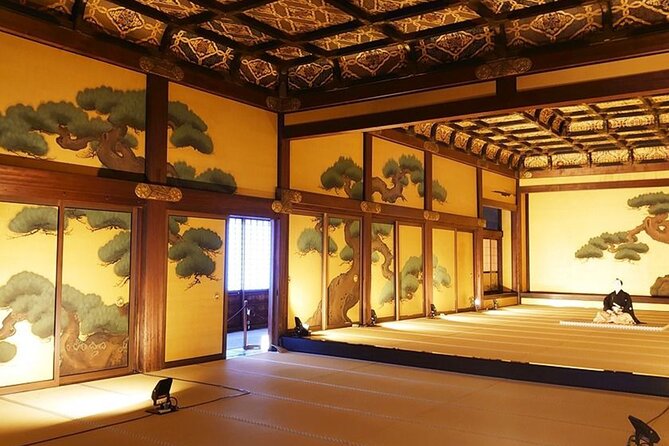
Ninomaru Palace is the central prize of the visit. Inside, you walk through rooms where decoration and size were linked to status. The arrangement was not casual. Who could enter, how far they could proceed, and where they could wait all reflected rank.
The famous nightingale floors are the detail most people expect, and they deserve the attention. As you walk, the boards produce a chirping sound. The effect is memorable because it is both ingenious and surprisingly direct: movement could be noticed even when an intruder tried to remain quiet.
You should not expect a theatrical performance. The floors are part of the actual structure, and the sound is best understood as a practical feature within a much larger system of surveillance and control. Your guide can point out why this mattered in a palace where sensitive conversations and political power shared the same rooms.
Removing your shoes is required. That rule is practical for preserving the palace interiors, but it also changes the way you experience the building. You slow down, notice the floors beneath you, and move through the rooms with a little more care.
The palace corridors can feel layered and deliberate. Instead of revealing everything at once, they shape your view and keep different levels of access separate. The guide’s explanation helps you see this not as confusing layout, but as a system built around rank.
More UNESCO World Heritage Tours in Japan
- From Tokyo: Nikko World Heritage Site Private Full-Day Trip
★ 4.9 · 243 reviews - Tokyo: Nikko World Heritage Private Day Trip Hotel Pick-up
★ 4.8 · 145 reviews - From Tokyo: Nikko World Heritage Sight Full Day Private Tour
★ 4.9 · 127 reviews - From Tokyo: Private Nikko World Heritage Sights One Day Trip
★ 4.7 · 52 reviews
The room where the shogunate ended
The most important historical moment comes in 1867. Tokugawa Yoshinobu returned authority to the Emperor in Ninomaru Palace, ending more than 260 years of shogunate rule and helping bring about the Meiji Restoration.
The tour takes you to the room associated with that event. This gives the visit a strong narrative center. You begin with the shogun asserting authority in Kyoto, then finish with that authority being handed back to the Emperor in the same political world.
That transition can be hard to grasp from dates alone. Inside the palace, it becomes a question of place and power. The building was made to show that the Tokugawa family controlled Japan, yet it also witnessed the end of that arrangement.
I like this part because it prevents the tour from becoming a collection of architectural facts. The painted rooms and formal corridors are tied to a major change in government. You see the setting where an old political order gave way to a new one.
The tour does not promise a full course in Japanese history, and 90 minutes cannot provide one. But it gives you a clear thread to follow: the shogun’s authority, his proximity to the Emperor, and the final transfer of power.
Gardens, moats, and koi beyond the palace
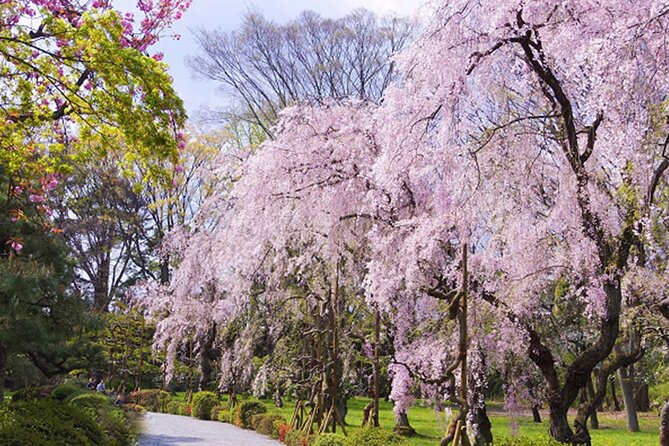
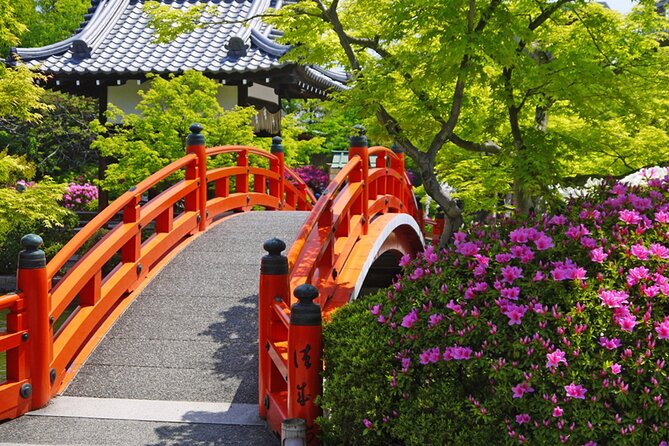
The castle grounds offer a different mood after the formal palace interiors. The gardens are photogenic, and colorful koi swim through the moats around the castle complex. These details provide a welcome visual break from the serious political story.
The gardens are not just decoration. They show another side of the compound, one built for appearance, movement, and controlled beauty. Water, greenery, stone, and palace structures work together to create the setting expected of a powerful residence.
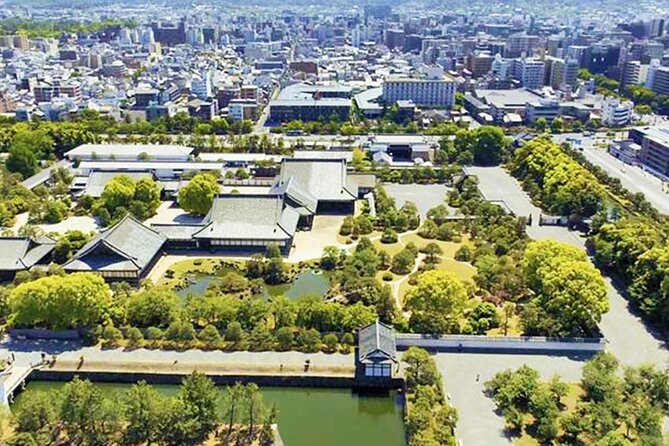
Bring your camera, but do not rush through the open-air sections. The koi and moats are easy subjects for photos, while the wider views help you understand the scale of the grounds. A guide may also point out details that are easy to pass without noticing.
This is one area where the 90-minute limit becomes noticeable. If you prefer to wander slowly, pause often, and study every garden feature, you may want additional time at the castle after the guided portion, if your admission access allows it. The stated tour itself is designed as a focused walk rather than a full-day visit.
What the guides add to the experience
The strongest pattern among the guide feedback is personal attention. Nao is praised for deep explanations and strong storytelling. Naoya is noted for answering questions, explaining both past and current culture, and pointing out less obvious parts of the castle. Uta is described as warm and engaging, with useful explanations of local customs.
Benjamin brings a mix of facts and humor, while Alexander receives praise for clear explanations. These comments point to a benefit that matters more than a memorized script: the guides appear comfortable responding to the people in front of them.
That can make a major difference at a historical site. If you are visiting with children, older relatives, or a partner with limited interest in Japanese history, a responsive guide can keep the visit moving at the right pace. If you already know the basics, you can use the question time to focus on details that interest you.
Some guides also offer suggestions for the rest of your Kyoto visit. Treat that as a pleasant extra rather than the main reason to book. The tour’s real purpose is Nijo Castle, but local advice can help you make better use of the rest of your day.
English is the tour language. The overall rating is 4.9 from 37 reviews, with repeated praise for friendly delivery, clear English, patience, and strong historical and cultural explanations. No guide can guarantee the same style for every departure, but the feedback is unusually consistent across several named guides.
Is $40 fair value for 90 minutes?
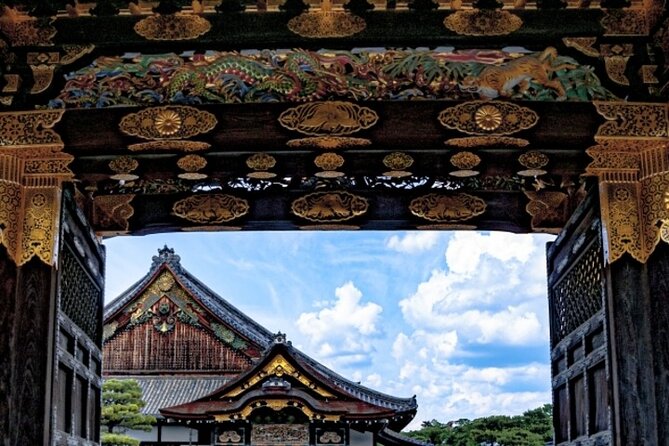
At $40 per person, this is not the cheapest way to enter Nijo Castle. The value comes from combining admission with a small-group guide who explains why the building looks and functions as it does.
If you are happy reading signs and exploring at your own pace, you may prefer a self-guided visit. You will have more freedom to linger, and you will not need to follow a fixed 90-minute route. The tradeoff is that the castle’s political message and social details may be harder to spot.
For many first-time visitors, the price is reasonable. The tour covers the palace, nightingale floors, gardens, koi, and the 1867 transfer of power in one compact visit. It also saves you from arriving with no idea which details deserve your attention.
The small group improves the value. A 10-person maximum is intimate enough for questions, and the possibility of a smaller group can make the experience feel personal. You are not paying for a large group lecture delivered from a distance.
Free cancellation up to 24 hours before the start also gives you some flexibility, and you can reserve now while paying later. Those terms are useful when your Kyoto schedule is still shifting.
Who should book this castle walk?
I would recommend it most strongly to first-time visitors to Kyoto, people interested in the Tokugawa period, and anyone who wants a clear story rather than a silent stroll through old rooms.
It also suits families and mixed-age groups. The walk is mostly flat, and guides have shown that they can adjust to different paces and answer questions from both adults and children.
Readers of historical fiction focused on the Tokugawa era may find extra pleasure in seeing the palace linked to that world. The nightingale floors are a strong draw, but the room connected with Yoshinobu’s decision gives the visit lasting weight.
You may prefer a different approach if you want extensive time in the gardens or a very slow photographic visit. Ninety minutes is enough for the main story, not every possible pause. Also remember the shoe-removal requirement, especially if that affects your comfort or mobility.
The tour is listed as wheelchair accessible, and the route is mostly flat. Still, the palace’s shoe-removal rule is worth considering in advance. If you need a specific accommodation beyond the stated accessibility information, confirm it before booking.
Final verdict: a smart way to read Nijo Castle
Book this tour if you want Nijo Castle to make sense, not just look beautiful. The guide turns the palace from a sequence of rooms into a lesson in authority, rank, surveillance, and political change.
The best reasons to go are the 10-person limit, the included admission, the nightingale floors, and the direct connection to the end of the shogunate. The main limitation is the fixed 90-minute schedule, which leaves less time for independent wandering.
At $40, I see it as a good choice for visitors who value context and conversation. If you want to explore every garden path alone, enter without a guide. If you want to understand why the Tokugawa shoguns placed such an imposing palace beside the Emperor’s home, this small-group walk is the better bet.
FAQ
Where does the Nijo Castle tour meet?
Meet outside Exit 1 of Nijōjō-mae Station. The guide will be holding a Local Guide Stars sign.
How long does the tour last?
The guided tour lasts 90 minutes.
What language is the tour offered in?
The tour is offered in English with a live guide.
Is admission to Nijo Castle included?
Yes. Admission to Nijo Castle is included in the price.
How large is the tour group?
The group is limited to 10 participants.
Do I need to remove my shoes?
Yes. All visitors must remove their shoes when entering the palace.
Is the tour wheelchair accessible?
Yes, the activity is listed as wheelchair accessible, and the route is mostly flat.
Does the tour visit Ninomaru Palace?
Yes. The route includes Ninomaru Palace, including the palace interiors and nightingale floors.
Can I cancel for a full refund?
Yes. You can cancel up to 24 hours in advance for a full refund.
More Castle and Palace History Tours in Tokyo
- Tokyo Castle & Imperial PalaceーShogun Walking Tour
★ 5.0 · 724 reviews - Imperial Palace East Garden and Edo Castle Walking Tour in Tokyo
★ 5.0 · 510 reviews - Edinburgh: Edinburgh Castle Guided History Tour with Tickets
★ 4.8 · 9,933 reviews - Madrid Essential: Historic Center, Plaza Mayor & Royal Palace
★ 5.0 · 6,416 reviews
More UNESCO World Heritage Tours in Tokyo
- From Tokyo: Guided Day Trip to Nikko World Heritage Sites
★ 4.8 · 51 reviews - World Heritage Shirakawa-go and Experience Tours from Kanazawa
★ 5.0 · 4,049 reviews - From Tirana: Berat UNESCO Heritage & Belshi Lake Tour
★ 4.9 · 3,863 reviews - Bali: Tanah Lot UNESCO World Heritage Sites Full-Day Tour
★ 4.7 · 1,947 reviews
Just added around Tokyo
- Historic Kanda Sake Tasting at Tokyo’s Oldest Shop (1596)★ 4.9 · 33 reviews
- From Tokyo: Private Nikko World Heritage Sights One Day Trip★ 4.7 · 52 reviews
- From Tokyo: Guided Day Trip to Nikko World Heritage Sites★ 4.8 · 51 reviews
- Asakusa: A Big-picture History Walk to Know Japan★ 4.6 · 77 reviews
- Asakusa: 3.5-hour Big-picture History Walk★ 4.7 · 39 reviews
- From Tokyo: Nikko World Heritage Site Private Full-Day Trip★ 4.9 · 243 reviews
- Tokyo: Nikko World Heritage Private Day Trip Hotel Pick-up★ 4.8 · 145 reviews
- From Tokyo: Nikko World Heritage Sight Full Day Private Tour★ 4.9 · 127 reviews
UNESCO World Heritage Tours, compared.
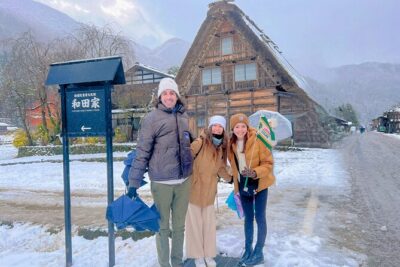
World Heritage Shirakawa-go and Experience Tours from Kanazawa
Read our review →

Bali: Tanah Lot UNESCO World Heritage Sites Full-Day Tour
Read our review →World Heritage Kyoto & Nara Uji Authentic Matcha Experience
Read our review →

UNESCO’s Ayutthaya Historical Park: Full-Day Tour from Bangkok
Read our review →
Rotterdam: Kinderdijk UNESCO World Heritage Entry Ticket
Read our review →