
Review · NARA
World Heritage Kyoto & Nara Uji Authentic Matcha Experience
Nara’s deer are only the beginning. This eight-and-a-half-hour day trip links Nara’s major sights with Uji’s tea culture, using an air-conditioned coach to cover ground that would take careful planning by train and bus. You’ll visit Kasuga Grand Shrine, Todai-ji Temple, Nara Park, Byodoin Temple, and a traditional matcha shop, with an English-speaking guide leading the way.
I like the easy mix of major sights and hands-on culture, especially the matcha-making session in Uji. I also like having transport, temple admissions, WiFi, and an optional Japanese lunch handled in one booking. The catch is the pace: this is a full day with plenty of walking, stairs, hills, and fixed meeting times.
Guides such as Nanami, Yuta, Mai, At-Chan, Den, Ciel, and Tommy have earned especially warm praise for clear explanations, friendly energy, and keeping groups together. Still, one serious complaint involved a guest being left behind at an early stop, so you should pay close attention to meeting instructions and stay near the guide.
What makes this day trip worth considering
- Three historic areas in one day: See Nara’s temples and deer, then finish in Uji, Kyoto’s traditional tea center.
- Todai-ji’s Great Buddha: Enter one of the world’s largest wooden buildings and see Nara’s famous seated Buddha.
- A real matcha activity: Prepare your own bowl at a tea shop with more than 500 years of tradition.
- A useful coach route: Air conditioning, onboard WiFi, and multilingual audio help make a long day more comfortable.
- Lunch can simplify the day: Choose the Japanese set meal, with a vegetarian option available if arranged at least two days ahead.
- Strong guide service: Nanami, Yuta, Mai, At-Chan, Den, and Ciel are repeatedly praised for history, organization, and good humor.
Starting early from Kyoto Station
The day begins at 7:50 a.m. at Tully’s Coffee inside Kyoto Avanti, on the first floor near Kyoto Station. You must get there on time. Late arrivals are not accepted, and joining the group later is not a practical option.
That early start is useful. Nara’s best-known sights are spread across a large park area, and road traffic can affect the schedule. A coach saves you from working out several train connections and local transfers, though it cannot remove the walking once you arrive.
The vehicle is air-conditioned and has WiFi. Multilingual audio guidance is available in English, Spanish, French, Italian, German, Portuguese, and Ukrainian, while a professional English-speaking guide accompanies the group. The maximum group size is 38 people, so expect a proper group outing rather than a private tour.
The route passes Fushimi Castle and the Heijo Palace site before reaching Nara. These are mainly views or passing points rather than long, dedicated visits, so keep your expectations clear. The real sightseeing time begins at Nara’s shrines, park, and temple.
More UNESCO World Heritage Tours in Japan
- World Heritage Shirakawa-go and Experience Tours from Kanazawa
★ 5.0 · 4,049 reviews - Kanazawa: World Heritage Shirakawa-go Morning Guided Tour
★ 4.9 · 988 reviews - Hiroshima Peace (Heiwa) Walking Tour at World Heritage Sites
★ 5.0 · 872 reviews
Kasuga Grand Shrine and Nara Park
Kasuga Grand Shrine is Nara’s most celebrated shrine, known for its religious importance and long approach through the wooded park. The scheduled visit is about 30 minutes, enough to take in the setting and key shrine features, but not enough for a slow, detailed exploration of every path.
Your guide gives you cultural and historical context, then you have some time to look around. Guides including Nanami, Yuta, Mai, and At-Chan are praised for finding a good balance between explanation and independent wandering. That balance matters on a group tour, since nonstop commentary can make a sacred site feel like a checklist.
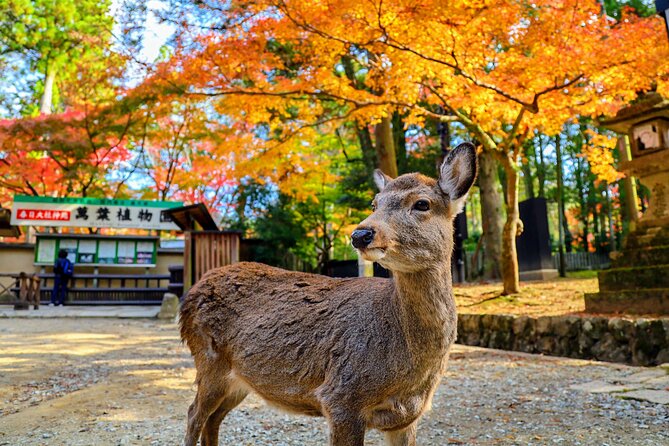
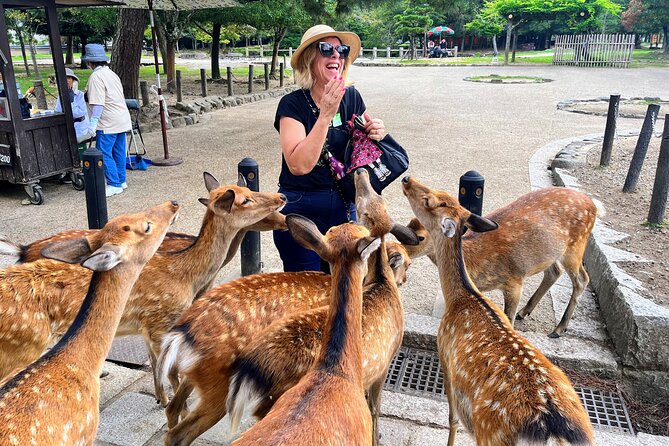
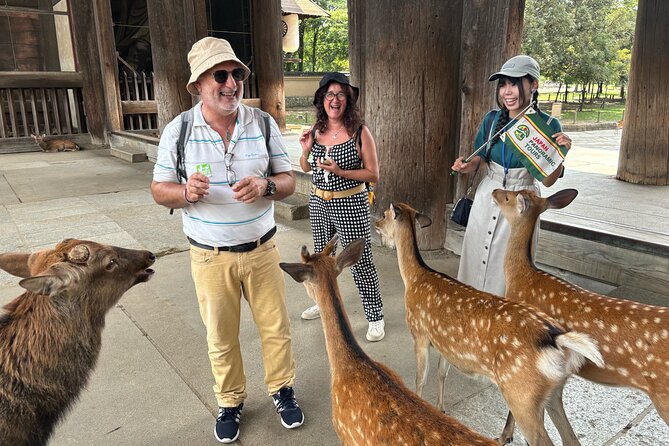
Next comes Nara Park, home to roughly 1,400 deer. This is the playful part of the day, but treat the animals with care. Deer crackers can be purchased separately, and the deer may nip or give a forceful pinch if you show food and then keep it from them. Feeding them can be memorable, especially when they bow for crackers, but do not assume every deer is gentle or patient.
You get about 30 minutes here. That sounds short, but it is enough to photograph the deer, feed a few, and enjoy the open park. Keep your group location in mind. The one serious complaint about this experience involved confusion over the meeting place at an early stop, so do not wander far without confirming exactly where the guide wants everyone to regroup.
Nandaimon and Todai-ji Temple
The Great South Gate, or Nandaimon, gets only about five minutes in the schedule. That may seem brief, but the gate is an impressive stop on the way to Todai-ji, with massive wooden construction and striking guardian statues.
Todai-ji is the main temple visit and receives about 40 minutes. The temple houses the Great Buddha of Nara and occupies one of the world’s largest wooden buildings. Admission is included, which is helpful because this is one of the day’s essential paid sights.
The scale is the point. Even if you do not follow every detail of Buddhist architecture, the building and Buddha make an immediate impression. Your guide can help connect the monument to Nara’s role as an early capital and major center of Japanese Buddhism.
Forty minutes gives you time to enter, see the Great Buddha, take photographs where permitted, and listen to the guide. It is not enough for an unhurried study of every corner, so this tour suits you best if you want the major experience rather than a specialist temple visit.
The route includes walking from the coach parking area to the historic sites. One useful warning from an experienced participant is that some stretches can run beyond 15 minutes. Add stairs, hills, warm weather, and crowded paths, and the walking becomes more demanding than the relaxed coach ride suggests.
Japanese lunch beside the Uji River
Lunch takes place in Uji and lasts about 50 minutes. If you select the lunch option, you receive a traditional Japanese set meal at a restaurant along the Uji River. A vegetarian meal is available, but you need to request it in your booking notes at least two days before the tour.
The lunch is valued for both taste and presentation. A set meal also removes the stress of finding a restaurant while keeping up with a group schedule. Some people particularly enjoy the artistic arrangement of the dishes, while others may prefer choosing their own meal independently.
The restaurant can change for operational reasons, and last-minute bookings may receive the regular meal rather than a vegetarian arrangement. Food and drinks are not included unless you selected the lunch option, so check your booking details before setting out.
Uji is a welcome change of mood after Nara. Instead of deer and large temple grounds, you get a riverside town tied closely to Japanese tea. The shift gives the day more range than a standard Nara temple tour.
Same place, a different slice of the past:
- Kyoto: Fushimi Inari, Kinkakuji, Bamboo Grove 1 Day Bus Tour
★ 4.8 · 4,316 reviews - Tokyo: Imperial Palace and Shogun Historical Walking Tour
★ 5.0 · 2,251 reviews - Kyoto Gion: 2-Hour Geisha Culture & History Walking Tour
★ 5.0 · 1,186 reviews - Tokyo Castle & Imperial PalaceーShogun Walking Tour
★ 4.7 · 1,068 reviews
Byodoin Temple and the 10-yen coin
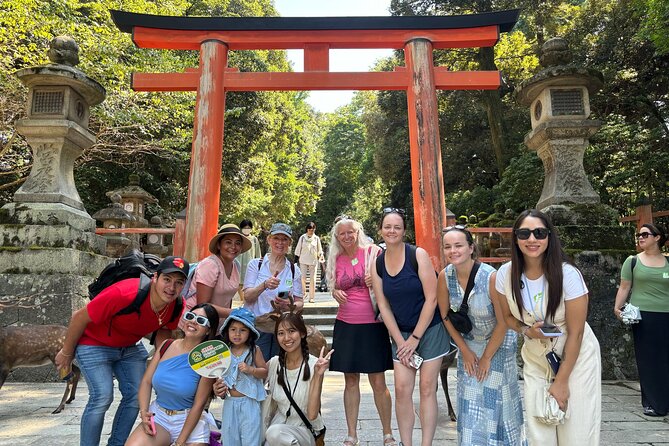
Byodoin Temple is one of Uji’s signature sights. Its Phoenix Hall is depicted on Japan’s 10-yen coin, a small detail that makes the visit easy to remember. Admission is included, and about 50 minutes is allocated for the Uji stop that includes lunch and sightseeing arrangements.
The temple is especially appealing if you enjoy seeing a famous image in its original setting. After noticing the building on a coin, you will recognize it again in shops and pockets across Japan. The visit also gives the day a different architectural character from Todai-ji.
Keep an eye on the schedule here. Uji includes several pieces: lunch, Byodoin, matcha making, and a walk along Byodoin Omotesando. You will see a lot, but you are not getting a long, solitary visit at each location.
Making matcha at a 500-year-old tea shop
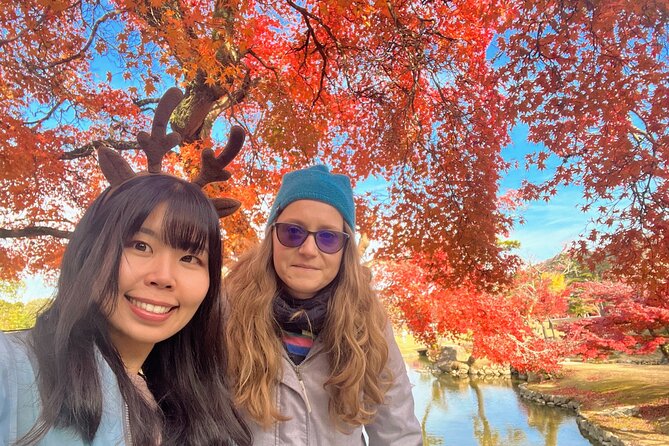
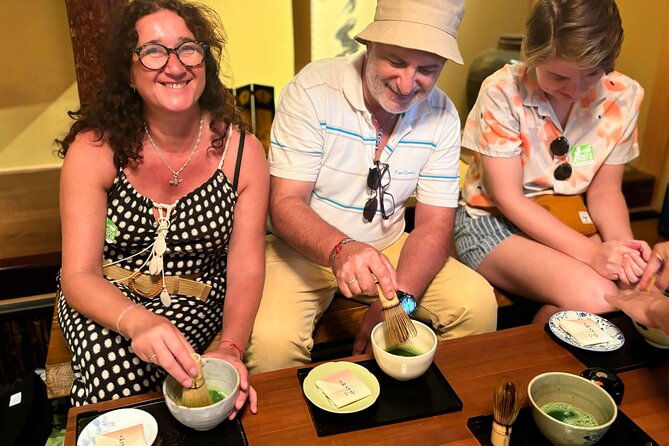
The matcha experience is the most distinctive part of the tour. At a historic tea shop with more than 500 years of tradition, you prepare your own bowl of matcha and learn the proper traditional way to drink it.
This is not simply a tea tasting handed to you at a table. You whisk the tea yourself, which makes the process easier to remember and gives you a practical connection to Uji’s tea culture. The activity lasts about 30 minutes, so it is approachable even if you have never handled matcha before.
The shop’s owner has been praised for humor, and several guides are credited with making the session comfortable and easy to follow. The experience is guided rather than formal and intimidating. You learn the basic method, taste the result, and gain a little insight into the care behind a bowl of matcha.
Do not expect a long ceremonial tea performance. This is a short, participatory introduction. That is also its strength: you get to do something rather than only look at another historic building.
Byodoin Omotesando and matcha sweets
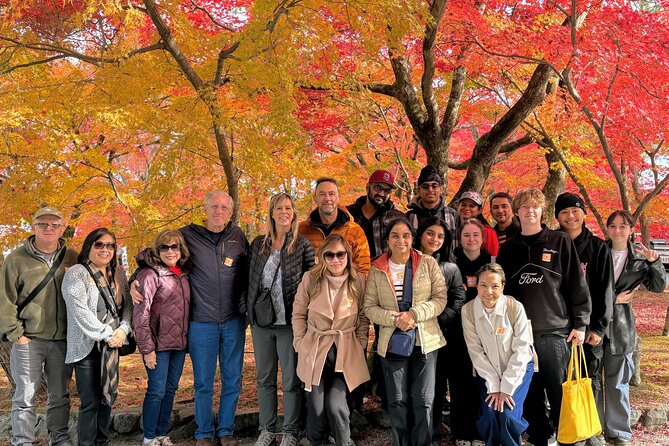
The final Uji portion is a 30-minute walk along Byodoin Omotesando. This is a good place to browse and sample matcha-flavored sweets after making and drinking the tea yourself.
The shopping time is limited, so think of it as a taste of the street rather than a full shopping session. You may find sweets and tea products worth bringing home, but the schedule does not allow unlimited browsing.
Ending in Uji with tea and sweets gives the day a pleasant close. The route has moved from shrine rituals and temple scale to everyday food culture, which helps the experience feel varied rather than repetitive.
What the $129.25 price really covers
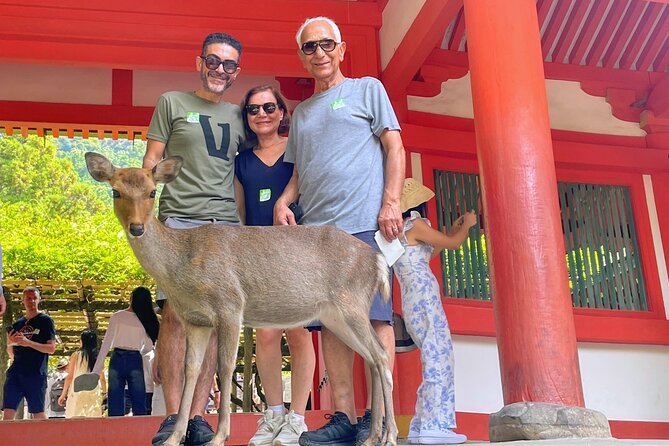
At $129.25 per person, this is not the cheapest way to visit Nara. You could arrange rail travel and local transport yourself for less, especially if you skip the lunch and paid admissions. But the comparison is not simply ticket price against ticket price.
The fee covers an air-conditioned vehicle, a professional English-speaking guide, multilingual bus audio, Todai-ji admission, Byodoin admission, and the matcha-making activity. Lunch is included only if you select that option. You are paying for route planning, transportation between several scattered areas, and someone to keep the day moving.
That value is strongest if you have limited time in Kyoto or prefer not to manage multiple connections. It is also useful for first-time visitors who want context at the main sites. If you already know Nara well, prefer long visits at one temple, or dislike group schedules, the price may feel less attractive.
The group can reach 38 people, so personal attention will vary. On the positive side, guides such as Yuta and Nanami are repeatedly praised for helping people stay organized, answering questions, and allowing free time. The quality of your day depends partly on the guide assigned to your departure.
Walking, weather, and practical limits
You need moderate physical fitness for this outing. The tour includes long walks, stairs, and hills, with additional movement between parking areas and the sights. A hot and humid day can make the route tiring, especially for older participants.
One participant in their eighties found the walking difficult in hot weather, while families with young children found the deer and matcha portions enjoyable. A four-year-old was reported to have handled the day well, but that does not mean every young child will enjoy the full schedule.
Wear comfortable shoes and keep water with you. The coach provides a break between stops, but you should not treat the day as physically easy simply because transportation is included.
Weather, traffic, and operating conditions can change the order or remove a stop. The operator may offer an alternative place or a gift, but there are no refunds for such changes. The lunch restaurant may also change.
Cancellation is free up to 24 hours before the start time for a full refund. Changes or cancellations within 24 hours are not refunded or accepted.
Who will enjoy this Nara and Uji tour
I would choose this tour if you want a broad first look at Nara and Uji in one day. It works particularly well for you if you value a guide’s stories, want the main temple admissions included, and like adding a practical food or tea activity to the sightseeing.
It is also a good fit for families and first-time visitors. The deer give children an immediate point of interest, while Todai-ji and Byodoin provide the historic substance. The matcha session adds something everyone can take part in.
I would think twice if you have limited mobility, dislike early starts, or want to linger at Kasuga Grand Shrine or Todai-ji. The schedule is full, the group is fairly large, and missing the departure is a serious problem.
Should you book it?
Book this tour if you want efficient coverage of Nara and Uji, with transport, admissions, guide service, and matcha making arranged in advance. The strongest reasons are the well-liked guides, the comfortable coach, and the unusual combination of deer, major temples, Japanese lunch, and hands-on tea preparation.
Skip it if you prefer slow independent sightseeing or cannot manage several hours of walking. If you do book, arrive early at Kyoto Avanti, confirm whether lunch is included, request a vegetarian meal at least two days ahead if needed, and stay close to the guide at every meeting point. For many first-time Kyoto visitors, the $129.25 cost is fair for a full day that removes much of the planning work.
FAQ
Where does the tour start?
It starts at 7:50 a.m. at Tully’s Coffee inside Kyoto Avanti, on the first floor at 31 Higashikujo Nishisannōchō, Minami Ward, Kyoto.
Does the tour return to Kyoto?
Yes. The activity ends back at the original meeting point.
Is lunch included?
Lunch is included only if you select the lunch option. The meal is a traditional Japanese set meal served at a restaurant near the Uji River.
Can I request a vegetarian lunch?
Yes. Vegetarian arrangements can be made if requested at least two days before the tour date. Last-minute bookings receive the regular meal.
Is admission to the temples included?
Admission to Todai-ji Temple and Byodoin Temple is included.
How much walking is involved?
The tour includes substantial walking, stairs, and hills. It is not recommended for people who cannot walk long distances.
Just added around Japan
- Private sake pairing@ancient underground★ 5.0 · 27 reviews
- [30 minutes] Rickshaw tour around Asakusa [History, sightseeing, Tokyo Skytree]★ 5.0 · 38 reviews
- Tokyo: Asakusa & Sensoji ー Oldest Temple Walking Tour (2hrs)★ 5.0 · 213 reviews
- Tokyo: Mount Fuji Private Full-Day Trip with Hotel Pickup★ 5.0 · 18 reviews
- Private Tour Through the Tokyo National Museum & Ukiyo-e★ 4.7 · 17 reviews
- Tokyo: Imperial Palace, the history of Japan (ENGLISH GUIDE)★ 5.0 · 77 reviews
- Tokyo: Customized Private Historical Guided Photoshoot Tour★ 5.0 · 25 reviews
- Tokyo: Edo Castle & East Garden of the Imperial Palace Tour★ 4.7 · 112 reviews
UNESCO World Heritage Tours, compared.
World Heritage Shirakawa-go and Experience Tours from Kanazawa
Read our review →
Bali: Tanah Lot UNESCO World Heritage Sites Full-Day Tour
Read our review →

UNESCO’s Ayutthaya Historical Park: Full-Day Tour from Bangkok
Read our review →
Rotterdam: Kinderdijk UNESCO World Heritage Entry Ticket
Read our review →
From Busan: Gyeongju UNESCO World Heritage Guided Day Tour
Read our review →
Morning World Heritage Cruise on the Gordon River from Strahan
Read our review →Browse the lists this tour appears in