Review · HIROSHIMA
Hiroshima Peace (Heiwa) Walking Tour at World Heritage Sites
Hiroshima asks you to slow down. This five-hour walk pairs the Peace Memorial Museum with local stories, then shifts to the city’s hopeful present at Orizuru Tower. I like the small group size, capped at eight, and the way guides such as Yuji, Kaori, Hiro, and Yasue bring warmth and personal detail to difficult subjects. The main concern is timing: crowds can make the museum’s central exhibit hard to see, especially at busy times.
I also like that lunch, admission fees, and tour photos are included, so the $94.84 price is easier to judge. You get more than a route between monuments, including the Aogiri tree, the Children’s Peace Monument, and a view over modern Hiroshima. Still, this is a serious walking tour, not a light sightseeing stroll, and the food cannot reliably meet gluten-free or allergy-related needs.
Key points at a glance
- Eight-person maximum: A small group gives you a better chance to ask questions and hear your guide.
- The Peace Museum is the emotional center: Allow yourself time to process graphic and upsetting exhibits.
- Orizuru Tower changes the mood: Its high view shows how Hiroshima rebuilt itself after destruction.
- Lunch and entrance fees are included: That makes the $94.84 cost more predictable.
- Guides add human context: Yuji, Kaori, Hiro, Yasue, Etsuko, and others are praised for care, clarity, and local perspective.
- Plan for heat and walking: Hiroshima summers can reach 40°C, and the tour is not suited to anyone with major mobility difficulties.
Why this Hiroshima walk works so well
A first visit to Hiroshima can feel like too much to organize. The Peace Memorial Park has monuments, museums, surviving structures, and memorials spread across an area that deserves more than a quick photo stop. This tour gives you a clear route and a trained local guide to explain what you are seeing.
The route also avoids reducing Hiroshima to one tragic morning. You learn about the atomic bombing, but you also hear about survival, rebuilding, daily life, and the city’s message of peace. That balance is one of the tour’s strongest features.
The group limit of eight matters. At a large tour, sensitive questions can get lost and the guide may need to keep moving. Here, you have a better chance to ask about a monument, a family story, or something you do not understand in the museum.
The quality of the day depends on your guide. The strongest comments praise guides for patience, care, and the ability to explain painful material without turning the experience into a lecture. Yuji is repeatedly praised for his historical and cultural explanations. Kaori is noted for keeping a mixed group moving smoothly. Hiro and Etsuko are praised for connecting the sites to personal stories and the lasting effects on families.
More History Walking Tours in Japan
- Tokyo: Imperial Palace and Shogun Historical Walking Tour
★ 5.0 · 2,251 reviews - Kyoto Gion: 2-Hour Geisha Culture & History Walking Tour
★ 5.0 · 1,186 reviews - Tokyo Castle & Imperial PalaceーShogun Walking Tour
★ 4.7 · 1,068 reviews
Starting at Peace Memorial Park
The tour begins at MontbellJapan in central Hiroshima. From there, you enter Peace Memorial Park, where your guide sets the scene before the museum visit.
The opening ten minutes are brief, but useful. You are not simply dropped beside a monument and left to guess its meaning. The guide helps you understand the park as a place of mourning, remembrance, and an appeal for peace.
This early orientation is valuable because the park contains several memorials with different purposes. Without context, the Cenotaph for the Atomic Bomb Victims and the Children’s Peace Monument can blur together. With an explanation, each stop has a clearer place in Hiroshima’s story.
The pace is generally gentle, but you should still wear comfortable shoes. The tour lasts about five hours and includes several outdoor stops. In hot weather, the combination of pavement, humidity, and sustained walking can become tiring.
The Peace Memorial Museum requires time and care
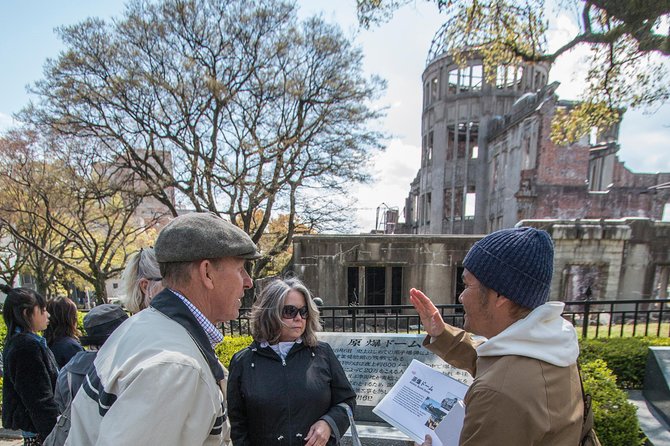
The museum is the heart of the tour. You spend about an hour here, learning about the atomic bombing and its effects on ordinary people. The exhibits can include graphic images and disturbing objects, so this is not an easy museum visit.
Your guide’s role is especially useful here. Museum displays can provide facts, dates, and artifacts, but a guide can explain the human meaning behind them and answer questions as you go. Several guides are praised for presenting the subject with compassion rather than sensationalism.
Give yourself permission to be quiet. Hiroshima’s museum is not a place where you need to rush from display to display. Some objects may stay with you long after you leave, and you may prefer to pause rather than keep talking.
There is one practical warning. At the end of the year, heavy crowds have made it impossible for some people to see the main exhibit within the tour’s schedule. If the museum is your main reason for booking, ask about expected crowd levels when you reserve, and try to choose a quieter date if possible.
The stated museum time is about one hour, but that does not guarantee you will see every exhibit at a busy period. The tour offers structure and access, not a private museum opening.
The Cenotaph and Children’s Peace Monument
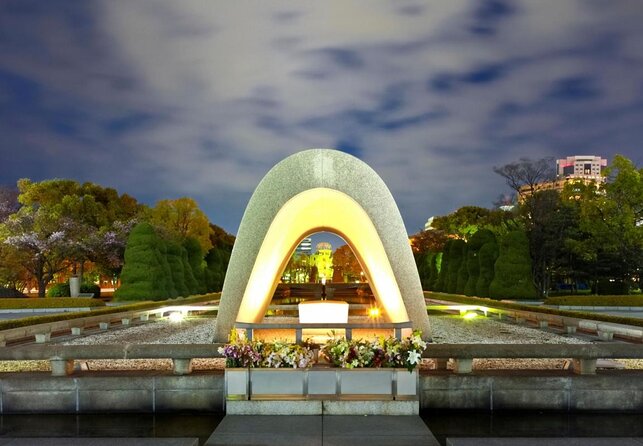
After the museum, the group visits the Cenotaph for the Atomic Bomb Victims. You spend about five minutes here, enough for your guide to explain the monument’s purpose and for you to reflect.
This is one of the points where a short stop can work. The monument does not need a long speech, and the tour’s value comes from allowing the setting to speak as well. Your guide can help connect it to the wider memorial park without crowding the moment with too many facts.
The Children’s Peace Monument gets about ten minutes. Your guide explains its meaning and the connection between children, remembrance, and the hope for a peaceful future. This stop adds another human layer to the park, especially for families and anyone interested in how Hiroshima remembers younger victims and survivors.
If you are traveling with children, consider their age and sensitivity. The museum may contain imagery that is upsetting for young children. Tell the guide about any concerns before the tour begins so the visit can be handled with care.
More UNESCO World Heritage Tours in Japan
- World Heritage Shirakawa-go and Experience Tours from Kanazawa
★ 5.0 · 4,049 reviews - World Heritage Kyoto & Nara Uji Authentic Matcha Experience
★ 5.0 · 1,573 reviews - Kanazawa: World Heritage Shirakawa-go Morning Guided Tour
★ 4.9 · 988 reviews - Kanazawa: World Heritage Shirakawa-go & Two Local Experience
★ 4.9 · 274 reviews
The Atomic Bomb Dome puts the past in plain view
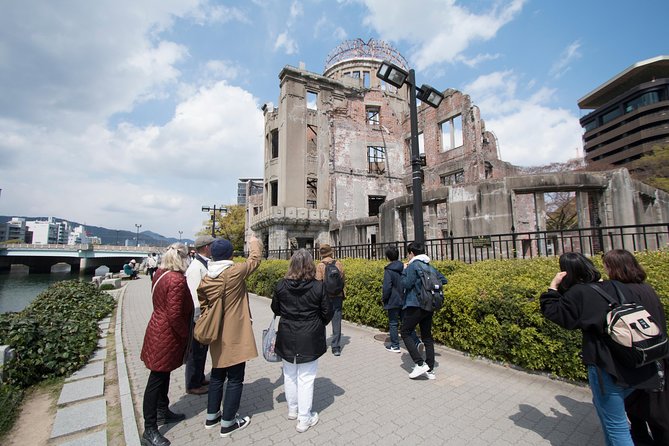
The walk continues to the Atomic Bomb Dome, one of Hiroshima’s most recognizable landmarks. The remaining structure conveys the force of the bomb in a way that written displays cannot.
You spend about fifteen minutes here. That is enough to view the building, hear its story, and take photographs without turning the stop into a hurried snapshot. The guide explains what the structure represents and why it remains such a powerful symbol.
The Dome also changes your sense of distance. After seeing museum objects indoors, you stand outside with a surviving building in front of you. The contrast can be stark. It helps you connect the human stories in the museum with the physical city around you.
As with all memorial sites, behave respectfully. This is a place for photographs, but it is also a place of remembrance. A good guide helps set that tone, and the strongest guide feedback points to exactly this blend of clarity and sensitivity.
Lunch and a wider view from Orizuru Tower

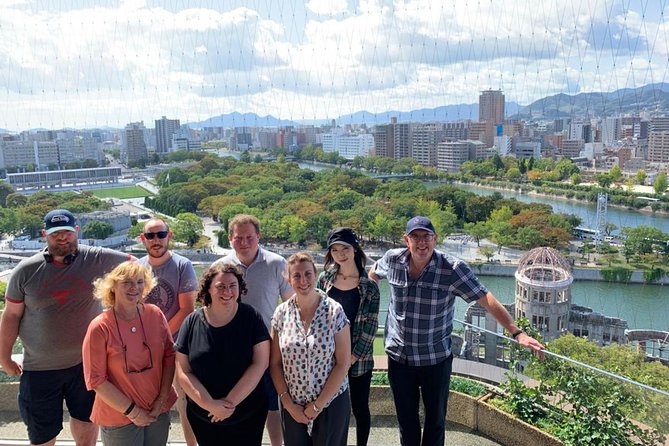
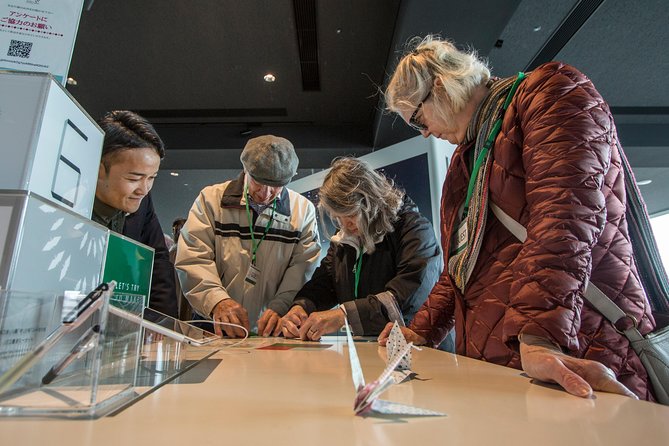
The final major stop is Orizuru Tower, where lunch is served near the top. The view over Hiroshima offers a deliberate change in mood. You have spent the morning looking backward, and now you see a functioning modern city spreading around the memorial district.
That contrast is one of the tour’s smartest choices. Hiroshima is not frozen in 1945. The city rebuilt itself, and the view helps you recognize the scale of that recovery. Lunch gives you a chance to sit down, talk with your guide, and absorb the morning without immediately moving to another monument.
Lunch is included, along with admission to Orizuru Tower. Many people praise the meal, and one guide-led group enjoyed a local restaurant meal that catered to different tastes. Vegetarian options may be limited, although one person reported receiving two vegan choices. You should not assume the same menu every day.
The food policy needs attention if you have restrictions. Gluten-free requests cannot be accommodated, and allergy-free meals are not guaranteed because food is prepared in kitchens outside MagicalTrip’s control. Vegetarian choices may also be limited. Tell the company about allergies or dietary requests at least one day before the tour, but understand that substitutions may not be possible.
You do not need to pay for the guide’s food or drinks. Additional food and drinks are your own responsibility.
What the guide adds to the day
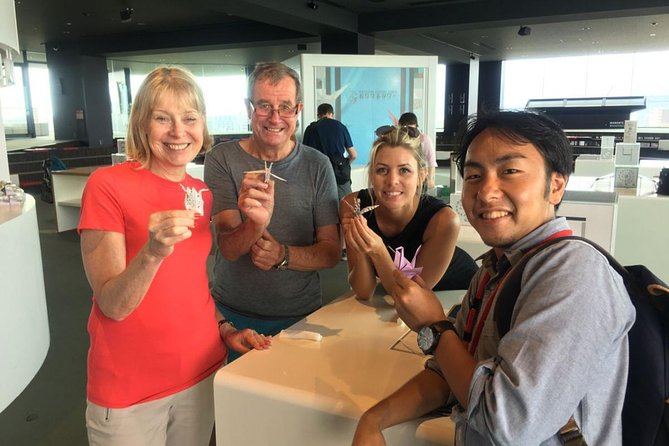
This tour is worth considering mainly for the guide. You can visit the Peace Museum and Atomic Bomb Dome independently, but a local guide gives the sites a connected story.
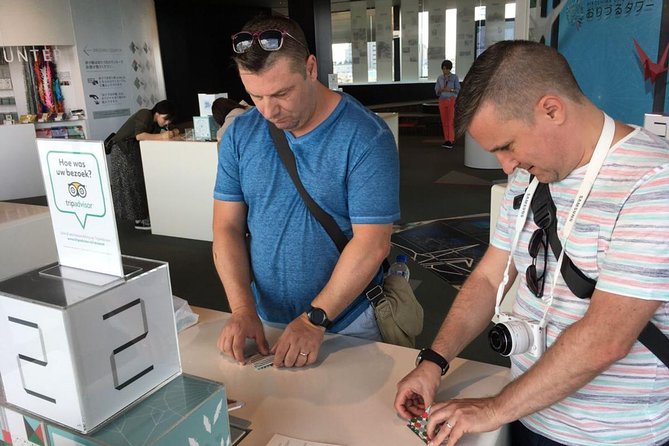
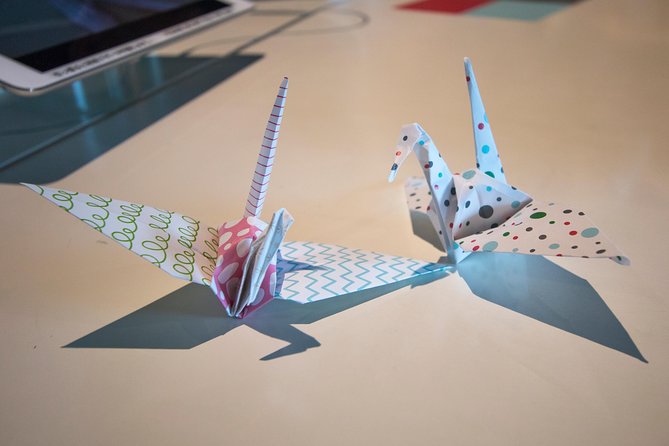
The best guide feedback follows a clear pattern. Yuji is praised for making the day informative and special. Yasue is praised for answering questions patiently and adding context beyond the signs. Hiro shares stories about the bombing, later generations, and Hiroshima’s culture. Etsuko is praised for personal stories, empathy, and a thoughtful paper crane card at the end of one tour.
Those details matter because Hiroshima can be hard to interpret from labels alone. A guide can help you understand the difference between a memorial, a symbol, and a surviving building. You also have someone to help with directions, timing, and the transition from a heavy museum visit to lunch.
The guide does not erase the sadness of the subject, nor should they. The goal is to help you face it with more understanding and less confusion. You should expect a respectful, serious tone, with room for questions and quiet reflection.
Is $94.84 a fair price?
At $94.84 per person, this is not a budget walk. The value comes from what is bundled into the half-day: Peace Memorial Museum admission, Orizuru Tower admission, lunch, a certified guide, and tour photos.
You are also paying for a small group, with no more than eight people. That is more useful here than it would be on a simple neighborhood stroll. The guide’s explanations and the ability to ask questions are central to the experience.
Independent visitors can spend less by paying their own admissions and eating separately. That option gives you more time inside the museum and full control over the pace. The tour earns its price if you want the day organized and want local interpretation at each major stop.
The package is especially good for a first Hiroshima visit, a short stay, or anyone who prefers not to manage a sensitive itinerary alone. If you already know the museum well or want several hours to study every exhibit, an independent visit may suit you better.
Weather, walking, and practical comfort
The tour is near public transportation and most people can participate, but it is not recommended if you have significant mobility issues. The route includes walking between several sites, outdoor paths, and time on your feet. A private tour is suggested if walking is difficult.
Summer weather deserves serious attention. Hiroshima can be very hot and humid, with temperatures reaching 40°C. Bring water, wear a hat, and choose light clothing. Winter can also be cold, with lows listed as low as -5°C, so dress for the forecast rather than relying on the season alone.
Comfortable shoes are essential. You will not be racing, but five hours is still a substantial stretch for anyone unused to walking tours.
The experience requires good weather. If poor weather cancels the tour, you are offered another date or a full refund. You can cancel for a full refund up to 24 hours before the start time, but late cancellations and late changes are not accepted.
Who should book this Hiroshima experience?
I would choose this tour if you want a guided introduction to Hiroshima’s memorial sites and prefer a clear, human explanation of what you are seeing. It suits first-time visitors, families with older children, couples, and solo visitors who want company during an emotional day.
It is also a good match if you want Hiroshima’s present included with its past. The Orizuru Tower view, lunch, and cultural context prevent the day from becoming only a museum visit.
I would think twice if you need strict dietary control, have difficulty walking, or want unlimited time in the Peace Memorial Museum. The crowd issue can also matter. On busy dates, the one-hour museum allocation may not be enough for the main exhibit.
Should you book it?
For most first-time visitors, yes. The route covers the essential memorial sites, the group stays small, lunch is included, and the guides are widely praised for warmth, patience, and clear explanations.
Book it for the human context, not just the checklist of landmarks. If you can visit on a quieter day and arrive prepared for difficult material, this tour gives you a thoughtful way to understand Hiroshima’s suffering, resilience, and continuing call for peace.
FAQ
How long does the Hiroshima Peace Walking Tour last?
The tour lasts approximately five hours.
What is included in the tour price?
The price includes admission to the Hiroshima Peace Memorial Museum and Orizuru Tower, lunch, a certified MagicalTrip guide, and tour photos.
How large is the tour group?
The tour has a maximum of eight travelers.
Is the tour suitable for people with mobility issues?
The tour is not recommended for individuals with mobility difficulties because it involves walking between several sites. A private tour is recommended if walking is difficult.
Can the tour accommodate gluten-free or allergy-related diets?
Gluten-free requests cannot be accommodated. Allergy-free meals and specific dietary substitutions cannot be guaranteed, though you should provide requests or allergy information at least one day before the tour.
What happens if bad weather cancels the tour?
If poor weather causes cancellation, you will be offered a different date or a full refund. You can also cancel for a full refund if you do so at least 24 hours before the experience begins.
More WWII and D-Day Tours in Japan
- Vienna: World War II Historical Walking Tour
★ 4.8 · 1,772 reviews - Zagreb: City & History Walking Tour & WW2 Tunnels
★ 4.9 · 1,202 reviews - Pearl Harbor History Remembered Tour from Ko Olina
★ 5.0 · 1,009 reviews - Berlin: History of the Third Reich Guided Walking Tour
★ 4.7 · 791 reviews
Just added around Japan
- Private sake pairing@ancient underground★ 5.0 · 27 reviews
- [30 minutes] Rickshaw tour around Asakusa [History, sightseeing, Tokyo Skytree]★ 5.0 · 38 reviews
- Tokyo: Asakusa & Sensoji ー Oldest Temple Walking Tour (2hrs)★ 5.0 · 213 reviews
- Tokyo: Mount Fuji Private Full-Day Trip with Hotel Pickup★ 5.0 · 18 reviews
- Private Tour Through the Tokyo National Museum & Ukiyo-e★ 4.7 · 17 reviews
- Tokyo: Imperial Palace, the history of Japan (ENGLISH GUIDE)★ 5.0 · 77 reviews
- Tokyo: Customized Private Historical Guided Photoshoot Tour★ 5.0 · 25 reviews
- Tokyo: Edo Castle & East Garden of the Imperial Palace Tour★ 4.7 · 112 reviews
UNESCO World Heritage Tours, compared.
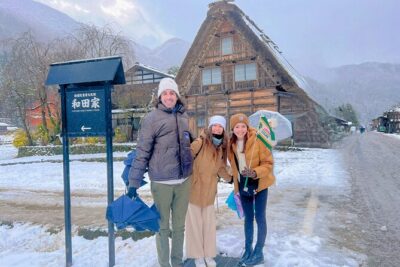
World Heritage Shirakawa-go and Experience Tours from Kanazawa
Read our review →
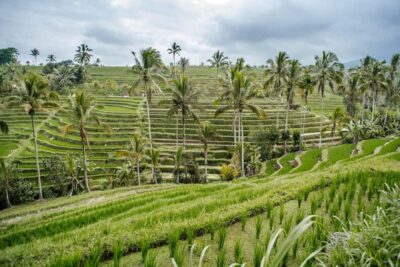
Bali: Tanah Lot UNESCO World Heritage Sites Full-Day Tour
Read our review →World Heritage Kyoto & Nara Uji Authentic Matcha Experience
Read our review →
UNESCO’s Ayutthaya Historical Park: Full-Day Tour from Bangkok
Read our review →
Rotterdam: Kinderdijk UNESCO World Heritage Entry Ticket
Read our review →