
Review · ZAGREB COUNTY
Zagreb: City & History Walking Tour & WW2 Tunnels
Zagreb reveals itself on foot. This $11 walking tour links the city’s grand squares, market lanes, medieval Upper Town, and WWII-era Grič Tunnel in a tidy 2.5-hour route. I like the small-group feel, which makes it easier to hear your guide and ask questions, and I like the mix of famous sights with local stories, from Zagreb’s café culture to the chapel inside Stone Gate. The main drawback is timing: the Grič Tunnel can close for events, Dolac Market is shut in the afternoon and on public holidays, and the funicular is closed for renovation until March 2026.
Guides such as Petra, Tomislav, Tomas, Maja, and Tom have earned especially warm praise for their humor, clear English, personal stories, and restaurant tips. The route gives you a useful first look at Zagreb, but it is still a walking tour rather than a deep visit inside the city’s museums or cathedral. Come ready to listen, walk on uneven streets, and fill in the details on your own later.
Key points to know before you go
- The route begins in Zrinjevac Park: Meet beside the small meteorological station at Trg Nikola Šubić Zrinski 2.
- The Grič Tunnel adds a darker chapter: This wartime shelter offers a change of pace from churches, markets, and handsome squares.
- Small groups make a real difference: You can hear the guide, ask questions, and keep the walk conversational.
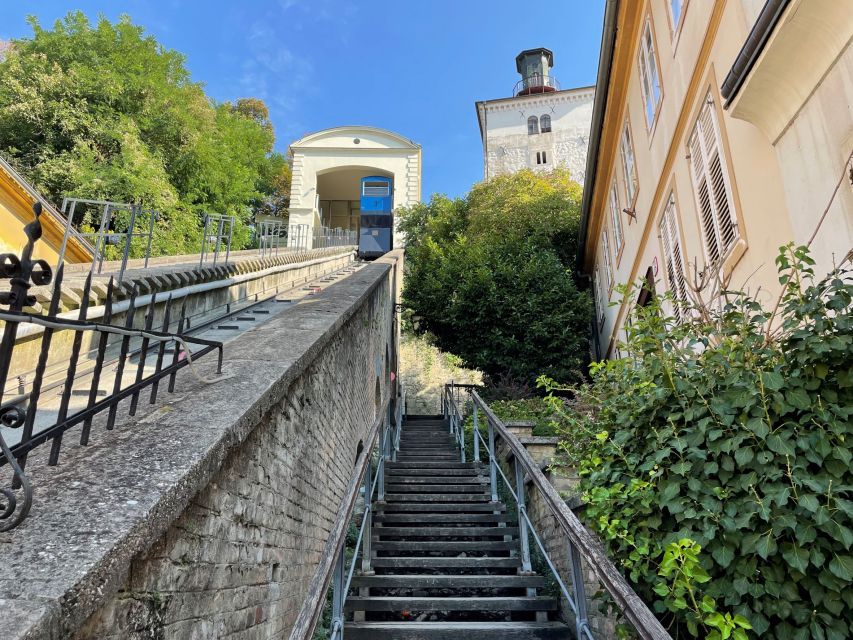
- The funicular is not operating: It is closed for renovation until March 2026, so expect to walk up to Gradec.
- Dolac Market depends on your start time: The market closes in the afternoon and on public holidays.
- The tour ends at Ban Jelačić Square: That central location makes it easy to continue to lunch, a museum, or another Zagreb sight.
Starting under the trees in Zrinjevac Park
The tour begins at Zrinjevac Park, one of the handsome green spaces in Zagreb’s Lower Town. Look for the meteorological station on the north side of the park. It is a small display showing the temperature and barometric pressure, but it is useful as a clear meeting point in an otherwise open square.
Zrinjevac gives your guide a good place to set the scene. Zagreb is not one single old town pressed behind walls. Its story unfolds through several connected areas, and this walk moves from the orderly Lower Town toward the medieval Upper Town.
The opening 15 minutes are listed as a guided visit and photo stop. That sounds brief, but it helps you get your bearings without spending too much time on one park. I appreciate that balance on a first-day tour. You want enough context to understand the city, not a long lecture before the walking begins.
More History Walking Tours in Croatia
- Dubrovnik Old Town History Walking Tour
★ 5.0 · 1,684 reviews - Dubrovnik: Ancient City Walls & Wars Walking Tour
★ 5.0 · 1,270 reviews - Walking Tour of Split with a ‘Magister’ of History
★ 5.0 · 1,122 reviews
Ban Jelačić Square and the story behind Zagreb
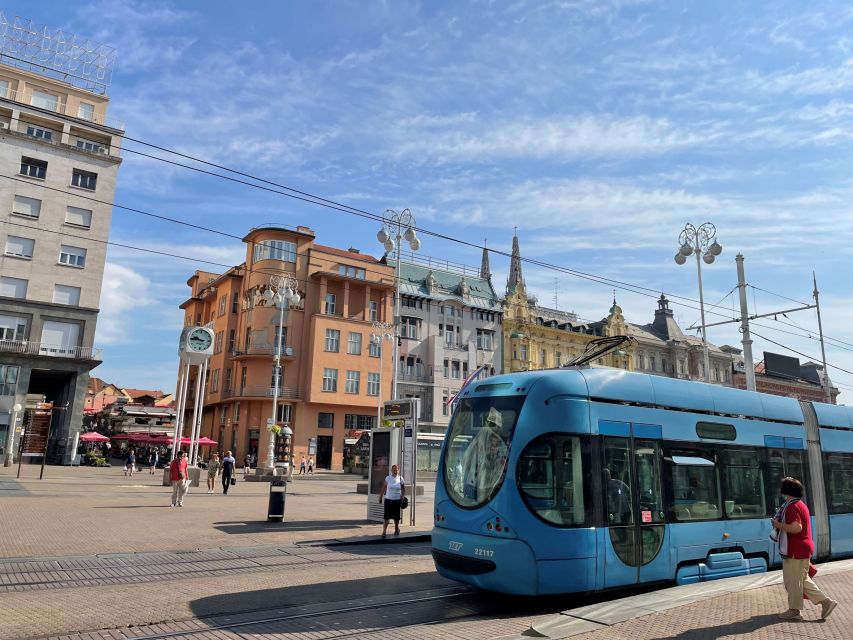
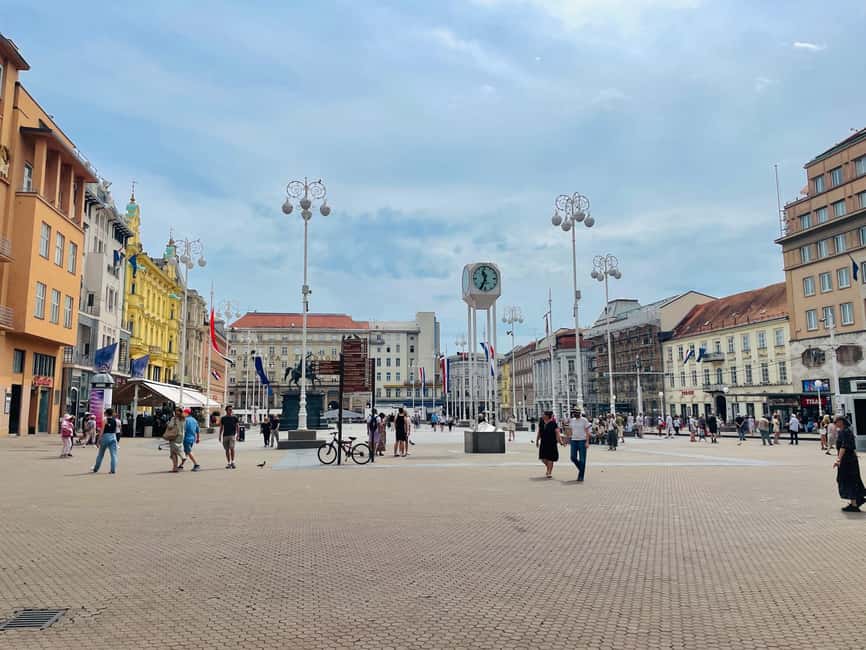
From Zrinjevac, the route heads toward Ban Josip Jelačić Square, Zagreb’s central meeting place. Trams, pedestrians, cafés, and grand buildings give the square a lively urban feel, and your guide explains how Zagreb got its name along with legends tied to the city’s beginnings.
This is where the tour’s storytelling matters. A guide can point out the shape of the square and name the buildings, but a good local guide connects those details to the way Zagreb functions today. Petra and Tomislav are especially praised for mixing facts with humor and personal observations, while Maja is noted for keeping her group together and making space for questions.
The square is also practical. Because the walk ends here, you can return to a familiar place after the tour. If you have just arrived by bus or train, this is a useful introduction to the city center before you set off on your own.
Zagreb Cathedral and a city shaped by damage
The next stop is Zagreb Cathedral, formally the Cathedral of the Assumption of the Blessed Virgin Mary. The tour covers its origins, difficult past, and repeated restoration. That matters because the cathedral is not just a grand photo stop. Its appearance reflects the many shocks Zagreb has faced across the centuries.
The visit is listed as a 15-minute guided stop, so you should expect an outside explanation rather than an extended interior visit. The supplied details do not promise entry inside, and the tour price does not include admission to attractions. If you want to study the cathedral at length, return later on your own.
This part of the walk also prepares you for a wider Zagreb theme: the city has been repaired, altered, and adapted many times. Your guide can give you the basic timeline, then you can decide which buildings deserve a closer look after the tour.
Dolac Market, Zagreb’s everyday meeting place
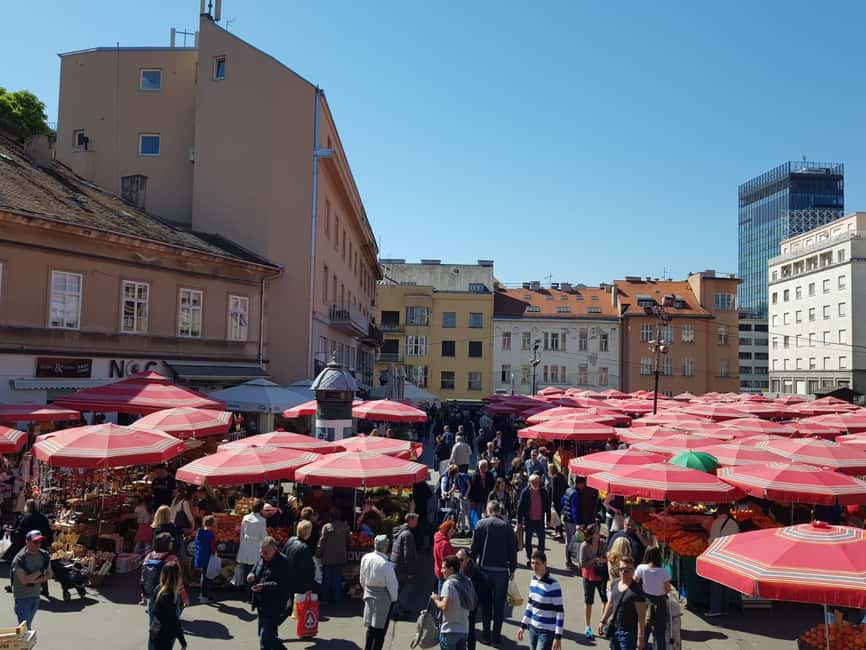
Dolac Market is often called the belly of Zagreb, and the nickname makes sense. It is where daily shopping, local produce, and ordinary city life come together. The tour pauses here for about 15 minutes, giving you a chance to see more than polished architecture.
This is one of the stops where timing really matters. Dolac is closed in the afternoon and on public holidays, so a morning departure is the safer choice if the market is important to you. When open, it adds color and movement to the walk, and your guide can explain how the market fits into local routines.
Do not expect a food tour. Food and drinks are not included, and the route does not promise tastings. I would treat Dolac as an introduction, then return later if you want to browse stalls or buy something to eat.
More WWII and D-Day Tours in Croatia:
- Vienna: World War II Historical Walking Tour
★ 4.8 · 1,772 reviews - Pearl Harbor History Remembered Tour from Ko Olina
★ 5.0 · 1,009 reviews - Hiroshima Peace (Heiwa) Walking Tour at World Heritage Sites
★ 5.0 · 872 reviews - Berlin: History of the Third Reich Guided Walking Tour
★ 4.7 · 791 reviews
Tkalčićeva Street and the art of sitting still
The walk continues through Tkalčićeva Street, one of Zagreb’s best-known café areas. Here the guide talks about the local habit of lingering over coffee and meeting friends in public rather than rushing through the day.
That small cultural detail helps the city make sense. Zagreb sightseeing is not only about monuments. It is also about how people use streets and squares. Tkalčićeva gives you a chance to notice that slower social rhythm, even if the tour itself keeps moving.
The street can feel crowded at popular times, and café activity is part of the appeal. Still, this is a pass-through cultural stop, not a scheduled café break. If you want to sit down, save that for after the tour.
Inside the Grič Tunnel
The Grič Tunnel is the most unusual stop on the route. This underground passage beneath the Upper Town served as a wartime shelter during World War II. Today it provides a direct link to Zagreb’s more recent past, and the change from open squares to a dim underground passage gives the walk a welcome shift in mood.
The guided visit is planned for about 20 minutes. You can expect your guide to explain the tunnel’s wartime role and why it remains part of the city’s public memory. It is not presented as a theme-park attraction. Its value comes from seeing a real piece of Zagreb’s history in a setting that feels very different from the cathedral and market.
There is one important uncertainty. The tunnel may close when an exhibition, theater performance, or another event is taking place. If that happens, the visit cannot go ahead. The tour does not promise a substitute, so keep your expectations flexible.
Walking uphill to Gradec while the funicular rests
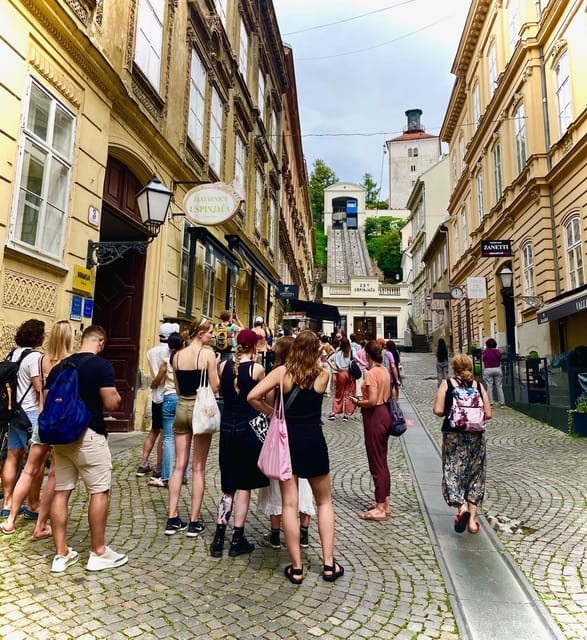
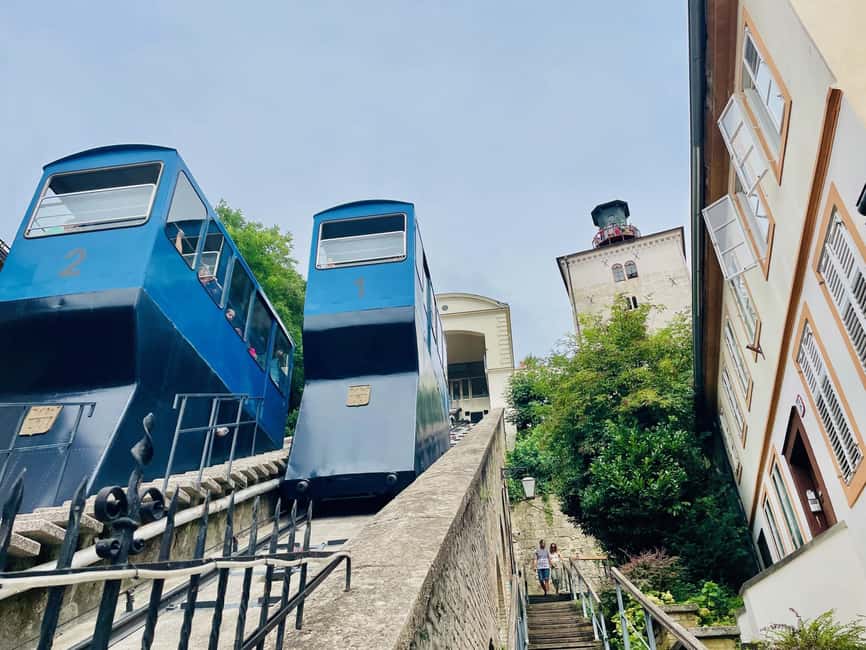
The route then turns toward Zagreb’s Upper Town, also called Gradec, one of the city’s original medieval settlements. The funicular normally offers a short ride up the hill and is Zagreb’s oldest public transport, but it is closed for renovation until March 2026.
That closure changes the physical feel of the tour. Instead of riding uphill, you will walk. The itinerary describes the Upper Town section as a short guided stop with scenic views along the way, but the entire route already involves walking between locations. If steep streets or uneven paving are difficult for you, this tour is not suitable for wheelchair users and may not be comfortable for everyone.
The upside is that walking gives you a better sense of the transition from the lower city to Gradec. You see Zagreb change from broad streets and formal parks to narrow lanes, old walls, and hilltop views.
Strossmayer Promenade and Lotrščak Tower
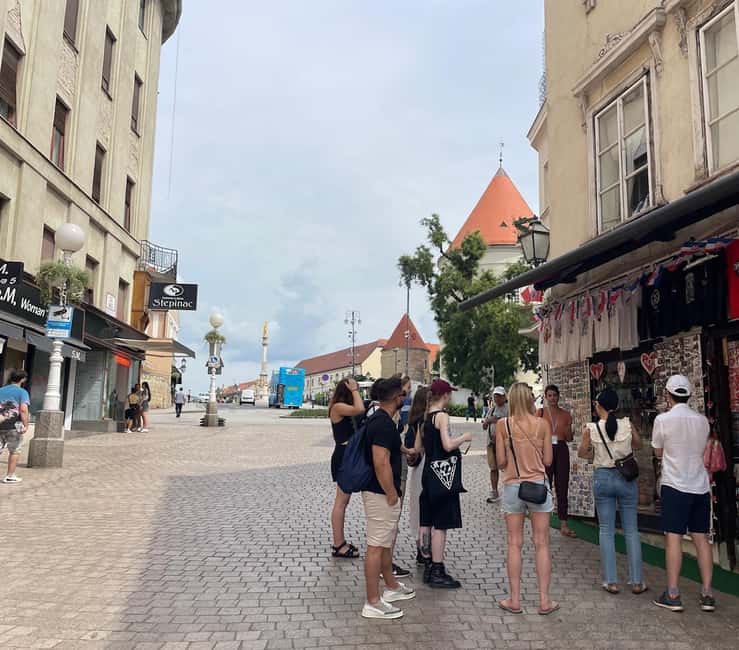
Strossmayer Promenade offers a leafy terrace above the city, with some of the best broad views on the route. It is a natural pause after the uphill walk. Your guide can point out the city below while explaining how the Upper Town fits into Zagreb’s past and present.
Lotrščak Tower receives a longer stop of about 20 minutes. The tower is one of the Upper Town’s key landmarks, and its position gives the guide a useful place to explain the old defenses and the city’s changing boundaries.
Timing may matter here too. Several people praised guides for arranging the walk so the group could hear the cannon fired at noon. This is not something you should assume will happen on every departure, but if your tour is timed correctly, it can be a memorable local moment. Ask your guide at the start if the schedule lines up.
The tour is not listed as including entry into Lotrščak Tower. Expect an exterior explanation and a photo stop unless your guide tells you otherwise.
Museum of Broken Relationships and St. Mark’s Square
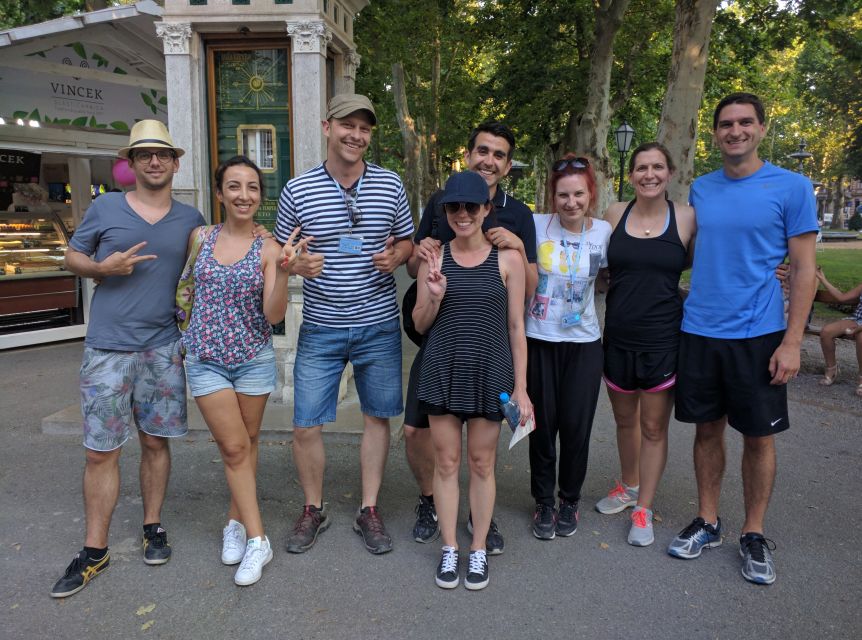
The route passes the Museum of Broken Relationships for about 10 minutes. This is a pass-by stop, not a museum visit. The museum is one of Zagreb’s best-known modern attractions, but you will need a separate visit if you want to see its collection.
That distinction is useful. The tour gives you a map of the Upper Town and points out places worth returning to, rather than trying to cover every interior. I prefer that approach on a short orientation walk because it keeps the pace moving.
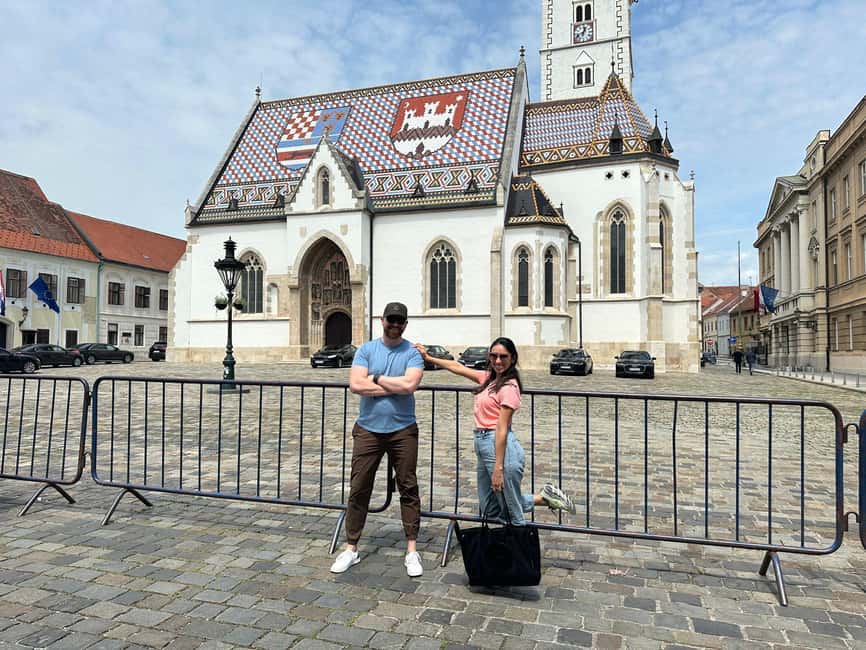
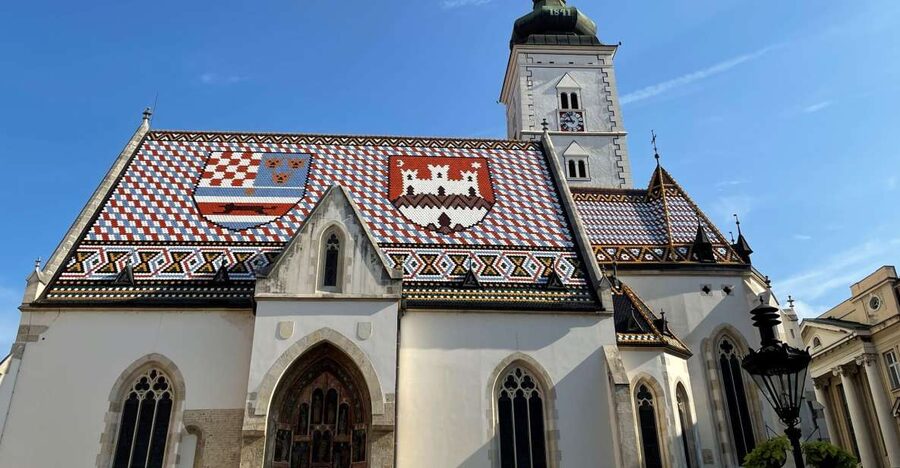
Next comes St. Mark’s Square, where the colorful tiled roof of St. Mark’s Church makes the stop instantly recognizable. The church is one of Zagreb’s most photographed sights, and your guide explains its importance as part of the Upper Town. The listed guided stop lasts about 15 minutes.
This area rewards careful looking. The roof is the obvious attraction, but the square also shows how political, religious, and civic life meet in the old center. Listen for the local details. Guides are praised for pointing out things you might walk past without noticing.
Stone Gate and a quiet place of devotion
The walk continues past Zagreb’s oldest pharmacy and through Stone Gate, the only surviving gate from the city’s old fortifications. Inside is a small chapel containing a painting of Our Lady, believed by locals to be miraculous.
Stone Gate is one of the most meaningful stops because it remains part of everyday life, not just a preserved monument. People pause there to pray, light candles, or pass through quietly. Your guide can explain the local devotion without turning the stop into a sermon.
The visit is scheduled for about 10 minutes. Be respectful and keep your voice down inside the chapel. The space is small, so the group may need to move through in an orderly way rather than linger all at once.
The secret stop and the final return
Before heading back, the guide takes you past a less obvious spot away from the main sightseeing path. The exact location is not specified in advance, which is part of the fun. Do not expect a major monument. Think of it as a small local detail that adds texture to the route.
The walk finishes at Ban Jelačić Square, the same central area you visited earlier. This is a convenient end point. Your guide can suggest places for food, museums, or your next Zagreb activity, and several guides have been praised for giving useful restaurant recommendations.
I would save your questions for the final stretch. Ask about a neighborhood you have not yet seen, a good place for lunch, or which museum deserves your limited time. The small-group format makes these conversations easier than they are on a large coach excursion.
What the $11 price really gives you
At $11 per person, this is unusually inexpensive for a 150-minute guided city walk. The value comes from the amount of ground covered and the amount of orientation you receive, not from included food, transport, or attraction admission.
You get a licensed local guide and the walking tour. Food and drinks are extra, and the tour does not list interior admission to the cathedral, Lotrščak Tower, or the Museum of Broken Relationships. That keeps the price low, but you should budget separately if you want to explore those places afterward.
The strongest value is for a first visit. In one walk, you see the main square, cathedral, market, café street, wartime tunnel, Upper Town, tower, church, Stone Gate, and a few less obvious corners. You also leave with practical ideas for restaurants and museums.
The group size is not stated as a fixed number, but repeated praise focuses on small groups, including one group of eight. That matters. You can hear the guide, ask follow-up questions, and avoid the slow shuffle of a very large crowd.
Timing, comfort, and who should book
I would choose a morning departure whenever possible. Dolac Market is closed in the afternoon, and a morning walk may also give you better access to the market’s daily activity. Check the starting time carefully because departure times vary.
Wear comfortable shoes. You will walk for two and a half hours, including an uphill section to Gradec. In hot weather, shade is limited in some open squares, although one guide was praised for steering the group toward shady spots when possible. In rain, the walk can still go ahead, but you should bring suitable clothing.
The tour is offered in English with a live guide. It suits first-time visitors, short-stay visitors, solo travelers who want local orientation, and anyone who prefers stories over a list of dates. It is also useful if you have only a few hours before a bus, as one guide accommodated that kind of tight schedule.
It is less suitable if you need wheelchair access, dislike walking uphill, or want a museum-heavy tour. The Grič Tunnel may also be unavailable because of an event, and the funicular will not provide a shortcut until renovation ends in March 2026.
Free cancellation is available up to 24 hours before the tour, and you can reserve now and pay later. Those terms are helpful if your Zagreb plans are still shifting.
Should you book this Zagreb walking tour?
Yes, if you want a friendly first look at Zagreb for very little money. The best parts are the small-group conversation, the guides’ humor and personal stories, and the unusual combination of Dolac Market, medieval Gradec, Stone Gate, and the WWII Grič Tunnel.
Book it early in your stay, preferably in the morning. That gives you a useful map of the center and leaves time to revisit the cathedral, market, museum, or Upper Town sights that catch your eye. Skip it only if you need step-free access, want long interior visits, or cannot tolerate a change of plan if the tunnel is closed.
FAQ
Where does the Zagreb walking tour begin?
It begins at Trg Nikola Šubić Zrinski 2 in Zrinjevac Park, next to the meteorological station on the north side of the park.
Where does the tour finish?
The tour ends at Ban Josip Jelačić Square in central Zagreb.
How long does the tour last?
The walking tour lasts 150 minutes, or two and a half hours.
What language is the tour offered in?
The tour is conducted in English by a live guide.
Is the Grič Tunnel always included?
The tunnel may be closed if an exhibition, theater performance, or similar event is taking place. If it is closed, the tunnel visit cannot go ahead.
Can I ride the Zagreb funicular during the tour?
No. The funicular is closed for renovation until March 2026, so the route goes on foot toward the Upper Town.
Is Dolac Market open for every tour?
No. Dolac Market is closed in the afternoon and on public holidays.
Is the tour suitable for wheelchair users?
No. The activity is not suitable for wheelchair users.
What is included in the price?
The price includes a licensed local guide and the walking tour. Food and drinks are not included.
Can I cancel the booking?
Yes. You can cancel up to 24 hours in advance for a full refund. You can also reserve now and pay later.
Just added around Croatia
- Split Walking Tour with History Professor★ 5.0 · 23 reviews
- Split: Local History and Culture 90-Minute Walking Tour★ 5.0 · 194 reviews
- Split: Private Walking Tour in the Historical Town Center★ 5.0 · 25 reviews
- Split: Historical & Gastro Treasures Tour with Green Market★ 4.9 · 144 reviews
- Split: Walking tour of Split with a ‘Magister’ of History★ 5.0 · 110 reviews
- Šibenik: Croatia in a Day, Vistas, History, Olive Oil, Wine★ 5.0 · 30 reviews
- Dubrovnik: Red History Museum Regular Ticket★ 4.6 · 134 reviews
- Pula: Historic Sites Guided Walking Tour★ 4.8 · 78 reviews
WWII & D-Day Tours, compared.
Pearl Harbor History Remembered Tour from Ko Olina
Read our review →
Hiroshima Peace (Heiwa) Walking Tour at World Heritage Sites
Read our review →
![Pearl Harbor & USS Arizona Small-Group Tour [Early Access]](https://4.historywanderer.com/wp-content/uploads/pearl-harbor-uss-arizona-small-group-tour-early-access-400x266.jpg)
Pearl Harbor & USS Arizona Small-Group Tour [Early Access]
Read our review →
Anne Frank and the Jewish History of Amsterdam Private Tour
Read our review →
Anne Frank and Amsterdam Jewish History Walking Tour
Read our review →
Historic Bayeux Daily Group City Tour In English 2 hrs (Apr-Sept)
Read our review →Browse the lists this tour appears in