
Review · ISTRIA COUNTY
Pula: Historic Sites Guided Walking Tour
Pula keeps its Roman past close. This 90-minute walk links the Arena, Venetian castle, Cathedral, Roman Forum, Augustus Temple, City Hall, mosaics, market, and ancient gates in one compact route. I like the clear old-town overview and the way the tour mixes famous monuments with smaller Roman traces you could easily miss alone.
I also like the local guide’s storytelling, especially when guides such as Sini explain how Pula’s architecture, culture, and long history fit together. The main drawback is that entry tickets are not included, and the tour is not suitable for people with mobility impairments. It also runs rain or shine, so sensible shoes and weather protection matter.
Key points at a glance
- Starts beside the Pula Arena: The meeting point is in front of the amphitheater entrance, making this easy to find if you are already visiting the city’s biggest landmark.
- A 90-minute route with strong coverage: You see the main historic sights without giving up half a day.
- Roman and Venetian Pula in one walk: The route moves from the Roman Arena and Forum to the 17th-century Venetian castle.
- Small details add value: Roman mosaics, the Arch of Sergii, Hercules Gate, and less obvious traces give the walk more depth than a simple monument checklist.
- Guide quality is a major strength: Sini is praised for clear English, humor, broad historical knowledge, and welcoming answers to questions.
- Good value at $20: For a guided introduction to Pula’s center, the price is reasonable, though attraction admission costs extra.
Why this short walk works so well in Pula
Pula is the sort of city where a guide can save you time and confusion. Its center is packed with remains from different periods, but they do not always announce themselves. A Roman fragment may sit beside a later building, while a busy street can hide the shape of an ancient gate.
This tour gives you a useful map of the city’s past. You begin at the Arena, move through the castle and Cathedral area, reach the Roman Forum, and finish at Twin Gate. That route lets you see the major sights while also understanding how the old center fits together.
The strongest feature is the balance between headline monuments and smaller details. You get the Pula Amphitheater, Augustus Temple, and City Hall, but you also see mosaics, the Arch of Sergii, the market, and Hercules Gate. I value that mix because it helps you understand Pula as a living city, not just a collection of Roman ruins.
The price is $20 per person. That is fair for a live English-language guide and a concentrated 90-minute introduction, especially if you are in Pula for a short stay or visiting from a cruise port. You will need to pay separately for any attraction admission, but the main value here comes from the explanation and route rather than from bundled entry tickets.
More History Walking Tours in Croatia
- Dubrovnik Old Town History Walking Tour
★ 5.0 · 1,684 reviews - Dubrovnik: Ancient City Walls & Wars Walking Tour
★ 5.0 · 1,270 reviews - Zagreb: City & History Walking Tour & WW2 Tunnels
★ 4.9 · 1,202 reviews
Meeting the guide at the Pula Arena
The tour begins at Istarska ul. 50, in front of the Amphitheater entrance. Look for a guide wearing a blue card around the neck and holding an umbrella. That detail is useful because the Arena area can be busy, and a clear meeting signal saves you from wandering around the entrance looking for the right person.
The Arena is the ideal starting point. Its size gives you an instant sense of Pula’s importance in Roman times, and the guide begins with a short introduction before the group moves on. You should expect an overview rather than a long interior visit at this point.
Entry tickets are not included. If you want to explore paid areas inside the Arena, confirm the admission arrangements before booking or plan a separate visit. The walking tour itself focuses on the historical setting and the story of the monument.
The guide’s opening explanation also sets the tone for the rest of the walk. Sini has received particular praise for excellent English, humor, clear stories, and the ability to answer questions. That matters on a history tour. Dates and names are easy to forget, but a good explanation helps you understand why a site still matters.
Climbing to the Venetian castle
From the Arena, the route continues to Pula Castle. The fortress was built by the Venetians in the 17th century, giving you a change of period and mood after the Roman opening.
The castle is useful for showing that Pula’s story did not end with the Roman Empire. Your guide explains its history and previous inhabitants, then connects it to the later development of the city. This shift from Roman power to Venetian control gives the walk a wider frame.
The castle also provides panoramic views. I would treat this as one of the tour’s best pauses, because the view helps you place Pula geographically instead of seeing the old town only at street level. It is a good moment to look back toward the city and understand the route you have already covered.
There is one practical point to keep in mind: the castle portion may involve walking on uneven surfaces or handling changes in level. The activity is specifically not suitable for people with mobility impairments, so this is not the right choice if stairs, slopes, or uneven ground create a problem.
The Cathedral and the layers of Pula
After the castle, you continue toward the Cathedral. This part of the walk helps connect the city’s Roman foundations with its later religious and civic life.
The Cathedral is not treated as an isolated sight. Instead, it forms part of a wider explanation of how Pula changed over time. That is one reason I prefer this kind of walking tour to simply moving from one photo stop to the next. You learn how different buildings share the same urban space.
The guide also points out traces that are easy to overlook. Roman remains do not always appear as complete monuments. They can survive in fragments, reused stone, paving, or the shape of a street. The tour’s focus on these smaller clues gives you a better eye for the rest of your time in town.
If you are taking photographs, bring your camera, but remember that video recording is not allowed. The restriction is worth noting before you arrive, particularly if you planned to make a walking video.
Same place, a different slice of the past:
- Walking Tour of Split with a ‘Magister’ of History
★ 5.0 · 1,122 reviews - Dubrovnik Combo: Old Town & Ancient City Walls
★ 5.0 · 1,019 reviews - Split Walking Tour with Professor of History
★ 5.0 · 926 reviews - Split: History and Heritage Walking Tour
★ 4.9 · 650 reviews
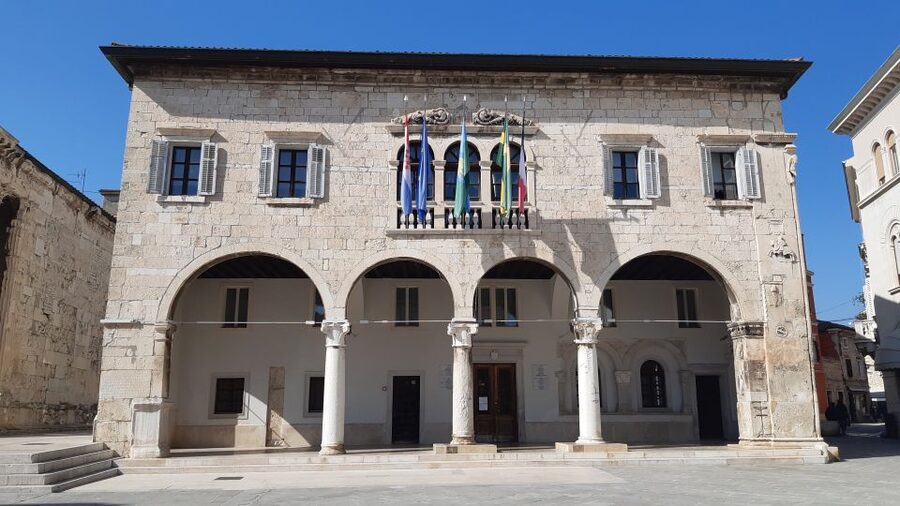
Roman Forum, Augustus Temple, and City Hall
The Roman Forum is the historic heart of the route. Here, the ancient city becomes easier to picture because the open public space brings several important buildings together.
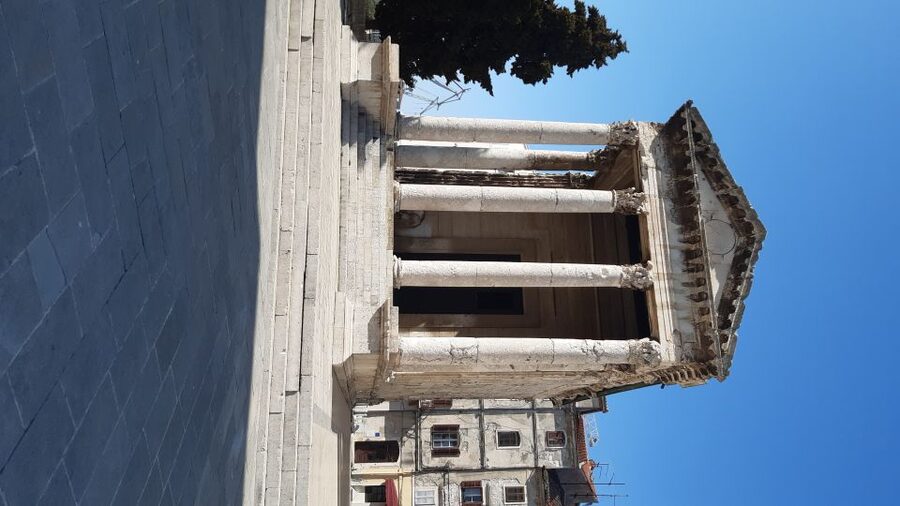
The Augustus Temple is the highlight. At about 2,000 years old, it gives you a direct link to Roman Pula. Your guide explains its architecture and place in the Forum, helping you see more than a well-preserved facade. The temple is small enough to examine closely, which makes it a different experience from the vast Arena.
City Hall adds another layer to the same setting. Seeing the modern civic building beside ancient Roman remains shows how Pula’s center has continued to function across centuries. The contrast is one of the most interesting parts of the route, and it gives the Forum a practical, lived-in quality.
This is also where an informed guide makes the biggest difference. Without context, you may admire the temple and move on. With explanations about architecture, civic life, and the changes to the square, you get a clearer picture of why the Forum was important then and remains central now.
Mosaics, the Arch of Sergii, and Hercules Gate
The route includes Roman mosaics along the way. These smaller pieces are easy to miss if you walk through Pula without a guide, especially when your attention is fixed on the largest monuments.
I like this part because it changes your pace. Instead of only stopping at major structures, you pause for evidence embedded in the city itself. The mosaics help show how ordinary Roman spaces could carry careful decoration and design.
The Arch of Sergii is another important stop. It adds a personal and commemorative side to Roman Pula, rather than presenting the period only through temples and public buildings. Your guide’s explanation gives the monument a human connection.
The walk ends at Twin Gate, after a stop at the ancient Gate of Hercules. These gates help you understand how people entered and moved through the old city. Hercules Gate is especially useful as a reminder that Pula’s Roman defenses and street plan were part of an organized urban system.
Finishing at Twin Gate is practical. You end near another clear historic marker rather than being left at an indistinct street corner. From there, you can continue exploring on your own, though the tour does not include onward transport.
A quick look at Pula Market
The Pula Market, established in the early 1900s, provides a welcome change from ancient stone. It shows a more recent part of the city’s public life and gives the walk a broader sense of place.
This stop matters because Pula is not an open-air museum. People still shop, meet, and move through the same center that contains Roman and Venetian remains. The market helps break up the concentration of temples, gates, and fortifications.
You should not expect a food tour or a dedicated market tasting experience. The market is one part of the historic route, not the main event. Still, it is a useful stop for understanding how the city developed beyond its ancient core.
Pace, guide style, and group experience
The walk lasts 90 minutes, which is enough time to cover the major sights without becoming an all-day commitment. Several comments describe the pace as comfortable and leisurely, with the monuments close together. That makes this a practical first activity after arriving in Pula.
The route is also a good fit for people who want information without a formal lecture. The strongest guide feedback highlights clear explanations, friendly manner, humor, and encouragement to ask questions. Sini is repeatedly praised for making the history approachable while still offering plenty of detail.
A 90-minute format does require some tradeoffs. You will not have unlimited time inside every monument, and the tour cannot give each site the attention of a dedicated museum visit. If you want extended time for photographs or a detailed architectural study, you may need to return to your favorite places later.
The language is English, and the tour is led by a live local guide. That is important if you want to ask about a detail that catches your eye. A recorded audio guide may give facts, but it cannot respond when you wonder why a building looks the way it does.
Weather, comfort, and who should book
The tour runs rain or shine. Check the forecast, but do not assume poor weather will cancel the walk. Bring suitable clothing, shoes with a firm grip, and protection from rain or sun as needed.
The route is not suitable for people with mobility impairments. The castle and historic center may include uneven surfaces, and the activity is built around walking rather than vehicle transfers. If you need step-free access or frequent seating, this is probably not the right excursion.
I think the tour suits you best if:
- You have only a short time in Pula.
- You want the main historic sights explained in English.
- You like Roman history but also want Venetian and later city history.
- You prefer a small-scale walking introduction to a long museum visit.
- You want to understand the city layout before exploring on your own.
Families with older children may also find the route useful, especially if the children enjoy ruins, forts, and stories about ancient cities. The guide’s humor and question-friendly approach should help keep the walk from feeling like a list of dates.
The experience is less suitable if you want entry to several attractions included in the price, if you dislike walking in poor weather, or if you need an accessible route.
Is Pula’s $20 historic walk worth booking?
I would book this tour if you want a well-organized first look at Pula. For $20, you get a local English-speaking guide, a clear route through the old center, and explanations that bring together Roman, Venetian, religious, and modern civic history.
The strongest reasons to choose it are the coverage and the guide quality. You see the Arena, castle, Cathedral, Forum, Augustus Temple, City Hall, market, Arch of Sergii, Hercules Gate, and Twin Gate in 90 minutes. Guides such as Sini add stories, answer questions, and help you notice Roman details you might otherwise pass.
I would skip it only if you need an accessible route, want a private or very slow visit, or expect attraction tickets to be included. For most able-bodied visitors making a first visit to Pula, this is a sensible and good-value introduction. Free cancellation up to 24 hours before the start and reserve-now, pay-later booking also make it easier to fit into a changing itinerary.
FAQ
How long does the Pula historic walking tour last?
The tour lasts 90 minutes, or one and a half hours.
Where does the tour begin?
It begins in front of the Pula Amphitheater entrance at Istarska ul. 50.
How do I identify the guide?
The guide wears a blue card around the neck and holds an umbrella.
Where does the tour finish?
The walk finishes at Twin Gate.
What language is the tour conducted in?
The live guided tour is conducted in English.
Are entry tickets included?
No. Entry tickets are not included in the tour price.
Can I cancel for a full refund?
Yes. You can cancel up to 24 hours in advance for a full refund.
Is the tour suitable for people with mobility impairments?
No. The activity is listed as not suitable for people with mobility impairments. It also runs rain or shine, so prepare for the weather.
Just added around Croatia
- Šibenik: Croatia in a Day, Vistas, History, Olive Oil, Wine★ 5.0 · 30 reviews
- Dubrovnik: Red History Museum Regular Ticket★ 4.6 · 134 reviews
- Pula: Historic Walking Tour with Local Guide & City Views★ 4.8 · 214 reviews
- Lumbarda: Half-Day Kayaking and History with Wine delight★ 5.0 · 49 reviews
- Experience Split History Walking Tour With Local Historian★ 5.0 · 28 reviews
- Dubrovnik: Small-Group Guided Old Town History Walking Tour★ 4.9 · 37 reviews
- Dubrovnik Old Town: Night tour with History, Wine & Bites★ 4.7 · 59 reviews
- Dubrovnik: Historical Tour with Game of thrones details★ 4.9 · 43 reviews
History Walking Tours, compared.
History and Hauntings of Salem Guided Walking Tour
Read our review →
Freedom Trail History Small Group Walking Tour
Read our review →
Historic Charleston Guided Sightseeing Walking Tour
Read our review →
Tapas Walking Tour with Food, Wine, and History
Read our review →
Savannah History and Haunts Candlelit Ghost Walking Tour
Read our review →
A History of Terror – Belfast City Centre Walking Tour
Read our review →Browse the lists this tour appears in