
Review · BOSTON
Boston: Freedom Trail History Small Group Walking Tour
Boston’s past is best read one street at a time. This 2.5-hour walking tour follows the Freedom Trail from Boston Common to Copp’s Hill Terrace, connecting all 16 official landmarks with stories from the years leading up to the American Revolution. I like the small group of no more than 16 people, and I like that the guides focus on the political tension of 1760 to 1775 instead of simply pointing at old buildings.
You also get a useful first look at central Boston and the North End in one outing. The main drawback is that you remain outside for most of the tour, and the pace requires plenty of standing and walking. Museum and church admissions are not included, so you will need extra time and money if you want to go inside.
Quick points before you book
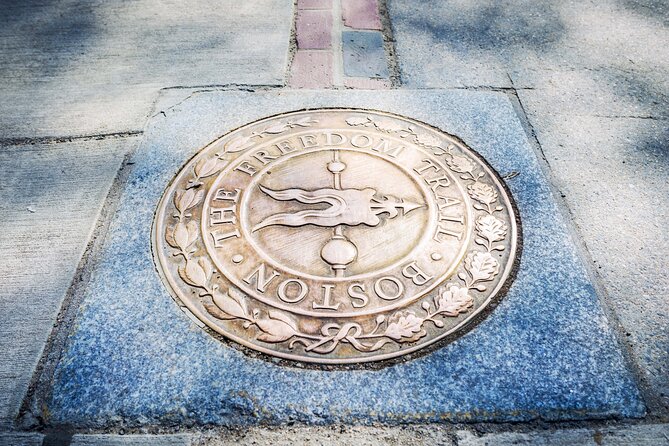
- All 16 Freedom Trail landmarks: The route covers Boston Common, Granary Burying Ground, the Boston Massacre Site, Faneuil Hall, Paul Revere’s home, and the other official stops.
- A history-first walk: The focus is Boston between 1760 and 1775, when arguments over taxation, representation, and British rule grew into revolution.
- Small-group format: With a maximum of 16 people, it should be easier to hear the guide and ask questions than on a large city tour.
- Ends in the North End: Copp’s Hill Terrace puts you near Hanover Street’s Italian restaurants, pastry shops, and pizza.
- Outdoor sightseeing: The walk is wheelchair and stroller accessible, but you should be comfortable standing for long periods.
- Strong guide team: Guides such as Jon, Mark, Maura, Maz, Nick, Alejandro, Cal, and Miles are repeatedly praised for clear storytelling and command of Boston history.
Why this Freedom Trail tour works so well
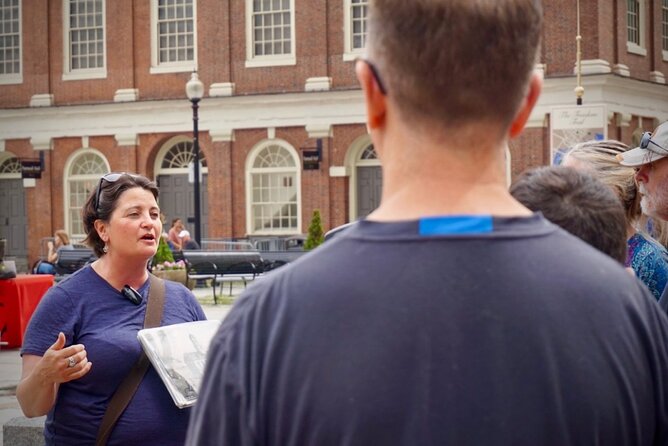
The Freedom Trail is easy to follow on your own, but the red line on the pavement cannot explain why a crowd gathered outside the State House, why five people died in 1770, or how a meetinghouse helped spark the Boston Tea Party. That is where a good guide earns the fee.
This tour links the stops into a timeline. You begin with Boston’s early colonial foundations, move through religious and political conflicts, and finish with the growing crisis between Boston residents and the British government. I find that approach much more useful than hearing sixteen disconnected facts.
At $35.10 per person, the value is solid if you want a guided introduction to Boston. You are paying for 2.5 hours with a historian guide, a small group, and a route that would take effort to organize yourself. The tour does not include admission to historic interiors, but that keeps the price lower and lets the guide maintain a steady route.
The guide quality matters here. Jon is praised for arranging the story in chronological order, while Mark and Alejandro are noted for combining strong historical knowledge with attention to cold weather. Maura and Maz are especially good choices for visitors who enjoy lively storytelling. Since guide assignments can vary, you should think of these names as examples of the tour’s style rather than a promise of a particular guide.
More History Walking Tours in Boston
- Boston: Freedom Trail History Small Group Walking Tour
★ 4.9 · 1,590 reviews - Boston Pizza Lovers Food and History Walking Food Tour
★ 4.5 · 1,082 reviews - Boston History Tour: Scenic Walk Through Time & Landmarks
★ 5.0 · 627 reviews
Starting at the Boston Foundation Monument
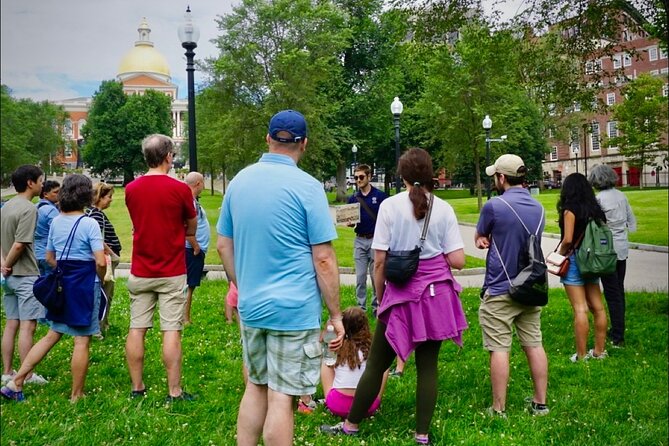
Meet inside Boston Common at the Boston Foundation Monument, on the park’s northern edge opposite 50 Beacon Street. The granite memorial includes a bronze relief showing two men shaking hands, representing the Puritans’ arrival in 1630.
This is a sensible starting point. You are not thrown straight into the Revolution. Instead, the tour begins by placing Boston’s later political struggles in the setting of its early settlement. The first stop takes about ten minutes and costs nothing to visit.
Make sure you arrive ready to walk. The meeting point is in the park, and the tour begins outdoors. Your mobile ticket and booking confirmation handle the check-in, but comfortable shoes and weather-appropriate clothing matter more than anything else.
Boston Common and the State House setting
Boston Common receives roughly twenty minutes. It is described as the oldest public land in the Americas and began as Boston’s communal grazing pasture in 1634.
The Common is more than a green space on this route. It gives you a sense of how compact early Boston was and how public land shaped daily life. Your guide also discusses the Massachusetts State Capitol, established in 1798, and the famous Hub of the Solar System nickname.
This section should appeal to first-time visitors because it helps you get oriented. You are still near the modern heart of Boston, but the tour is already showing how much of the city’s present-day layout rests on its colonial past.
Granary Burying Ground and Boston’s early leaders
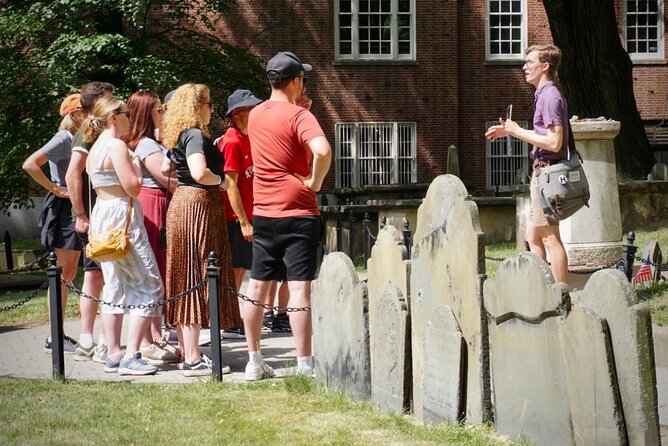
The next major stop is Granary Burying Ground, where you spend about twenty minutes. Founded in 1660, it is Boston’s third-oldest burying ground and contains the graves of many key figures from Revolutionary Boston.
A cemetery stop can sound quiet compared with the dramatic events later in the walk, but it gives the story weight. The Revolution was shaped by real people, families, religious leaders, printers, merchants, and political organizers. A guide can point out the figures who mattered and explain how their roles connected.
The route also passes King’s Chapel, the first Church of England in Puritan Boston. Its history reaches back to 1686, with the current building dating to 1754. You see Boston’s oldest burying ground, founded in 1630, along the way as well.
You should note that the walking tour does not include admission inside the churches. One recent guide response points out that Old South Meeting House and Old North Church offer discounted admission with a Hub Town Tour ticket, with King’s Chapel expected to join that arrangement. If you want interiors, plan a separate visit after the walk or return on another day.
More History Walking Tours in the USA
- Boston’s North End Food and History Walking Tour
★ 5.0 · 459 reviews - Walk the Historic Freedom Trail with Costumed Guide
★ 4.5 · 329 reviews - Boston Seafood Lovers Food and History Walking Tour
★ 5.0 · 208 reviews - Downtown Freedom Trail Walking Tour – History & Architecture
★ 4.5 · 194 reviews
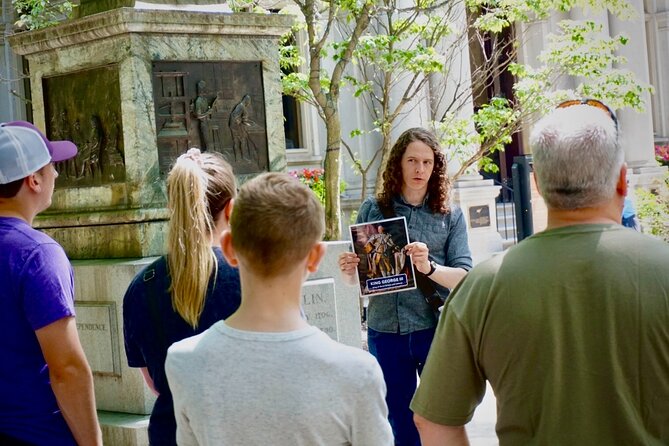
Boston Latin School and the Benjamin Franklin statue
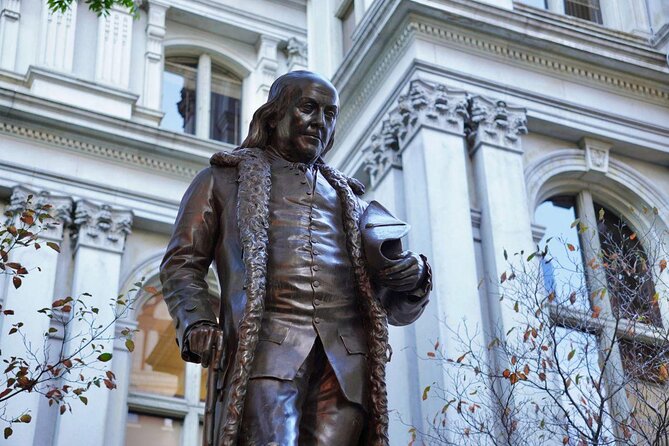
The statue of Benjamin Franklin marks the site of Boston Latin School, founded in 1635 and recognized as the oldest public school in the Americas. The tour allows about ten minutes here.
This stop is valuable because it broadens the story beyond battles and famous speeches. Education, civic life, and public debate helped shape Boston’s political culture. Franklin’s connection also gives your guide a natural way to discuss a major American figure who grew up in Boston before becoming a printer, writer, scientist, and political leader.
The tour continues past places tied to Boston’s political and literary life, including the center of Boston politics for more than a century and the former publishing house of Ticknor & Fields. You also pass an active church that was once the tallest building in 19th-century Boston.
These quick exterior stops are one of the tour’s strengths and one of its limits. You cover a lot of ground and see the city in context, but you will not linger everywhere. If you want a detailed look inside each building, this is not the right format.
The Boston Massacre Site and the road to revolution
The Boston Massacre Site receives about twenty minutes. Here, British soldiers killed five Bostonians in 1770, an event that became a powerful symbol in the colonial resistance.
This is likely one of the most important stops on the route because it shows how public opinion could be shaped by a single violent confrontation. Your guide can explain the difference between the event itself and the way political leaders presented it to the public. That distinction helps you understand why the Revolution was not simply a sudden fight between two clear sides.
The route also passes the colonial capitol of the Massachusetts Bay Colony, built in 1713 and described as Boston’s oldest public building. You see a Congregationalist meeting house founded in 1729, associated with the Boston Tea Party in 1773, and places connected to the Sons of Liberty.
At this stage, the walk becomes a lesson in pressure building. Meetings, printed arguments, public gatherings, and confrontations all become part of the same chain. I especially like this part for visitors who know the major Revolutionary War names but want to understand how the crisis developed before 1775.
Faneuil Hall and the public voice of Boston
Faneuil Hall Marketplace takes about ten minutes. The hall hosted Boston’s town meetings and is known as the Cradle of Liberty.
The name is fitting, but the guide’s explanation is more useful than the slogan. This was a place where public arguments took shape and where Boston’s political voice could be heard. You also pass the city’s oldest restaurant, established in 1826 in a historic building dating to 1704.
This is a busy part of the city, so expect more modern activity around the historic sites. The contrast is part of the fun. You can stand near a place tied to colonial politics, then step a short distance toward shops and restaurants serving today’s Boston.
North Square, Paul Revere’s home, and the Midnight Ride
North Square Park is the gateway to Boston’s North End and receives about twenty minutes. Founded in 1634, it remains one of the oldest public squares in Boston.
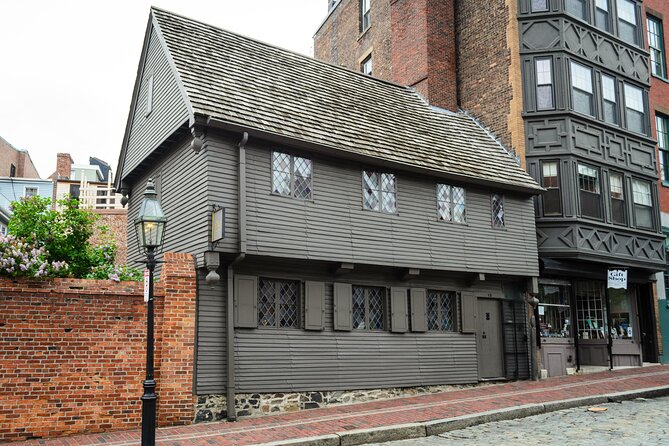
The square leads to the Paul Revere House, built in 1680 and described as the oldest surviving structure in downtown Boston. Revere lived there during the period associated with his famous ride, making this one of the most recognizable stops on the route.
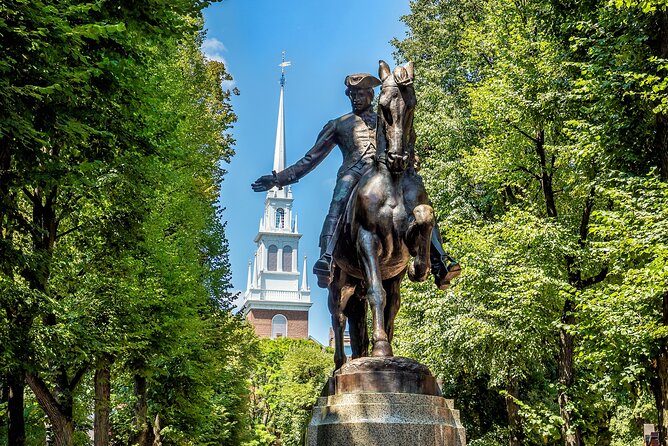
The tour then reaches the Paul Revere Statue and a pedestrian area honoring the Midnight Ride of 1775. You also pass Old North Church, where signal lanterns were displayed, and Copp’s Hill Burying Ground, Boston’s second-oldest burying ground.
This is the section many first-time visitors anticipate, but it works best when you have heard the earlier parts of the story. The Midnight Ride was not an isolated heroic episode. It came after years of tension, protest, military presence, and competing ideas about who had the right to govern.
You should not expect to tour the Paul Revere House or Old North Church as part of the $35.10 ticket. The guide explains the exterior sites, while admissions inside are separate. That is worth planning around, especially if you want to see Revere’s home rather than only view it from the street.
Finishing at Copp’s Hill Terrace
The tour concludes at Copp’s Hill Terrace after about twenty minutes at the final stop. From here, you look across the Charles River toward the USS Constitution and Bunker Hill Monument, both linked to the early history of the Revolution.
This ending gives the walk a useful final view. You have moved from Boston Common through the historic center and into the North End, then finish with two major landmarks across the water. It also leaves you in a practical place for lunch or dinner.
Hanover Street is only steps away, with Italian restaurants, pastry shops, pizza, and other North End favorites. Since the tour ends in the middle of the day for many departure times, I would keep the rest of your schedule flexible. You may want to eat nearby or continue exploring the North End on foot.
The tour does not include Charlestown, so Bunker Hill Monument and the USS Constitution are viewed from across the river rather than visited directly. If those are priorities, plan a separate excursion.
How demanding is the 2.5-hour walk?
The tour is wheelchair and stroller accessible, and service animals are allowed. It also runs near public transportation, which makes the start and finish fairly practical for a city day.
Still, the activity requires a moderate level of physical fitness. You will be outside for much of the 2.5 hours, moving between stops and standing while the guide speaks. It is not recommended if you have difficulty standing for extended periods.
Winter deserves special attention. Several recent tours took place in freezing or windy conditions, yet guides such as Jon, Alejandro, Mark, and Maura used indoor or covered spaces for warm-up breaks when possible. That helps, but it does not turn the walk into an indoor activity. Bundle up in cold weather, and remember that summer heat can also make a long outdoor tour tiring.
The best footwear is simple: shoes you can comfortably wear for several hours on city streets. A small water bottle and a weatherproof layer are sensible additions.
Who will get the most from this tour?
I would recommend this walk to first-time Boston visitors, American history fans, families with older children, and anyone who wants a strong orientation before exploring alone. The chronological approach makes the complicated period before the Revolution easier to follow.
It can also work well for Boston residents or repeat visitors who want more context. One review described the guide’s presentation as useful even for someone who already lived in Boston, which makes sense. The city has many layers, and a good explanation can change how you see familiar streets.
Families should consider attention span and weather. Children who enjoy stories, politics, and famous historical figures may find the tour engaging, and one family found that both an 11-year-old and a 14-year-old handled the route well. Very young children may find 2.5 hours of standing and listening harder.
This is less suitable for anyone seeking extensive interior visits, a short highlights walk, or a tour focused on modern Boston. It is also not the best choice if you want to visit Charlestown as part of the same outing.
Is $35.10 a fair price?
At $35.10, I consider this a reasonable price for the amount of ground and history covered. A self-guided walk costs less, but you would need to research the sequence of events, identify the important buildings, and keep track of all 16 official landmarks yourself.
The small group is the key value. A maximum of 16 people gives you a better chance of hearing the guide and asking questions. The tour also saves you from stopping every few minutes to consult a map or phone.
The tradeoff is that admissions are separate. If you add the Paul Revere House, Old North Church, Old South Meeting House, or King’s Chapel, your total day cost will rise. Still, the walking tour works well as the historical framework, followed by one or two interior visits that match your interests.
Gratuity is optional. The tour price includes the Freedom Trail route and the small-group guide, but not museum entry, food, transportation, or Charlestown.
Booking advice and final verdict
This is a strong choice if you want Boston’s Freedom Trail explained as one connected story. The guides are praised for clear delivery, enthusiasm, and the ability to answer questions, with Jon, Maura, Maz, Mark, Alejandro, Nick, Cal, and Miles all receiving particular praise in recent feedback.
Book it if you value historical storytelling over quick sightseeing, want to see all 16 landmarks, and can manage a long outdoor walk. Try to book ahead, since the tour is commonly reserved about 22 days before the date.
Skip it if you mainly want to enter historic buildings, avoid standing, or cover Charlestown in the same tour. For everyone else, $35.10 buys a well-organized introduction to Boston’s colonial center, with a useful North End finish and enough context to make the Freedom Trail more than a line on the pavement.
FAQ
How long is the Boston Freedom Trail walking tour?
The tour lasts approximately 2 hours and 30 minutes.
Where does the tour start?
It starts at the Boston Foundation Monument inside Boston Common, near 49 Beacon Street in Boston.
Where does the tour end?
The tour ends at Copp’s Hill Terrace at 520 Commercial Street in Boston’s North End.
Does the tour visit all 16 Freedom Trail landmarks?
Yes. The experience includes all 16 official historic landmarks on the Freedom Trail.
Are museum and church admissions included?
No. Admission inside museums and historic churches is not included in the tour price.
Is the tour wheelchair and stroller accessible?
Yes. The tour is wheelchair and stroller accessible, and service animals are allowed. You should still be prepared for extended periods of walking and standing.
More Small-Group History Tours in Boston
- Boston Freedom Trail History Pub Crawl Small-Group Tour
★ 5.0 · 996 reviews - Beacon Hill Boston History + Photo Walking Tour (SMALL Group)
★ 5.0 · 163 reviews - Freedom Trail Guided Walking Tour (SMALL GROUP)
★ 4.5 · 98 reviews - Boston’s Architecture, History + Photo Walking Tour (SMALL Group)
★ 5.0 · 91 reviews
Just added around Boston
- Boston’s North End History + Photo Walking Tour (SMALL Group)★ 5.0 · 27 reviews
- Freedom Trail Guided Walking Tour (SMALL GROUP)★ 4.5 · 98 reviews
- Boston’s Architecture, History + Photo Walking Tour (SMALL Group)★ 5.0 · 91 reviews
- Boston: Underground Railroad History Tour of Beacon Hill★ 5.0 · 141 reviews
- North End Food Tour: Taste Boston’s Italian Heritage★ 5.0 · 20 reviews
- Boston Freedom Trail History and Food Tour★ 4.5 · 22 reviews
- Beacon Hill + Back Bay History + Photo Walking Tour(SMALL Group)★ 5.0 · 60 reviews
- Haunted Boston’s Historic Streets Walking Guided Tour★ 4.5 · 184 reviews
History Walking Tours, compared.
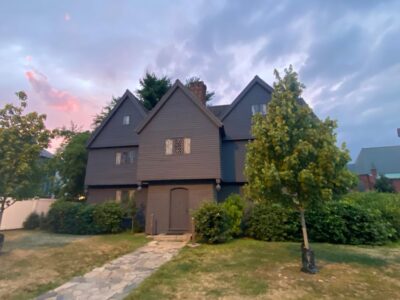
History and Hauntings of Salem Guided Walking Tour
Read our review →
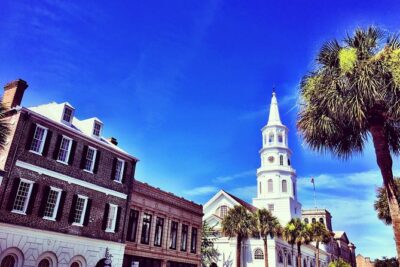
Historic Charleston Guided Sightseeing Walking Tour
Read our review →
Tapas Walking Tour with Food, Wine, and History
Read our review →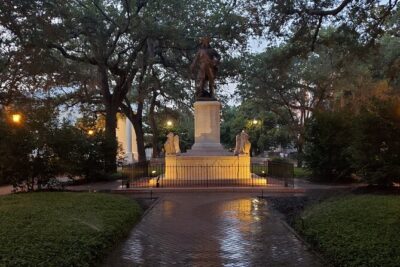
Savannah History and Haunts Candlelit Ghost Walking Tour
Read our review →
A History of Terror – Belfast City Centre Walking Tour
Read our review →
New Orleans Garden District History Walking Tour
Read our review →Browse the lists this tour appears in