
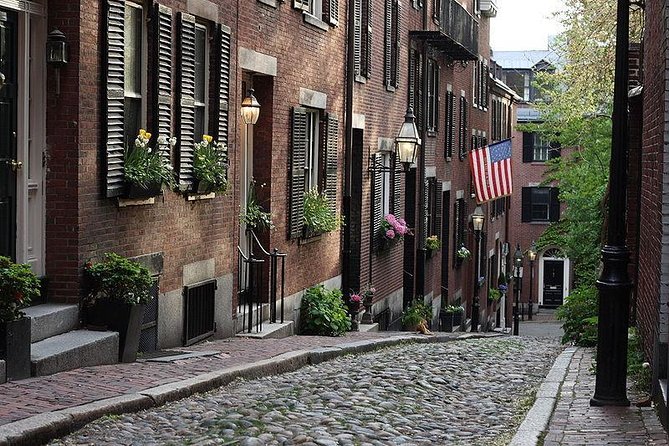
Review · BOSTON
Boston: Underground Railroad History Tour of Beacon Hill
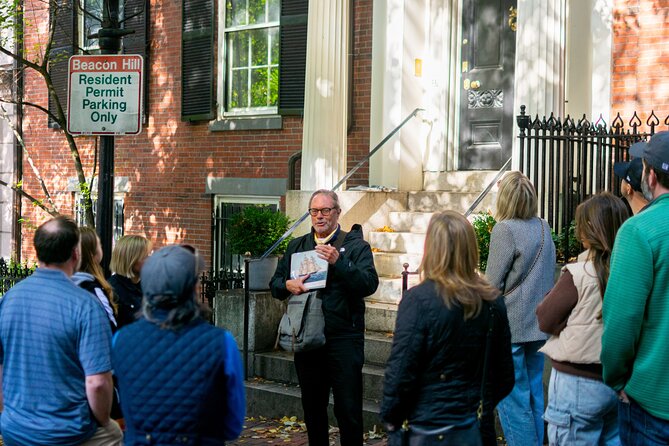
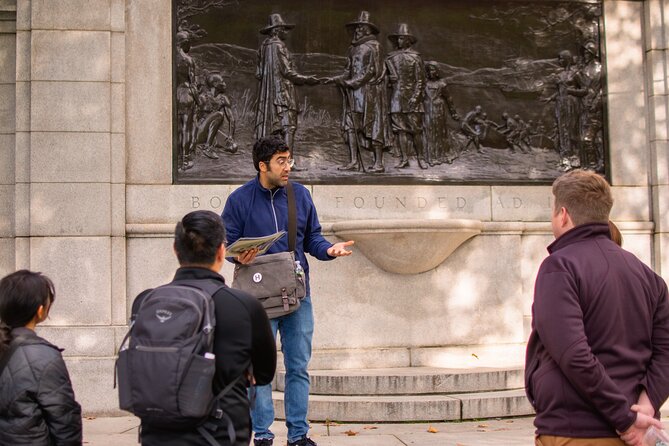
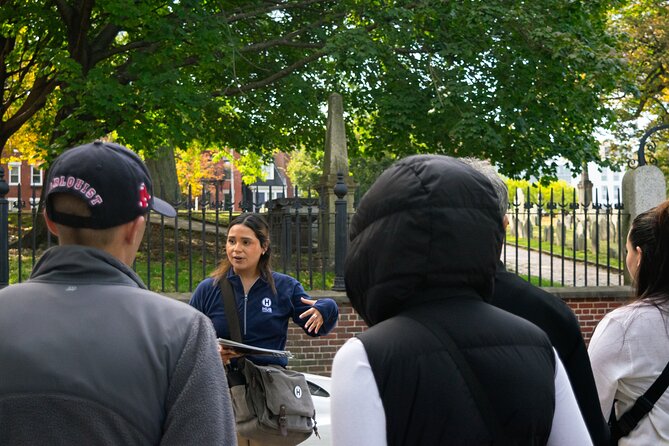
Boston’s freedom story begins on a hill. This two-and-a-half-hour walking tour connects Beacon Hill’s elegant streets with the Black Americans, abolitionists, and Civil War figures who shaped Boston and the nation. I especially like the small group size, capped at 16, and the way the route links grand homes to personal stories of courage and resistance.
The tour also gives you a sharper view of Boston than a standard Freedom Trail walk. Guides such as Dana, Will, Lin, and Meghan are praised for clear storytelling and strong command of the subject. The main drawback is physical: Beacon Hill is genuinely hilly, with cobblestones, uneven pavement, long periods of standing, and plenty of walking. Wear comfortable shoes and bring water.
Five things to know before you book

- The tour visits all 10 stops on the Black Heritage Trail, including the African Meeting House and the Hayden home at 66 Phillips Street.
- The group is limited to 16 people, which makes it easier to hear the guide and ask questions.
- The story reaches beyond the Underground Railroad, covering Boston’s abolition movement, the Civil War, segregated education, Black community life, and Boston’s Brahmin elite.
- You walk uphill and over uneven surfaces, so this suits people with a moderate level of fitness.
- The African Meeting House is the only listed indoor admission, while the other stops are viewed from outside.
- The tour costs $35 per person, a fair price for a 2.5-hour guided walk with a small group and a substantial amount of local history.
Why Beacon Hill tells a bigger story
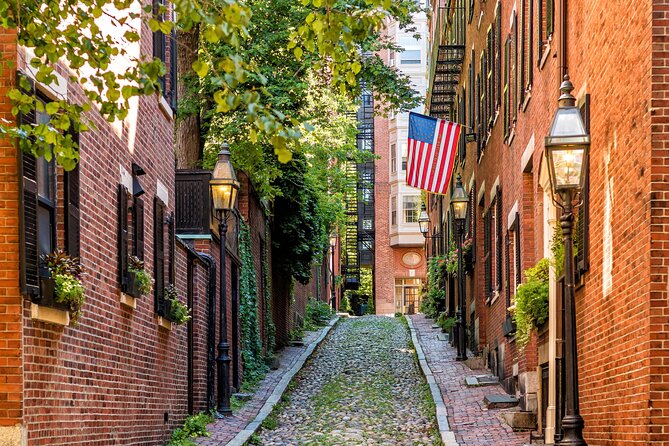
Beacon Hill is often presented as Boston’s postcard neighborhood: brick townhouses, narrow lanes, tidy squares, and the famous cobblestones of Acorn Street. This tour asks you to look past the polished appearance.
The hill was home to wealthy white families, including the Boston Brahmins, but it also became the center of Boston’s Black community. Black abolitionists lived, worked, worshiped, organized, taught, and sheltered people fleeing slavery here. The contrast between refined private homes and hard-fought public activism gives the walk much of its force.
I like that the tour does not treat the Underground Railroad as a series of vague secret routes. It connects the escape network to schools, churches, newspapers, homes, political action, and the broader fight against slavery. You learn about people who challenged the system in court, in the legislature, in churches, and through direct action.
The Civil War also feels less distant after this walk. Boston’s role in abolition and the famous 54th Massachusetts Regiment becomes tied to actual streets and buildings rather than remaining a chapter in a textbook.
A few more history tours around Boston worth a look
- Boston: Freedom Trail History Small Group Walking Tour
★ 5.0 · 6,450 reviews - Tour of Historic Fenway Park, America’s Most Beloved Ballpark
★ 4.5 · 3,013 reviews - Boston Food & History: Pizza, North End & Freedom Trail
★ 5.0 · 1,772 reviews
Beginning at the Soldiers and Sailors Monument
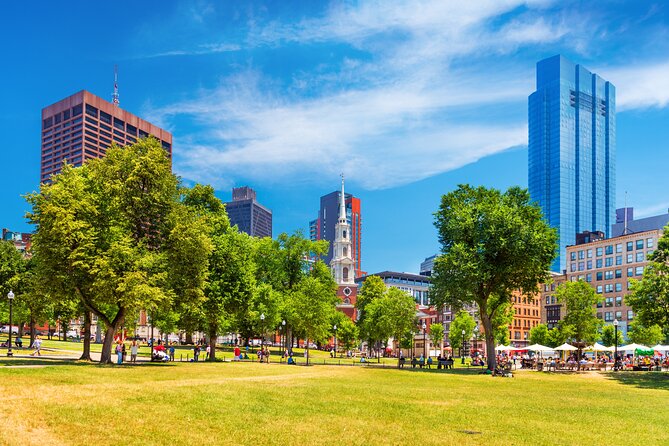
Meet at the Soldiers and Sailors Monument in Boston Common, near the Boston Common Visitors Center at 139 Tremont Street. The monument is easy to identify: a white granite column topped by a female figure holding a flag, with four bronze figures around its base.
The opening stop places you in Boston’s oldest public land in the Americas and its former communal grazing pasture, established in 1634. That detail helps frame the city’s long civic story before the group heads into Beacon Hill.
You spend about 10 minutes here. There is no admission fee, and the meeting point is close to public transportation. Arrive with enough time to find the monument, since Boston Common has several paths and monuments that can look similar at a glance.
Acorn Street and Beacon Hill’s polished face
Acorn Street takes about 10 minutes and provides the visual change most people expect from Beacon Hill. Its narrow cobblestones and historic homes are picturesque, but the guide uses the area to explain the world of the nineteenth-century Boston Brahmins.
This is one of the tour’s useful contrasts. The street can look like a set for a period film, yet the surrounding neighborhood was shaped by wealth, political influence, and social power. Understanding that elite world makes the later stories of Black Bostonians more pointed.
Acorn Street is also one of the places where comfortable shoes matter. Cobblestones can be awkward, and the route continues over old sidewalks and inclines.
Phillips School and the fight over education
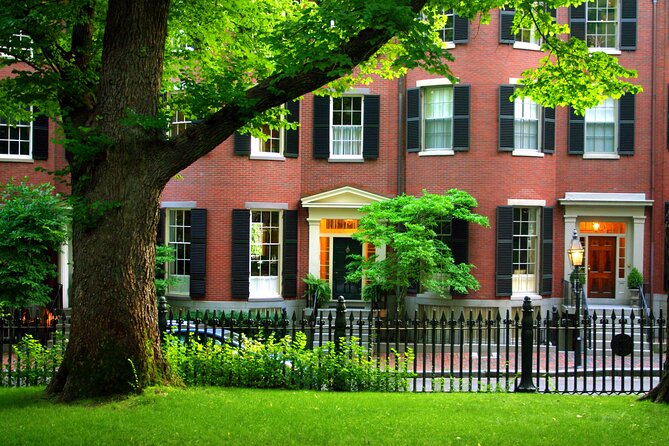
At Phillips School, the tour turns to public education and segregation. The building began in 1824 as a whites-only school, then became one of Boston’s first schools to integrate by 1855.
This stop shows that abolition was not only about escaping slavery in the South. It also involved battles over access to education, civic respect, and equal treatment in Boston itself. The history is local and concrete, which makes the subject easier to grasp than a broad lecture about nineteenth-century reform.
You spend roughly 10 minutes here. The building is viewed from outside, so this is a short stop focused on explanation rather than an indoor visit.
Same place, a different slice of the past:
- Boston: Freedom Trail History Small Group Walking Tour
★ 4.9 · 1,590 reviews - City Cruises Boston Historic Sightseeing Harbor Cruise
★ 4.5 · 1,388 reviews - Boston Pizza Lovers Food and History Walking Food Tour
★ 4.5 · 1,082 reviews - Boston Freedom Trail History Pub Crawl Small-Group Tour
★ 5.0 · 996 reviews
John J. Smith House and Black political leadership
The John J. Smith House was the home of a leading abolitionist, state legislator, and former barber. His life brings several parts of the story together: work, community leadership, politics, and antislavery activism.
This is the kind of stop that gives the tour its human scale. Instead of hearing only about famous national figures, you see how local people built influence through public service and personal networks.
The tour also points out the main thoroughfare of Beacon Hill, lined with shops and restaurants. That makes this a useful place to note that the neighborhood is still part of everyday Boston, not a sealed museum district. You can return later for a meal or a slower walk after the tour.
Charles Street Meeting House and public disagreement
The Charles Street Meeting House dates to 1807 and was a site of heated debate over racial integration. You spend about 15 minutes here, learning how religious buildings could become centers of political disagreement.
The meeting house matters because churches were not passive backdrops to reform. They offered meeting space, moral arguments, and platforms for abolitionists, but they could also reflect the racial conflicts of the wider city.
This stop is especially useful if you want to understand how reform movements worked in practice. Speeches and ideals were important, but so were arguments over who could sit where, worship together, and claim a place in public life.
66 Phillips Street and the Underground Railroad
At 66 Phillips Street, the tour reaches one of its clearest Underground Railroad connections. The home belonged to the Haydens, staunch abolitionists who had formerly been enslaved. It served as a safe house for people seeking freedom.
You should listen closely here, since the value is in the story and context rather than an elaborate museum display. The house is viewed from outside, and the guide explains how a private residence could become part of a dangerous escape network.
Some tour accounts also highlight secret passages and lesser-known details that help bring these stories to life. The larger point is more important: freedom seekers depended on organized assistance, personal courage, and people willing to risk punishment and violence.
The stop lasts about 15 minutes. It is one of the best places on the route for understanding why Beacon Hill mattered to the Underground Railroad.
Otis House and the power of contrast
Otis House, built in 1796, was the residence of Harrison Gray Otis, a Boston mayor and nephew of Revolutionary figure James Otis Jr. The stop takes about 10 minutes and returns you to the world of elite white Boston.
That shift is deliberate. The tour does not isolate Black history from the rest of Beacon Hill. It places Black abolitionist activity beside the homes of powerful families, showing how different communities occupied the same small neighborhood.
Along the way, the guide points out an 1806 church designed by architect Asher Benjamin, the home of an outspoken abolitionist and US senator who was beaten unconscious in the Capitol in 1856, and residences connected with Black abolitionists including historian William Cooper Nell.
These short passing stops add texture to the route. You do not linger at each one, but together they show how much political activity was packed into a few blocks.
The African Meeting House, the tour’s main interior visit
The African Meeting House is the route’s central indoor stop and receives about 25 minutes. Built in 1806, it was a cultural center for Boston’s Black community and is the oldest surviving Black church building in the United States.
This is where the tour’s themes come together most clearly. The building represents worship, education, organizing, and community life. It also helps correct the common idea that Black Bostonians appear in the city’s story only as people helped by white abolitionists. They built institutions of their own and led campaigns for freedom and equality.
A related stop recalls a school founded in 1835 for Boston’s African-American children when education remained segregated. Together, the meeting house and school show the work required to sustain a community under unequal conditions.
Admission inside the African Meeting House is included. Other museum admissions are not included, so do not assume the tour provides interior access at every building.
5 Pinckney Street and the long reach of Black history
At 5 Pinckney Street, you see the oldest surviving house in Beacon Hill, dating to 1787. It was home to an African-American Revolutionary War veteran.
This brief stop widens the timeline. Black presence in Boston did not begin with the nineteenth-century abolition movement. African-American people served in the Revolutionary era and helped shape the city long before the Underground Railroad became part of the national story.
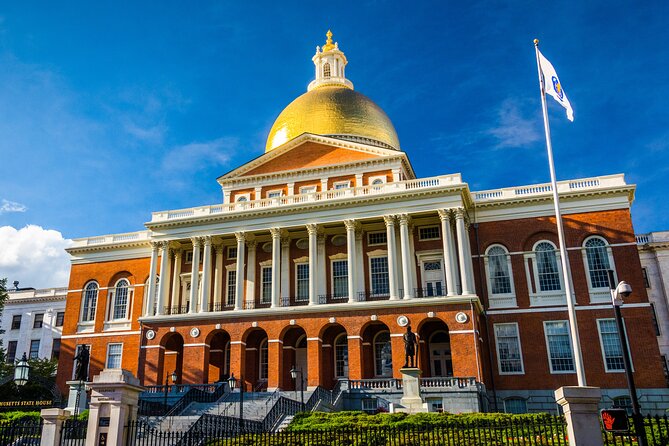
The route then moves toward the Massachusetts State House, built in 1798 and famously described as the Hub of the Solar System. The nickname adds a little Boston humor, but the location also brings the tour back to government, law, and the question of who was allowed full citizenship.
Ending at the 54th Regiment Memorial
The tour concludes at the Robert Gould Shaw and the 54th Regiment Memorial, opposite the Massachusetts State House on Beacon Street. The final stop lasts about 15 minutes.
The memorial honors Robert Gould Shaw and the 54th Massachusetts Regiment, one of the best-known Black regiments of the Civil War. Ending here gives the walk a strong sense of direction: you have moved from abolitionist homes and meeting spaces to the military struggle that helped end slavery.
The ending is convenient. It is within about 0.2 miles of the starting area, and you finish near the State House and central Boston. You can continue sightseeing, find food, or return to Boston Common without arranging transportation.
Guides, pace, and group size
The guide makes a major difference on a tour with this much material. Dana is praised for enthusiasm, clear explanations, and an ability to keep children engaged. Will is especially strong for people who enjoy Civil War detail and long-form storytelling. Lin is noted for a measured pace and for presenting difficult subjects in a relatable way. Meghan is described as easy to follow and skilled at making the Underground Railroad interesting.
The exact guide depends on the date, but the experience clearly relies on guides who enjoy teaching. You can expect stories, questions, visual aids, and connections between buildings rather than a dry list of dates.
The pace is generally described as measured, with frequent stops, but the tour may run longer than the advertised two and a half hours if discussion continues. One account noted a delay of roughly two extra hours, which appears unusual, but you should still avoid scheduling a tight appointment immediately afterward.
Children around 12 or 13 may enjoy it if they already have some interest in American history. Younger children may tire from the walking and standing. The subject includes slavery, racial violence, segregation, and political conflict, so it suits families ready to discuss serious topics.
Is $35 a fair price?
At $35, I consider this good value for a 2.5-hour small-group tour in central Boston. You are paying for a focused guide, all 10 Black Heritage Trail landmarks, and entry to the African Meeting House. The route also covers several subjects that are easy to miss on a standard sightseeing walk.
The value is strongest if you want interpretation rather than simply seeing old streets. You can walk Beacon Hill for free, but you will not automatically understand why the Phillips School, Charles Street Meeting House, Hayden home, and 54th Regiment Memorial belong in one story.
The price is less attractive if you dislike guided history walks or prefer to move independently. You also need to factor in the physical effort. This is not a short photo stop around Acorn Street.
Free cancellation is available up to 24 hours before the start time. Poor weather or failure to reach the minimum group size can lead to a new date or a full refund.
Practical advice for a better walk
Wear shoes with solid support. Beacon Hill includes hills, cobblestones, and uneven surfaces, and you may stand for several minutes at each stop.
Bring water, especially in warm weather. There is no promise of a long seated break, although the guide generally sets a manageable pace.
Keep your schedule open after the tour. The walk is advertised at approximately 2.5 hours, but a guide may spend extra time answering questions.
The tour is offered in English and uses a mobile ticket. Service animals are allowed, and the route is near public transportation. It is not recommended if you have difficulty standing for extended periods.
Who should book this tour?
You should book it if you want a thoughtful introduction to Boston’s Black history, abolition movement, and Civil War connections. It is also a strong choice if you have already walked the main Freedom Trail and want a more focused look at Beacon Hill.
I would especially recommend it to adults, history-minded families with older children, and Boston residents who assume they already know the neighborhood. The tour’s greatest strength is its ability to show how much national history happened on ordinary-looking streets.
Skip it if you need a short, flat activity, dislike standing, or want to spend most of your time inside museums. You will see many buildings from the street, and the subject matter demands attention.
For most people interested in American history, the combination of expert storytelling, intimate group size, and meaningful places makes this $35 walk a worthwhile addition to a Boston visit.
FAQ
Where does the tour begin?
It begins at the Soldiers and Sailors Monument in the center of Boston Common, near the Boston Common Visitors Center at 139 Tremont Street.
Where does the tour end?
It ends at the Robert Gould Shaw and the 54th Regiment Memorial at 26 Beacon Street, across from the Massachusetts State House.
How long does the tour last?
The tour lasts approximately 2 hours and 30 minutes, though discussion can sometimes make it longer.
How much does the tour cost?
The price is $35 per person.
How many people can join the tour?
The maximum group size is 16 people.
Is the African Meeting House included?
Yes. Admission to the African Meeting House is included in the tour.
Are other museum admissions included?
No. Admissions inside other museums are not included.
Is the tour offered in English?
Yes. The tour is offered in English.
Is the tour suitable for people with limited mobility?
The tour requires moderate physical fitness and includes hills, uneven surfaces, walking, and extended periods of standing. It is not recommended if you have difficulty standing for long periods.
Can I cancel for a refund?
You can cancel up to 24 hours before the start time for a full refund. Poor weather or failure to meet the minimum number of participants may also result in a new date or full refund.
Should You Book the Beacon Hill Underground Railroad Tour?
Book it if you want Boston history tied to real homes, churches, schools, and memorials. The walk is long and sometimes demanding, but the subject is important, the route is well chosen, and the best guides turn Beacon Hill into far more than a pretty neighborhood.
Just added around Boston
- Boston’s North End History + Photo Walking Tour (SMALL Group)★ 5.0 · 27 reviews
- Freedom Trail Guided Walking Tour (SMALL GROUP)★ 4.5 · 98 reviews
- Boston’s Architecture, History + Photo Walking Tour (SMALL Group)★ 5.0 · 91 reviews
- North End Food Tour: Taste Boston’s Italian Heritage★ 5.0 · 20 reviews
- Boston Freedom Trail History and Food Tour★ 4.5 · 22 reviews
- Beacon Hill + Back Bay History + Photo Walking Tour(SMALL Group)★ 5.0 · 60 reviews
- Haunted Boston’s Historic Streets Walking Guided Tour★ 4.5 · 184 reviews
- Boston: Votes for Women History Tour of Back Bay★ 5.0 · 49 reviews
Boston History Tours, compared.
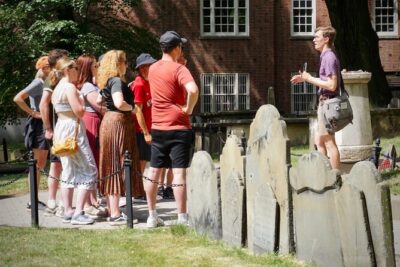
Freedom Trail History Small Group Walking Tour
Read our review →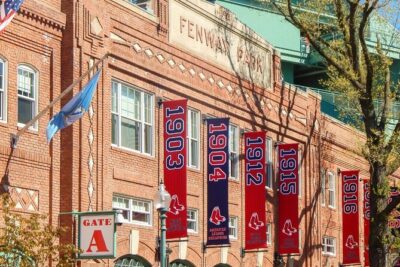
Tour of Historic Fenway Park, America’s Most Beloved Ballpark
Read our review →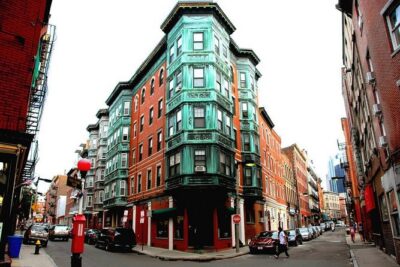
Boston Food & History: Pizza, North End & Freedom Trail
Read our review →Freedom Trail History Small Group Walking Tour
Read our review →
City Cruises Boston Historic Sightseeing Harbor Cruise
Read our review →
Boston Pizza Lovers Food and History Walking Food Tour
Read our review →
Boston Freedom Trail History Pub Crawl Small-Group Tour
Read our review →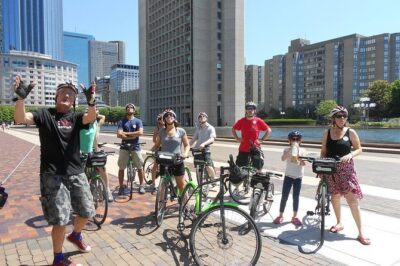
Boston City View Bicycle Tour: History and Landmarks
Read our review →Browse the lists this tour appears in