
Review · BOSTON
Downtown Freedom Trail Walking Tour – History & Architecture
Boston tells its story underfoot. This 70-minute walk links Faneuil Hall, the Old State House, and Boston Common, giving you a quick, useful introduction to the city’s revolutionary past. I like the compact route and the way the guide connects architecture with people and events. The $45 price is fair for a small-group tour, though the experience can lose some impact if the guide is hard to hear or the weather turns sour.
I also like that the tour includes less obvious stops, such as the Old Corner Bookstore, Boston Latin School site, and Tremont Temple. Guides Alan and Andrew receive especially warm praise for humor and clear explanations. Still, guide quality can vary, and some visitors found the history lighter than expected or had trouble hearing without a microphone.
Key points to know before you go
- A compact Freedom Trail route: The tour covers the downtown section from Faneuil Hall to Boston Common in about 70 minutes.
- Architecture is part of the lesson: You hear about buildings, styles, churches, cemeteries, and how Boston developed over time.
- Small groups help: The maximum group size is 20, making it easier to follow the guide and ask questions.
- A strong first-day choice: The route gives first-time visitors a useful map of central Boston before exploring on their own.
- Guide quality matters: Alan and Andrew have earned especially strong praise, but volume and presentation may differ by guide.
- Bring weather protection: The walk runs outdoors and operates in changing conditions, so comfortable shoes and suitable clothing matter.
A fast introduction to Boston’s revolutionary core
Boston’s Freedom Trail is easy to follow on your own, but a guide gives the red-brick route some meaning. Without context, you may see a cemetery, a church, and a handsome government building. With context, you begin to understand how arguments about taxes, religion, race, immigration, and self-government shaped the city.
This tour focuses on the section between Faneuil Hall and Boston Common. It begins at State Street and Congress Street at 10:00 a.m. and finishes near Brewer Fountain beside Boston Common. That arrangement works well if you want to continue sightseeing after the walk rather than return to your starting point.
I see the tour as an orientation rather than a full study of the Freedom Trail. You cover many sites quickly, so the guide cannot spend long inside each one. The reward is range: in just over an hour, you move from colonial government to the American Revolution, from early education to Irish immigration, and from church history to modern Boston.
More History Walking Tours in Boston
- Boston: Freedom Trail History Small Group Walking Tour
★ 5.0 · 6,450 reviews - Boston: Freedom Trail History Small Group Walking Tour
★ 4.9 · 1,590 reviews - Boston Pizza Lovers Food and History Walking Food Tour
★ 4.5 · 1,082 reviews
Faneuil Hall and Quincy Market set the scene
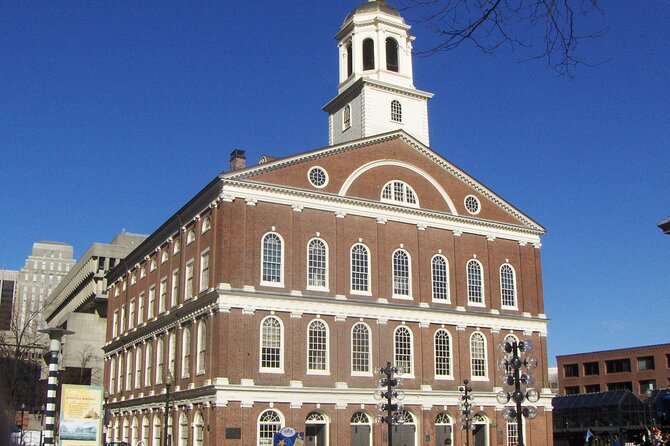
The walk begins near Faneuil Hall, often called the Cradle of Liberty. This marketplace hosted heated public meetings and protests in the years before the American Revolution. The building’s famous grasshopper weathervane is an easy detail to miss, so look up when the guide points it out.
Faneuil Hall is valuable as a first stop because it introduces Boston as a city of argument. The important story is not only the building itself, but the public life that took place there. You begin to see how a marketplace could also serve as a political stage.
Quincy Market is nearby, adding a more everyday side to the district. This is one of the busiest parts of central Boston, and foot traffic can make it harder to stay close to the guide. A small group helps, but you should still keep your eyes up and listen carefully when the group moves.
The Old State House and Boston Massacre Site
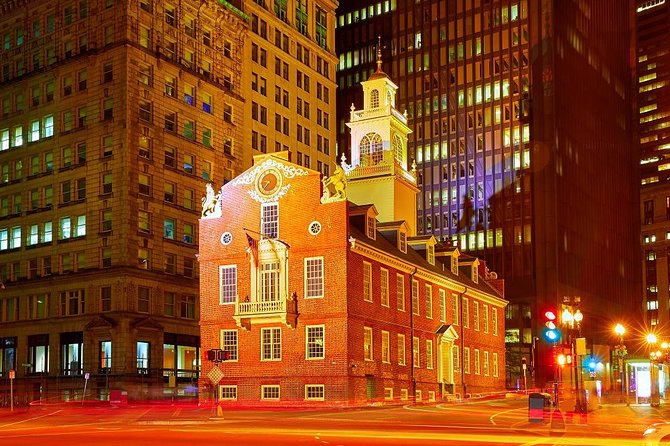
The Old State House was built in 1713 and served as the center of British colonial government in Boston. Its balcony is famous as the place where the Declaration of Independence was first read publicly to Boston residents.
This stop makes the political story more concrete. You are not simply hearing that the colonies resisted British rule. You are standing beside the building that represented that rule, then hearing how the same place became associated with American independence.
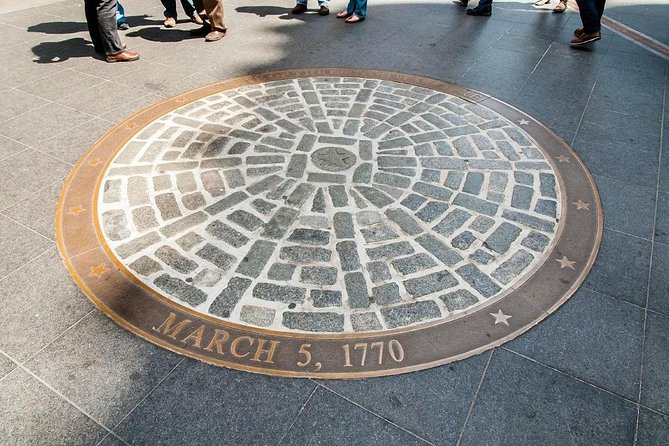
Just outside is the Boston Massacre Site, marked by a cobblestone ring in the pavement. In 1770, a confrontation between British soldiers and colonists ended with five colonists killed. The physical marker is modest, which is part of its effect. You can easily walk past it without noticing, but the guide explains why this small patch of pavement became such a powerful symbol.
The route moves quickly here. If you want interior visits at the Old State House or other buildings, treat this walk as a preview and return later with more time.
Old South Meeting House and the road to revolution
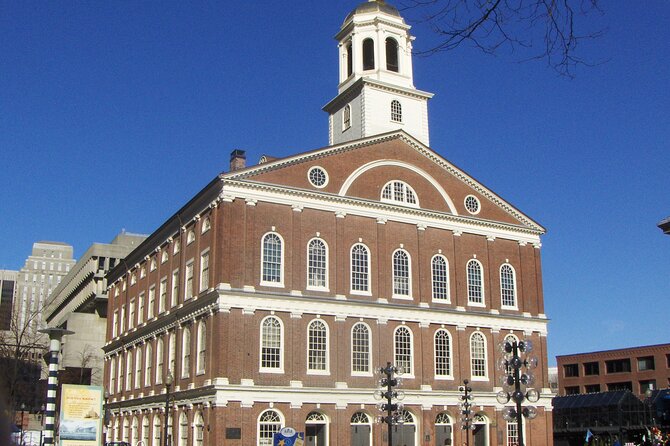
The Old South Meeting House is a massive brick church tied to the events that led to the Boston Tea Party. In 1773, signals connected with that protest were given from the church, making it an important place in the story of colonial resistance.
I like this part of the route because it shows how religious buildings also served as public halls. Colonial Boston did not separate worship, politics, and community life in the same way modern visitors might expect. A church could hold a large public gathering and become part of a national crisis.
The tour also passes the Old Corner Bookstore at Washington and School streets. Built in 1718 as a residence and apothecary shop, it became a bookstore in 1828. Ralph Waldo Emerson, Charles Dickens, and other authors gathered there, giving the building a literary connection as well as an architectural one.
The Old Corner Bookstore is a good example of the tour’s broader approach. You are not only following the military and political story of the Revolution. You are also seeing how commerce, publishing, religion, and education shaped Boston’s identity.
More History Walking Tours in the USA
- Boston History Tour: Scenic Walk Through Time & Landmarks
★ 5.0 · 627 reviews - Boston’s North End Food and History Walking Tour
★ 5.0 · 459 reviews - Walk the Historic Freedom Trail with Costumed Guide
★ 4.5 · 329 reviews - Boston Seafood Lovers Food and History Walking Tour
★ 5.0 · 208 reviews
School Street’s layers of history
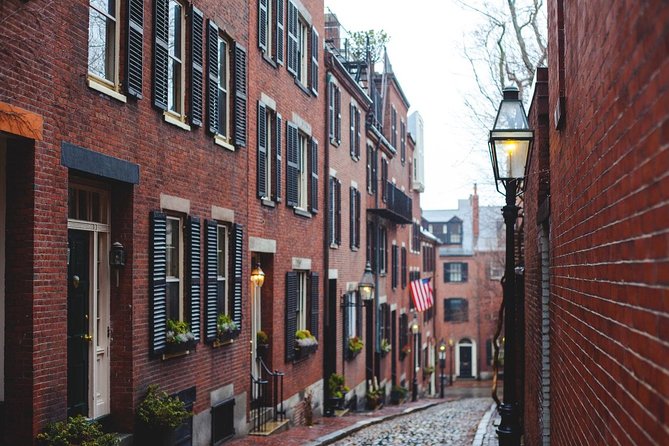
School Street packs several different stories into a short stretch. Old City Hall, at 45 School Street, served as Boston’s city government from 1865 to 1969. Its French Second Empire design makes it one of the more distinctive buildings on the route and adds a later architectural chapter to the colonial story.
The First Schoolhouse site marks the original location of Boston Latin School, founded in 1635. It was the first public school in America, offering free classical education to boys. A statue of Benjamin Franklin and a sidewalk mosaic identify the location today.
This stop helps explain why architecture matters on the tour. The Freedom Trail is not a single period preserved in amber. It is a line through several centuries of Boston development. Colonial churches, government buildings, commercial structures, memorials, and modern streets all occupy the same downtown blocks.
You also pass the Boston Irish Famine Memorial, a plaza with two groups of statues. One depicts an Irish family suffering during the Great Famine of 1845 to 1852. The other presents a prosperous family that immigrated to America. It is a later memorial, but it adds an important reminder that Boston’s story continued long after independence.
King’s Chapel and the changing city
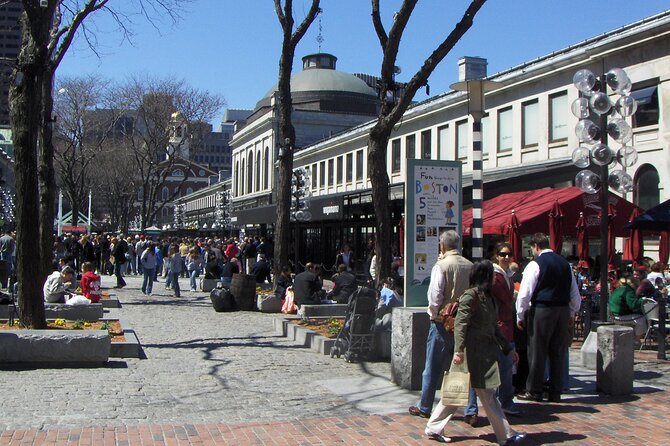
King’s Chapel has more than 330 years of history, beginning with its founding in 1686. The church lived through the colonial period, the American Revolution, and the early years of the United States.
The site is especially useful for understanding religious divisions in colonial Boston. Even if you are mainly interested in the Revolution, the church helps explain how religion and government influenced daily life. Its continued presence also gives the route a strong sense of time.
The tour does not treat every stop as a full interior visit. You should expect exterior explanations and guided commentary rather than a long church tour. That keeps the pace manageable, but it also means visitors who want detailed information about individual buildings may find the treatment brief.
Nearby, the Omni Parker House adds another layer. Founded by Harvey D. Parker in 1855, it is the oldest continuously operating hotel in the United States. The hotel is associated with Boston Cream Pie, Parker House Rolls, and the term scrod, and it has hosted every U.S. president since Ulysses S. Grant.
Tremont Temple and a broader American story
Tremont Temple began in 1839 as the Free Baptist Church. It became known as the first integrated church in America because attendance was open without charge and welcomed people across racial lines.
The building also hosted public events beyond worship. An Egyptian mummy was displayed there in 1850, and speakers including Frederick Douglass and Sam Houston addressed slavery and other major issues.
This is one of the most valuable stops for visitors who want more than a narrow Revolution story. Boston’s past includes abolition, race, immigration, public education, religion, and urban change. The tour sometimes leans toward people and social history, while at other moments it gives more attention to buildings and design.
That balance may not satisfy everyone. Some people want a detailed account of Revolutionary battles and political leaders. Others appreciate seeing how the city’s past connects to wider American questions. I would choose this tour if you want both, with architecture included in the conversation.
Old Granary Cemetery and Boston Common
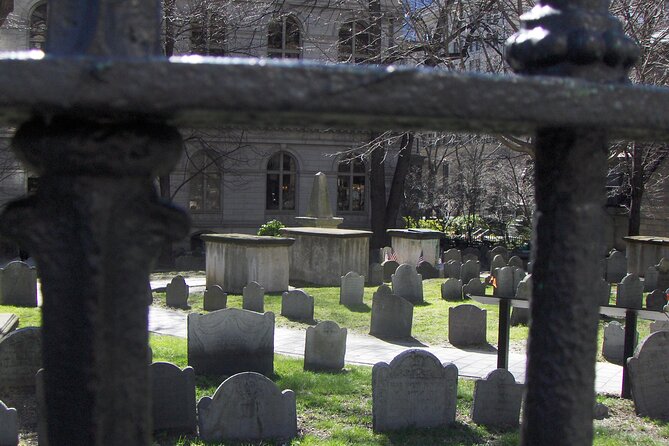
Old Granary Cemetery is the final resting place of Paul Revere, Samuel Adams, and John Hancock. It is among the most visited cemeteries in the country, and its crowded gravestones reflect how much early Boston history is concentrated in this small space.
A cemetery stop can feel less dramatic than Faneuil Hall or the Old State House, but it gives the political story human scale. The people discussed at earlier stops are no longer abstract names. They are buried here, in the middle of the city they helped shape.
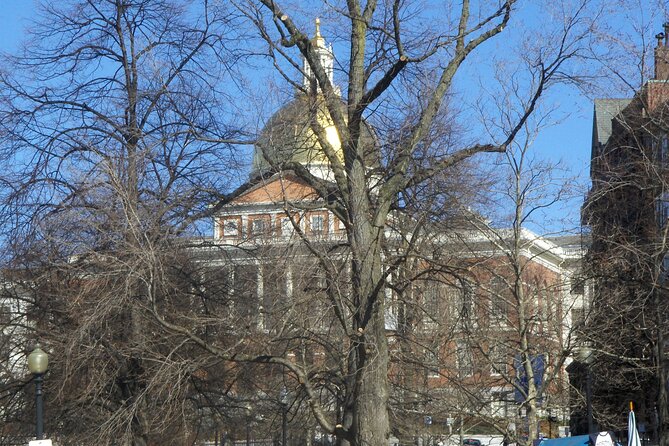
The walk finishes at Boston Common, the oldest city park in the United States. The 50-acre park is bounded by Tremont Street, Park Street, Beacon Street, Charles Street, and Boylston Street. Brewer Fountain is the stated endpoint.
Boston Common is a practical place to finish. You can continue toward Beacon Hill, stroll through the park, or use public transportation nearby. Some people have paid an additional $15 to continue beyond the advertised 70-minute downtown route on a longer walk toward Back Bay and Beacon Hill. Confirm exactly what you have booked so there is no confusion about the route or any added cost.
What the $45 price gets you
At $45 per person, this is not the cheapest way to see the Freedom Trail. Much of the route is free, and you can walk the brick line independently. The value comes from having a person explain what you are looking at and connect separate sites into one story.
I think the price is reasonable if this is your first time in Boston and you want a guided introduction without committing to a long half-day tour. You cover a broad section of downtown, hear about architecture as well as history, and finish in a useful location.
The tour is also a good fit for families. Guides have involved children in questions, and several strong experiences came from guides who kept younger participants interested with humor. That approach can work well, though one critical account found repeated questions directed at a child distracting. The style depends on the guide and the group.
Guide style, group size, and sound quality
The group limit is 20 people, which is a sensible number for narrow sidewalks and busy streets. A smaller group also makes it easier to ask questions and stay with the guide. One particularly strong experience became almost private when only two people attended, allowing the guide to tailor the discussion.
Alan receives repeated praise for clear history, humor, and an ability to connect facts with present-day Boston. Andrew is also singled out for an engaging and funny presentation. If you see either name available when booking, that may help you choose, though guide assignments can change.
Sound is the main practical concern. Some people found a guide difficult to hear and wished for a microphone. The tour does not list audio equipment, so arrive prepared to stay near the guide. Stand close, avoid drifting behind, and ask politely if you miss a point.
Weather, walking, and timing
The walk lasts about 70 minutes and takes place outdoors. Wear shoes that can handle pavement and dress for the forecast. One guide found shelter when heavy rain arrived, but weather still affected the experience.
The information gives two weather-related instructions that you should understand together. The tour operates in all weather conditions, so you should dress appropriately. At the same time, the experience may be canceled because of poor weather, in which case you are offered another date or a full refund.
Confirmation arrives at booking. The meeting point is State Street at Congress Street, Boston, Massachusetts 02203. Children must be accompanied by an adult, and most people can participate.
You can cancel for a full refund up to 24 hours before the start time. Changes or cancellations inside that window are not refunded. The tour may also be canceled if the minimum number of participants is not reached.
Who should book this Freedom Trail walk?
I would recommend it to first-time visitors, history fans, families, and anyone who wants a short introduction before exploring Boston independently. It is especially useful early in a visit because the route helps you understand where the main downtown sights fit together.
You may want another option if you already know Boston’s Revolutionary history well, need in-depth interior access, or prefer a theatrical guide in period clothing. This is a present-day walking tour, not a costumed performance.
You should also think about your expectations. The best version of the experience combines people, architecture, politics, and social history. Some guides may focus more heavily on buildings, while others may give you more stories about individuals and events.
Should you book it?
Book this tour if you want a short, well-priced orientation to Boston’s central Freedom Trail and value a guide’s explanations more than a long list of building interiors. The route includes major landmarks plus easily missed places such as the bookstore, schoolhouse site, Irish Famine Memorial, and Tremont Temple.
I would book it for a first morning in Boston, arrive early at State Street, stay close enough to hear, and leave time afterward for Boston Common or a return visit to the sites that catch your interest. At $45, it earns its price when the guide brings the streets together into one clear story.
FAQ
How long is the Downtown Freedom Trail Walking Tour?
The tour lasts approximately 1 hour and 10 minutes, or 70 minutes.
Where does the tour begin and end?
It begins at State Street at Congress Street in Boston. It ends near Brewer Fountain on the Freedom Trail beside Boston Common.
What time does the tour start?
The listed start time is 10:00 a.m.
What landmarks are included?
The route includes Faneuil Hall, Quincy Market, the Old State House, the Boston Massacre Site, Old South Meeting House, Old Corner Bookstore, Old City Hall, the Boston Latin School site, King’s Chapel, Tremont Temple, Old Granary Cemetery, Park Street Church, the New State House, and Boston Common.
Is the tour suitable for children?
Yes. Children can participate, but they must be accompanied by an adult. The tour is also described as suitable for families.
What happens if I need to cancel?
You can receive a full refund if you cancel at least 24 hours before the start time. Cancellations or changes made less than 24 hours before the tour are not refunded.
More Architecture and Landmark Tours in Boston
- Boston: Freedom Trail History and Architecture Walking Tour
★ 4.8 · 18 reviews - Venice: St. Mark’s Basilica Guided Tour & VR History Intro
★ 3.9 · 4,880 reviews - Venice’s Best: Basilica, Doge’s Palace, Gondola & History Gallery
★ 4.5 · 2,478 reviews - Córdoba: Skip-the-Line Great Mosque-Cathedral History Tour
★ 4.7 · 1,690 reviews
Just added around Boston
- Haunted Boston’s Historic Streets Walking Guided Tour★ 4.5 · 184 reviews
- Boston: Votes for Women History Tour of Back Bay★ 5.0 · 49 reviews
- Boston: Freedom Trail History Tour and Brewery Taste★ 5.0 · 38 reviews
- Boston: Food and History of The Freedom Trail Private Tour★ 5.0 · 159 reviews
- Walk the Historic Freedom Trail with Costumed Guide★ 4.5 · 329 reviews
- Self Guided “Historic Boston Downtown Freedom Trail” Audio/GPS Walking Tour★ 4.0 · 22 reviews
- Boston Seafood Lovers Food and History Walking Tour★ 5.0 · 208 reviews
- A Taste of the Freedom Trail: Boston’s Iconic Food & History Tour★ 5.0 · 32 reviews
Architecture & Landmark Tours, compared.
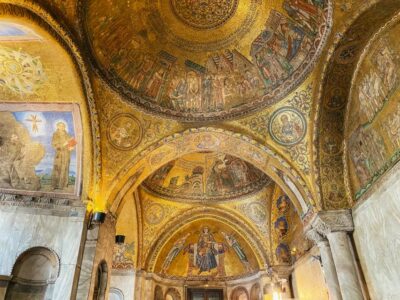
St. Mark’s Basilica Guided Tour & VR History Intro
Read our review →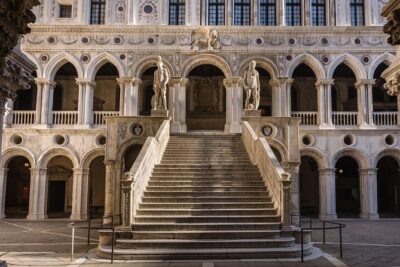
Venice’s Best: Basilica, Doge’s Palace, Gondola & History Gallery
Read our review →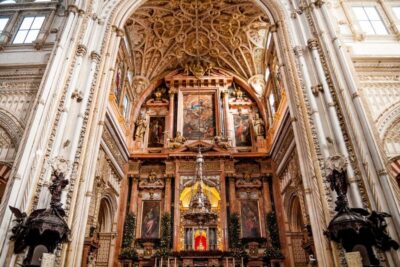
Córdoba: Skip-the-Line Great Mosque-Cathedral History Tour
Read our review →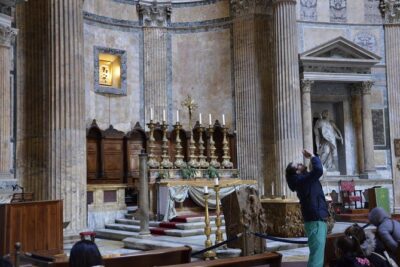
Pantheon Elite Guided Tour – Rome’s Iconic Ancient Temple
Read our review →
Abu Dhabi Grand Mosque, Palace, and Heritage Village
Read our review →
Chicago in a Day: Food, History & Architecture Walking Tour
Read our review →

Colosseum Special Access Tour, with Ancient Temples & Tombs
Read our review →Browse the lists this tour appears in