
Review · BOSTON
Beacon Hill Boston History + Photo Walking Tour (SMALL Group)
Slow down and look up. This 90-minute Beacon Hill tour combines neighborhood history with simple photography advice, taking you beyond the famous streets and toward details you might otherwise walk past. Guide Saba Alhadi brings years of experience and a clear affection for the area, pointing out unusual doors, gas lamps, flowers, old homes, and stories tied to the people who lived here.
I especially like the small group limit of 15 people, which gives you room to ask questions and stop for pictures without feeling rushed. I also like the relaxed pace and the useful composition tips for phones and cameras. The main consideration is that this is a history walk with photography woven in, not a technical photography class. If you want instruction on manual settings or advanced camera equipment, you may find the photo guidance too basic.
What Makes This Beacon Hill Walk Worth Your Time
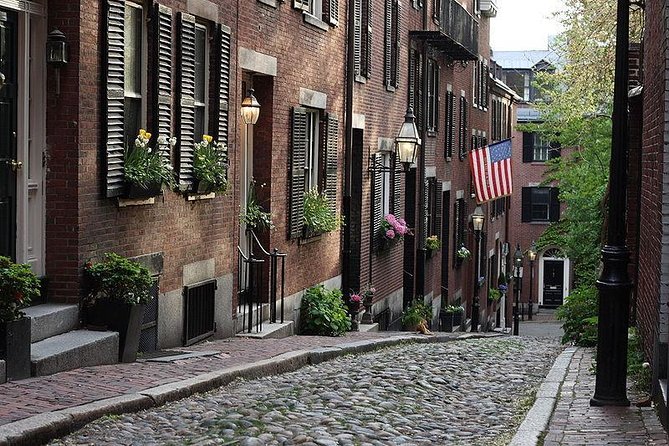
- Acorn Street from a better angle: See Boston’s most photographed street while learning how framing and positioning can make familiar scenes more interesting.
- Stories beyond the grand facades: Hear about John Hancock, Louisa May Alcott, Nathaniel Hawthorne, Black Bostonians, former residents, and the working people who shaped Beacon Hill.
- A calm 15-person maximum: The small format makes it easier to hear Saba, ask questions, and get help with a phone or camera.
- Useful tips for ordinary cameras: The focus is on angles, composition, and spotting good subjects, not complicated equipment.
- A walk through several Boston landmarks: The route connects Beacon Hill with Louisburg Square, the Massachusetts State House, Boston Common, and the Public Garden.
- Good value at $45: You receive local context, guided access to scenic streets, and photography help for less than many longer city tours.
Starting at 34 Beacon Street
The meeting point is at 34 Beacon Street, near Boston’s historic core. You should arrive about 10 minutes early. The tour ends on Charles Street, so you finish in a different part of Beacon Hill rather than returning to the start.
That arrangement works well for building the walk into a day of sightseeing. Charles Street is a useful place to continue exploring the neighborhood, while the nearby public transportation makes the start and finish fairly practical. The exact route can vary with the group, weather, and neighborhood conditions, but you should expect a steady walk through brick sidewalks, narrow lanes, and residential streets.
There are no restroom stops, so plan ahead before meeting Saba. Wear comfortable shoes and keep your camera or phone easy to reach. Beacon Hill is photogenic enough to make you stop often, but the surfaces still require attention, especially around older paving and uneven spots.
More History Walking Tours in Boston
- Boston: Freedom Trail History Small Group Walking Tour
★ 5.0 · 6,450 reviews - Boston: Freedom Trail History Small Group Walking Tour
★ 4.9 · 1,590 reviews - Boston Pizza Lovers Food and History Walking Food Tour
★ 4.5 · 1,082 reviews
Beacon Hill’s Streets Tell More Than Its Facades
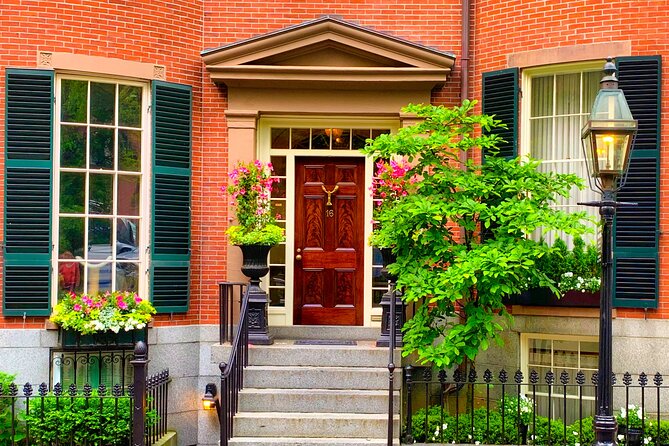
The heart of the experience is Beacon Hill itself. You walk past 19th-century row houses with brick fronts, decorative doors, iron railings, antique-style gas lamps, and flower boxes. The visual appeal is obvious, but Saba’s approach asks you to pay attention to smaller features too.
That might mean a door knocker, an unusual entrance, a window arrangement, or a building that once served a different purpose. One particularly memorable detail from the tour’s stories is the way some homes and spaces have changed over time. The neighborhood is not simply a pretty collection of expensive houses. It has moved from pastureland to a fashionable residential district, and its streets reflect changing class, race, and social life.
Saba also uses photographs to add context. She may show you what Acorn Street looked like around 1890 or provide images of homes that are difficult to see from the sidewalk. That visual comparison helps you understand that Beacon Hill was not frozen in its current postcard form.
The historical material includes the oldest house in the neighborhood, the first resident of Beacon Hill, and the site of the first kindergarten in America. You also hear about the first racially integrated elementary school in Beacon Hill and stories of Black residents who helped shape the area. This gives the walk more substance than a simple parade of handsome houses.
One important strength is the attention to ordinary life. You are not only shown the grandest homes or told about famous names. The walk also considers workers, families, and residents who made the neighborhood function. That broader view can make Beacon Hill feel more like a lived-in place and less like an outdoor museum.
Acorn Street, Boston’s Favorite Photo Stop
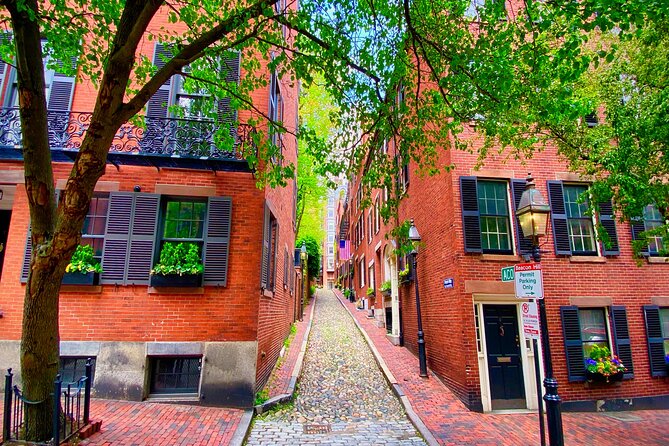
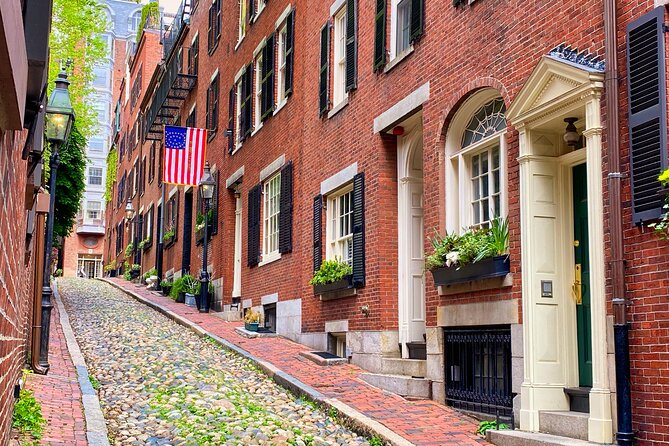
Acorn Street is the most obvious photographic prize on the route. Its narrow cobblestone surface, gas-lit lanterns, brick row houses, and window boxes create the classic Beacon Hill image that appears in countless Boston photographs.
It is also a working residential street, not a stage set. You should be respectful, keep your voice down, and avoid blocking entrances while taking pictures. The short stop here gives you time to frame the lane, photograph architectural details, and try the composition suggestions Saba offers.
The useful lesson is not simply to point your phone at the most famous view. Saba encourages you to consider angles, positioning, and what sits around the main subject. That can help you make a more balanced image, particularly if you are using a phone and usually take quick snapshots.
Several people have found that Saba will also take pictures of you or your group using your own phone. That is a small but valuable touch, especially for couples and families who often return from a tour with plenty of building photographs and very few pictures of themselves.
Acorn Street is only listed as a brief stop, so do not expect a long photography session with tripods or detailed editing advice. The point is to see the street in context, take a few strong pictures, and keep moving through the neighborhood.
Louisburg Square and Beacon Hill’s Grand Side
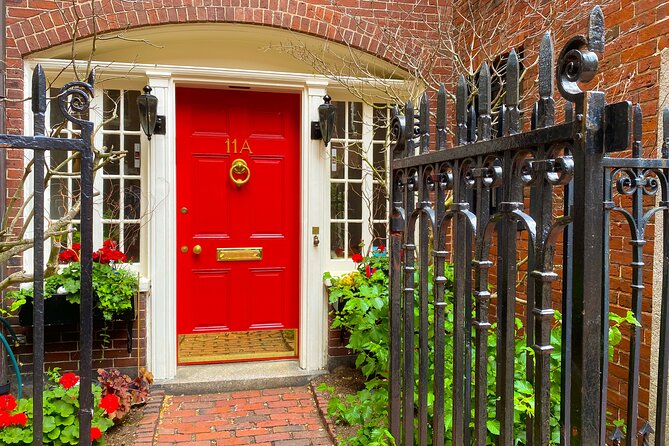
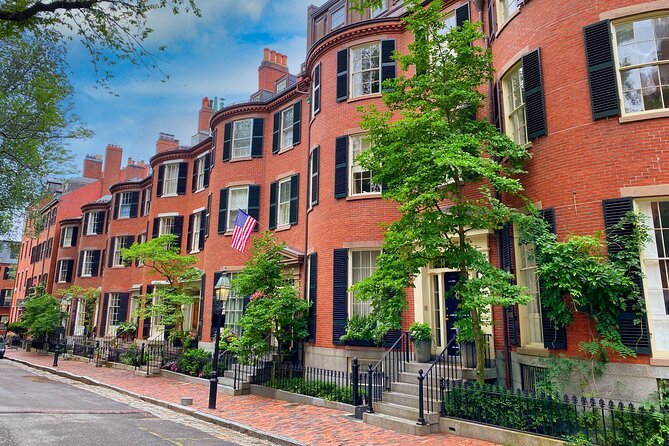
Louisburg Square offers a different mood. The square is known for elegant brick townhouses, decorative ironwork, formal entrances, and examples of Greek Revival and Federal-style design. Compared with Acorn Street’s intimate lane, this area feels more spacious and polished.
Saba draws attention to architectural details that are easy to miss when you simply walk through. The value here is having someone explain what you are looking at and why the buildings feel different from one another. If architecture interests you, this part of the route may be especially satisfying.
The discussion also touches on present-day real estate. Beacon Hill is one of Boston’s most desirable neighborhoods, and housing prices are part of its current identity. Some people may enjoy that context, while others may find repeated attention to property values less interesting than stories about former residents and historic events.
That is a useful expectation to set before booking. The tour blends past and present, including how the area is valued today. It does not treat Beacon Hill only as a historic district sealed off from modern life.
More History Walking Tours in the USA
- Boston History Tour: Scenic Walk Through Time & Landmarks
★ 5.0 · 627 reviews - Boston’s North End Food and History Walking Tour
★ 5.0 · 459 reviews - Walk the Historic Freedom Trail with Costumed Guide
★ 4.5 · 329 reviews - Boston Seafood Lovers Food and History Walking Tour
★ 5.0 · 208 reviews
John Hancock, Authors, and Unexpected Stories
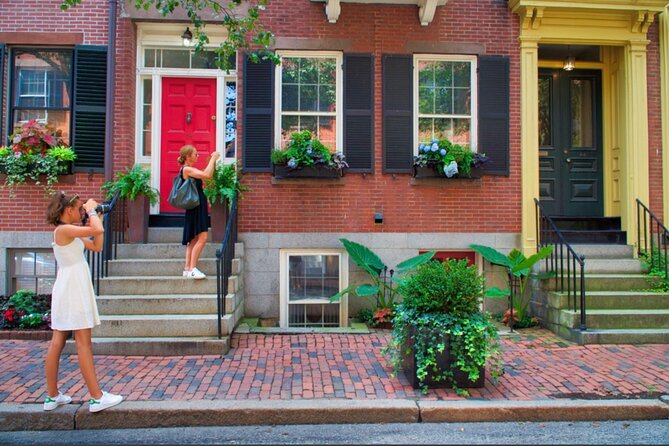
The walk includes connections to well-known residents and figures associated with Beacon Hill. You may hear about John Hancock and see a photograph of his former home, along with links to Louisa May Alcott and Nathaniel Hawthorne.
The strongest part of this approach is the use of smaller stories. Instead of giving you only dates and names, Saba connects the people to actual buildings and streets. She has also shared stories about a famous politician and a well-known author who live in the neighborhood today, bringing the area into the present.
One of the more unusual moments described from the tour involves a former horse stable that had become a private residence. A homeowner welcomed the group inside, an unexpected opportunity that showed how Beacon Hill’s buildings have been adapted over time. You should not assume this will happen on every departure, but it illustrates the kind of unplanned local moment that can make a small walking tour memorable.
The guide’s longtime connection to the neighborhood is central here. Saba has led tours for roughly 20 years and brings personal familiarity with the area. Her style is warm and conversational, with plenty of chances to ask questions.
Massachusetts State House and the City’s Public Green Spaces
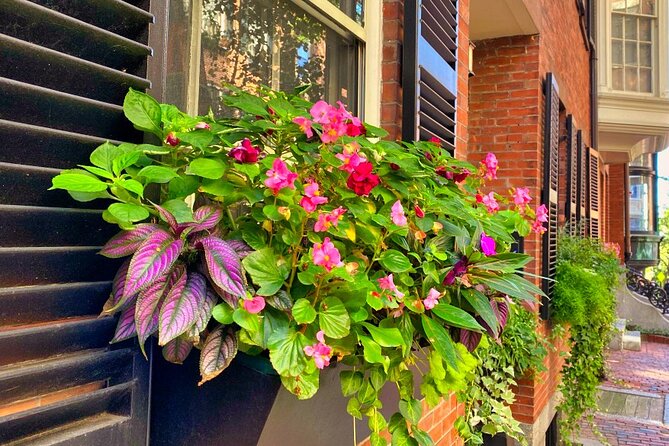
The Massachusetts State House is another short stop. It was built in 1795 on land once owned by John Hancock, linking the building to the wider political story of Boston and Massachusetts.
You do not visit the interior as part of the supplied route, so think of this as an exterior orientation point rather than a statehouse tour. The stop adds civic context and gives you another strong architectural subject for your camera.
The route also includes Boston Common, founded in 1630 and recognized as Boston’s oldest public park. This broad green space offers a change from the tight residential lanes of Beacon Hill. It helps you understand the neighborhood’s position within the larger city rather than viewing it in isolation.
The final listed park stop is the Public Garden, founded in 1837 as the first public botanical garden in America. Again, the tour does not promise an extended garden visit, but the setting adds variety to the walk and gives you another place to practice composition with open space, paths, plantings, and historic surroundings.
These short stops help the experience feel like a compact introduction to central Boston. You get residential architecture, political history, public parks, and local stories within a manageable outing.
What You Actually Learn About Photography
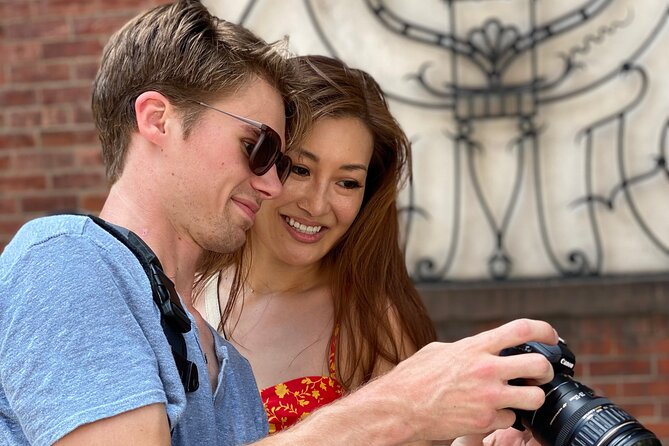
The photography element is practical and casual. You learn how to find a good angle, position yourself, frame a doorway, and notice small visual details. Saba works with both phones and cameras, and several people have found the composition suggestions useful even when phone-specific instructions do not match their device.
This is particularly helpful for beginners. If you usually take a picture from eye level and move on, the walk encourages you to pause and consider the edges of the frame, the shape of the street, the relationship between light and architecture, and the way a person can add scale.
You should not book this expecting a formal class. There is no promise of instruction in aperture, shutter speed, lenses, lighting equipment, or post-processing. A technically experienced photographer may find the tips elementary, though one experienced local photographer still found new places to photograph and appreciated the historical commentary.
That mix is the tour’s strength and its limit. You are learning to look more carefully while touring Boston, not attending a photography workshop. Bring a phone or camera, but do not bring a full set of professional expectations.
Pace, Weather, and Comfort
The walk lasts about one hour and 30 minutes. Most of the time is spent outdoors, with frequent pauses for stories and photographs. The pace is described as leisurely rather than strenuous, but you still need a moderate level of physical fitness.
Hot, humid weather can change the experience. Beacon Hill has brick, pavement, and limited shade in places, and one person left after about an hour during a day of 90-degree heat and 90 percent humidity. On a cool or cloudy day, the same route may feel much easier.
The tour requires good weather. If poor conditions cancel it, you are offered another date or a full refund. Since the walk is built around outdoor streets and photography, that policy makes sense.
Children must be accompanied by an adult. Service animals are allowed, and the meeting area is near public transportation. Because there are no restroom stops, families and anyone who needs regular breaks should take care of that before the tour begins.
Is $45 a Fair Price?
At $45 per person, the cost is reasonable if you want more than a basic orientation walk. You receive a small-group experience, a local guide with many years in the neighborhood, historical commentary, photo suggestions, and a route through several of Boston’s most attractive areas.
The value is strongest for first-time visitors who want a gentle introduction to Beacon Hill and for people who like to take pictures but want help noticing better subjects. It also suits couples, families, solo visitors, and local residents who have walked Beacon Hill before but have not paid close attention to its doors, stories, and architectural changes.
The value is weaker if you want a long academic lecture, an interior tour of the State House, a dedicated genealogy walk, or advanced camera training. You are paying for an entertaining local walk with useful visual advice, not a specialist seminar.
The high overall rating and 98 percent recommendation fit the experience described here, but you should still match the tour to your interests. The few less positive experiences point to the same issue: some people expect more historical depth or technical photography instruction than the format provides.
Who Should Book This Walk?
I would choose this tour if you want to see Beacon Hill at a relaxed pace and come away with better pictures of its streets. It is especially well suited to first-time Boston visitors, casual photographers, couples who want a few good travel photos, and families with older children who enjoy stories tied to real places.
It is also a good pick if you have already seen Beacon Street and the famous public views. The route moves into residential streets and pays attention to details that are easy to miss on your own.
I would choose another experience if you dislike stopping often for photographs, need regular restroom breaks, have difficulty with outdoor walking surfaces, or want advanced camera coaching. On a very hot day, rescheduling would be wise if that option is available.
Final Take: A Good Choice for Curious Walkers
Book the Beacon Hill Photo Walking Tour if you want a friendly, compact introduction to one of Boston’s most attractive neighborhoods, with history and photography sharing the spotlight. Saba Alhadi’s enthusiasm, personal stories, and eye for overlooked details are the main reasons this experience works.
Just set your expectations correctly. You will get composition advice, not a full photography course. You will hear about famous residents, but also about working people, Black history, changing buildings, and modern Beacon Hill. Bring comfortable shoes, arrive early, plan for no restroom stop, and keep your camera ready.
FAQ
How long does the Beacon Hill photo walking tour last?
The tour lasts approximately one hour and 30 minutes.
How much does the tour cost?
The price is $45 per person.
Where does the tour begin?
The meeting point is 34 Beacon Street, Boston, Massachusetts 02108.
Where does the tour finish?
The tour ends on Charles Street in Boston.
What language is the tour offered in?
The tour is offered in English.
How large is the group?
The tour has a maximum of 15 participants.
Is this a photography workshop?
No. The experience is a walking tour that combines Beacon Hill history with casual photography tips. The guidance focuses on angles, positioning, framing, and composition rather than advanced camera settings.
Are there restroom stops?
No. The tour has no restroom stops, so you should plan ahead before arriving.
What happens if the weather is poor?
The experience requires good weather. If it is canceled because of poor conditions, you will be offered another date or a full refund.
What is the cancellation policy?
You can cancel at least 24 hours before the start time for a full refund. Cancellations or changes made less than 24 hours before the tour are not accepted for a refund.
More Small-Group History Tours in Boston
- Boston Freedom Trail History Pub Crawl Small-Group Tour
★ 5.0 · 996 reviews - Freedom Trail Guided Walking Tour (SMALL GROUP)
★ 4.5 · 98 reviews - Boston’s Architecture, History + Photo Walking Tour (SMALL Group)
★ 5.0 · 91 reviews - Beacon Hill + Back Bay History + Photo Walking Tour(SMALL Group)
★ 5.0 · 60 reviews
Just added around Boston
- Boston’s North End History + Photo Walking Tour (SMALL Group)★ 5.0 · 27 reviews
- Freedom Trail Guided Walking Tour (SMALL GROUP)★ 4.5 · 98 reviews
- Boston’s Architecture, History + Photo Walking Tour (SMALL Group)★ 5.0 · 91 reviews
- Boston: Underground Railroad History Tour of Beacon Hill★ 5.0 · 141 reviews
- North End Food Tour: Taste Boston’s Italian Heritage★ 5.0 · 20 reviews
- Boston Freedom Trail History and Food Tour★ 4.5 · 22 reviews
- Beacon Hill + Back Bay History + Photo Walking Tour(SMALL Group)★ 5.0 · 60 reviews
- Haunted Boston’s Historic Streets Walking Guided Tour★ 4.5 · 184 reviews
History Walking Tours, compared.
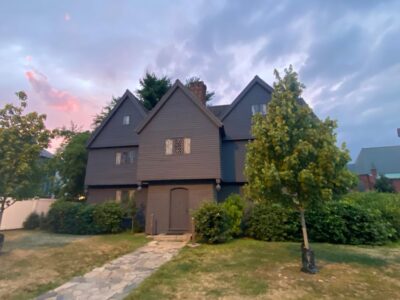
History and Hauntings of Salem Guided Walking Tour
Read our review →
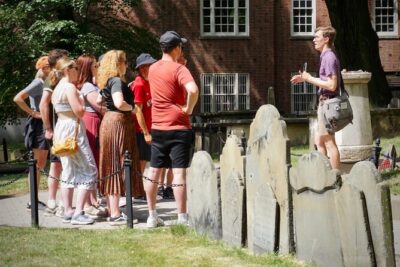
Freedom Trail History Small Group Walking Tour
Read our review →
Historic Charleston Guided Sightseeing Walking Tour
Read our review →
Tapas Walking Tour with Food, Wine, and History
Read our review →
Savannah History and Haunts Candlelit Ghost Walking Tour
Read our review →
A History of Terror – Belfast City Centre Walking Tour
Read our review →Browse the lists this tour appears in