
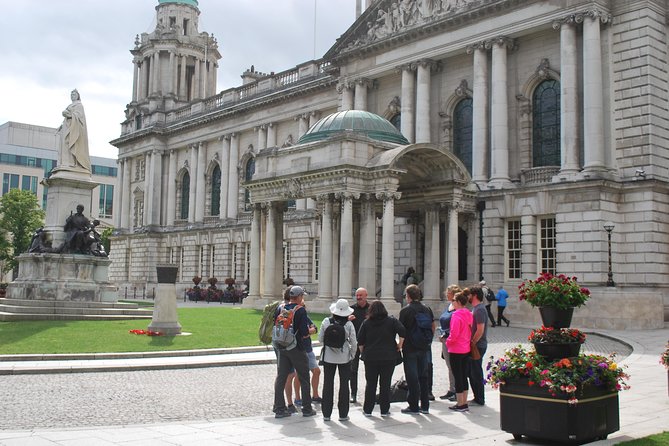
Review · BELFAST
A History of Terror – Belfast City Centre Walking Tour
Belfast’s past is close beneath the pavement. This 2.5-hour city walk links ordinary streets, memorial artworks, and former trouble spots with a clear account of how Northern Ireland reached The Troubles and found a fragile path toward peace. I especially like the local perspective and the effort to present both unionist and nationalist viewpoints. The use of headsets is another real plus in a group of up to 25 people.
The subject is often painful, and the tour does not turn violence into entertainment. You will hear about bombings, deaths, policing, and political conflict, sometimes while standing in places now filled with shops, cafés, and nightlife. The main drawback is that the tour involves a fair amount of standing and listening, with less actual walking than the name might suggest. Rain can also make the experience harder, so dress for Belfast’s changeable weather.
Key points before you book
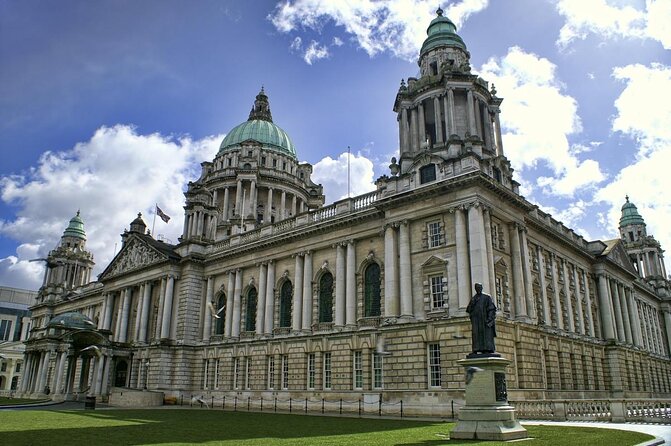
- The tour begins at Belfast City Hall, where the guide explains the long British and Irish relationship before introducing The Troubles.
- Seven central stops cover major events, from a 1971 nightclub bombing to the beginnings of the peace process.
- The Cathedral Quarter provides a striking contrast, with modern street art and nightlife set against stories from the darkest years.
- Guides bring personal experience, including accounts from people who grew up during The Troubles and saw its effects firsthand.
- Headsets help you hear clearly, though one reported equipment failure shows why it is worth speaking up quickly if sound becomes a problem.
- The 1.5-mile route is flat, with no hills or steps, and ends beside the Beacon of Hope about five minutes from City Hall.
Why this Belfast tour is worth your time
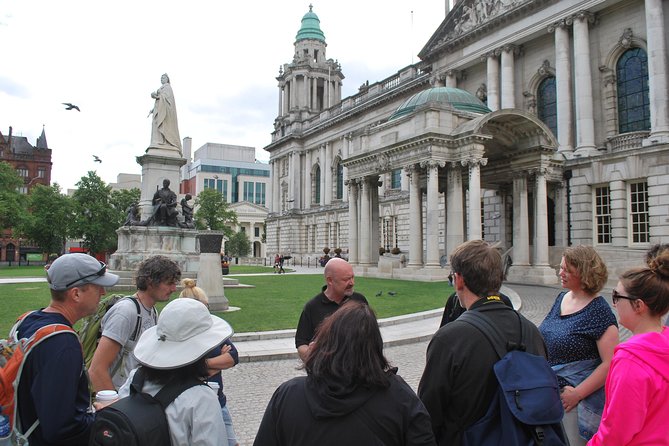
Belfast can look easy to read at first. You see a handsome city hall, broad streets, restored warehouses, pubs, and public art. Yet the city’s recent past is not far away. A shopping street may have been the scene of a bombing. A pleasant public square may carry memories of loss. A nightlife district may have once been part of a city divided by fear.
This tour gives you a way to connect those pieces. Instead of treating The Troubles as a list of dates, it places events on the streets where they happened. That matters. You begin to understand how ordinary life continued during years of violence, and how peace changed the city without erasing its memories.
The tour is also useful because it covers context before the most difficult material. At City Hall, you get an explanation of the centuries-old relationship between Britain and Ireland, along with the political and religious divisions that shaped Northern Ireland. The guide then explains why violence escalated in the late 1960s.
That opening helps you follow the rest of the morning. Without it, the later stops could feel like disconnected stories. With it, the route becomes a chronological walk through conflict, fear, policing, and gradual change.
More History Walking Tours in the UK
- Edinburgh: Old Town History and Tales Walking Tour
★ 4.8 · 2,361 reviews - Old Town Walking Tour History and Tales in Edinburgh
★ 5.0 · 2,168 reviews - Shadows of York: Ghost Walk and Horrible History.
★ 5.0 · 1,403 reviews
Starting at City Hall with the long view
Meet at 10:30 am in the grounds of Belfast City Hall. This is a practical starting place in the centre, close to public transport and easy to find.
The first 20 minutes are spent setting the scene. You are not rushed into dramatic stories. Instead, the guide explains the relationship between British and Irish identities and the conditions that led to The Troubles. That framing is one of the strongest parts of the experience.
The subject can become highly partisan when presented carelessly. Here, the stated approach is neutral and fact-based, while still allowing room for personal stories. Guides such as James, Anne, Mylie, Róisín, Rory, Roisin, Rorey, Chris, and Jim have been praised for clear delivery, personal insight, and sensitivity. The guide can vary, so your experience will depend partly on who leads your group.
You should expect some standing at each location. The route covers roughly 1.5 miles, but the guide pauses often to speak, explain, and answer the obvious question: how did these events affect daily life?
Donegall Place and Castle Lane: ordinary streets, painful memories
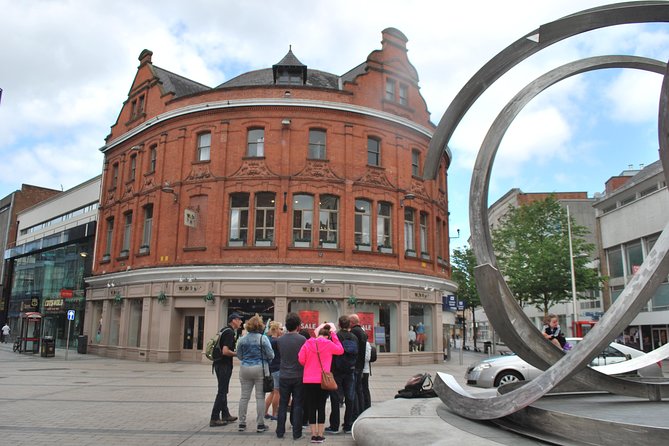
Donegall Place is now a main shopping street. Its modern appearance makes the story harder to picture, which is exactly why the stop works. The guide discusses a 1971 bomb attack on a nightclub, the tragic events that followed, and the introduction of the Ring of Steel.
The Ring of Steel refers to the security measures that reshaped movement through Belfast. Streets that now feel open and normal once had checkpoints and restrictions. This stop helps you see how security affected not only politics, but also shopping, nightlife, work, and the basic rhythm of city life.
The visit then continues to Castle Lane, another pedestrian area that looks ordinary today. Here, the guide describes life at the height of The Troubles and explains an event that remains firmly remembered in Belfast.
These stops are not designed for quick photographs. You will spend around 15 minutes at each place, listening to the guide connect the location with specific events. If you prefer a tour that keeps moving, this may feel slow. If you want detail and explanation, the pauses give the stories room to register.
The Spirit of Belfast and the events of 1971
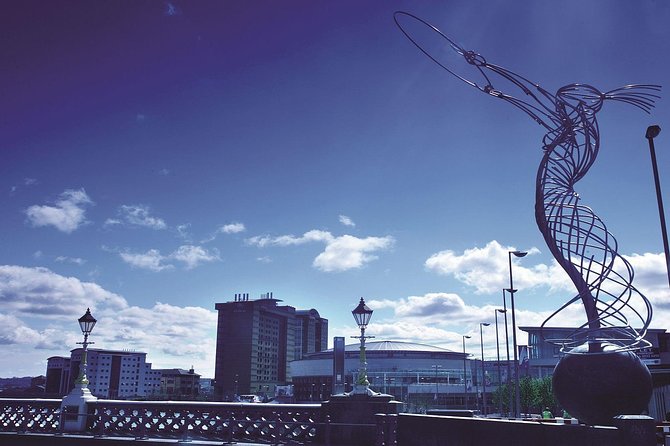
The Spirit of Belfast is a public artwork near the river, known locally by the more playful nickname the Onion Rings. It represents resilience, but the tour uses the location to discuss a chain of events that began in a nearby bar in 1971.
Those events helped push Northern Ireland into a rapidly worsening period of violence. The point is not simply to identify one incident. The guide shows how individual actions, political tension, retaliation, and public fear could feed one another.
This is one reason the tour works better than a general city walk if you want to understand Belfast’s recent past. You are not only being told that violence occurred. You are shown how it spread through familiar places and altered the way people used their own city.
The stop lasts about 15 minutes. Bring a waterproof layer, especially outside the warmer months. The tour is held in the open air, and the weather can be a real factor when you are standing still.
Same place, a different slice of the past:
- London Small Group Tour of Historical Pubs
★ 5.0 · 10,422 reviews - Edinburgh: Edinburgh Castle Guided History Tour with Tickets
★ 4.8 · 9,933 reviews - Edinburgh: Whisky Tasting with History and Storytelling
★ 4.9 · 2,451 reviews - Soho Music & Historic Pubs Tour
★ 5.0 · 1,993 reviews
Cathedral Quarter: nightlife beside the memory of violence
The route continues through the Cathedral Quarter, now one of Belfast’s main cultural and nightlife areas. Street art, bars, and restored lanes give the district a very different mood from the Belfast of the 1970s.
The guide uses this contrast to explain later events and the first steps toward peace. You see how far the city has changed, but you are also reminded that regeneration does not wipe away what happened before.
This may be the most memorable section for many people because the setting is so lively. The modern Cathedral Quarter is easy to enjoy on its own, but the tour gives it another layer. You may look at a lane or bar differently after hearing what the area represented during the conflict.
At around 20 minutes, it is one of the longer stops. The best guides make this section feel like a conversation about change rather than a simple list of buildings and dates. Mylie has been praised for linking Belfast’s past with its present, while other guides have been appreciated for personal accounts and calm, balanced storytelling.
Ann Street and the question of policing
At Ann Street, you stand beside Belfast’s largest police station. The guide explains how Northern Ireland was policed during The Troubles and how policing changed after the peace agreement.
This is an important part of the tour because policing sits at the centre of many questions about trust, identity, and fairness. The stop gives you a chance to consider how security looked and felt during the conflict, and how the role of the police changed as peace took hold.
The guide also discusses the possible impact of Brexit on borders. That brings the tour into the present without pretending that every political question has been settled. Northern Ireland’s future remains tied to questions of identity, sovereignty, and the relationship between communities.
The stop lasts about 15 minutes. It is a useful reminder that the peace process was not just about ending shootings. It also required changes in institutions and daily life.
Finishing at the Beacon of Hope
The final stop is beside the River Lagan at the Beacon of Hope, a public artwork linked to resilience and regeneration. The location gives the tour a more hopeful ending after the difficult material earlier in the morning.
Here, the guide compares Belfast today with one of the darkest days in its past. You hear how the peace was achieved, why it remains fragile, and what the future may hold.
I like this ending because it avoids two easy mistakes. The tour does not leave you with only despair, but it also does not suggest that peace solved every disagreement. Belfast is presented as a city that has changed greatly while still carrying unresolved questions.
The route ends on Oxford Street, at the Beacon of Hope. From there, City Hall is about a five-minute walk away. That makes the finish convenient if you want to continue sightseeing in the centre.
How the guides shape the experience
The guide is the most important part of this tour. The route and locations are useful, but the subject needs a person who can explain it with care.
Several guides have received strong praise for combining political context with personal memories. Anne has spoken about being a child when The Troubles began. Other guides have shared what it was like to grow up in Belfast during the conflict. Those accounts make the history more human, especially when the guide names victims rather than speaking only in broad political terms.
Mylie has been praised for an engaging presentation and for offering more than one side of the story. James is repeatedly described as friendly, passionate, and clear, with a strong grasp of the subject. Róisín has been appreciated for emotional storytelling based on firsthand experience.
The tour is not limited to guides who personally lived through every stage of The Troubles. One guide was an American, yet the presentation was still praised for its command of the subject and fair treatment of different viewpoints. That is worth noting. Local experience can add depth, but a guide’s preparation and delivery matter just as much.
One practical warning is important. A group member reported that the guide’s speaker stopped working halfway through the tour and that the guide did not adjust enough for people at the back. The tour normally supplies headsets so you can hear clearly, but equipment can fail. If you cannot hear, say so at once and move closer rather than quietly missing half the explanation.
Price, group size, and comfort
At $36.06 per person, this is not the cheapest way to spend a morning in Belfast, but the price is fair if you value guided context. You are paying for about two and a half hours with a dedicated guide, a planned route, headset equipment, and access to personal interpretation that you would not get from walking alone.
The maximum group size is 25 people. That is large enough to create some crowding at stops, but small enough for a guide to move the group through central streets. Headsets are particularly helpful here.
The walk is flat, with no hills or steps. Comfortable shoes still matter because you will cover about 1.5 miles and spend time standing. The tour is for ages 12 and up, and the material is serious. I would think carefully before bringing a younger teenager, even though the minimum age is 12.
The tour runs in English and uses a mobile ticket. Confirmation arrives when you book. You should dress for showers and cold weather, even if the forecast looks friendly. The experience is outdoors, and standing in wind or rain is much less pleasant than walking through it.
The provider says the tour takes place regardless of weather, while also noting that poor weather can lead to a cancellation, alternate date, or full refund. In practical terms, prepare to go ahead in ordinary Belfast rain, but keep an eye on messages if conditions become genuinely unsuitable.
Who should book this walking tour?
I would choose this tour early in a Belfast visit if you want a strong foundation for the city. It gives you the political background needed to understand later visits to murals, peace walls, museums, and former conflict sites.
It is especially suitable for:
- First-time visitors who want more than architecture and shopping
- Anyone interested in The Troubles and the peace process
- People who value personal stories alongside political facts
- Visitors who want a flat route without hills or stairs
- Older teenagers and adults comfortable with serious subject matter
I would choose another activity if you want a light, purely entertaining city walk. The tour includes bombings, deaths, fear, and political violence. It is often emotional, and the tone is respectful rather than cheerful.
Should you book A History of Terror?
Yes, if you want to understand Belfast rather than simply pass through it. The strongest reasons to book are the careful introduction at City Hall, the connection between major events and ordinary streets, and the guides’ ability to add personal detail without turning the tour into a political speech.
The tour earns its high rating because it treats The Troubles as lived history. You hear about victims, communities, policing, and peace, then finish by considering what Belfast may become.
Book it for a morning with decent weather, wear comfortable shoes, and arrive ready to listen. If possible, take it near the start of your stay. You will see Belfast’s streets with sharper eyes afterward.
FAQ
Where does the tour begin?
The tour begins in the grounds of Belfast City Hall at Donegall Square North, Belfast BT1 5GS.
What time does the tour start?
The scheduled start time is 10:30 am.
Where does the tour finish?
The tour ends at the Beacon of Hope on Oxford Street, Belfast BT1 3NB.
How far is the walking route?
The route covers about 1.5 miles.
Is the route suitable for people who dislike hills and steps?
Yes. Belfast city centre is described as completely flat, with no hills or steps. Comfortable footwear is still recommended.
How long does the experience last?
The tour lasts approximately two hours and 30 minutes.
What language is the tour offered in?
The tour is offered in English.
Are headsets provided?
Yes. Headsets are included so you can hear the guide clearly.
What is the minimum age?
The minimum age is 12 years.
What happens if the tour is canceled because of poor weather?
You will be offered another date or a full refund if the experience is canceled because of poor weather. You can also cancel at least 24 hours before the start time for a full refund.
Just added around the UK
- Curious Cambridge – The History Tour that’s FUN!!!★ 5.0 · 80 reviews
- Birmingham Gangs Nighttime Historical Walking Tour with Pub Stops★ 5.0 · 53 reviews
- 2.5-Hours Walking Tour of Birmingham into Black Heritage Madiba★ 5.0 · 49 reviews
- Belfast Walking Tour: City Centre History, Troubles & Stories★ 5.0 · 39 reviews
- Award Winning Private 2 Hour Belfast Political Black Taxi Tour★ 5.0 · 53 reviews
- Belfast Political/history/troubles private taxi/cab tour★ 5.0 · 69 reviews
- Private Political History & Murals Tour Belfast★ 5.0 · 182 reviews
- Ancient Britain Tour – Private Day Trip from Bath★ 5.0 · 17 reviews
History Walking Tours, compared.
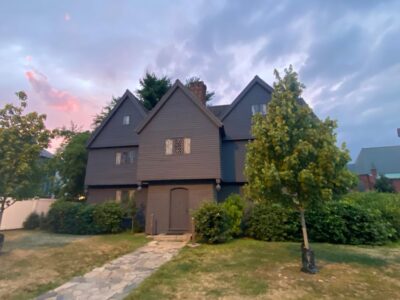
History and Hauntings of Salem Guided Walking Tour
Read our review →
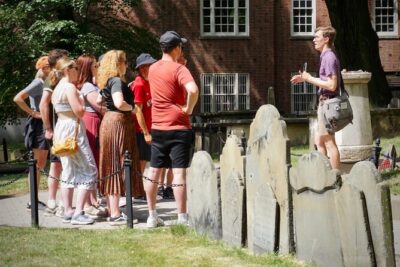
Freedom Trail History Small Group Walking Tour
Read our review →
Historic Charleston Guided Sightseeing Walking Tour
Read our review →
Tapas Walking Tour with Food, Wine, and History
Read our review →
Savannah History and Haunts Candlelit Ghost Walking Tour
Read our review →

New Orleans Garden District History Walking Tour
Read our review →Browse the lists this tour appears in