
Review · BIRMINGHAM
2.5-Hours Walking Tour of Birmingham into Black Heritage Madiba
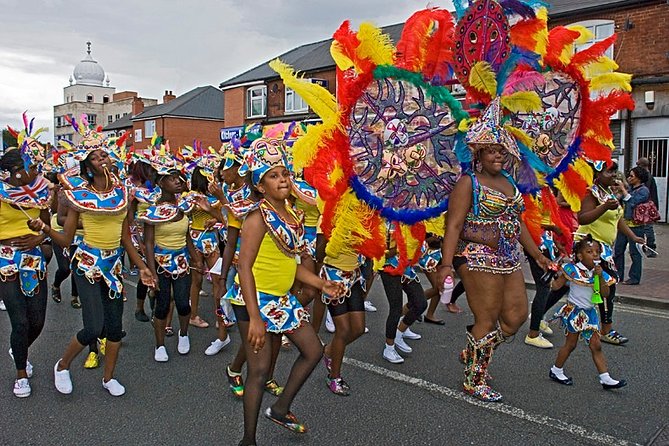
History lives in the streets here. This walking tour links Birmingham’s Black heritage with Handsworth’s music, migration, architecture, and community stories. I especially like the focus on local people and places, plus the small group limit of 12, which should give you room to ask questions. The main consideration is that this is a proper walking tour, so you need a moderate level of fitness and should bring water.
I also like that the route moves beyond central Birmingham’s standard sightseeing circuit. Guides Marcia and Gary have made a strong impression through their warmth, personal connection, and clear storytelling. If rain arrives, though, the experience can be less comfortable, even though the operator may offer another date or an adapted format.
Key points to know before you go
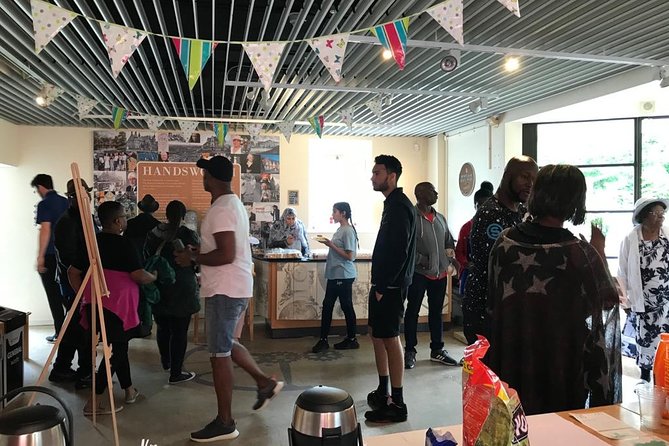
- Handsworth is the heart of the route: You explore the area’s people, buildings, heritage, and cultural life rather than simply viewing a few isolated landmarks.
- Nelson Mandela’s Birmingham connection matters: The tour explains how the local community welcomed Mandela and why that moment remains important.
- The guide makes the difference: Marcia and Gary bring personal feeling and local knowledge to a subject that is often left out of standard city tours.
- You visit Handsworth Park: The route includes its arts trails and leisure centre, with about 20 minutes set aside there.
- It begins and ends at Soho House Museum: The meeting point is Soho Avenue, and the historic house of industrial designer Matthew Boulton and the Lunar Society is discussed from outside.
- The price is modest for a specialist tour: At $19.29 per person, it offers a focused introduction to Birmingham’s Black heritage without the cost of a large attraction ticket.
Why this Birmingham walk is worth your afternoon
Birmingham is often presented through its canals, industrial growth, shopping streets, and grand civic buildings. Those subjects matter, but they do not tell the whole story. This tour shifts attention to the Black communities that helped shape modern Birmingham, including Jamaican, African, Asian, Irish, and other local connections.
That wider view is one of the tour’s strongest features. You are not simply given dates and names. You are shown how different communities lived alongside one another, built relationships, faced prejudice, and helped change the city. One particularly meaningful thread is the connection between Black residents, Irish people, and Indian communities. It gives you a more realistic picture of Birmingham than a simple single-community narrative.
The tour also connects public history with personal memory. Marcia is described as someone who is part of the history she presents, and that gives her explanations a clear sense of purpose. Gary brings a friendly and accommodating manner, along with strong knowledge of the Handsworth area. The tone appears warm rather than formal, which suits a walking tour through a living neighborhood.
You should come ready to listen. This is not a quick photo stop at a famous building. Much of the value comes from context: who used a place, what happened there, and how the surrounding community changed over time.
More History Walking Tours in the UK
- A History of Terror – Belfast City Centre Walking Tour
★ 5.0 · 2,883 reviews - Edinburgh: Old Town History and Tales Walking Tour
★ 4.8 · 2,361 reviews - Old Town Walking Tour History and Tales in Edinburgh
★ 5.0 · 2,168 reviews
Starting at Soho House and Matthew Boulton’s world
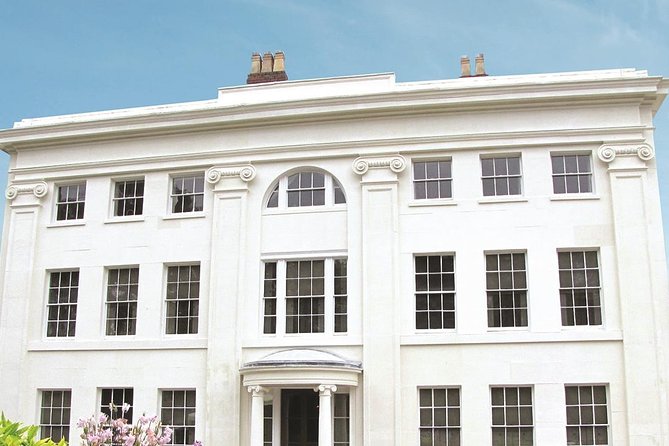
The walk begins at Soho House Museum on Soho Avenue, Birmingham B18 5LB. The house is associated with Matthew Boulton, the industrial designer and manufacturer, and with the Lunar Society, the group of thinkers and innovators linked to Birmingham’s industrial development.
You do not enter the house as part of this experience. That is important if you were hoping for an interior visit. Instead, the stop gives you a starting point for thinking about Birmingham’s industrial past and the people connected with it.
This opening also creates a useful contrast. Soho House represents one familiar version of Birmingham’s story: industry, invention, business, and the growth of the modern city. The Black heritage walk then widens that picture, asking you to consider the people and communities who helped shape Birmingham in later generations.
The tour runs in the afternoon, with listed hours from 1:00 PM to 4:00 PM every day. The exact walking time is described as approximately two hours in one place and 2.5 hours in the experience title, so I would allow the full afternoon rather than scheduling a tight appointment immediately afterward.
Handsworth Park, arts trails, and the leisure centre
One of the named stops is Handsworth Park, where about 20 minutes are set aside for the arts trails and leisure centre. Admission is included, with no separate ticket required.
This is a useful part of the route because it places cultural life in an everyday setting. A park is not just open space. It can be a place for recreation, public art, local gatherings, and community identity. The leisure centre adds another layer, showing how public amenities fit into the life of the area.
Do not expect a long, leisurely park visit with time for a picnic. Twenty minutes is enough for an introduction and explanation, but not enough for a full tour of every feature. The value comes from seeing the park as part of Handsworth’s story rather than treating it as a detached green space.
If you arrive expecting a conventional landmark tour, this stop may feel understated. That is also its strength. The experience pays attention to places that make sense to local residents, not only to buildings that appear in every guidebook.
Walking through Handsworth’s streets
The main portion of the experience is a roughly one-hour walk through Handsworth. You explore the area’s people, heritage, and architecture while the guide explains how Black communities became part of Birmingham’s social and cultural life.
This is where the tour moves beyond a list of historical facts. The architecture becomes evidence of change. Public spaces become places connected with memory. Local figures and musicians help explain how the neighborhood contributed to Birmingham’s cultural identity.
The supplied information specifically points to stories about local musicians and celebrities. You should therefore expect the route to include cultural personalities alongside broader social history. The guide may connect music and public life with the communities that supported them, though the exact names and stops are not specified.
Handsworth also provides the setting for discussions of migration and settlement. The tour explains how Jamaicans and Asians came to Birmingham and established themselves in the area. That matters because migration is often reduced to a few dates or general statements. Here, the subject is tied to a particular neighborhood, its buildings, and its residents.
You may find the route more rewarding if you have already seen Birmingham’s central sights. After visiting the city’s major museums and shopping areas, this walk shows you a part of Birmingham that many short city breaks skip. It also gives returning visitors a reason to look at the city differently.
Same place, a different slice of the past:
- London Small Group Tour of Historical Pubs
★ 5.0 · 10,422 reviews - Edinburgh: Edinburgh Castle Guided History Tour with Tickets
★ 4.8 · 9,933 reviews - Edinburgh: Whisky Tasting with History and Storytelling
★ 4.9 · 2,451 reviews - Soho Music & Historic Pubs Tour
★ 5.0 · 1,993 reviews
The Madiba connection and a wider Black history
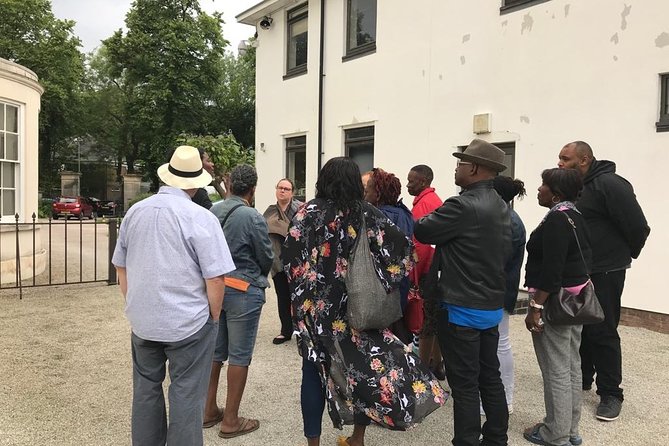
The name Madiba refers to Nelson Mandela, and his connection with Birmingham is a central part of the tour. The local community welcomed him with the warmth of family, a detail that helps explain the emotional importance of his visit.
This is not presented as a distant international story. The focus is on how Mandela’s presence connected with people in Birmingham and with the city’s Black community. That local angle gives the subject more feeling than a general biography would.
The tour also explores the struggles and achievements of Black residents over several decades. You hear about the forces that made life difficult, as well as the ways communities organized, worked together, and contributed to the city.
A major strength is the effort to connect Black history with other Birmingham communities. The relationship between Black, Irish, and Indian residents adds useful complexity. It reminds you that cities are shaped through cooperation as well as conflict, and that community history rarely fits into one neat category.
The guide’s role is especially important here. A subject like this can become dry if it is delivered as a school lesson. The experience appears to work best because the guides combine information with personal enthusiasm. Marcia is repeatedly praised for making the subject approachable, while Gary is described as friendly and well prepared.
What the guides add to the experience
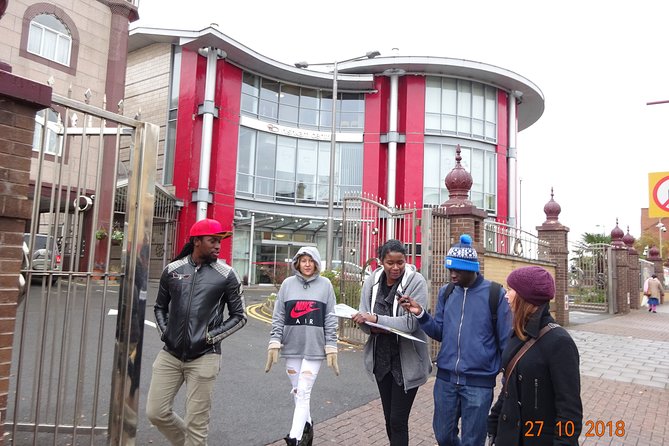
The strongest praise is directed at the guides, particularly Marcia. Her approach is described as warm, passionate, and generous with her time. On one occasion, she repeated the earlier part of the tour for someone who arrived late, which suggests a flexible and considerate style.
That does not mean you should plan to arrive late. It is still best to be at Soho House Museum before the stated start. But it does indicate that the experience is not rigidly delivered from a script.
Another useful detail concerns poor weather. During one rainy walk, Marcia made tea at the centre afterward so people could warm up and dry off. That is a small gesture, but it reflects the personal character of the experience.
Gary also receives strong praise for making the walk enjoyable and accommodating. Since guides can vary, your experience may feel slightly different depending on who leads the group. The shared strength appears to be local commitment and a clear wish to keep the history alive.
With a maximum of 12 people, the group should be small enough for conversation. That is a real advantage on a subject where you may want to ask about family connections, migration, music, or particular buildings. A small group also makes it easier to hear the guide in a residential area.
Price, timing, and physical demands
At $19.29 per person, this is an affordable specialist walk. You are paying for a licensed guide and a focused two to 2.5-hour experience rather than entry to a major attraction. For anyone interested in Birmingham’s Black heritage, the price offers strong value because the subject is difficult to discover through ordinary sightseeing alone.
The tour does not include bottled water, so bring your own bottle. That is a basic point, but it matters on a walk lasting several hours.
You should also wear comfortable shoes and be ready to walk through the area. The physical requirement is described as moderate fitness. The operator can adapt the tour if necessary, and may arrange an alternative tour or a static presentation, but you should contact them about your needs rather than assume every route can be changed on the spot.
The group size is capped at 12. The tour is offered in English and uses a mobile ticket. Hotel pickup and drop-off are not included, so you need to make your own way to Soho House Museum and return from there after the walk.
The experience depends on good weather. If poor weather causes cancellation, you are offered another date or a full refund. You can also cancel for a full refund up to 24 hours before the start time. Changes or cancellations inside that window are not accepted for a refund.
Who should book the Madiba walk?
I would recommend this tour to you if you want a more complete picture of Birmingham than the usual industrial and city-centre story. It suits visitors interested in Black history, migration, music, local politics, community life, and the way neighborhoods change over time.
It is also a good choice for people with a personal connection to Birmingham. One especially striking reaction came from someone whose partner grew up in the city but still discovered parts of Handsworth in a new way. That is a useful reminder that local history can surprise residents as much as first-time visitors.
You will probably enjoy it less if you want a fast route through famous sights, lots of interior visits, or a tour built mainly around photographs. Soho House is not entered, and the focus is on explanation and walking rather than a long list of admission-ticket attractions.
I would also think carefully about the weather and your walking comfort. The route can be adapted, but the normal format is outdoors and requires reasonable fitness.
Should you book this Birmingham Black heritage tour?
Book it if you want human stories tied to real streets. At $19.29, the tour is inexpensive, small in scale, and focused on a part of Birmingham that is easy to miss. Marcia and Gary bring warmth to the subject, and the links between Handsworth, migration, music, community life, and Mandela give the afternoon real substance.
Skip it only if you are looking for a conventional sightseeing circuit or a house museum visit. For everyone else, this is a valuable way to see Birmingham through the people who helped make it what it is.
FAQ
Where does the tour begin?
It begins at Soho House Museum, Soho Avenue, Birmingham B18 5LB, UK.
Where does the tour end?
The experience ends back at the meeting point.
How long does the tour last?
The tour is described as approximately two hours in the tour details and 2.5 hours in the experience title. You should allow roughly two to 2.5 hours.
What language is the tour offered in?
The tour is offered in English.
What is included in the price?
A licensed guide is included.
Is bottled water provided?
No. You should bring your own bottle of water for hydration.
Is hotel pickup included?
No. Hotel pickup and drop-off are not included.
How many people can join the tour?
The maximum group size is 12 people.
Is the tour suitable for people with limited mobility?
The tour requires a moderate level of physical fitness because it is a walking experience. The operator says the tour can be adapted if necessary, or an alternative tour or static presentation may be arranged.
Can I cancel for a refund?
Yes. You can cancel at least 24 hours before the start time for a full refund. If the tour is canceled because of poor weather or because the minimum number of participants is not reached, you are offered another date or experience, or a full refund.
Just added around the UK
- Birmingham Gangs Nighttime Historical Walking Tour with Pub Stops★ 5.0 · 53 reviews
- Belfast Walking Tour: City Centre History, Troubles & Stories★ 5.0 · 39 reviews
- Award Winning Private 2 Hour Belfast Political Black Taxi Tour★ 5.0 · 53 reviews
- Belfast Political/history/troubles private taxi/cab tour★ 5.0 · 69 reviews
- Private Political History & Murals Tour Belfast★ 5.0 · 182 reviews
- Ancient Britain Tour – Private Day Trip from Bath★ 5.0 · 17 reviews
- Jane Austen’s Bath And History Trail★ 5.0 · 77 reviews
- Bath: Local Pubs & Historic Sights Walking Tour (3h)★ 5.0 · 31 reviews
History Walking Tours, compared.

History and Hauntings of Salem Guided Walking Tour
Read our review →
Freedom Trail History Small Group Walking Tour
Read our review →
Historic Charleston Guided Sightseeing Walking Tour
Read our review →
Tapas Walking Tour with Food, Wine, and History
Read our review →
Savannah History and Haunts Candlelit Ghost Walking Tour
Read our review →
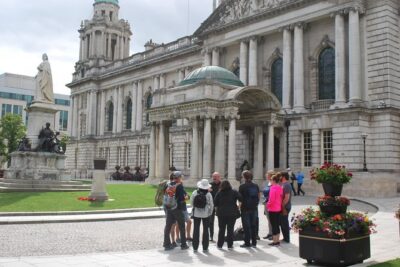
A History of Terror – Belfast City Centre Walking Tour
Read our review →Browse the lists this tour appears in