
Review · SPLIT
Split Walking Tour with Professor of History
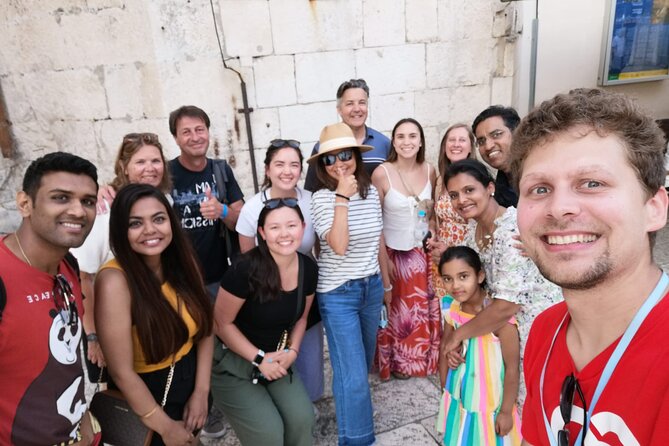
Split’s oldest streets still do daily work. This walking tour pairs Diocletian’s Palace with a history professor who explains how an ancient imperial residence became the center of modern Split. I like the sharp historical context and the local advice on food, banks, and onward sightseeing. I also like the small maximum group of 17, which makes questions easier.
The main drawback is timing. It is advertised at about 2 hours 20 minutes, but a detailed tour may run closer to three hours. The Cathedral of Saint Domnius and Temple of Jupiter are viewed from outside, so you will need to pay separately if you want to enter.
Key points to know before you book
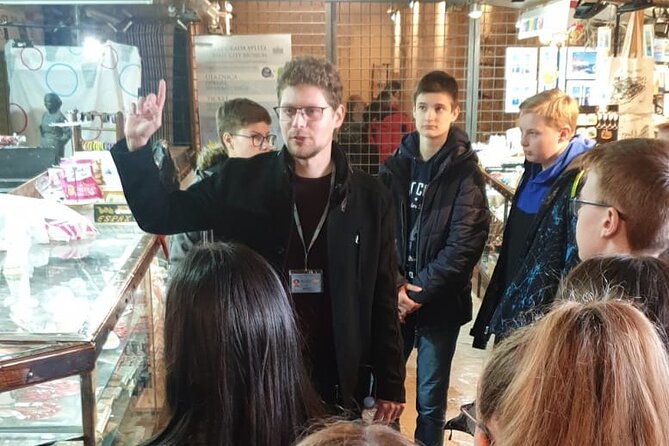
- A history-led walk through a living palace: You explore Roman, medieval, Napoleonic, and modern Split in one compact route.
- The guide makes the difference: Mario is frequently praised for humor, local tips, and clear explanations, while Anita is noted for her care and pride in Croatian culture.
- Eleven useful stops: The route moves from Riva Harbor through the palace core, Golden Gate, Marmontova Street, Prokurative, and Fruit’s Square.
- Good value at $24.19: All listed fees and taxes are included, while optional entry to the cathedral and other paid sights is not.
- Plan for a longer morning or afternoon: The scheduled time is about 2 hours 20 minutes, but the guide may continue if the group is engaged.
- English and mobile ticket: You receive confirmation when booking, and the tour is offered in English.
Why a professor makes Split easier to understand
Split can seem confusing at first. Roman walls, medieval homes, church bells, cafés, souvenir shops, and apartment doors all share the same old stone. A guide who teaches history can give those layers an order.
That is the central strength of this walk. You are not simply shown a gate or a column. You hear how the palace was built for Emperor Diocletian, how its spaces changed over time, and how people still use the old center as part of ordinary city life.
The tour is also more conversational than a basic sightseeing circuit. Mario is repeatedly praised for mixing facts with humor, asking questions, and correcting popular myths. Anita receives similar praise for being attentive to her group and sharing her pride in Croatia.
The route is conducted in English. The maximum group size is 17, though the experience may feel smaller when the guide pauses to answer questions. A private upgrade is available if you want a more personal pace and more direct attention.
More History Walking Tours in Croatia
- Walking Tour of Split with a ‘Magister’ of History
★ 5.0 · 1,122 reviews - Split: History and Heritage Walking Tour
★ 4.9 · 650 reviews - SPLIT-PRIVATE Walking Tour of Diocletian’s Palace & Old Town
★ 5.0 · 467 reviews
Starting beside Riva Harbor
The meeting point is at the Brass Gate, also called Porta Aenea, at Obala Hrvatskog narodnog preporoda 22. The tour begins beside a model of the palace on Riva, Split’s broad waterfront promenade.
Riva is not just a pretty opening view. It is where local life gathers for coffee, sunlight, and conversation. Starting here helps you see Split as a working city, not merely an archaeological site.
The first stop lasts about 15 minutes. You will get your bearings along the harbor before moving through the palace entrance. This is a useful introduction because the palace does not feel like a sealed museum. Its walls contain homes, shops, restaurants, and public paths.
The exact meeting point matters in a port city. Look for the Brass Gate and the palace model rather than wandering along the waterfront hoping to spot a guide. Your mobile ticket and booking confirmation should be ready on your phone.
The palace below street level
The Substructures of Diocletian’s Palace are among the best-preserved complexes from classical antiquity. The tour allows about 15 minutes here, enough for the guide to explain why these underground halls matter so much to Split’s identity.
The substructures supported the imperial apartments above. Their layout also helps you understand the shape of the palace itself. Once you know that, the streets and rooms you see later make more sense.
The itinerary lists this stop with no admission charge. That does not mean every palace attraction on your route includes entry. The cathedral and Temple of Jupiter are exterior visits, and the tour does not include their admission fees.
This portion is especially useful early in your visit. You get a clear sense of the palace’s Roman purpose before later stops show how people adapted it over centuries.
Standing before the Peristyle and Vestibule
The Peristyle is the palace’s central square, and the guide spends about 10 minutes here. In Diocletian’s time, this was a formal setting for the emperor, who was presented as the living son of Jupiter.
The important point is the power of the setting. The emperor appeared beneath the central architrave of the Protyron while visitors approached with extreme ceremony. Kneeling, kissing the edge of his red cloak, or prostrating themselves made the political message clear: this was not a casual courtyard.
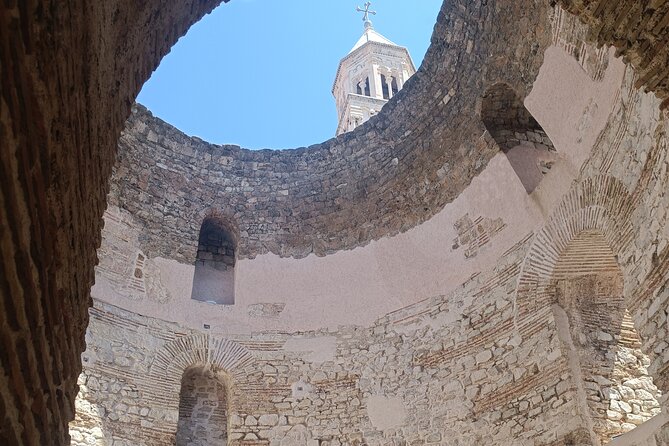
The next stop is the Vestibule, a circular hall that formed part of the imperial route toward the private apartments. It was built by the beginning of the fourth century and once had a dome. The room measures about 17 meters high and 12 meters across.
The Vestibule was meant for selected audiences, including ambassadors. You can expect about 10 minutes here. It is a compact stop, but the guide’s explanation helps you read the room as an imperial reception space rather than simply a round stone chamber.
More History Walking Tours in Split:
- Split: Local History and Culture 90-Minute Walking Tour
★ 5.0 · 194 reviews - Private History Split Walking Tour in English
★ 5.0 · 159 reviews - Split: Walking tour of Split with a ‘Magister’ of History
★ 5.0 · 110 reviews - History & Cultural Walking Tour of Split and Diocletian’s Palace
★ 5.0 · 104 reviews
Seeing Saint Domnius in three different roles
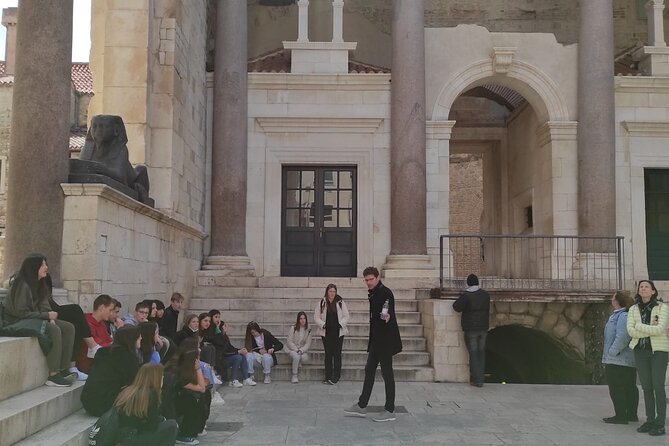
The Cathedral of Saint Domnius is given about 20 minutes, the longest single stop on the palace route. You see it from outside, since admission is not included.
Its story is unusually layered. The building began as a Roman temple and mausoleum connected with Diocletian. It later became a church. That shift from imperial tomb to Christian place of worship captures the larger changes that shaped Split.
The guide provides detailed information and can explain what you would see if you choose to enter after the tour. This is a practical advantage. You can decide later if the interior is worth the extra fee instead of paying for every attraction in advance.
If you want to go inside, do not assume the walking tour covers it. Budget separately and leave time after the tour, since the group only views the cathedral exterior.
Jupiter, John the Baptist, and the narrowest street
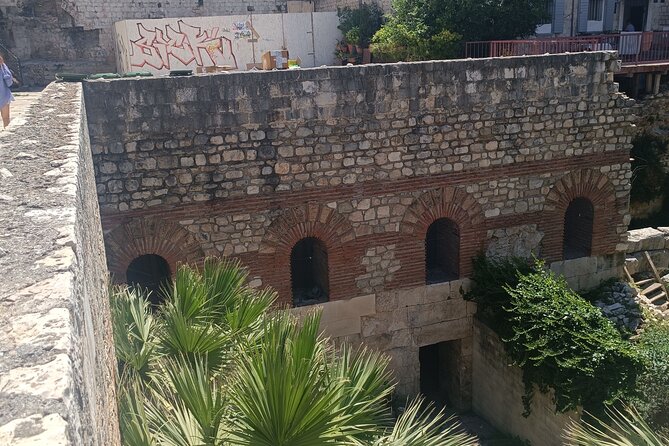
The Temple of Jupiter is another exterior stop, scheduled for about 10 minutes. Jupiter was the Roman sky and thunder god, and the temple once honored the supreme deity of Roman religion.
The building later became a baptistery dedicated to Saint John the Baptist. That conversion gives the stop more weight than a quick look at an ancient façade. You see how religious use changed while the stone structure remained part of the city.
On the way toward the Golden Gate, the group passes through a tiny lane called Let Me Pass Street. Local people believe it is the narrowest street in the world. The name tells you what to do when someone is coming the other way.
This is the kind of small local detail that can make a walking tour more memorable. It also shows why Split is best explored on foot. The most interesting connections are often too tight for vehicles and too easy to miss on your own.
From the Golden Gate to Gregory of Nin
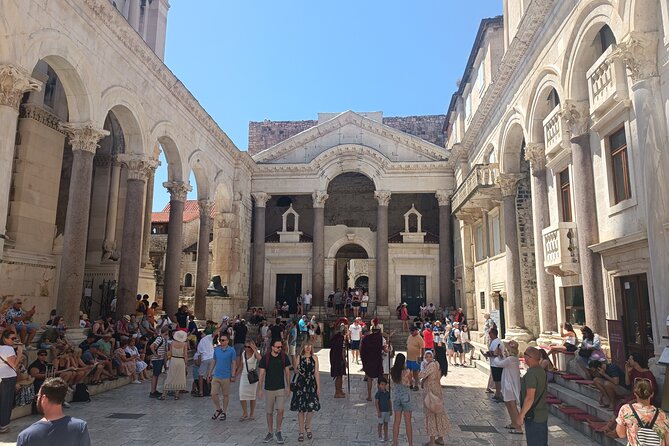
The Golden Gate, or Northern Gate, was one of four principal Roman entrances to the old town. It was the main gate used by Diocletian to enter the palace and originally carried elaborate decoration.
During the Middle Ages, the gate was sealed and lost its columns and statues. It was later reopened and repaired. The guide can help you separate the original Roman role from the changes made over time.
The stop lasts about 15 minutes and is free to visit. It is also a good place to think about the palace as a fortified residence, not just a collection of elegant ruins.
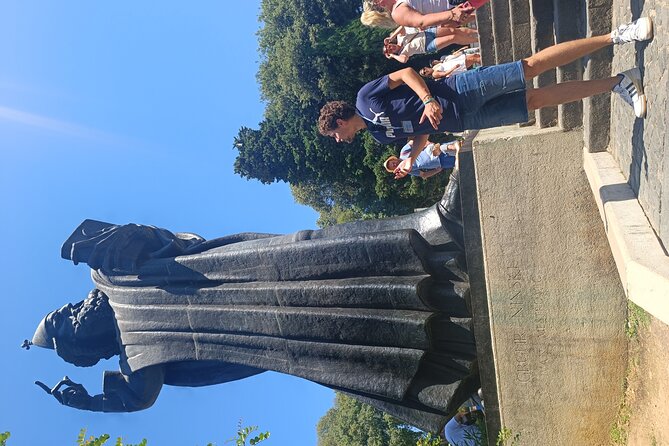
From here, the walk continues to the 8.5-meter statue of Gregory of Nin by Croatian sculptor Ivan Meštrović. The statue is a popular meeting point, and its polished toe reflects a familiar local custom. Rubbing it is said to bring good luck.
You can expect about 10 minutes at the statue. The stop is lighthearted after the more formal Roman sites, but Gregory of Nin also connects the city to Croatian religious and cultural history.
Marmontova Street and Napoleon’s urban legacy
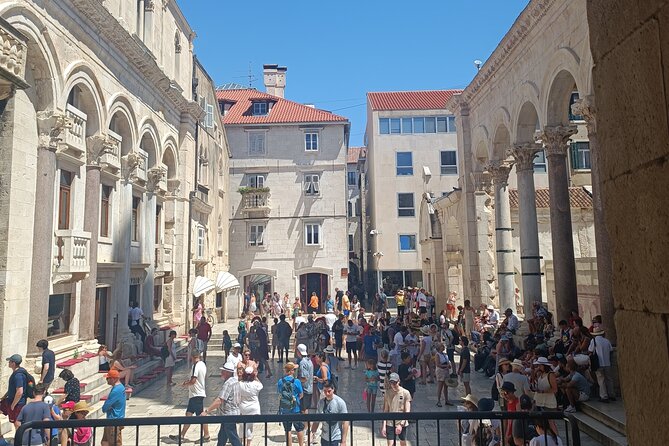
Marmontova Ulica offers a change of subject. The street is named after Napoleon’s marshal Marmont, who helped urbanize cities across Dalmatia despite arriving as a conqueror.
The tour allows 10 minutes here. That short pause is useful because it links Split’s Roman past with a later period of outside rule and city planning. You see that the old center was shaped by more than emperors and church leaders.
This is also one of the route’s more modern-feeling sections. After narrow lanes and Roman monuments, a named city street gives you a sense of how Split expanded and changed.
Prokurative and Fruit’s Square
The Prokurative, officially Republic Square, is a large open space surrounded on three sides by elaborate neo-Renaissance buildings. Its 10-minute stop gives the group room to step back from the tight palace streets.
The square is a reminder that Split’s identity is not limited to Roman stone. Later architecture, public spaces, and civic design also belong to the city’s story.
The final stop is Fruit’s Square, or Trg Brace Radic. The small square was once associated with women selling fruit. It is now a good place to finish with stories about Croatian history, local food, and Split’s everyday culture.
The guide also points out the statue of Marko Marulić, often called the father of Croatian literature. This final stop is well chosen. Instead of ending with another imperial monument, the tour closes with literature, food, and ordinary commerce.
The tour ends back at the meeting point. You can then use the advice gathered along the way to decide where to eat or which sights deserve a second look.
What the $24.19 price really gives you
At $24.19 per person, this is a strong value if you want context rather than a quick orientation walk. The route covers major palace locations, several later city landmarks, and the stories that connect them.
All fees and taxes are included in the tour price. Alcoholic beverages are not included, though no drink is presented as a required part of the walk.
The value depends partly on how you use the tour. If you only want exterior photographs, you may find a self-guided walk sufficient. If you want to understand why a Roman mausoleum became a cathedral, why an ancient temple became a baptistery, or how medieval life filled the palace, the guide’s interpretation earns the fee.
The tour is often booked well ahead, with an average booking lead time of 33 days. That suggests you should not leave it until the last moment if your Split schedule is fixed.
Timing, comfort, and group expectations
The published duration is approximately 2 hours 20 minutes. One detailed account places the actual experience closer to three hours, and that is possible when the guide answers questions or adds local recommendations.
I would allow three hours rather than trying to fit another appointment immediately afterward. The route includes 11 stops, and several involve standing while the guide explains a building or historical event.
Split’s old center has tight lanes and open squares, so you should expect a real walking tour rather than a short palace briefing. Wear comfortable shoes and plan your day with some flexibility. The supplied information confirms that most people can participate, and service animals are allowed.
The tour is near public transportation, but it starts and ends in the historic center. A mobile ticket is accepted, and confirmation arrives at booking.
The small maximum group of 17 is a practical advantage. It does not guarantee a private feel, but it gives the guide a better chance to hear questions and keep the group together. If you want a fully personal experience, the private upgrade is the clearer choice.
The guide’s style matters here
The strongest part of this experience is the teaching style. Mario is praised for making difficult history easy to follow, adding trivia, and using humor without losing the main thread. He also gives practical advice about restaurants, food, banks, ATMs, and things to do beyond the old center.
That kind of advice can save you time after the walk. One useful feature is the follow-up help he has provided, including suggestions for eating and further sightseeing.
Anita is praised for being thoughtful and attentive to a group of 14 people. She is also noted for her pride in Croatian heritage and her ability to keep the experience pleasant for first-time visitors.
The overall rating is 5 out of 5 from 926 reviews, with 100 percent recommending the experience. Those figures suggest a very consistent product, especially for people who want history presented with personality.
Still, guide-led tours are personal. Some people will love the jokes, questions, and extra details. Others may prefer a shorter, quieter walk. If you want only the headline facts, the tour may feel long, particularly if it runs beyond the scheduled 2 hours 20 minutes.
Who should book this Split walk?
I would choose this tour if you are visiting Split for the first time, care about history, or want the old center to make sense before exploring alone. It is also a good fit if you enjoy asking questions and want practical advice for the rest of your stay.
Families and mixed-age groups may appreciate the humor and variety. The route moves from imperial ritual to a polished statue toe, from ancient temples to fruit sellers, so the subject changes often enough to keep the walk from becoming one long lecture.
You should think twice if your mobility is limited, your schedule is tight, or you strongly prefer entering every major monument. The tour is primarily an exterior walking experience, and the cathedral and Temple of Jupiter require separate admission if you want to see inside.
Book it if you want a well-organized introduction to Split with a strong history focus and useful local guidance. Skip it only if you are content to read plaques and follow a map on your own. At $24.19, the chance to see the city through a professor’s explanations makes it an easy recommendation for most first-time visitors.
FAQ
Where does the Split walking tour begin?
It begins at the Brass Gate, also called Porta Aenea, at Obala Hrvatskog narodnog preporoda 22 in Split.
Where does the tour end?
The tour ends back at the meeting point.
How long does the tour last?
The scheduled duration is approximately 2 hours 20 minutes. It may run closer to three hours if the guide spends extra time answering questions and sharing information.
Is the tour offered in English?
Yes. The tour is offered in English.
Are entrance tickets to the cathedral included?
No. The Cathedral of Saint Domnius is visited from outside, and admission is not included.
Is admission to the Temple of Jupiter included?
No. The Temple of Jupiter is viewed from outside, and admission is not included.
What is the cancellation policy?
You can cancel at least 24 hours before the local start time for a full refund. Cancellations or changes made less than 24 hours before the start time are not accepted for a refund. If poor weather causes the tour to be canceled, you will be offered another date or a full refund.
Just added around Split
- Split Walking Tour with History Professor★ 5.0 · 23 reviews
- Split: Local History and Culture 90-Minute Walking Tour★ 5.0 · 194 reviews
- Split: Private Walking Tour in the Historical Town Center★ 5.0 · 25 reviews
- Split: Historical & Gastro Treasures Tour with Green Market★ 4.9 · 144 reviews
- Split: Walking tour of Split with a ‘Magister’ of History★ 5.0 · 110 reviews
- Experience Split History Walking Tour With Local Historian★ 5.0 · 28 reviews
- History Split Walking Tour in French -Small group★ 5.0 · 41 reviews
- Split History and Gastro Small-Group Tour with Food and Drinks★ 5.0 · 375 reviews
History Walking Tours, compared.
History and Hauntings of Salem Guided Walking Tour
Read our review →
Freedom Trail History Small Group Walking Tour
Read our review →
Historic Charleston Guided Sightseeing Walking Tour
Read our review →
Tapas Walking Tour with Food, Wine, and History
Read our review →
Savannah History and Haunts Candlelit Ghost Walking Tour
Read our review →
A History of Terror – Belfast City Centre Walking Tour
Read our review →Browse the lists this tour appears in