
Review · DALMATIA
Experience Split History Walking Tour With Local Historian
Split keeps its Roman past in daily life. This two-hour walk brings you through Diocletian’s Palace with a local historian, then connects its ancient stones to medieval squares, the waterfront, and modern Croatian life. I like the small maximum of 12 people and the use of 3D images, which can make ruined or altered spaces easier to understand.
I also like the guide’s local angle. Boris has earned praise for clear explanations, friendly answers, food tips, and his ability to point out details you could easily miss. The main consideration is pace: the tour covers many stops in two hours, and it is not suitable for wheelchair users or people with mobility impairments.
Key points to know before you book
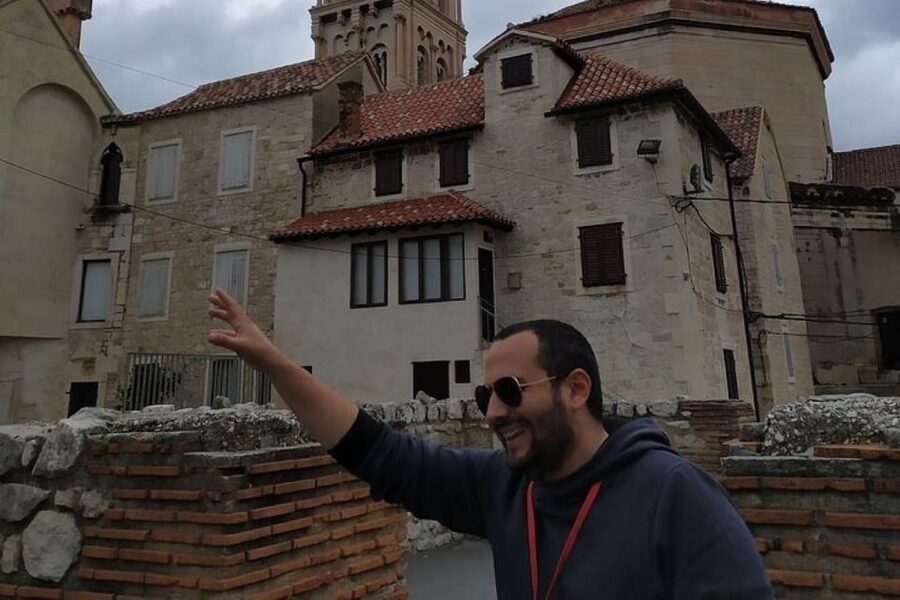
- A historian leads the walk: Your guide is a licensed local professional with a master’s degree in history, with English and Croatian available.
- The Golden Gate is the starting point: You enter Diocletian’s Palace through its northern entrance, beside Split’s enormous statue of Gregory of Nin.
- The route connects several eras: Roman palace remains, medieval squares, the Riva promenade, and present-day local life all fit into the walk.
- The itinerary is packed: Peristil, Jupiter’s Temple, the cathedral, Vestibul, the cellars, Fruit Square, and People’s Square all appear within two hours.
- Small groups make questions easier: The maximum is 12 people, and one recorded tour had only five participants.
- The price is $37 per person: That is fair if you want context and orientation, but less compelling if you prefer to explore monuments at your own pace.
Why this Split walk works
Diocletian’s Palace is not a quiet archaeological site set apart from town. It is part of Split’s center, with homes, shops, cafés, lanes, churches, and public squares fitted into Roman walls. That makes the palace exciting, but it can also make the place confusing. A column may belong to one century, a doorway to another, and a busy lane may follow a Roman route.
This tour gives you a framework before you wander off on your own. You begin at the Golden Gate, move through the palace core, continue to the Riva, and finish at Narodni trg, also called People’s Square. That route helps you see Split as a city that kept changing rather than as a collection of isolated monuments.
The guide also uses 3D reconstruction images and photographs in a display book. I value that kind of aid in Split because many Roman spaces no longer look as they did under Emperor Diocletian. A visual comparison can show how a structure once worked, where a room fitted into the palace, or why a partially preserved wall matters.
The tour is described as a See, Hear and Feel experience. In practical terms, that means you get stories, visual material, architectural details, legends, and comments about everyday life. The strongest part should be the link between formal history and the way people still use the old center.
More History Walking Tours in Croatia
- Dubrovnik Old Town History Walking Tour
★ 5.0 · 1,684 reviews - Dubrovnik: Ancient City Walls & Wars Walking Tour
★ 5.0 · 1,270 reviews - Zagreb: City & History Walking Tour & WW2 Tunnels
★ 4.9 · 1,202 reviews
Starting beside the Golden Gate and Gregory of Nin
The meeting point is the Golden Gate, the northern entrance to Diocletian’s Palace. It sits opposite the eight-meter statue of Gregory of Nin, so this is a relatively easy place to identify. Arrive with the gate and statue in view, rather than relying on a vague meeting point somewhere inside the old center.
The opening explanation covers Split, Croatia, and the history of the area. You learn the gate’s name, purpose, and importance before walking through it as Roman emperor and empress once did. That small theatrical touch helps you picture the palace as a working imperial residence, not just a stone shell.
Gregory of Nin gives the introduction a later Croatian dimension. The statue is one of Split’s best-known public monuments, and its size makes it hard to miss. The guide explains the person represented and the role the statue plays in the city’s visual identity.
The opening lasts about 15 minutes at the gate, followed by around eight minutes at Gregory of Nin. That is useful orientation time, though you should know that the tour does not rush straight into the most famous palace courtyard.
Seeing Diocletian’s Palace as a living city

The next section moves into the palace itself. Diocletian’s decision to build and retire here is central to the story, and the guide explains his life inside and outside the palace. The value is not only in learning dates. You begin to understand why the building had such a strong combination of residence, ceremonial spaces, religious buildings, service areas, and fortified entrances.
The palace visit is scheduled for about 10 minutes, but the story continues through many later stops. That distinction matters. You are not spending only ten minutes inside the whole complex. Instead, the route breaks the palace into its most meaningful spaces.
As you walk, look for the way modern Split fits into the old plan. Streets and walls do not always present themselves as a neat museum display. The guide’s job is to explain what you are looking at and how the site changed as local people adapted it over the centuries.
A five-person tour described by one participant felt almost private, with an easy pace and time for questions. That is a useful clue about the group format. The advertised maximum is 12, but the actual feel will depend on how many people book your departure.
Peristil, the palace’s grand central stage
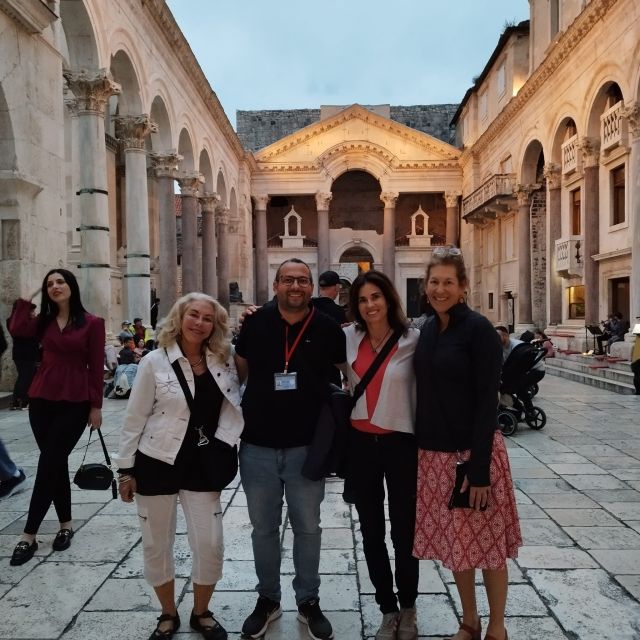
Peristil is the visual center of the tour. This main palace square is surrounded by monumental remains, and it gives you the clearest sense of Diocletian’s imperial ambitions. The scheduled visit lasts about 15 minutes, making it one of the longer stops.
Here, the guide can explain how ceremonial movement worked and why this space mattered. You are not simply looking at columns. You are standing in a place designed to frame power, religion, and the emperor’s presence.
Peristil also shows why a guide adds value. Without context, it is easy to photograph the courtyard and move on. With an explanation of the surrounding buildings, you can read the square as part of a planned complex.
Give yourself a moment to look upward and across the space rather than focusing only on the most obvious stones. The tour’s 3D images can help restore the missing parts in your imagination.
Same place, a different slice of the past:
- Walking Tour of Split with a ‘Magister’ of History
★ 5.0 · 1,122 reviews - Dubrovnik Combo: Old Town & Ancient City Walls
★ 5.0 · 1,019 reviews - Split Walking Tour with Professor of History
★ 5.0 · 926 reviews - Split: History and Heritage Walking Tour
★ 4.9 · 650 reviews
Jupiter’s Temple and the palace’s sacred side
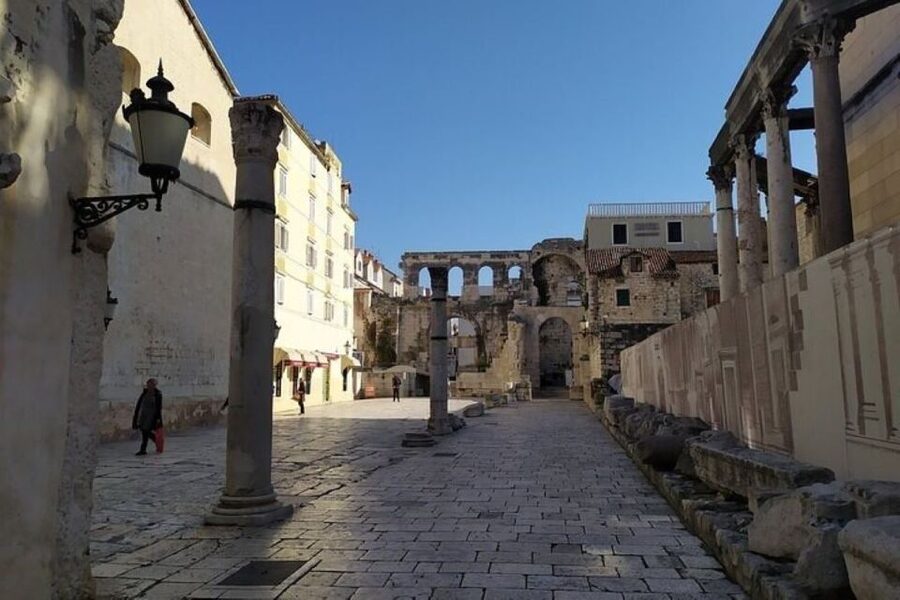
Jupiter’s Temple receives about 10 minutes. This stop adds a religious layer to the palace and balances the focus on imperial residence and military-looking gates.
The tour uses stories, facts, legends, and intrigues to explain the site. That mix should appeal to you if you like history with a human voice rather than a string of dates. It also gives the guide room to separate what is documented from what has entered local storytelling.
A short stop labeled as a tucked-away sight lasts only about two minutes. Do not expect a long visit at every location. Some stops are there to point out a detail you might otherwise pass without noticing.
Mausoleum, Cathedral, Vestibul, and the changing palace
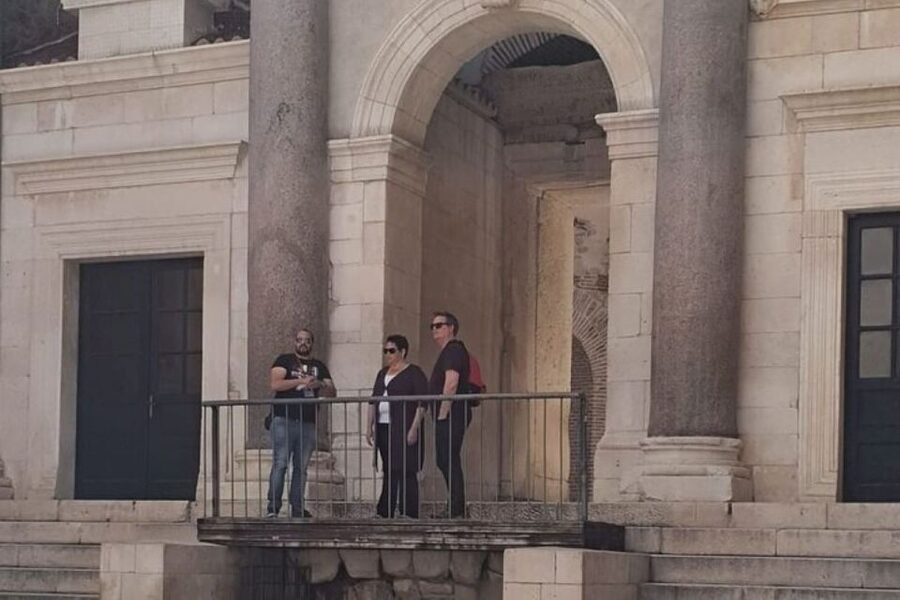
The Cathedral of Saint Domnius receives about 10 minutes. The building occupies the former mausoleum area, so this is one of the clearest places to see how Split’s religious life took over and reinterpreted an imperial structure.
That change is one of the most useful themes in the whole walk. The palace did not freeze after Diocletian’s era. It was altered, reused, and absorbed into the town. The cathedral stop helps you see the meeting point between Roman construction and later Christian Split.
Vestibul follows with another 10-minute visit. Its rounded form and ceremonial role make it one of the palace’s memorable interior spaces. The guide explains its purpose and peculiarities, while the visual material can help you picture how the room once functioned.
The itinerary also includes a secret stop and a narrow church and street among the less obvious sights. The supplied information does not name every location, so I would not book this expecting a fixed list of secret corners. Instead, treat these short pauses as a chance to notice the small-scale details that get lost when you only visit Peristil and the cathedral.
The cellars show how the palace was built
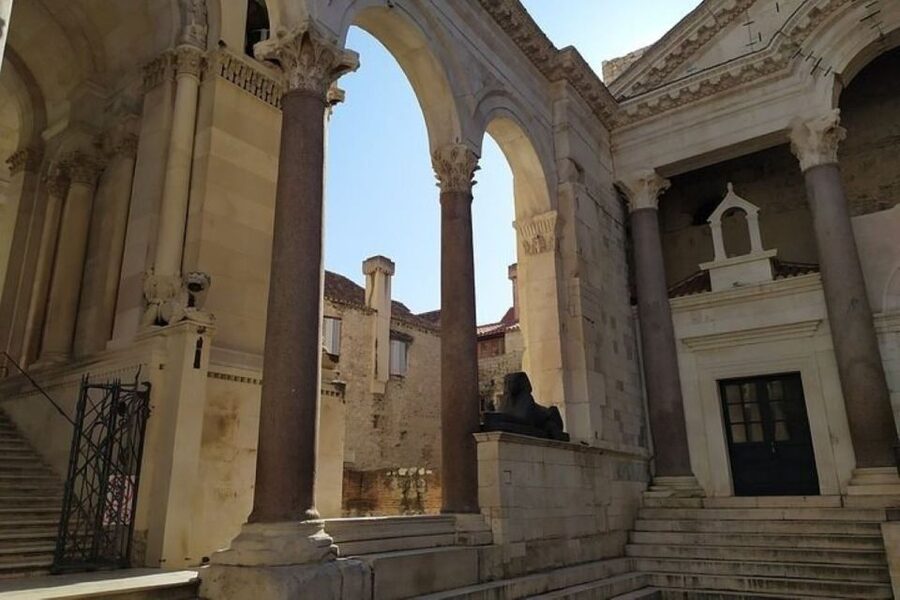
Diocletian’s Cellars receive about 10 minutes. These central substructures are among the most practical parts of the palace to understand because their layout reflects the rooms and spaces above them.
The guide explains the cellars as part of the palace’s design rather than as a separate underground attraction. This can make the upper complex easier to read. You begin to see how the builders supported, organized, and connected the imperial residence.
One practical point is worth keeping in mind: the tour includes a guided look at the cellars, but the supplied details do not say that an admission ticket to every separate paid area is included. The included items are the professional guide and the 3D images and pictures. If you want a longer independent visit to the cellars or cathedral afterward, ask about entry arrangements and allow extra time.
One participant specifically found that returning to the palace substructure and cathedral after the tour improved the experience. That is good advice. Use the walk to get your bearings, then revisit the places that catch your interest.
Riva connects Roman Split with local life
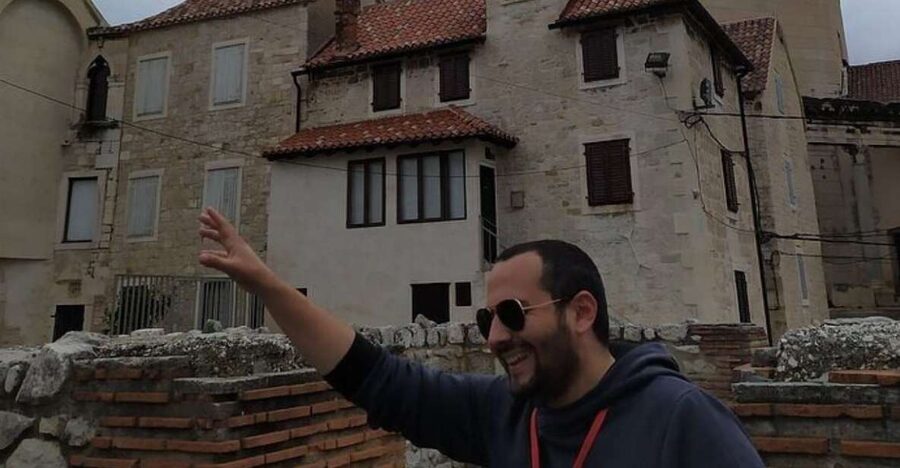
The route leaves the palace for the Riva promenade, with about five minutes here. It is a short stop, but it serves an important purpose. The guide explains the connection between Roman and medieval Split, then introduces the local pomalo way of life.
Pomalo is presented as a local attitude and rhythm that you can notice during your stay. The tour aims to help you take part in the city’s everyday atmosphere instead of treating Split as only an archaeological site.
The Riva section is brief, so do not expect a long waterfront walk or a detailed food tour. Its purpose is to connect the old palace to the city outside the walls and to give you a little social context.
This is also where Boris’s practical recommendations could be useful. His suggestion for good ice cream was praised as accurate, and another participant appreciated food advice after the tour. Since food and drinks are not included, you will pay for any treats yourself.
Fruit Square and People’s Square
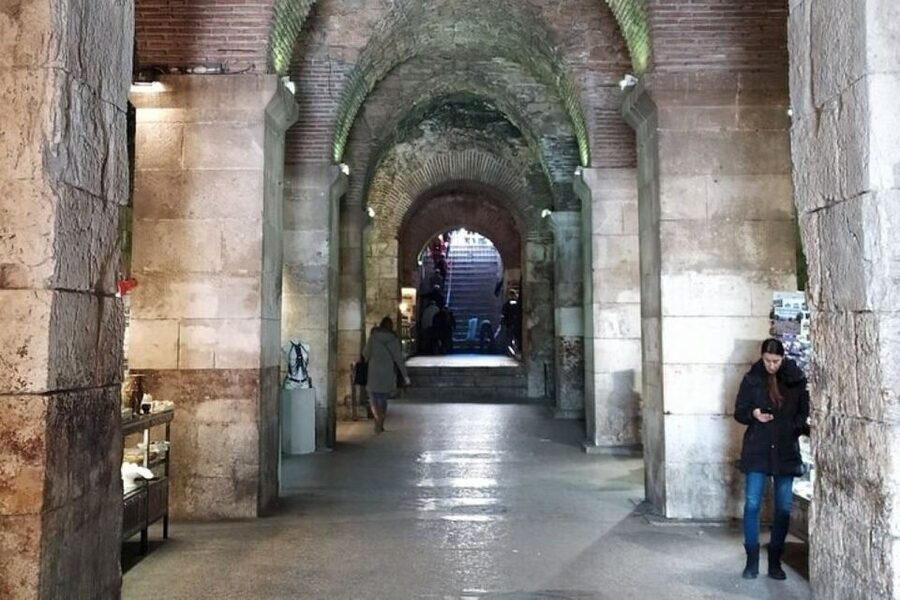
Fruit Square receives about 10 minutes. Its name, architecture, and stories give you a different view of Split from the formal Roman spaces. The guide explains what the square has seen through the centuries and points out details that may be easy to overlook.
People’s Square, or Narodni trg, is the final stop and also the finishing point. The tour spends about 10 minutes here, discussing the square’s architecture and events. Ending in a public medieval square makes sense: you finish with the city’s later civic life rather than returning to the emperor’s palace.
These two squares help correct a common mistake in Split. If you focus only on Diocletian, you miss how much of the city’s identity was shaped after Roman rule. The medieval and modern layers are not side notes. They are the reason the palace feels like part of a real town.
What Boris adds to the experience
Boris is the guide named in the strongest personal feedback. He is described as kind, open to questions, and able to explain palace history alongside Croatian culture, religion, and Split’s sense of community.
That combination matters. A guide can recite the Roman story and still leave you unsure how the city works today. Boris appears to connect the monuments with local habits and practical suggestions, including places to eat and where to get ice cream.
The language options are English and Croatian. The tour is led by a local licensed guide with a master’s degree in history, so it suits you if you want more than a quick orientation.
The group limit of 12 is another plus. In a small group, it is easier to hear in narrow spaces and ask about a detail that catches your eye. The downside is that a larger departure may feel less personal than the five-person example. The maximum is small, but it is not a private tour.
Is $37 a fair price?
At $37 per person, the tour sits in a reasonable range for a two-hour guided walk led by a professional historian. The value comes from interpretation, not from included meals, transport, or a long list of ticketed attractions. Food and drinks are not included, and there is no hotel pickup or drop-off.
I would pay this price if you are visiting Split for the first time, want a clear introduction to the palace, or enjoy asking questions. It is also useful if you want local suggestions before choosing where to eat and what to revisit.
I would think twice if you already know Roman and medieval Split well, or if you prefer to spend 20 minutes inside one monument rather than move through many locations. The route covers a lot in two hours, so some stops are necessarily short.
You can cancel up to 24 hours before the tour for a full refund, and you can reserve now and pay later. Check the available start times when booking. Comfortable shoes are recommended, and bring water or a hat on sunny days.
Who should book this walk?
This is a good match for first-time visitors, history fans, curious families with older children, and anyone who wants to understand why Split’s center looks the way it does. It also suits people who appreciate local advice and prefer a small walking group.
The route is not suitable for people with mobility impairments or wheelchair users. The information provided does not give a detailed accessibility description, so contact the provider before booking if stairs, uneven surfaces, or walking distance may be a concern.
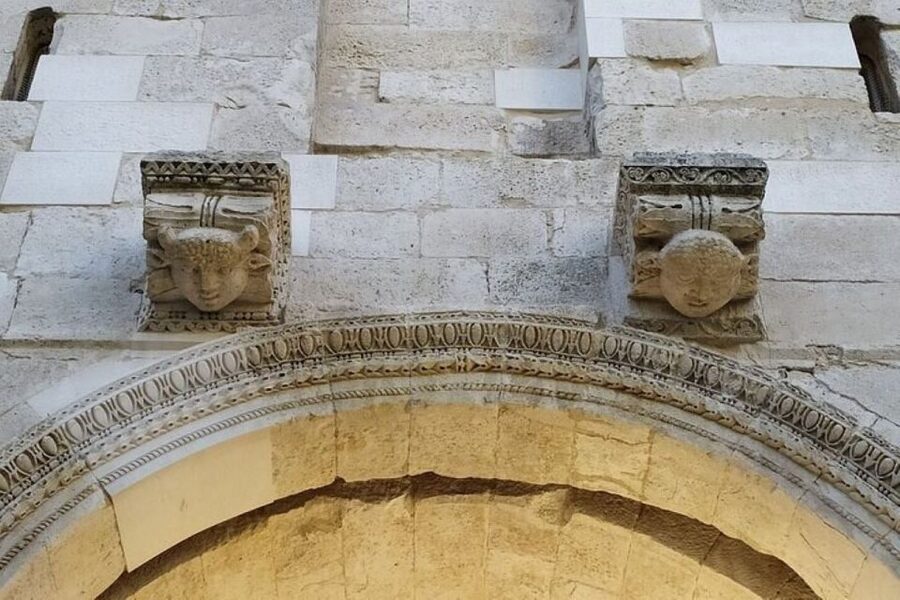
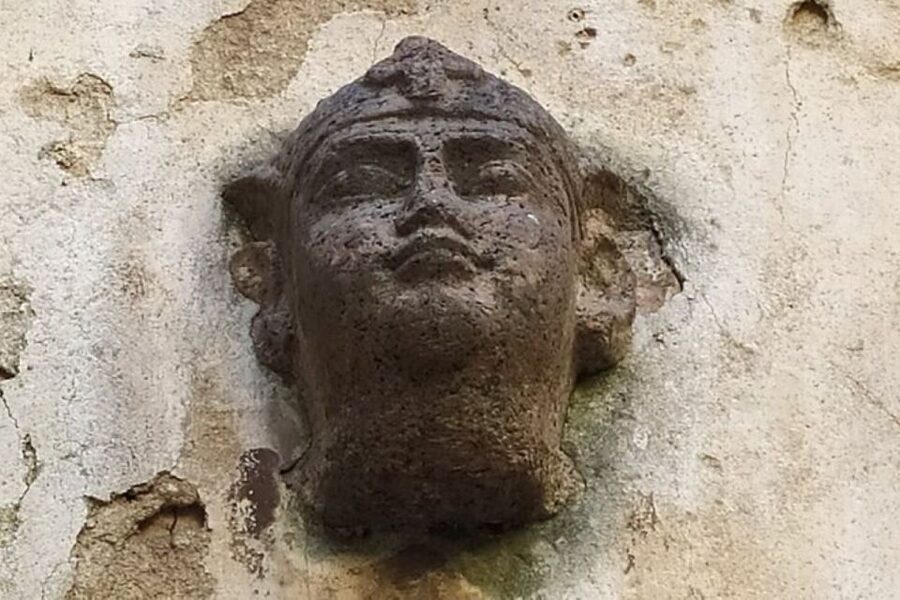
You should also choose this tour if you want both famous sights and smaller details. The Golden Gate, Peristil, Jupiter’s Temple, cathedral, Vestibul, and cellars provide the major landmarks. The narrow street, narrow church, lost sphinx head, secret garden, and other short stops add curiosity without taking over the whole walk.
Should you book the Split History Walking Tour?
Book it if you want a well-organized introduction to Split with a historian who can explain both the palace and the city that grew around it. The small group limit, visual reconstruction material, local-life discussion, and practical tips make the $37 fee reasonable.
Skip it if you need a fully accessible route, dislike packed itineraries, or plan to explore every monument at length on your own. For most first visits, I would take the tour early in your stay, then return to the cellars, cathedral, or palace corners that deserve more time.
FAQ
Where does the tour start?
The tour starts at the Golden Gate, the northern gate of Diocletian’s Palace. It is opposite the eight-meter statue of Gregory of Nin.
Where does the tour finish?
The tour finishes at Narodni trg, also known as People’s Square.
How long does the walking tour last?
The tour lasts two hours.
What is the maximum group size?
The maximum is 12 participants.
What languages are available?
The tour is available in English and Croatian.
Is Diocletian’s Palace included?
The guided walk visits Diocletian’s Palace and several areas within it, including Peristil, Jupiter’s Temple, Vestibul, the cathedral area, and the central cellars.
Is a professional historian the guide?
Yes. The tour includes a local professional guide with a master’s degree in history.
Are food and drinks included?
No. Food and drinks are not included.
Is the tour suitable for wheelchair users?
No. The tour is not suitable for wheelchair users or people with mobility impairments.
Just added around Croatia
- Dubrovnik: Small-Group Guided Old Town History Walking Tour★ 4.9 · 37 reviews
- Dubrovnik Old Town: Night tour with History, Wine & Bites★ 4.7 · 59 reviews
- Dubrovnik: Historical Tour with Game of thrones details★ 4.9 · 43 reviews
- Dubrovnik: Game of Thrones & History Tour★ 4.7 · 72 reviews
- Dubrovnik History and Game of Thrones Locations Tour★ 4.8 · 49 reviews
- Dubrovnik Old Town: Easy paced and accessible History tour★ 4.9 · 20 reviews
- Dubrovnik: History and Game of Thrones Walking Tour★ 4.7 · 85 reviews
- History Split Walking Tour in French -Small group★ 5.0 · 41 reviews
History Walking Tours, compared.
History and Hauntings of Salem Guided Walking Tour
Read our review →
Freedom Trail History Small Group Walking Tour
Read our review →
Historic Charleston Guided Sightseeing Walking Tour
Read our review →
Tapas Walking Tour with Food, Wine, and History
Read our review →
Savannah History and Haunts Candlelit Ghost Walking Tour
Read our review →
A History of Terror – Belfast City Centre Walking Tour
Read our review →Browse the lists this tour appears in