
Review · SOUTH HOLLAND
Rotterdam: Kinderdijk UNESCO World Heritage Entry Ticket
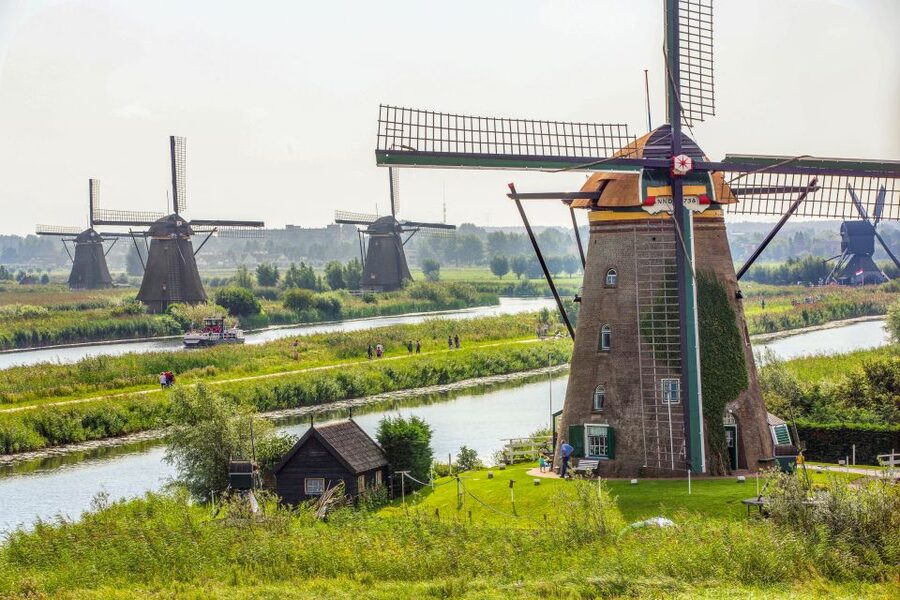
Windmills make Dutch engineering unforgettable. This self-guided visit to Kinderdijk combines nineteen historic windmills, two museum interiors, a pumping station, and a boat ride through the polders. I especially like the chance to see how miller families lived and worked, not just photograph the sails from a path. I also like that you can set your own pace instead of being tied to a group.
The main caution is simple: Kinderdijk requires walking. The paths between the entrance, museums, and boat stops can be long, with little shade. Boat capacity is limited, and bad weather can stop the boats altogether, so the experience depends partly on the day you choose.
Key points to know before you go
- Nineteen working windmills: See a full Dutch drainage system rather than one isolated postcard mill.
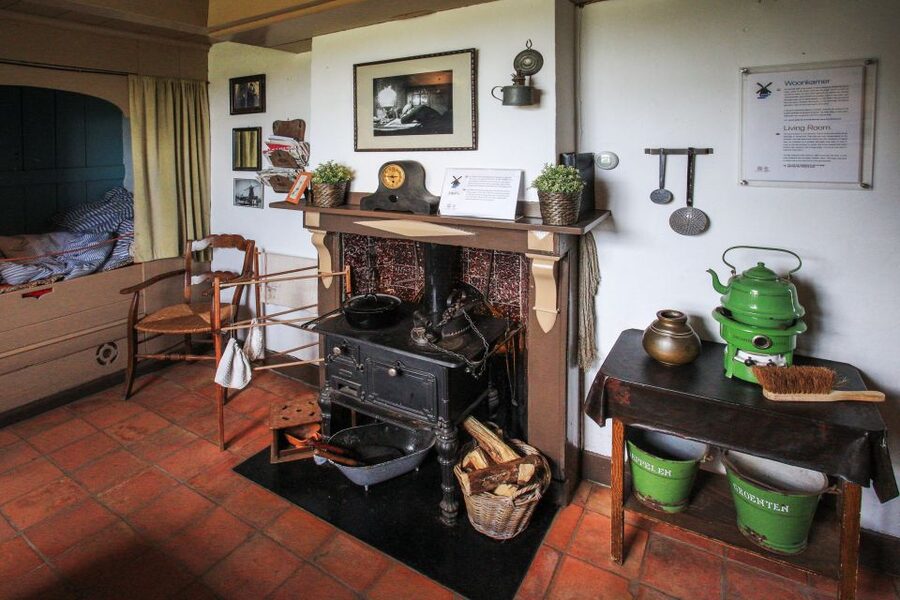
- Two museum mills: Enter Blokweer and Nederwaard to see the machinery and the cramped domestic life of former miller families.
- Boat ride included: Cruise along the canals and polder waterways, but remember that the last boat leaves 30 minutes before closing.
- More than a photo stop: A film, exhibition, audio guide, and pumping station explain why these mills mattered.
- Self-guided and flexible: You can walk, take the boat, or combine both at your own speed.
- Transport is separate: You must arrange your own route from Rotterdam or elsewhere, with waterbus and bicycle options available in the area.
Why Kinderdijk is worth your day
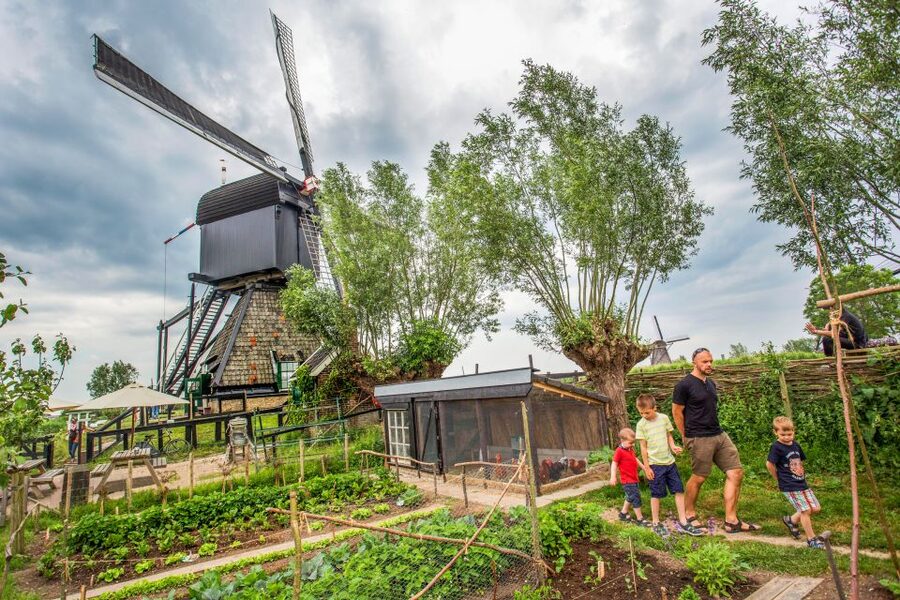
Kinderdijk is not simply a row of attractive windmills. It is a working example of how Dutch communities controlled water for centuries. The mills helped move water from low-lying polders into higher canals, making farmland and settlement possible in a country where water has always been both resource and threat.
That practical story gives the visit weight. You are not only looking at wooden sails turning in the wind. You are seeing part of a large water-management system, with canals, dikes, pumping equipment, and carefully maintained homes all working together.
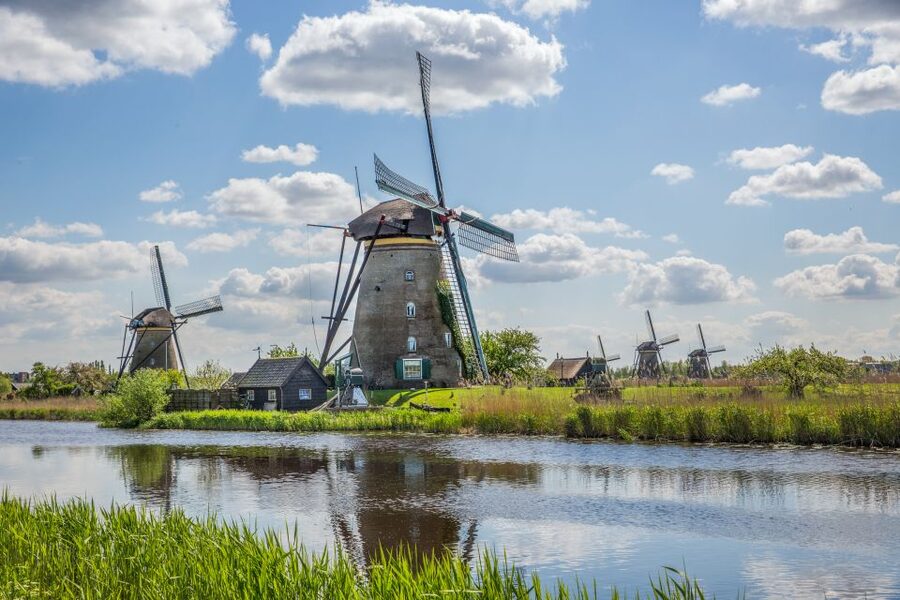
The setting is peaceful. Paths run beside the waterways, and the windmills appear at different distances across the open polder. On a clear day, this is one of the best places near Rotterdam for photographs that feel genuinely Dutch rather than staged.
I like the balance between outdoor freedom and indoor detail. You can spend an hour strolling along the main route, or make a half-day of it by entering the museum mills, watching the film, taking the boat, and stopping at the pumping station. Some people spend two or three hours here. If you bring a bicycle and picnic, you can comfortably stretch the visit longer.
More UNESCO World Heritage Tours in the Netherlands:
- World Heritage Shirakawa-go and Experience Tours from Kanazawa
★ 5.0 · 4,049 reviews - From Tirana: Berat UNESCO Heritage & Belshi Lake Tour
★ 4.9 · 3,863 reviews - Bali: Tanah Lot UNESCO World Heritage Sites Full-Day Tour
★ 4.7 · 1,947 reviews
Arriving from Rotterdam: plan the transport first
The ticket does not include transport, so getting to Kinderdijk is part of your planning. A popular option is the waterbus from Rotterdam toward the Kinderdijk area. One route described by visitors uses Waterbus 21 to Alblasserdam, followed by a bicycle rental for the ride to the site.
This can be a fine way to turn the trip into a Dutch-style outing, but check the waterbus timetable before you leave. A missed return boat can disrupt your whole afternoon. If you are arriving from a cruise ship, allow time to reach the waterbus stop and check the sailing schedule rather than assuming frequent departures.
Driving is possible, but parking can be difficult, especially at busy times. The site itself is spread out, so a bicycle can also be useful once you arrive. Walking remains the simplest option for the core visit, but it is not a short stroll from one end to the other.
For mobility access, the Kinderdijk site is wheelchair accessible and suitable for mobility scooters. The approach by water taxi or waterbus may be less convenient for disabled visitors, so check the specific transport connection before booking. Once inside, the paths and facilities are much more manageable.
Start with the film and exhibition
Near the entrance, the informative film and exhibition help you understand what you are seeing. I would begin here rather than rushing straight toward the first windmill. Without this background, the mills can look like a beautiful line of old machines. With it, the canals and water levels begin to make sense.
The film is short enough to fit easily into your visit. One account describes videos on the boats lasting about nine minutes, while the main site also provides an informative film and exhibition. Use the material as a quick introduction, then let the outdoor visit bring the explanation to life.
An online guide with audio tours is included. It is available in English, Dutch, French, Spanish, Italian, Chinese, and German. The host and greeter languages are Dutch and English, while the audio guide gives you more choice if you prefer to explore without following a live explanation.
Ask for the audio tour code at the information desk if you need it. It may not be handed to you automatically. This small step can make a big difference, especially if you want context while walking instead of reading every display.
Blokweer Museum Mill: domestic life beside the machinery
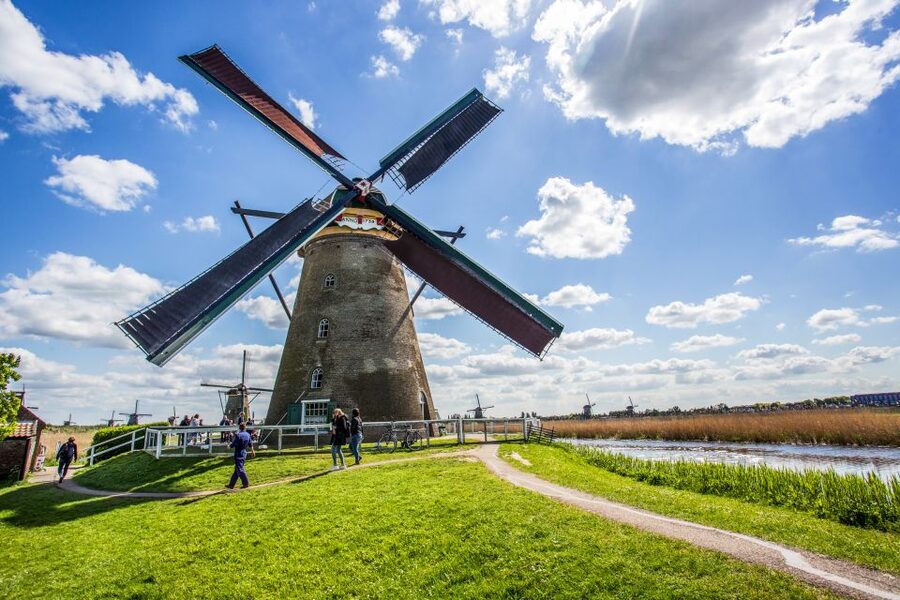
The museum mills are the heart of the ticket. At Blokweer, you get a closer look at the life built around a working mill. The value is not only the age of the structure, but the way the interior shows how a miller’s household operated in a tight, practical space.
Expect narrow areas, working equipment, and a strong sense of how closely home and workplace were connected. The visit helps explain that a windmill was not an ornamental object. It was a job, a home, and part of a water-control system at the same time.
Inside the mill, pay attention to the machinery as well as the rooms. Seeing moving parts and the arrangement of the living quarters makes the work more understandable than a display panel alone. A visit here is particularly useful for families, because children can connect the mechanical system with the daily life of the people who operated it.
The historic interiors are not designed for a quick walk-through. Crowds can make the rooms feel tight, so be patient and allow people ahead of you to move through. You will get more from the stop if you look carefully rather than treating it as another photo point.
More Entry Tickets in the Netherlands:
- Rotterdam: Maritime Museum and historic museum harbor ticket
★ 3.9 · 92 reviews - Edinburgh: Edinburgh Castle Guided History Tour with Tickets
★ 4.8 · 9,933 reviews - Taormina: Ancient Theater Skip-the-Line Ticket & Audio Guide
★ 4.5 · 2,412 reviews - Historic Milan Tour with Skip-the-Line Last Supper Ticket
★ 4.5 · 1,976 reviews
Nederwaard Museum Mill: machinery and miller families
Nederwaard gives you another view of life inside a working windmill. Visiting both mills is worthwhile because each adds detail to the other. The first explains the basic idea. The second reinforces the scale of the machinery and the personal side of mill life.
The interiors show how the final families lived, and that human detail is one of the strongest parts of the experience. You can picture children growing up in the mill, daily work taking place around the equipment, and the household adapting to the constant demands of water management.
The mills are preserved, but they are not lifeless museum shells. Their working character is part of the appeal. When the sails or machinery are active, the system feels practical and powerful rather than merely historic.
If you are short on time, do not skip both interiors in favor of the outdoor paths. Much of the view can be enjoyed without paying for the full ticket, but the museums explain what you are looking at and justify much of the admission cost.
The pumping station explains the modern chapter
The pumping station engine room adds an important contrast. Windmills represent an earlier method of moving water, while the pumping equipment shows how technology later changed the work.
This stop helps you see Kinderdijk as an ongoing water-management story rather than a frozen village. The mills are old, but the problem they address remains central to life in the Netherlands. The machinery also gives visitors who enjoy engineering something beyond the usual scenic walk.
I would place the pumping station between the museum mills and the boat ride, if timing allows. That order creates a clear progression: first understand the people and machines, then see the wider system from the water.
The boat ride: the best view of the full site
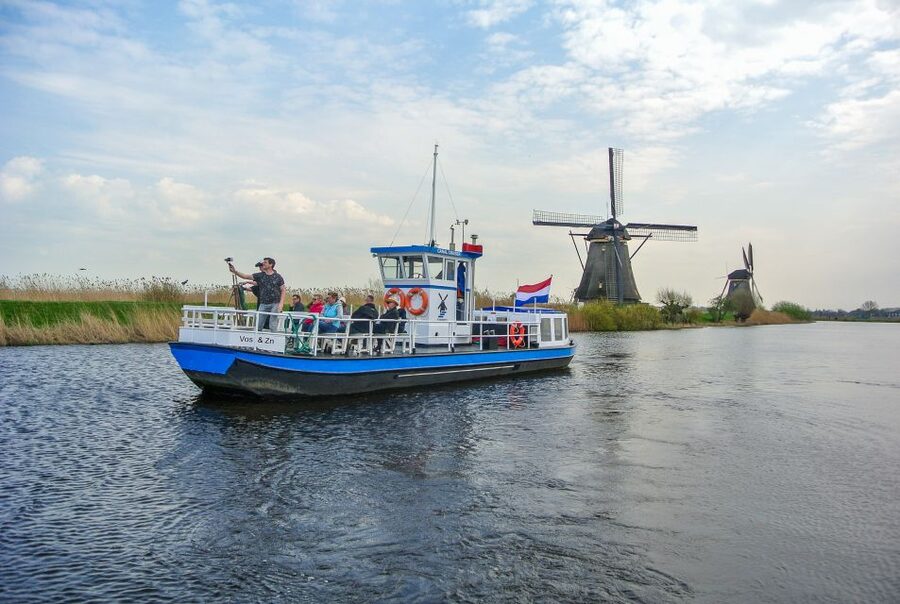
The included boat trip is one of the ticket’s strongest features. From the path, you see individual mills one after another. From the boat, the group becomes a complete water-control system, with sails and roofs lining the canals on both sides.
The ride is relaxing and saves your feet. It also gives you photo angles that are difficult to find while walking. As the boat moves through the polder waters, the windmills drift past at a steady pace, giving you time to appreciate their scale and spacing.
Boats may operate between stops rather than following one long guided cruise. That means you can use the service as transport within the site, then walk back along the paths for a closer look. Some visitors prefer to take the boat around first and return on foot to visit the museums.
Boat space is limited, so do not leave it until the final minutes of the day. The last boat departs 30 minutes before closing, and boats may not sail in poor weather. If the water service is important to you, check conditions and plan it early.
Walking the paths: beautiful, but exposed
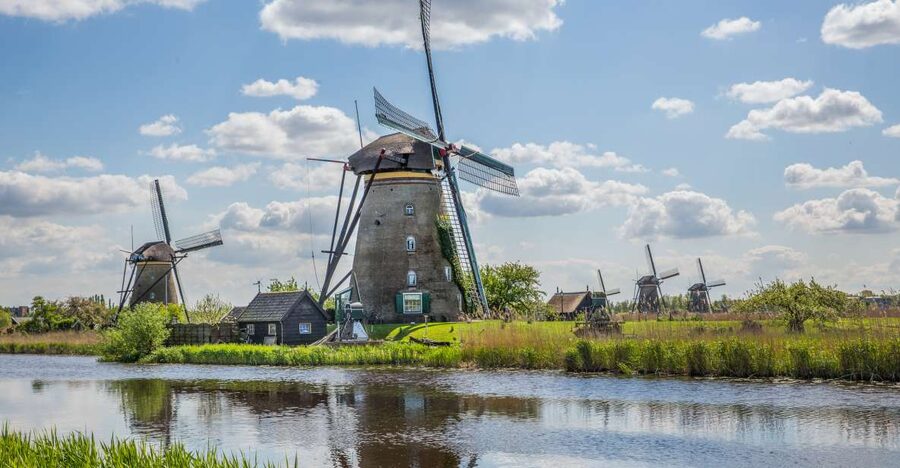
The outdoor route is carefully maintained and rewarding, but it is longer than the entrance area might suggest. You may walk considerable distances between the museums, boat stops, and crossings over the dikes.
There is little shade along some sections. In summer, bring water, sun protection, and a hat. A picnic can turn the visit into a relaxed half-day, though food and drinks are not included with the ticket.
Bicycles can make the wider area easier to cover, but take care on shared paths. Pedestrians and cyclists may use the same routes, and busy sections require attention. If you prefer to stop often for photographs, walking gives you more control.
The quiet is part of the charm. You hear wind, water, and the movement of the mills rather than city traffic. On cloudy days, the visit can still be atmospheric, but good weather makes the open setting much more comfortable.
Is the $25 ticket good value?
At $25 per person, the ticket is a reasonable buy if you plan to use its main inclusions. You receive entry to two museum mills, the pumping station engine room, the boat ride, the film and exhibition, and the online audio guide.
The value is weaker if you only want to photograph the windmills. Much of the main outdoor route can be seen without paying for the full ticket, according to information available at the site. The admission becomes worthwhile when you want to enter the mills and understand how the drainage system worked.
For a first visit to the Netherlands, I think the ticket earns its price. It turns a scenic stop into a proper history and engineering visit, while still leaving you free to walk at your own speed. It can also cost less than a packaged excursion from a cruise port, particularly if you arrange local transport yourself.
The ticket is valid for one day, not for a fixed short session. That matters because Kinderdijk rewards a slower visit. Two or three hours is enough for the main sights, while half a day gives you room for the boat, both museums, the pumping station, and a picnic break.
Best times and seasonal details
Opening hours change during the year:
- Until March 5, the site is open on operating days from 10:30 a.m. to 4 p.m.
- From March 6 through November 1, it is open daily from 9 a.m. to 5:30 p.m.
- From November 2 through December 31, it is open daily from 10:30 a.m. to 4 p.m.
- It is closed on Christmas Day.
Arriving early is useful in the main season. You get a better chance of boarding the boat before it fills, and you have more time for the two interiors. In winter, the shorter hours leave less room for a leisurely visit, so check the schedule carefully.
The site can be beautiful in any season, but the practical experience changes. Summer brings longer opening hours and better picnic weather, along with more sun and more people. Cooler months offer a quieter visit, but boat operation and daylight can be less dependable.
Who will enjoy Kinderdijk most?
I would recommend this experience to anyone interested in Dutch history, engineering, photography, or quiet countryside. It suits families because the scavenger hunt for children gives younger visitors something active to do, while the mills and boat ride provide variety.
It is also a strong choice for independent visitors. You are not locked into a guide’s pace, and the audio tour lets you choose how much explanation you want. Couples and older visitors may appreciate the boat as a break from the walking.
You should think twice if you dislike open, exposed paths or cannot comfortably walk between stops. The site is accessible once you arrive, but transport connections and long distances can still require planning. Visitors who want a fast, tightly scheduled attraction may find Kinderdijk too spread out.
Should you book the Kinderdijk ticket?
Book it if you want more than a windmill photograph. The two museum mills, pumping station, and boat ride give the visit real substance, and the $25 price is fair for a full day of self-guided access.
Skip the ticket if you only want the outdoor view and do not care about entering the buildings. In that case, arrange transport carefully and enjoy the public paths. For most first-time visitors from Rotterdam, though, I would pay for the full experience, arrive early, use the boat before the final departure, and allow at least half a day if your schedule permits.
FAQ
How long is the Kinderdijk ticket valid?
The ticket is valid for one day. You can use that time to visit the museum mills, pumping station, exhibition, and boat service at your own pace.
Does the ticket include transport from Rotterdam?
No. Transport to Kinderdijk is not included. You must arrange your own route, such as a waterbus connection or another local transport option.
Is the boat ride included?
Yes. The ticket includes a boat trip through the World Heritage Site. The boats may not sail in bad weather, and the last boat leaves 30 minutes before closing.
Which museum mills can I enter?
The ticket includes the Blokweer Museum Mill and the Nederwaard Museum Mill. Both show the machinery and living conditions connected with mill life.
Is Kinderdijk wheelchair accessible?
The Kinderdijk site is wheelchair accessible and suitable for mobility scooters. Access by water taxi may be difficult for disabled visitors, so check the transport connection before setting out.
What languages are available for the audio guide?
The online audio guide is available in English, Dutch, French, Spanish, Italian, Chinese, and German. Hosts and greeters speak Dutch and English.
Just added around the Netherlands
- Amsterdam: Luxury Canal Cruise with Historic VR Experience★ 5.0 · 305 reviews
- Amsterdam Walking Tour: Urban Legends & History with local guide★ 5.0 · 39 reviews
- Amsterdam 3 hrs Bike Tour – live guide En/Fr/De/Nl/Sp★ 4.5 · 138 reviews
- Amsterdam Haunted History and Ghost Walking Tour★ 5.0 · 47 reviews
- Private Guided Historic Amsterdam Canal Cruise in a Salon Boat★ 5.0 · 21 reviews
- Historical Walking Tour, private with local Dutch guide★ 5.0 · 23 reviews
- Anne Frank’s Amsterdam Jewish History WWII Exclusive Guided Tour★ 5.0 · 18 reviews
- LGBTQI+ History Tour of Amsterdam★ 5.0 · 123 reviews
UNESCO World Heritage Tours, compared.
World Heritage Shirakawa-go and Experience Tours from Kanazawa
Read our review →

Bali: Tanah Lot UNESCO World Heritage Sites Full-Day Tour
Read our review →World Heritage Kyoto & Nara Uji Authentic Matcha Experience
Read our review →

UNESCO’s Ayutthaya Historical Park: Full-Day Tour from Bangkok
Read our review →
From Busan: Gyeongju UNESCO World Heritage Guided Day Tour
Read our review →
Morning World Heritage Cruise on the Gordon River from Strahan
Read our review →Browse the lists this tour appears in