
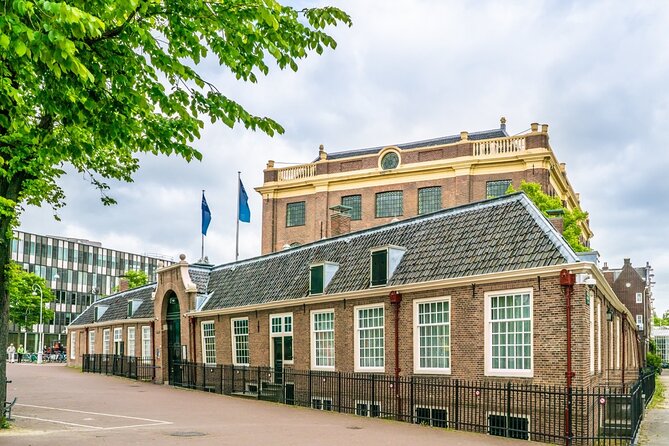
Review · AMSTERDAM
Anne Frank’s Amsterdam Jewish History WWII Exclusive Guided Tour
Amsterdam remembers in public. This 2.5-hour walking tour begins outside the Anne Frank House, then widens the story to Jewish life, resistance, LGBTQ+ victims, deaf victims, and Roma and Sinti families. I like the broad memorial route and the way a private or small-group setting leaves room for questions.
I also like that the guides bring personal energy to difficult material. Guides including Monique, Clare, Jo, Hannah, Anita, Huibert, and Marco have been praised for clear explanations, thoughtful pacing, and local recommendations. The main drawback is simple: you do not enter the Anne Frank House, so this is a companion experience, not a substitute for an interior visit.
- Anne Frank is only the beginning: The tour places her story within Amsterdam’s wider wartime experience.
- Twelve meaningful stops: You visit memorials for Jewish victims, resistance fighters, LGBTQ+ people, deaf victims, and Roma and Sinti victims.
- A private-group format: The booking information says only your group participates, which can make sensitive questions easier to ask.
- No Anne Frank House ticket is included: The first stop is exterior only.
- A city-crossing walk: The route ends at the National Holocaust Names Monument, not back at the starting point.
- Strong guide-led value: The price is $59.28 per person, including a local guide and a satisfaction guarantee.
Why this Anne Frank tour offers more than a photo stop

Many people come to Amsterdam with one wartime site in mind: the Anne Frank House. That museum is important, but Anne’s story can feel isolated if you only visit the hiding place and leave. This tour gives you a wider frame.
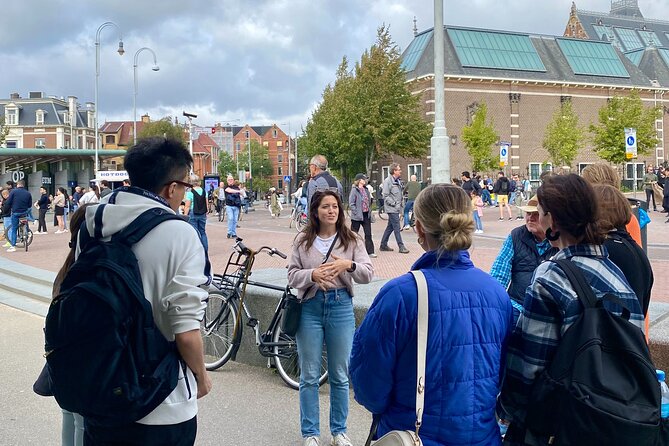
You begin at Westermarkt, outside the Anne Frank House, where the guide explains how Anne, her family, and four others lived in hiding for two years. From there, the route moves through central Amsterdam and the former Jewish Quarter, using monuments and street corners to show how Nazi occupation affected different groups.
That wider view is the tour’s strongest feature. You learn about Anne, but you also hear about Dutch resistance, public protest, deportation, Jewish community life, and the ways Amsterdam remembers people who were targeted for different reasons.
The tone is serious, as it should be. Still, the walk is not only a list of dates and names. The guide is expected to explain how each memorial came to exist and why its design matters. That makes the experience useful for anyone who wants context rather than a quick landmark checklist.
Starting at the Anne Frank House and Westerkerk
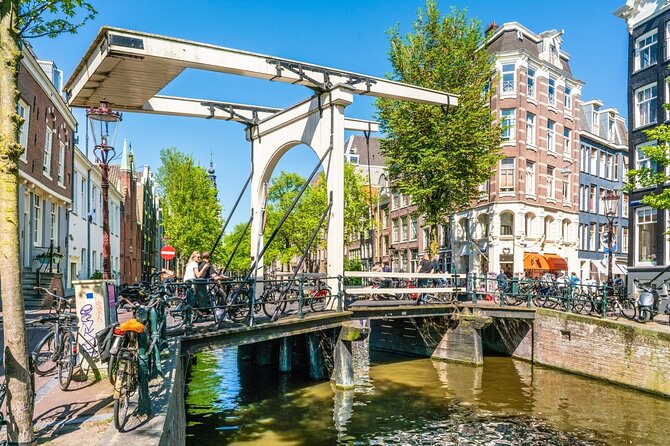
The first stop is the Anne Frank House, seen from outside. You spend about 10 minutes here, learning about the hiding place and the people who lived there.
This is an important limitation to understand before booking. No admission ticket is included, and the tour does not take you through the rooms, bookcase entrance, or exhibition. If you already have a separate Anne Frank House reservation, this walk can work well before or after it. One person found it especially useful as preparation for a later interior visit.
If you cannot get a museum ticket, the tour still gives you a meaningful introduction, but you should not expect the same experience as entering the house. The exterior stop is brief, so most of the value comes from the guide’s explanation and the places that follow.
A short walk brings you to the statue of Anne Frank near Westerkerk. The 17th-century church forms a fitting backdrop. Anne wrote about its bells, which offered both comfort and a reminder that ordinary life continued outside the attic.
This stop adds a human detail to a story that can otherwise become too abstract. You are not just hearing about hiding, fear, and deportation. You are also hearing about a young person listening to the sounds of a city she could no longer freely enter.
More WWII and D-Day Tours in the Netherlands
- Anne Frank and the Jewish History of Amsterdam Private Tour
★ 5.0 · 307 reviews - Anne Frank and Amsterdam Jewish History Walking Tour
★ 5.0 · 259 reviews - Amsterdam: Anna Frank and World War II History Walking Tour
★ 4.8 · 86 reviews
From the Homomonument to Dam Square
The Homomonument broadens the tour beyond Jewish history. It honors LGBTQ+ people persecuted under Nazi rule and is described as the first memorial of its kind in the world.
That inclusion matters because Nazi persecution did not affect one community alone. The monument gives the guide a chance to explain how memorial culture in Amsterdam includes groups whose suffering can be overlooked in a tour focused only on Anne Frank.
The route then reaches Dam Square, Amsterdam’s historic main square. The guide points out the site of a former Nazi recruitment office and the National Monument, a cenotaph for victims of World War II and later conflicts.
This is one of the more public, open parts of the walk. Dam Square can feel busy and commercial, so do not expect a quiet memorial setting. The contrast is useful, though. You see how a central civic space can carry layers of wartime memory while daily city life continues around it.
The stop at the Spinoza Monument shifts the focus back to Jewish intellectual life. Baruch Spinoza was a Dutch Jewish philosopher whose ideas about religion and politics were considered radical in his time. The guide connects his thinking with the later Enlightenment.
You only spend about five minutes here, but it prevents the story of Amsterdam’s Jewish community from becoming limited to persecution. Jewish life in the Netherlands included philosophy, trade, faith, scholarship, and civic participation long before the Nazi occupation.
Jewish resistance and the quiet outline of an orphanage
The Jewish Resistance Monument honors Jewish resistance fighters who died during World War II. Erected in 1988, it also marks the location associated with the first mass protest against Nazi occupation.
This is a valuable stop because it complicates the old image of Jewish people as passive victims. Resistance took many forms, and the guide can help place this protest within the wider story of occupied Amsterdam.
Next comes the Monument Megadlé Jethomiem, a subtle sidewalk memorial. Stones trace the outline of a Jewish orphanage whose children and caretakers were deported to Sobibor in 1943.
You could easily walk past this site without noticing it. That is exactly why it works well with a guide. The memorial does not dominate the street. Instead, the outline asks you to picture the building and the people who were taken from it.
This is one of the most affecting parts of the route because the memorial uses absence rather than a large statue. You see the shape of a place that is gone, while the pavement remains part of ordinary Amsterdam.
The Portuguese Synagogue and the city’s Jewish past
The Portuguese Synagogue is a reminder of Amsterdam’s once-thriving Jewish community. The building was once considered the largest synagogue in the world, and its presence gives physical scale to the community that existed before the war.
The stop is listed as exterior viewing, and admission is not included. The Jewish Museum across the street offers more background on Jewish life, culture, and history in the Netherlands, but entry there is also not part of the tour price.
That makes this section useful as an introduction rather than a museum visit. If you have extra time, you can consider returning to the area independently. The walking tour helps you understand why the synagogue matters before you decide how much more time to spend nearby.
The itinerary gives about 10 minutes to this stop. That is enough for orientation and explanation, but not enough for a full visit inside the synagogue or museum. Keep your expectations practical.
More WWII and D-Day Tours in Amsterdam:
- Amsterdam: Private Anne Frank and Jewish History Tour
★ 5.0 · 26 reviews - Amsterdam Walking Tour:Anne Frank, History & Liberal Culture
★ 5.0 · 18 reviews - Vienna: World War II Historical Walking Tour
★ 4.8 · 1,772 reviews - Zagreb: City & History Walking Tour & WW2 Tunnels
★ 4.9 · 1,202 reviews
The February Strike and the cost of public courage
The Dokwerker statue honors the February Strike of 1941. Thousands of workers protested Nazi persecution in what is remembered as the first public protest against Nazi persecution in occupied Europe.
This is a powerful point in the walk because it shifts attention from individuals in hiding to collective action. The guide can explain how ordinary workers took a public risk, and why this event remains important in Amsterdam’s memory.
The statue itself is direct and sturdy, fitting the story it represents. You spend about 10 minutes here, enough time to listen, ask questions, and consider the scale of the protest.
The next stop is the Deaf Memorial, dedicated to Jewish deaf and hard-of-hearing victims murdered by the Nazis between 1940 and 1945. It is a small memorial, but its subject is rarely covered in a basic city tour.
This is a good example of what the route does best. It keeps widening the story, showing how Nazi categories and murder policies targeted people in specific ways. The memorial also reminds you that victims were not a single, uniform group.
Wertheimpark and the broken sky of Auschwitz
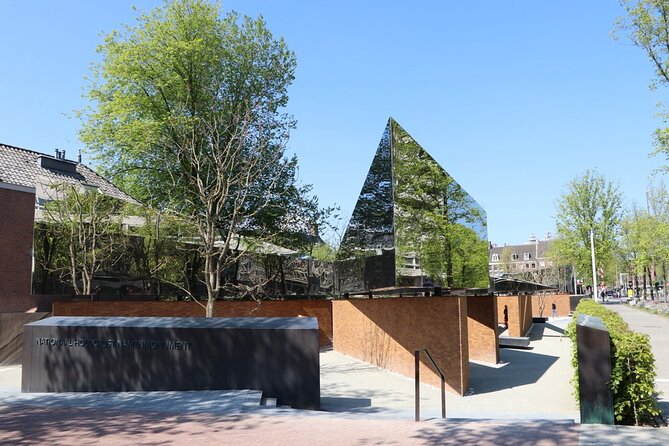
In Wertheimpark, the Auschwitz Monument uses shattered mirrors to reflect the sky. The image suggests that the heavens themselves were broken by the crimes committed in Auschwitz and other concentration camps.
After several urban stops, this park setting gives the walk a quieter pause. The memorial is not simply a name or statue. Its design asks you to look upward and then back down, making the meaning physical without relying on a long inscription.
The guide’s role is especially important here. The symbolism may be clear at first glance, but the historical context gives it weight. You can also ask questions in a setting that is less rushed than a crowded square.
The tour’s final area is the National Holocaust Names Monument, along with Stumbling Stones embedded in the pavement. The Names Monument carries the names of about 102,000 Jewish victims and 220 Roma and Sinti people murdered by the Nazis.
The Stumbling Stones mark the last known residences of people who were deported. These small brass plaques are easy to miss if you are walking alone. With a guide, they become a record of individual lives connected to specific addresses.
Ending here gives the tour a clear movement from one famous person, Anne Frank, toward thousands of named victims. You leave with a better sense of the scale of what happened in the Netherlands, while still being reminded that large numbers are made up of individual people.
What the $59.28 price really covers
At $59.28 per person, the price is reasonable if you value a live guide and a private-group format. You are paying for about two and a half hours of explanation across 12 locations, not for museum admissions, food, transport, or hotel service.
The value improves if you are traveling with people who want to ask questions. The booking information describes the activity as private, with only your group participating. It also refers to small-group and private options, so check the exact format and group discount available when you book.
This is not the cheapest way to see memorials in Amsterdam. You can walk to many of them on your own. But the route is spread across several areas, and the meaning of the sites is not always obvious from a plaque. A good guide saves you research time and connects events that are easy to treat as separate stories.
The strongest praise has gone to guides who personalize the pace and answer questions clearly. Monique was described as passionate and willing to go beyond the planned route. Jo adjusted when the group needed a snack or cup of tea. Marco made the experience personal for a small group, while Clare, Hannah, Anita, and Huibert were praised for clear, thorough explanations.
Those details matter more than a long list of stops. A walking tour about persecution can become tiring or rigid if the guide rushes. Here, the best guide experience appears to include wellness checks, a comfortable pace, and room for questions.
Practical details before you reserve
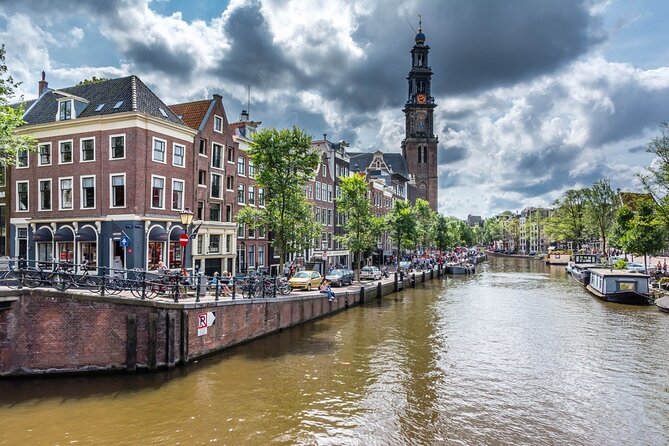
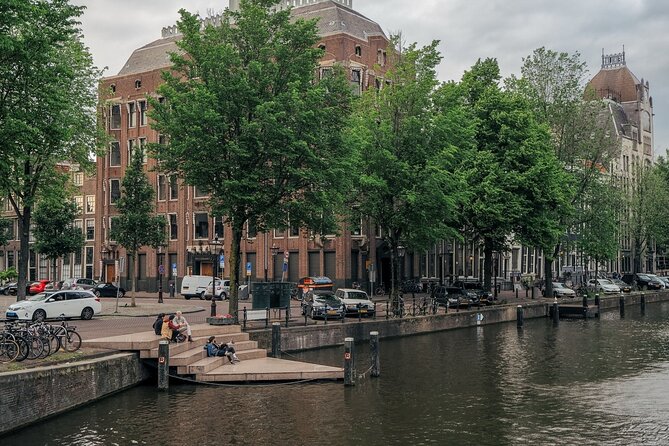
The walk begins at Westermarkt 60, near the Anne Frank House, and ends at the National Holocaust Names Monument in the 1018 postal district. You do not return to the starting point, so plan your next activity from the eastern side of central Amsterdam.
You should be comfortable walking for about two and a half hours. The tour requires a moderate level of physical fitness, and the route is near public transportation. Hotel pickup and drop-off are not included. Taxi or Uber is recommended by the operator if you need a direct ride to the meeting point.
The tour is offered in English and uses a mobile ticket. Food, drinks, luggage storage, coat storage, gratuities, and paid admissions are extra. The Portuguese Synagogue and Anne Frank House are not included as interior visits.
Weather can affect comfort. One guide took care to keep the group comfortable during rain, but you should still dress for an outdoor walk. Bring water and wear shoes suitable for city streets.
Free cancellation is available up to 24 hours before the start time for a full refund. Changes or cancellations inside that period are not accepted, based on local time. A satisfaction guarantee is also included, with money back promised if you are not satisfied.
Who should book this Amsterdam walk?
I would recommend it to first-time visitors who want to understand Amsterdam’s wartime story beyond one famous address. It also suits anyone who has already visited the Anne Frank House and wants to connect that experience with resistance, Jewish community life, and other persecuted groups.
Families with older children may find the format useful if they want a guide to explain difficult subjects in plain language. A private setting can make it easier to pause or ask questions, though the subject matter is naturally serious.
I would hesitate if your main goal is to enter the Anne Frank House. This tour cannot replace that ticket. I would also think twice if you dislike walking, want a quiet self-guided visit, or have only a short time in Amsterdam and need to finish where you started.
Should you book the Anne Frank Jewish History WWII Tour?
Book it if you want the story behind the memorials, not just photographs of them. The Anne Frank House exterior is only the opening chapter. The real value comes from the route’s wider view, the small memorials you could miss alone, and a guide who can connect them.
Skip it if you already know Amsterdam’s memorial sites well or only want interior museum access. For most people seeking a thoughtful, well-paced introduction to Amsterdam during Nazi occupation, $59.28 is a fair price, especially when a strong guide turns a long list of locations into a connected human story.
FAQ
Does the tour include entry to the Anne Frank House?
No. The Anne Frank House is an exterior stop only, and admission is not included.
How long does the tour last?
The tour lasts approximately 2 hours and 30 minutes.
Where does the tour begin?
It begins at Westermarkt 60, 1016 DL Amsterdam, near the Anne Frank House.
Where does the tour end?
It ends at the National Holocaust Names Monument in Amsterdam, postal district 1018.
Is the Portuguese Synagogue included inside the tour?
No. The Portuguese Synagogue is visited as a stop, but entry is not included in the price.
Is the tour private?
The additional information describes it as a private activity with only your group participating. The experience also offers small-group and private tour arrangements, so confirm the format at booking.
What happens if I need to cancel?
You can cancel up to 24 hours before the start time for a full refund. Cancellations or changes made less than 24 hours before the start time are not accepted for a refund.
More Jewish Heritage Tours in Amsterdam
- Amsterdam: Jewish Quarter and History Guided Tour
★ 4.7 · 210 reviews - Budapest Jewish Heritage Memorial Walking Tour & Synagogue Entry
★ 5.0 · 568 reviews - Budapest: Jewish Heritage Guided Tour with Synagogue Ticket
★ 4.8 · 533 reviews - 3-Hour Porto Jewish Heritage Walking Tour with Local Guide
★ 4.5 · 396 reviews
Just added around Amsterdam
- Amsterdam: Luxury Canal Cruise with Historic VR Experience★ 5.0 · 305 reviews
- Amsterdam Walking Tour: Urban Legends & History with local guide★ 5.0 · 39 reviews
- Amsterdam 3 hrs Bike Tour – live guide En/Fr/De/Nl/Sp★ 4.5 · 138 reviews
- Amsterdam Haunted History and Ghost Walking Tour★ 5.0 · 47 reviews
- Private Guided Historic Amsterdam Canal Cruise in a Salon Boat★ 5.0 · 21 reviews
- Historical Walking Tour, private with local Dutch guide★ 5.0 · 23 reviews
- LGBTQI+ History Tour of Amsterdam★ 5.0 · 123 reviews
- Ghost Walking Tour and Dark History in Amsterdam★ 5.0 · 32 reviews
WWII & D-Day Tours, compared.
Pearl Harbor History Remembered Tour from Ko Olina
Read our review →
Hiroshima Peace (Heiwa) Walking Tour at World Heritage Sites
Read our review →
![Pearl Harbor & USS Arizona Small-Group Tour [Early Access]](https://4.historywanderer.com/wp-content/uploads/pearl-harbor-uss-arizona-small-group-tour-early-access-400x266.jpg)
Pearl Harbor & USS Arizona Small-Group Tour [Early Access]
Read our review →
Anne Frank and the Jewish History of Amsterdam Private Tour
Read our review →
Anne Frank and Amsterdam Jewish History Walking Tour
Read our review →Browse the lists this tour appears in