
Review · HONSHU
Historic Kanda Sake Tasting at Tokyo’s Oldest Shop (1596)
Sake tells Tokyo’s story. This two-hour experience takes you into Kanda, introduces a shop founded in 1596, and guides you through seven small pours in a setting tied to the city’s drinking culture. I like the mix of local history and practical tasting. You are not simply handed a tray of drinks. You learn what makes each sake different, then get suggestions for places to continue the evening.
I also like the small group of no more than 10 people, especially for a subject that invites questions. Guides such as Fumino-San have been praised for clear English, friendly service, and useful Tokyo recommendations. The main drawback is simple: food is not included, and the sake pours are small, so you should eat before arriving if you need a full stomach.
What makes this Kanda sake tour worth considering
- The shop dates to 1596, giving the tasting a direct connection to one of Tokyo’s oldest sake businesses.
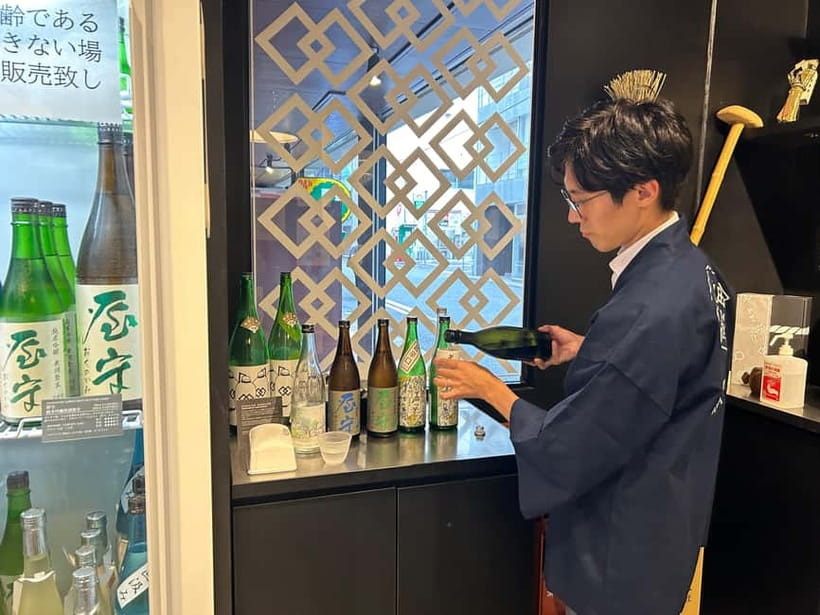
- Seven tasting pours let you compare several styles without committing to full bottles or large glasses.
- Kanda’s salaryman drinking district adds a useful local setting beyond the usual Tokyo sightseeing route.
- Fumino-San and other English-speaking guides explain the drinks clearly and offer extra Tokyo tips.
- The group is limited to 10 people, making it easier to ask about brewing, flavor, and food pairings.
- You can buy a favorite sake at the shop after tasting, though the purchase is optional.
Starting at Kanda Station’s south entrance
Your meeting point is NewDays outside the south ticket gates at Kanda Station. NewDays is a convenience store, so it should be easy to identify once you are in the station, but do not arrive at the last second. The guide carries a sign marked Sake Tasting Tour and can wait only five minutes.
That short waiting window matters. You cannot join halfway through, so allow enough time to find the correct station exit and meeting point. Kanda is well connected, but Japanese train stations can have several exits and plenty of signs to sort through.
The tour returns to the same place at the end. That makes the experience easy to fit into a Tokyo day. You can schedule it before dinner, after sightseeing, or near the end of an evening in central Tokyo without arranging a complicated transfer afterward.
Bring a valid passport or other ID. The guide must confirm that you are at least 20 years old, the legal drinking age in Japan. Comfortable shoes and relaxed clothing are sensible because the tour includes walking through the neighborhood.
Other history tours people book around Tokyo:
- Tokyo: Imperial Palace and Shogun Historical Walking Tour
★ 5.0 · 2,251 reviews - Tokyo Castle & Imperial PalaceーShogun Walking Tour
★ 4.7 · 1,068 reviews - Tokyo: Imperial Palace Japanese History Walking Tour
★ 4.9 · 987 reviews
A short walk through Kanda’s drinking district
The first guided section takes about 20 minutes through Kanda’s west entrance shopping street. This is not a long sightseeing walk with a list of major monuments. Its value is the setting.
Kanda is known as a drinking area for Japanese office workers, often called salarymen. The streets and local businesses help explain how sake fits into ordinary city life. You get a look at the sort of neighborhood where a drink after work, a quick meal, and a few glasses with colleagues form part of the daily rhythm.
I like this introduction because it gives the tasting a place and a purpose. Sake is easier to understand when you see the kind of neighborhood where it is bought and enjoyed. You are not studying the drink in an isolated classroom.
The walk lasts only 20 minutes, so keep your expectations realistic. It is an orientation to Kanda rather than a full neighborhood tour. The short length is also useful if you have limited time or prefer not to spend half a day on one subject.
Entering Toshimaya Rita-Shop, established in 1596
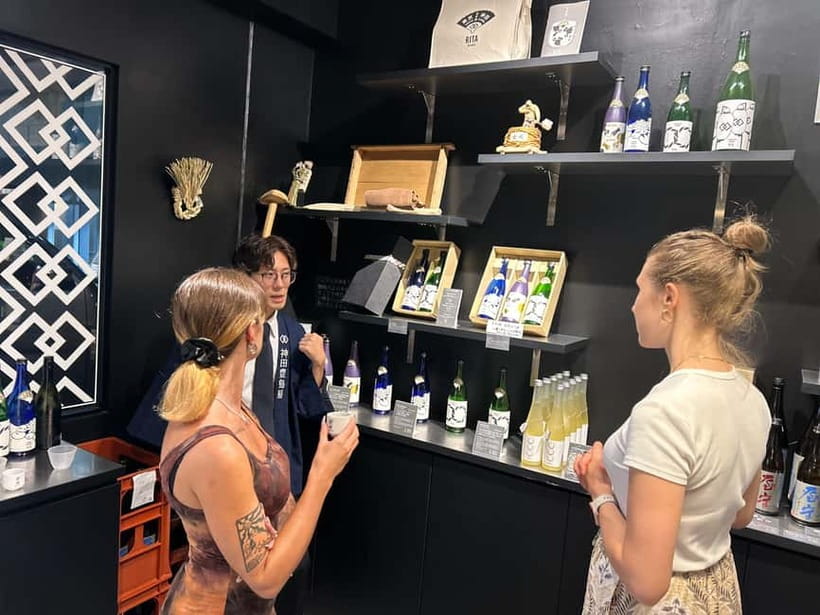
The central stop is Toshimaya Rita-Shop, where the experience continues for about 90 minutes. The shop’s foundation in 1596 is the key historical detail. That date places the business in the late 16th century, giving you a direct link to a long-running Japanese sake tradition.
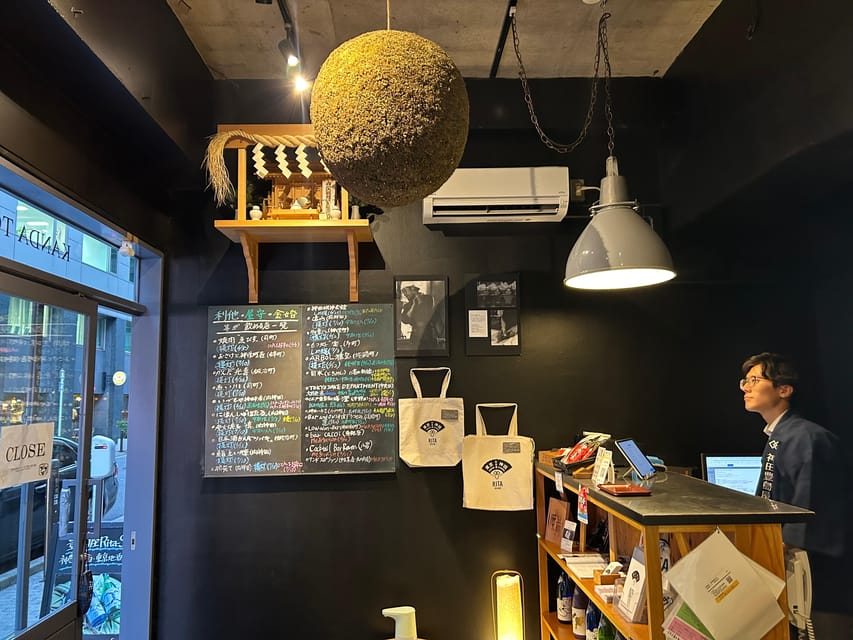
You first have time to take in the shop and hear about its background. The atmosphere is part of the experience. You are seeing where the sake is sold before sampling the bottles, which helps connect the explanations to a real working shop.
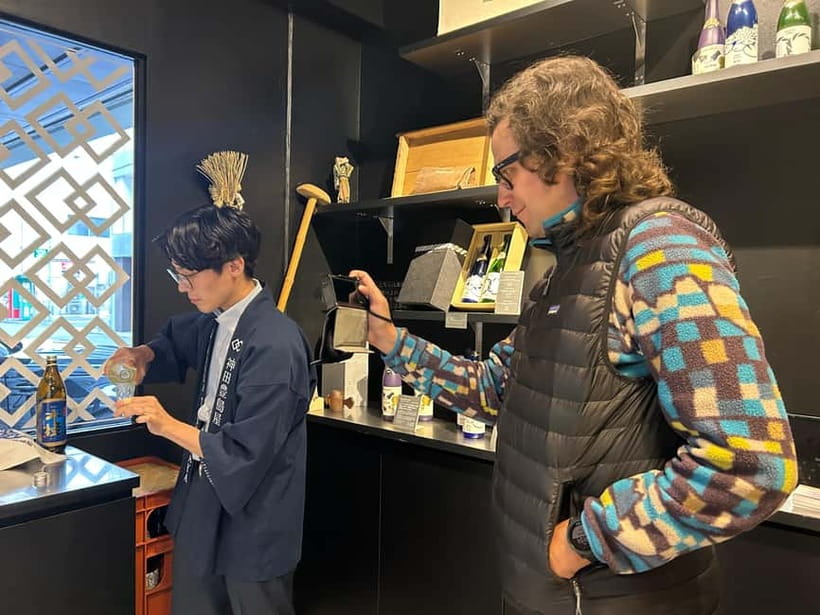
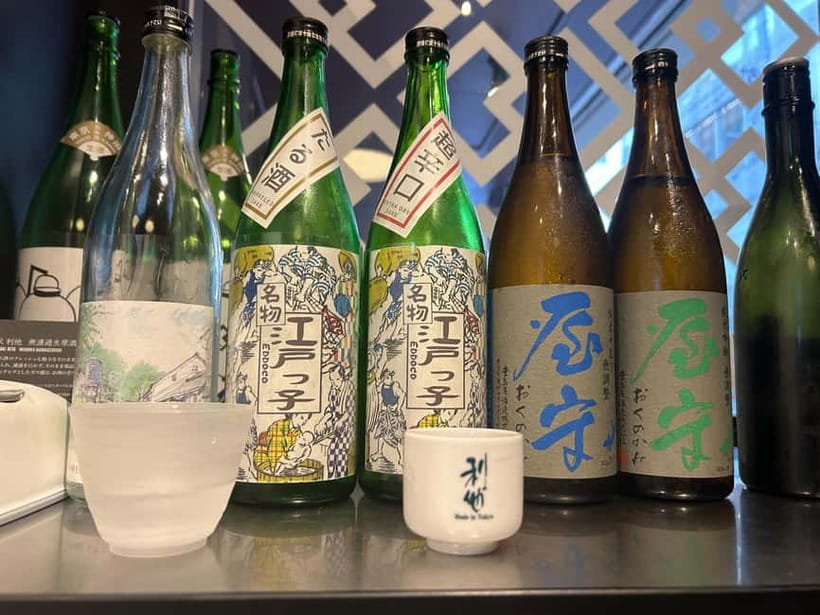
After the introduction, you move to another room for the tasting. Around seven types of sake are served, with each pour measuring approximately 10 to 20 milliliters. These are tasting portions, not full glasses. That is good news if you want variety and need to stay alert for the rest of your Tokyo plans.
The exact selection can change by season and timing. You should treat that as a strength rather than expecting a fixed menu. The point is to compare what the shop is offering at that moment, not to receive the same bottle list all year.
How the seven sake tastings work
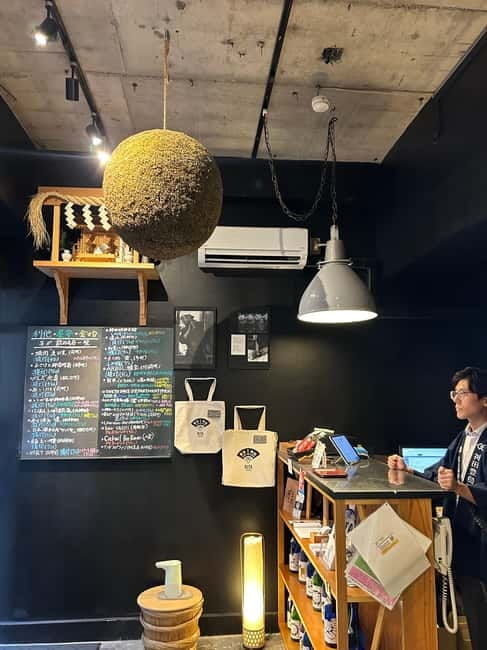
The small pours let you compare different varieties without guessing which full bottle to buy. The guide explains the sake, its production, its background, and the differences in flavor. That structure suits both newcomers and people who already know a little about sake.
If you are new to sake, do not worry about having the right vocabulary. You can ask basic questions about how the drinks are made and how one type differs from another. The English-language guides are there to explain the details in plain terms.
If you already enjoy sake, the tasting still gives you room to ask more specific questions. One particularly strong point from the guide feedback is the ability to handle detailed questions in English. Fumino-San has been praised for beautiful English, a friendly manner, and useful answers about the drinks.
The tasting cups are small, so this is not a leisurely bar session with large servings. I see that as a good match for a short afternoon activity. You can focus on comparison, remember what you liked, and avoid turning the tour into a heavy drinking event.
The available sake may change, so do not book this expecting one particular label. If you find a bottle you enjoy, you can purchase it at the shop afterward. That option adds value because you can make a decision after tasting instead of choosing from a shelf based only on a label.
A few more history tours around Tokyo worth a look
- Tokyo: Shinjuku Historical Walking Tour & Secret Backstreets
★ 5.0 · 530 reviews - From Tokyo: Nikko World Heritage Site Private Full-Day Trip
★ 4.9 · 243 reviews - Tokyo: The Best of Izakaya in Shinjuku Food & Cultural Tour
★ 4.9 · 221 reviews - Tokyo: Nikko World Heritage Private Day Trip Hotel Pick-up
★ 4.8 · 145 reviews
The shop return and local drinking advice
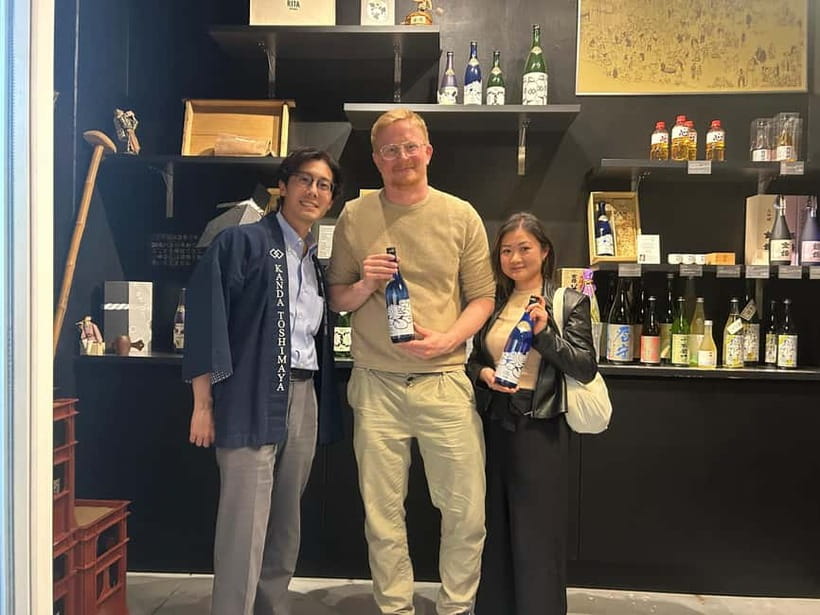
After the tasting, the guide introduces nearby places for good sake and izakaya food. This may be the most useful part for anyone who wants to continue exploring Kanda after the tour.
An izakaya is a Japanese drinking-and-dining place, and the guide’s recommendations can help you turn a short tasting into a fuller evening. The activity does not include food, so these suggestions are especially helpful if you are ready for dinner.
You then return to the shop for more browsing and shopping. The order works well: first you learn, then taste, then hear where to go next, and finally return to the bottles with a better sense of what interests you.
I would not treat the final shopping stop as a required sales pitch. A German participant described the sales conversation as expected and acceptable at this price. That is a fair way to view it. You get a chance to buy a sake you have already tasted, but you are not required to purchase anything.
What $38 buys you
At $38 per person, the price is reasonable if you value instruction and local context, not just alcohol. Seven tasting pours alone do not tell the whole value story. You are also paying for an English-speaking guide, the shop visit, the Kanda walk, explanations about sake, and recommendations for places to eat and drink afterward.
The small group improves the value. With a maximum of 10 people, the guide can answer questions more easily than on a large bus-style activity. Some departures may be even smaller. One participant described a group of three, which allowed for a very personal session.
The price is less attractive if you only want to drink sake cheaply. You do not receive food, and each pour is only about 10 to 20 milliliters. If your priority is a large meal or a long night at a bar, spend the $38 elsewhere.
For someone who wants a focused introduction before exploring Japanese drinking culture independently, I think the cost makes sense. The guide’s local recommendations can also help you avoid wandering around Kanda without knowing where to start.
The practical limits you should know
This is an alcohol tasting, so the age rule is firm. Every participant must be at least 20, and you need a passport or valid ID for verification. The experience is not suitable for people under 20 or pregnant women.
You should also skip it if you have a cold. That may sound like a minor rule, but tasting depends on your sense of smell and taste, and the activity involves shared indoor time with a small group.
Eat before you arrive if you are hungry. Food is not included, and the tasting portions are small rather than meal-sized. You are not allowed to bring food into the activity.
Wear comfortable shoes and clothes. The schedule includes a short neighborhood walk, time in the shop, and a move to a separate tasting room. Nothing suggests strenuous walking, but comfort will make the two hours easier.
English is the tour language. The strongest guide feedback points to clear explanations, easy communication, and helpful answers. Still, the level of conversation may depend on the guide and the group, so arrive ready to participate and ask questions.
Who will enjoy this experience most
I would recommend this to a first-time sake drinker who wants more than a quick sample at a bar. The guide explains the basic differences and gives you a safe way to compare several types before buying anything.
It also suits experienced sake drinkers who enjoy asking about production, history, and flavor. The small group and English-speaking guides make it easier to move beyond a standard introduction.
Kanda is a good fit if you want to see a less polished, more everyday side of Tokyo. The focus is not on famous views or major temples. Instead, you get a short look at a neighborhood shaped by after-work drinking, local shops, and izakaya culture.
This is less suitable if you dislike alcohol, need a full meal during the activity, or prefer a fixed tasting menu. Since the sake selection changes, you should enjoy the idea of discovery rather than arrive with a precise bottle list in mind.
Planning your two hours in Tokyo
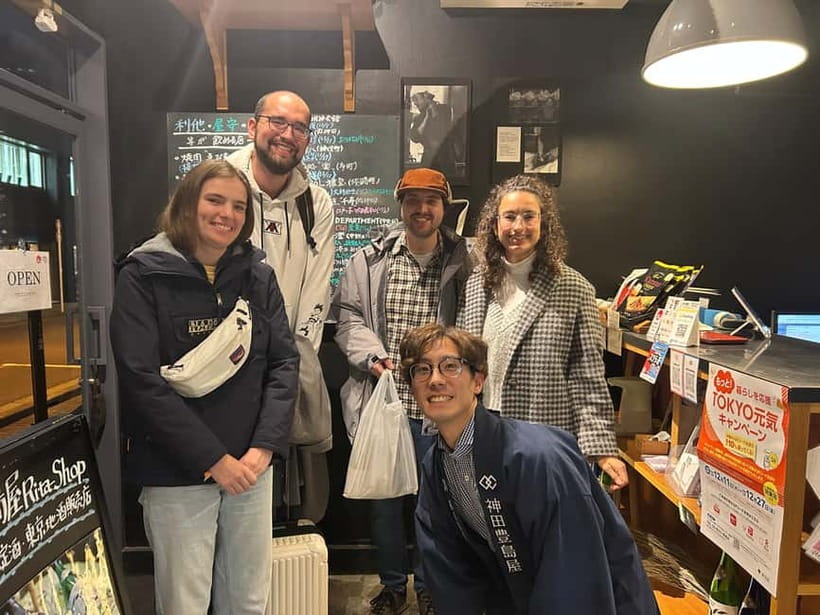
The tour lasts two hours, including the 20-minute guided walk and about 90 minutes at Toshimaya Rita-Shop. The meeting and return point is NewDays outside Kanda Station’s south entrance, which keeps the logistics simple.
Because the guide waits only five minutes, build in a station-finding margin. Do not confuse the south entrance with another Kanda exit, and check the meeting instructions before leaving your hotel.
The tour may work well before dinner because the guide points out nearby izakayas afterward. It can also work as a compact afternoon activity between other plans. I would avoid scheduling it immediately before a timed attraction if you are unfamiliar with Kanda Station.
Free cancellation is available up to 24 hours before the start for a full refund. You can also reserve and pay later, which helps if your Tokyo schedule is still shifting. Check the available starting times when booking, since the exact departure options can vary.
Should you book the Kanda sake tasting?
Book it if you want a friendly, focused introduction to sake with real neighborhood context. The strongest reasons are the 1596 shop, seven changing tastings, the small group, and the chance to ask an English-speaking guide about both sake and Tokyo.
I especially like it for couples, solo visitors, and small groups who want an easy evening plan before dinner. Fumino-San’s clear English and local recommendations have been singled out as major strengths, and the 4.9 rating from 33 reviews supports the idea that the guiding is a key part of the experience.
Skip it if you want a full meal, large pours, or a long bar crawl. For everyone else, $38 is a fair price for two hours of useful instruction, local history, and a direct introduction to Kanda’s sake scene.
FAQ
How long does the sake tasting experience last?
The experience lasts two hours.
Where does the tour meet?
It meets at NewDays outside the south entrance ticket gates at Kanda Station.
How will I recognize the guide?
The guide will be holding a sign marked Sake Tasting Tour.
Can I join after the tour has started?
No. The guide can wait only five minutes, and you cannot join partway through the experience.
How old must I be to participate?
You must be at least 20 years old, which is the legal drinking age in Japan.
Do I need to bring identification?
Yes. Bring a valid passport or ID card because your age must be verified.
How many sake tastings are included?
Seven sake tastings are included. Each pour is approximately 10 to 20 milliliters.
Will the exact sake selection always be the same?
No. The sake available for tasting may change according to the season and timing.
Is food included?
No. Food is not included, and eating before the tour is recommended if you are hungry.
Is the tour conducted in English?
Yes. The live tour guide conducts the experience in English.
Just added around Tokyo
- From Tokyo: Private Nikko World Heritage Sights One Day Trip★ 4.7 · 52 reviews
- From Tokyo: Guided Day Trip to Nikko World Heritage Sites★ 4.8 · 51 reviews
- Asakusa: A Big-picture History Walk to Know Japan★ 4.6 · 77 reviews
- Asakusa: 3.5-hour Big-picture History Walk★ 4.7 · 39 reviews
- From Tokyo: Nikko World Heritage Site Private Full-Day Trip★ 4.9 · 243 reviews
- Tokyo: Nikko World Heritage Private Day Trip Hotel Pick-up★ 4.8 · 145 reviews
- From Tokyo: Nikko World Heritage Sight Full Day Private Tour★ 4.9 · 127 reviews
- Tokyo: The Best of Izakaya in Shinjuku Food & Cultural Tour★ 4.9 · 221 reviews
Tokyo History Tours, compared.
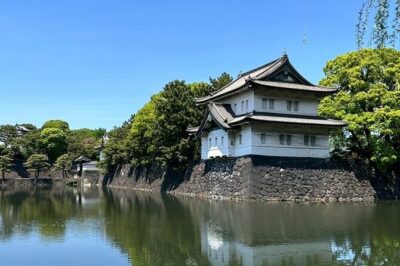
Imperial Palace and Shogun Historical Walking Tour
Read our review →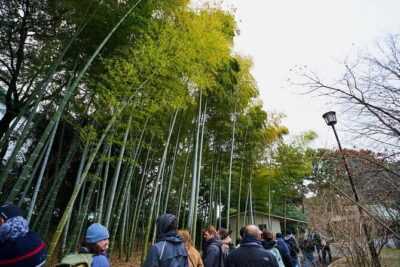
Tokyo Castle & Imperial PalaceーShogun Walking Tour
Read our review →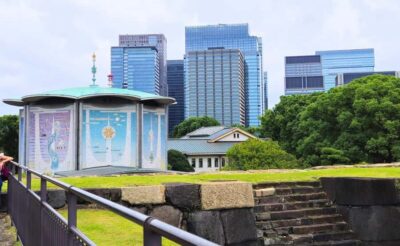
Tokyo Castle & Imperial PalaceーShogun Walking Tour
Read our review →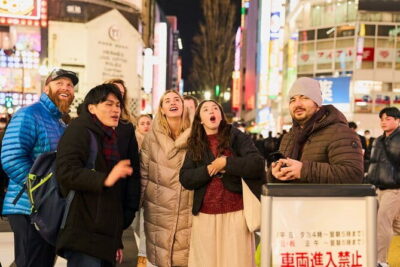
Shinjuku Historical Walking Tour & Secret Backstreets
Read our review →
Imperial Palace East Garden and Edo Castle Walking Tour in Tokyo
Read our review →
The Best of Izakaya in Shinjuku Food & Cultural Tour
Read our review →Browse the lists this tour appears in