
Review · HONSHU
Tokyo: Imperial Palace Japanese History Walking Tour
History feels close here. This walking tour turns Tokyo’s Imperial Palace grounds into a clear story about samurai power, shoguns, and the birth of modern Japan. I like the friendly English-speaking guides, especially names such as Mika, Natsumi, Lakki, and Alexandre, who explain the past in plain language. I also like the route’s mix of castle ruins, gardens, bamboo, and royal koi fish. The main drawback is that you cannot enter the Inner Palace, and the walk may be hard in summer heat, rain, or for anyone with limited mobility.
At $32 per person, this is a sensible way to get context before exploring more of Tokyo. You are not paying for grand interiors or a long list of admissions. You are paying for interpretation: someone who can explain why Edo Castle mattered, how the social order worked, and how a shogun’s stronghold became an emperor’s palace.
- Walk through Otemon Gate, the historic entrance to the former Edo Castle grounds.
- See castle remains and a miniature model that helps you picture the original complex.
- Learn the old social order, from farmer and samurai to daimyo and shogun.
- Spot royal koi and gardens, including trees sent to the emperor from around Japan.
- Get practical Tokyo advice, with guides often suggesting food and sightseeing ideas.
- Expect a rain-or-shine walk, with no access to the Inner Palace.
Why Edo Castle Is the Right Place to Start
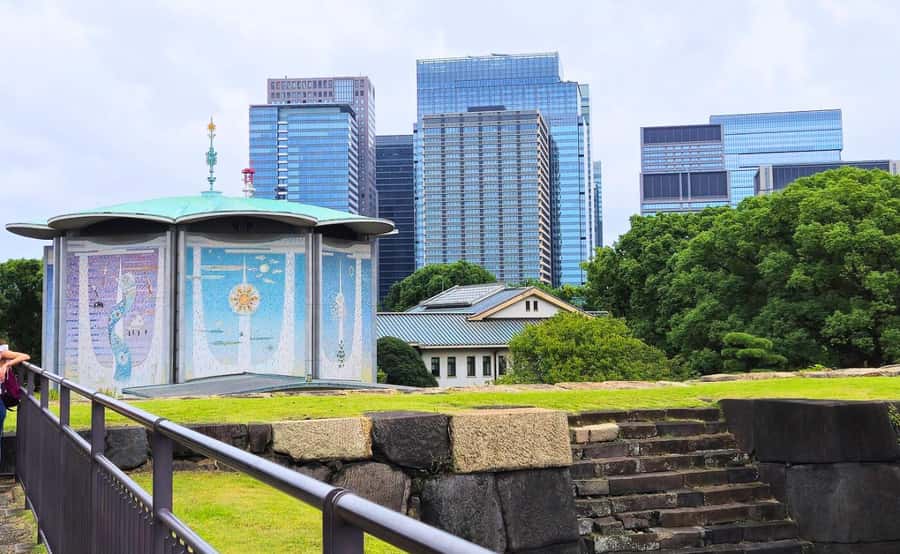
Tokyo can feel modern to the point of abstraction. Glass towers, train stations, and dense streets make it easy to forget that this city was once Edo, the seat of shogun power and one of Japan’s most important political centers.
This tour begins by putting that older city back on the map. The grounds occupy the site of Edo Castle, which shaped Japanese politics for more than 250 years. You do not simply look at a palace and take a photograph. You learn how power worked here, who answered to whom, and why the transition from shogun rule to imperial government changed the country.
That context is the tour’s main value. Without a guide, the stone walls and garden paths are pleasant but easy to misunderstand. With a guide, a gate becomes part of a defensive system, a ruined foundation becomes evidence of a vanished castle, and the palace grounds become a place where Japan’s political story unfolded.
The tour is especially useful early in your Tokyo visit. Several people praised it as a good first activity because the historical overview helped them understand the city and Japanese culture. I agree with that logic. A couple of hours here can give you a framework for later visits to museums, temples, castles, and historic neighborhoods.
Meeting at Wadakura Fountain Park
The meeting point is practical, but give yourself time to find it. From Tokyo Station or Otemachi Station, walk roughly five to ten minutes to Wadakuramon Fountain Park. Your guide waits near the Starbucks by the fountain, holding a Sunrise Adventure sign.
This arrangement is easier than searching around a large palace entrance. Several guides were praised for making themselves easy to identify, and that matters in central Tokyo, where station exits and broad avenues can quickly become confusing.
Bring water and arrive ready to walk. The tour runs in English, with French also available, and it ends back at the same meeting point. That return is handy if you want to continue toward Tokyo Station, Otemachi, or another nearby part of the city.
The meeting point also gives you a useful mental reset. You leave the commercial energy of the station area and move toward open garden space and historic walls. The change is quick, which is one of the pleasures of central Tokyo.
More Castle and Palace History Tours in Japan
- Tokyo: Imperial Palace and Shogun Historical Walking Tour
★ 5.0 · 2,251 reviews - Tokyo Castle & Imperial PalaceーShogun Walking Tour
★ 4.7 · 1,068 reviews - Tokyo Castle & Imperial PalaceーShogun Walking Tour
★ 5.0 · 724 reviews
Through Otemon Gate and Into the Castle Grounds
The route heads toward Otemon Gate, the grand entrance to the palace grounds. This is where the tour begins to feel more like a history lesson in place, rather than a general walk through a public garden.
Your guide explains what the gate controlled and how the castle complex was organized. The original Edo Castle is gone, so expectations matter. If you are hoping to tour preserved rooms, ornate palace halls, or a complete fortress, this is not that experience.
Instead, you see traces. The ruins and foundations give you clues about the scale and design of the old castle. A miniature model helps fill in the gaps, showing what the site looked like before fire, political change, and rebuilding altered it. That model is particularly useful because the present-day gardens do not immediately reveal the size or importance of the former fortress.
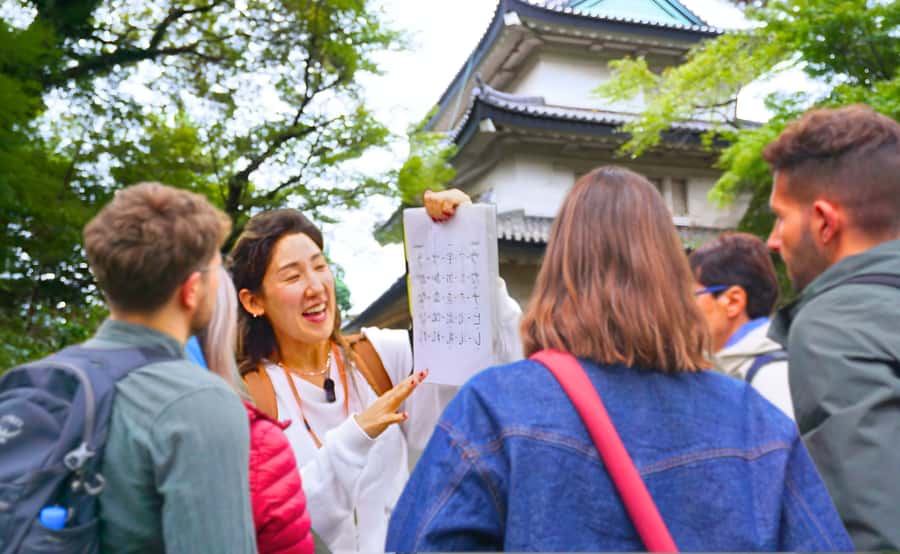
Guides use questions and conversation to keep the walk active. Valentina praised the interactive style, while families appreciated that guides such as Lucky included children in the discussion. This approach works better than a long speech delivered while everyone trails behind.
Shoguns, Daimyos, and the Old Ranking System
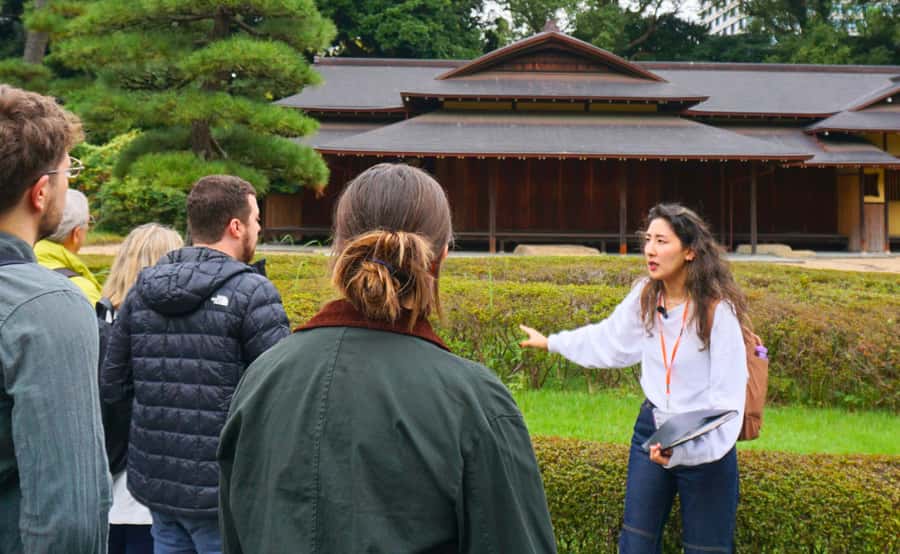
The strongest educational part of the walk is the explanation of Japan’s former ranking system. You learn how farmers, samurai, daimyo, and shoguns fit into the structure of Edo-period society.
The point is not to memorize a list. The ranking system helps explain why Edo Castle mattered. The shogun was the military ruler, while daimyo were powerful regional lords whose loyalty and movements were closely managed. Samurai served within this order, and farmers occupied an important but lower position in the official social structure.
A good guide connects these categories to the physical site. Castle walls, controlled entrances, and large compounds were not decoration. They supported a system built around protection, status, duty, and political control.
The guides receive their strongest praise for making this material understandable. Natsumi is repeatedly described as a clear storyteller who connected the Edo and Meiji eras to the growth of modern Tokyo. Mika was praised for answering many questions in excellent English. Lakki was noted for warmth, humor, and strong explanations.
The quality can naturally vary by guide, but the repeated praise for Mika, Natsumi, Lakki, Lucky, Alexandre, and others suggests that the experience depends on people who take the teaching side seriously. Alexandre also leads tours in French, giving French-speaking visitors another option.
What You Actually See Along the Way
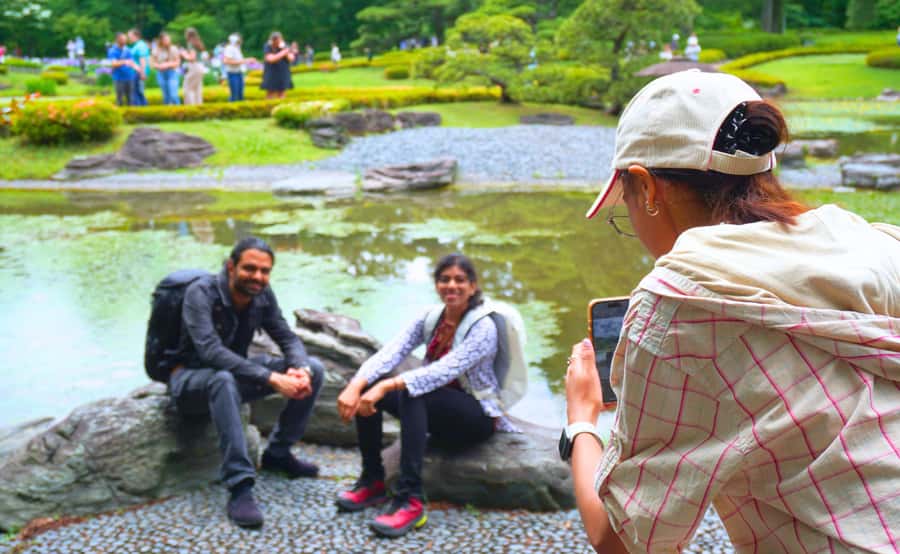
The walk combines several kinds of stops, which keeps it from becoming a sequence of stone walls.
You may pause at former samurai residences or remnants of the old castle complex. These places help connect the ruling structure to daily life. You also see trees from different parts of Japan that were given to the emperor, creating a living record of regional connections.
The gardens offer the visual relief you want during a history walk. Paths pass through greenery, bamboo, and carefully maintained spaces. The setting is calm, but do not mistake calm for empty. The gardens show how the palace grounds serve both as a public park and as a place connected to the imperial household.
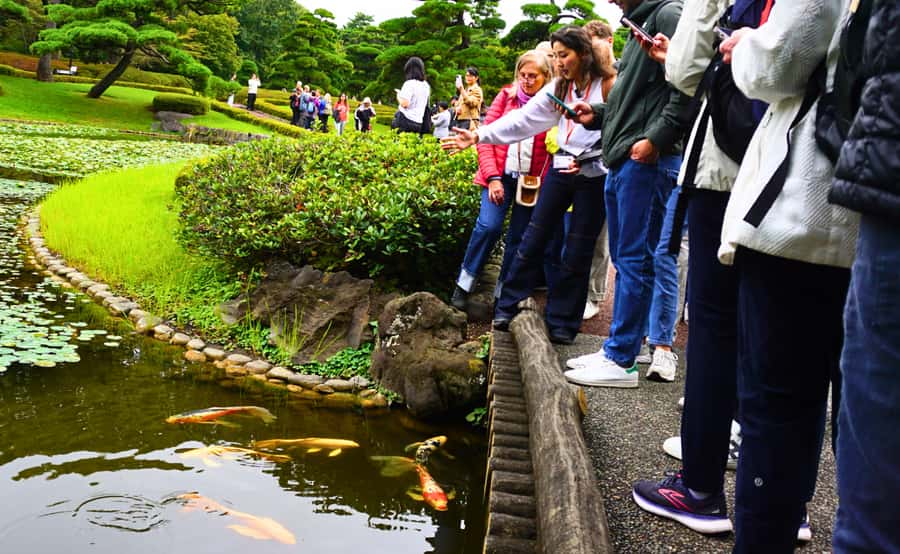
The royal koi fish are another memorable stop. They add a small, almost playful moment to a tour built around military rulers and political change. Guides also point out good photo locations and may help take pictures, a detail that several people appreciated.
This combination works well for first-time visitors. You get architecture, nature, animals, and stories, rather than two hours of dates. The gardens also provide some shade, which matters during Tokyo’s hot season. One guide handed out small gifts that helped in the heat, and another carried mosquito spray for the garden areas. Those gestures are not guaranteed, but they show the sort of practical care guides may offer.
More History Walking Tours in Japan
- Tokyo: Shinjuku Historical Walking Tour & Secret Backstreets
★ 5.0 · 530 reviews - Imperial Palace East Garden and Edo Castle Walking Tour in Tokyo
★ 5.0 · 510 reviews - Asakusa: A Big-picture History Walk to Know Japan
★ 4.6 · 77 reviews - Asakusa: 3.5-hour Big-picture History Walk
★ 4.7 · 39 reviews
The Miniature Model Makes the Missing Castle Understandable

The absence of the original castle is both the tour’s limitation and its teaching opportunity. You will not walk through Edo Castle as it once existed. Much of what you see is ruin, reconstruction, garden, or open space.
That can disappoint visitors expecting a complete historic castle. The miniature model helps solve the problem by showing the former layout and scale. Your guide can then point from the model to the remaining walls, foundations, and grounds.
I find this more useful than a reconstructed building that looks complete but hides the layers of change. The tour makes clear that the site moved from shogun authority to imperial use. The castle was not simply preserved as a museum piece. Its meaning changed as Japan’s government changed.
The transition from shogun’s castle to emperor’s palace is central to the experience. It explains why the Imperial Palace is both a place of living national ceremony and a site tied to the military government of the Edo period.
A Two-Hour Walk With Real Heat and Rain
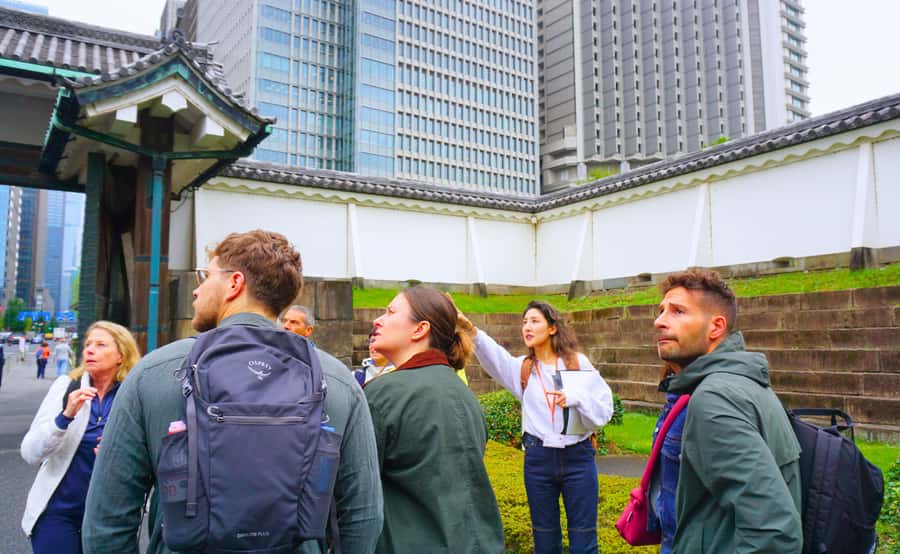
One review describes the route as lasting two hours, and that gives you a helpful sense of scale. It is long enough for a proper introduction, yet short enough to fit into a busy Tokyo day.
The walk is not a race. Guides were praised for setting a comfortable pace, answering questions, and stopping in shade when possible. That makes a difference in summer, when the heat can turn any open-air activity into hard work.
Still, this is an outdoor tour. It runs rain or shine, so wear clothing suited to the weather and use sensible footwear. Rain can make the gardens less comfortable, while heat adds a real physical burden. One person enjoyed the tour despite heavy rain, but you should not assume the conditions will be easy.
The experience is not suitable for wheelchair users or people with mobility impairments, back problems, heart problems, recent surgery, or a low level of fitness. It is also not recommended for pregnant women. These restrictions are important because the tour takes place on foot through palace grounds, not in a controlled indoor setting.
Smoking, drones, weapons, sharp objects, alcohol, drugs, skateboards, and fire are not allowed. You can cancel up to 24 hours ahead for a full refund, and the reserve-now, pay-later option can help if your Tokyo plans are still shifting.
What $32 Buys You
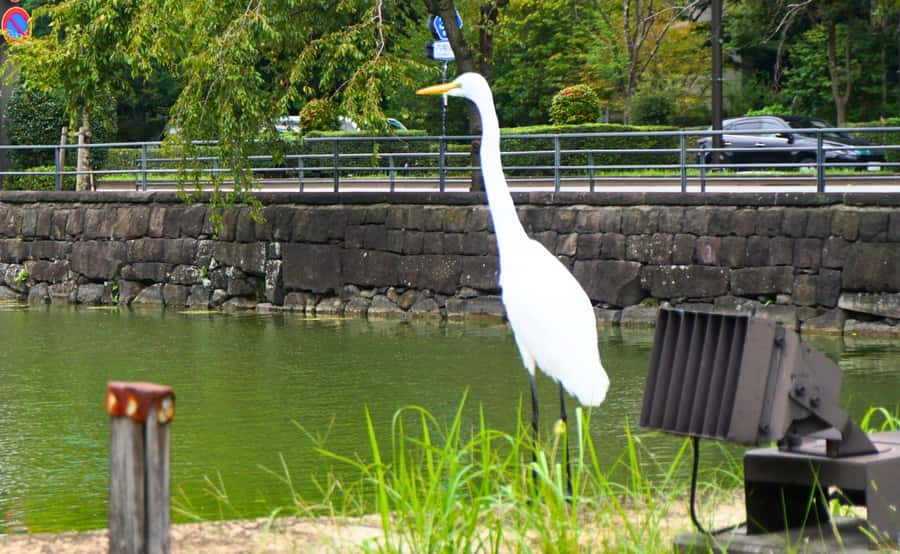
At $32, the tour offers good value if you want historical guidance rather than simple access to a garden. The public setting itself is not the expensive part. The useful service is the guide who explains what you are seeing and answers questions in real time.
That value is strongest if Japanese history is new to you. A self-guided visit can still be enjoyable, but you may leave with attractive photographs and only a vague idea of why the site matters. The tour gives you a narrative connecting Edo Castle, samurai authority, daimyo politics, the Meiji change, and the modern capital.
The price also includes practical help beyond the official story. Guides have suggested restaurants, food, etiquette, and other places to visit. Natsumi, Mika, and Alexandre were all praised for giving useful local recommendations. Those conversations can be especially helpful at the start of a trip, when you are still working out how Tokyo fits together.
Do not read the price as admission to a private palace. You cannot enter the Inner Palace, and there is no promise of a tea ceremony. One guide offered a private tour with a tea ceremony as an extra opportunity, but that is separate from the standard walk.
Who Will Enjoy This Tour Most

I would choose this tour for first-time Tokyo visitors, families with older children, and anyone who wants a readable introduction to Japanese history. It also suits people who enjoy asking questions rather than simply following a guide from one photo stop to the next.
The interactive style is a plus for children because the social ranking system and samurai stories give them clear characters and roles to follow. Adults who already know the basic Edo-period story may still enjoy the gardens and castle remains, but the educational payoff will be smaller.
This is also a good choice if you want a gentle cultural start before tackling more crowded areas. The gardens provide a quieter setting, and the route gives you a sense of how Tokyo developed around political power.
I would skip it if your main goal is to enter the Imperial Palace, see preserved palace rooms, or avoid outdoor walking. You should also think twice if heat, rain, or uneven walking conditions create serious problems for you.
Should You Book the Imperial Palace Walk?
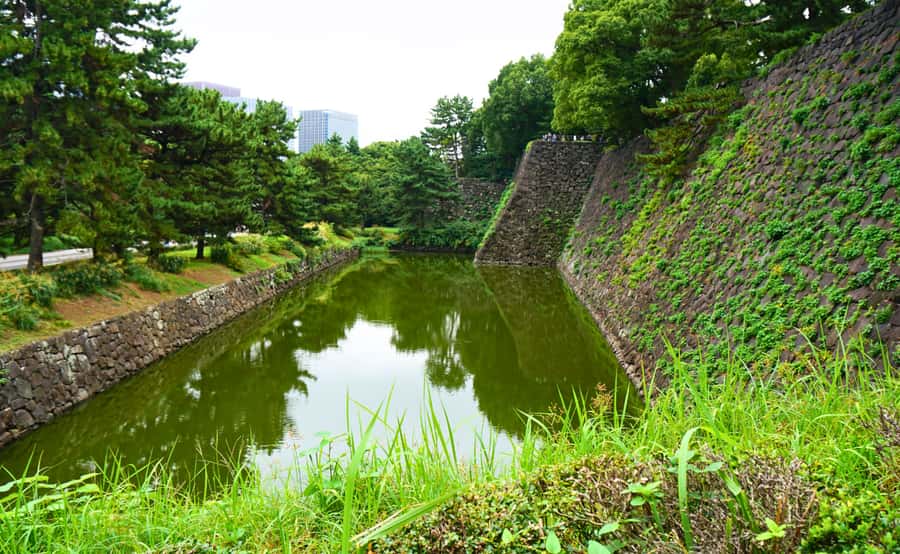
I would book this tour if you want the Imperial Palace to make sense, not just look attractive. The best parts are the clear historical storytelling, the remains of Edo Castle, the model of the old complex, and the guides’ willingness to answer questions and offer Tokyo advice.
Mika, Natsumi, Lakki, Lucky, and Alexandre receive especially strong praise for making the experience friendly and easy to follow. The exact guide is not something to treat as guaranteed, but the repeated emphasis on warm, clear instruction is encouraging.
Book it early in your Tokyo stay, wear weather-ready clothes, and bring water. Accept that the Inner Palace is off-limits and that you are seeing the former castle through ruins, gardens, and explanation. If that sounds like the kind of history lesson you want, $32 is a fair price for two useful hours in one of Tokyo’s most important places.
FAQ
Where does the Imperial Palace walking tour begin?
It begins at the Starbucks near the fountain in Wadakuramon Fountain Park. The park is about a five to ten-minute walk from Tokyo Station or Otemachi Station.
How do I find the guide?
The guide waits near the fountain and carries a Sunrise Adventure sign. The sign is intended to make the meeting point easy to identify.
Where does the tour end?
The tour ends back at the original meeting point.
Which languages are available?
The tour is available in English and French.
Can I enter the Inner Palace?
No. The Inner Palace is not open to the public and is not included in this activity.
What will I see on the walk?
You can expect Otemon Gate, former Edo Castle remains, a miniature model of the old castle, gardens, bamboo, samurai-related sites, trees given to the emperor, and royal koi fish.
Does the tour run in bad weather?
Yes. The tour takes place rain or shine, so you should wear clothing suited to the forecast.
Is this tour suitable for wheelchair users?
No. It is not suitable for wheelchair users or people with mobility impairments.
Can I cancel for a refund?
Yes. You can cancel up to 24 hours in advance for a full refund.
More History Walking Tours in Tokyo
- History and Hauntings of Salem Guided Walking Tour
★ 5.0 · 14,564 reviews - Lisbon: History, Stories and Lifestyle Walking Tour
★ 4.8 · 10,902 reviews - Boston: Freedom Trail History Small Group Walking Tour
★ 5.0 · 6,450 reviews - Historic Charleston Guided Sightseeing Walking Tour
★ 5.0 · 6,216 reviews
More Castle and Palace History Tours in Tokyo
- Tokyo: Edo Castle & East Garden of the Imperial Palace Tour
★ 4.7 · 112 reviews - Tokyo: Imperial Palace, the history of Japan (ENGLISH GUIDE)
★ 5.0 · 77 reviews - Kyoto: Nijo Castle World Heritage Guided Tour with Admission
★ 4.9 · 37 reviews - Edinburgh: Edinburgh Castle Guided History Tour with Tickets
★ 4.8 · 9,933 reviews
Just added around Tokyo
- Tokyo: Mount Fuji Private Full-Day Trip with Hotel Pickup★ 5.0 · 18 reviews
- Private Tour Through the Tokyo National Museum & Ukiyo-e★ 4.7 · 17 reviews
- Tokyo: Imperial Palace, the history of Japan (ENGLISH GUIDE)★ 5.0 · 77 reviews
- Tokyo: Customized Private Historical Guided Photoshoot Tour★ 5.0 · 25 reviews
- Tokyo: Edo Castle & East Garden of the Imperial Palace Tour★ 4.7 · 112 reviews
- Tokyo: Nagano Snow Monkeys and Zenkoji Tour with Temples★ 4.9 · 19 reviews
- Kyoto: Nijo Castle World Heritage Guided Tour with Admission★ 4.9 · 37 reviews
- Historic Kanda Sake Tasting at Tokyo’s Oldest Shop (1596)★ 4.9 · 33 reviews
Castle & Palace History Tours, compared.

Edinburgh Castle Guided History Tour with Tickets
Read our review →
Venice’s Best: Basilica, Doge’s Palace, Gondola & History Gallery
Read our review →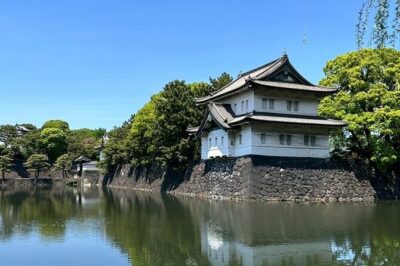
Imperial Palace and Shogun Historical Walking Tour
Read our review →
Saadian Tombs & Bahia Palace, Medina Guided Tour
Read our review →
Charleston historical walking tour with a Professor of History at The Citadel
Read our review →
Abu Dhabi Grand Mosque, Palace, and Heritage Village
Read our review →
Buda Castle District Dark History, Legends and Vampire Night Tour
Read our review →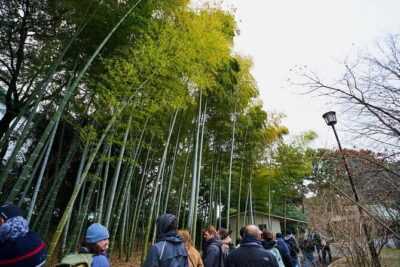
Tokyo Castle & Imperial PalaceーShogun Walking Tour
Read our review →Browse the lists this tour appears in