

Review · CHARLESTON
Charleston historical walking tour with a Professor of History at The Citadel
Charleston rewards curious walkers. This three-hour tour with Citadel history professor Eric Lager connects churches, courthouses, theaters, and harbor views into one clear story of the city. I like the small group of no more than 12, and I like that you can ask detailed questions instead of simply following a guide with a flag.
The $40 price is fair for a long, expert-led walk through central Charleston. The main drawback is the pace: you cover plenty of ground, and the tour requires moderate fitness, good weather, and comfort with standing outdoors. It is not a quick introduction or a casual stroll.
Key points at a glance
- A real classroom on Charleston’s streets: Eric Lager teaches history at The Citadel and brings academic depth to the city’s buildings, politics, religion, architecture, and Civil War story.
- Small groups make a difference: With a maximum of 12 people, you should be able to hear clearly and ask questions without shouting across a crowd.
- The route crosses four centuries: You move from early Charleston and French Huguenot settlers through the Revolution, the Constitution, secession, and the opening shots of the Civil War.
- Fort Sumter is viewed from land: You see the fort from the Battery, but this experience does not include the boat trip or admission to the monument.
- The finish is useful: The walk ends at 39 East Battery, near Rainbow Row, putting you close to one of Charleston’s most recognizable areas.
- Plan for weather and walking: Bottled water and transportation are not included, and the tour can be rescheduled or refunded if poor weather cancels it.
Why this Charleston walk is different
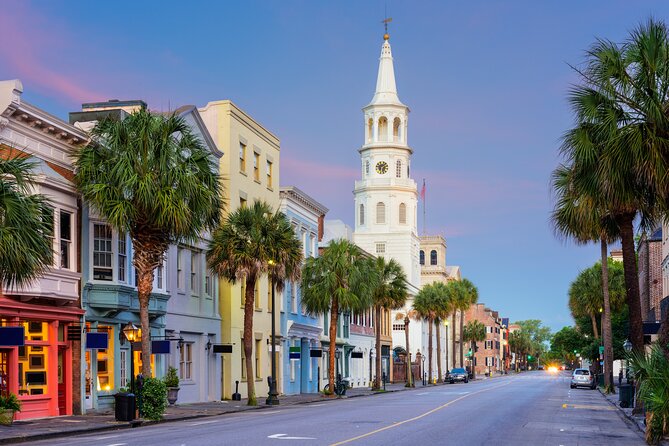
Charleston has no shortage of carriage rides, ghost tours, and short orientation walks. This experience takes a more serious route. You spend about three hours on foot with Eric Lager, a professor of history at The Citadel, moving through the historic center and discussing how the city developed.
That academic background matters most when the questions get complicated. Charleston’s past is not just a string of dates. It involves colonial power, religion, architecture, slavery, the Revolution, the Constitution, secession, and the Civil War. The strongest part of this tour is the way those subjects are connected through actual streets and buildings.
The group limit of 12 is another major advantage. A large walking group often turns a historic building into a distant backdrop. Here, you should have a better chance of hearing the explanation and asking about a detail that catches your attention. The experience is especially good for people who want to pick the guide’s brain rather than simply collect a few photo stops.
The tone also seems to be part of the appeal. Eric is described as funny, personable, accommodating, and able to keep a dense subject moving. That combination matters. A professor can bury you in detail, but the best historical guide knows when to tell a story, when to explain a building, and when to answer a side question.
More History Walking Tours in Charleston
- Historic Charleston Guided Sightseeing Walking Tour
★ 5.0 · 6,216 reviews - Hidden Alleyways and Historic Sites Small-Group Walking Tour
★ 5.0 · 2,335 reviews - Charleston: Old Walled City Historical Walking Tour
★ 4.7 · 705 reviews
Starting at Mills House and Dock Street Theater
The walk begins at 108 Meeting Street, near the Mills House Charleston, Curio Collection by Hilton. The hotel is not just a meeting landmark. Its early Civil War connection gives the tour an immediate way into Charleston’s wartime past.
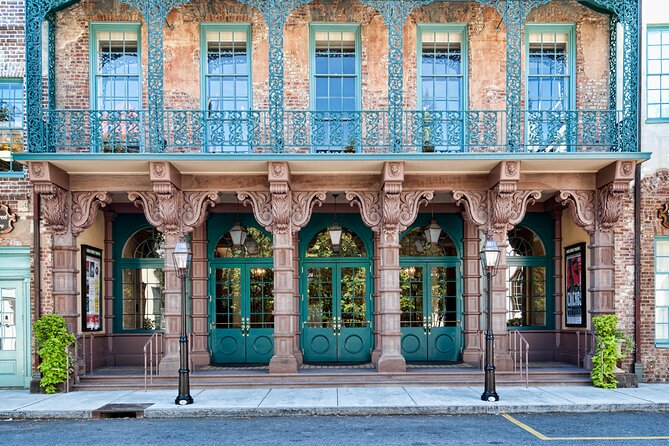
From there, you reach Dock Street Theater, one of the city’s most useful stops for understanding Charleston’s cultural life. The site is tied to the first theater built in North America, along with the colorful people connected to it. You get about 10 minutes here, enough for context without turning the tour into a theater-history seminar.
That balance continues at the Pink House Gallery. Dating to around 1712, this is one of Charleston’s oldest buildings. The stop is short, about five minutes, but it gives you a close look at the compact scale and early character of the old city.
If you enjoy architecture, pay attention to how these early buildings fit into the street pattern. The tour does not treat them as isolated pretty facades. Instead, they become evidence of how Charleston grew and how its identity formed.
Washington Square, City Hall, and the old statehouse
Washington Square gives the group more room to pause. You spend about 15 minutes here, looking at the historic square and its monuments. This is a good place for a wider discussion of civic memory, public space, and the people Charleston has chosen to honor.
Next comes Charleston City Hall. The building’s earlier uses are part of what makes it interesting: it once served as a meat market and a bank before becoming City Hall. That sequence tells you more than a standard architectural label would. Buildings change as cities change, and Charleston’s public structures often carry several chapters at once.
The Charleston County Courthouse adds another layer. This site was once the old South Carolina statehouse, so the stop connects local government with the state’s political development. You begin to see Charleston not only as a preserved old town, but as a place where laws, money, religion, and regional power were worked out in public buildings.
The route is strongest when you let the buildings speak together. A theater, a market, a bank, a courthouse, and a square may sound like separate stops. In Eric’s hands, they can form a picture of how an old port city functioned.
St. Michael’s Church and the colonial city
St. Michael’s Church is one of the major architectural stops. Completed in 1761, it is Charleston’s oldest church edifice. The 10-minute visit focuses on its long history and place in the city.
You do not need to be a church specialist to appreciate this stop. Religious buildings often explain a city’s social order, wealth, and connections with Britain and Europe. St. Michael’s gives the guide a strong setting for discussing Charleston before and during the Revolution.
By this point, the tour has already moved across several periods. You have seen early buildings, cultural institutions, civic sites, and religious architecture. The benefit is breadth, but the tradeoff is that each stop receives limited time. If you want to tour interiors at length, this will feel too quick. If you want a connected overview, the pace works better.
The route is designed for questions, too. Several participants have praised Eric’s ability to handle subjects beyond the basic tour script. That is useful when one building raises a question about politics, architecture, religion, or the Civil War. You can expect a dense walk, not a series of disconnected facts.
More History Walking Tours in the USA
- Historic Charleston Walking Tour: Rainbow Row, Churches, and More
★ 5.0 · 691 reviews - Charleston: History and Architecture Guided Walking Tour
★ 4.8 · 349 reviews - Charleston History and Hops Tour: Bar and History Walk
★ 5.0 · 316 reviews - Small-Group Tour: Charleston Old Walled City Historical Walking Tour
★ 4.5 · 283 reviews
George Washington, the Old Exchange, and French Huguenot Charleston
The Heyward-Washington House marks a personal connection to the national story. George Washington stayed here during his visit to Charleston in 1791. Admission is not included, and the stop is mainly about seeing the site and hearing its place in the city’s past.
The Old Exchange and Provost Dungeon carries a heavier political story. It was the last public building built by the British in North America, and the Constitution was ratified there in 1788. The stop itself is brief, about five minutes, and admission is not included.
That distinction is important. You are not buying a ticket to every historic interior on the route. The value lies in the explanation and the city-wide context. If you want to enter the Heyward-Washington House or Old Exchange, treat that as a separate expense and plan extra time.
The French Huguenot Church shifts the focus toward Charleston’s European and religious ties. It is associated with the French Huguenots and is identified as the first church built in the Gothic Revival style. The guide can use the building to explain how immigrant communities and European design influenced Charleston.
This is one of the places where a history professor has a clear advantage. The building is attractive, but the story behind it is the real reason to stop. You learn to look beyond paint, columns, and church towers and ask who built the place, why they came, and what their presence meant.
The French Quarter and Hibernian Hall
The French Quarter is one of the most appealing parts of the walk. You have about 15 minutes to take in its streets and charm, but this is not simply a photo break. The quarter helps tie together the architectural and cultural themes introduced earlier.
Charleston’s historic center is compact enough to explore on foot, yet full of details that are easy to miss. A guide can point out how the district’s buildings, streets, and institutions reflect different eras and communities. You should have your camera ready, but keep listening. The explanation is more valuable than a quick picture of a doorway.
Hibernian Hall follows with a political and architectural story. It is associated with the place where the seeds of disunion were sown, and it also offers a link to Greek Revival architecture in America. Admission is not included.
This part of the route is particularly useful for understanding the road toward the Civil War. The tour does not begin with the first shots and work backward. It gives you political and social context before reaching the Battery, which makes the final harbor view more meaningful.
Fort Sumter from the Battery
The final major stop is Fort Sumter National Monument, viewed from the Battery. This is an important detail: you do not travel out to the fort. You look across Charleston Harbor from land, and the stop lasts about 10 minutes.
That limitation is also practical. If visiting Fort Sumter itself is a priority, you will need a separate boat excursion. This walk gives you the setting and the story of where the first shots of the Civil War were fired, but it does not replace the island visit.
The Battery is a fitting end. The harbor view puts the city’s political crisis in a physical setting. After hearing about Charleston’s public buildings, secession, and wartime history, you can look toward the place where the conflict began.
The walk ends at 39 East Battery, near Rainbow Row. That is a convenient finish for exploring more of the historic district, taking photographs, or continuing toward the waterfront. It also makes this tour a smart first activity in Charleston. You leave with a map in your head and several ideas for what to revisit.
How much value do you get for $40?
At $40 per person, this is not the cheapest way to walk around Charleston. It is also not priced like a basic orientation tour. You are paying for roughly three hours, a small group, a route with 13 listed stops, and a guide with a Ph.D. and a teaching position at The Citadel.
The value depends on how you like to travel. If you prefer a short introduction, a carriage ride, or a relaxed walk with only a few facts, this may feel too academic. If you enjoy asking why a building matters and how one period led to another, the price is reasonable.
The group size is part of the value. A 12-person maximum gives you a more personal experience than a large public tour. You are not paying for private guiding, but you get some of the benefits of a private conversation at a lower price.
You also cover a lot. The route includes the French Quarter, St. Michael’s Church, Dock Street Theater, the old statehouse, the Old Exchange, Hibernian Hall, and the Battery. Admission to the Heyward-Washington House and Old Exchange is not included, and you should budget separately if you want to go inside.
Walking conditions and useful planning tips
Wear comfortable shoes. The walk lasts about three hours, includes frequent standing, and requires a moderate level of fitness. The tour does not provide bottled water, so bring your own.
Charleston weather can affect the experience. The activity requires good weather, and if poor conditions cause a cancellation, you are offered another date or a full refund. Since much of the value comes from listening outdoors, check the forecast and dress for the season.
The meeting point is 108 Meeting Street. The end is at 39 East Battery, near Rainbow Row. There is no private transportation, but the tour is near public transportation, and a mobile ticket is accepted.
Book early if your dates are fixed. The experience is often reserved well ahead of time, with an average booking lead time of about 22 days. Free cancellation is available until 24 hours before the start time. Cancellations or changes inside that window are not refunded or accepted.
Who will enjoy this tour most?
I would choose this walk if you want substance. It suits history buffs, architecture fans, solo visitors, couples, and small groups who would rather ask questions than listen passively.
It is also a good match if you are visiting Charleston for the first time. The route gives you enough context to plan later visits to churches, houses, museums, and Fort Sumter. One participant described the tour as useful early in a Charleston stay for exactly this reason.
Families with older children may enjoy it, especially if they already like history. Very young children may find three hours of historical discussion demanding. The same is true for anyone who dislikes walking, outdoor standing, or detailed explanations.
The experience is conducted in English. Service animals are allowed. The group size never exceeds 12, which helps with hearing and conversation.
Should you book Charleston History Walk by Eric Lager?
Book it if you want an expert-led, question-friendly look at Charleston rather than a light sightseeing loop. Eric Lager’s strongest qualities are his command of the subject, clear enthusiasm, humor, and willingness to discuss the side questions that make a place feel real.
Skip it if you want to enter every building, visit Fort Sumter in person, or move at a slow photo-taking pace. Those goals require separate visits or a different type of tour.
For most history-minded visitors, the combination is hard to beat: three hours, a compact group, major sites, and a guide who can connect Charleston’s early years to the Revolution, the Constitution, and the Civil War. At $40, it is a sensible way to get your bearings and understand what you are seeing.
FAQ
How long does the Charleston historical walking tour last?
The tour lasts approximately three hours.
What is the maximum group size?
The tour has a maximum of 12 participants.
Who leads the tour?
The tour is led by Eric Lager, Ph.D., a professor of history at The Citadel.
Where does the tour begin?
The tour begins at 108 Meeting Street, Charleston, South Carolina 29401.
Where does the tour end?
It ends at 39 East Battery, near the Rainbow Row area of Charleston.
Does the tour visit Fort Sumter?
The tour views Fort Sumter from the Battery in Charleston Harbor. It does not travel out to the fort.
Are admission tickets to the historic houses included?
Admission to the Heyward-Washington House and the Old Exchange and Provost Dungeon is not included. The other listed stops have no admission charge for the tour.
Is transportation included?
No. Private transportation and bottled water are not included.
What happens if bad weather cancels the tour?
If poor weather causes cancellation, you are offered a different date or a full refund. You can also cancel for a full refund up to 24 hours before the start time.
More Castle and Palace History Tours in Charleston
- Charleston walking tour with a Citadel history professor
★ 5.0 · 105 reviews - Edinburgh: Edinburgh Castle Guided History Tour with Tickets
★ 4.8 · 9,933 reviews - Madrid Essential: Historic Center, Plaza Mayor & Royal Palace
★ 5.0 · 6,416 reviews - Venice’s Best: Basilica, Doge’s Palace, Gondola & History Gallery
★ 4.5 · 2,478 reviews
Just added around Charleston
- Charleston’s Historic Pubs, Taverns, and Taprooms Tour★ 4.5 · 33 reviews
- Charleston’s Strong Women of the South History Tour★ 4.5 · 27 reviews
- Small-Group Tour: Charleston Old Walled City Historical Walking Tour★ 4.5 · 283 reviews
- Private Walking Tour of Historic Charleston★ 5.0 · 38 reviews
- Sip History in The Sun Cabana Covered Cocktail Class★ 5.0 · 332 reviews
- Sip History In a Secret Speakeasy Cocktail Class★ 5.0 · 40 reviews
- Private Afternoon Sailing/Dolphin & History Tour on 43ft Mystique★ 5.0 · 32 reviews
- Private Sunset Sail BYOB Dolphin/History Tours on 43ft Mystique★ 5.0 · 42 reviews
Castle & Palace History Tours, compared.

Edinburgh Castle Guided History Tour with Tickets
Read our review →
Venice’s Best: Basilica, Doge’s Palace, Gondola & History Gallery
Read our review →
Imperial Palace and Shogun Historical Walking Tour
Read our review →
Saadian Tombs & Bahia Palace, Medina Guided Tour
Read our review →
Abu Dhabi Grand Mosque, Palace, and Heritage Village
Read our review →
Buda Castle District Dark History, Legends and Vampire Night Tour
Read our review →
Tokyo Castle & Imperial PalaceーShogun Walking Tour
Read our review →
Browse the lists this tour appears in