
Review · CHARLESTON
Historic Charleston Walking Tour: Rainbow Row, Churches, and More
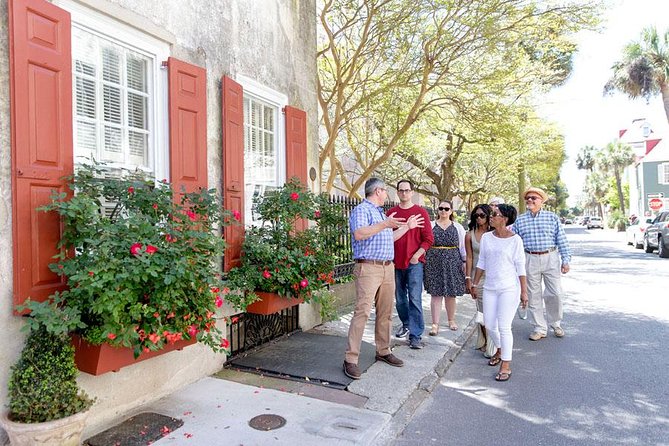
Charleston rewards slow walking. This two-hour tour gives you a useful first look at the old city, from Rainbow Row and the Waterfront Battery to churches, graveyards, gardens, and Charleston’s distinctive single houses. I like the relaxed pace and the way local guides turn architecture into stories. I also like that admission to the Powder Magazine Museum is included. The main drawback is simple: you are on your feet for two hours, and one past guest felt the Battery and Fort Sumter views were not covered clearly enough.
The price is $40.50 per person, which feels fair if you want historical context rather than a quick photo walk. Guides such as Gordon, Eric, Diane, Graham, Lisa, and Andrew have been praised for clear storytelling, humor, and patience with questions. Arrive early, though. The tour leaves on time, and the walking does not wait for latecomers.
Key points to know before you book

- Rainbow Row opens the tour with Charleston’s most colorful homes, a row of 18th-century buildings recognized as the longest pre-Revolutionary structure in America.
- The route covers Charleston’s original historic core, with cobblestones, iron gates, antebellum mansions, churches, graveyards, gardens, and Charleston single houses.
- The Waterfront Battery offers the strongest photo stop, with palmettos, cannons, cannon balls, harbor views, and a distant look toward Fort Sumter.
- Powder Magazine admission is included, adding an indoor historical stop to a mostly outdoor walk.
- The pace is leisurely but still requires steady walking, standing, and comfort with uneven old streets.
- Group size is capped at 20 people, and you can choose a morning or afternoon departure.
Why this walking tour works as a first look at Charleston
Charleston can feel confusing at first. Streets bend, old homes crowd close to the sidewalks, and the city’s history reaches across the Revolutionary War, the Civil War, slavery, trade, and modern life. A guided walk gives you a useful framework before you explore on your own.
This tour stays in the Historic District and moves through the area that was once enclosed by Charleston’s walls. You are not simply ticking off landmarks. You are looking at how the city was built, how homes faced the street, and how churches, burial grounds, gardens, and waterfront defenses fit together.
I especially like the focus on architecture and daily city life. Charleston’s single houses are a good example. They are usually one room deep, with the narrow end facing the street and an entrance arranged along the long side. That design makes far more sense when a guide points it out while you are standing among the houses, gates, and narrow lanes.
The tour also gives you a chance to ask questions. Gordon was praised for setting a comfortable pace and allowing time for photos and answers. Other guides, including Diane, Eric, Faith, Nelson, and David, were singled out for making historical material easy to follow instead of turning the walk into a dry lecture.
More History Walking Tours in Charleston
- Historic Charleston Guided Sightseeing Walking Tour
★ 5.0 · 6,216 reviews - Hidden Alleyways and Historic Sites Small-Group Walking Tour
★ 5.0 · 2,335 reviews - Charleston historical walking tour with a Professor of History at The Citadel
★ 5.0 · 1,284 reviews
Rainbow Row and the first burst of color
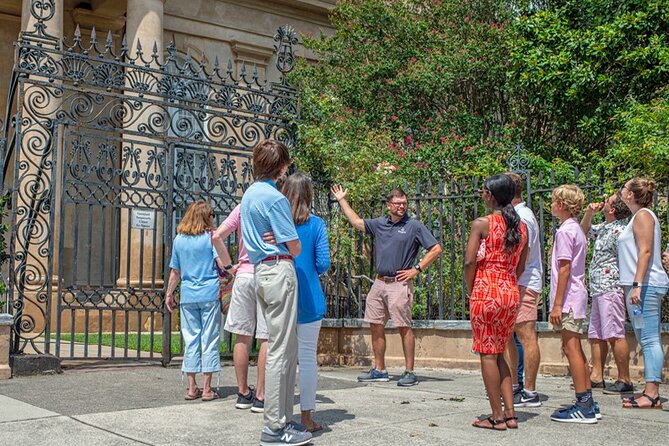
Rainbow Row is an obvious starting point because it gives you an instant sense of Charleston’s visual appeal. The thirteen colorful historic houses form one of the city’s most recognizable scenes, and the tour allows about ten minutes at the stop.
The buildings date from the 18th century and are described as the longest Pre-Revolutionary structure in America. The bright paint is the attention-grabber, but the real value comes from learning how these old homes fit into Charleston’s early commercial and residential streets.
You should expect a photo stop, not a long interior visit. Admission to Rainbow Row is free, and the appeal is mainly the exterior view, the colors, and the chance to hear why the row matters.
This is also a good moment to settle into the group. The guide begins setting the tone for the rest of the walk, mixing facts with stories and pointing out details you could easily miss on your own. If you arrive hoping for a broad introduction to Charleston rather than an in-depth house tour, Rainbow Row does that job well.
Cobblestones, iron gates, and Charleston single houses
After Rainbow Row, the route continues through the old streets, where the architecture becomes the main attraction. You will see cobblestones, custom iron gates, gardens, courtyards, and a large collection of 18th- and 19th-century buildings.
The homes are not all grand mansions. That is part of the appeal. Opulent antebellum houses share the streets with more modest buildings, churches, and narrow side spaces. A good guide helps you read the differences without reducing Charleston to a parade of pretty facades.
The Charleston single house deserves special attention. Its unusual layout reflects the tight urban setting and the way homes were placed on their lots. The front entrance often faces a side piazza or long side of the house rather than opening straight onto the narrow end facing the street.
This part of the walk rewards people who enjoy details. Look at the gates, window placement, entry stairs, and the relationship between public street and private garden. You may find that the small features hold as much interest as the famous mansions.
The historic streets are also where comfort matters most. The pace is described as leisurely, but leisurely does not mean effortless. You will stand and walk for roughly two hours, so wear supportive shoes. One guest specifically advised comfortable footwear, and another noted that guides paused in shaded areas and offered occasional spots to rest.
Churches, graveyards, gardens, and the city’s difficult past

The route includes historic churches and graveyards, along with hidden gardens and courtyards. These spaces add a quieter side to the tour. They also show that Charleston’s story is not limited to wealthy homes and waterfront views.
Churchyards can reveal changing beliefs, family connections, disease, war, and the city’s growth. Gardens and courtyards show how residents created privacy and shade within a dense old town. You will not just be looking at isolated attractions. You will be seeing how people lived, worshiped, died, and marked their place in Charleston.
The tour also covers the Revolutionary and Civil War periods. Graham was praised for explaining the three wars connected with South Carolina in a clear way, while David was appreciated for treating Charleston’s difficult past with care and respect.
That tone matters. Charleston’s beauty can make it tempting to focus only on pastel houses and palms. A good historical walk should also address conflict, inequality, and the forces that shaped the city. The available guide feedback suggests that the strongest guides handle this balance well, giving you facts and stories without losing sight of the human cost.
More History Walking Tours in the USA
- Charleston: Old Walled City Historical Walking Tour
★ 4.7 · 705 reviews - Charleston: History and Architecture Guided Walking Tour
★ 4.8 · 349 reviews - Charleston History and Hops Tour: Bar and History Walk
★ 5.0 · 316 reviews - Small-Group Tour: Charleston Old Walled City Historical Walking Tour
★ 4.5 · 283 reviews
The Waterfront Battery and the Fort Sumter view
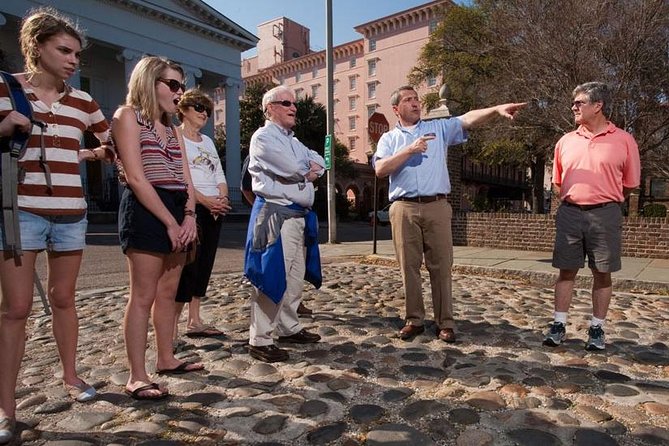
The Waterfront Battery is one of the most appealing outdoor sections of the tour. Here you can expect views of southern mansions, cannons, cannon balls, palmettos, and the harbor. The route includes a visual tour of Fort Sumter, seen from afar rather than visited by boat.
This distinction is important. The walking tour does not transport you to Fort Sumter, and transportation is not included. You are getting a viewpoint and historical context, not a separate Fort Sumter excursion.
The Battery is also one of the best places for photographs. The mix of old homes, military objects, water, and palms gives you several different views in a small area. A guide can explain why this defensive edge mattered and connect the waterfront to the wars discussed earlier.
There is one practical caution. One person found that the Battery and Fort Sumter were not clearly covered during the walk. Since route emphasis can vary with the guide and conditions, ask early in the tour when and where you will see them if those stops are your main reason for booking.
Powder Magazine adds an indoor history stop
Admission to the Powder Magazine Museum is included in the tour price. That gives the experience a useful change of rhythm after a long stretch outside.
The museum connects to Charleston’s military past and helps reinforce the Revolutionary War material discussed during the walk. It is not an extra admission you need to budget for, which makes the $40.50 price more appealing.
Because the experience lasts about two hours and includes several outdoor areas, the Powder Magazine stop also gives the route some variety. Still, the supplied details do not specify how long you spend inside or the exact order of this stop. Think of it as an included museum visit within a walking experience, not a full museum tour.
What the $40.50 price really buys you
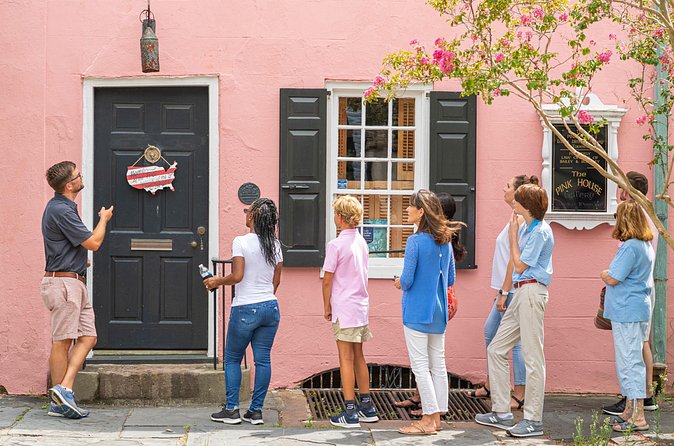
At $40.50 per person, this is not the cheapest way to see Charleston’s old streets. You can walk past Rainbow Row and the Battery on your own for free. The value comes from the explanation, the route planning, the local stories, and the included Powder Magazine admission.
You are paying for two hours of interpretation, not transportation or a long list of admissions. That can be worthwhile on your first day, especially if you want to understand what you are seeing before returning to favorite streets at your own pace.
A capped group of 20 is another plus. It is not a private tour, but it is small enough that questions should be practical and possible. The strongest guide feedback repeatedly points to clear explanations, humor, patience, and time for photographs.
The value is weaker if you already know Charleston well or mainly want to wander without a schedule. It is also less attractive if you dislike standing outdoors in heat, rain, or strong sun. The tour operates in all weather conditions, with appropriate clothing advised, although poor weather can lead to cancellation and a choice of another date or a full refund.
Morning or afternoon, and what to bring
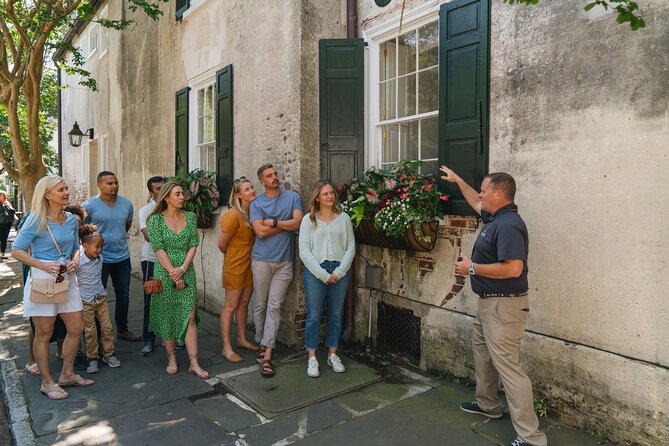
You can choose a morning or afternoon departure. The best choice depends on your plans and the season, but the guides have shown awareness of heat by stopping in shade when possible.
Wear comfortable shoes with good support. The route includes old streets and cobblestones, and you will be standing as well as walking. Bring water, sun protection, and weather-appropriate clothing. The available details do not state that water is provided, so plan to carry your own.
Arrive 15 minutes before the start at 115 Meeting Street, Charleston, South Carolina 29401. The tour ends back at the meeting point, which makes it easier to arrange lunch, another activity, or a return to your hotel.
The group leaves strictly on time. A family using a stroller found the guide accommodating, and service animals are allowed. Most people can participate, but you should be honest with yourself about two hours of outdoor walking and standing.
The guide can shape the whole experience
The route is strong, but the guide makes the biggest difference. The most praised guides are described as entertaining, clear, funny, patient, and able to answer questions without losing the group.
Gordon received repeated praise for his pace, historical detail, and ability to be heard. Eric was described as personable and willing to answer every question. Diane brought stories to life, and Lisa kept the tour interesting even when rain began. Andrew held the attention of children aged 11 and 14 for the full walk.
That variety is encouraging, but it also means your exact experience depends partly on who leads the group. The company uses several guides, so you cannot assume you will receive a particular one unless the booking details promise it. Still, the repeated praise across different guides suggests a strong general standard.
The best way to enjoy the walk is to listen for connections. Notice how architecture, war, religion, wealth, and waterfront trade overlap. Ask questions when the guide pauses. This is not a tour for racing from one photo stop to another.
Who should book this Charleston walk?
I would recommend it to first-time Charleston visitors, history fans, couples, families with older children, and anyone who wants a clear introduction to the Historic District. It is also useful early in a stay because you can return later to the streets, buildings, and waterfront areas that caught your attention.
Families should know that children may enjoy the stories, but the appeal depends on the guide and the child. One family reported that children aged 11 and 14 stayed engaged, which is a good sign for school-age kids who like history.
You may want a different experience if you need a fully shaded route, dislike uneven streets, or want a dedicated Fort Sumter visit. The tour only gives you a distant visual view of the fort. It also may not satisfy you if you want to enter several mansions or spend long periods inside museums.
Free cancellation is available up to 24 hours before the start time. Cancellations inside that window are not refunded, and changes are not accepted. If bad weather or low enrollment cancels the tour, you are offered another date or a full refund.
Should you book it?
Book this tour if you want a friendly, structured introduction to Charleston’s old center, with strong local storytelling and a good mix of architecture, waterfront views, military history, churches, and gardens. The Powder Magazine admission helps the price, and the 4.9 rating from 691 ratings, with 97 percent recommending it, supports the idea that the experience is consistently well received.
Go in with the right expectations. You are not taking a private tour, visiting Fort Sumter itself, or riding between sights. You are walking, listening, asking questions, and looking closely at the city.
For most first visits, I would book it near the beginning of your Charleston stay, choose the time that best avoids harsh heat, arrive early, and wear sensible shoes. That combination gives you the best chance of getting real value from the two hours.
FAQ
How long is the Historic Charleston Walking Tour?
The tour lasts approximately two hours.
Where does the tour begin?
It begins at 115 Meeting Street, Charleston, South Carolina 29401.
Where does the tour end?
The experience ends back at the meeting point.
Is transportation included?
No. Transportation is not included, so you must make your own way to the meeting point.
Is admission to the Powder Magazine included?
Yes. Admission to the Powder Magazine Museum is included with the tour purchase.
Does the tour visit Fort Sumter?
The tour provides a visual view of Fort Sumter from the waterfront. It does not include transportation to the fort.
How many people can join the tour?
The group has a maximum of 20 travelers.
What happens if I need to cancel?
You can receive a full refund if you cancel at least 24 hours before the start time. Cancellations or changes made less than 24 hours before the start are not accepted for a refund.
More Architecture and Landmark Tours in Charleston
- Charleston’s Best Highlights: History, Culture & Architecture
★ 5.0 · 422 reviews - Charleston History, Homes, and Architecture Guided Walking Tour
★ 5.0 · 267 reviews - Charleston History and Architecture Walking Tour
★ 5.0 · 63 reviews - Venice: St. Mark’s Basilica Guided Tour & VR History Intro
★ 3.9 · 4,880 reviews
Just added around Charleston
- Charleston’s Historic Pubs, Taverns, and Taprooms Tour★ 4.5 · 33 reviews
- Charleston’s Strong Women of the South History Tour★ 4.5 · 27 reviews
- Small-Group Tour: Charleston Old Walled City Historical Walking Tour★ 4.5 · 283 reviews
- Private Walking Tour of Historic Charleston★ 5.0 · 38 reviews
- Sip History in The Sun Cabana Covered Cocktail Class★ 5.0 · 332 reviews
- Sip History In a Secret Speakeasy Cocktail Class★ 5.0 · 40 reviews
- Private Sunset Sail BYOB Dolphin/History Tours on 43ft Mystique★ 5.0 · 42 reviews
- Private Afternoon Sailing/Dolphin & History Tour on 43ft Mystique★ 5.0 · 32 reviews
Architecture & Landmark Tours, compared.

St. Mark’s Basilica Guided Tour & VR History Intro
Read our review →
Venice’s Best: Basilica, Doge’s Palace, Gondola & History Gallery
Read our review →
Córdoba: Skip-the-Line Great Mosque-Cathedral History Tour
Read our review →
Pantheon Elite Guided Tour – Rome’s Iconic Ancient Temple
Read our review →
Abu Dhabi Grand Mosque, Palace, and Heritage Village
Read our review →
Chicago in a Day: Food, History & Architecture Walking Tour
Read our review →

Colosseum Special Access Tour, with Ancient Temples & Tombs
Read our review →Browse the lists this tour appears in