
Review · SOUTH CAROLINA
Charleston walking tour with a Citadel history professor
History gets better on foot. This three-hour Charleston walk with Citadel history professor Eric Lager combines old alleys, graveyards, churches, theaters, and public squares with the stories that shaped South Carolina. I especially like the small-group limit of 12 and Eric’s ability to connect architecture, religion, politics, war, and daily life. The main consideration is the pace: three hours on Charleston sidewalks can feel long in heat or rain, and the tour is not suitable for wheelchair users.
I also like that this is more than a parade of pretty buildings. Eric teaches Charleston history at the college level and has nearly two decades of experience in teaching and public history, so you get context instead of a string of dates. You will not enter the house museums, and one stop near basket makers has occasionally felt too much like a sales pause, but the overall price of $40 offers strong value for a serious, personal introduction to the city.
Key points to know before you book
- A small group capped at 12: You can hear Eric clearly and ask questions without shouting across a crowd.
- A professor guides the walk: Eric Lager specializes in the Colonial Era, American Revolution, Antebellum Era, and Civil War.
- Charleston beyond the postcard streets: Alleys, graveyards, Washington Park, the Four Corners of Law, and religious landmarks add depth to the route.
- Architecture becomes evidence: You learn why buildings were shaped and arranged as they were, not just when they were built.
- Three hours for $40: The price is reasonable if you want a serious historical overview rather than a quick orientation walk.
- Plan for outdoor conditions: Wear comfortable shoes, bring water, and expect the tour to run in rain unless conditions become unsafe.
Why this Charleston walk feels different

Charleston offers plenty of pleasant strolls where you admire pastel homes, ironwork, and church steeples. Those walks can be lovely, but they may leave you with a collection of views rather than a sense of how the city developed.
Eric’s approach is to use the streets as a classroom. A church can lead to a discussion of religious communities. A graveyard can open a window onto social rank, memory, and local customs. A building’s shape can reveal practical needs, climate concerns, or the habits of the people who lived there.
That makes this a good first activity in Charleston. You get a broad framework for the city, then recognize more when you visit a house museum, historic church, or waterfront site later. Several people have also taken the walk after visiting Charleston before and still found new details, which tells you that this is not only a first-time introduction.
Eric’s credentials matter here, but his teaching style matters just as much. He holds a Ph.D. in history, according to the information provided by past participants, and brings the ease of someone used to answering questions. He does not rely on note cards, and the walk is shaped by conversation as much as by prepared material.
You should still choose this tour with clear expectations. It is a history walk, not a ghost tour, food tour, carriage ride, or house museum visit. The reward comes from listening, looking closely, and allowing the city’s details to make sense.
More History Walking Tours in Charleston
- Historic Charleston Guided Sightseeing Walking Tour
★ 5.0 · 6,216 reviews - Hidden Alleyways and Historic Sites Small-Group Walking Tour
★ 5.0 · 2,335 reviews - Charleston historical walking tour with a Professor of History at The Citadel
★ 5.0 · 1,284 reviews
Meeting Eric at 108 Meeting Street
The meeting point is easy to identify once you know what to look for. The building at 108 Meeting Street has four small white Ionic Greek columns along the front. It now houses a graphic design center for the city of Charleston and is not open to the public.
Meet along the brick wall on the sidewalk in front of the building. It is directly across from Hibernian Hall and the pink Mills House Hotel, useful landmarks if you are approaching from another part of the historic district.
There are no restrooms at the meeting point. The Mills House Hotel has restrooms, so plan ahead before the walk begins. This is a small but important detail, especially because three hours is a long stretch between facilities.
Arrive ready to walk rather than expecting a formal reception area. You will be outdoors from the start, and the tour takes place rain or shine unless conditions become unsafe. Charleston weather can change your comfort level quickly, so water and sensible clothing are more useful than dressing for a polished dinner.
Colonial Charleston through alleys and graveyards

The tour looks at Charleston from its founding in 1670 to the present. That is a large span for three hours, but the walk uses selected places and stories to show how the city changed over time.
The old alleys and graveyards are especially valuable because they steer you away from the grandest facades. Charleston’s famous streets can suggest wealth and order. Smaller lanes and burial grounds help reveal the people, beliefs, conflicts, and working life behind that polished image.
You may hear stories about famous figures, but the less famous characters are just as important. A city becomes easier to understand when history includes ordinary people, local personalities, religious communities, and those who lived on the margins of power.
The graveyards also give the tour a different mood. You are not simply looking at stones and dates. Eric uses these spaces to explain the way Charleston remembered its dead and how religion and social standing shaped the city.
Bring water and wear shoes with good support. The walk is described as easy in pace by several participants, but easy does not mean effortless. You will be outside for about three hours, and uneven sidewalks, heat, or rain can affect your enjoyment.
Dock Street Theater and Charleston’s public life

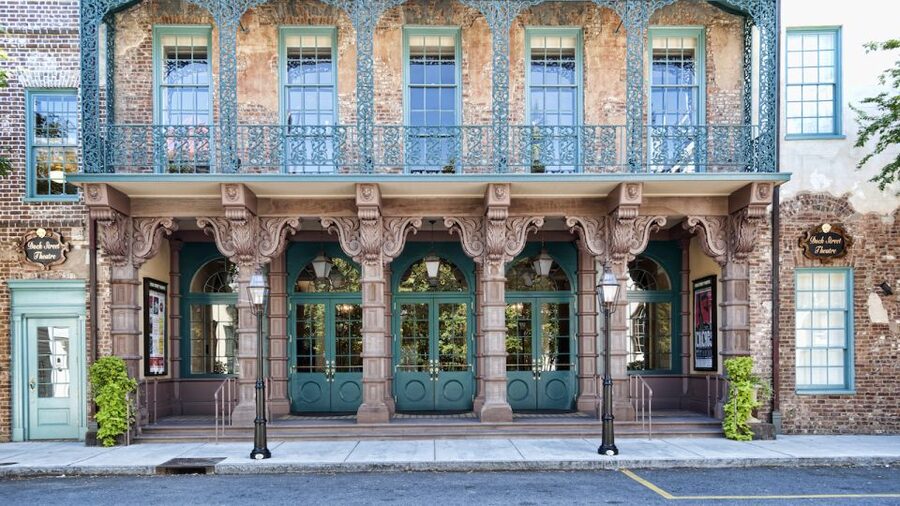
Dock Street Theater is one of the named sights on the route. Its importance is not only visual. It represents Charleston’s long connection with public performance and urban social life, giving Eric a chance to place entertainment within the wider story of the city.
This is where the tour’s storytelling style should help. Rather than treating the theater as an isolated photo stop, Eric connects landmarks to the people who used them and the society that grew around them. You learn to ask what a building did for Charleston, who had access to it, and what it says about the period in which it was created.
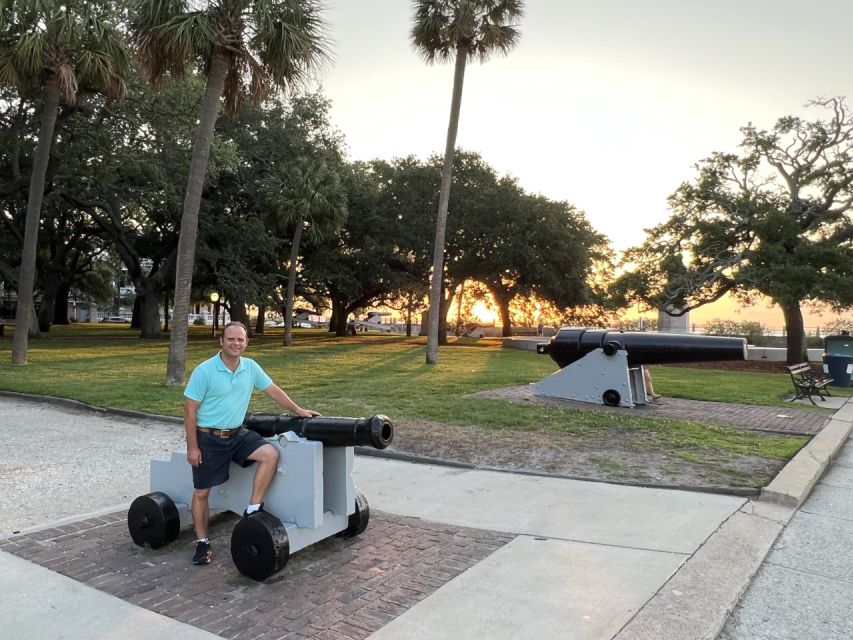
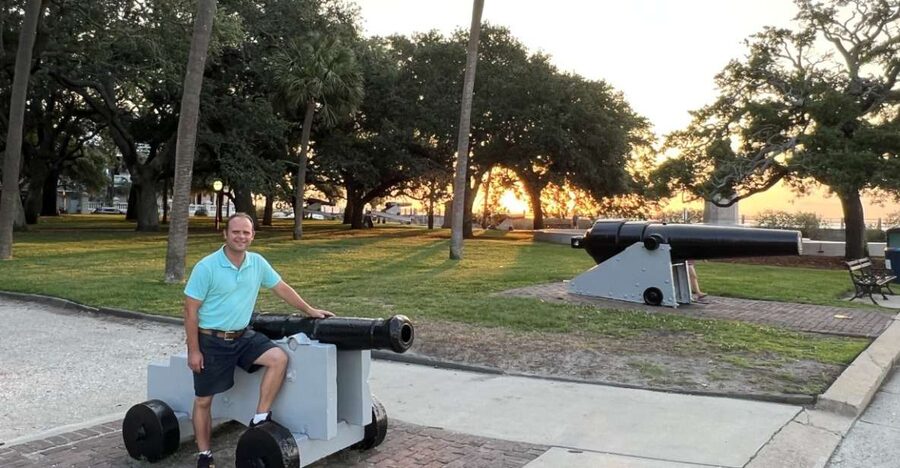
The route also includes Washington Park, another place where the city’s public identity comes into view. Parks can appear simple at first glance, but their location and use often reveal how a city organized civic space.
Expect to pause while Eric explains the setting. This is not a power walk designed to cover every block. The small group makes it easier to stand together, hear the explanation, and ask a follow-up question without holding up a large procession.
More History Walking Tours in the USA
- Charleston: Old Walled City Historical Walking Tour
★ 4.7 · 705 reviews - Historic Charleston Walking Tour: Rainbow Row, Churches, and More
★ 5.0 · 691 reviews - Charleston: History and Architecture Guided Walking Tour
★ 4.8 · 349 reviews - Semi-private SMALL group Historic Walking Tours w/certified guide
★ 5.0 · 224 reviews
French Huguenot Church and the city’s religious mix
The French Huguenot Church adds an important religious thread to the walk. Charleston’s story includes more than one cultural or religious tradition, and this stop helps explain how those communities became part of the city’s identity.
Eric’s strength is the way he connects religious history with architecture and wider cultural change. A church is not merely a handsome facade. Its presence can point to migration, beliefs, community ties, and the ways newcomers shaped Charleston.
The church also helps balance the military and political subjects that often dominate American history tours. You will hear about the Colonial Era, the American Revolution, the Antebellum Era, and the Civil War, but the city’s religious life keeps the focus on people and communities as well as battles and leaders.
Entry into house museums is not included, and the available information does not promise interior access to the church either. Think of this as an outside interpretation of important sites, not a ticketed interiors tour.
The Four Corners of Law and Washington Park
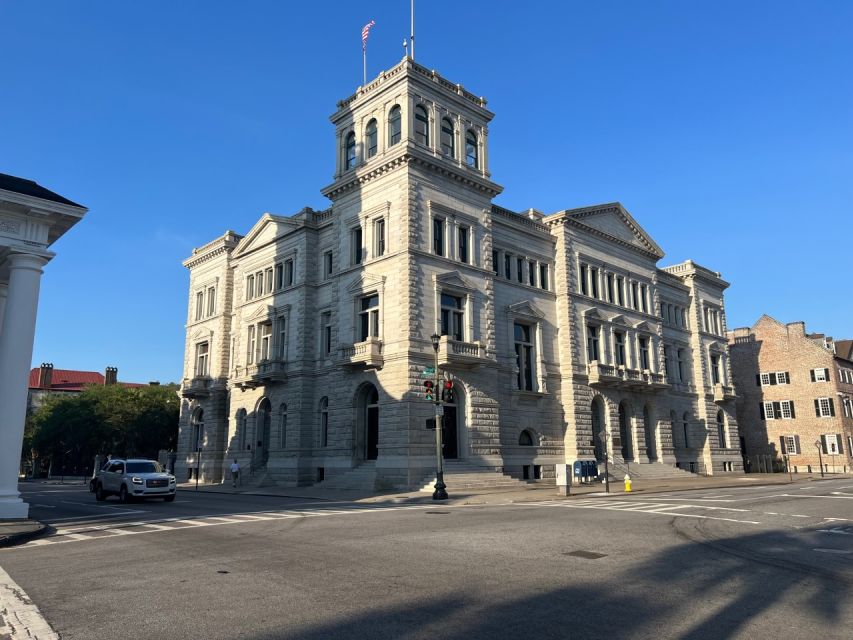
The Four Corners of Law is another central stop. This intersection brings together several kinds of authority in one compact part of Charleston, making it a useful place to discuss how law, religion, government, and civic life shaped the city.
It is the sort of stop that rewards explanation. Without a guide, you might walk through and notice only a busy historic intersection. With Eric’s background, the location becomes a way to understand Charleston’s public structure and the competing forces that influenced it.
Washington Park gives the walk another civic setting. Together, these locations help you see that Charleston was not built only as a collection of private homes. Its squares, institutions, churches, courts, and public buildings formed a working city.
This is also where questions can make the tour especially rewarding. People who have taken the walk appreciated being able to ask about architecture, politics, religion, culture, and military history. If you enjoy connecting separate subjects, keep your questions ready.
Architecture that explains how Charleston worked
One of the best parts of the experience is the attention to building design. Eric explains why homes and other structures were arranged as they were, showing that Charleston architecture reflects practical needs as well as style.
You may notice details you would otherwise pass without a thought. The shape of a house, the placement of a doorway, the relation between a building and the street, or the use of a narrow passage can all lead to a discussion of climate, privacy, social customs, and construction.
This approach changes the way you see the city after the tour. A row of attractive buildings stops being a backdrop and becomes evidence. You begin to look at proportions, materials, entrances, and street plans with more curiosity.
The architecture material also makes the walk useful for people who are not strict history buffs. If dates and military campaigns are not your favorite subjects, the built environment gives you another way into Charleston’s past.
Still, Eric covers a lot. He discusses architecture, culture, religion, politics, military events, and local personalities in one outing. If you prefer a narrow topic with plenty of time at each site, a focused museum visit may suit you better.
Famous and infamous characters in the story
Facts become easier to remember when they are attached to people. Eric’s walk includes stories about famous and infamous characters from Charleston’s past, helping the city feel less like a museum display and more like a place shaped by ambition, conflict, humor, and ordinary human mistakes.
His sense of humor is a useful part of the experience. The subject matter includes war, slavery, political conflict, and the long effects of the Antebellum Era and Civil War. Humor can keep the presentation lively, but the tour still treats serious history with care.
The best fit is someone who wants both accuracy and personality. You do not need an academic background, and you will not be expected to memorize names. Eric explains the setting in plain language, then welcomes questions when a subject catches your attention.
Several participants found that the time passed quickly, with some walks lasting around two and a half hours and others using the full three-hour format. That variation is normal for a conversational walk. The more questions your group asks, the more the route may stretch.
Small groups and the value of $40

At $40 per person, this walk costs more than a casual self-guided stroll but less than many private history experiences. The price makes sense if you want a trained historian who can respond to your questions rather than simply deliver a fixed script.
The stated group limit is 12 people. Several past bookings described groups of 10 or fewer, which gives you a good idea of the intimate scale, though you should plan for up to 12.
That size matters in a city where street noise, traffic, and crowds can make a guide hard to hear. You can stay close to Eric, ask about a building as you pass it, and get more direct attention than you would on a 20-person tour.
The value also comes from the breadth of the material. In three hours, you receive an overview of Charleston’s founding, colonial development, religious life, architecture, political history, and military past. You will not master the city in one walk, but you will leave with a useful map in your head.
Food, drinks, hotel pickup, and museum entry are not included. That keeps the price focused on the guide and the walking experience, but you should budget for your own refreshments and plan your transportation to and from the meeting point.
Who will enjoy this tour most
I would choose this walk if you want Charleston explained rather than merely photographed. It is especially well suited to first-time visitors, history students, architecture fans, and anyone who prefers a small group with room for questions.
It also works for returning visitors. The route includes details and lesser-seen spaces that you might miss while exploring on your own, and Eric’s explanations connect familiar landmarks in new ways.
Families with older children may enjoy it if they can manage three hours of walking and listening. The content covers serious subjects, so younger children may not have the attention span for the full experience.
This is less suitable if you want frequent food samples, interior access, entertainment with minimal history, or a fully accessible route. It is not suitable for wheelchair users, and pets are not allowed, although assistance dogs are permitted.
Book early if your dates are fixed. The group is intentionally small, and one participant specifically wished they had reserved sooner because the preferred day was full.
Practical advice for the walk
Wear comfortable shoes. Charleston’s streets are pleasant to explore, but three hours on foot calls for support rather than style.
Bring water, especially in warm weather. You may also want rain protection because the tour runs in wet conditions unless the weather becomes unsafe.
Use the Mills House Hotel for a restroom before meeting at 108 Meeting Street. There are no restrooms at the actual meeting location.
Do not plan a tight appointment immediately afterward. The advertised duration is three hours, and past walks have sometimes lasted close to that or run a little beyond the shorter estimates. Give yourself breathing room.
Cancellation is flexible if your plans change. You can cancel up to 24 hours before the tour for a full refund, and you can reserve now and pay later. The live tour is in English.
Should you book Charleston History Walk?
Book it if you want a serious but friendly introduction to Charleston from someone who teaches the subject for a living. Eric Lager’s combination of academic training, humor, local focus, and small-group attention gives the walk a clear advantage over a large scripted tour.
The strongest reasons to go are the range of subjects, the chance to explore alleys and graveyards, and the way architecture becomes part of the story. At $40, it is a fair price for three hours of direct access to a history professor.
Skip it if you dislike long outdoor walks, need wheelchair access, or mainly want interiors, food, or ghost stories. For everyone else, schedule it early in your Charleston visit so the rest of the city makes more sense.
FAQ
How long is the Charleston walking tour?
The tour lasts three hours.
How much does the tour cost?
The price is $40 per person.
Who leads the tour?
Eric Lager leads the walk. He is a Citadel history professor with experience teaching South Carolina and Charleston history from the Colonial Era through the Civil War and into the present.
What places are included on the walk?
The route includes old alleys, graveyards, Dock Street Theater, the French Huguenot Church, the Four Corners of Law, and Washington Park.
How large is the tour group?
The group is limited to no more than 12 people. Several past bookings described groups of 10 or fewer.
Where does the tour meet?
Meet along the brick wall on the sidewalk in front of 108 Meeting Street. The building has four small white Ionic Greek columns and is across from Hibernian Hall and the pink Mills House Hotel.
Is the tour accessible to wheelchair users and pets?
The tour is not suitable for wheelchair users. Pets are not allowed, but assistance dogs are permitted.
More Castle and Palace History Tours in Charleston
- Edinburgh: Edinburgh Castle Guided History Tour with Tickets
★ 4.8 · 9,933 reviews - Madrid Essential: Historic Center, Plaza Mayor & Royal Palace
★ 5.0 · 6,416 reviews - Venice’s Best: Basilica, Doge’s Palace, Gondola & History Gallery
★ 4.5 · 2,478 reviews - Tokyo: Imperial Palace and Shogun Historical Walking Tour
★ 5.0 · 2,251 reviews
Just added around Charleston
- Take a History Tour with an actual Historian – Cooper!★ 4.8 · 61 reviews
- Charleston: Historic City Tour & Magnolia Plantation Combo★ 4.4 · 187 reviews
- Charleston: History and Architecture Guided Walking Tour★ 4.8 · 349 reviews
- Charleston: Sip History Cocktail Making Class w Drinks Incl.★ 4.8 · 28 reviews
- Charleston: Historic City Tour and Harbor Cruise★ 4.5 · 260 reviews
- Charleston: Historic City and Southern Mansion Combo Tour★ 4.5 · 129 reviews
- Charleston: Hidden Alleys and Historic Sites Walking Tour★ 4.9 · 22 reviews
- Charleston: Historic Downtown Food Tour★ 4.7 · 67 reviews
Castle & Palace History Tours, compared.

Edinburgh Castle Guided History Tour with Tickets
Read our review →
Venice’s Best: Basilica, Doge’s Palace, Gondola & History Gallery
Read our review →
Imperial Palace and Shogun Historical Walking Tour
Read our review →
Saadian Tombs & Bahia Palace, Medina Guided Tour
Read our review →
Charleston historical walking tour with a Professor of History at The Citadel
Read our review →
Abu Dhabi Grand Mosque, Palace, and Heritage Village
Read our review →
Buda Castle District Dark History, Legends and Vampire Night Tour
Read our review →
Tokyo Castle & Imperial PalaceーShogun Walking Tour
Read our review →Browse the lists this tour appears in