
Review · TOKYO
Imperial Palace East Garden and Edo Castle Walking Tour in Tokyo
Tokyo’s past hides in plain sight. This 2.5-hour walking tour links Wadakura Fountain Park with the Imperial Palace East Gardens and the remains of Edo Castle, giving you a clear introduction to Japan’s shoguns, samurai, emperors, and castle life. I like the small group size, capped at 12, and the guides’ use of photos and visual aids to make old ruins easier to understand. The main drawback is simple: you do not enter the Imperial Palace buildings, and some visitors may find the gardens less dramatic than expected.
I also like the steady pace and human touch. Guides such as Kenta, Sato, Glenda, Kei, Miko, and Kaz have earned praise for clear English, good storytelling, humor, and patience in rainy weather. Wear solid walking shoes, allow the full two and a half hours, and do not squeeze this tour into a tight schedule.
Key points at a glance
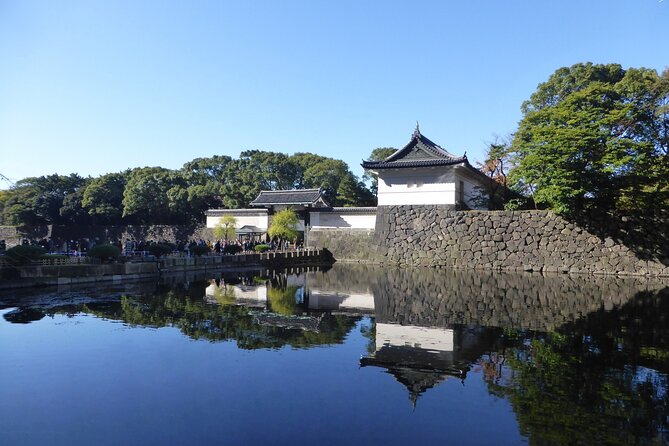
- Wadakura Fountain Park begins the story: Spend about 30 minutes around an elegant water park near the palace, with a royal connection dating to 1961.
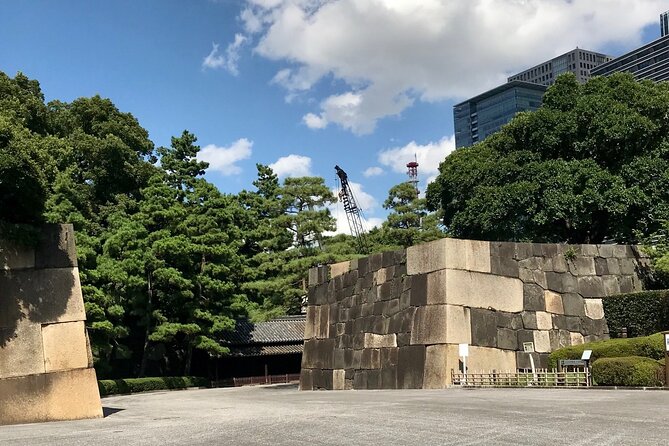
- Edo Castle ruins reveal Tokyo’s older identity: The East Gardens occupy former castle grounds, with stone remains, the Honmaru area, and the Ninomaru Garden.
- Small groups make questions easy: The tour allows no more than 12 people, and some departures have been even smaller.
- The guide is the real value: Strong guides use photos, stories, humor, and clear explanations to connect the site with samurai and imperial history.
- Expect a genuine walk: The route can include hills and steep paths, though one review noted there were no stairs.
- The palace interiors are off-limits: You explore the grounds and East Gardens, not the Emperor’s residence or palace buildings.
Why the Imperial Palace East Gardens deserve your morning
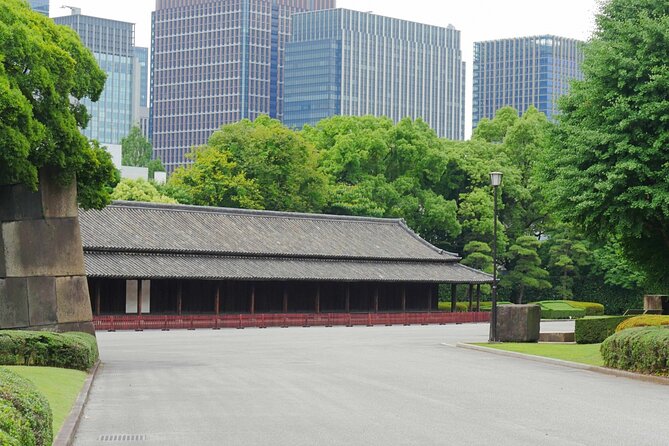
Tokyo can feel so modern that it is easy to forget the city was once Edo, the seat of the Tokugawa shoguns and one of the world’s great castle cities. This tour helps correct that impression. You walk through grounds where political power, military rule, court life, and modern Japan meet.
The East Gardens are not a preserved castle in the European sense. You will not find intact halls filled with furniture or a towering keep you can climb. Instead, you see open grounds, stone foundations, garden paths, ponds, plantings, and ruins that require explanation.
That is why the guide matters. A bare stone wall can seem modest until you understand what it guarded, who used the area, and how the castle operated. Guides praised on this tour, including Kenta and Glenda, have been especially good at explaining the relationship between shoguns, samurai, emperors, and the present imperial family.
The public rating is 4.9 out of 5 from 510 ratings, with 98 percent recommending the experience. That is unusually strong, but it also points to the tour’s main strength: the quality of the person leading it. The garden itself is pleasant and historic, not a grand palace museum.
More Castle and Palace History Tours in Japan
- Tokyo: Imperial Palace and Shogun Historical Walking Tour
★ 5.0 · 2,251 reviews - Tokyo Castle & Imperial PalaceーShogun Walking Tour
★ 4.7 · 1,068 reviews - Tokyo: Imperial Palace Japanese History Walking Tour
★ 4.9 · 987 reviews
Meeting at Wadakura Fountain Park and Starbucks
The meeting point is the Starbucks Coffee at Kokyogaien Wadakura Fountain Park, 3-1 Kōkyogaien, Chiyoda City. Starting here is practical because the park gives you a recognizable place to meet near the Imperial Palace grounds.
Allow a little extra time to locate the guide. The tour description says the meeting point is easy to find, but a large Tokyo station area can still be confusing if you arrive at the last minute. Your mobile ticket provides the booking information, and confirmation is sent when you book.
Wadakura Fountain Park is more than a waiting area. It is a carefully designed public space with fountains and a calm feel, especially when compared with Tokyo’s traffic and office towers nearby. The park was first built in 1961 to mark the wedding of Emperor Akihito and Empress Michiko. It was redesigned and reopened in 1995 for the wedding of Crown Prince Naruhito and Crown Princess Masako.
You spend about 30 minutes here. That is enough time for an introduction, a few photographs, and a first lesson in how Japan’s modern imperial story relates to the area around you. The fountain park is attractive, but it is not the main event. Think of it as a gentle opening chapter before the longer walk through the castle grounds.
Walking through Edo Castle’s former stronghold
The East Gardens take up roughly two hours of the tour. This is where the experience earns its name and most of its historical value.
The grounds were once part of Edo Castle, the center of political power during the shogun era. Today, the open setting can make the scale hard to picture. Your guide fills in that gap by pointing out the castle remains and showing images that help you imagine the buildings that once occupied the site.
The Honmaru area is a major stop. It was the central section of the castle, and its surviving traces give you a sense of how much has disappeared. The foundations and stonework may not look spectacular at first glance, but they become more interesting when placed in the story of the Tokugawa government and the castle’s role in Japanese history.
The Ninomaru Garden provides a different mood. Here, the focus shifts from fortification to traditional Japanese garden design, with ponds, carefully arranged plantings, and quiet walking paths. It is one of the most peaceful parts of the visit and gives the tour a welcome change of pace.
You may also see carp in the water, a detail one visitor singled out as especially charming when the fish caught the sunlight. Depending on the season, the gardens can offer cherry blossoms in spring or autumn color later in the year. Do not book solely for seasonal flowers, though. One October visit had plenty of neat greenery but few flowers and little fall color.
That is an important point. The gardens are well kept and serene, but they may not impress you as a spectacular flower garden. Their appeal is the mix of open space, history, stonework, traditional design, and the chance to pause in central Tokyo.
What the guide adds to the castle ruins
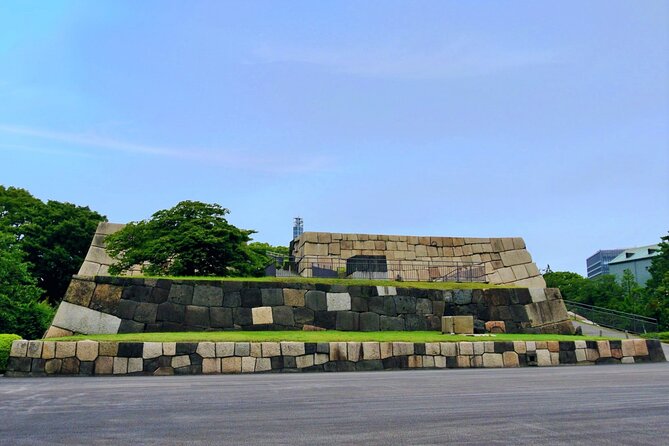
A self-guided stroll through the East Gardens is possible, but the tour gives you a narrative. You are not simply looking at a pond, wall, or foundation. You are hearing how the site connects to the samurai era, the Edo period, the shoguns, and the modern imperial family.
The strongest guides appear to balance facts with conversation. Kenta is praised for humor, energy, visual handouts, and the ability to explain a great deal without making the group feel buried in details. Miko used photographs to explain the gardens, castle grounds, former tower, and other features. Glenda was praised for speaking slowly and clearly while offering wider suggestions for places to visit in Tokyo.
That range matters because English-language guiding in a historical site can be uneven. Here, the most consistently praised qualities are clear speech, friendly manner, and strong preparation. Guides answer questions rather than delivering one long speech and walking away.
There are also thoughtful touches. Kei adjusted the route and discussion during rain, keeping the group in more sheltered spots when possible. Another guide helped obtain a wheelchair when a participant became tired and dizzy. The activity allows service animals, and most people can take part, but it remains a walking tour rather than a seated palace visit.
The guide you receive is not guaranteed by name, so do not book on the assumption that Kenta, Glenda, Sato, or another particular person will lead your departure. Still, the repeated praise for several different guides suggests the operator has a solid bench of staff.
More History Walking Tours in Japan
- Tokyo Castle & Imperial PalaceーShogun Walking Tour
★ 5.0 · 724 reviews - Tokyo: Shinjuku Historical Walking Tour & Secret Backstreets
★ 5.0 · 530 reviews - Asakusa: A Big-picture History Walk to Know Japan
★ 4.6 · 77 reviews - Asakusa: 3.5-hour Big-picture History Walk
★ 4.7 · 39 reviews
Pace, terrain, weather, and what to wear
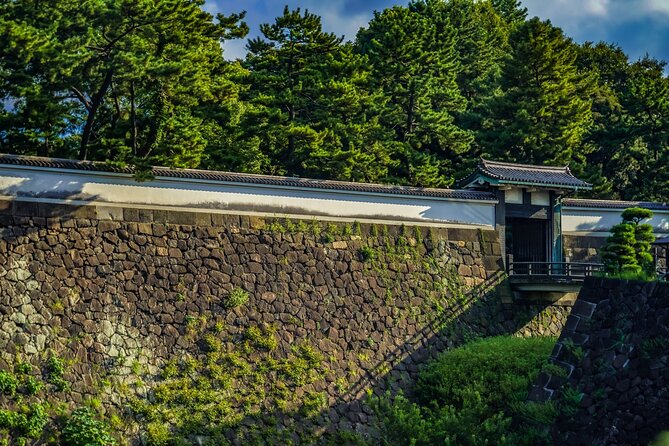
The official duration is approximately two hours and 30 minutes. Plan on using the full time. One person expected a shorter outing and found that the nearly 2.5-hour route affected the rest of the day. That is not a flaw in the tour itself, but it is a scheduling warning.
Wear comfortable shoes with decent grip. The route includes walking around the gardens and may have hills or steep paths. One description calls it an easy walk with some hills and no stairs, while another warns of steep sections. The safest approach is to expect uneven or sloping ground and dress accordingly.
The experience requires good weather. If poor weather cancels it, you are offered another date or a full refund. Light rain does not always ruin the outing, and guides have adjusted the pace and route during wet conditions, but you should still bring rain protection if the forecast looks uncertain.
There are no snacks included. Bring water if you need it, and eat before or after the tour rather than counting on refreshments along the route. Because the walk finishes back at the meeting point, you can plan lunch or another central Tokyo activity afterward, but leave a buffer for the full duration.
Is $25 a fair price?
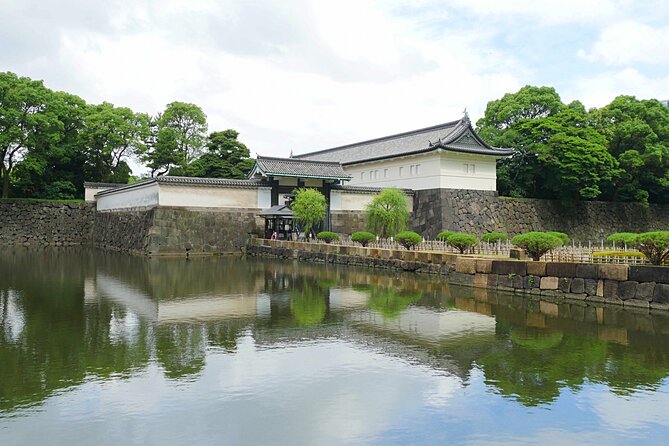
At $25 per person, this is a modestly priced guided walk for Tokyo. The fee includes all taxes and fees plus an English-speaking local guide. You are not paying for admission to the gardens, since entry is free, so the value rests almost entirely in the interpretation and organization.
That makes the tour a good deal if you want context. The guide helps you understand the castle ruins, points out details you might miss, and gives you a historical framework for the modern imperial grounds. The small group limit also makes it easier to hear and ask questions than it would be on a large bus excursion.
The value is less clear if you mainly want beautiful gardens or palace interiors. You can enter the East Gardens without paying for this tour, and the scenery may feel understated outside the best blossom or autumn periods. If you prefer to wander alone and read signs, save the $25 and explore independently.
For a first visit to Tokyo, I think the price is reasonable, particularly if Japanese history is new to you. A good guide turns a simple walk through lawns and stone foundations into a story about power, family, warfare, ceremony, and the city’s transformation.
Who will enjoy this walk most?

I would recommend it to first-time Tokyo visitors who want a manageable introduction to the city’s political and imperial past. It also suits anyone interested in samurai, shoguns, Edo-period Japan, Japanese gardens, or the current imperial family.
Families can do well here, especially when the guide uses humor and pictures. One family found the guide patient and understanding with children. The tour is also a sensible choice for people who want a small group rather than a private guide, since the maximum is 12.
It may not suit you if you have limited mobility, dislike outdoor walking, or need a completely flat route. Most people can participate, and one guide assisted someone who became tired, but the route still includes hills and prolonged walking.
It is also not the right choice if your main goal is to enter the Imperial Palace. Public access to the palace buildings is not permitted on this activity. You see the East Gardens and surrounding grounds, with excellent photo chances, but no interior rooms.
How to fit it into a Tokyo itinerary
Book it early in your Tokyo stay if you want historical context for later sightseeing. The tour can make other places, such as museums or traditional districts, easier to understand because you will already have a basic sense of the Edo period and the imperial transition.
A morning departure works well because the gardens provide a calm start before Tokyo becomes more tiring. Just do not schedule a timed attraction immediately afterward. The tour is advertised as approximately 2.5 hours, and the walking pace, group questions, weather, and photo stops can affect your finish time.
The end point is the original meeting point. That makes onward planning fairly simple, but check your route before leaving. The activity is near public transportation, and the central location makes it practical for combining with other parts of the city.
Free cancellation is available up to 24 hours before the start time for a full refund. Changes or cancellations inside that window are not accepted for a refund, and the weather policy applies if the operator cancels the experience.
Should you book the Imperial Palace East Garden tour?
Book it if you want history brought to life by a guide, prefer a small group, and can spare the full two and a half hours. The best part is not a single grand view. It is the steady connection between Wadakura Fountain Park, Edo Castle’s remains, the Ninomaru Garden, and the people who shaped Japan.
Skip it if you expect palace interiors, elaborate castle rooms, or a flower garden in peak bloom. The grounds can feel quiet and understated, and the free entry means the $25 fee only makes sense if you value clear explanations and an organized route.
For most first-time visitors with an interest in Japan’s past, I would book it. Wear good shoes, leave room in your schedule, and treat the ruins as clues rather than a complete castle. With the right expectations, this is an affordable and useful way to see a calmer, older side of central Tokyo.
FAQ
Where does the tour start?
It starts at Starbucks Coffee in Kokyogaien Wadakura Fountain Park, 3-1 Kōkyogaien, Chiyoda City, Tokyo 100-0002, Japan.
Where does the tour end?
The tour ends back at the original meeting point.
How long does the tour last?
The experience lasts approximately two hours and 30 minutes.
Does the tour enter the Imperial Palace buildings?
No. The tour does not enter the palace buildings. It covers the Imperial Palace East Gardens and surrounding grounds.
What places are included?
The route includes Wadakura Fountain Park and the East Gardens of the Imperial Palace, including the former Edo Castle area, Honmaru grounds, and Ninomaru Garden.
Is admission included?
The tour includes all fees and taxes, and the listed stops have free admission.
How large is the group?
The activity has a maximum of 12 participants.
What happens if bad weather cancels the tour?
You will be offered another date or a full refund if the experience is canceled because of poor weather.
More History Walking Tours in Tokyo
- History and Hauntings of Salem Guided Walking Tour
★ 5.0 · 14,564 reviews - Lisbon: History, Stories and Lifestyle Walking Tour
★ 4.8 · 10,902 reviews - Boston: Freedom Trail History Small Group Walking Tour
★ 5.0 · 6,450 reviews - Historic Charleston Guided Sightseeing Walking Tour
★ 5.0 · 6,216 reviews
More Castle and Palace History Tours in Tokyo
- Tokyo: Edo Castle & East Garden of the Imperial Palace Tour
★ 4.7 · 112 reviews - Tokyo: Imperial Palace, the history of Japan (ENGLISH GUIDE)
★ 5.0 · 77 reviews - Kyoto: Nijo Castle World Heritage Guided Tour with Admission
★ 4.9 · 37 reviews - Edinburgh: Edinburgh Castle Guided History Tour with Tickets
★ 4.8 · 9,933 reviews
Just added around Tokyo
- Tokyo: Mount Fuji Private Full-Day Trip with Hotel Pickup★ 5.0 · 18 reviews
- Private Tour Through the Tokyo National Museum & Ukiyo-e★ 4.7 · 17 reviews
- Tokyo: Imperial Palace, the history of Japan (ENGLISH GUIDE)★ 5.0 · 77 reviews
- Tokyo: Customized Private Historical Guided Photoshoot Tour★ 5.0 · 25 reviews
- Tokyo: Edo Castle & East Garden of the Imperial Palace Tour★ 4.7 · 112 reviews
- Tokyo: Nagano Snow Monkeys and Zenkoji Tour with Temples★ 4.9 · 19 reviews
- Kyoto: Nijo Castle World Heritage Guided Tour with Admission★ 4.9 · 37 reviews
- Historic Kanda Sake Tasting at Tokyo’s Oldest Shop (1596)★ 4.9 · 33 reviews
Castle & Palace History Tours, compared.

Edinburgh Castle Guided History Tour with Tickets
Read our review →
Venice’s Best: Basilica, Doge’s Palace, Gondola & History Gallery
Read our review →
Imperial Palace and Shogun Historical Walking Tour
Read our review →
Saadian Tombs & Bahia Palace, Medina Guided Tour
Read our review →
Charleston historical walking tour with a Professor of History at The Citadel
Read our review →
Abu Dhabi Grand Mosque, Palace, and Heritage Village
Read our review →
Buda Castle District Dark History, Legends and Vampire Night Tour
Read our review →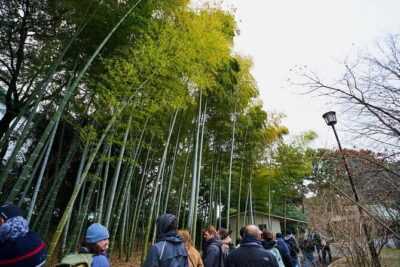
Tokyo Castle & Imperial PalaceーShogun Walking Tour
Read our review →Browse the lists this tour appears in