
Review · HONSHU
Tokyo Castle & Imperial PalaceーShogun Walking Tour
Tokyo’s past is hiding in plain sight. This two-hour walk turns moats, gates, gardens, and stone walls into a clear story about Edo Castle, the shogun, and Japan’s long imperial tradition. I especially like the small group of up to 10 people, which makes it easier to hear the guide and ask questions. The price, $23 per person, is also fair for a central Tokyo history tour with an English-speaking guide.
The main drawback is that much of the time is spent outdoors, and the tour does not enter the private areas of the Imperial Palace. You see the grounds, East Gardens, ruins, gates, and palace views rather than royal rooms. Still, guides such as Anju, Fuma, Yuka, Tomo, Keiko, and Kosei have earned praise for making the missing buildings feel present through stories, diagrams, and historical detail.
Key points to know before booking
- Edo Castle was once Japan’s largest castle, and its surviving moats, gates, walls, and towers reveal how difficult it was to attack.
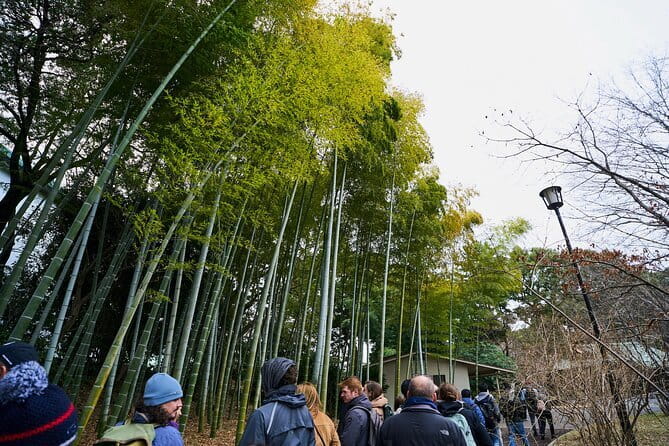
- The East Gardens provide the tour’s calmest moments, with seasonal plants, special koi fish, old trees from around Japan, and a miniature palace structure.
- The guide makes the difference, with repeated praise for clear English, friendly pacing, good photographs, and answers to questions.
- The route lasts two hours and stays mostly outdoors, so comfortable shoes and weather-ready clothing matter.
- The meeting point is easy to identify, Starbucks Coffee Kōkyo Gaien Wadakura Fountain Park Store at 3-1 Kōkyo Gaien, Chiyoda City.
- At $23, the tour is strongest for history lovers, especially if you want context instead of simply walking through attractive gardens.
Why Edo Castle matters in modern Tokyo
Tokyo can feel startlingly new, but the Imperial Palace grounds hold the outline of an older city. Edo Castle once occupied a huge area at the center of the capital. The tour explains how its layered defenses, moats, gates, and stonework helped protect the shogun and his government.
That physical setting gives the walk its purpose. Without a guide, you may see a broad moat or a heavy gate and simply register it as pleasant scenery. With an explanation, you begin to understand how each feature controlled movement and protected the castle interior.
The castle also connects two important parts of Japanese history. The shogun ruled during the long samurai era, including a peaceful period that lasted about 260 years. The Imperial Palace later became the home of Japan’s emperor, linking the site to a 2,600-year imperial tradition described on the tour.
I like that the experience does not treat the palace as a collection of old stones. It asks how power changed hands, how the city grew around the castle, and how the imperial system continued into modern Japan. That gives the walk more weight than a standard photo stop.
More Castle and Palace History Tours in Japan
- Tokyo: Imperial Palace and Shogun Historical Walking Tour
★ 5.0 · 2,251 reviews - Tokyo: Imperial Palace Japanese History Walking Tour
★ 4.9 · 987 reviews - Tokyo Castle & Imperial PalaceーShogun Walking Tour
★ 5.0 · 724 reviews
Meeting at Wadakura Fountain Park
The tour begins in front of Starbucks Coffee Kōkyo Gaien Wadakura Fountain Park Store. The address is 3-1 Kōkyo Gaien, Chiyoda City, Tokyo. Look for a guide holding a sign marked Local Guide Stars.
This is a useful meeting point because it is in the Imperial Palace outer grounds rather than at a distant neighborhood landmark. Still, give yourself enough time to find the correct Starbucks. Large Tokyo stations and palace surroundings can make a few minutes disappear quickly.
The group is capped at 10 people. That size is small enough for a more personal walk, but it still gives the outing a social feel. Several guides have been praised for keeping the pace relaxed, including Fuma, Anju, Koyo, Ai, Mai, Nana, and Kazuki.
The English-only format is important. Japanese language support is not available, so you should be comfortable following a live tour in English. The guides are described as clear and friendly, and one guide, Kosei, was especially appreciated for comparing Japanese customs with life abroad.
Sakurada Tatsumi Yagura: a first look at castle defenses
The first stop is Sakurada Tatsumi Yagura, a traditional corner tower and one of the early reminders that this was a working fortress. The stop is short, about five minutes, but it sets up the larger story.
Your guide explains how the castle’s structures fit into a defensive plan. The tower is not just an attractive old building. It helped watch the surrounding area and protect the castle’s edges.
This is a photo stop, so you get an early chance to frame the tower with the surrounding grounds. The short timing also keeps the tour moving. If you prefer long periods for photography, you may wish for more time here, but the guide is trying to cover a large area within two hours.
Ote-Mon Gate and the art of controlled entry
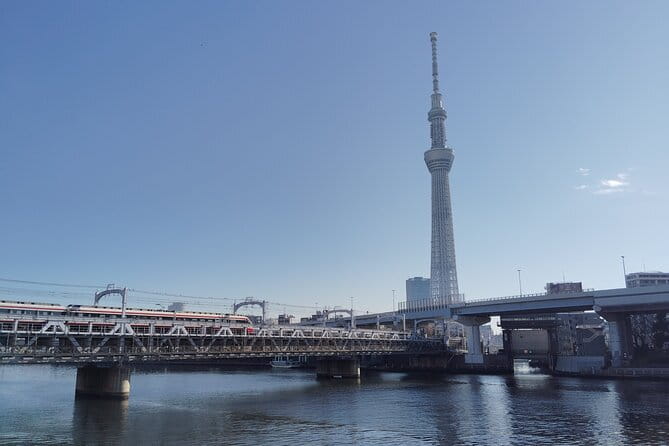
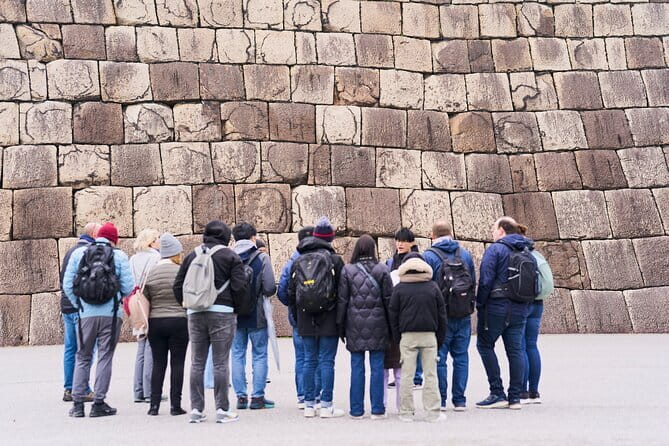
Ote-Mon Gate receives about 15 minutes, making it one of the more useful stops for understanding castle design. Gates were not simple entrances. They controlled who could enter, slowed potential attackers, and helped separate the outer areas from the shogun’s protected compound.
This is where the tour’s explanation of layered defenses becomes especially helpful. The broad moats and heavy stone foundations make more sense once you know that an attacker would face several obstacles rather than one wall.
I would pay close attention here if you are interested in samurai government. The gate helps explain how authority was protected in daily life, not just during a dramatic battle. The tour focuses on the system around the shogun, his retainers, and the castle staff.
The stop also gives you a good sense of scale. Edo Castle was enormous, and the surviving features are only pieces of a much larger complex. A guide can point out what has disappeared and help you picture the original arrangement.
More History Walking Tours in Japan
- Tokyo: Shinjuku Historical Walking Tour & Secret Backstreets
★ 5.0 · 530 reviews - Imperial Palace East Garden and Edo Castle Walking Tour in Tokyo
★ 5.0 · 510 reviews - Asakusa: A Big-picture History Walk to Know Japan
★ 4.6 · 77 reviews - Asakusa: 3.5-hour Big-picture History Walk
★ 4.7 · 39 reviews
The Imperial Palace: from shogun’s headquarters to imperial residence
The route then reaches the Tokyo Imperial Palace area for about 20 minutes. Today, the site serves as the residence of Japan’s emperor. The tour uses this setting to explain how the political role of the grounds changed over time.
Do not expect a palace interior tour. The experience focuses on the exterior grounds and public areas. You will see palace views, open spaces, historic structures, and the setting around the residence, but private imperial rooms are not part of the route.
That limitation is worth knowing before you book. If you want indoor rooms, royal furnishings, or a long look at palace architecture, this is not the right experience. If you want the larger story of the site, the outdoor route works well.
The guides bring the timeline forward to the present day. Elise, one of the past participants, described leaving with a better grasp of the samurai, Edo period, and imperial family. That is the tour’s real strength: it connects centuries rather than treating the Edo period as an isolated chapter.
Ninomaru Garden and the quieter side of central Tokyo
Ninomaru Garden receives about 15 minutes and offers a welcome change from defensive walls and formal gates. Here, the focus shifts to planting, design, water, and the quieter rhythms of palace life.
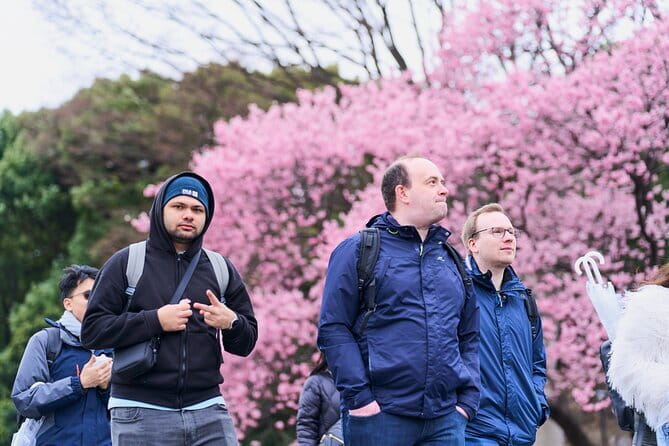
The gardens are carefully maintained, with seasonal color and trees representing different parts of Japan. The tour also includes encounters with special koi fish. These details make the walk appealing even if your interest in samurai politics is only moderate.
I like this portion because it slows the pace without losing the historical thread. Your guide may point out why particular garden features matter and how the grounds served more than a decorative purpose.
The garden also shows another side of the imperial setting. Edo Castle was a center of government and military authority, but it was also a place of ceremony, private routines, and carefully planned beauty. The contrast helps keep the two-hour walk from feeling like one long sequence of walls.
Edo Castle ruins and the lost palace
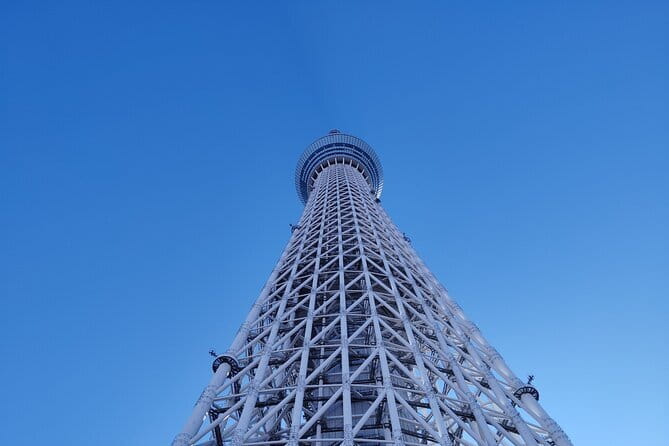
The Edo Castle ruins get about 10 minutes. This is one of the most valuable parts for anyone trying to understand what disappeared.
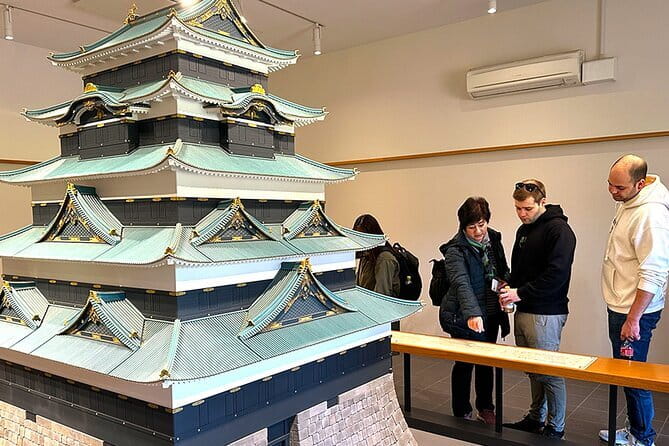
The original castle was much larger than the remains suggest. Some major structures no longer exist, so a guide must do the work of reconstruction. The tour includes a miniature structure of the former palace, which helps bridge the gap between the surviving foundations and the castle that once filled the site.
Kevin’s experience captures the appeal of this section: the visit helped make clear what the palace used to look like. Without that visual aid, ruins can be hard to read. With the miniature structure and spoken explanation, the empty spaces begin to carry meaning.
The short timing may feel tight if you want to linger over every stone. The benefit is that the guide can place the ruins in a wider story about the Edo period, the shogun’s authority, and Tokyo’s later development.
Imperial Palace East Gardens: the tour’s best photo stop

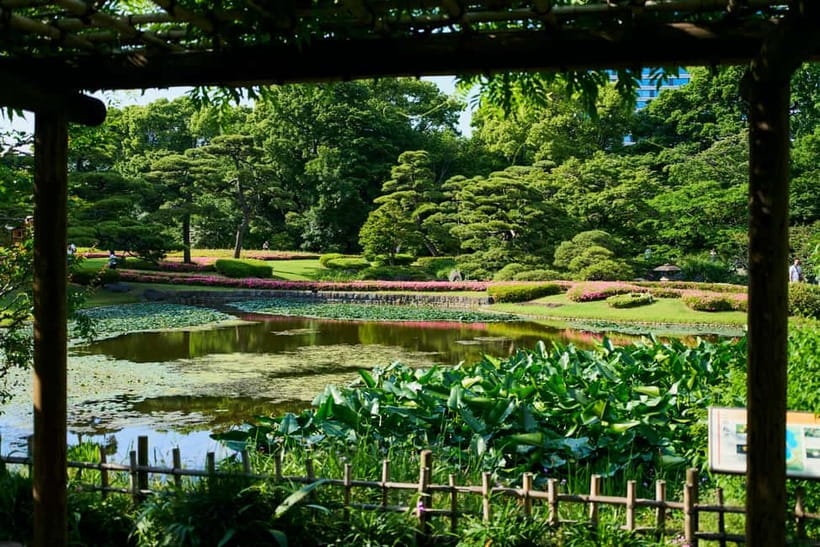
The East Gardens receive around 20 minutes and are likely to be the prettiest part of the walk. You can expect open garden views, old stonework, seasonal plants, koi ponds, and trees gathered from across Japan.
Photography is encouraged, so bring a camera or keep your phone ready. Several guides have also been praised for taking photos for the group. Yuka was specifically appreciated for answering questions and taking excellent pictures, while Fuma was praised for pointing out details that people might otherwise walk past.
The gardens are not only a scenic finish. They help you see how the site operates today. The old defensive remains sit beside carefully managed public gardens, creating a place where imperial history and everyday Tokyo meet.
This is also where the tour feels most relaxed. Pina described the pace as calm, with small quizzes and enough time to enjoy the setting. That matters in Tokyo, where many sightseeing stops can feel hurried and crowded.
The guides are the main reason to book
The strongest pattern in the feedback is the quality of the guiding. Names that come up repeatedly include Anju, Fuma, K, Kosei, Keiko, Tomo, Yuka, Koyo, Ai, and Kazuki.
The praise is specific. Anju is described as patient, cheerful, and strong at bringing the Edo period up to the present. Fuma is noted for fun facts, warm conversation, and useful recommendations for the rest of a Tokyo visit. Tomo is praised for a good pace and an interactive style.
Several guides are young Japanese students or recent graduates, which can give the tour a friendly, conversational feel. That may appeal to you if you prefer a relaxed local voice instead of a formal lecture.
The best guides seem to welcome questions rather than rush through prepared facts. That is especially useful at a place where the physical remains are incomplete. You need someone who can explain what is missing, why it mattered, and how the modern palace fits into the story.
Is $23 a fair price?
At $23 per person, this is a reasonable price for a two-hour small-group experience in central Tokyo. The Imperial Palace grounds and East Gardens are the main attraction, so the fee is paying primarily for interpretation, organization, and access to a guide rather than an expensive admission ticket.
That distinction matters. If you are happy to walk through the gardens alone and read signs, you may find the cost less appealing. Teresa made a similar point, noting that the price felt a little high because entry to the gardens may not involve a separate charge.
I still think the price works for first-time visitors who want the site to make sense. The guide explains defenses, palace changes, samurai society, the imperial family, and the growth of Tokyo in one compact visit. At $23, that is a modest way to add structure to a large and potentially confusing area.
The small group also adds value. You are not one person in a huge crowd trying to hear a distant microphone. With no more than 10 participants, questions and photographs are easier to manage.
Practical details for a comfortable walk
Plan for outdoor conditions. A large portion of the route takes place outside, so wear shoes suitable for walking and dress for the day’s weather. Sun, rain, heat, or cold can shape your enjoyment more than any historical detail.
There is a security check when entering the Imperial Palace grounds. Do not bring knives or alcohol. Keep your belongings simple so the entry process does not slow you down.
Wheelchairs are available within the Imperial Palace grounds, but some slopes and sections require walking or going down on foot. If accessibility is important for you, ask for current details before booking because the route includes uneven changes in level.
The tour returns to the same Starbucks meeting point. That makes it easy to continue sightseeing in central Tokyo afterward, though no transport is included as part of the walking experience.
Free cancellation is available up to 24 hours before the tour for a full refund, and you can reserve now while paying later. Check the available starting times when planning your day.
Who will enjoy this tour most?
I would choose this tour if you want a clear introduction to the Edo period, samurai culture, the shogun, and the imperial family without spending half a day in a museum.
It also suits fans of historical dramas who want to separate screen drama from the real setting. Joe, who had become interested in the Edo period after watching Shōgun, found the different historical perspectives especially rewarding.
The tour works for photographers, garden lovers, and curious first-time visitors too. The best moments are not limited to lectures. You get towers, gates, moats, stonework, ruins, koi, seasonal gardens, and palace views.
I would skip it if you strongly prefer indoor attractions, private palace interiors, or complete freedom to set your own pace. The route covers a lot in two hours, and some stops are brief.
Should you book the Tokyo Castle and Imperial Palace Shogun Walking Tour?
Book it if you want the Imperial Palace grounds to tell a story rather than simply provide a pleasant walk. The $23 price, 10-person limit, and steady stream of positive comments about guides such as Anju, Fuma, Tomo, and Keiko make it a solid value for history-focused visitors.
Go in with realistic expectations: this is an outdoor walking tour of surviving castle features, gardens, ruins, and palace grounds. You will not tour private rooms or see a complete Edo Castle.
For most first-time visitors, the guide is worth the fee. A moat becomes a defense system, a gate becomes a tool of control, and a garden becomes part of a long imperial setting. That extra layer is what turns a central Tokyo walk into a useful history lesson.
FAQ
How long is the Tokyo Castle and Imperial Palace Shogun Walking Tour?
The tour lasts two hours.
How much does the tour cost?
The price is $23 per person.
How many people can join the group?
The group is limited to 10 participants.
Is the tour offered in Japanese?
No. The tour is conducted in English only, and Japanese language support is not available.
Where does the tour start?
Meet in front of Starbucks Coffee Kōkyo Gaien Wadakura Fountain Park Store at 3-1 Kōkyo Gaien, Chiyoda City, Tokyo.
How will I identify the guide?
The guide will be holding a sign that says Local Guide Stars.
What places are included in the route?
The route includes Sakurada Tatsumi Yagura, Ote-Mon Gate, the Tokyo Imperial Palace area, Ninomaru Garden, Edo Castle ruins, and the Imperial Palace East Gardens.
Are there any security restrictions?
Yes. There is a security check when entering the Imperial Palace. Do not bring knives or alcohol.
Can wheelchair users join the tour?
Wheelchairs are available within the Imperial Palace grounds, but some slopes and areas require walking or going down on foot.
More History Walking Tours in Tokyo
- History and Hauntings of Salem Guided Walking Tour
★ 5.0 · 14,564 reviews - Lisbon: History, Stories and Lifestyle Walking Tour
★ 4.8 · 10,902 reviews - Boston: Freedom Trail History Small Group Walking Tour
★ 5.0 · 6,450 reviews - Historic Charleston Guided Sightseeing Walking Tour
★ 5.0 · 6,216 reviews
More Castle and Palace History Tours in Tokyo
- Tokyo: Edo Castle & East Garden of the Imperial Palace Tour
★ 4.7 · 112 reviews - Tokyo: Imperial Palace, the history of Japan (ENGLISH GUIDE)
★ 5.0 · 77 reviews - Kyoto: Nijo Castle World Heritage Guided Tour with Admission
★ 4.9 · 37 reviews - Edinburgh: Edinburgh Castle Guided History Tour with Tickets
★ 4.8 · 9,933 reviews
Just added around Tokyo
- Tokyo: Mount Fuji Private Full-Day Trip with Hotel Pickup★ 5.0 · 18 reviews
- Private Tour Through the Tokyo National Museum & Ukiyo-e★ 4.7 · 17 reviews
- Tokyo: Imperial Palace, the history of Japan (ENGLISH GUIDE)★ 5.0 · 77 reviews
- Tokyo: Customized Private Historical Guided Photoshoot Tour★ 5.0 · 25 reviews
- Tokyo: Edo Castle & East Garden of the Imperial Palace Tour★ 4.7 · 112 reviews
- Tokyo: Nagano Snow Monkeys and Zenkoji Tour with Temples★ 4.9 · 19 reviews
- Kyoto: Nijo Castle World Heritage Guided Tour with Admission★ 4.9 · 37 reviews
- Historic Kanda Sake Tasting at Tokyo’s Oldest Shop (1596)★ 4.9 · 33 reviews
Castle & Palace History Tours, compared.

Edinburgh Castle Guided History Tour with Tickets
Read our review →
Venice’s Best: Basilica, Doge’s Palace, Gondola & History Gallery
Read our review →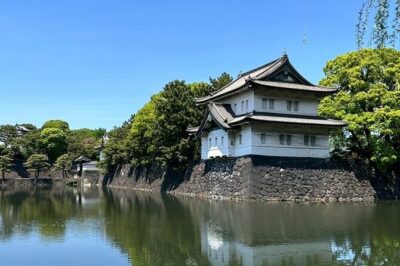
Imperial Palace and Shogun Historical Walking Tour
Read our review →
Saadian Tombs & Bahia Palace, Medina Guided Tour
Read our review →
Charleston historical walking tour with a Professor of History at The Citadel
Read our review →
Abu Dhabi Grand Mosque, Palace, and Heritage Village
Read our review →
Buda Castle District Dark History, Legends and Vampire Night Tour
Read our review →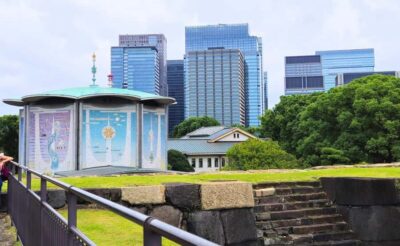
Browse the lists this tour appears in