
Review · PHILADELPHIA
Philly Gayborhood and LGBTQ History Walking Tour
Philadelphia tells its queer story block by block. This 90-minute walk through the Gayborhood connects murals, community spaces, old gay bars, and the long shift from LGBTQ protest to public Pride. I especially like the small-group feel, with no more than 30 people, and the way the route honors both well-known leaders and everyday community spaces. A possible drawback is the short running time: you get a focused introduction, not a full tour of Philadelphia’s LGBTQ past.
The walk costs $49 per person and begins at 3:00 p.m. outside Bud & Marilyn’s on Locust Street. I like that it stays in a compact area and returns to the same meeting point, which makes it easy to fit into an afternoon in Center City. The main consideration is weather, since the tour can be canceled if conditions are poor.
Key points before you book
- Four focused stops cover murals, bookstores, bars, and community work, giving the tour more range than a simple neighborhood stroll.
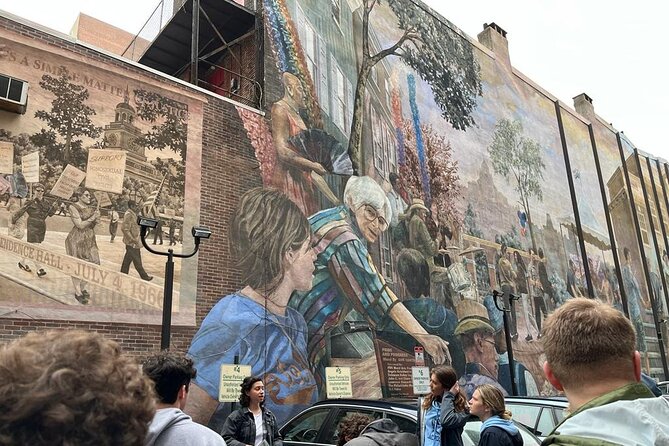
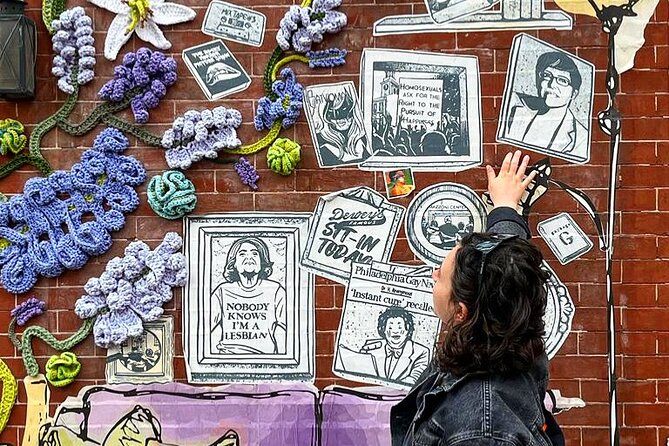
- William Way’s Pride and Progress mural provides a strong opening look at LGBTQ activism and public memory.
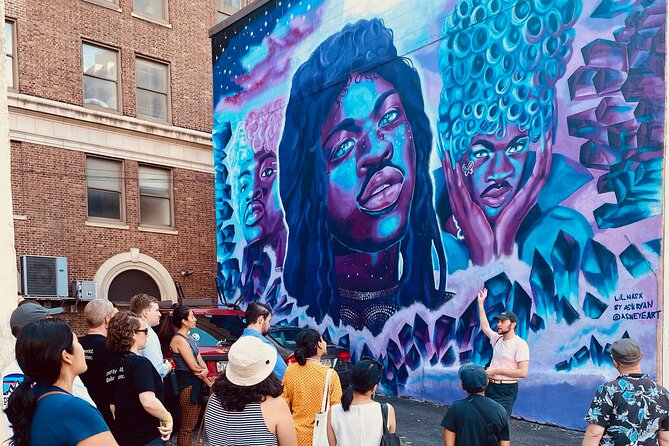
- Two murals at Writer’s Block Rehab honor queer icons, including a local QPOC-owned bar as part of the story.
- Giovanni’s Room is a major stop, since it is the oldest continuously operating LGBTQ-focused bookstore in the country.
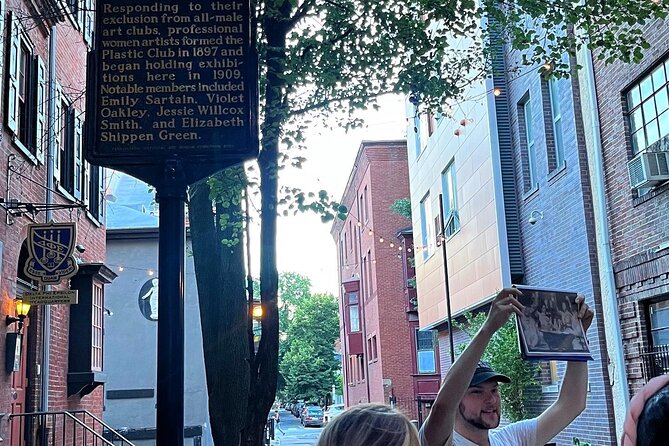
- North Camac Street shows where the historic Gayborhood took shape, including the location of some of Philadelphia’s oldest gay bars.
- A private option is available for groups of at least five, useful if you want a more personal pace and discussion.
Why this short Philadelphia walk is worth your time
This is not a broad city tour with one quick mention of LGBTQ Philadelphia. The entire route is centered on the Gayborhood and the people, businesses, art, and organizing that shaped it.
That focus matters. A neighborhood can look ordinary if you walk through it without context. A mural becomes more meaningful when you understand why it was painted. A bookstore becomes more than a shop when you know its place in LGBTQ life. A street lined with restaurants and apartments can also mark the location of some of the city’s oldest gay bars.
I like the balance here. The tour does not rely only on famous names or dramatic political moments. It also points you toward places that helped create daily community life. You see public art, a community center, a bookstore, and a former social center of the Gayborhood.
The tour is also a manageable length. At about an hour and a half, it gives you a clear introduction without taking over your day. You can schedule it at 3:00 p.m., then continue exploring Center City afterward. If you want a long, highly detailed lecture, this may feel brief. If you want a useful first look with a guide who can answer questions, the length works well.
One attendee described the walk as starting on time, moving at a comfortable pace, and allowing plenty of time for photographs. That is useful information if you do not want to rush from stop to stop. The guide was also praised for answering questions, so you should feel free to ask about the people, places, and changes connected with each stop.
More History Walking Tours in the USA
- Philadelphia Old City Historic Walking Tour with 10+ Top Sites
★ 5.0 · 2,020 reviews - Philadelphia: History, Highlights & Revolution Walking Tour
★ 4.9 · 317 reviews - Philadelphia: Revolutionary Walk Through Historic Old City
★ 4.8 · 208 reviews
Starting at William Way and the Pride and Progress mural
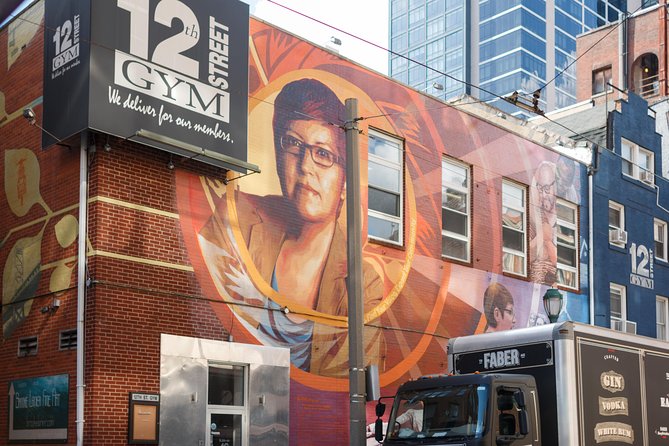
The first stop is the William Way LGBT Community Center, where you see the Pride and Progress mural on the side of the building. The visit lasts about 15 minutes, and there is no separate admission charge.
This is a smart place to begin. A community center gives the tour a direct connection to ongoing LGBTQ support and organizing, while the mural turns that connection into something visible from the street. The title, Pride and Progress, also points toward one of the tour’s central themes: LGBTQ rights and public recognition have changed, but that change came through organized effort.
You should expect to spend time looking closely at the artwork and listening to the guide set up the larger story. This is likely one of the best moments for photographs, since the mural is the main feature of the stop.
The practical advantage is that you do not need to enter a museum or plan around timed admission. You are seeing a public work in the neighborhood where the story took place. The limitation is that this is an outdoor stop, so poor weather can affect the experience and may lead to cancellation.
Meeting queer icons at Writer’s Block Rehab
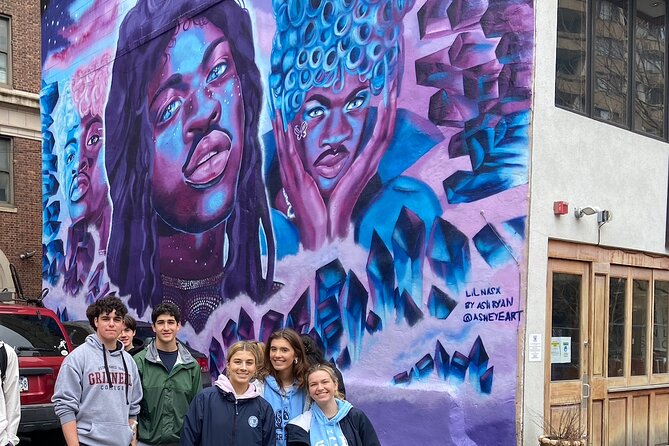
The second stop takes about 10 minutes and brings you to Writer’s Block Rehab, a local QPOC-owned bar. On its side are two murals featuring queer icons.
This stop adds an important layer to the route. The Gayborhood is not presented as a single, uniform story. By including a QPOC-owned business and murals of queer figures, the walk signals that LGBTQ history includes many voices and communities.
Because the visit is short, you will probably spend most of the time viewing the murals and hearing the guide explain their significance. You may find this stop especially useful if public art is one of your main reasons for booking. It gives you two works in one place and shows how private businesses can help carry community memory into the street.
The stop also gives the tour some variety. You are not moving from one formal institution to another. You are seeing a working local business that is part of the neighborhood’s present-day identity. That contrast helps connect past activism with current community life.
You should keep your expectations sensible. The tour information does not promise an indoor visit, food, drinks, or a long stop inside the bar. Think of Writer’s Block Rehab primarily as a mural and neighborhood-history stop.
Visiting Giovanni’s Room and LGBTQ books
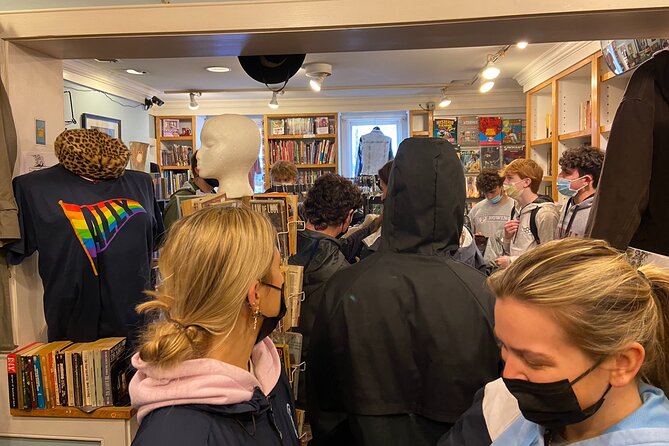
The third stop is Philly AIDS Thrift at Giovanni’s Room, with about 15 minutes set aside for the visit. This is the oldest continuously operating LGBTQ-focused bookstore in the country, making it one of the most significant places on the route.
For me, this is the stop that gives the tour its strongest link to LGBTQ literature and ideas. Murals tell public stories through images. A bookstore preserves stories through books, reading, and the exchange of ideas. That makes Giovanni’s Room a useful counterpoint to the outdoor art earlier in the walk.
The current name includes Philly AIDS Thrift, so you are seeing a place with both literary and community connections. The tour information identifies it as a bookstore stop, but it does not promise a shopping period or specify a particular author, collection, or exhibit. You can still expect the guide to explain why the site matters and how it fits the Gayborhood’s development.
If you enjoy bookstores, this may be the stop that makes the walk feel especially worthwhile. You might want to allow extra time before or after the tour if you hope to browse, since the scheduled 15 minutes is part of the guided route rather than a dedicated shopping session.
This is also a reminder that LGBTQ history is not only about marches and political milestones. It is about where people found books, language, community, and a sense that their lives belonged in print.
More History Walking Tours in Philadelphia:
- Philadelphia Historical Independence Walking Tour
★ 4.5 · 164 reviews - Walking Tour of Historic Philadelphia
★ 5.0 · 99 reviews - Badass Women’s History Walking Tour of Philadelphia
★ 5.0 · 97 reviews - The Black Journey: An African-American History Walking Tour of Philadelphia
★ 5.0 · 76 reviews
Walking North Camac Street and the old Gayborhood
The final listed stop is North Camac Street, where the guide explains what formed the heart of the Gayborhood and points out the locations of Philadelphia’s oldest gay bars. The stop lasts about 10 minutes.
This section gives the tour its clearest street-level geography. You learn not only about individual sites, but about how a neighborhood functions as a social center. Bars provided places to meet, socialize, and build community, especially during periods when LGBTQ people faced greater pressure to hide their identities in public.
The value of North Camac Street is its connection to place. The street itself becomes part of the lesson. You are not just hearing that Philadelphia had an established gay community. You are seeing where that community gathered.
Ten minutes is enough for a concise explanation and a few questions, but it will not cover every bar, business, or decade of change. If you want a full architectural or nightlife survey, you will need more time on your own. For a short walking tour, though, this stop gives the route a logical finish before you return to the starting point.
The ending also helps tie the four stops together. The community center shows organized support. The murals show public remembrance. The bookstore shows cultural life. North Camac Street shows the social spaces that helped the Gayborhood grow.
How Pride changes from protest to parade
One of the tour’s main themes is the evolution of Pride, from protest to parade. That shift is worth paying attention to, since it explains why a cheerful public celebration can also carry serious political meaning.
The tour does not treat Pride as a single event frozen in the past. Instead, it follows how public demonstrations and celebrations changed over time. The William Way mural is a natural setting for this subject, while the other stops show how Pride connects to art, local businesses, books, and community spaces.
I appreciate this framing because it avoids reducing LGBTQ history to a simple story of progress. The route pays tribute to prominent activists and leaders, but it also directs your attention to the places where people built everyday support networks.
You should ask questions during this section if you want more detail about local organizers, specific Pride events, or the changes in the neighborhood. The guide has been praised for answering questions, and the group size should allow some conversation, though a maximum of 30 people can still feel fairly large at busy points.
Group size, private tours, and the walking pace
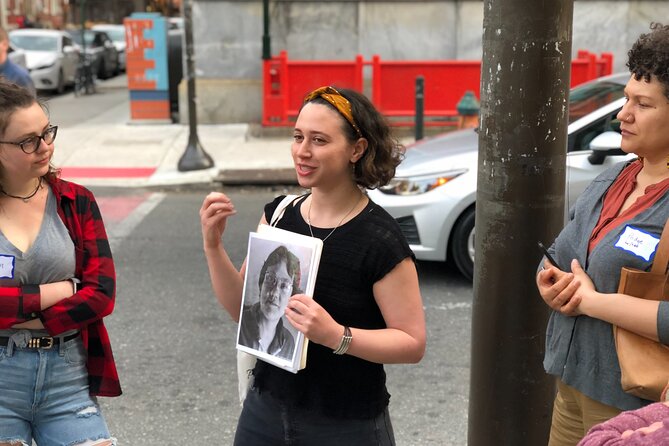
The standard tour allows up to 30 people. That is small enough to keep the route manageable, but it is not a private walk. Your experience may depend on how actively the group participates and how well everyone can hear at each outdoor stop.
A private upgrade is available with a minimum of five people. This could be a good choice for friends, family, school groups, or organizations that want more control over the pace. The supplied details do not specify the private-tour price, exact group limit, or special customization, so you should confirm those points before booking.
The tour is offered in English and uses a mobile ticket. It begins and ends at Bud & Marilyn’s, 1234 Locust Street. The meeting point is near public transportation, which is useful if you are staying elsewhere in Philadelphia or combining the walk with another Center City activity.
Most people can participate, and service animals are allowed. The route is on foot, so comfortable shoes remain sensible, even though the walk is only about 90 minutes. No separate admission fees are listed for the four stops.
Is $49 a fair price?
At $49 per person, this is not the cheapest way to spend 90 minutes in Philadelphia. You can walk through the Gayborhood on your own for free. The value comes from the context, route planning, and access to a guide who connects the sites into one story.
I would consider the price reasonable if you want more than a self-guided stroll. Without a guide, you might see the William Way mural, pass Writer’s Block Rehab, enter Giovanni’s Room, and walk along North Camac Street without knowing how those places relate. The tour gives you a clear sequence and a chance to ask questions.
The price is easier to justify if you care about LGBTQ history, public art, independent bookstores, or Philadelphia neighborhoods shaped by social movements. It is less compelling if you already know the Gayborhood well or only want a general orientation to Center City.
The tour has earned a five-star rating from 36 submitted ratings, with 100 percent recommending it. Those figures suggest strong satisfaction, especially with the pace and guide interaction, but I would still keep the short duration in mind. You are paying for a concentrated introduction, not an all-day historical program.
Who should book this Gayborhood walk?
I would recommend it to first-time visitors who want a focused look at Philadelphia’s LGBTQ past and present. It also suits locals who know Center City but have never connected its murals, community institutions, and former bars into one story.
The tour is a good fit if you like walking, public art, local history, and discussions of social change. It should also work well for anyone who prefers a compact activity with a fixed start and finish.
You may want to skip it if you dislike outdoor tours, need a fully indoor activity, or want extensive time inside each location. The route is short, and the information provided does not promise museum access, food, drinks, or a longer bookstore visit.
Book with weather in mind. You can cancel for a full refund up to 24 hours before the start time, but changes or cancellations inside that window are not refunded. If poor weather cancels the tour, you will be offered another date or a full refund. The same choice applies if the minimum number of participants is not reached.
Should you book the Philly Gayborhood and LGBTQ History Walking Tour?
Book it if you want a clear, welcoming introduction to Philadelphia’s LGBTQ community, especially if murals, bookstores, and neighborhood history appeal to you. The strongest parts are the Pride and Progress mural, Giovanni’s Room, and the explanation of North Camac Street’s old bar district.
I would not book it expecting a long academic lecture or a complete account of every LGBTQ site in Philadelphia. At 90 minutes, it is best viewed as a focused starting point. You leave with a better sense of how activism, Pride, businesses, art, and social spaces shaped the Gayborhood, then you can continue exploring on your own.
FAQ
How much does the Philly Gayborhood and LGBTQ History Walking Tour cost?
The tour costs $49 per person.
How long does the tour last?
The walking tour lasts approximately 1 hour and 30 minutes.
What time does the tour start?
The tour starts at 3:00 p.m.
Where does the tour meet?
The meeting point is Bud & Marilyn’s at 1234 Locust Street, Philadelphia, Pennsylvania 19107.
Where does the tour end?
The activity ends back at the meeting point at Bud & Marilyn’s.
What language is the tour offered in?
The tour is offered in English.
What places are included on the route?
The route includes the William Way LGBT Community Center, Writer’s Block Rehab, Philly AIDS Thrift at Giovanni’s Room, and North Camac Street.
Is there a private tour option?
Yes. You can upgrade to a private tour experience, with a minimum of five people.
How many people can join the standard tour?
The tour has a maximum group size of 30 people.
Can I cancel for a full refund?
Yes. You can cancel up to 24 hours before the start time for a full refund. Cancellations or changes made less than 24 hours before the start time are not refunded or accepted.
Is the tour canceled in bad weather?
The experience requires good weather. If poor weather causes a cancellation, you will be offered a different date or a full refund.
More LGBTQ-Friendly in Philadelphia
- Dublin LGBTQ Pride Historical and Cultural Walking Tour
★ 5.0 · 91 reviews - Pride Tours NYC’s LGBTQ Historical Walking Tour
★ 5.0 · 89 reviews - Two-Hour NYC LGBTQ+ History Walking Tour
★ 5.0 · 35 reviews
Just added around Philadelphia
- Badass Women’s History Walking Tour of Philadelphia★ 5.0 · 97 reviews
- The Black Journey: An African-American History Walking Tour of Philadelphia★ 5.0 · 76 reviews
- Walking Tour of Historic Philadelphia★ 5.0 · 99 reviews
- Historic Sites of Philadelphia Self-Guided Walking Audio Tour★ 4.5 · 24 reviews
- Philadelphia Old City History Pub Crawl Small-Group Tour★ 5.0 · 294 reviews
- One Hour Tour Of Philadelphia Historical Sites In A Vintage Car★ 4.5 · 52 reviews
- Independence Mall (Entrance to 2 Historic Sites) 2.5 Hour Walking★ 5.0 · 21 reviews
- Beyond the [Liberty] Bell History Walking Tour★ 5.0 · 73 reviews
History Walking Tours, compared.
History and Hauntings of Salem Guided Walking Tour
Read our review →
Freedom Trail History Small Group Walking Tour
Read our review →
Historic Charleston Guided Sightseeing Walking Tour
Read our review →
Tapas Walking Tour with Food, Wine, and History
Read our review →
Savannah History and Haunts Candlelit Ghost Walking Tour
Read our review →
A History of Terror – Belfast City Centre Walking Tour
Read our review →Browse the lists this tour appears in