
Review · NEW YORK CITY
Pride Tours NYC’s LGBTQ Historical Walking Tour
Some streets carry a whole movement. Pride Tours NYC’s LGBTQ Historical Walking Tour traces that movement through Christopher Park, the Stonewall Inn, and several nearby sites in Greenwich Village. For $30, you get a focused 75-minute introduction to New York’s LGBTQ+ past, led in a small group of no more than 15 people.
I like the compact route and the chance to ask questions without losing the guide in a crowd. I also like how the tour connects famous places with lesser-known stories, including the Oscar Wilde Memorial Bookshop, the first Sip In, and the early Pride March. The main thing to consider is pace: one visitor found the presentation too fast, and the tour is offered only in English, so you will get more from it if you are comfortable following spoken English.
Key points to know before you book
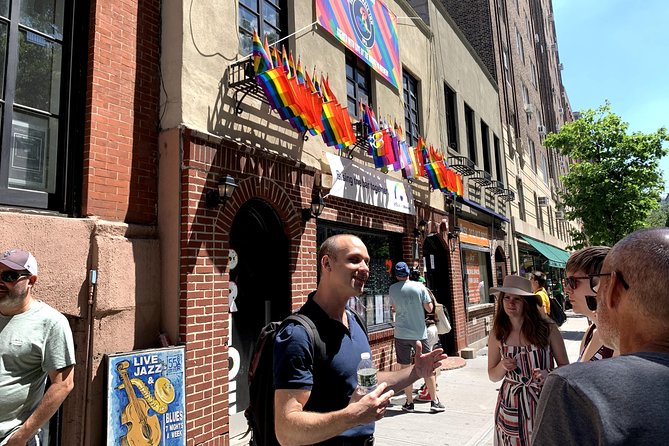
- Stonewall is only one part of the story: The tour also covers Craig Rodwell, the first Pride March, the Rainbow Flag, the first Sip In, and the Gay Liberation Monument.
- The route stays close to Christopher Street: You see a lot without spending the afternoon marching across Manhattan.
- Groups are capped at 15 people: That helps keep the walk personal and leaves room for questions.
- Joe is a frequently praised guide: His energy, detail, and passion for the subject are recurring strengths, though guide style can vary.
- Morning and afternoon departures are available: You can fit the walk around meals, museums, or other plans.
- Bad weather can change the plan: The tour requires good weather, with another date or a full refund offered if it is canceled.
Why this short Greenwich Village walk matters
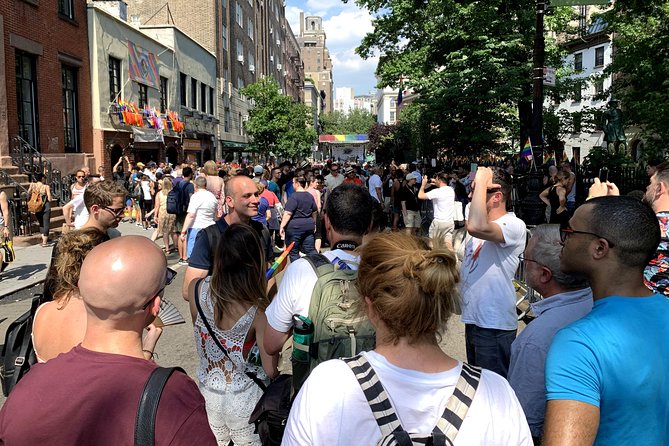
Greenwich Village can look like a pleasant collection of old streets, bars, cafés, and apartment buildings. This tour helps you see the political and personal stories tied to those places. You are not simply walking past the Stonewall Inn. You are learning how a neighborhood became central to the modern LGBTQ+ rights movement.
That distinction matters. You could visit the Stonewall Inn on your own, take a photo outside, and move on. You would miss the connections between the 1969 Stonewall Uprising, Craig Rodwell’s organizing work, the first Pride March, and earlier acts of protest such as the Sip In at Julius’ bar.
The tour also keeps the subject grounded in real locations. The stories are attached to signs, buildings, parks, and monuments rather than presented as a general lecture in a room. I like that format because the Village itself becomes part of your understanding.
The route is short, and that is useful in New York. You remain in the Christopher Street and Greenwich Village area, with only a modest amount of walking between stops. One person described the route as a short loop packed with information, while another appreciated that it was manageable in hot weather. You still need to walk and stand outdoors, but this is not an exhausting city hike.
More History Walking Tours in New York City
- Hamilton and Washington Revolutionary Walking Tour
★ 5.0 · 182 reviews - #1 Rated NYC Chinatown Food and History Walking Tour with FNYT
★ 5.0 · 171 reviews - Tribeca Architecture And History Walking Tour
★ 5.0 · 141 reviews
Starting at Christopher Park
The meeting point is Christopher Park, at 38-64 Christopher Street. This is a sensible place to begin because the park sits directly beside the Stonewall Inn and includes the Gay Liberation Monument.
The guide first sets up the wider story of LGBTQ+ life in the United States and New York City before 1969. That opening context is important. Without it, the Stonewall Uprising can seem like an isolated burst of anger. The introduction shows how earlier restrictions, police pressure, social stigma, and organizing efforts shaped what happened next.
You will spend about 12 minutes here. Admission to the park is free, and there is no separate ticket for any stop on the walk. The park gives the guide room to explain the setting before moving you toward the better-known landmark next door.
This is also where the small-group format helps. With a maximum of 15 people, you should have a fair chance to hear the guide and ask a question. The tour is designed to be conversational rather than a silent march behind a flag.
The Stonewall Inn and June 28, 1969
At the Stonewall Inn, the guide explains the early morning hours of June 28, 1969, and the days that followed. This is the emotional center of the tour, and the stop lasts about 12 minutes.
The value here is not just hearing the date again. The guide places the uprising in the streets where it happened, then explains how those first hours grew into several days of resistance and public attention. You get a clearer sense of why the event became such an important turning point.
The Stonewall Inn remains an active business, so this is primarily an exterior history stop rather than a guaranteed indoor visit. The supplied tour details do not promise entry, seating, or a drink at the bar. Plan on listening outdoors and looking closely at the building and surrounding streets.
If you want a quick photo, you may get one, but the main reason to linger is the explanation. Several people praised the guides for bringing the Pride movement to life and connecting the local story to later changes in LGBTQ+ rights and politics.
The Oscar Wilde Memorial Bookshop site
The stop at Greenwich Letterpress marks the original site of the Oscar Wilde Memorial Bookshop. The guide spends about seven minutes here discussing the shop, its founder Craig Rodwell, and the organizing work that helped connect Stonewall to the modern Pride movement.
This is one of the most useful parts of the walk for anyone who already knows the Stonewall story. It shifts your attention from one famous night to the planning, publishing, community work, and persistence that followed.
Craig Rodwell’s role gives the tour a human center. The story becomes less about an abstract movement and more about people who built links between local activism and public marches. That makes this stop especially helpful if you want to understand how protest became an organized annual event.
The location is now Greenwich Letterpress, so you should not expect to see the bookshop operating as it once did. The importance is historical, and the guide supplies the connection between the present-day site and its earlier use.
More History Walking Tours in the USA
- Lower Manhattan Secrets And History Walking Tour
★ 5.0 · 96 reviews - NYC: History of Slavery & Underground Railroad Walking Tour
★ 4.7 · 87 reviews - Harlem Walking Tour: Mount Morris Park Historic District w/ Lunch
★ 5.0 · 84 reviews - New York City: Mafia History in Little Italy Walking Tour w/NYPD
★ 5.0 · 59 reviews
Gay Street and the details people walk past
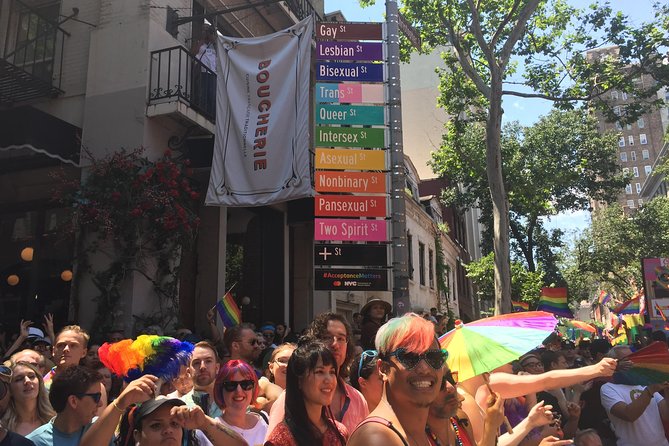
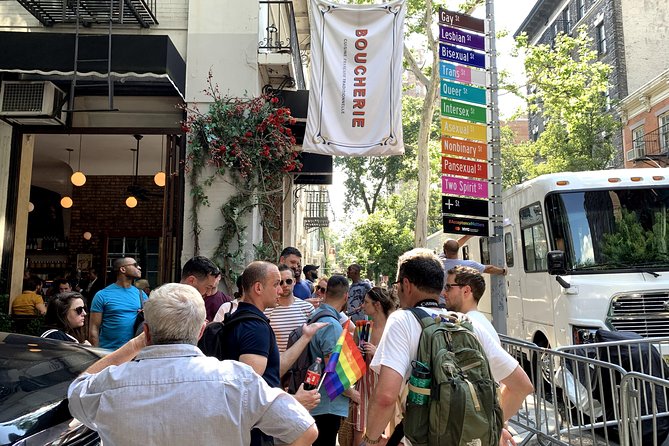
At the Gay Street sign, the guide explains the history behind the street name. The stop lasts around seven minutes.
This may sound like a small stop, but it illustrates one of the tour’s strengths. In New York, a sign can become a landmark because of what people attach to it. Without context, you might walk past, snap a picture, and never wonder why the street carries that name.
The tour does not treat every stop as equally famous. Instead, it gives you a chain of smaller details that help the neighborhood feel more readable. I like these moments because they slow you down and encourage you to look around rather than rush from one major attraction to the next.
The first Pride March at the Axis Theatre Company site
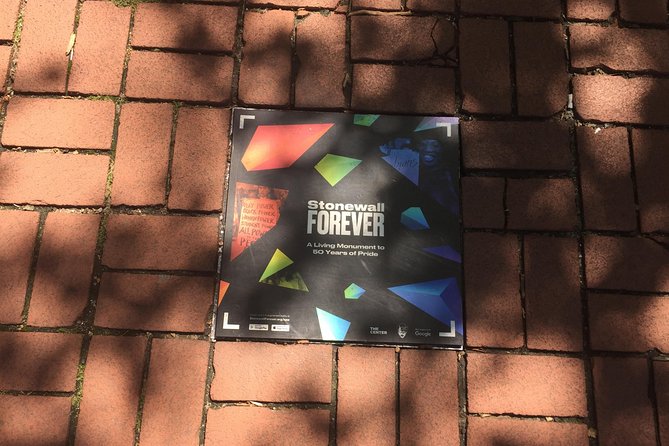
At the site associated with the start of the first Pride March, the guide explains how that march began and how Pride marches have changed over time. This stop lasts about 12 minutes and also includes the history of the Rainbow Flag.
This is where the tour moves from Stonewall to public commemoration. The uprising mattered, but the first Pride March helped turn memory into an annual public statement. The guide’s discussion links the local event to the way Pride developed into a wider movement.
The Rainbow Flag adds a visual thread. It is a symbol many people recognize instantly, but the tour gives you a chance to connect it to this particular place and to the growth of Pride celebrations.
The site is connected to the Axis Theatre Company rather than presented as a large museum or formal memorial. You are learning on the street, which keeps the experience direct but also means weather and street noise can affect how easily you hear. Stay close to the guide, especially if the group is spread out.
Julius’ and the first Sip In
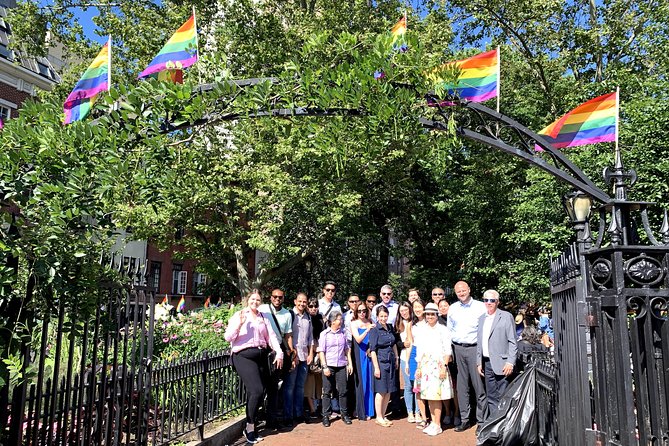
At Julius’, the guide tells the story of the first Sip In. This stop takes about seven minutes.
The Sip In belongs to an earlier style of organized protest, using the simple act of ordering a drink to challenge discrimination. It adds useful depth to the tour because it shows that LGBTQ+ activism in New York did not begin with Stonewall.
Julius’ is a working bar, so the walking tour does not promise a reserved table, food, or a drink. You are there for the story and the setting. If you want to spend more time in the area afterward, this is a natural place to consider for a separate stop, but the tour itself keeps moving.
I value this part because it broadens the usual Stonewall-focused visit. You get a better sense of repeated acts of protest, not just one dramatic confrontation.
Marie’s Crisis Café and a movement entering the mainstream
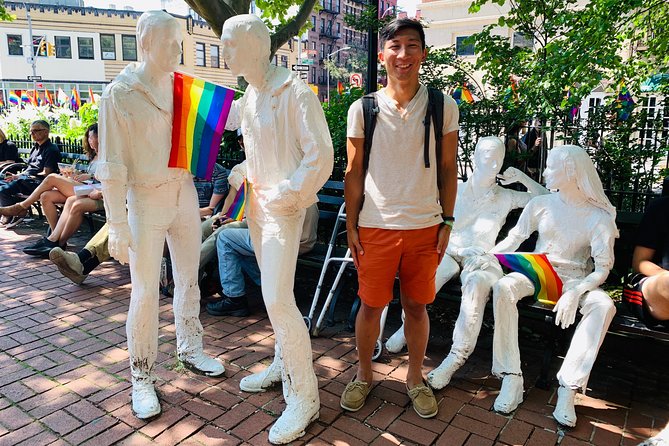
At Marie’s Crisis Café, the guide covers the history of the café and the changes in the LGBTQ+ movement as it entered mainstream public life. The stop lasts about seven minutes.
This is a good transition point in the route. Earlier stops focus on organizing and protest. Here, the discussion turns toward public visibility, cultural change, and the complicated process of becoming more accepted without losing sight of the work still needed.
The guide’s ability to link past events with the present is one of the most praised parts of the experience. Several comments describe the presentation as moving, engaging, and useful for understanding how the movement changed over time.
Again, the tour does not promise an indoor visit or a reserved place. You should expect to hear the explanation near the café, then continue on foot.
The Gay Liberation Monument closes the loop
The final stop is the Gay Liberation Monument in Christopher Park, where the guide discusses LGBTQ+ rights and politics in the United States since Stonewall. The guide also explains the history of the monument itself, with about 12 minutes allocated here.
Ending at the monument makes sense. You begin with the conditions that led toward Stonewall, move through protest and organizing, and finish with the continuing political story. The monument also brings the tour back to its starting point, so you do not need to arrange transportation from a distant neighborhood.
This final section may be the most useful for people who know the basic Stonewall story but want help placing it in a longer timeline. The tour does not pretend that history ended in 1969. It shows the movement as something that continued to change and face new questions.
The return to Christopher Park is practical too. You can continue exploring Greenwich Village, stop for a meal, or use nearby public transportation. The route is well suited to a morning or afternoon plan.
Guide style, group size, and pace
The experience is offered in English, and guide quality matters a great deal on a walking tour built around spoken explanation. Joe is named repeatedly as an enthusiastic, friendly guide who brings strong subject knowledge and energy to the route. People also praised his recommendations about the neighborhood and his ability to connect individual stories with larger events.
That said, one person found the speaker too fast and wished the guide had checked in more often with the group. A separate comment noted that the ending felt abrupt. Those points are worth taking seriously, especially if you are a non-native English speaker or prefer a slower, more interactive tour.
The small maximum of 15 people is a real advantage. It should be easier to hear, ask questions, and stay near the guide than on a large bus or a 30-person walking group. Still, the experience is offered in English only, and the tour packs a lot into 75 minutes. You may need to ask the guide to repeat or slow down if a point is important to you.
Is $30 a fair price?
At $30 per person, this is not the cheapest way to spend 75 minutes in New York, but the price is reasonable for a specialized small-group walk. You are paying for a guide who organizes a complicated subject into a clear route and gives context you would probably not gather from a self-guided stroll.
The value is strongest if you want the connections between places. Christopher Park, the Stonewall Inn, Julius’, and the Gay Liberation Monument are free to see, but the guided explanation turns separate sights into one story.
The value is lower if you only want a quick photo at Stonewall or prefer to read at your own pace. You could visit the area independently, but you would miss much of the detail about the Oscar Wilde Memorial Bookshop, Craig Rodwell, the first Pride March, and the first Sip In.
At 75 minutes, the tour also leaves plenty of time for lunch, another Greenwich Village stop, or a museum afterward. That makes it easier to fit into a busy New York schedule.
Practical advice for choosing your time
Choose the morning if you want to use the rest of the day for Greenwich Village. Choose the afternoon if you prefer to place the tour between other city plans or finish near dinner.
Wear comfortable shoes, even though the route is short. You will walk between eight stops and stand outdoors while the guide speaks. The experience requires good weather, so check the forecast and keep your schedule flexible. If poor weather cancels the tour, you can receive another date or a full refund.
Free cancellation is available until 24 hours before the start time. Cancellations or changes inside that window are not refunded or accepted, so do not leave the decision until the last minute.
Service animals are allowed, the meeting point is near public transportation, and most people can participate. Confirmation arrives when you book, and the tour ends back at Christopher Park.
Who should book this LGBTQ+ history tour?
I would recommend it to first-time New York visitors who want more than a quick Stonewall photo, LGBTQ+ travelers looking for the city’s historic places, and anyone interested in how local protest became a broader Pride movement. Supporters, couples, solo visitors, and families can all find something useful here.
It is also a good choice if you have already walked Greenwich Village but sensed you were missing part of its story. The tour adds meaning to ordinary signs, bars, parks, and building sites.
I would hesitate only if you need a fully indoor activity, dislike standing outside, or are not comfortable following spoken English at a fairly brisk pace. In those cases, the subject may still interest you, but this particular format may feel rushed.
Should you book Pride Tours NYC?
Book it if you want a short, focused, place-based introduction to LGBTQ+ history in New York. The strongest reasons are the small group, the compact route, and the way the guide links Stonewall with the first Pride March, Craig Rodwell’s work, Julius’, and the Gay Liberation Monument.
For $30, you get more than a landmark stop and a few dates. You get a usable framework for understanding why this small part of Greenwich Village matters. Plan it around a meal or another Village activity, arrive ready to listen, and ask questions if the pace gets quick. For many visitors, this is a worthwhile use of 75 minutes.
FAQ
Where does the LGBTQ Historical Walking Tour begin?
The tour begins at Christopher Park, located at 38-64 Christopher Street in New York City.
Where does the tour end?
The activity ends back at the meeting point in Christopher Park.
How long does the tour last?
The tour lasts approximately 1 hour and 15 minutes.
How much does the tour cost?
The listed price is $30 per person.
How many people can join the tour?
The tour has a maximum group size of 15 people.
Is the tour offered in English?
Yes. The tour is offered in English.
What happens if bad weather cancels the tour?
If the experience is canceled because of poor weather, you will be offered another date or a full refund.
More LGBTQ-Friendly in New York City
- Two-Hour NYC LGBTQ+ History Walking Tour
★ 5.0 · 35 reviews - Dublin LGBTQ Pride Historical and Cultural Walking Tour
★ 5.0 · 91 reviews
Just added around New York City
- Wall Street Inside with a Trader Walking History Tour★ 5.0 · 23 reviews
- The Psychiatric History of New York: Upper East Side Tour★ 5.0 · 31 reviews
- The Original Greenwich Village Food & Cultural Tour Since 1999★ 5.0 · 254 reviews
- Tenement History and Immigrant Life in the Lower East Side★ 5.0 · 50 reviews
- Speakeasy Drinks and Prohibition History Tour NYC★ 4.5 · 204 reviews
- New York City: Mafia History in Little Italy Walking Tour w/NYPD★ 5.0 · 59 reviews
- Soul of Harlem: Striver’s Row, Apollo Theatre & Gospel Heritage★ 5.0 · 75 reviews
- The Speakeasy Adventure: A Tipsy Trip Through History★ 5.0 · 220 reviews
History Walking Tours, compared.

History and Hauntings of Salem Guided Walking Tour
Read our review →
Freedom Trail History Small Group Walking Tour
Read our review →
Historic Charleston Guided Sightseeing Walking Tour
Read our review →
Tapas Walking Tour with Food, Wine, and History
Read our review →
Savannah History and Haunts Candlelit Ghost Walking Tour
Read our review →
A History of Terror – Belfast City Centre Walking Tour
Read our review →Browse the lists this tour appears in