
Review · DUBLIN
Dublin LGBTQ Pride Historical and Cultural Walking Tour
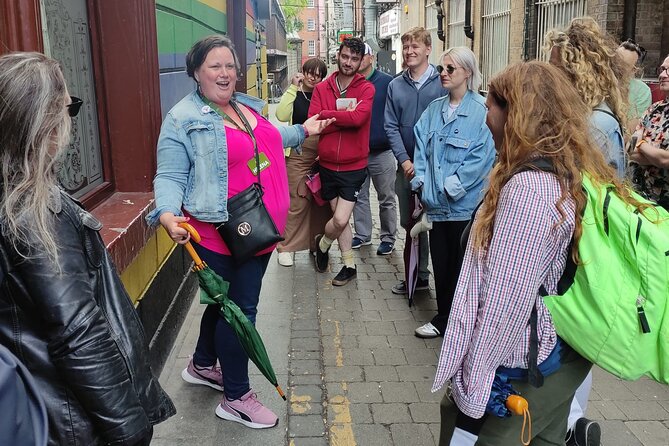
Queer history changes how Dublin looks. This two-hour walking tour links famous places with stories of LGBTQ+ people often left out of standard city tours. I like the route’s smart mix of major Dublin landmarks and lesser-known community history, plus the chance to hear guides such as Helena and Deidre bring the subject to life. The main drawback is pace: you cover many stops in a short time, so some stories are necessarily brief.
I also like the tour’s practical shape. It begins in Temple Bar, crosses the River Liffey, passes the GPO, Abbey Theatre, Trinity College, and Dublin Castle, then finishes near the city center. At about $29.02 per person, it offers strong value if you want a focused introduction to Irish LGBTQ+ history without paying for museum admissions or a long formal tour.
Key points to know before you book
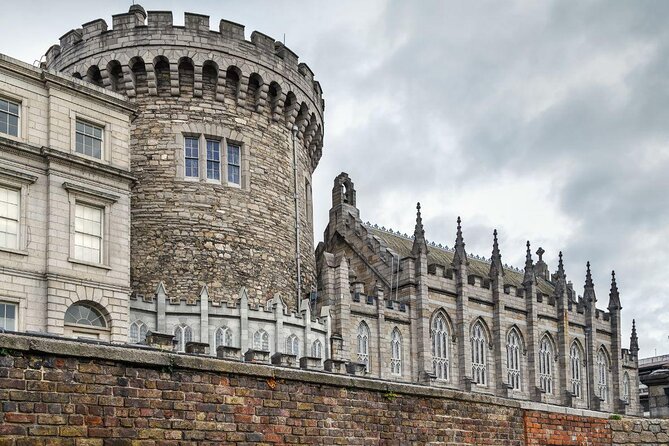
- A queer history route through central Dublin: You see Temple Bar, the Ha’penny Bridge area, the GPO, Abbey Theatre, Trinity College, the George Bar, and Dublin Castle.
- The GPO adds political weight: The tour connects LGBTQ+ figures with the 1916 Easter Rising and the way Ireland remembers that period.
- The George is a genuine community landmark: Dublin’s oldest operating gay bar provides a strong final stop before Dublin Castle.
- Helena and Deidre receive repeated praise: The guides are described as energetic, warm, well informed, and especially good at keeping the walk engaging.
- No major indoor admissions are included: The experience is mainly an outdoor city walk, with stops viewed from public areas.
- Expect a moderate amount of walking: The tour lasts about two hours and moves through central Dublin streets, bridges, squares, and historic grounds.
Why this Dublin LGBTQ+ tour is different
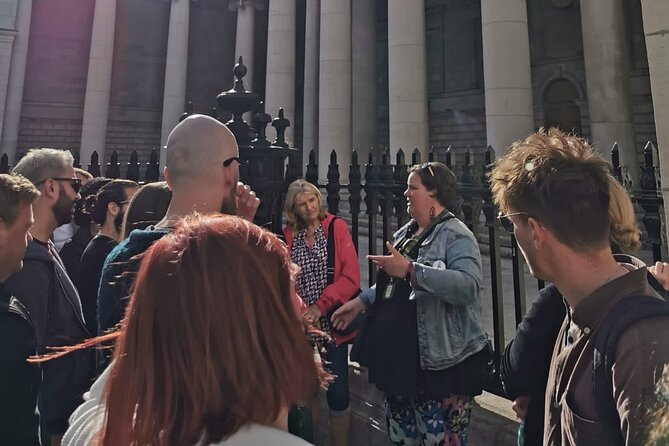
A standard Dublin walking tour can take you past the GPO, Trinity College, and Dublin Castle while giving you the familiar national story. This route asks a sharper question: where were LGBTQ+ people in that story, and who helped change Ireland?
That change in viewpoint is the tour’s real value. You are not simply looking at buildings. You are connecting political events, theatre, student life, activism, nightlife, and public memory. The route also treats women’s rights and trans activism as part of the wider story, rather than limiting the discussion to a short list of famous gay men.
The structure is easy to follow. You meet at 3 Crown Alley in Temple Bar, spend time in the city center, loop through both sides of the River Liffey, and finish in the upper courtyard of Dublin Castle. The walk does not require a bus or taxi between stops, which makes it a useful way to get your bearings early in a Dublin visit.
The price is $29.02 per person. That is fair for a two-hour guided walk in central Dublin, especially given the amount of ground covered and the specialist subject. You are paying for interpretation and local context, not entry to attractions. That distinction matters because the tour does not include admission to Trinity College or other paid sites.
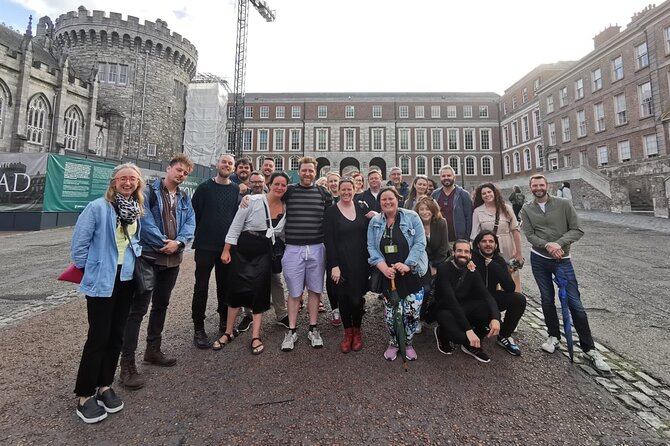
The maximum group size is listed as 100, although the experience has also been described as a small-group walk. Group size can affect the feel of a street tour, especially when you are listening beside busy roads or in crowded public squares. If you want the best chance of hearing every detail, arrive early and stay close to the guide.
More History Walking Tours in Ireland
- 2-Hour Historical Walking Tour from Dublin
★ 5.0 · 875 reviews - Historical 2-Hour Guided Walking Tour of Dublin
★ 4.7 · 865 reviews - Dublin’s Haunted History Walking Tour
★ 4.3 · 345 reviews
Starting at Temple Bar and crossing the Liffey
The walk begins at 3 Crown Alley, in the heart of Temple Bar. This is a convenient meeting point, but it is also one of Dublin’s busiest areas. Give yourself time to find the exact departure place, particularly if you are arriving by public transport or walking from another part of the city.
Temple Bar is more than a nightlife district on this route. You begin by looking at its connection with Dublin’s LGBTQ+ community and the organizations that have used the area over time. The tour later returns to Temple Bar, so the opening stop helps you see the district as part of a longer community story rather than only a place for pubs and photos.
You then cross one of Dublin’s best-known bridges as the walk moves toward the north side of the city. The itinerary does not name the bridge, but the route description presents it as one of the city’s most photographed crossings. This is a useful early transition: the group leaves the tourist center, crosses the river, and begins placing queer history alongside Ireland’s national story.
The route also brings you to the Anna Livia area, where you straddle the River Liffey on both sides during the walk. These river crossings add variety, but they also mean you should wear comfortable shoes. Dublin’s center is manageable on foot, yet two hours of pavement, bridges, and public squares can feel long in thin or uncomfortable footwear.
The GPO and LGBTQ+ lives during the Easter Rising
The General Post Office is one of the most important buildings in modern Irish history. It was the central stage of the 1916 Easter Rising, and its facade remains one of the clearest reminders of that week in Dublin.
Here, the tour focuses on gay figures who played important roles in the events of 1916 and on how they are remembered today. This is one of the strongest parts of the experience because it places LGBTQ+ lives inside a story that is usually told through military leaders, political speeches, and national independence.
You should expect about ten minutes at the GPO. That is enough time for a focused explanation, a look at the building, and some context, but not enough for a full account of the Rising. If this period is a major interest for you, treat the stop as an introduction rather than a complete lesson in 1916 history.
The GPO stop also shows why a specialist guide helps. A building you might otherwise photograph and pass can become a place for asking who was present, who was remembered, and who was pushed to the edge of the official story.
Abbey Theatre and a modern Irish icon
The Abbey Theatre is Ireland’s national stage and one of Dublin’s essential cultural landmarks. The tour uses the theater to discuss a prominent contemporary gay icon and that person’s role in shaping modern Ireland.
This stop broadens the route beyond political struggle. Theatre provides a way to talk about public identity, culture, influence, and the changing place of LGBTQ+ people in Irish life. It also gives you a chance to see how queer history connects with the arts rather than existing only in the story of protests and legal reform.
The planned stop lasts roughly ten minutes. That short time works well for a clear portrait of one major figure, but you should not expect a backstage visit or a theater performance. The experience is an exterior city walk, and the value comes from the guide’s explanation.
Several comments about the guides praise their energy and ability to make difficult subjects engaging. Helena, in particular, is described as passionate and fun, while Deidre is praised for linking LGBTQ+ history with women’s rights and Irish history more broadly. That mix of seriousness and human warmth is important on a route that includes discrimination, loss, and political conflict.
More Local Culture and Traditions Tours in Dublin:
- Deliciously Dublin: The Artisan Donut Walking & History Tour
★ 5.0 · 329 reviews - Amsterdam Food and Cultural Tour with Tastings
★ 5.0 · 4,315 reviews - Sevilla Food Tour: Tapas, Wine, History & Traditions
★ 5.0 · 3,468 reviews - Tromsø: Reindeer Camp and Sami Cultural Tour with Lunch
★ 4.7 · 3,326 reviews
Liberty Hall and the first Irish Pride parade
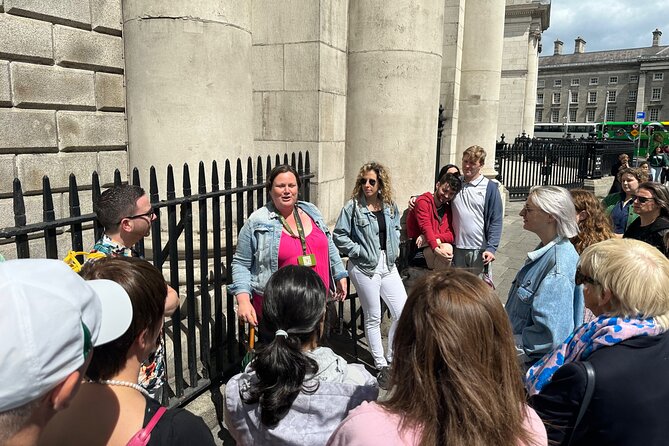
At Liberty Hall, the tour turns to the first gay Pride parade in Ireland and the difficult circumstances surrounding it. This is likely to be one of the more emotional parts of the walk because Pride is presented not as a polished annual celebration, but as the result of fear, pressure, courage, and persistence.
The stop also introduces one of Ireland’s important trans activists. Including trans history gives the tour a wider reach and prevents the story from being reduced to a single set of experiences. The discussion connects public protest with the people who made it possible for later generations to be more visible.
Again, you have about ten minutes. The guide must make choices, so you will hear a compact account rather than a full documentary-style history. That is not a flaw, but it is worth knowing before you book. The tour gives you names, events, and themes to follow up later.
Liberty Hall is also a good reminder that Dublin’s LGBTQ+ story is tied to labor, politics, and civil rights. The route does not keep queer history in a separate social corner. It shows how different movements overlap and how public change often comes from people working across causes.
Trinity College and LGBTQ+ alumni
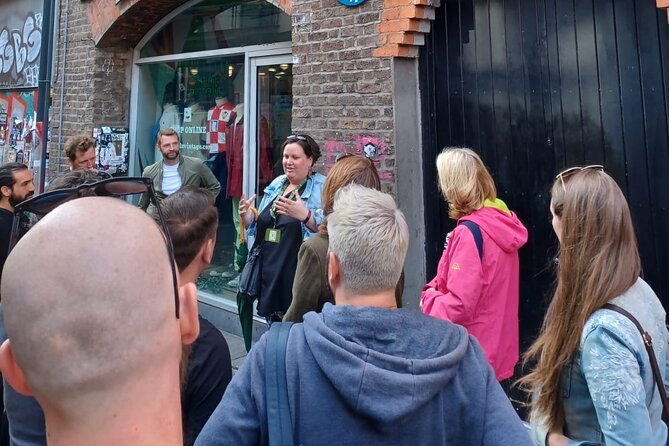
The walk continues to Trinity College Dublin, Ireland’s oldest and best-known college. You explore the college green area and learn about LGBTQ+ alumni who passed beneath its famous old arch.
This stop adds an academic layer to the tour. Trinity is often treated as a symbol of Irish education and tradition, but the LGBTQ+ stories connected with it make the institution feel more human and less monumental. You get to consider who studied here, what lives they led, and how their identities fit, or failed to fit, the society around them.
Admission to Trinity College is not included. The stop is therefore about the exterior setting and the college’s wider green area, not a guaranteed visit to the Book of Kells or other indoor attractions. If you want to visit those sights, plan and pay for them separately.
The college section also gives you a useful mid-route change of mood. After the political intensity of the GPO and Liberty Hall, Trinity offers space to think about writers, scholars, and public figures. Do not expect a long campus tour. The scheduled time is about ten minutes.
Temple Bar in the 1980s and the first LGBTQ+ headquarters
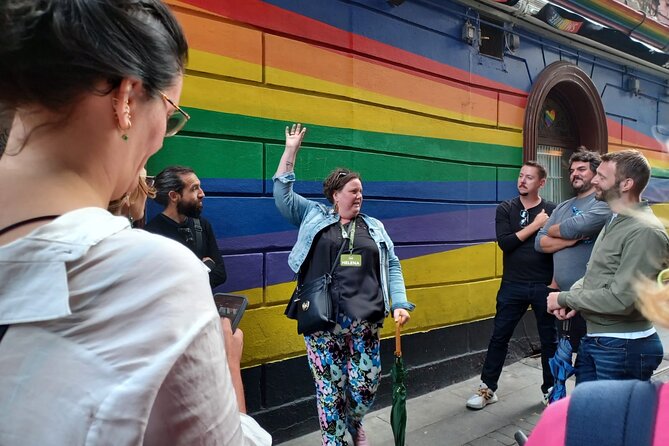
The route loops back through Temple Bar to Meeting House Square. Here you look at Dublin’s queer community during the 1980s and hear about people who offered hope and support during a difficult period.
The square is also linked with the site of Ireland’s first bona fide gay headquarters, a place that included a café, disco, cinema, and other community functions. That detail brings the history down to an everyday level. A headquarters was not only an office. It could be a social space, a place to find information, and somewhere to meet people who understood your life.
This section may be especially useful if you want to understand how a community builds its own institutions. The story is not only about famous leaders. It is also about the practical work of creating places where people could gather and feel less alone.
The tour’s return to Temple Bar gives the district a different meaning from the one you encountered at the start. You see the same central area through the lens of nightlife, activism, and community organizing. That repeated setting helps the route feel connected rather than like a string of unrelated landmarks.
The George and Dublin Castle finish
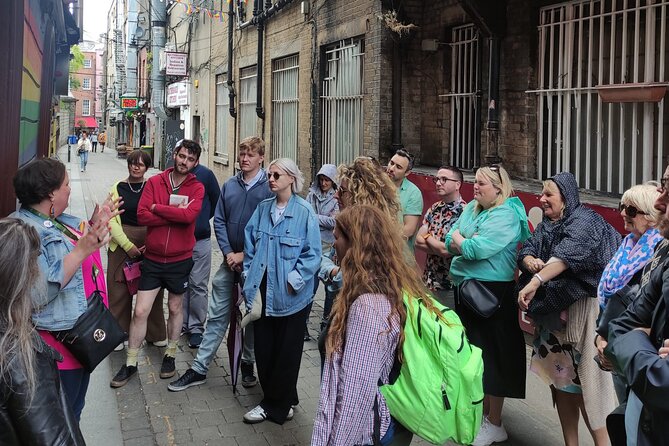
The George is Dublin’s oldest operating gay bar and one of the city’s best-known LGBTQ+ institutions. The stop is not a promise of a drink or an organized visit inside. Instead, the guide explains the bar’s place at the center of Dublin’s LGBTQ+ community.
For many people, this will be the most direct connection to present-day queer Dublin. Historic buildings tell you about the past, but a long-running bar shows how community life continues in the city now. The stop also gives the guide a chance to point out other queer nightlife options in Dublin, something one guide specifically did during the tour.
The walk finishes at Dublin Castle, in its upper courtyard. With about 1,200 years of history connected to the site and an 18th-century setting around the courtyard, it is a fitting end to a route about power, identity, and social change.
Ending at Dublin Castle is practical, too. You are close to central Dublin attractions, restaurants, and transport links. The listed end point is described as the upper courtyard of the castle, so make sure you are comfortable walking the full route rather than planning to return to the starting point immediately.
Guide quality, pace, and group feel
The strongest praise centers on the guides. Helena is described as energetic, passionate, and especially good at making forgotten queer stories memorable. Deidre, also written as Deidree in one comment, is praised for combining LGBTQ+ history with women’s rights and wider Irish history.
That matters because the route covers serious material quickly. A flat delivery would make the walk feel like a list of dates and names. The guide’s personality helps turn the stops into connected stories, while the enthusiasm keeps the two-hour format moving.
You should also know that the tour is offered in English only. Service animals are allowed, and the meeting point is near public transportation. A moderate level of physical fitness is advised, which is sensible for a route crossing central streets and bridges over two hours.
The tour is recommended by 100 percent of the people represented in its current rating, with a five-star score from 91 reviews. That record points to consistent satisfaction, especially with the guides’ energy, warmth, and subject knowledge. Still, the subject and pace will not suit everyone. If you want long indoor visits, extensive architectural detail, or a slow historical lecture, choose a different format.
Who should book this walk?
I would recommend it to anyone who wants to understand Dublin beyond its standard national story. It is particularly well suited to LGBTQ+ visitors, allies, history fans, and people who want their sightseeing to include social change and personal stories.
It is also a smart first-day activity because the route covers several central areas you may visit again. You will pass Temple Bar, the GPO, Trinity College, the George, and Dublin Castle, giving you a useful mental map of the city.
I would be less enthusiastic for anyone with limited walking ability, anyone expecting admission to major attractions, or anyone who needs a highly detailed account of every period in Irish queer history. The tour offers breadth, strong storytelling, and many carefully chosen stops, but each stop is short.
Free cancellation is available up to 24 hours before the start time. After that point, the payment is not refunded, and late changes are not accepted.
FAQ
Where does the Dublin LGBTQ+ walking tour begin?
It begins at 3 Crown Alley, Temple Bar, Dublin, D02 CX67, Ireland.
Where does the tour finish?
The walk finishes in the upper courtyard of Dublin Castle, in central Dublin.
How long does the tour last?
It lasts approximately two hours.
What language is the tour offered in?
The tour is offered in English.
How much does the tour cost?
The listed price is $29.02 per person.
Does the price include admission to Trinity College?
No. Admission to Trinity College is not included.
Is the tour suitable for people with limited mobility?
A moderate level of physical fitness is advised because this is a walking tour through central Dublin.
Are service animals allowed?
Yes, service animals are allowed.
How far in advance is the tour usually booked?
It is booked an average of 25 days in advance.
Should you book the Dublin LGBTQ+ Historical and Cultural Walking Tour?
Book it if you want a focused, human account of Dublin’s LGBTQ+ past, told beside the buildings and streets where the wider story unfolded. The combination of Temple Bar, the GPO, Abbey Theatre, Liberty Hall, Trinity College, the George, and Dublin Castle gives you a lot for two hours, and the guides’ energy appears to be a major part of the appeal.
At $29.02, it is good value for a specialist city walk. Just arrive ready to walk, listen in public spaces, and accept that each stop offers a snapshot rather than a full chapter. For a thoughtful introduction to queer Dublin, this is a strong choice.
More LGBTQ-Friendly in Dublin
- Two-Hour NYC LGBTQ+ History Walking Tour
★ 5.0 · 35 reviews
More History Walking Tours in Dublin
- Hidden Dublin: Haunted History Walking Tour v2.0 2026
★ 4.5 · 188 reviews - Dublin: Macabre History Walking Tour
★ 4.9 · 95 reviews - DayTripper Dublin: A Guided City Walking Tour
★ 5.0 · 90 reviews - Semi-Private (8people max) 2.5 Hr Dublin Walking Tour
★ 5.0 · 69 reviews
Just added around Dublin
- Private Dublin Historical and Heritage Tour by Bike★ 5.0 · 30 reviews
- DayTripper Dublin: A Guided City Walking Tour★ 5.0 · 90 reviews
- Historical Walking Tour of Dublin★ 5.0 · 50 reviews
- Full-Day Irelands Ancient Boyne Valley Private Guided Tour★ 5.0 · 36 reviews
- Interactive Guided Tour of Printing History★ 5.0 · 23 reviews
- Interactive Living History in Dalkey Castle near Dublin City★ 5.0 · 133 reviews
- Hidden Dublin: Haunted History Walking Tour v2.0 2026★ 4.5 · 188 reviews
- Glendalough Night Hike and History Tour★ 5.0 · 55 reviews
Local Culture & Traditions Tours, compared.

Amsterdam Food and Cultural Tour with Tastings
Read our review →
Sevilla Food Tour: Tapas, Wine, History & Traditions
Read our review →
Tromsø: Reindeer Camp and Sami Cultural Tour with Lunch
Read our review →
Half Day Dominican Republic Cultural Tour : Small Group
Read our review →
Ultimate Melbourne Walking Tour: History, Laneways & Culture
Read our review →
Tromsø: Sámi Reindeer Sledding and Sami Cultural Tour
Read our review →
Kyoto Gion: 2-Hour Geisha Culture & History Walking Tour
Read our review →
Marrakech Historical and Cultural Tour – Half Day City Tour
Read our review →Browse the lists this tour appears in