
Review · NEW YORK CITY
Two-Hour NYC LGBTQ+ History Walking Tour
History feels close in Greenwich Village. This two-hour walk links bars, monuments, memorials, and community spaces that helped shape LGBTQ+ rights in New York City and far beyond. I especially like the small group limit of 20 people and the way the route connects famous places with less familiar stories. The main thing to consider is that this is an outdoor walking tour, so poor weather can lead to a date change or cancellation.
I also like the clear start and finish. You begin at McCarthy Square near Charles Street and Waverly Place, then finish at the LGBT Community Center on West 13th Street. The route includes free entry at each listed stop, but the value comes from the guide’s explanations, not from paid attractions.
The tour costs $49 per person and is offered in English with a mobile ticket. It receives a five-star rating from 35 posted ratings, with 100 percent recommending it. One especially useful response praises the pace and the way the tour helps connect LGBTQ+ history with the struggles young people may face today. Guide Michael is named in one such response, which suggests the experience can feel personal as well as educational.
Key points to know before you book
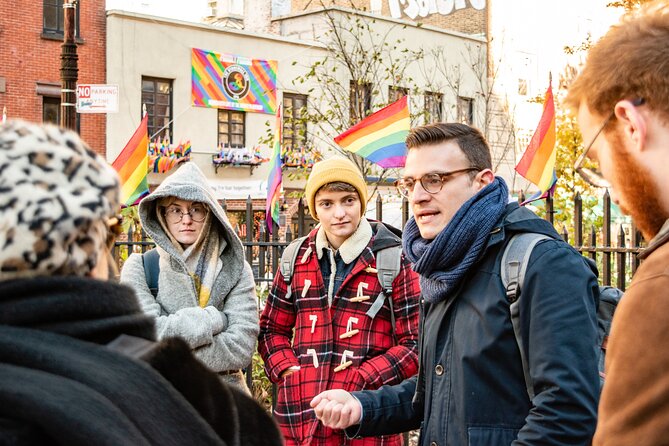
- The 1966 Sip-In comes before Stonewall: At Julius’, you learn about an important protest that took place three years before the Stonewall Riots.
- Stonewall gets more than a photo stop: The route includes the inn, the national monument, and the visitor center, giving you several ways to understand the 1969 uprising.
- The tour covers lesbian and gay community history too: The LGBT Community Center and the AIDS Memorial broaden the story beyond one bar and one night.
- The walk ends with extra time at the LGBT Center: You can see an original Keith Haring mural and browse an LGBTQ+-owned bookshop.
- The route is designed for questions: The guide provides commentary throughout and leaves room for conversation.
- You should plan for a steady outdoor walk: The tour lasts about two hours and requires suitable weather.
Starting with Greenwich Village’s early LGBTQ+ resistance
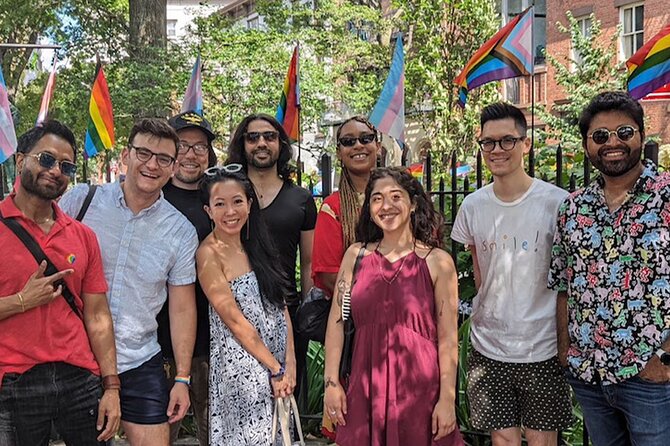
The meeting point is McCarthy Square, at Charles Street and Waverly Place. This puts you right in Greenwich Village, a neighborhood where streets, storefronts, and public spaces carry layers of social history.
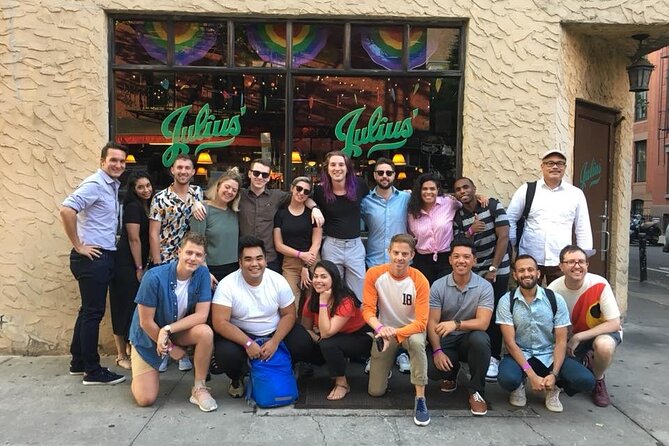
The first stop is Julius’, about a 15-minute visit. Here, the guide explains the 1966 Sip-In organized by the Mattachine Society. The protest challenged the practice of refusing service to LGBTQ+ people in bars and restaurants, and it took place three years before Stonewall.
That timing matters. Stonewall is often treated as the beginning of the modern LGBTQ+ rights movement, but the Sip-In shows that organized resistance was already taking place. You get a better sense of the slow buildup, the risks people took, and the many steps that came before the most famous uprising.
Julius’ also gives the tour an appealingly ordinary setting. This is not an abstract lecture in a museum. You are learning about a protest connected to a real bar in a real neighborhood, then continuing on foot through the streets where this history unfolded.
More History Walking Tours in New York City
- Hamilton and Washington Revolutionary Walking Tour
★ 5.0 · 182 reviews - #1 Rated NYC Chinatown Food and History Walking Tour with FNYT
★ 5.0 · 171 reviews - Tribeca Architecture And History Walking Tour
★ 5.0 · 141 reviews
From LGBTQ+ books to a street called Gay
The next stop is Greenwich Letterpress, with about 10 minutes devoted to its historical connection. The site marks the former location of the first LGBTQ+ bookstore on the East Coast.
That detail adds an important cultural layer. Books, magazines, and printed material helped people find language for their lives and connect with a wider community, especially when mainstream publishing offered little space for LGBTQ+ voices. At this stop, the focus shifts from public protest to the role of literature and independent spaces.
You then walk to Gay Street, where you have time for photographs and a short history of the street. This is one of the lighter stops on the route, but it gives you a chance to pause and take in the neighborhood.
Gay Street can also help you appreciate how much of this tour happens in an active city setting. You are not moving through a preserved historical park. You are walking through Greenwich Village as it exists today, with the past woven into ordinary blocks and corners.
Understanding the Stonewall National Monument
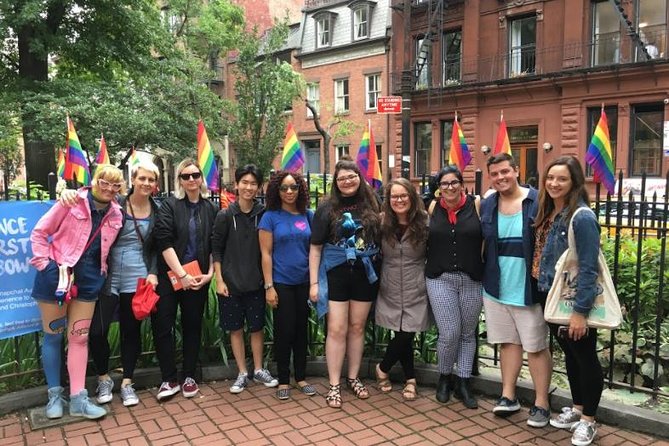
The route then moves toward Stonewall National Monument. One stop focuses on the original 1978 Gilbert Baker rainbow flag and its role as a symbol of pride and resistance.
The visit is brief, listed at about five minutes, so do not expect a long museum-style presentation here. Instead, the flag offers a compact way to discuss how LGBTQ+ symbols developed and how public signs of identity can carry political meaning.
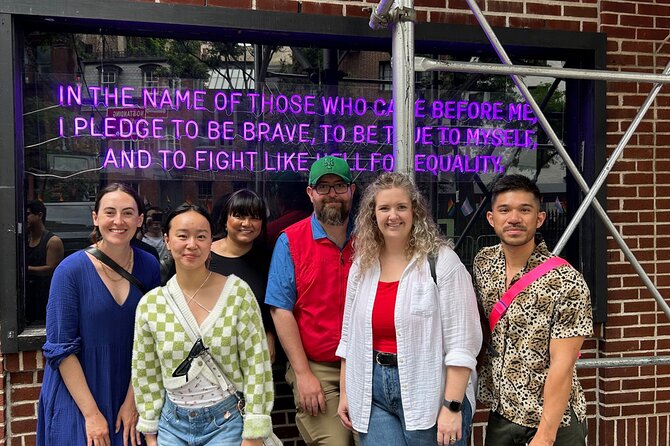
The nearby Stonewall Inn receives about 15 minutes. This is the emotional center of the route, and the guide shares accounts of the Stonewall Riots of 1969, including important figures and the event’s wider impact.
The strength of this portion is the connection between place and story. You are standing outside the bar associated with the uprising while hearing how the events unfolded and why Stonewall became known around the world. You also get time for photographs, so bring your phone or camera if that matters to you.
Still, keep your expectations realistic. This is a walking tour stop, not an extended interior tour of the Stonewall Inn. The value lies in the guide’s storytelling and the chance to see the location itself.
Spending time at the Stonewall Visitor Center
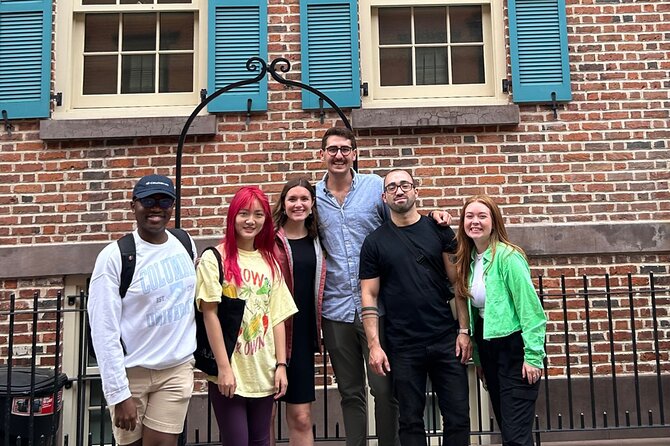
The Stonewall National Monument Visitor Center receives about 10 minutes. The exhibits help preserve and explain LGBTQ+ history, giving you a more formal setting after the street-based storytelling at the inn.
This stop is useful because it adds structure to the information you have already heard. The inn connects you to a specific event, while the visitor center places that event within a larger effort to preserve LGBTQ+ memory and public history.
The short time here is both useful and limiting. You get an introduction rather than a long visit, so you may want to return on your own if you prefer to read every exhibit at length. As part of the walking tour, though, it creates a good change of pace and keeps the route moving.
More History Walking Tours in the USA
- Lower Manhattan Secrets And History Walking Tour
★ 5.0 · 96 reviews - NYC: History of Slavery & Underground Railroad Walking Tour
★ 4.7 · 87 reviews - Harlem Walking Tour: Mount Morris Park Historic District w/ Lunch
★ 5.0 · 84 reviews - NYC Private Walking Tour: Local Insights, History & Food
★ 5.0 · 41 reviews
Public art at the Gay Liberation Monument
The Gay Liberation Monument receives about 10 minutes. The guide discusses its dedication in 1992 and the way public art can preserve LGBTQ+ stories.
This is a welcome addition because monuments often say something different from bars, archives, and community buildings. A memorial or sculpture can make history visible in an open public space, giving people a place to reflect even when they know little about the subject beforehand.
The stop also makes the tour less dependent on Stonewall alone. LGBTQ+ history includes protest, art, community organizing, and remembrance. The Gay Liberation Monument helps show how public recognition changed over time.
The LGBT Community Center and Keith Haring’s mural
The route continues to the Lesbian, Gay, Bisexual & Transgender Community Center on West 13th Street. You spend about 10 minutes learning about the center’s role in LGBTQ+ rights, its programs, its events, and its continuing support for the community.
This stop is important because it moves the story from historical milestones to ongoing work. A tour focused only on Stonewall might leave you thinking the main story ended in 1969. The Center shows how community spaces continue to matter through support services, cultural programs, and public events.
The tour ends here, with time to view an original Keith Haring mural and browse an LGBTQ+-owned bookshop. Those final details give the walk a more personal finish. You can look at art, consider what you have learned, and continue exploring LGBTQ+ books without needing to rush immediately to another attraction.
The end point is also practical. You finish at 208 West 13th Street rather than returning to the starting square, so think of the tour as a one-way route. That makes planning easy if you want to continue around the West Village afterward, but you should know that getting back to your starting point is not part of the experience.
The AIDS Memorial and the wider story
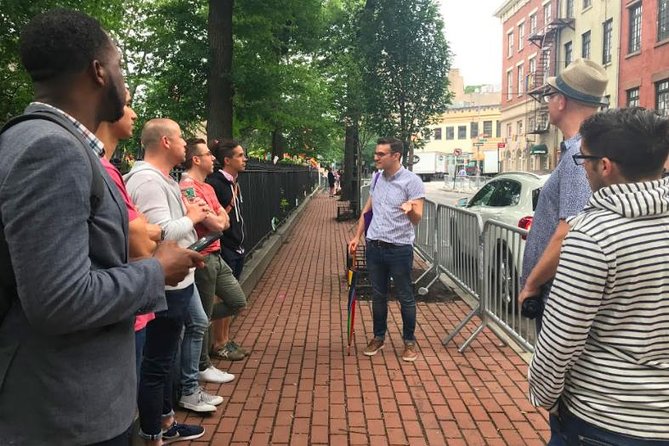
The New York City AIDS Memorial is the final historical stop, with about 15 minutes devoted to the memorial and AIDS activism in New York City.
This part of the tour broadens the story again. LGBTQ+ history is not only about liberation, nightlife, and legal rights. It also includes grief, public health, organizing, and the urgent activism that began in New York and helped inspire a global movement.
The memorial provides a quiet counterpoint to the earlier Stonewall stories. You move from the energy of protest and public celebration to remembrance and the lasting effects of the AIDS crisis. That balance makes the route more serious, but also more honest.
If you want only upbeat sightseeing, this may feel heavy. If you want a fuller understanding of the community’s past, it is one of the most necessary parts of the walk.
What $49 gets you
At $49, this tour is not the cheapest way to see Greenwich Village. You can walk past many of these locations on your own without paying an admission fee. The question is what you would learn without a guide.
The tour includes about two hours of interpretation, route planning, historical context, and time for questions. It also links nine significant stops in a sensible order, which saves you from researching locations and building your own map.
I think the price is fair for someone who wants a guided history lesson rather than a casual neighborhood walk. The value is strongest if you are new to LGBTQ+ history in New York, want help understanding the connections between locations, or appreciate being able to ask questions as you go.
The value is weaker if you already know the history well or prefer exploring at your own pace. The stops are mostly viewed from public spaces, and no separate admission is listed for them. You are paying for the guide’s explanation, not access to a major paid attraction.
Pace, group size, and practical planning
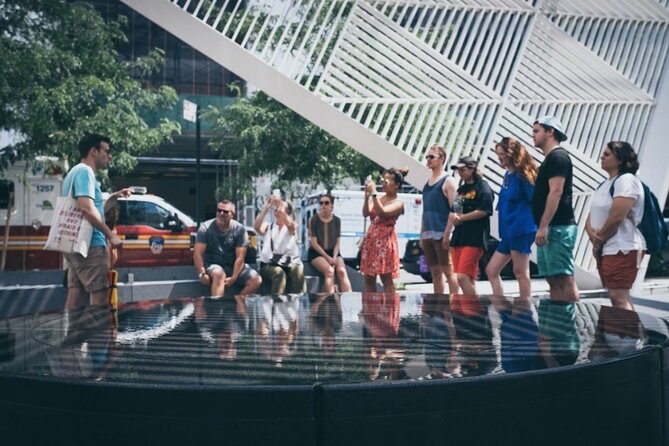
The maximum group size is 20 people. That is large enough to create some energy but small enough for the guide to answer questions without turning the walk into a crowd-management exercise.
The posted comments praise the pacing, calling the route well-paced through a beautiful neighborhood with significant queer history. That is worth noting because nine stops in two hours can feel rushed if the timing is poor. Several stops last only five or 10 minutes, while Julius’, Stonewall Inn, and the AIDS Memorial receive more attention.
Wear shoes you can walk in and plan for an outdoor experience. The tour requires good weather, and a cancellation caused by poor weather comes with the choice of another date or a full refund. You can cancel for a full refund up to 24 hours before the start time, but changes or cancellations inside that window are not refunded.
The tour is near public transportation, and most people can take part. Service animals are allowed. It is offered in English, and confirmation arrives when you book. Since the experience is often reserved about 29 days ahead, booking early is sensible if your New York schedule is fixed.
Who will get the most from this walk
I would recommend this tour to anyone who wants a clear introduction to LGBTQ+ history in New York City. It works particularly well for first-time visitors to Greenwich Village, people interested in social movements, and anyone who prefers learning through real places instead of reading only in a museum.
It also suits educators, families with older children, and people who want better language for discussing LGBTQ+ history. One response describes how the experience helped someone working with LGBTQ+ teenagers understand some of the struggles those young people may face. That is a useful reminder that the tour is not just sightseeing. It can offer context for present-day conversations.
You should think twice if you dislike walking, need a fully indoor activity, or want extensive time at each exhibit. The Stonewall Visitor Center and other stops are relatively brief, and the guide sets the pace for the group.
Should you book the NYC LGBTQ+ History Walking Tour?
Yes, if you want a thoughtful introduction to Greenwich Village and the people, protests, art, and community spaces that shaped LGBTQ+ history in New York. I especially like the full arc, from the 1966 Sip-In at Julius’ to Stonewall, the Gay Liberation Monument, the LGBT Center, and the AIDS Memorial.
The tour is worth $49 when you want context, not just photographs. Book it if you value a guide who welcomes questions, a manageable group, and a route that includes both famous sites and less obvious parts of the story.
Skip it if you already know Greenwich Village well or prefer a self-guided walk with no fixed schedule. For most people seeking a balanced, place-based introduction, though, this is a strong use of two hours.
FAQ
How long does the NYC LGBTQ+ History Walking Tour last?
The tour lasts approximately two hours.
Where does the tour begin?
It begins at McCarthy Square, at Charles Street and Waverly Place in New York City.
Where does the tour end?
The tour ends at the Lesbian, Gay, Bisexual & Transgender Community Center at 208 West 13th Street.
What language is the tour offered in?
The tour is offered in English.
How many people can join the tour?
The maximum group size is 20 people.
Is the tour accessible to service animals?
Yes, service animals are allowed.
What happens if bad weather cancels the tour?
If poor weather causes a cancellation, you will be offered another date or a full refund.
More LGBTQ-Friendly in New York City
- Dublin LGBTQ Pride Historical and Cultural Walking Tour
★ 5.0 · 91 reviews
More Two-Hour Tours in New York City
- 2-Hour Gettysburg Battlefield Guided History Bus Tour with a National Park Guide
★ 4.5 · 2,201 reviews - Kyoto Gion: 2-Hour Geisha Culture & History Walking Tour
★ 5.0 · 1,186 reviews - 2 Hour LoDo Historic Walking Tour in Denver
★ 5.0 · 1,106 reviews - 2-Hour Historical Walking Tour from Dublin
★ 5.0 · 875 reviews
Just added around New York City
- Little Italy – Official Historic District Tour★ 5.0 · 23 reviews
- The Secret Speakeasies and History Experience!★ 5.0 · 69 reviews
- NYC Private Walking Tour: Local Insights, History & Food★ 5.0 · 41 reviews
- Harlem Walking Tour: Mount Morris Park Historic District w/ Lunch★ 5.0 · 84 reviews
- High Line, Greenwich Village Food, and Historical Downtown Tour★ 5.0 · 64 reviews
- Christmas in New York: Private Holiday History Tour★ 5.0 · 107 reviews
- NYC’s History of Comedy Tour★ 5.0 · 20 reviews
- The Story Behind NY’s Evolving Skyline An Architectural Journey Through History★ 5.0 · 18 reviews
History Walking Tours, compared.

History and Hauntings of Salem Guided Walking Tour
Read our review →
Freedom Trail History Small Group Walking Tour
Read our review →
Historic Charleston Guided Sightseeing Walking Tour
Read our review →
Tapas Walking Tour with Food, Wine, and History
Read our review →
Savannah History and Haunts Candlelit Ghost Walking Tour
Read our review →
A History of Terror – Belfast City Centre Walking Tour
Read our review →Browse the lists this tour appears in