
Review · NEW YORK CITY
NYC’s History of Comedy Tour
Comedy has been part of Greenwich Village for generations. This walking tour traces that story from vaudeville and radio to Saturday Night Live and today’s stand-up clubs, using photos and lively stories along the way. I especially like the small group limit of 20 and the chance to hear from Joe, a friendly guide praised for his humor, patience, and command of New York show business.
I also like that the tour ends at the Village Underground, where you receive free access to a local stand-up show later that evening. The main consideration is that this is a storytelling walk, not a backstage visit or comedy performance, so you should book it for the history and neighborhood setting first.
Key points at a glance
- Starts on Gay Street: Begin with vaudeville, dinner clubs, and radio comedy in the early 1900s.
- Covers famous Greenwich Village venues: See the Duplex, Cafe Wha?, the Bitter End, Cafe Au Go Go, and the Comedy Cellar.
- Explains Saturday Night Live’s origins: Learn how television changed comedy in the 1960s and beyond.
- Includes African American comedy history: The tour gives this part of American entertainment its own attention.
- Ends at the Village Underground: You receive free access to a local stand-up show later that day.
- Costs $30: That is a fair price if you value expert storytelling and plan to use the included comedy-show benefit.
Why New York’s comedy story belongs in Greenwich Village
New York comedy is not confined to one theater or one famous club. Its story runs through small rooms, music venues, dinner clubs, radio studios, television sets, and neighborhood streets. This tour gives you a compact way to connect those pieces while walking through Greenwich Village.
The route lasts about 1 hour and 15 minutes and covers seven stops. That makes it easy to fit into a morning or afternoon, and you finish near one of the city’s best-known comedy areas. You are not simply ticking off landmarks. At each stop, the guide uses photos and stories to show how performers and venues shaped American entertainment.
The tour is especially appealing if you like comedy as a form of social history. You hear about changes in performance styles, the rise of radio, the arrival of television, and the growth of stand-up as a major form of entertainment. You also get suggestions for comedy shows to consider after the walk.
The experience is offered in English, with a mobile ticket and a maximum of 20 people. That group size matters here. A guide telling stories about clubs and performers needs to be heard, and a smaller group should make it easier to ask questions.
A few more history tours around New York City worth a look
- NYC: Speakeasy Drinks and Prohibition History Tour
★ 4.7 · 474 reviews - #1 Rated NYC Chinatown Food and History Walking Tour with FNYT
★ 5.0 · 171 reviews - Tribeca Architecture And History Walking Tour
★ 5.0 · 141 reviews
Gay Street and Christopher Street: starting with vaudeville
The tour begins at 13 Christopher Street, at the well-known meeting point of Gay Street and Christopher Street. This opening section covers early 20th-century comedy, including vaudeville, dinner clubs, and radio in the 1930s and 1940s.
This is a useful starting point because it gives the rest of the walk a timeline. You learn that New York comedy did not begin with modern stand-up clubs. It developed through touring variety acts, club entertainers, radio performers, and other formats that brought jokes to large audiences before television took over.
The guide uses pictures to support the narration. That should help you picture places and performers that may no longer look the way they did during their comedy heyday. You spend about 10 minutes here, so expect an introduction rather than a full lecture.
I like this opening because it connects the streets around you with a much older entertainment network. The drawback is that much of the early material is delivered through spoken explanation and images. If you want to enter historic interiors, this tour will not provide that kind of access.
The Duplex: a small room with a large role
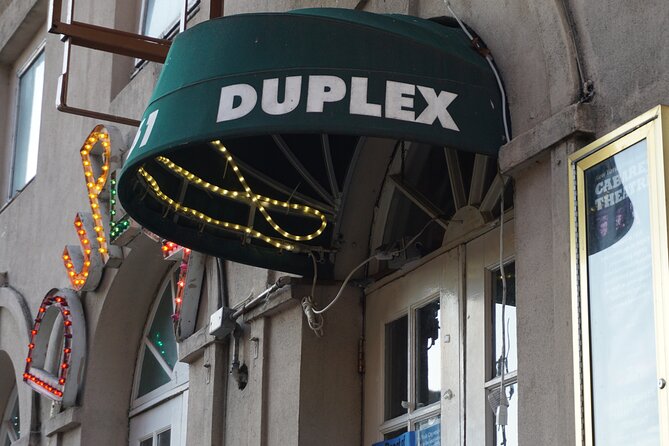
The next stop is The Duplex, where the guide explains the venue’s place in New York comedy and points out performers who developed their careers there. You spend about five minutes at this stop.
That short pause reflects the nature of the tour. You are not staying for a set or going inside for a performance. Instead, the guide gives you the important context, then keeps the route moving through the Village.
For comedy fans, venues such as The Duplex matter because they show how careers often grow in intimate rooms. A club can be small in physical size but important in the careers of performers who later reach wider audiences. This part of the walk is likely to appeal most to you if you enjoy the behind-the-scenes side of entertainment.
Cafe Wha? and the Bitter End: comedy beside music history
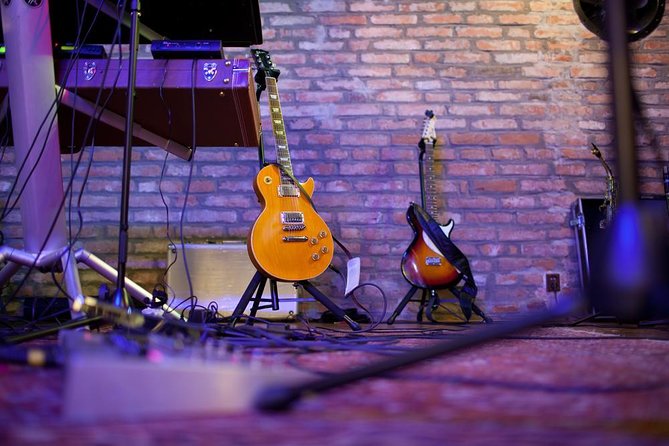
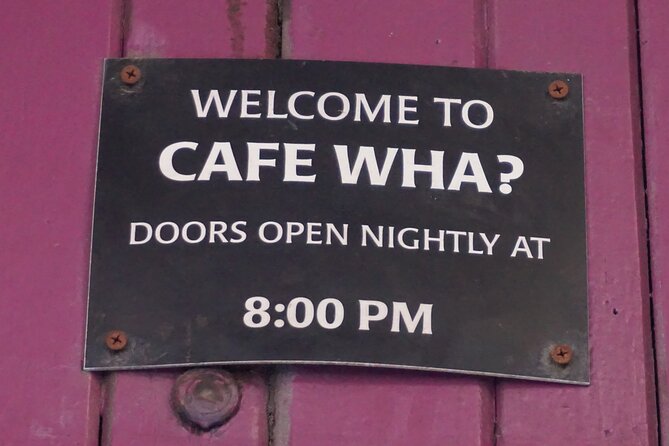
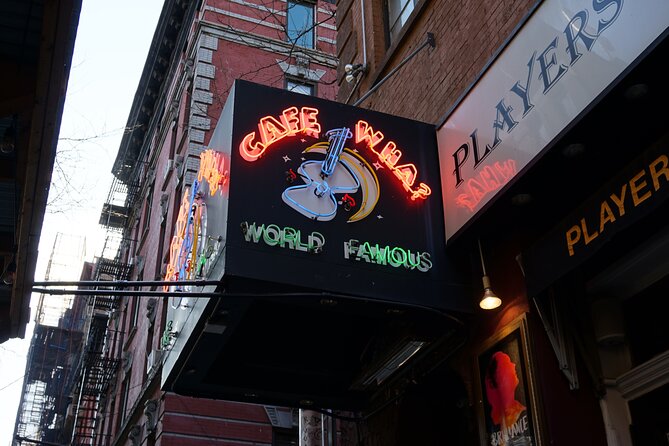
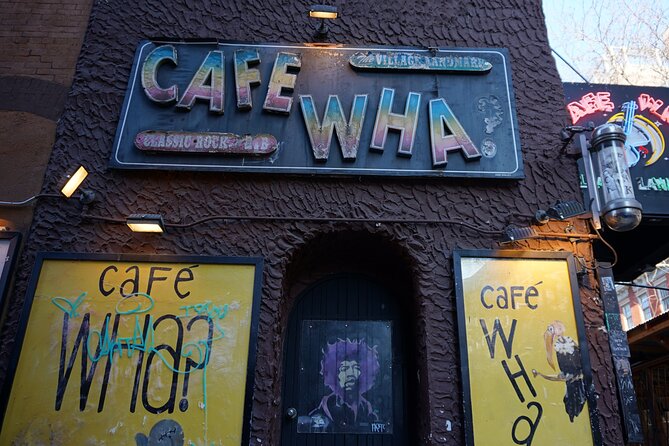
Cafe Wha? is the third stop. The guide covers its comedy history and the well-known performers associated with the venue, again using photos. You spend about five minutes here.
Cafe Wha? is also linked with the broader Greenwich Village club scene, so this stop helps show how comedy existed alongside music and other live entertainment. The result is a wider picture of the neighborhood. Comedy did not develop in isolation. It shared rooms and audiences with other forms of performance.
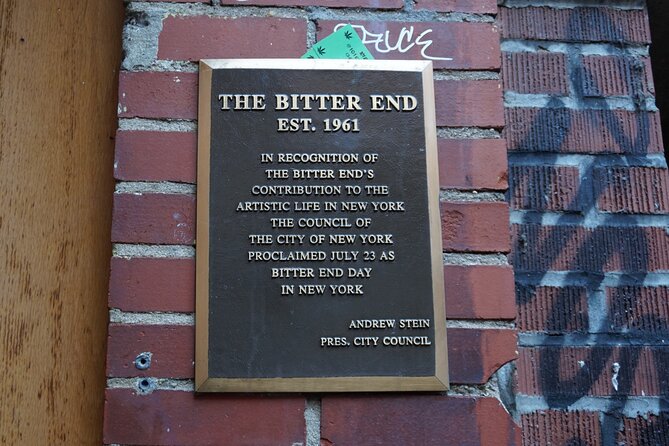
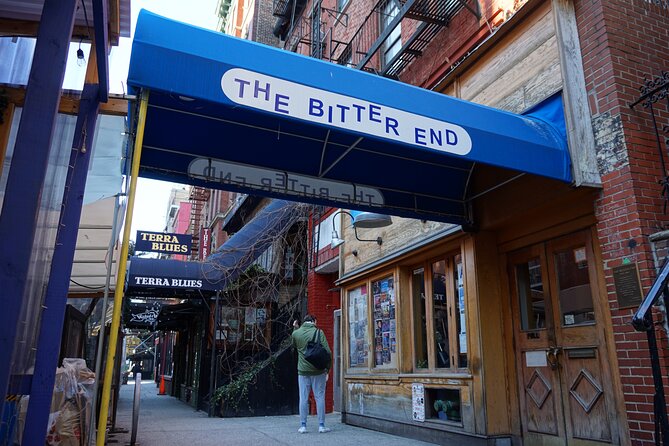
At the Bitter End, the story expands to include both the Bitter End and Cafe Au Go Go. The guide discusses their comedy history and the performers connected with them, with about 10 minutes devoted to this section.
This is one of the more useful parts of the route for anyone interested in venues rather than only famous names. You see how a small section of Greenwich Village became a gathering place for performers, audiences, and new styles. The tour does not promise entry into these clubs, so you should think of the stop as an outdoor history lesson.
Same place, a different slice of the past:
- Hamilton and Washington Revolutionary Walking Tour
★ 5.0 · 182 reviews - NYC: Night Out Prohibition History Bar and Speakeasy Tour
★ 4.6 · 128 reviews - Christmas in New York: Private Holiday History Tour
★ 5.0 · 107 reviews - Lower Manhattan Secrets And History Walking Tour
★ 5.0 · 96 reviews
The Grisly Pear: television, SNL, and African American comedy
At The Grisly Pear Comedy Club, the tour moves into the 1960s and the rise of television. The guide discusses how TV changed comedy, explains the creation of Saturday Night Live, and highlights African American contributions to comedy.
This section gives the tour its broadest historical reach. Earlier stops focus on clubs and performance spaces. Here, you look at how comedy moved into American homes and how television created new routes to national fame.
The attention given to African American comedy is important. It places the history of American humor in a fuller context instead of treating it as a story told only through a few familiar white comedians or television programs. You should come ready to listen, since this stop depends heavily on the guide’s explanation and visual material.
The stop also introduces some of New York’s best-known modern comedy clubs. That makes it a practical point in the tour. If you are trying to decide where to see a show during your stay, you can ask questions and get ideas before the walk ends.
The Comedy Cellar: a famous name and a useful photo stop
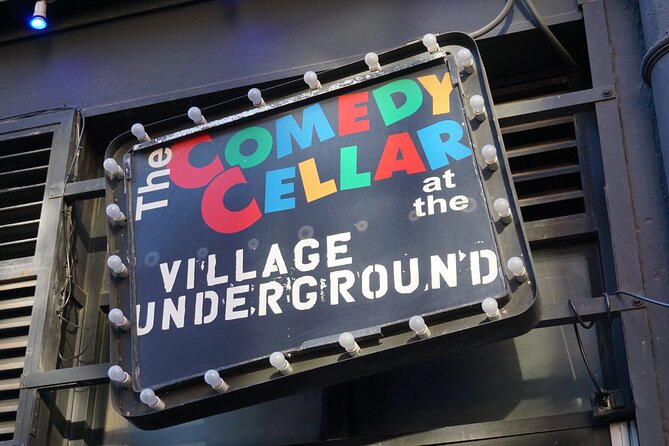
The Comedy Cellar receives its own stop, with about seven minutes devoted to the club’s history. The guide offers to take photos of you beneath the famous marquee, which is a nice touch for anyone who wants a clear souvenir of the comedy route.
The Comedy Cellar is one of the most recognizable names on the walk. Hearing about its development after learning the story of earlier venues helps you see how the city’s comedy scene changed over time. The club is not presented as an isolated attraction. It is part of a long chain that includes vaudeville, radio, television, and smaller Greenwich Village rooms.
Keep your expectations practical. The tour does not say that you will enter the club, watch a set there, or meet performers. You get history, photographs, and a good location for your own picture.
The Village Underground: finish with a show option
The final stop is the Village Underground at 130 West 3rd Street. This is where the tour ends, and the guide shows you the second location connected with the Comedy Cellar.
The most valuable extra is free access to a local stand-up comedy show later that evening. The information provided does not specify the exact show time or seating process, so ask the guide for those details during the tour. Still, this benefit can change the value of the experience. At $30, you are paying for the guided history walk, but you may also get a chance to see live comedy afterward.
The ending works well because it turns history into something you can experience in the present. You finish at an active comedy venue rather than returning to the starting point or ending in a less useful location.
If you already plan to see comedy that night, this is a strong reason to consider the tour. If your schedule is packed, the free show benefit may be less useful, and the $30 value rests mainly on the guide and the historical content.
What the guide adds to the experience
Joe is the guide named in the feedback provided, and his approach seems to be one of the tour’s strongest features. He is described as friendly, funny, patient, interactive, and well informed about American comedy and New York show business.
That combination matters. A walking tour about comedy can easily become a list of names and dates. A guide who welcomes questions and uses humor can make the material easier to follow. Joe also uses photos, which gives you something concrete to look at while hearing about venues and performers.
One useful detail is that Joe did not make an issue of one participant arriving 15 minutes late. You should still aim to arrive on time, since a walking tour may move away from the meeting point, but the guide’s patience suggests a relaxed tone.
The guide also appears ready to answer questions about clubs, neighborhoods, and local history. That makes the tour more useful than a fixed speech. If you have a particular interest in stand-up, television comedy, African American performers, or Greenwich Village, ask about it.
Price, timing, and group size
The price is $30 per person. For a 75-minute walking tour, that is not the cheapest way to spend an hour in New York, but the value improves if you care about the subject and use the included comedy-show access.
You are paying for a specialized topic rather than a general orientation walk. The route focuses on comedy and show business, and the guide’s personal knowledge is central to the experience. If you already know a great deal about New York comedy, you may find the material familiar in places. If the subject is new to you, the tour gives you a clear framework for understanding the city’s comedy scene.
Morning and afternoon departure options make the tour easier to fit into a wider day. You can choose a morning walk before other sightseeing, or take it in the afternoon and continue to the included comedy show later.
The group limit is 20 people. That is large enough to create energy but small enough for the guide to handle questions. Because the tour takes place on city streets, wear comfortable shoes and expect ordinary urban walking conditions.
Who will enjoy this tour most
This experience is a strong match for you if:
- You follow stand-up comedy and want context beyond the performers on a club bill.
- You enjoy Greenwich Village and want a themed walk through its entertainment past.
- You are interested in television comedy, Saturday Night Live, and the development of American humor.
- You want suggestions for comedy shows during your New York visit.
- You like guided walks that combine neighborhood sightseeing with stories and pictures.
- You plan to attend a comedy show later that same evening.
It is less suitable if you want a full performance, club entry at every stop, or a broad tour of all New York attractions. The route stays focused on comedy history and does not promise backstage access.
The tour also suits couples, solo visitors, and small groups with a shared interest in comedy. The supplied feedback includes a couple who came to New York hoping to see as much comedy as possible, and this is exactly the kind of visitor who can get extra value from the route and the evening show option.
Practical details before you book
You receive confirmation when you book, and the ticket is mobile. The tour is offered in English. Service animals are allowed, and the route is near public transportation.
Most people can participate, though the experience is a walking tour through Greenwich Village. The official duration is approximately 1 hour and 15 minutes. One piece of feedback described the outing as lasting closer to two hours, so I would leave a little extra time in your schedule rather than planning a tight connection immediately afterward.
You can cancel for a full refund if you do so at least 24 hours before the start time. Cancellations or changes made within 24 hours are not refunded or accepted, based on the stated policy.
The tour is often booked about 21 days ahead. That does not guarantee that every departure sells out, but it is a useful sign that you should reserve early if your New York dates are fixed.
Should you book NYC’s History of Comedy Tour?
Book it if you want a focused, friendly walk through the places and people that shaped New York comedy. The route is short, the group is limited to 20, and the guide’s photos and stories give the stops more meaning than a simple list of club names.
The best value comes when you combine the tour with an evening comedy show at or near the Village Underground. At $30, that pairing gives you both background and live entertainment. Skip it if you want to watch comedy during the walk or enter each venue, since the experience is built around outdoor narration and historical context.
For comedy fans, Greenwich Village explorers, and anyone curious about how vaudeville led toward television and modern stand-up, this is an easy tour to recommend.
FAQ
Where does the tour begin?
The tour begins at 13 Christopher Street in New York City, at the intersection of Gay Street and Christopher Street.
Where does the tour end?
It ends at the Village Underground, located at 130 West 3rd Street. The venue is one of the Comedy Cellar locations.
How long does the tour last?
The stated duration is approximately 1 hour and 15 minutes.
How much does the tour cost?
The price is $30 per person.
Is a comedy show included?
You receive free access to a local stand-up comedy show later that evening as a benefit of attending the tour. The specific show details are not provided, so ask the guide for the current information.
What language is the tour offered in?
The tour is offered in English.
Is the tour available in the morning?
Yes. Morning and afternoon tour options are available.
How many people can join the tour?
The maximum group size is 20 people.
Can I cancel for a refund?
Yes. You can receive a full refund if you cancel at least 24 hours before the experience starts. Cancellations or changes made less than 24 hours before the start time are not refunded or accepted.
Just added around New York City
- Little Italy – Official Historic District Tour★ 5.0 · 23 reviews
- The Secret Speakeasies and History Experience!★ 5.0 · 69 reviews
- NYC Private Walking Tour: Local Insights, History & Food★ 5.0 · 41 reviews
- Harlem Walking Tour: Mount Morris Park Historic District w/ Lunch★ 5.0 · 84 reviews
- High Line, Greenwich Village Food, and Historical Downtown Tour★ 5.0 · 64 reviews
- Christmas in New York: Private Holiday History Tour★ 5.0 · 107 reviews
- Two-Hour NYC LGBTQ+ History Walking Tour★ 5.0 · 35 reviews
- Central Park Pedicab Tour with Natural History Museum Access★ 5.0 · 62 reviews
New York City History Tours, compared.

NYC: Speakeasy Drinks and Prohibition History Tour
Read our review →
Hamilton and Washington Revolutionary Walking Tour
Read our review →
#1 Rated NYC Chinatown Food and History Walking Tour with FNYT
Read our review →
NYC: Night Out Prohibition History Bar and Speakeasy Tour
Read our review →
Christmas in New York: Private Holiday History Tour
Read our review →
Lower Manhattan Secrets And History Walking Tour
Read our review →
NYC: History of Slavery & Underground Railroad Walking Tour
Read our review →Browse the lists this tour appears in