
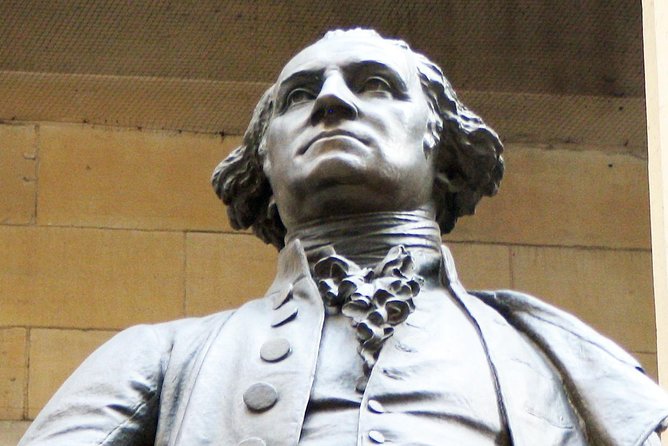
Review · NEW YORK CITY
Hamilton and Washington Revolutionary Walking Tour
History comes alive below Broadway. This three-hour walk connects Alexander Hamilton and George Washington with the streets, churches, taverns, and financial institutions of Lower Manhattan. I like the clear Revolutionary-era focus, and I like that a licensed guide leads a small group of no more than 16 people. The main drawback is simple: you will spend much of the tour standing outdoors, and some stops are viewed from outside.
The tour is especially appealing if the musical Hamilton sparked your interest in the real people behind it. Guides such as Bruce bring plenty of detail, humor, and enthusiasm, but this is not a musical-themed stroll with songs or theatrical performances. It is a history walk, so you should come ready to listen, ask questions, and picture buildings and events that have partly vanished.
Key points to know before booking

- Follow Hamilton’s New York: Visit places tied to his Treasury work, banking plans, political battles, and burial site.
- See Washington’s first capital: Federal Hall marks his inauguration and the first Capitol under the Constitution.
- Small-group format: The tour accepts a maximum of 16 people, making questions and conversation easier.
- Expect plenty of standing: The route covers a compact area, but the three-hour length can feel demanding in cold, heat, rain, or snow.
- Check opening times: Fraunces Tavern Museum, Federal Hall, and Trinity Church may not be open at every tour time.
- Book ahead: The tour is often reserved about 27 days before departure, so popular dates may fill early.
Why Lower Manhattan makes a fine history classroom
The southern end of Manhattan packs an unusual amount of early American history into a small area. You are not crossing a large part of New York City to find each sight. Instead, the tour moves through a compact district where a street corner, churchyard, or financial building can open a window onto the Revolutionary period.
I like this format because the guide can connect events rather than present isolated facts. Hamilton’s financial ideas lead naturally to Wall Street. Washington’s military career leads to his farewell at Fraunces Tavern. The story keeps moving between people, places, and the new nation’s uncertain first steps.
The setting also helps you understand why New York mattered so much. Today’s Lower Manhattan is crowded with office towers and traffic, yet the tour asks you to picture the same area during the Revolution and the early years of the United States. Some original buildings are gone, so the guide’s storytelling and ability to explain what once stood there matter a great deal.
The experience is conducted in English. It begins at 1 Bowling Green and finishes at Trinity Church, 89 Broadway. That point-to-point design is useful because you end near one of the tour’s most important sites instead of returning to the starting point.
More History Walking Tours in New York City
- #1 Rated NYC Chinatown Food and History Walking Tour with FNYT
★ 5.0 · 171 reviews - Tribeca Architecture And History Walking Tour
★ 5.0 · 141 reviews - Lower Manhattan Secrets And History Walking Tour
★ 5.0 · 96 reviews
Bowling Green and the Hamilton Custom House

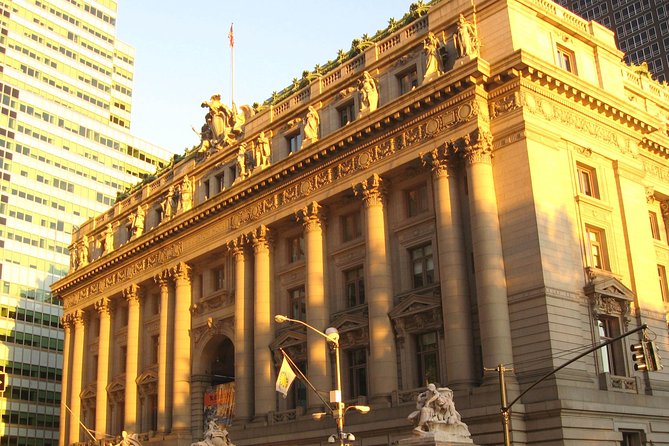
The meeting point at 1 Bowling Green puts you near one of the tour’s central figures from the start. The first featured stop is the Alexander Hamilton U.S. Custom House, where the guide explains Hamilton’s work as the first Secretary of the Treasury.
This stop gives you a practical way to understand Hamilton beyond the stage version. His importance was not limited to military service or political arguments. He helped shape the financial structure of the young United States, and the Custom House offers a direct link to that work.
You do not pay a separate admission for the tour itself at this stop, but the admission information notes that entry is not included. That means you should treat the building primarily as an exterior or guided-history stop unless your specific departure time includes access.
From there, the route moves into Bowling Green. Here, the focus shifts to the pressure that pushed the colonies toward war. The guide explains events leading to the Revolution and the destruction of a 4,000-pound lead statue of King George III.
That detail gives the political conflict a physical edge. A statue may sound like a small subject, but its destruction shows how public anger had become visible and forceful. Bowling Green also helps you connect familiar New York scenery with the tension of the 1770s.
Each of these first stops lasts about 20 minutes. That is enough time for a proper explanation without turning the walk into a lecture in one place.
Peter Minuit Plaza and Hamilton’s beginnings
At Peter Minuit Plaza, the story turns toward New York City at the opening of the Revolutionary War and Hamilton’s origins. This is an important pause because it places the young Hamilton within a wider city and imperial crisis.
The value here is context. You are not simply told that Hamilton became a major Founder. You hear about the world he entered and the circumstances that shaped his rise. The guide’s job is to connect personal ambition with the larger conflict around him.
The tour’s strongest feature is likely this linking of biography and place. Hamilton’s story can become a list of famous names and arguments if told in a classroom. On these streets, the story has physical markers, even when the original scene has changed.
The route remains concentrated in Lower Manhattan, but do not confuse compact geography with an easy indoor outing. Several accounts of the experience praise the guide while noting the amount of walking and standing. Wear comfortable shoes and plan clothing for the forecast.
Fraunces Tavern and Washington’s farewell
Fraunces Tavern is one of the most memorable stops because it connects directly with George Washington’s departure from his officers. The tavern is associated with his farewell after the Revolutionary War, including his nearly unprecedented decision to leave military power behind.
That moment carries more weight when you consider what Washington could have done instead. The guide uses the site to explain his departure as a military leader and the meaning it held for the new republic.
The museum has a separate admission arrangement, so entry is not included in the tour price. The schedule allows about 15 minutes here, which suggests that the main value comes from the guide’s explanation and the location, not from an extended museum visit.
You should also check the day and time of your booking. The tour notes that certain sites are entered only when they are open. Fraunces Tavern Museum is therefore best treated as a possible interior stop rather than a guarantee for every departure.
This is a good example of how the experience works. It does not promise a long visit inside every landmark. Instead, it gives you a connected walk through the district, with selected interiors when hours allow.
More History Walking Tours in the USA
- NYC: History of Slavery & Underground Railroad Walking Tour
★ 4.7 · 87 reviews - New York: Rock and Roll History and Culture Walking Tour
★ 5.0 · 22 reviews - NYC: Lower East Side Devour Food & History Walking Tour
★ 4.8 · 19 reviews - History and Hauntings of Salem Guided Walking Tour
★ 5.0 · 14,564 reviews
The New York Stock Exchange, Wall Street, and Burr
The New York Stock Exchange stop shifts the story back toward Hamilton’s financial plan and his connection to the institution. The subject may sound less dramatic than battles and political speeches, but it is essential to understanding Hamilton’s role in building the new government.
The guide explains how financial policy affected the young nation and how Hamilton’s ideas remained tied to the district’s money center. Admission is not included here, so expect this to be a discussion stop rather than a paid visit inside the exchange.
At Wall Street, the tour turns to Hamilton’s Bank of New York and Aaron Burr’s political ambitions. This is where the walk can help you sort out the relationships that popular culture often compresses.
Hamilton and Burr were not simply characters in a famous rivalry. Their political goals, financial interests, and competing visions of power shaped the early republic. The guide’s explanation gives you a chance to see how personal conflict and public policy could overlap.
The Wall Street section is also useful for readers who want more than musical references. You get the background behind the names, institutions, and arguments. The musical connection adds interest, but the tour’s subject is broader than the show.
Federal Hall and Washington’s inauguration
Federal Hall is one of the most important stops on the route. The site served as the first Capitol of the United States under the Constitution, hosted the first meeting of Congress, and saw Washington’s inauguration.
That concentration of events makes the stop valuable even if you have little prior interest in Hamilton. It gives you a clear picture of New York’s short but important role as the nation’s first capital under the new Constitution.
Admission is not included, and the building is closed on weekends. Check your departure day before booking if entering Federal Hall matters to you. Even when the interior is unavailable, the guide can still explain the site’s role, but the experience will differ from a weekday visit.
The schedule allows about 20 minutes. That is enough time for the guide to set out the political situation and explain why the location mattered without allowing the group to linger for a long museum session.
Trinity Church and Hamilton’s final resting place
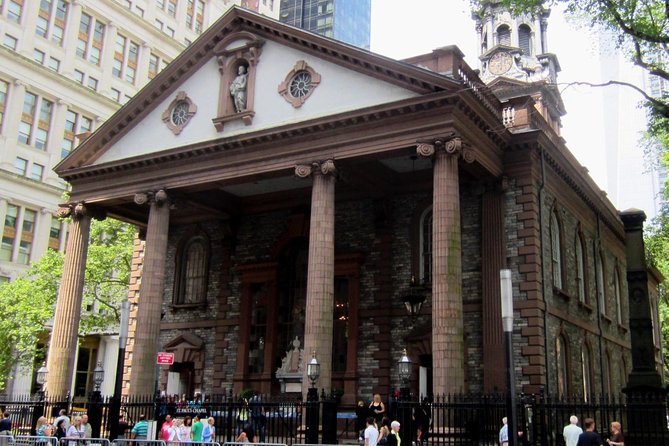
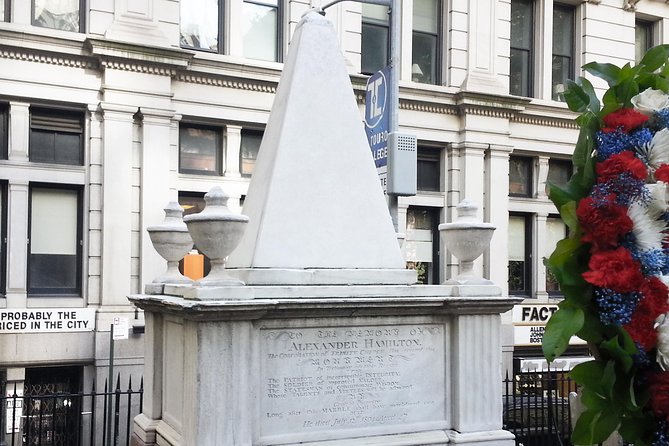
The tour ends at Trinity Church, where Alexander and Eliza Hamilton are buried. The churchyard also includes other notable Revolutionary-era figures, including Hercules Mulligan.
This closing stop gives the walk a quieter finish. After hearing about public arguments, war, finance, and political ambition, you arrive at the place where Hamilton and Eliza’s story is marked in stone.
The churchyard is free to visit, but entry depends on the church’s opening hours. The tour notes that the group enters on days and at times when it is open. If seeing the graves is your main reason for booking, confirm the departure schedule carefully.
Ending here also makes practical sense. Trinity Church is at 89 Broadway, close to public transportation and in the middle of Lower Manhattan’s major sights. You can continue sightseeing afterward, although the tour does not include a return transfer.
What the guide adds to the experience
A history walk depends heavily on its guide. The strongest praise for this experience centers on Bruce, who is described as funny, kind, organized, passionate, and exceptionally well informed. His ability to answer questions and adjust to a multigenerational group is especially useful for families.
The important point is not just the number of facts. The guide helps make places meaningful when buildings are gone or changed beyond recognition. Several accounts describe the storytelling as strong enough to help you picture the 1776-era city even when little original fabric remains.
One especially practical detail comes from a hot, humid outing, when the guide sought shade and breeze for the group. That suggests a thoughtful approach to comfort, though you should still prepare for outdoor conditions yourself.
The tour has also been praised for connecting with young people. Children must be accompanied by an adult, and the small group size gives the guide more room to respond to questions than a large coach tour would.
Price, group size, and practical value
At $52.95 per person, this is not the cheapest way to walk around Lower Manhattan. You are paying for roughly three hours with a licensed New York City guide and historian, rather than simply receiving a map of free sights.
I think the price makes sense if you care about American history, Hamilton, Washington, or the early financial life of the United States. The guide’s narration is the main product. You are paying for connections, explanations, and access to a carefully ordered story.
The maximum group size is 16. That is small enough to keep the guide visible and make questions realistic, though it is not a private tour. Gratuity is not included, so plan to tip separately if the guide’s work adds real value to your day.
The route lasts about three hours and includes repeated periods of standing. One account describes the area as small with a great deal of history, while another warns that the walking and standing are substantial. Both can be true: the distance may not be huge, but the time on your feet is significant.
Tours operate in rain, snow, and sunshine according to the operating information, while the cancellation terms also allow a weather cancellation with a different date or full refund. Read the conditions at booking, and dress for outdoor weather rather than assuming indoor shelter.
Free cancellation is available up to 24 hours before the start time for a full refund. Changes or cancellations inside that window are not accepted for a refund, and the experience can also be canceled if its minimum number is not reached.
Who should book this Lower Manhattan walk?
I would choose this tour if you want American history explained through real places. It is a strong fit for fans of Hamilton who want the factual setting behind the drama, but you do not need to know the musical to enjoy it.
Families can benefit from the lively storytelling, especially if children already have an interest in Washington or the Revolution. Adults who prefer long museum visits may find the outdoor format less satisfying, particularly if Federal Hall, Fraunces Tavern Museum, or Trinity Church is closed during their departure.
The tour also suits solo visitors and couples who want a focused introduction to Lower Manhattan. It is less suitable if you want a relaxed stroll with frequent café breaks, a theatrical performance, or a tour conducted in a language other than English.
Should you book the Hamilton and Washington tour?
Book it if you want the real history behind Hamilton, Washington, Burr, and the early United States, and if you are comfortable spending three hours outside. The strongest reason to go is the guide’s storytelling, especially with Bruce, not simply the number of landmarks checked off.
Skip it if you dislike standing, need guaranteed interior access, or want the musical itself to be the main subject. For everyone else, the combination of a small group, a compact historic district, and a guide who can make vanished places visible offers solid value at $52.95.
FAQ
How long does the Hamilton and Washington Revolutionary Walking Tour last?
The tour lasts approximately three hours.
Where does the tour begin?
It begins at 1 Bowling Green, New York, NY 10004.
Where does the tour end?
The tour ends at Trinity Church, 89 Broadway, New York, NY 10006.
How large is the tour group?
The experience has a maximum of 16 participants.
Is the tour offered in English?
Yes. The tour is offered in English.
Are admission fees included?
Admission is not included for the Alexander Hamilton U.S. Custom House, Fraunces Tavern Museum, the New York Stock Exchange, or Federal Hall. Bowling Green, Peter Minuit Plaza, Wall Street, and Trinity Church are listed as free stops, although access to Trinity Church depends on opening times.
Is Federal Hall open during every tour?
No. Federal Hall is closed on weekends, so interior access is not available on those days.
Can I cancel for a full refund?
Yes, if you cancel at least 24 hours before the experience start time. Cancellations or changes made less than 24 hours in advance are not refunded.
Just added around New York City
- Soul of Harlem: Strivers Row, Apollo Theatre, Gospel History★ 4.6 · 87 reviews
- NYC: Lower East Side Devour Food & History Walking Tour★ 4.8 · 19 reviews
- New York: Mafia and Gangster History Tour in Little Italy★ 4.6 · 79 reviews
- New York: Rock and Roll History and Culture Walking Tour★ 5.0 · 22 reviews
- NYC: History of Slavery & Underground Railroad Walking Tour★ 4.7 · 87 reviews
- NYC: Night Out Prohibition History Bar and Speakeasy Tour★ 4.6 · 128 reviews
- New York City: Flatiron Food, History, and Architecture Tour★ 4.8 · 43 reviews
- NYC: New York City History of Stand-Up Comedy Tour★ 4.8 · 21 reviews
History Walking Tours, compared.

History and Hauntings of Salem Guided Walking Tour
Read our review →
Freedom Trail History Small Group Walking Tour
Read our review →
Historic Charleston Guided Sightseeing Walking Tour
Read our review →
Tapas Walking Tour with Food, Wine, and History
Read our review →
Savannah History and Haunts Candlelit Ghost Walking Tour
Read our review →
A History of Terror – Belfast City Centre Walking Tour
Read our review →Browse the lists this tour appears in