
Review · NEW YORK CITY
Tribeca Architecture And History Walking Tour
Tribeca rewards careful looking. This 2.5-hour walk connects farmland, cast-iron warehouses, grand residences, movie fame, and modern wealth in one compact part of Manhattan. I like the focus on one neighborhood, and I like that the tour works for locals as well as first-time visitors. You get more than a photo stop at the Ghostbusters firehouse: the route explains how Tribeca changed over three centuries.
The small maximum of 15 people is another real plus. A guide can answer questions and adjust the discussion, which matters on a walking tour built around details above street level. The main drawback is the weather: you are outside for most of the experience, and the tour may be canceled in poor conditions. Comfortable shoes and a forecast check are wise.
Key things to know before you book
- Tribeca in one focused walk: The route covers more than 15 locations instead of rushing through several downtown neighborhoods.
- Architecture without homework: You do not need a background in design to understand the buildings or enjoy the stories.
- A useful Ghostbusters stop: Company 8 is a fun photo opportunity, but the firehouse also has a history beyond its film role.
- Strong guiding is central: Meghan Sara is praised for animated storytelling, humor, art, architecture, and local recommendations.
- A small group helps: The tour allows a maximum of 15 people, making questions and street-side explanations easier.
- Good timing for a first visit: The 11:00 a.m. start leaves the rest of the day open for lunch, galleries, shopping, or more downtown exploring.
Why Tribeca makes a good walking tour subject
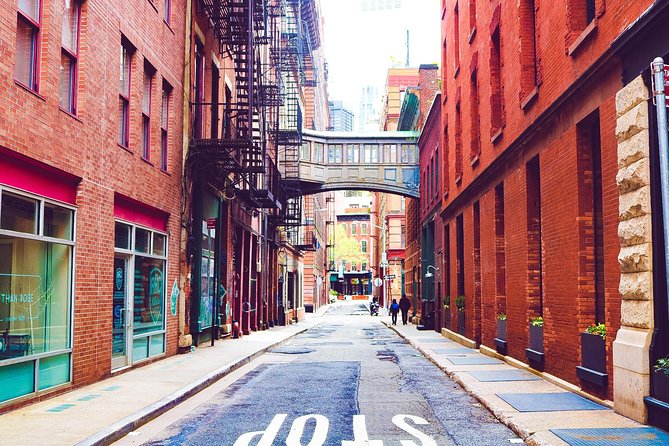
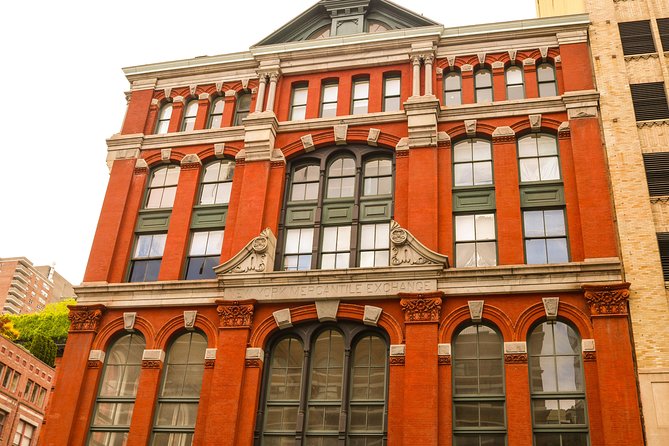
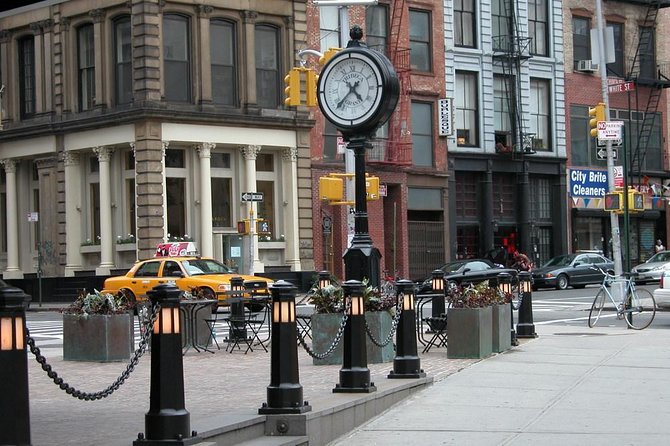
Tribeca can seem polished and quiet at first glance. That is part of its appeal, but it can also make the neighborhood easy to skim past. The best details are in the facades, old industrial buildings, courtyards, converted spaces, and bits of street history that do not announce themselves.
This walk gives the neighborhood a clear story. You learn how land that was once farmland became part of a growing city, then an industrial district, and later one of New York’s most expensive addresses. That change is easier to understand on foot, where each block shows a different stage of Tribeca’s development.
I especially like the tour’s narrow focus. A broad Lower Manhattan walk can cover more famous sights, but it often gives each place only a few minutes. Here, the subject is Tribeca itself, so the guide has time to explain how the neighborhood got its name, how its buildings were used, and why its architecture matters.
The tour also avoids the assumption that architecture must be technical or dry. You can enjoy the shapes, materials, and old construction details without knowing the difference between every architectural style. The storytelling, pop culture references, and local anecdotes help keep the pace lively.
More History Walking Tours in New York City
- Hamilton and Washington Revolutionary Walking Tour
★ 5.0 · 182 reviews - #1 Rated NYC Chinatown Food and History Walking Tour with FNYT
★ 5.0 · 171 reviews - Lower Manhattan Secrets And History Walking Tour
★ 5.0 · 96 reviews
Starting at Tweed Courthouse on Chambers Street
The meeting point is Tweed Courthouse at 52 Chambers Street, a practical place to begin because it puts you at the edge of Lower Manhattan and close to public transportation. The start time is 11:00 a.m., so you do not need an early morning rush to reach it.
Beginning near the courthouse sets up the larger story. You are close to some of Manhattan’s oldest civic and commercial areas, and the walk then moves toward Tribeca Park at 8 Beach Street. The change in streets and buildings helps show how downtown New York developed in layers.
Bring water and wear shoes with decent support. The route lasts about two and a half hours, and even a relaxed city walk can feel long if you are in thin-soled shoes. Snacks are not included, so eat beforehand or plan a stop after the tour. The guide may point out cafes, bakeries, and restaurants, which can help you choose what to do next.
More than 15 locations, with time to look up
The route visits more than 15 locations, with stops for pictures and explanations. That number gives you a sense of the tour’s pace: you will see plenty, but you should not expect a long interior visit at every stop.
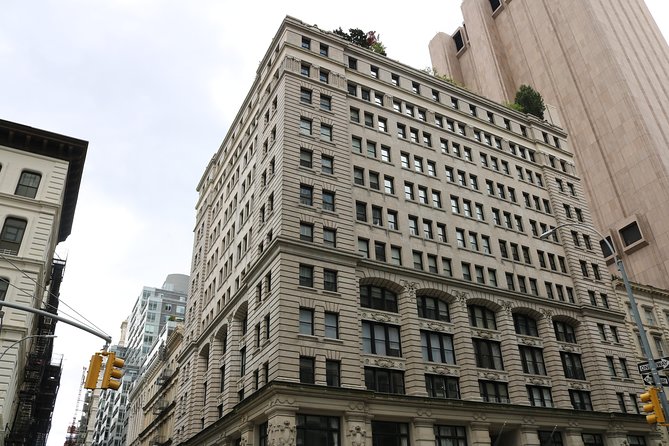
The real value comes from learning what to notice. Tribeca’s architecture includes older cast-iron buildings, and a guide can draw your eye to details you might otherwise miss. You may pass a building and see only a handsome facade. With context, you begin to read it as evidence of changing work, trade, wealth, and city life.
The walk also includes modern architectural choices and buildings that reflect Tribeca’s later transformation. The point is not simply to admire expensive property. It is to understand how an area with practical origins became a sought-after residential district associated with celebrities and high property values.
That mix keeps the walk from becoming a parade of facades. The history gives the architecture a reason to matter. You are not just looking at old buildings. You are seeing how the needs and fortunes of New York changed from one era to the next.
The architecture stories are accessible, not academic
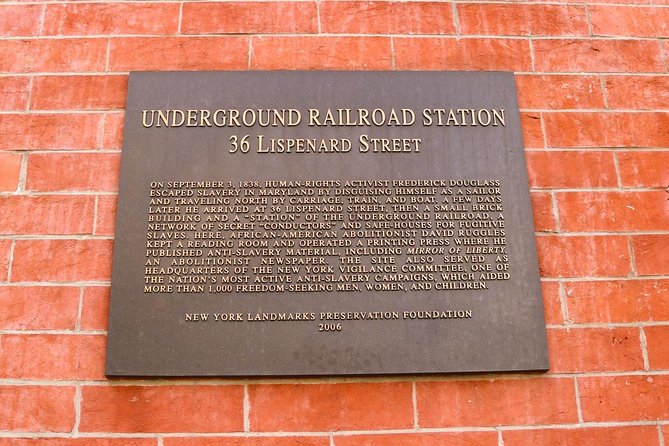
This tour is a good fit if you like buildings but do not consider yourself an architecture expert. The explanations are designed for a general audience, and the strongest part of the experience appears to be the guide’s ability to turn facts into stories.
Meghan Sara receives particularly strong praise for making the subject colorful, funny, and easy to follow. Her style is described as animated and passionate, with a mix of architecture, history, art, pop culture, and small local facts. That combination matters because two and a half hours of building talk can become tiring if every stop sounds the same.
You can also expect some flexibility in the conversation. One of the tour’s strengths is the ability to respond to the group’s interests, with the guide adjusting emphasis when people want more detail on a certain site or topic. That is harder to do with a large group, so the 15-person limit helps.
A few reviews also point to thoughtful pacing, including places to warm up and use the restroom. Those breaks are especially helpful in bad weather, though you should not treat them as a substitute for dressing properly. One memorable guide tip mentioned in the feedback is to ask about New York’s beavers, a small example of the offbeat facts that can make a neighborhood walk stick in your mind.
More History Walking Tours in the USA
- NYC: History of Slavery & Underground Railroad Walking Tour
★ 4.7 · 87 reviews - New York: Rock and Roll History and Culture Walking Tour
★ 5.0 · 22 reviews - NYC: Lower East Side Devour Food & History Walking Tour
★ 4.8 · 19 reviews - History and Hauntings of Salem Guided Walking Tour
★ 5.0 · 14,564 reviews
The Ghostbusters firehouse at Company 8
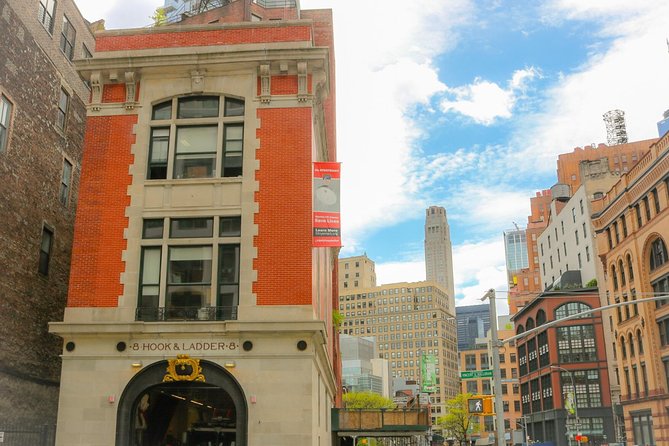
The Ghostbusters firehouse is the tour’s most obvious pop culture stop. Company 8 gives you an easy photo opportunity and a familiar connection to the movies, even if you came mainly for architecture.
What makes this stop more worthwhile is the explanation that the firehouse is not simply a film prop. The tour places it in the real life of the neighborhood and explains why the building matters beyond its screen appearance. That balance is useful: you get the fun photo without reducing the entire stop to movie trivia.
Allow about 10 minutes for this part of the experience. It is long enough for pictures and a proper explanation, but not so long that it overwhelms the architectural focus of the walk.
If you are traveling with a teenager or a mixed-age group, this can be a helpful energy boost. One family with a 14-year-old found the experience engaging, and the mix of history and popular culture gives younger participants something familiar to grab onto.
Ending at Tribeca Park on Beach Street
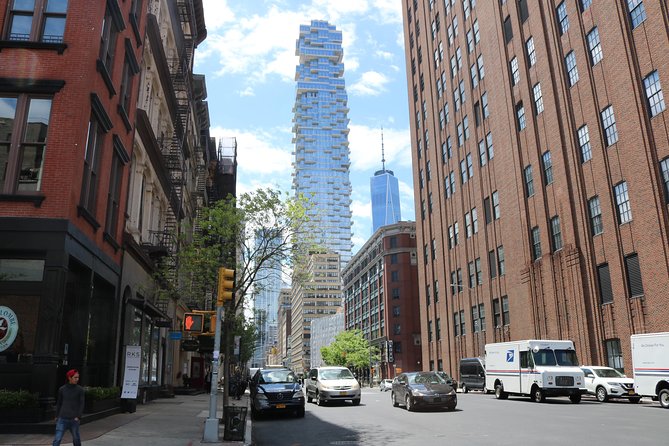
The tour ends at 8 Beach Street in Tribeca Park, a place connected with 300 years of local history. Finishing here gives the walk a natural endpoint rather than leaving you beside a random subway entrance.
The ending is useful for planning the rest of your day. The tour begins at 11:00 a.m. and lasts around 2.5 hours, so you should finish in the early afternoon. That makes the guide’s food recommendations practical, especially if you want lunch in or near Tribeca.
Several people found it helpful to take the tour early in a New York stay because the guide offered suggestions for cafes, bakeries, restaurants, and other nearby stops. I agree with that strategy. A neighborhood walk is more useful when you can still act on what you learn instead of hearing recommendations on your final afternoon.
What the $50 price gets you
At $50 per person, this is not the cheapest way to spend a morning in New York. You can walk through Tribeca on your own for free, photograph the Ghostbusters firehouse, and read about the area before arriving.
The price makes more sense if you value interpretation. You are paying for two and a half hours of organized storytelling, a route covering more than 15 locations, a small group, and a guide who can explain details in real time. The included Manhattan recommendation guides add practical value, especially if this is your first visit.
The tour is also a reasonable choice for local residents. Tribeca’s streets are familiar to many New Yorkers, but the architectural details and historical connections are easy to overlook during everyday errands. A good guide changes the way you see a place you thought you knew.
I would skip it if your main goal is a fast list of famous landmarks or if you dislike standing outdoors while listening. The walk rewards curiosity and attention. It is not a sightseeing bus tour, and there is no promise of extensive indoor access.
Weather, group size, and comfort
The experience requires good weather, and poor conditions can lead to a date change or full refund. That policy is sensible for a walking tour, but it means you should keep your schedule flexible if rain or severe weather is forecast.
The maximum group size is 15 people. That is small enough for the guide to keep the group together without turning every explanation into a struggle to hear. It also gives you a better chance to ask about a building, request a recommendation, or follow up on a curious detail.
Most people can take part, and service animals are allowed. The tour is near public transportation, which helps with both arrival and departure. Still, it is a walking experience lasting roughly 150 minutes, so anyone with mobility concerns should consider the length and outdoor format before booking.
The mobile ticket is convenient. Confirmation arrives at booking, so you can keep the reservation on your phone rather than carry printed paperwork.
Who will enjoy this tour most
I would recommend the tour to several types of people:
- First-time visitors who want more context than a quick downtown photo stop
- New Yorkers who enjoy architecture but have not explored Tribeca closely
- Families with older children or teenagers who appreciate movie connections
- Anyone who likes local stories, unusual facts, and changing neighborhoods
- Visitors planning their meals and sightseeing around Lower Manhattan
- People who prefer a small group and a guide-led route
It may be less suitable if you want a completely unstructured morning, dislike walking, or care only about movie locations. The Ghostbusters firehouse is one stop, not the whole purpose of the tour.
The strongest reason to book is the guide. Meghan Sara is repeatedly praised for her humor, enthusiasm, and ability to make difficult material easy to follow. Guides can vary, so the quality of delivery may depend on who leads your date, but the experience clearly depends on a strong storyteller rather than a simple audio script.
Booking advice and cancellation terms
The tour is often reserved about 25 days ahead, which suggests you should not leave it until the final day of a short New York visit. Booking early also helps if you want the 11:00 a.m. start on a particular date.
You can cancel for a full refund up to 24 hours before the start time. Changes or cancellations within 24 hours are not accepted for a refund. If bad weather or an insufficient number of participants cancels the tour, you can choose another date or receive a full refund.
That flexibility is useful, but check the local cut-off time carefully. The tour also requires a minimum number of participants, so a cancellation for that reason is possible even after you have made plans.
Should you book the Tribeca Architecture and History Walking Tour?
Book it if you want to understand Tribeca rather than simply pass through it. The best parts are the focused route, the old cast-iron buildings, the farmland-to-luxury story, the small group, and the guide’s mix of serious history with odd facts and pop culture.
The $50 price is fair when you want expert context and recommendations, but it is harder to justify if you prefer exploring independently. For visitors, I would schedule it early in your stay so you can use the restaurant and neighborhood tips afterward. For locals, it offers a fresh look at streets that may seem familiar.
Pack water, wear comfortable shoes, check the weather, and bring a phone for the mobile ticket and photos. If you do those simple things, this is a thoughtful way to spend a New York morning, with enough architecture, history, and movie fun to keep the walk from feeling like a lecture.
FAQ
How long is the Tribeca Architecture and History Walking Tour?
The tour lasts approximately 2 hours and 30 minutes.
What time does the tour begin?
The tour starts at 11:00 a.m.
Where does the tour begin?
It begins at Tweed Courthouse, 52 Chambers Street, New York, NY 10007.
Where does the tour end?
The tour ends at 8 Beach Street in Tribeca Park.
How much does the tour cost?
The listed price is $50 per person.
Is the Ghostbusters firehouse included?
Yes. The route includes Ghostbusters Firehouse Company 8, with about 10 minutes for the stop.
How many people can join the tour?
The activity has a maximum of 15 participants.
Is food included?
No. Snacks are not included.
Is the tour suitable for people without architecture experience?
Yes. No architecture knowledge is required to enjoy the tour.
Can I cancel for a full refund?
Yes. You can cancel at least 24 hours before the start time for a full refund. Late cancellations are not refunded.
More Architecture and Landmark Tours in New York City
- New York City: Flatiron Food, History, and Architecture Tour
★ 4.8 · 43 reviews - Venice: St. Mark’s Basilica Guided Tour & VR History Intro
★ 3.9 · 4,880 reviews - Venice’s Best: Basilica, Doge’s Palace, Gondola & History Gallery
★ 4.5 · 2,478 reviews - Córdoba: Skip-the-Line Great Mosque-Cathedral History Tour
★ 4.7 · 1,690 reviews
Just added around New York City
- Soul of Harlem: Strivers Row, Apollo Theatre, Gospel History★ 4.6 · 87 reviews
- NYC: Lower East Side Devour Food & History Walking Tour★ 4.8 · 19 reviews
- New York: Mafia and Gangster History Tour in Little Italy★ 4.6 · 79 reviews
- New York: Rock and Roll History and Culture Walking Tour★ 5.0 · 22 reviews
- NYC: History of Slavery & Underground Railroad Walking Tour★ 4.7 · 87 reviews
- NYC: Night Out Prohibition History Bar and Speakeasy Tour★ 4.6 · 128 reviews
- New York City: Flatiron Food, History, and Architecture Tour★ 4.8 · 43 reviews
- NYC: New York City History of Stand-Up Comedy Tour★ 4.8 · 21 reviews
Architecture & Landmark Tours, compared.
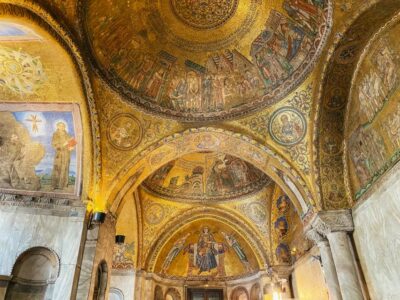
St. Mark’s Basilica Guided Tour & VR History Intro
Read our review →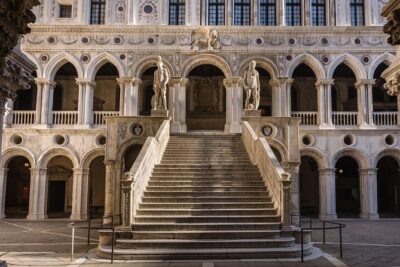
Venice’s Best: Basilica, Doge’s Palace, Gondola & History Gallery
Read our review →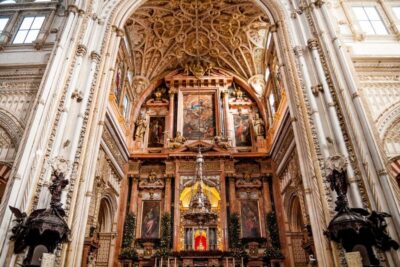
Córdoba: Skip-the-Line Great Mosque-Cathedral History Tour
Read our review →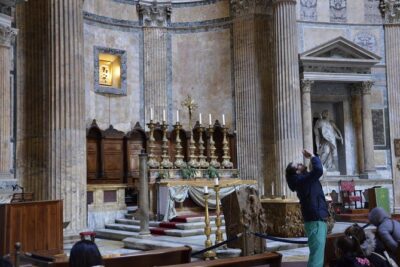
Pantheon Elite Guided Tour – Rome’s Iconic Ancient Temple
Read our review →
Abu Dhabi Grand Mosque, Palace, and Heritage Village
Read our review →
Chicago in a Day: Food, History & Architecture Walking Tour
Read our review →

Colosseum Special Access Tour, with Ancient Temples & Tombs
Read our review →Browse the lists this tour appears in