
Review · NEW YORK (STATE)
New York: Rock and Roll History and Culture Walking Tour
Rock history is hiding in plain sight.
This three-hour walk links Greenwich Village, the East Village, and the West Village with the clubs, apartments, taverns, and street corners tied to New York music legends. I especially like the small group limit of six, which should make it easier to ask questions, and the way the route covers several eras, from Bob Dylan and Jimi Hendrix to the Ramones, Velvet Underground, and Sex Pistols.
The main drawback is the walking. You cover about three miles, or 4.5 kilometers, and the tour is not suitable for people with mobility impairments. It is also conducted in English, so the stories may be harder to follow if you are not comfortable listening to English for three hours.
Key points at a glance
- Start beneath the green Keith Haring statue: Meet outside 101 Astor Place, near the corner of 3rd Avenue, and look for a guide in a white cap.
- Trace several generations of New York music: The route moves from Dylan and Hendrix to punk, glam, art rock, and the downtown club scene.
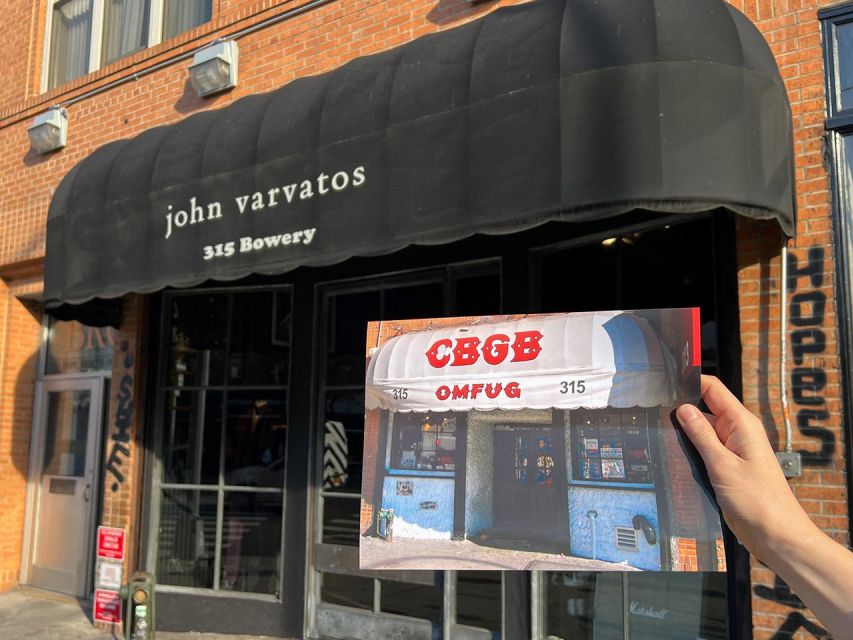
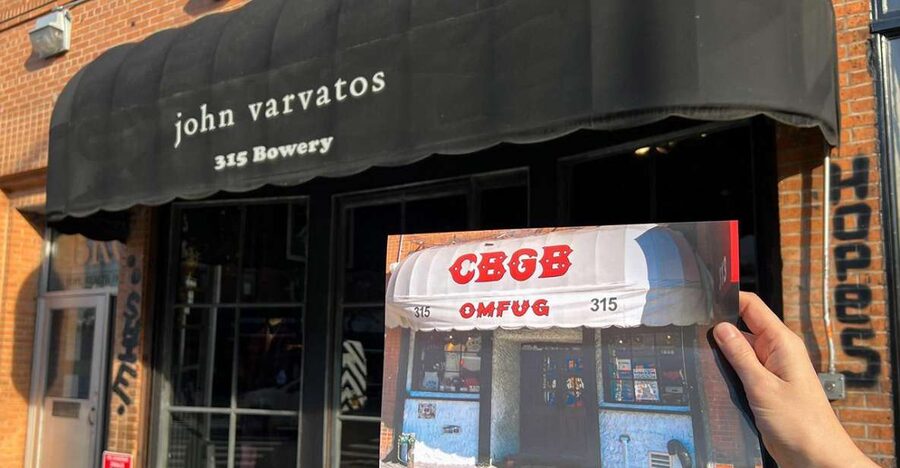
- See the former CBGB site: This is one of the tour’s strongest stops for anyone interested in the Ramones, Talking Heads, and Blondie.
- Connect real streets with famous records: You visit locations linked to album covers by Bob Dylan, the Ramones, and Led Zeppelin.
- Finish at the White Horse Tavern: The final stop adds literary history through Dylan Thomas, after a walk through the West Village.
- Expect a brisk three miles: Wear proper walking shoes and arrive 10 minutes early, since late arrivals cannot join once the group leaves.
Why this New York music walk is different
Many city music tours focus on one musician or one neighborhood. This one takes a wider view. In three hours, you move through the East Village, Greenwich Village, and West Village while following a changing New York sound.
That range is the big attraction. You are not getting only a list of famous clubs. The route connects folk music, blues, punk, art rock, and the downtown scene. I like that structure because it shows how one generation of musicians gave way to another.
The tour also depends on places that may not look dramatic today. A former club site or an apartment building can seem ordinary if you do not know what happened there. A guide gives those addresses meaning by explaining who played there, who lived there, and why the location mattered.
The experience has a five out of five rating from 22 ratings, with repeated praise for the guide’s grasp of New York’s music scene and the interesting stories along the way. One Italian participant described the guide as very prepared and appreciated the answers to questions. Another visitor from New Zealand liked that the route covered a substantial distance. That is useful praise, but it also tells you what kind of activity this is: a serious walking tour rather than a quick photo stop.
More History Walking Tours in New York City
- Hamilton and Washington Revolutionary Walking Tour
★ 5.0 · 182 reviews - #1 Rated NYC Chinatown Food and History Walking Tour with FNYT
★ 5.0 · 171 reviews - Tribeca Architecture And History Walking Tour
★ 5.0 · 141 reviews
Starting at Astor Place and entering the East Village
Meet outside 101 Astor Place, by the green Keith Haring statue of a man near 3rd Avenue. The white cap worn by the guide should help you find the group, but arrive 10 minutes early. The tour starts promptly, and you cannot join after the walk has begun.
The East Village section lasts about 40 minutes. This gives the guide time to establish the setting and explain how the area became linked with musicians, artists, clubs, and creative outsiders. You will want to listen closely here because the first section sets up many of the themes that return later: small venues, crossovers between art and music, and musicians building careers far from the polished concert circuit.
This opening part may be especially good for people who enjoy context. You are not simply heading toward the next address. You are learning how different New York neighborhoods helped shape different forms of music.
CBGB and the birth of New York punk
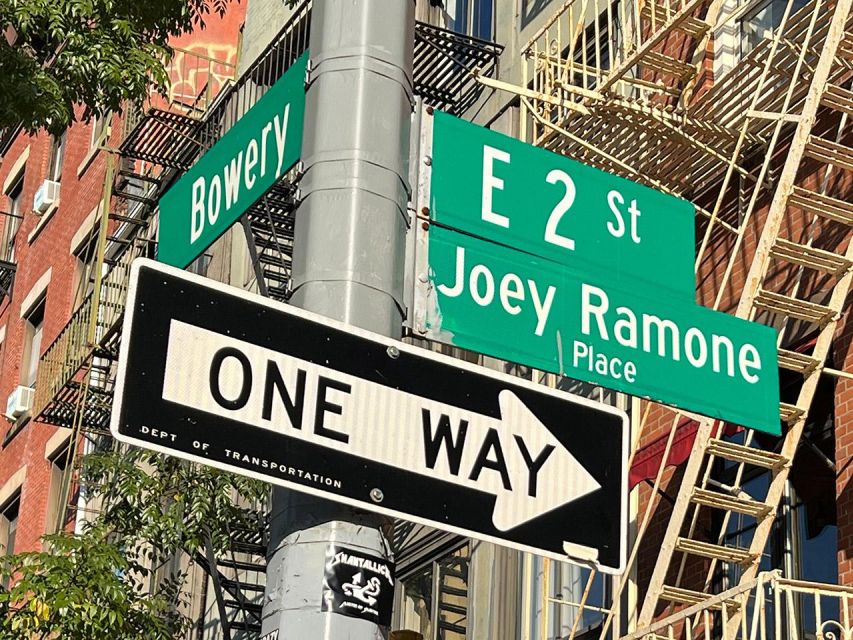
CBGB is one of the essential stops. The club became closely associated with the Ramones, Talking Heads, Blondie, and the early punk scene. The venue itself is no longer operating, so this is a place where the story matters more than the present-day building.
I like this kind of stop because it asks you to picture the room as it once was. CBGB was not famous for grand design or comfort. Its importance came from the bands that played there and the audience that gathered around a new, rougher sound.
Expect about 10 minutes here. That is enough for a focused explanation, though not enough for a long lecture on every band connected with the club. If you already know the punk story, you may want more time. If you are new to it, the guide should give you a useful outline without turning the whole morning into a music-history class.
Greenwich Village, Cafe Wha?, and Bob Dylan
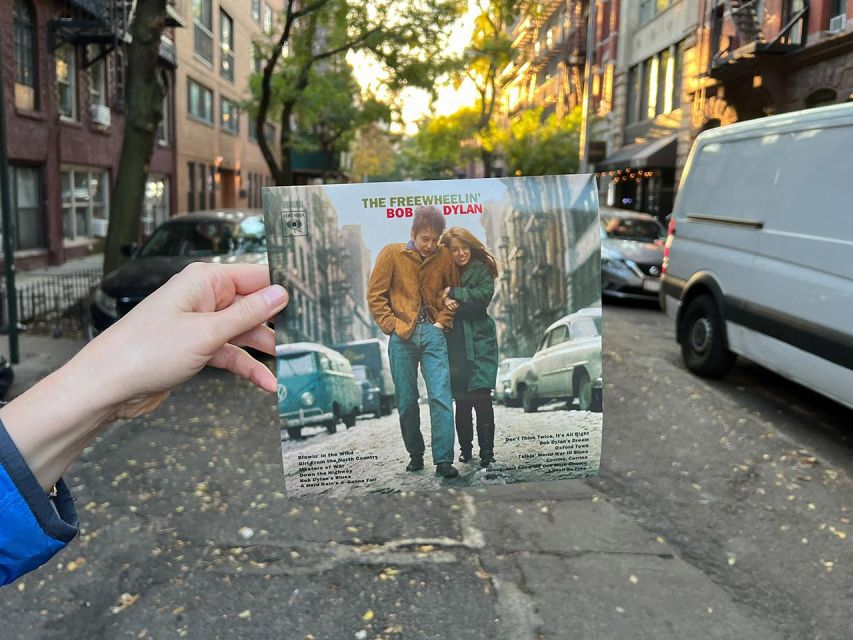
The route then moves into Greenwich Village, with about 30 minutes devoted to the neighborhood. This is where the folk and singer-songwriter side of New York music comes forward.
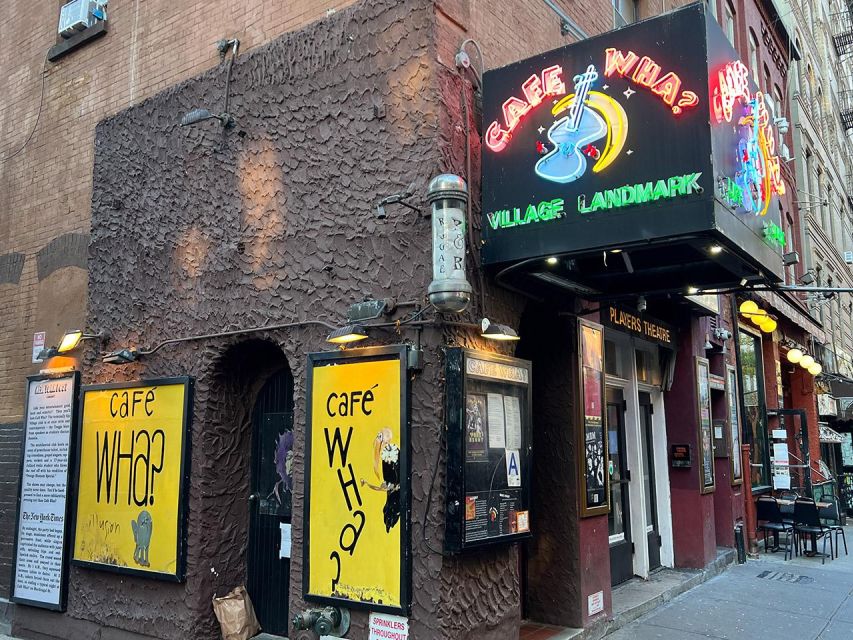
Cafe Wha? receives its own 10-minute stop. It is tied to the early careers of Bob Dylan and Jimi Hendrix, two musicians who took very different paths but both became major figures in modern music. Seeing the place where their careers began gives the tour a personal scale. These were not distant legends when they started. They were young performers trying to get heard in small clubs.
For me, this is one of the most appealing parts of the walk. It connects music history with the practical reality of a working musician: finding a venue, building an audience, and developing a style in front of people.
The guide also points out locations connected with classic album covers, including work associated with Dylan. These are good moments for music fans who enjoy matching an image from a record sleeve with the actual New York setting. Bring your own memory of the covers, since the pleasure comes from recognizing the connection on the street.
More History Walking Tours in the USA
- Lower Manhattan Secrets And History Walking Tour
★ 5.0 · 96 reviews - NYC: History of Slavery & Underground Railroad Walking Tour
★ 4.7 · 87 reviews - NYC: Lower East Side Devour Food & History Walking Tour
★ 4.8 · 19 reviews - History and Hauntings of Salem Guided Walking Tour
★ 5.0 · 14,564 reviews
Washington Square Park and the city’s creative crossroads
Washington Square Park is another short stop, lasting around 10 minutes. The park sits naturally within the Greenwich Village story, giving the walk a public place where music, art, and city life meet.
Do not expect a concert or performance here. The value is in hearing how the park fits into the neighborhood’s creative identity and how nearby streets connect to the artists discussed on the tour.
This stop also provides a natural pause in the route. Three miles of city walking can feel more tiring than the distance suggests, especially when you are standing still to listen. Take the chance to drink water and check your shoes before moving on.
West Village stories, the Fillmore East, and the Pyramid Club

The 40-minute West Village section is the longest part of the route. It broadens the story beyond the early careers of Dylan and Hendrix and brings in the clubs and personalities that shaped later New York music.
The former Fillmore East is a major reference point. Known as the Church of Rock and Roll in the late 1960s, it represents the era when New York became a key stop for major rock acts and devoted music audiences. The nickname alone hints at how seriously concertgoers treated the venue.
The Pyramid Club shifts the story into the 1980s, when music and art mixed in downtown New York. This is an important inclusion because it prevents the tour from treating rock as a single period. The city’s music scene kept changing, and clubs such as this helped performers, artists, and audiences meet in the same rooms.
The route also covers Buddy Holly’s former home, where he recorded his last songs before his death. This is a quieter and more somber story than the club stops. It reminds you that music history is not only about success and celebration. It also includes unfinished work, sudden loss, and the ordinary homes where important songs were made.
Andy Warhol and the Velvet Underground
The Andy Warhol connection comes through the Exploding Plastic Inevitable, the multimedia event associated with Warhol and the Velvet Underground. This part of the walk shows how New York rock could overlap with painting, film, performance, and fashion.
That crossover is one of the tour’s strongest ideas. The Velvet Underground did not fit neatly into a standard rock story, and the Warhol connection helps explain why. You see music as part of a larger downtown art world rather than as an isolated style.
The exact experience at any former site depends on what remains visible today. Do not expect a preserved museum room. Instead, listen for the guide’s explanation of what took place there and why the location became important.
Sid Vicious, John and Yoko, and the darker side of the route
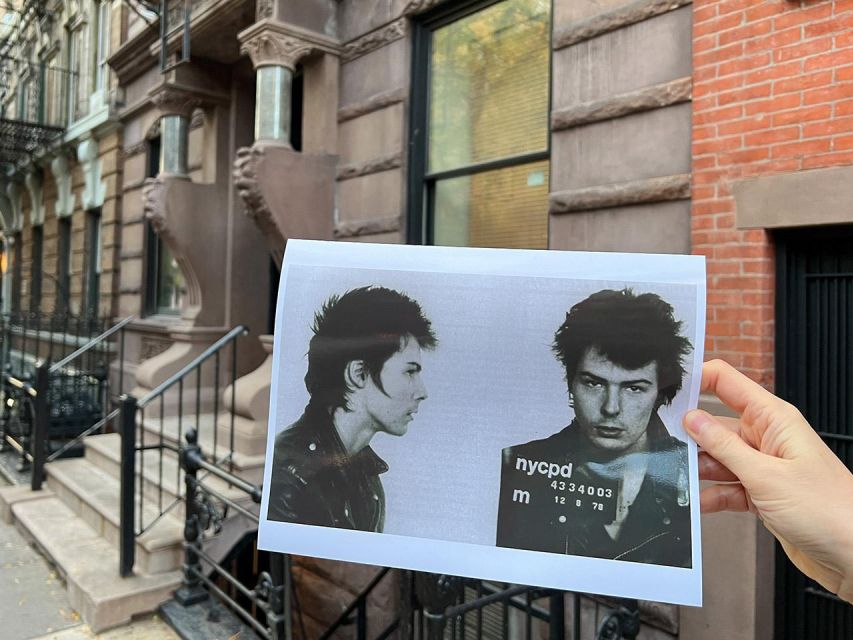
The tour includes the site where Sid Vicious of the Sex Pistols met his death. This is a difficult part of the walk, but it belongs in the story because punk history was marked by excess, tragedy, and short careers.
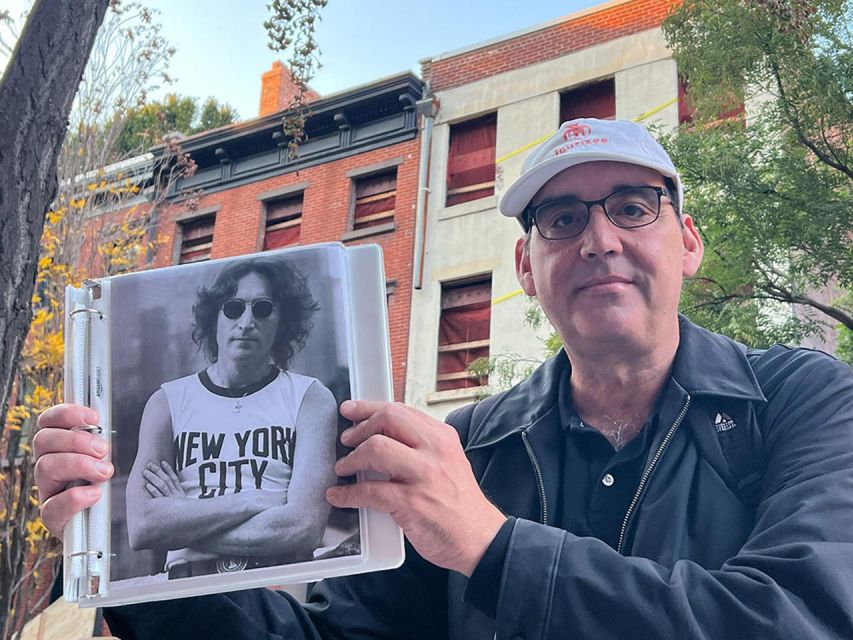
You also visit the modest apartment where John Lennon and Yoko Ono first made their home in New York. That detail offers a contrast with the vast fame they later carried. It is a reminder that even major cultural figures once occupied an ordinary corner of the city.
These stops add emotional weight to the tour. They are not simply places for a quick photograph. They show how music history includes private lives, personal choices, and painful endings. If you prefer a lighthearted sightseeing walk, this section may feel heavy. If you want a fuller account of New York’s music culture, it gives the route more honesty.
Album covers brought back to street level
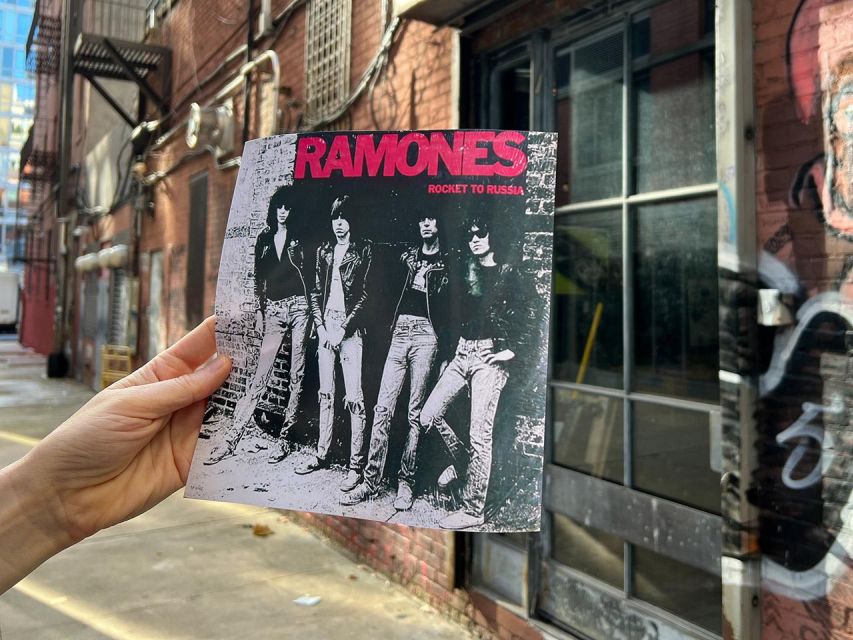
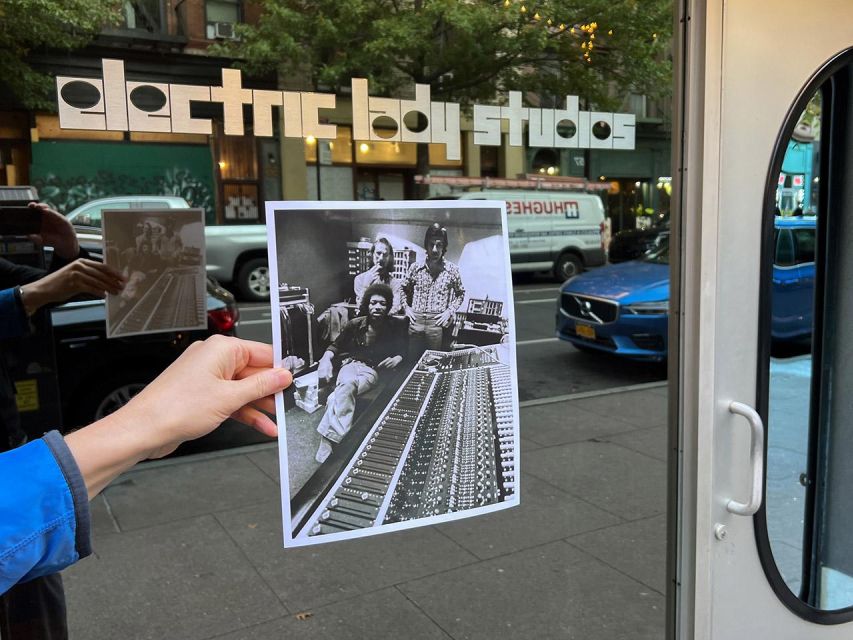
The album-cover stops are a smart feature. Record sleeves often turn New York into a symbol, but seeing the actual locations lets you compare the famous image with the present-day street.
The tour includes cover locations connected with Bob Dylan, the Ramones, and Led Zeppelin. I would consider these stops particularly useful for music fans who like visual details. Before you go, look at those covers again if you can. You will get more from the walk if the images are fresh in your mind.
This part also makes the experience accessible to people who know the music but not every club or performer. You do not need to be an expert on New York punk to enjoy recognizing a familiar cover setting.
Ending at the White Horse Tavern
The walk ends at the White Horse Tavern after about 10 minutes of guided discussion there. The tavern is linked with the poet Dylan Thomas, who famously drank himself to death.
It is a fitting final stop because it brings the tour back to the relationship between art, nightlife, and personal risk. It also gives you a clear endpoint in the West Village rather than returning you to Astor Place.
The experience ends at the tavern, and the information provided does not include a meal, drink, or reserved table. Think of it as the final historical stop, not a dining package. If you want to continue the evening there, any food or drink would be separate.
Is $45 a fair price?
At $45 per person, I consider this a reasonable price for a three-hour guided walk, especially with a maximum of six people. You are paying for the route and the guide’s explanations, not admission to museums or performances.
The small group matters. With only six participants, you should have a better chance to ask about a favorite band or stop without losing the whole group. The experience also depends heavily on the guide, since many locations are historical sites rather than active attractions.
Value is strongest for people who already care about music history or enjoy learning the stories behind city streets. If you only want to see famous buildings, the price may feel less attractive because several stops are about what once happened there.
The high rating, along with repeated praise for the guide’s preparation and explanations, supports the idea that the spoken history is the main product. One English-language participant called it a holiday highlight, while another praised the interesting route through different music periods. Those comments match the tour’s real strength: the connections between places.
Timing, walking comfort, and who should book
Plan on three hours and three miles. Wear comfortable shoes, and do not treat this as a gentle stroll with frequent sitting. You will move between neighborhoods and spend time standing while the guide talks.
The tour is not suitable for people with mobility impairments. It may also be a poor fit if you dislike city walking, need regular rest breaks, or prefer a bus-based sightseeing format.
I would recommend it most strongly to:
- Fans of Bob Dylan, Jimi Hendrix, the Ramones, Blondie, Talking Heads, Led Zeppelin, the Velvet Underground, or the Sex Pistols
- Visitors interested in Greenwich Village and the East Village beyond the usual shopping and restaurant stops
- People who like connecting album images with real New York streets
- Anyone who prefers a small group and a guide-led discussion
- Music fans who want several eras covered in one outing
The tour may be less suitable for children or casual sightseers unless they already have an interest in rock music. The subject matter includes death, addiction, and tragic events, so the tone is not always cheerful.
Weather also matters. The walk may be cancelled in bad weather or if too few people book, with a full refund. You can cancel up to 24 hours ahead for a full refund, and the reserve-now, pay-later option gives you some flexibility when your New York plans are still shifting.
Should you book this rock history walk?
Book it if you want stories, context, and real locations rather than a concert or museum display. The small group, wide range of music eras, and strong guide ratings make $45 a fair deal for a serious three-hour walk.
Skip it if three miles is too much, if you need an accessible route, or if you want to enter preserved club interiors. Many of the places are remembered through explanation, photographs, and association.
For the right person, this is a smart way to hear New York differently. You leave with a map of music in your head, from Cafe Wha? and CBGB to the Fillmore East, the Pyramid Club, and the White Horse Tavern.
FAQ
How long does the New York rock and roll walking tour last?
The tour lasts three hours.
How far does the tour walk?
The route covers about three miles, or 4.5 kilometers.
Where does the tour begin?
It begins outside 101 Astor Place on the corner of 3rd Avenue, beside the green Keith Haring statue of a man.
How can I find the guide?
Look for the guide wearing a white cap.
Where does the tour finish?
The tour finishes at the White Horse Tavern in the West Village.
How many people can join the tour?
The group is limited to six participants.
What language is the tour conducted in?
The live guided tour is conducted in English.
What should I bring?
Bring comfortable shoes suitable for three miles of city walking.
Can the tour be cancelled?
Yes. The tour may be cancelled because of bad weather or too few bookings. In that case, you receive a full refund.
More Local Culture and Traditions Tours in New York City
- Amsterdam Food and Cultural Tour with Tastings
★ 5.0 · 4,315 reviews - Sevilla Food Tour: Tapas, Wine, History & Traditions
★ 5.0 · 3,468 reviews - Tromsø: Reindeer Camp and Sami Cultural Tour with Lunch
★ 4.7 · 3,326 reviews - Half Day Dominican Republic Cultural Tour : Small Group
★ 4.5 · 1,862 reviews
Just added around New York City
- Soul of Harlem: Strivers Row, Apollo Theatre, Gospel History★ 4.6 · 87 reviews
- NYC: Lower East Side Devour Food & History Walking Tour★ 4.8 · 19 reviews
- New York: Mafia and Gangster History Tour in Little Italy★ 4.6 · 79 reviews
- NYC: History of Slavery & Underground Railroad Walking Tour★ 4.7 · 87 reviews
- NYC: Night Out Prohibition History Bar and Speakeasy Tour★ 4.6 · 128 reviews
- New York City: Flatiron Food, History, and Architecture Tour★ 4.8 · 43 reviews
- NYC: New York City History of Stand-Up Comedy Tour★ 4.8 · 21 reviews
- NYC: Central Park Pedicab Tour and Natural History Access★ 4.7 · 52 reviews
Local Culture & Traditions Tours, compared.

Amsterdam Food and Cultural Tour with Tastings
Read our review →
Sevilla Food Tour: Tapas, Wine, History & Traditions
Read our review →
Tromsø: Reindeer Camp and Sami Cultural Tour with Lunch
Read our review →
Half Day Dominican Republic Cultural Tour : Small Group
Read our review →
Ultimate Melbourne Walking Tour: History, Laneways & Culture
Read our review →
Tromsø: Sámi Reindeer Sledding and Sami Cultural Tour
Read our review →
Kyoto Gion: 2-Hour Geisha Culture & History Walking Tour
Read our review →
Marrakech Historical and Cultural Tour – Half Day City Tour
Read our review →Browse the lists this tour appears in