
Review · SEVILLE
Sevilla Food Tour: Tapas, Wine, History & Traditions
Taste Seville one small plate at a time. This 3.5-hour walk links traditional tapas with old streets, local wine, flamenco customs, and the city’s football culture. I like the way it uses several neighborhood bars instead of one fixed restaurant, and I like that the guide stays with you between bites, explaining what you are eating and where you are walking. The main caution is simple: food quality and portion size can vary, and a few people found the drinks small or the dishes too salty.
The tour costs $83.44 per person and accepts no more than 12 people. That is a fair price if you want dinner, four wines, a local guide, and a useful list of places to eat later. It is less appealing if your only goal is the biggest possible meal for the money.
Key points at a glance
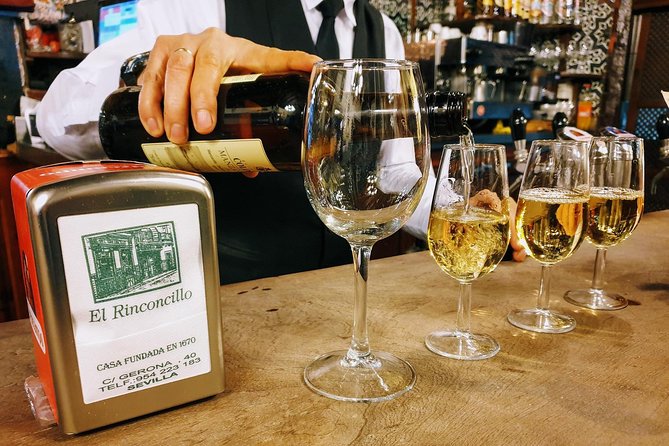
- Four local wines with dinner-sized tastings: Wine is part of the experience, not an afterthought. Beer and soft drinks can replace it.
- A walk through four central Seville districts: You move from Plaza de la Encarnación toward Alfalfa, the old center, Santa Cruz, and Calle Santa María la Blanca.
- Traditional dishes, not just tourist staples: Expect items such as chicharrones, pringá, carrillada, spinach with chickpeas, meatballs, pestiños, and local cheeses.
- A maximum of 12 people: The small group helps the guide manage several bar stops and keep the conversation moving.
- Guides make or break the evening: Alejandro, Pilar, Cate, Dorota, Ella, Jeff, Ferran, Sasha, Stephanie, Agata, Katerina, and Antonietta have all been praised for warmth, humor, and strong local knowledge.
- Important food warning: The tour is not recommended for people with celiac disease because of gluten cross-contamination, and it is not recommended for vegans.
Starting beneath the Setas de Sevilla
Meet at the white 18th-century public fountain in Plaza de la Encarnación, beside Metropol Parasol, known locally as the Setas de Sevilla. This is a useful meeting place because the giant wooden structure is hard to miss and the plaza sits close to public transportation.
The opening point also gives the guide an easy way to frame Seville. You are not simply meeting for a meal. You are starting in one of the city’s most recognizable modern spaces before walking into older neighborhoods and traditional bars.
I suggest arriving with room in your stomach. The food is described as enough for lunch or dinner, and the evening builds slowly. You will have drinks and small dishes at several stops, rather than one large plate at the beginning.
More Local Culture and Traditions Tours in Spain
- Taste of Malaga Tour : Tapas, History and Local Customs
★ 5.0 · 758 reviews - San Sebastian E-bike trour: Basque History and Cultural.
★ 5.0 · 367 reviews - Málaga: 2h Walking Historical Tour–Art, Culture and Legends
★ 4.9 · 341 reviews
Los Soportales and the first taste of Seville
The first food stop is Los Soportales, where the focus is on traditional dishes such as chicharrones and a montadito. Chicharrones are seasoned pork, while a montadito is a small sandwich, often filled with meat or another prepared ingredient. The food is served with Cruzcampo beer from the barrel, or you can choose wine instead.
This is a good opening because it introduces the basic rhythm of a Sevillian tapas evening: order several small items, share them around the table, and keep talking while the drink arrives. The guide can also explain how these foods fit into local eating habits, rather than treating them as isolated menu items.
The portions are not designed to be individual restaurant entrées. That matters. You are paying for a sequence of tastes, stories, and stops. If you arrive expecting a full plate of pork or a large sandwich, you may leave disappointed. If you enjoy sampling several dishes, the format makes more sense.
Flamenco dresses at Plaza del Pan
After the first bite, the group makes a short stop at a flamenco dress shop near Plaza del Pan, also called Plaza Jesús de la Pasión. The visit lasts only about five minutes, but it adds a useful piece of local culture to the food route.
The traditional traje de flamenca is worn during Feria and other local celebrations. Its ruffles, colors, and fitted shape are closely tied to Andalusian identity. You are not signing up for a shopping excursion here. The value is the quick look at a custom you might otherwise see only from a distance.
This pause also breaks up the food stops. A tapas tour can become a blur of plates and glasses, so a short cultural stop helps keep the evening varied.
Alfalfa, tostas, and a small neighborhood tavern
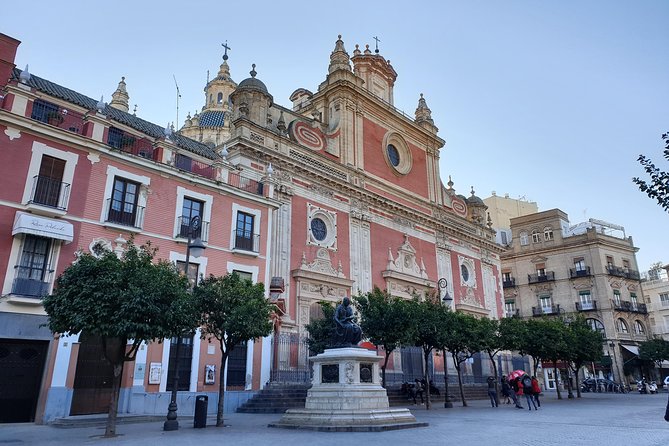
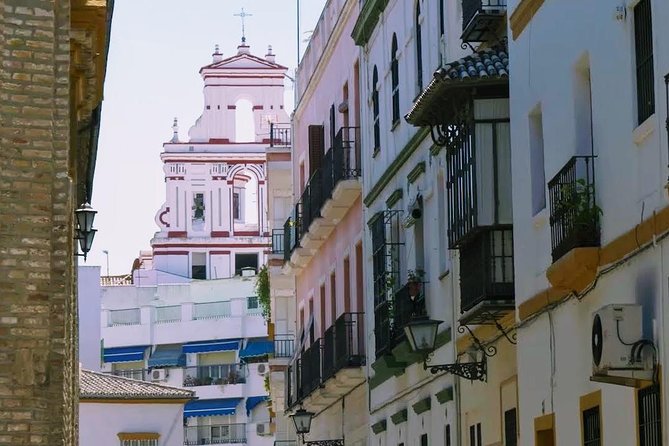
The route continues into Alfalfa, an area with medieval roots and narrow cobbled streets. Today it mixes old buildings, local hangouts, and modern city life. You will stop at a small tavern with a rustic feel and a short menu of tostas, montaditos, and regional wines.
A tosta is bread topped with ingredients such as meat, fish, cheese, or vegetables. It is simple food, but the topping and the local preparation matter. This stop is less about a famous landmark than about sitting in the kind of compact bar where a short menu can signal that the kitchen knows what it is doing.
The listed stop lasts about 40 minutes. That gives you time to taste several items and ask questions. The exact dishes may change with the season and the partner bar’s availability, so do not treat the published food list as a guarantee.
That flexibility is both a strength and a weakness. It lets the company use fresh or suitable dishes and keep the route practical. It also means two departures may not be identical. If you have your heart set on one particular tapa, ask the guide at the start.
More Food and History Tours in Spain:
- Madrid Historic Centre Food Tour with Authentic Tapas & Wines
★ 5.0 · 814 reviews - Madrid Local’s Tapas Tour Dinner with a side of History
★ 5.0 · 530 reviews - Private: Madrid Historic Centre Food Tour with 10+ Authentic
★ 5.0 · 97 reviews - Barcelona Tapas Food Tour, Taverns, History & Local Culture
★ 5.0 · 42 reviews
Walking through Seville’s old center
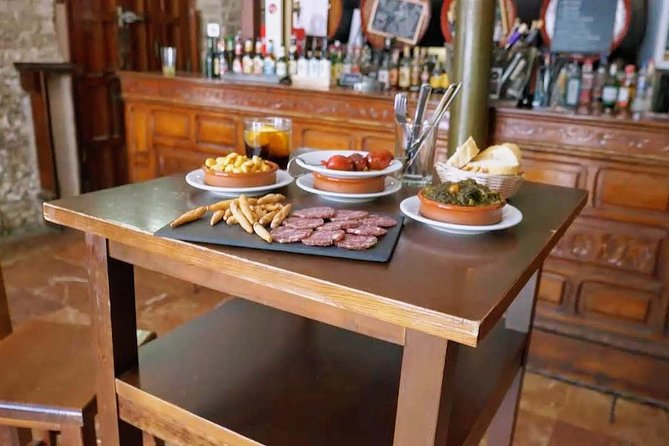
Between food stops, you walk through the Centro Histórico de Sevilla. The walking segments are short, with one listed at about 10 minutes, but they help you understand how the bars connect to the city around them.
This is one of the tour’s best features. You are not being driven from restaurant to restaurant in a private vehicle. You see the streets at walking pace, pass through old squares, and get a basic sense of where Alfalfa, Santa Cruz, and the central districts sit in relation to one another.
The route stays in central Seville and ends within walking distance of many sights and restaurants. Wear shoes that can handle cobbled streets. Private transportation is not included, but none is needed for the stated route.
Grandma-style cooking near Santa María la Blanca
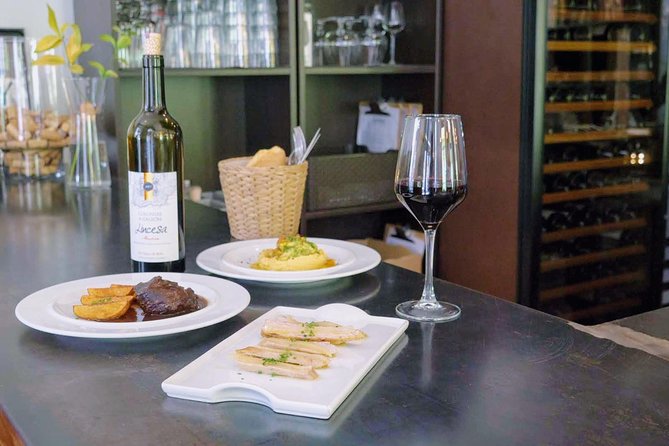
At a classic neighborhood bar near Iglesia de Santa María la Blanca, the food shifts toward slow-cooked and home-style dishes. Two named specialties are carrillada, usually slow-braised pork cheek, and espinacas con garbanzos, spinach cooked with chickpeas.
This may be the most useful stop for people who want to understand everyday Andalusian cooking. The dishes are not flashy. They rely on long cooking, seasoning, and familiar ingredients. They show a side of Seville beyond fried snacks and jamón boards.
The stop also includes conversation about Seville’s football culture and the city’s oldest Betis supporters’ club. You do not need to follow football to enjoy this part. It gives you a look at local identity, neighborhood loyalties, and the subjects that come up over a shared meal.
Again, dishes can change with seasonality and partner availability. The tour may offer comparable local food rather than exactly the same two plates every time.
Santa Cruz, family cooking, and a sweet finish
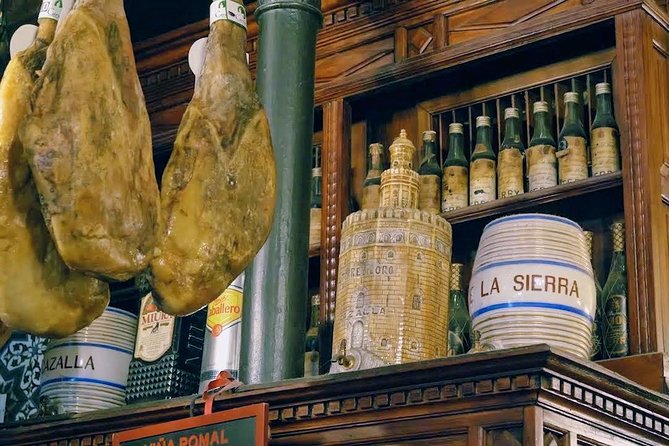
The final stop takes place in Barrio Santa Cruz, the former Jewish quarter and one of Seville’s most atmospheric central areas. The group visits a family-owned tavern in a traditional Sevillian home with an interior patio.
The setting matters. A patio gives you a sense of the old domestic architecture of Seville, where open courtyards helped bring light and air into the house. It is a pleasant place to slow down after several stops on foot.
Here, the planned tastings include albóndigas, or meatballs, local pestiños, and a glass of PX. Pestiños are sweet pastries associated with Andalusian and festive cooking. PX, short for Pedro Ximénez, is a sweet fortified wine that works naturally as a dessert drink.
The final hour is the longest stop, which is sensible. You have time to finish the food, talk with the group, and ask the guide for suggestions. Several guides have sent a follow-up list of the bars, dishes, and drinks served. That is especially useful if you want to return to a favorite stop later.
What you are likely to eat and drink
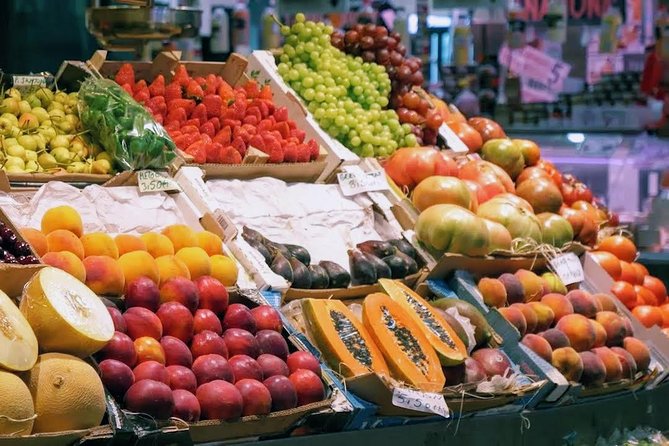
The route is built around local food, but the precise menu can change. Named examples include:
- Chicharrones from Cádiz
- A pringá sandwich
- Red tuna with almonds
- Marinated cazón fish
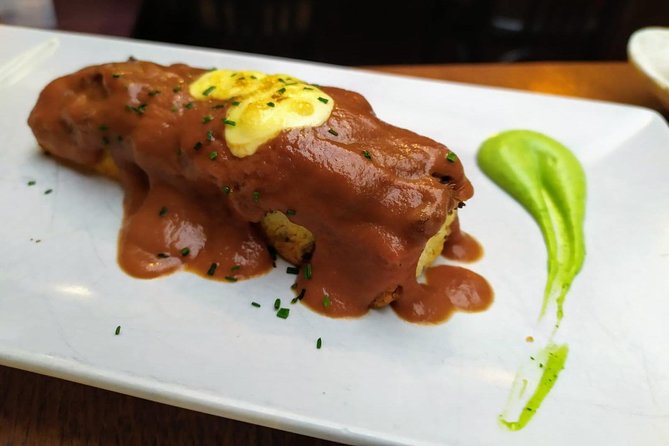
- Spanish omelet with whisky sauce
- Salchichón and other cold cuts
- Cheese from Ronda
- Carrillada
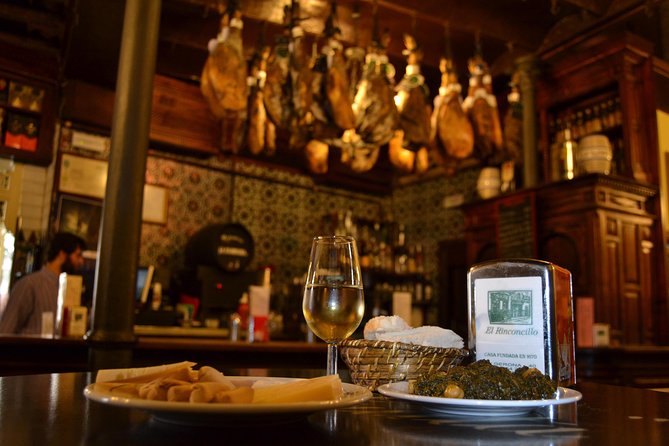
- Spinach with chickpeas
- Meatballs with vegetables
- Pestiños
That is a wide range for one evening. You may encounter pork, fish, cheese, eggs, chickpeas, bread, and sweets. The style is traditional and generous in variety, but not necessarily light.
Four wines are included, with beer or soft drinks available instead. Some published tour comments refer to five glasses, so the exact drink sequence may vary, but the stated inclusion is four wines. You can ask for a wine choice at the first stop rather than automatically accepting beer.
The strongest food experience will likely come from approaching the meal with curiosity. If you prefer delicate cooking, large portions, or modern presentation, some plates may feel ordinary. One person found the food mediocre and overly salty, while many others praised the selection. That difference tells you something useful: this is a traditional tapas evening, not a fine-dining tasting menu.
The guides are the main strength
The clearest pattern across the experience is the importance of the guide. Alejandro is praised for linking food with Seville’s past. Pilar helped one person discover a new appreciation for sherry. Cate added flamenco knowledge and gave a recommendation for a less obvious flamenco venue afterward.
Dorota is praised for her warmth and broad understanding of Seville’s food, wine, culture, and history. Ella is described as open to questions and well organized. Jeff is repeatedly praised for considerate hosting, food knowledge, and practical suggestions for the rest of a stay.
Other highly praised guides include Ferran, Stephanie, Sasha, Agata, Katerina, and Antonietta. Their shared strength is not simply reciting facts. They keep the group talking, explain local customs, and help you feel more comfortable ordering in Seville.
That personal element makes the tour somewhat unpredictable. A strong guide can turn an average dish into an interesting story. A less engaging guide would leave you judging the experience mainly by the food. The overall rating of 4.9 from 3,468 reviews and the 98 percent recommendation rate suggest that guide quality is usually a major asset.
Is $83.44 a fair price?
At $83.44, the cost includes enough food for lunch or dinner, four wines or alternate drinks, a local guide, and a dining guide with suggestions for bars and restaurants.
I consider that reasonable if you value orientation and conversation as much as the food. You are paying for four stops, a walking route, reserved attention from a guide, and a meal that unfolds over three and a half hours. You also avoid spending your first evening guessing which bars are worth entering.
The value is weaker if you measure everything by portion size. Tapas are small by design, and the drinks may not be large pours. A person seeking the cheapest dinner in Seville can eat for less.
The tour is also a good choice early in your stay. Stephanie, Jeff, and other guides have offered advice about where to eat and what to do afterward. The route helps you get your bearings, and the dining list can stretch the value beyond one evening.
Who should book this experience?
I would choose this tour if you want to combine dinner with a walking introduction to Seville. It suits first-time visitors, couples, solo visitors who want company, and small groups who enjoy trying several foods rather than ordering one meal.
It is especially useful if you are unsure about Spanish menus. The guide can explain dishes, drinks, local customs, and the difference between a quick bar stop and a longer meal.
Vegetarians should contact the provider before booking and explain their needs. One vegetarian had a good experience with adapted dishes, but the tour is not recommended for vegans. Anyone with celiac disease should avoid it because of the risk of gluten cross-contamination.
The maximum group size is 12, which keeps the experience more personal than a large coach excursion. Still, you should expect to eat with people you do not know. That social element is part of the format.
Practical details before you go
The tour lasts approximately 3 hours and 30 minutes. It begins at Fuente Pública Siglo XVIII in Plaza de la Encarnación and ends on Calle Santa María la Blanca in Santa Cruz.
You will walk between stops, so comfortable shoes are sensible. The tour is near public transportation, and most people can participate. Private transportation is not part of the experience.
Confirmation arrives when you book. Free cancellation is available until 24 hours before the start time. Within 24 hours, you do not receive a refund, and changes are not accepted. The tour requires a minimum number of people, so if the company cancels for that reason, you are offered another date or a full refund.
Should you book it?
Book this tour if you want a social, food-focused introduction to Seville with stories attached to every stop. The best reasons are the small group, the range of traditional dishes, the four drinks, and the chance to walk through Alfalfa and Santa Cruz while a local guide explains what you are seeing.
Skip it if you need strict dietary control, want vegan food, dislike shared meals, or judge a dinner mainly by portion size. The dishes can vary, and not every plate will suit every palate.
For most first visits, I would schedule it near the beginning of your stay. You will eat well enough, learn how Seville’s tapas culture works, and leave with practical ideas for the rest of your time in the city.
FAQ
How long does the Seville food tour last?
The experience lasts approximately 3 hours and 30 minutes.
What is the price?
The listed price is $83.44 per person.
How many people can join the tour?
The tour has a maximum of 12 travelers.
Where does the tour begin?
It begins at the white 18th-century public fountain in Plaza de la Encarnación, beside Metropol Parasol, also called the Setas de Sevilla.
Where does the tour end?
It ends on Calle Santa María la Blanca in Seville’s Casco Antiguo.
How many wines are included?
Four wines are included. Beer or soft drinks can be used instead.
Is enough food provided for a full meal?
The included tastings are described as enough for lunch or dinner.
Is the tour suitable for vegans or people with celiac disease?
The tour is not recommended for vegans. It is also not recommended for people with celiac disease because of the risk of gluten cross-contamination. You should report dietary restrictions when booking.
Can I cancel for a full refund?
Yes. You must cancel at least 24 hours before the experience starts to receive a full refund. Cancellations within 24 hours are not refunded.
More Food Tours in Spain
- Madrid Tapas & Taverns Small Group Food & History Tour
★ 5.0 · 2,664 reviews - Savor Spain: Food, Wine, History & Culture Small Group Tour in Old Barcelona
★ 5.0 · 140 reviews - Valencia’s Greatest Food, History & Culture Tour
★ 5.0 · 129 reviews - Barcelona: La Boqueria Food, Wine & History Walking Tour
★ 5.0 · 126 reviews
More Wine Tours in Spain
- Barcelona: Tapas Walking Tour with Food, Wine, and History
★ 4.8 · 4,261 reviews - Valencia Old Town Tour with Wine & Tapas in 11th Century Historic Monument
★ 5.0 · 3,234 reviews - Barcelona Tapas Walking Tour: Food, Wine & History
★ 4.5 · 1,928 reviews - Ultimate Seville Tapas, Wine & History Small Group Tour
★ 5.0 · 1,766 reviews
Just added around Spain
- Jerez de la Frontera History and Art Walking Tour★ 4.5 · 49 reviews
- 2 Hours Tour around Cádiz: History, anecdotes and curiosities★ 5.0 · 89 reviews
- Bilbao Historical Small Group Tour★ 4.5 · 159 reviews
- Barcelona Jewish & Gothic Tour★ 5.0 · 18 reviews
- Andorra Original History and Sightseeing Tour (Private, Pickup)★ 5.0 · 350 reviews
- History Museum of Catalonia & Rooftop Access Ticket★ 4.5 · 43 reviews
- Sip, Sites & Bites Barcelona Food, Drinks & History Tour★ 4.5 · 95 reviews
- Barcelona Tapas Food Tour, Taverns, History & Local Culture★ 5.0 · 42 reviews
Food & History Tours, compared.
Dublin Historical Centre Food Tour with 8 Food Tastings & Drinks
Read our review →
The Great Indian Food Tour: Old Delhi Food and Heritage Walk
Read our review →

Boston Pizza Lovers Food and History Walking Food Tour
Read our review →Browse the lists this tour appears in