
Review · NEW YORK (STATE)
New York: Mafia and Gangster History Tour in Little Italy
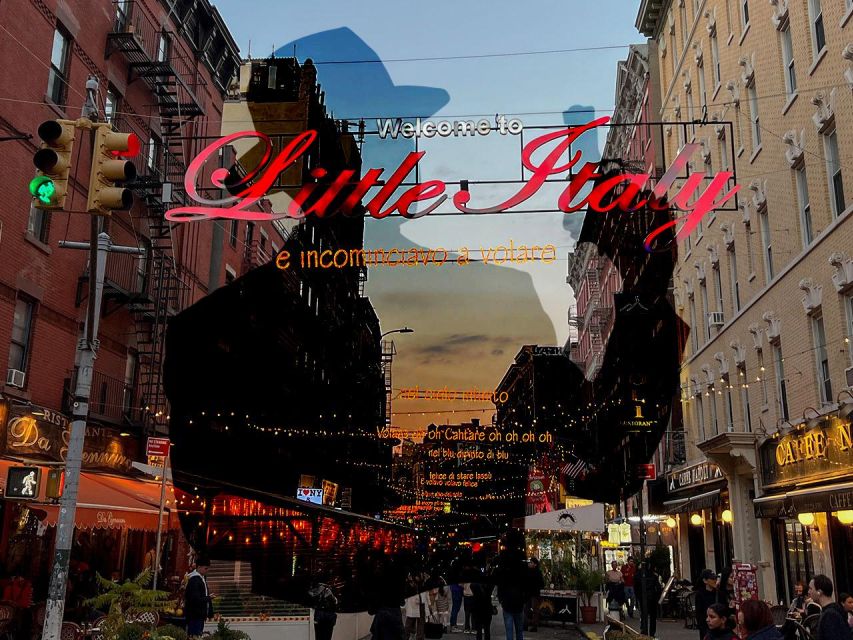
Crime stories live on these streets. This two-hour walk through Little Italy connects Lucky Luciano, John Gotti, and Crazy Joey Gallo with the places where their stories unfolded. I like the clear historical arc, from early Black Hand gangs to organized crime during Prohibition and beyond. I also like the small group size, capped at 10 people, which gives the guide room to answer questions. The main drawback is that this is an outdoor walking tour, and the pace or storytelling may be harder to follow in cold, wet, or noisy weather.
The tour costs $40 and covers about one mile. That is a fair price for two hours with a live guide, especially when the guide brings photographs and newspaper articles to show how the neighborhood once looked. You need comfortable shoes, and you need to arrive early because late arrivals cannot join once the walk begins.
Key points at a glance
- Ravenite Social Club: See the former headquarters linked with John Gotti and the Gambino crime family.
- Umberto’s Clam House: Visit the restaurant connected with the 1972 killing of Crazy Joey Gallo.
- A full crime timeline: Follow the story from Black Hand extortion through Prohibition, Luciano, the Five Families, and Gotti.
- Police and reformers included: Learn about Lieutenant Giuseppe Petrosino and Frank Serpico, not just the gangsters.
- Small-group format: No more than 10 people, with guides such as Tom, Thomas, Tim, and Paulie praised for strong presentation.
- Film connections: The route can include places linked with The Godfather and The Sopranos, depending on the tour discussion.
Why this Little Italy walk is more than a mobster photo stop
Many crime-themed tours simply string together famous names. This one has a more useful structure. It begins with the rough early years of New York’s underworld, explains how Prohibition changed the money, and then shows how Lucky Luciano helped turn rival gangs into a more organized system.
That structure matters because it keeps the tour from becoming a collection of disconnected shooting stories. You hear about the machinery behind the crime: protection rackets, control of liquor, family alliances, police pressure, and political influence.
I also appreciate that the tour gives time to law enforcement figures. Lieutenant Petrosino represents an early attempt to confront organized crime through determined police work. Frank Serpico brings the story into the later period, when police corruption became part of the problem. The result is a more balanced account than a tour focused only on glamorous gangsters.
The subject is dark, but the tone appears to be lively and approachable. Tom receives the most praise, with several people describing him as friendly, funny, prepared, and deeply engaged with the material. His thick binder of photographs and newspaper clippings is especially useful. Old buildings change, storefronts disappear, and streets get cleaned up. Images help you see what is no longer there.
A few more history tours around New York City worth a look
- NYC: Speakeasy Drinks and Prohibition History Tour
★ 4.7 · 474 reviews - #1 Rated NYC Chinatown Food and History Walking Tour with FNYT
★ 5.0 · 171 reviews - Tribeca Architecture And History Walking Tour
★ 5.0 · 141 reviews
Meeting at Spring and Mulberry Streets
The tour starts on the sidewalk at the corner of Spring and Mulberry Streets, beside DaSalvio Playground at 44 Spring Street. Look for the guide wearing a white cap.
Arrive 10 minutes before the start. This is not a casual walk where you can catch up at the next stop. The tour begins promptly, and once it is underway, late arrivals cannot join.
That rule is worth taking seriously in New York. Little Italy has busy streets, many entrances, and plenty of distractions. Give yourself time to find the corner without rushing. Since the tour ends back at 44 Spring Street, you can plan a meal or another downtown activity afterward.
The walking distance is only about one mile, but the experience lasts two hours because the stops are built around storytelling. You are not racing from one address to another. Still, the route involves standing outdoors, crossing streets, and remaining on your feet. The activity is not recommended for people with mobility impairments.
Early Black Hand gangs and the roots of organized crime
The opening section looks at the violent methods used by early Black Hand gangs. These groups relied on threats, extortion, and intimidation. The point is not simply to introduce colorful characters. It is to show how criminal networks took shape in immigrant neighborhoods and how fear could become a business model.
This part should help you separate fact from movie shorthand. The word mafia often gets applied too loosely, but the tour traces how earlier gangs developed into larger and more disciplined crime organizations.
You will also hear about the battles for control of the liquor trade during Prohibition. That period created enormous profits for people willing to risk arrest and violence. Competition intensified, and control of alcohol helped push street gangs toward more formal syndicates.
For me, this is one of the most valuable parts of the route because it explains why certain figures gained power. The tour is not only about who shot whom. It is about money, organization, and the pressures that changed New York crime.
Joe Masseria and the fight for control
The story then moves to Joe Masseria, known as Joe the Boss. He became an important figure during the violent struggle for control of New York’s criminal operations.
This section gives the tour a sense of rising tension. The old style of leadership was often tied to personal loyalty, neighborhood influence, and force. But the criminal world was changing. Larger operations needed agreements, shared rules, and ways to prevent constant internal warfare from damaging profits.
You should expect the guide to connect Masseria’s story with the later rise of Lucky Luciano. The value here is the transition. The tour shows that organized crime did not appear fully formed. It grew through conflict, alliances, and attempts to make violence more controlled and profitable.
Same place, a different slice of the past:
- Hamilton and Washington Revolutionary Walking Tour
★ 5.0 · 182 reviews - NYC: Night Out Prohibition History Bar and Speakeasy Tour
★ 4.6 · 128 reviews - Lower Manhattan Secrets And History Walking Tour
★ 5.0 · 96 reviews - Soul of Harlem: Strivers Row, Apollo Theatre, Gospel History
★ 4.6 · 87 reviews
Lucky Luciano and the Commission of Five Families
Lucky Luciano is the central architect in this part of the tour. You learn how he helped reshape organized crime through the Commission of Five Families.
The important idea is organization. Luciano recognized that rival groups could make more money by cooperating than by fighting without end. The Five Families system created a structure for sharing power and handling disputes. It helped turn separate criminal groups into a more coordinated network.
The guide also explains Luciano’s unusual deal with the United States government during World War Two. That episode adds a surprising turn to the story and shows how the line between criminal networks and official power could become complicated during wartime.
This is the point where the tour moves beyond neighborhood folklore. You are looking at a major shift in how organized crime operated. If your interest comes mainly from films and television, this section can correct some of the simplified versions you have seen on screen.
Ravenite Social Club and John Gotti
The former Ravenite Social Club is one of the route’s headline stops. This was associated with John Gotti, the Gambino crime family boss known as the Dapper Don.
The name and image are familiar, but the location gives the story a physical anchor. You can stand where Gotti held court and hear about his rise and fall in the context of the neighborhood around him.
A good guide should make clear that Gotti’s public style was part of his power. His clothing, confidence, and media attention helped create a larger public persona. That attention also brought intense scrutiny. The story becomes a lesson in how visibility can help a crime boss project authority while making him easier for law enforcement and the press to follow.
The Ravenite stop lasts about 15 minutes. That is long enough for a focused explanation without making the entire tour feel stuck at one address. If you want interior access or a museum-style display, this is not that kind of stop. You see the location from the walking route and learn its importance through the guide.
Lieutenant Petrosino Square and the police response
Lieutenant Petrosino Square shifts attention from gangsters to one of the early figures who fought organized crime. Lieutenant Giuseppe Petrosino became known for his work against criminal networks.
This stop is important because it places police efforts inside the same neighborhood where criminal groups operated. You get a clearer sense of the pressure on investigators and the risks involved in confronting people who used threats and violence.
The stop is scheduled for about 10 minutes. It is short, but it breaks up the gangster-heavy story and adds a civic side to the tour. I value that balance. A crime tour should not treat criminals as folk heroes, and this section helps keep the focus on the damage caused by corruption and violence.
The Police Building and Frank Serpico
The Police Building provides another chance to examine the role of law enforcement. The tour includes Frank Serpico, who risked his life to expose police corruption.
Serpico’s story adds a different kind of danger. The threat was not only from organized crime outside the department. It also involved corruption within the police system. That makes this stop a useful companion to the Petrosino section.
Together, these two stops show that fighting organized crime required more than arrests. Investigators had to confront criminals, compromised systems, and people who benefited from looking the other way.
The Police Building stop lasts around 10 minutes. Do not expect a long indoor visit based on the information available. The value comes from the guide’s explanation of the site and the people connected to it.
Umberto’s Clam House and Crazy Joey Gallo
The final major stop is Umberto’s Clam House, linked with the killing of mobster Crazy Joey Gallo. This is one of the tour’s most direct connections to a violent event.
The location is memorable because it is an ordinary restaurant setting tied to a major underworld story. That contrast can make the history feel more immediate. You are not looking at a battlefield or a dramatic monument. You are considering how violence entered an everyday public place.
The tour also covers the death of Sally Bugs Briguglio. These final crime scenes bring the earlier themes together: rivalries, shifting alliances, and the personal danger behind organized crime’s public image.
The stop lasts about 10 minutes. The material is grim, so this may not suit anyone looking for a light sightseeing walk. The tour deals with murders and criminal violence directly, though the available information suggests the emphasis is on historical explanation rather than shock value.
The Godfather, The Sopranos, and Five Points
Film fans get an extra layer. The tour may include locations connected with The Godfather and one location from The Sopranos. These references are optional additions to the main history walk, so the exact amount of screen history may depend on the guide and timing.
Tom also took one group onward to Five Points and explained its earlier history. That suggests some guides may be willing to add context when time and circumstances allow, but you should not treat an extra stop as guaranteed.
The film connections are best seen as seasoning, not the main course. The strongest reason to book this tour is the historical route through Little Italy. If your main goal is movie-location photography, confirm what the guide plans to cover at the start.
How the guides shape the experience
The guide makes a major difference on a walking tour built around names, dates, and old photographs. Tom is repeatedly praised for being prepared, friendly, funny, and passionate about the subject. One person specifically noted that his photographs and newspaper articles helped bring former buildings and events back to life.
Other guide names include Thomas, Tim, and Paulie. The available comments describe the guides as engaging and well prepared, though one person suggested that the guide speak more slowly. That is a useful point if English is not your first language or if you prefer time to absorb detailed explanations.
The tour is conducted in English. With a maximum of 10 participants, you have a better chance of hearing the guide clearly than on a large group walk. A small group can also make it easier to ask questions about particular gangsters, police investigations, or film references.
Is $40 a fair price?
At $40 per person, I consider this good value if you want guided context rather than simply walking through Little Italy on your own.
You are paying for two hours, a live English-speaking guide, a planned one-mile route, historical photographs, and access to a connected story that would be difficult to assemble from plaques or street signs. The small group limit improves the value because the experience is less likely to feel like a crowd following a flag.
The price is less appealing if you only want to see famous addresses and take photographs. Several locations are viewed from the street, and the tour does not include food, drinks, museum entry, or transportation.
The schedule is also weather-dependent. The tour may be cancelled because of bad weather or too few bookings, with a full refund. You can cancel up to 24 hours in advance for a full refund, and the reserve-now-pay-later option gives you some flexibility when planning a New York itinerary.
Who should book this tour?
I would recommend it to you if you enjoy American crime history, New York neighborhoods, investigative stories, or the real events behind gangster films. You do not need to be a mafia expert. The tour begins with basic background and builds toward Luciano and Gotti.
It also suits visitors who want more than a standard Little Italy food stop. The neighborhood becomes a setting for political pressure, police work, immigration-era gangs, and the growth of organized crime.
You may want to skip it if you dislike stories about murder, extortion, and corruption. It is also a poor fit if you need step-free sightseeing or want to avoid standing outdoors. Comfortable shoes are essential, and cold weather can make the two hours feel longer.
FAQ
Where does the tour start?
It starts on the sidewalk at the corner of Spring and Mulberry Streets, next to DaSalvio Playground at 44 Spring Street.
Where does the tour finish?
The walk ends back at 44 Spring Street.
How long is the tour?
The tour lasts two hours and covers about one mile, or 1.5 kilometers.
How many people can join?
The group is limited to a maximum of 10 participants.
What language is the tour conducted in?
The live guided tour is conducted in English.
What should I bring?
Bring comfortable shoes because the experience involves walking and standing outdoors.
Can I bring a pet?
Pets are not allowed, although assistance dogs are permitted.
What happens if the weather is bad?
The tour may be cancelled because of inclement weather or too few bookings. If that happens, you receive a full refund.
Should you book the Little Italy mafia tour?
Book it if you want a focused, story-led look at New York crime history rather than a quick walk past famous addresses. The strongest features are the clear timeline, small group, old photographs, and guides such as Tom who bring serious preparation and personal enthusiasm to the subject.
At $40, it offers solid value for two hours. Arrive early, wear good shoes, and expect an outdoor tour with grim subject matter. If that sounds like your kind of New York history, this is an easy recommendation.
Just added around New York City
- Soul of Harlem: Strivers Row, Apollo Theatre, Gospel History★ 4.6 · 87 reviews
- NYC: Lower East Side Devour Food & History Walking Tour★ 4.8 · 19 reviews
- New York: Rock and Roll History and Culture Walking Tour★ 5.0 · 22 reviews
- NYC: History of Slavery & Underground Railroad Walking Tour★ 4.7 · 87 reviews
- NYC: Night Out Prohibition History Bar and Speakeasy Tour★ 4.6 · 128 reviews
- New York City: Flatiron Food, History, and Architecture Tour★ 4.8 · 43 reviews
- NYC: New York City History of Stand-Up Comedy Tour★ 4.8 · 21 reviews
- NYC: Central Park Pedicab Tour and Natural History Access★ 4.7 · 52 reviews
New York City History Tours, compared.

NYC: Speakeasy Drinks and Prohibition History Tour
Read our review →
Hamilton and Washington Revolutionary Walking Tour
Read our review →
#1 Rated NYC Chinatown Food and History Walking Tour with FNYT
Read our review →
NYC: Night Out Prohibition History Bar and Speakeasy Tour
Read our review →
Lower Manhattan Secrets And History Walking Tour
Read our review →
NYC: History of Slavery & Underground Railroad Walking Tour
Read our review →
Soul of Harlem: Strivers Row, Apollo Theatre, Gospel History
Read our review →Browse the lists this tour appears in