

Review · NEW YORK CITY
The Story Behind NY’s Evolving Skyline An Architectural Journey Through History
Look up, and New York starts talking. This nearly two-hour video tour by Kitt Garrett traces the city from its Dutch beginnings to its skyscraper age, explaining how architecture, zoning, transportation, and waterfront development shaped the streets you see today. I especially like the clear architectural timeline and the downloadable document, which lets you continue exploring after the presentation ends. The main drawback is that this is not a live walking tour, so you need to supply your own route, pace, and street-level sightseeing.
I also like the format for its flexibility. You can watch it before a trip, use it as a refresher while living in New York, or follow its addresses and neighborhoods later with your phone in hand. At $25 per group of up to 15 people, it offers good value for families and small groups, but solo visitors looking only for a short, casual walk may prefer a traditional in-person tour.
Key points to know before you buy
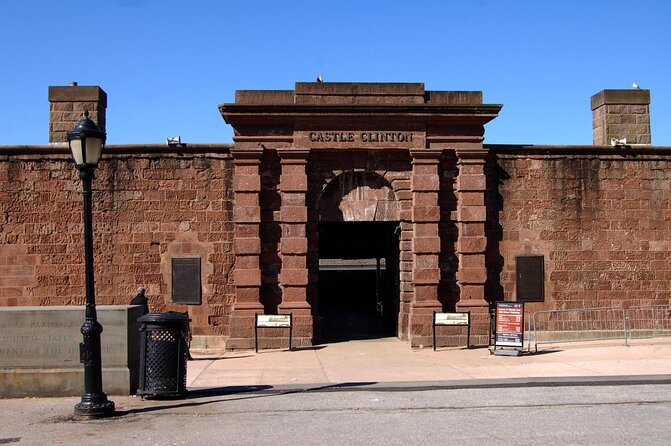
- The story begins at Castle Clinton: The tour uses Lower Manhattan as the starting point for New York’s growth from a Dutch settlement and trading port.
- Architecture is treated as evidence: You learn how styles such as Georgian, Federal, Greek Revival, Gothic Revival, Romanesque Revival, Italianate, and Neo-Classical reflect different periods.
- Kitt Garrett leads the presentation: Her methodical, carefully ordered narration connects buildings to the people, events, and civic decisions behind them.
- The route reaches Hudson Yards: The endpoint at 20 Hudson Yards brings the story into the present, with new construction, public spaces, retail, and waterfront redevelopment.
- The tour works before or after a visit: Watch it from anywhere, then use the downloadable document to find buildings and neighborhoods in person.
- It is private for your group: One purchase covers up to 15 people, and the activity is designed for individual group viewing rather than a shared live audience.
Why New York’s buildings make such good history lessons
New York can feel like a collection of unrelated streets and towers. This presentation gives you a way to read the city as a sequence of decisions.
A building’s facade can point to the period when it was built. Its materials can reveal what builders could afford, what technology was available, and what image a neighborhood wanted to project. A tower’s height may reflect zoning rules, land prices, and the value of sunlight or views. A waterfront park may tell you that an industrial district is being given a new public purpose.
That approach is the strongest feature here. Garrett does not treat architecture as a parade of pretty facades. She connects it to commerce, immigration, public transportation, urban planning, and the changing needs of people who live and work in the city.
The presentation also asks you to notice details. Instead of passing a building and seeing only its age, you begin looking for architectural clues: the shape of windows, the arrangement of entrances, the choice of stone or brick, and the decorative language around the roofline. This is useful far beyond the tour itself. Once you learn the basic vocabulary, an ordinary walk through Manhattan becomes more rewarding.
More Architecture and Landmark Tours in New York City:
- Tribeca Architecture And History Walking Tour
★ 5.0 · 141 reviews - New York City: Flatiron Food, History, and Architecture Tour
★ 4.8 · 43 reviews - Venice: St. Mark’s Basilica Guided Tour & VR History Intro
★ 3.9 · 4,880 reviews
Castle Clinton gives the story a practical starting point

The tour begins at Castle Clinton National Monument in Lower Manhattan. This is a fitting launch point because the harbor sits at the center of New York’s story. From the city’s early days as a Dutch settlement, trade and shipping helped determine where people built, worked, and lived.
The opening section places New York’s development within a long time frame. You move through roughly 400 years of architectural change, from early Georgian and Federal influences to the many revival styles that shaped the city before the modern skyscraper took over.
That broad sweep is useful, but it also means the presentation covers a great deal in under two hours. If you want a single building examined floor by floor, this is not the right format. You get a citywide survey, with enough detail to point you toward further exploration.
Castle Clinton also establishes an important theme: New York has always changed because of its relationship with the water. The harbor supported trade and commerce, while later generations rethought the waterfront as a place for recreation and public use. The city’s edge is not fixed. It reflects changing economic needs and civic priorities.
The architectural styles are explained as clues, not labels
A list of architectural styles can sound like a memorization exercise. Garrett makes the labels useful by placing them within New York’s growth.
You hear about Georgian, Federal, Greek Revival, Romanesque Revival, Italianate, Renaissance Revival, Gothic Revival, Queen Anne, Neo-Classical, and modern architecture. The real value is not simply knowing the names. It is learning how to spot differences and connect those differences to the period in which a building appeared.
For example, the word revival tells you that architects were borrowing from earlier traditions. That choice was not random. It could express civic seriousness, cultural confidence, wealth, or a desire to connect a new building with an admired past.
The presentation also pays attention to building materials. That matters in New York, where brick, stone, steel, and glass tell different stories about cost, technology, fire safety, and height. You come away with a better sense of why two buildings from different decades can feel so different, even when they occupy the same block.
I find this particularly helpful for first-time visitors who may be overwhelmed by the city’s size. Instead of trying to see every famous building, you can focus on learning a few visual patterns. The city becomes easier to read.
From revival architecture to the modern skyline
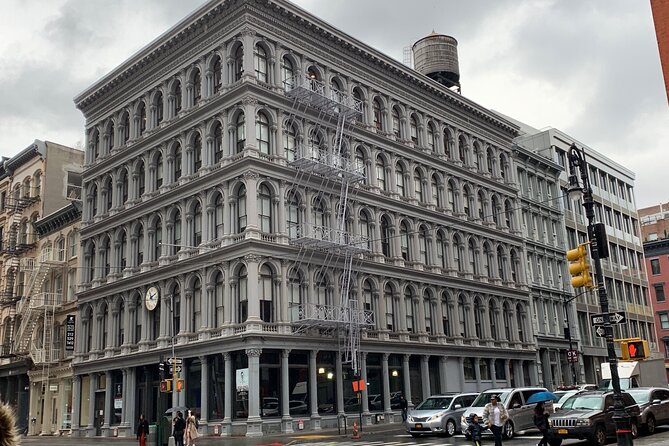
New York’s skyline did not appear all at once. It grew through layers of construction, regulation, ambition, and competition.
The presentation follows that transformation from low-rise historic neighborhoods to towers that changed the scale of the city. It also considers the architects who helped shape New York’s public image. The emphasis is not just on famous names. You are encouraged to think about why particular buildings were designed as they were and how they affected the streets around them.
One useful idea is that a skyline is not only a collection of tall buildings. It is also the result of rules. Zoning determines how much can be built, where height is allowed, and how new construction meets older neighborhoods. Air rights, mentioned as one of the less familiar but important subjects, help explain how development can take place even when a site itself has limited room.
That topic may sound technical, but it has real effects on the city you walk through. It helps explain why a neighborhood may contain a historic low-rise building beside a much taller structure, or why a new tower may be shaped in a particular way.
The discussion of urban planning is one of the tour’s strongest points. You learn to connect architecture with public transportation, parks, neighborhood boundaries, and the needs of people who use the city every day.
A few more history tours around New York City worth a look
- NYC: Speakeasy Drinks and Prohibition History Tour
★ 4.7 · 474 reviews - #1 Rated NYC Chinatown Food and History Walking Tour with FNYT
★ 5.0 · 171 reviews - NYC: Night Out Prohibition History Bar and Speakeasy Tour
★ 4.6 · 128 reviews - Christmas in New York: Private Holiday History Tour
★ 5.0 · 107 reviews
The waterfront story continues toward Hudson Yards
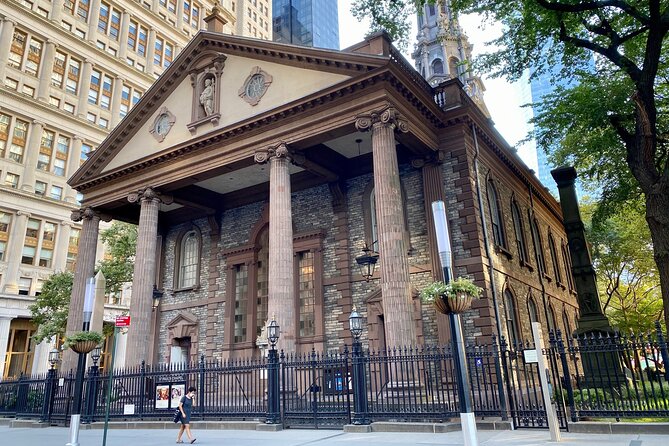
The tour ends at 20 Hudson Yards, a modern destination with shopping, restaurants, and restrooms. As a stopping point, it is practical. You have somewhere comfortable to finish, pause, or continue your own exploration.
More important, Hudson Yards brings the historical story into the present. The area represents the conversion of former industrial space into a new mixed-use district. The tour explains how public and private partnerships can create new destinations and how waterfront areas have changed from working zones into places for recreation, business, and public activity.
This final section gives the presentation a useful sense of direction. It does not treat New York’s past as finished. The city keeps changing, and every new project raises questions about access, scale, neighborhood identity, and public benefit.
You should not expect a full walking itinerary through every Hudson Yards attraction. The stated end point is 20 Hudson Yards, and the presentation’s purpose is to explain the architectural and planning story rather than provide a complete neighborhood guide.
Still, ending here makes sense. You begin with the harbor and the city’s early commercial purpose, then finish in a district shaped by current development decisions. New York’s built story keeps moving.
How the video format changes the experience
This is an on-demand video and self-guided walking experience, not a live guide waiting for you at Castle Clinton. That difference is important.
You can watch from home before your trip, which may help you recognize buildings later. You can also watch it after arriving in New York, then use the downloadable document to plan your own walks. If bad weather, a busy schedule, or limited mobility makes a long city walk difficult, the video format gives you access to the material without requiring you to cover the full distance in one session.
The private setup is another advantage. One $25 purchase covers a group of up to 15 people, so the cost is especially reasonable for a family, school group, club, or group of friends. You are not paying per person.
The tradeoff is that you must manage the practical side yourself. There is no live guide to answer a question, adjust the route, or point out a detail at the exact moment you pass it. You also need to keep track of the addresses and decide how you want to travel between locations.
The downloadable tour document helps with this. Keep it on your phone or tablet so you can refer back to the locations while walking. It turns the presentation from a one-time video into a planning tool.
Who will get the most from this tour
This experience suits several kinds of people.
If you are visiting New York for the first time, it gives you a framework before the city’s scale becomes overwhelming. You will understand that different neighborhoods reflect different eras, building traditions, and planning choices.
If you already live in New York, the tour can refresh familiar walks. Several people who know Manhattan well found that the presentation gave them a new way to see streets they had passed many times. That is a fair measure of its value: it does not depend only on famous sights.
It is also a good choice for anyone who likes history but does not want a purely academic lecture. Garrett’s presentation is described as organized, enthusiastic, and carefully researched, with a steady pace that keeps the material moving.
Architecture students and serious enthusiasts may appreciate the range of styles and the attention to smaller details. At the same time, you do not need formal training to follow the main story. The emphasis is on observation and context.
This may be less suitable if you want a relaxed, live stroll with spontaneous conversation. It is also not ideal if your priority is entering major landmarks or receiving detailed interior access. The focus is the city’s architectural development, not an attraction ticket or a conventional sightseeing circuit.
Price, timing, and practical value

The price is $25 per group, with up to 15 people included. That works out well for a group, especially if you divide the cost among several people. For one person, the value depends on how much use you make of the material.
At approximately 1 hour and 58 minutes, the presentation is long enough to offer real substance without becoming an all-day commitment. You can watch it in one sitting or split it into sections, then revisit the document during later walks.
The start and end points also help you understand the geographic scope. The story begins at Castle Clinton National Monument in New York, New York 10004, and ends at 20 Hudson Yards in New York, New York 10001. Both areas are connected to public transportation, and the activity is listed as suitable for most participants. Service animals are allowed.
The tour is non-refundable and cannot be changed after purchase. That makes it wise to buy only when you are sure the self-guided video format suits your plans.
The listed rating is 5, with 100 percent recommended and 18 reviews. The strongest praise centers on Garrett’s organization, enthusiasm, attention to detail, and ability to connect architecture with history. Those qualities matter because the subject covers a lot of ground quickly.
What I like most about Kitt Garrett’s presentation
Kitt Garrett’s greatest strength is her method. She organizes a large subject into a sequence that you can follow: early settlement, trade, changing architectural styles, urban growth, skyscrapers, zoning, transportation, and new waterfront districts.
The presentation also appears to include details that are easy to miss in a standard sightseeing talk. Air rights are one example. That kind of subject helps explain how New York works, not just what it looks like.
I also like the emphasis on looking up. New York rewards attention above street level, and the tour encourages you to notice rooflines, decorative elements, materials, and the upper sections of buildings. You may begin seeing the city in layers rather than as a wall of towers.
The tone is another plus. Garrett’s enthusiasm is frequently praised, but the more useful point is that her enthusiasm is paired with structure. A lively talk can lose you if it jumps around. Here, the material is presented in an orderly way.
Should you book The Story Behind New York’s Evolving Skyline?
Book it if you want to understand New York rather than simply photograph it. The tour is especially worthwhile for architecture fans, history lovers, repeat visitors, local residents, and groups who can share the $25 cost.
I would also choose it before a first trip if you enjoy arriving with some context. Watch the video, download the document, then use your days in New York to look for the styles, materials, and planning choices it explains.
Skip it if you need a live guide, spontaneous questions, or a short route with a tightly managed schedule. This is best thought of as an architectural primer and a self-guided companion. Used that way, it gives you a sharper eye for the city, from Castle Clinton’s harbor setting to Hudson Yards’ newest construction.
FAQ
Where does the tour begin?
It begins at Castle Clinton National Monument in New York City.
Where does the tour end?
It ends at 20 Hudson Yards, New York, NY 10001. The location has shopping, restaurants, and restrooms.
How long does the tour last?
The approximate duration is 1 hour and 58 minutes.
Is this a live guided walking tour?
No. It is an on-demand video and self-guided walking experience that you can use at your own pace.
How much does the experience cost?
The price is $25 per group, for up to 15 people.
Is a document included?
Yes. A document connected to the virtual tour can be downloaded to your device for later reference.
Can people with service animals participate?
Yes. Service animals are allowed.
Can I cancel or change the booking?
No. The experience is non-refundable and cannot be changed for any reason after booking.
Just added around New York City
- Little Italy – Official Historic District Tour★ 5.0 · 23 reviews
- The Secret Speakeasies and History Experience!★ 5.0 · 69 reviews
- NYC Private Walking Tour: Local Insights, History & Food★ 5.0 · 41 reviews
- Harlem Walking Tour: Mount Morris Park Historic District w/ Lunch★ 5.0 · 84 reviews
- High Line, Greenwich Village Food, and Historical Downtown Tour★ 5.0 · 64 reviews
- Two-Hour NYC LGBTQ+ History Walking Tour★ 5.0 · 35 reviews
- Christmas in New York: Private Holiday History Tour★ 5.0 · 107 reviews
- NYC’s History of Comedy Tour★ 5.0 · 20 reviews
Architecture & Landmark Tours, compared.
St. Mark’s Basilica Guided Tour & VR History Intro
Read our review →
Venice’s Best: Basilica, Doge’s Palace, Gondola & History Gallery
Read our review →
Córdoba: Skip-the-Line Great Mosque-Cathedral History Tour
Read our review →
Pantheon Elite Guided Tour – Rome’s Iconic Ancient Temple
Read our review →
Abu Dhabi Grand Mosque, Palace, and Heritage Village
Read our review →
Chicago in a Day: Food, History & Architecture Walking Tour
Read our review →

Colosseum Special Access Tour, with Ancient Temples & Tombs
Read our review →Browse the lists this tour appears in