
Review · DUBLIN COUNTY
Dublin: Macabre History Walking Tour
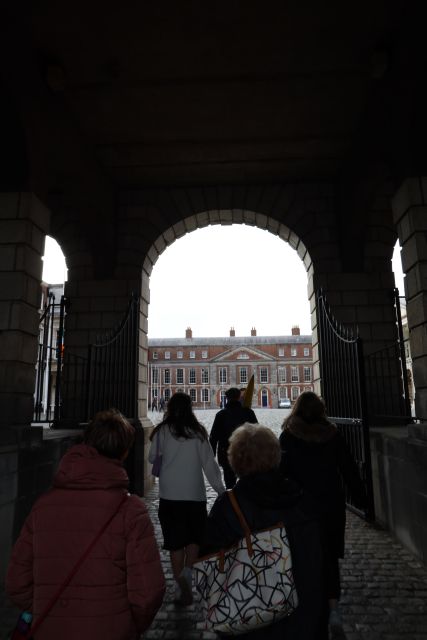
Dublin’s darker side walks on two feet. This two-hour tour leaves the usual sightseeing route behind, crossing both sides of the River Liffey and threading through old city streets with stories of executions, grave robbing, plague quarantine, and grisly deaths. I love the small-group feel, which can make the outing seem almost private, and I like the way guides such as Peter and Rob mix solid history with humor and theatrical storytelling. The main consideration is that the tour may feel more curious than terrifying, especially if you expect nonstop gore.
I also appreciate the clear meeting point beside the Spire on O’Connell Street. Look for the yellow umbrella, then expect a fairly active walk that ends back where it began. At $19 per person, it is a good-value way to put Dublin’s streets into context, though the macabre subject matter and 18-plus rule make it a poor fit for young children.
Key points to know before you go
- Cuchulainn’s death opens the door to Irish legend: Hear how the mighty warrior died, with a raven on his shoulder and his eyes pecked out.
- The route crosses both sides of the River Liffey: You see old Dublin through lesser-known corners rather than only its headline sights.
- Grave robbing gets a full historical airing: The 19th-century trade developed beside the city mortuary, adding an unsettling layer to Dublin’s medical past.
- The stories move from medieval danger to modern crime: Expect mummified corpses, public executions, a legless serial killer, and man-eating rats.
- Peter and Rob bring different strengths: Peter is praised for passion and dramatic delivery, while Rob earns warm marks for his personable style and humor.
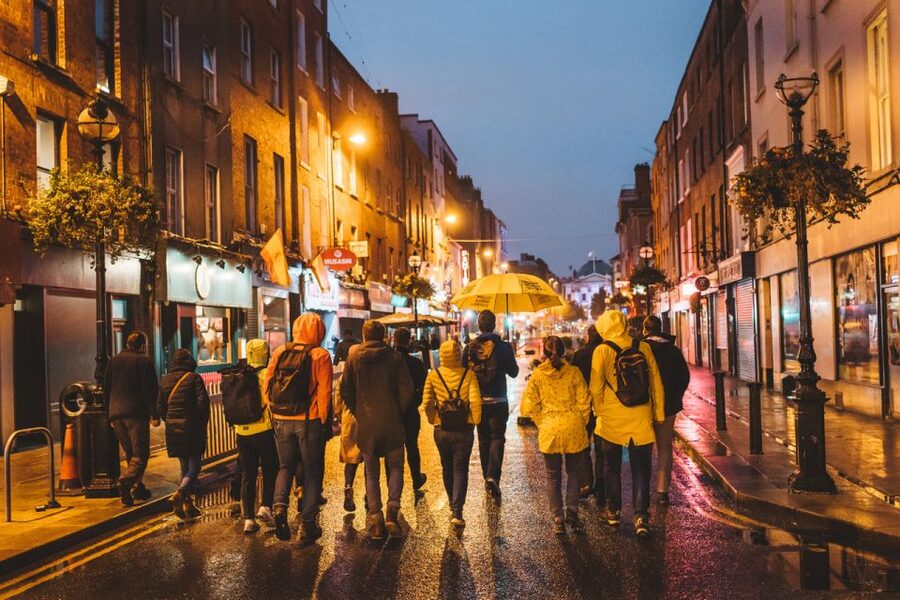
- The practical setup is easy: Meet beside the Spire, follow the yellow umbrella, and return to the same point after two hours.
Why Dublin’s darker past makes a good walking tour
Dublin is easy to admire at street level. You can enjoy its grand avenues, river views, and famous pubs without asking what happened here centuries ago. This tour changes that habit. A doorway, wall, statue, or cathedral can become a clue to a far less cheerful chapter.
I like this format because the stories are tied to the city itself. You are not sitting in a theater hearing a general ghost tale. You are walking through the old center and along the riverside while the guide connects particular areas with death, crime, disease, and punishment.
The subject is macabre, but the presentation is not meant to be solemn from start to finish. Peter is praised for blending drama, humor, and historical detail. Rob is described as personable and entertaining, with a style that keeps the group moving. That matters on a two-hour walk. The material is grim, yet the guide needs enough lightness to keep it engaging rather than exhausting.
The tour also reaches beyond murder stories. You hear about Irish legend, medieval quarantines, public executions, medical practices, old city defenses, and social life. That wider frame gives the outing more value than a simple list of crimes.
More History Walking Tours in Ireland
- 2-Hour Historical Walking Tour from Dublin
★ 5.0 · 875 reviews - Historical 2-Hour Guided Walking Tour of Dublin
★ 4.7 · 865 reviews - Dublin’s Haunted History Walking Tour
★ 4.3 · 345 reviews
Meeting at the Spire on O’Connell Street
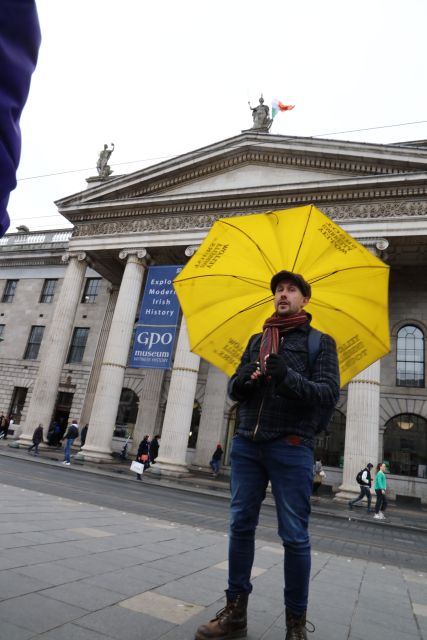
The tour begins beside the Spire, the tall needle-like landmark in the middle of O’Connell Street. The yellow umbrella is your visual marker. That detail is useful in a busy central area, though one person specifically warned that more than one yellow umbrella may appear, so confirm that you have found the correct group.
There is no hotel pickup. You make your own way to O’Connell Street, then return to the same meeting point at the end. This makes the experience simple to fit around other Dublin plans, especially if you are already spending time in the city center.
The activity lasts two hours. That is long enough for several stops and a broad sweep through Dublin’s past, but short enough to fit into a morning or afternoon. Starting times vary, so check availability when booking.
The route covers old city streets and both sides of the river. You should expect walking rather than a stationary talk, so comfortable shoes make sense. The tour is listed as wheelchair accessible, which is useful information for planning, though the route still takes place on city streets and includes movement between several areas.
Cuchulainn and the beginning of the story
One early highlight is the statue associated with the death of Cuchulainn, the legendary Irish warrior. His final moments are described in striking terms: the raven on his shoulder pecks out his eyes after his death.
This is an effective opening because it places Irish legend beside the later, documented stories of crime and punishment. You get a sense of how Dublin’s dark tales are not limited to police cases or old newspaper reports. Some reach back into myth and national storytelling.
The Cuchulainn stop also shows why a guide matters. A statue can be easy to pass without much thought. With the story attached, it becomes a point of entry into Irish culture and the way death has been remembered through legend.
If you want only verified crime history, keep this distinction in mind. The tour combines folklore, legend, and historical events. That mixture is part of its appeal, but it may not suit someone who wants a strictly academic account.
Grave robbing beside the city mortuary
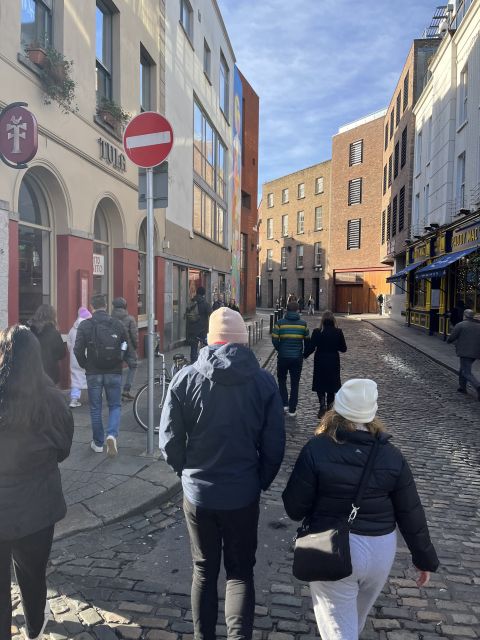
The 19th-century grave-robbing story is one of the more unusual parts of the walk. The trade flourished beside the city mortuary, linking Dublin’s medical development with a business that was both illegal and deeply disturbing.
This stop gives the tour a useful social angle. The darker side of a city is not only about killers and victims. It can also reveal how medical study, poverty, death, and demand created grim opportunities for people willing to dig up the dead.
I find this kind of story more satisfying than a simple shock tale because it explains a system. You learn about a trade and the setting that supported it, not just an isolated act. It also helps you see why old mortuaries, graveyards, and city boundaries carried such fear.
The subject may unsettle you more than the theatrical stories, since it concerns ordinary people and the treatment of corpses. The guide’s tone matters here. Peter is praised for explaining difficult material clearly and allowing time for questions, while Rob is noted for making the stories accessible without losing their darker edge.
More History Walking Tours in Dublin:
- Deliciously Dublin: The Artisan Donut Walking & History Tour
★ 5.0 · 329 reviews - Semi-Private (8people max) 2.5 Hr Dublin Walking Tour
★ 5.0 · 69 reviews - Dublin: LGBT Pride Walking Tour with Queer History
★ 5.0 · 24 reviews - History and Hauntings of Salem Guided Walking Tour
★ 5.0 · 14,564 reviews
Old walls, mummified corpses, and a legless killer
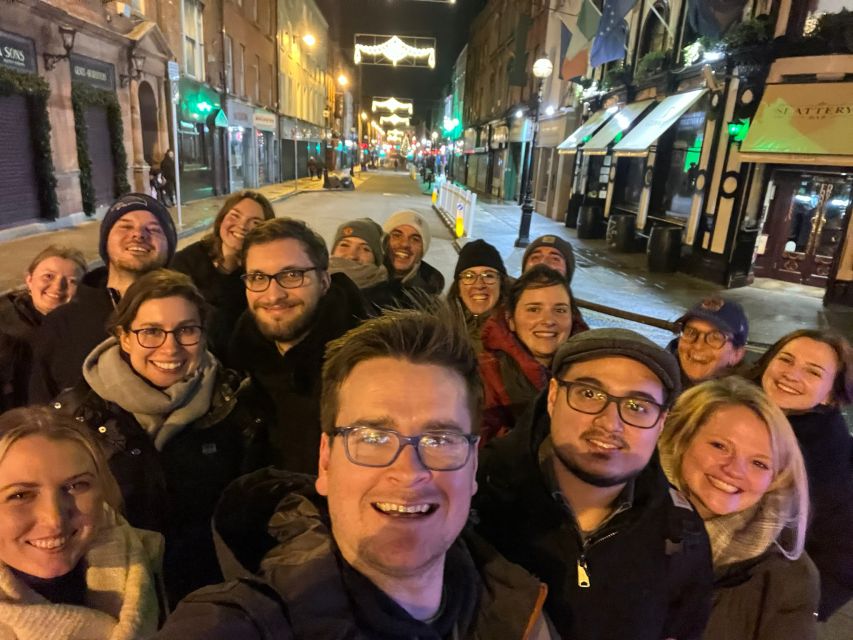
Near the old city walls, the mood shifts again. The tour brings in stories of mummified corpses and a legless serial killer, two subjects that show the range of material covered.
The mummified corpses connect the walk with Dublin’s older burial practices and physical remains. The legless killer is the sort of story that sounds almost invented until a guide places it within the city’s past. Together, these tales give the old walls a more unsettling character.
This is also where the walk benefits from taking you to places you might otherwise overlook. Several people praised the way the guide points out spots that can seem ordinary at first glance. You may walk past them on a standard city visit without learning why they matter.
The route is not designed as a haunted-house attraction. There are no stated special effects or staged scares. The tension comes from the stories, the age of the surroundings, and the contrast between everyday Dublin and what happened there before.
That distinction is worth knowing. One visitor felt the tour could have been more macabre and bloody. If you want a frightening night out, you may find the tone too restrained. If you prefer history with a dark edge, the balance should work better.
Medieval quarantines and the dangers of disease
Medieval quarantine forms another part of the walk. This topic broadens the idea of macabre history beyond murder and execution. Disease could reshape a city just as forcefully as war or crime, and quarantine reflects the fear, isolation, and uncertainty that surrounded outbreaks.
The value here is the connection between public health and urban life. Streets, walls, rivers, and city entrances were not just scenery. They affected how people moved, where they gathered, and how authorities tried to control illness.
The guide’s storytelling style is important because quarantine can sound dry when reduced to dates and rules. Peter is praised for slowing down when needed, checking that the group understands, and answering questions. That makes the more complicated parts easier to follow.
You should expect the tour to include broader Dublin history alongside the macabre material. It is not a two-hour parade of murders. The stories explain how people lived, suffered, and responded to danger across different periods.
Executions, the cathedral, and a deadly ending
Public executions bring the tour toward its most overtly grim material. Execution stories reveal how punishment once worked as public entertainment, warning, and control. They also show how different old Dublin was from the city you see today.
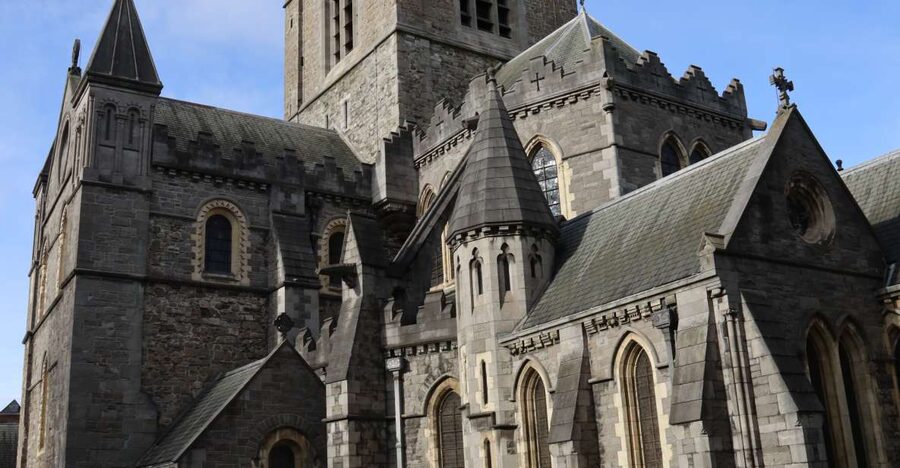
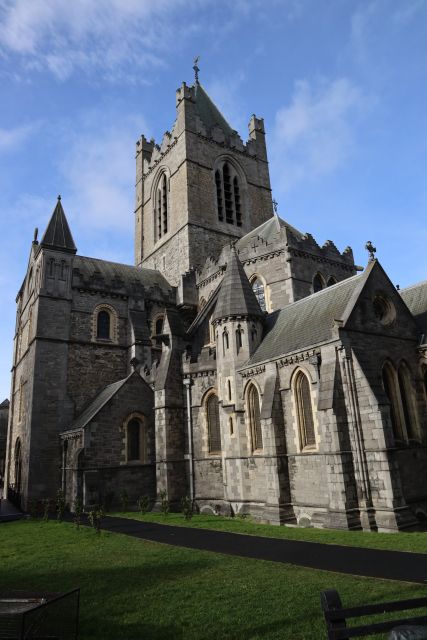
The final section takes place beside the cathedral and concerns Dublin’s most famous brothel keeper, who met an untimely death by fire at the stake. Ending with this story gives the walk a strong dramatic finish, moving from legend and disease to crime, sex work, punishment, and public death.
This stop may be especially interesting if you are visiting the cathedral area separately. Instead of treating the building only as an architectural sight, the tour adds a human story connected with the surrounding streets.
The cathedral stop also illustrates the tour’s main strength: familiar areas gain another layer. You do not need to visit a remote attraction to find unusual history. Much of the experience comes from looking again at central Dublin with a guide who knows which overlooked details deserve attention.
Peter, Rob, and the value of the guide
The guide can make or break a story-based walking tour. Here, Peter receives the strongest praise. He is described as passionate, clear, friendly, and highly expressive, with a talent for acting out scenes and carrying a story across several historical periods.
His style seems particularly useful for solo visitors or small groups. A few tours have had only three people, creating a relaxed, almost private atmosphere. That can make it easier to ask questions and follow the guide’s pace.
Rob offers a slightly different appeal. He is described as personable, funny, and well informed, with an entertaining delivery. One person compared his manner to comedian Max Fosh, which suggests a lighter, quick-witted style rather than a formal lecture.
Guide quality can vary by departure, so you should not book expecting one exact personality every time. Still, the consistent praise for clear storytelling, enthusiasm, and local tips is a strong sign that the human element is the heart of the experience.
The guides also appear willing to discuss more than the listed macabre subjects. You can ask about Irish history, local life, and the city’s past. That flexibility makes the tour useful for someone who wants an introduction to Dublin rather than only a collection of gruesome anecdotes.
Is $19 a fair price for two hours?
At $19 per person, the tour offers good value if you want a guided look at central Dublin without paying for admission to a major attraction. The cost covers a two-hour walking tour and a live English-speaking guide. You are paying for research, narration, and access to stories you may not find while exploring alone.
The value improves if your group is small. A compact group can feel more personal, and the guide may have more time for questions. Even if your group is larger, the route covers enough material to make the price reasonable for a full two-hour activity.
There are limits. Hotel pickup is not included, and the tour does not replace a standard orientation walk if you want Dublin’s major landmarks explained in a broad, traditional way. Its focus is specific: lesser-known stories, grim subjects, and old city details.
I would book it early in a Dublin stay if you enjoy walking tours. It can help you see central areas differently for the rest of your visit. The free cancellation option, available up to 24 hours before the start, also reduces the risk of committing too far ahead. You can reserve now and pay later, which helps if your schedule is still changing.
Who should book this Dublin walk?
I would recommend it to adults who enjoy local history, folklore, crime stories, and guides who perform rather than simply recite facts. It is a good match for solo visitors, couples, and small groups who want an unusual way to get oriented in the old center.
It also suits people who have already seen Dublin’s standard sights and want something less predictable. The route reaches places you may otherwise ignore, and the stories add context without requiring a full day.
I would skip it if you dislike death, disease, executions, grave robbing, or stories involving corpses. Children under 18 are not permitted, and the tour is not built around gentle family entertainment.
You should also adjust your expectations about the word macabre. The content is grim, but at least one person wanted a darker and bloodier presentation. The experience leans toward lively historical storytelling with unsettling details, not nonstop horror.
FAQ
How long is the Dublin Macabre History Walking Tour?
The tour lasts two hours. Starting times vary, so you need to check availability for the date you want.
Where does the tour meet?
The group meets beside the Spire, the large needle in the middle of O’Connell Street. Look for the yellow umbrella, and make sure it is the correct tour group.
Where does the tour end?
The walk ends back at the meeting point beside the Spire.
What language is the tour conducted in?
The live tour guide speaks English, and English is the listed tour language.
Is the tour wheelchair accessible?
Yes. The activity is listed as wheelchair accessible.
Can children join the tour?
No. The tour is not suitable for children under 18.
Should you book it?
Book this tour if you want Dublin’s old center explained through strange, troubling, and often entertaining stories. The combination of Cuchulainn’s death, grave robbing, quarantines, public executions, mummified corpses, and the cathedral-area finale gives you far more than a routine city stroll.
I especially like it for the price, the central meeting point, and the chance to explore places you might otherwise pass without a second look. Peter and Rob both bring strong personality to the route, though the exact tone can depend on your guide and group size.
Skip it if you want a strictly factual lecture, a family outing, or a genuinely frightening scare experience. For adults who enjoy Dublin with a little grit, $19 buys two useful hours and a fresh way to read the city’s streets.
Just added around Dublin
- Dublin: LGBT Pride Walking Tour with Queer History★ 5.0 · 24 reviews
- Wicklow Historic Gaol: 1-Hour Tour★ 4.4 · 56 reviews
- Dublin Historical Centre Private Food Tour with 8 Food Tastings★ 5.0 · 152 reviews
- Semi-Private (8people max) 2.5 Hr Dublin Walking Tour★ 5.0 · 69 reviews
- Dublin Private Highlights & History of 1916 Easter Rising Tour★ 5.0 · 154 reviews
- The History of Dublin With Locals: 1916 Easter Rising PRIVATE Tour★ 5.0 · 73 reviews
- Dublin’s Haunted History Walking Tour★ 4.3 · 345 reviews
- Deliciously Dublin: The Artisan Donut Walking & History Tour★ 5.0 · 329 reviews
History Walking Tours, compared.

History and Hauntings of Salem Guided Walking Tour
Read our review →
Freedom Trail History Small Group Walking Tour
Read our review →
Historic Charleston Guided Sightseeing Walking Tour
Read our review →
Tapas Walking Tour with Food, Wine, and History
Read our review →
Savannah History and Haunts Candlelit Ghost Walking Tour
Read our review →
A History of Terror – Belfast City Centre Walking Tour
Read our review →Browse the lists this tour appears in