
Review · PHILADELPHIA
Beyond the [Liberty] Bell History Walking Tour
Philadelphia’s old streets still have surprises. Beyond the Bell History Walking Tour brings the city’s famous sights together with lesser-told stories, including Hannah Callowhill Penn, Ona Judge, Indigenous history, women’s contributions, Black history, and LGBTQ history. I like the focus on people often left out of standard city tours, and I like that the route includes both Independence Hall and the oldest continuously lived street in the United States. The main drawback is time: two hours goes quickly, so each stop offers an introduction rather than a long museum-style visit.
I also like the small-group limit of 30 people and the chance to ask questions along the way. Guides such as Joey, Rebecca, Mike, and Matthew have been praised for warmth, flexibility, and clear answers. At $59 per person, this is not the cheapest way to see Old City, but it can be good value if you want context and human stories rather than a quick list of famous buildings.
Key points to know before you book
- Philadelphia history with a wider lens: The tour looks beyond the usual founders and battlefield stories to include women, people of color, Native Americans, and LGBTQ Philadelphians.
- Starts at Washington Square: You begin at 210 W Washington Square at 1:00 pm, a useful location for reaching the historic district by public transportation.
- The Liberty Bell gets context: You hear why the bell became an American symbol, not simply stop for a photo.
- Independence Hall is part of the route: The UNESCO World Heritage Site appears within a walking tour rather than as a separate building visit.
- Ends near the Betsy Ross House: The route finishes at 239 Arch Street, placing you in Old City for more sightseeing afterward.
- A manageable two-hour walk: You need moderate physical fitness, but the tour is short enough to fit around other Philadelphia plans.
What Beyond the Bell does differently
Philadelphia is easy to visit as a checklist. You see the Liberty Bell, pose near Independence Hall, glance at the cobblestones, and move on. This tour tries to slow the story down and ask who else shaped the city.
That change in focus matters. The usual Philadelphia narrative can become a parade of famous men, declarations, and political victories. Beyond the Bell adds the people who lived with the results of those decisions. You hear about women who formed Philadelphia, the Lenape community, enslaved people, Black history, and LGBTQ contributions. The result is less polished, but more honest.
The tour also keeps the major sights in view. You do not have to choose between familiar landmarks and less familiar stories. The Liberty Bell, Independence Hall, Washington Square, Welcome Park, and the Betsy Ross House all fit into the route.
The tour is offered in English and uses a mobile ticket. The maximum group size is 30, though the strongest praise in the available feedback comes from people who had a small or even private-feeling group. A larger group could make questions and street-side listening harder, so arriving ready to stay close to the guide is sensible.
More History Walking Tours in the USA
- Philadelphia Old City Historic Walking Tour with 10+ Top Sites
★ 5.0 · 2,020 reviews - Philadelphia: History, Highlights & Revolution Walking Tour
★ 4.9 · 317 reviews - Philadelphia: Revolutionary Walk Through Historic Old City
★ 4.8 · 208 reviews
Washington Square begins with William Penn’s vision
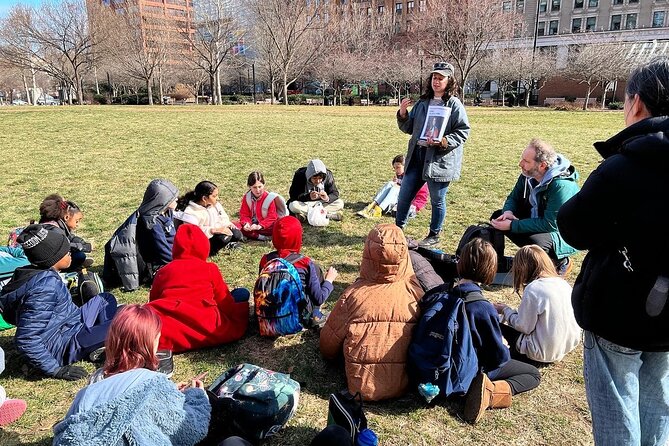
The meeting point is 210 W Washington Square, and the tour starts at 1:00 pm. Washington Square is a fitting place to begin because the opening story concerns William Penn’s plan for Philadelphia and the ideals behind the city.
You hear about Penn’s vision, then about Hannah Callowhill Penn, a woman often left out of the standard introduction. She was not just a footnote beside William Penn. Her inclusion signals the tone of the rest of the walk: the guide uses familiar places to introduce people whose work and influence are less widely known.
This opening stop lasts about five minutes, so do not expect a long park lecture. Its value is as a frame for the tour. You begin thinking about how cities are planned, who receives credit, and whose role gets reduced in the telling.
Washington Square is also a practical starting point. If you are staying elsewhere in Philadelphia, public transportation is nearby, and the location gives you a clear target for the afternoon. Check the mobile ticket before setting out so you are not searching for the group at the last moment.
The Liberty Bell becomes more than a photo stop
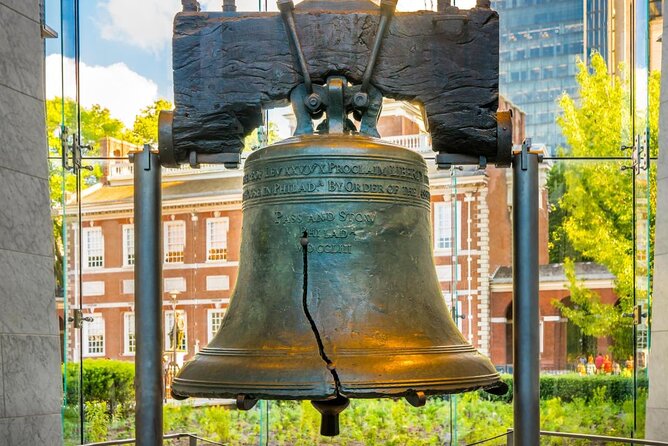
The Liberty Bell Center is next, with about five minutes devoted to the bell and its meaning as an American symbol. That is brief, but it can be enough to shift your attention from the object itself to the ideas attached to it.
The bell is one of Philadelphia’s most familiar sights. A standard visit can leave you with a photograph and a few dates. Here, the guide gives the tour’s interpretation of why the bell became such a powerful national emblem.
Do not expect an extended indoor visit or a detailed examination of every display. The schedule treats the Liberty Bell as a conversation stop within a larger walk. That is useful if you have already seen the bell, or if you want a broader story rather than a single attraction.
The short timing also means you should manage expectations. If the Liberty Bell is your main reason for visiting Philadelphia, allow separate time for the Liberty Bell Center and its exhibits. The walking tour adds meaning, but it is not presented as a full museum tour.
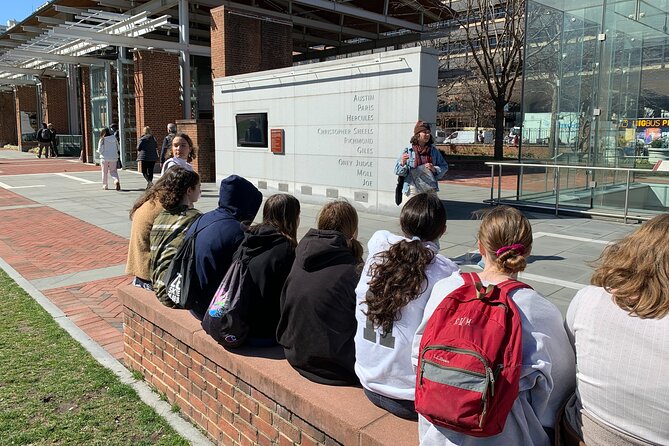
The President’s House and Ona Judge’s escape
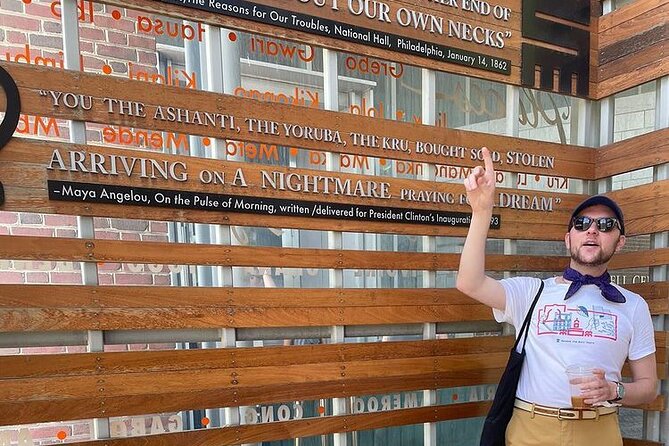
The President’s House is one of the most important stops because it brings national politics down to the level of individual lives. The stop lasts about 15 minutes, longer than the opening Washington Square and Liberty Bell conversations.
Here, you learn about the controversy surrounding the President’s House and the escape of Ona Judge from George Washington. That story makes the site difficult in the best way. The building is linked to early American government, but also to slavery and the people who resisted it.
Ona Judge’s story gives the stop a clear human center. Instead of treating the early presidency as a clean tale of leadership, the guide can show the conflict between public claims about liberty and the reality of enslavement.
This is likely to be one of the tour’s most memorable sections. It also shows why the walk suits people who have already seen Philadelphia’s headline attractions. You are not only being told where something happened. You are being asked to think about how the city remembers it.
The 15-minute stop still cannot cover every part of the controversy. If you want an extended visit to the President’s House site, plan to return on your own. The tour gives you a strong starting point and a way to understand what you are looking at.
More History Walking Tours in Philadelphia:
- Philadelphia Historical Independence Walking Tour
★ 4.5 · 164 reviews - Walking Tour of Historic Philadelphia
★ 5.0 · 99 reviews - Badass Women’s History Walking Tour of Philadelphia
★ 5.0 · 97 reviews - The Black Journey: An African-American History Walking Tour of Philadelphia
★ 5.0 · 76 reviews
An old street and the people Philadelphia forgot
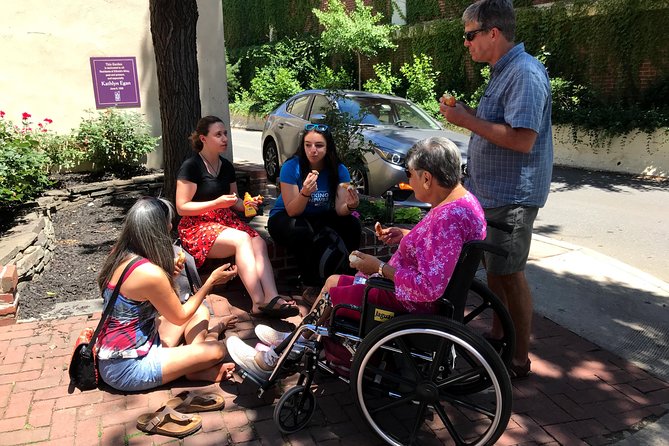
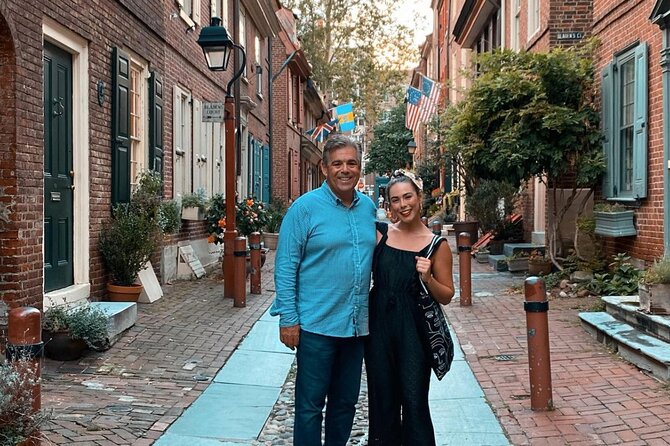
At some point along the walk, the route takes you down the oldest continuously lived street in the United States. The supplied details do not give the street’s name, so you should rely on the guide and the meeting group rather than trying to plan around a specific address.
This part of the experience is less about a single monument and more about the feel of a lived-in historic neighborhood. The street helps connect the city’s past to its present. You are not looking at history behind glass. You are walking through a place where people have continued to live.
The tour also makes room for women who shaped Philadelphia. That theme appears more than once, rather than being confined to one token story. The focus is a major reason to choose this walk over a standard introduction to Old City.
The available feedback gives a useful sense of what this means in practice. Rebecca was praised for highlighting women, people of color, Native Americans, and LGBTQ people, while also covering the general story of William Penn and Philadelphia. Joey received similar praise for bringing forward Black history and less-publicized figures.
That does not mean every guide will tell the exact same stories in the same order. It does mean the company’s approach is clear. You are booking a tour that tries to put more people into the picture.
Welcome Park and the Lenape connection
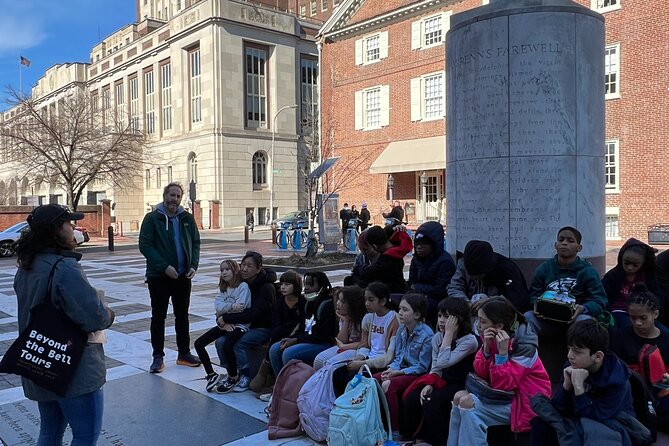
Welcome Park adds Indigenous history to the route. The focus is William Penn’s relationship with the Lenape, the local Indigenous community.
This is an important correction to the usual city story. Philadelphia is often introduced through Penn’s ideals and the founding of the colony, but those events did not take place on empty land. The Lenape connection gives you a chance to consider the people already living in the region and the relationships that shaped the early settlement.
The stop lasts about 10 minutes. That is enough for a focused explanation, but not enough for a full account of Lenape history or later displacement. I would treat it as a meaningful introduction, not the final word.
Welcome Park also helps the tour move from large national symbols to local history. The Liberty Bell and Independence Hall can feel like monuments to the whole country. The Lenape story brings the setting back to the ground beneath your feet.
Independence Hall without losing the human story
Independence Hall is included as a UNESCO World Heritage Site. Its presence gives the tour a major architectural and political landmark, but the walk’s purpose is not simply to point out the building and list famous names.
You should expect to see and discuss the site from the route. The provided details do not promise an interior tour or reserved entry, so do not book this experience expecting access inside Independence Hall. If you want to tour the building, arrange that separately.
The value here is the connection between the building and the people discussed elsewhere on the route. National independence, presidential power, slavery, Indigenous history, and women’s work do not exist as separate subjects. The walk places them within the same historic district.
That approach can make the familiar sights feel new. It also keeps the experience grounded. You are not being asked to admire a monument without question. You are being given more information before deciding what the monument means to you.
The guide makes the difference
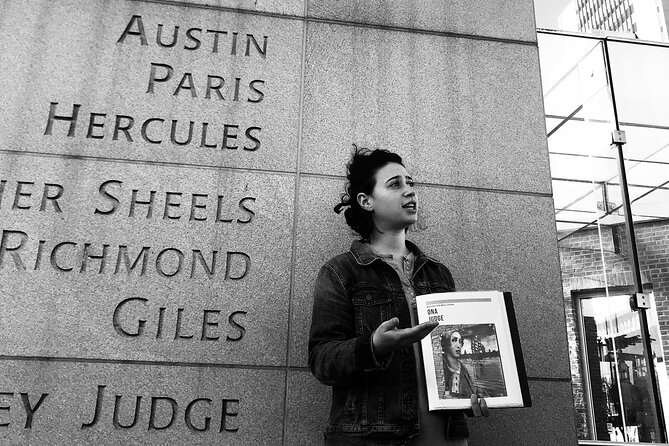
A history walk succeeds or fails with its guide. The strongest praise for this experience centers on guides who combine facts with an easy manner.
Joey is described as personable and responsive to questions, with a talent for bringing forward inspiring women, Black history, and other less-publicized figures. Rebecca is praised for making the tour feel personal and for treating overlooked contributions with care. Mike is described as sharing information the group would not otherwise have heard, while Matthew received particularly warm praise for his command of the subject.
One useful detail is that a guide adjusted the route to fit the group’s needs. That suggests some flexibility, though you should not assume every request can be accommodated. The tour still has a set duration and a planned ending.
You should also feel free to ask questions. Several comments point to guides handling impromptu questions well. This is where a walking tour can offer more than an audio guide. You can pause over a detail, ask about a name, or connect one story to something you have already seen.
The company appears to be a small business, and that can be part of the appeal. The tone is more personal than a large coach tour. The trade-off is that your experience may vary with the individual guide and the size of the group.
Is $59 a fair price?
At $59 per person, the tour costs more than wandering through Old City with a guidebook. The question is what you want your money to buy.
You are paying for about two hours of guiding, a planned route, local interpretation, and a story that goes beyond the standard founder-focused script. You also get an introduction to several major sites without having to organize the order yourself.
The price is easier to justify if you value context and conversation. It is less attractive if you mainly want interior access to the Liberty Bell Center or Independence Hall, since those are not listed as included admissions. You may need to budget separately for attractions you want to enter.
For a first afternoon in Philadelphia, the tour can help you get your bearings and decide where to spend more time later. For someone with only a few hours in Old City, it offers a useful framework. For a history specialist who wants long lectures at each site, the short stops may feel too quick.
The 99 percent recommendation rate and 4.9 rating from 73 reviews suggest strong satisfaction, but I would still read those numbers in context. The praise is especially consistent about the guides’ warmth, flexibility, and ability to tell overlooked stories. That is the real product here.
Practical details for a smoother walk
The tour starts at 1:00 pm at 210 W Washington Square and ends at the Betsy Ross House at 239 Arch Street. That ending is useful because you can continue exploring Old City afterward rather than returning to the starting point.
The tour lasts approximately two hours. Wear comfortable shoes and be ready to walk and stand outdoors. A moderate level of physical fitness is required, and weather can affect how pleasant any city walk feels.
The experience is offered in English. A mobile ticket is provided, service animals are allowed, and the route is near public transportation. The group can include up to 30 people, so arrive early enough to locate the guide and stay near the front if you want every word.
Free cancellation is available up to 24 hours before the start time. Canceling later, or making changes within that period, does not qualify for a refund. The cancellation cut-off uses Philadelphia local time.
Who should book Beyond the Bell?
I would choose this tour if you want Philadelphia history told with more than the usual list of founding fathers. It is especially well suited to first-time visitors who want to understand the historic district, and to repeat visitors who have already seen the main sights but want new stories.
It is also a strong choice if you care about women’s history, Black history, Native American history, LGBTQ history, and the lives of people often left out of public memory. Families with older children and adults who enjoy asking questions may get the most from the format.
I would skip it if your main goal is a long indoor visit to Independence Hall, a detailed museum tour, or a full Liberty Bell Center experience. The walk gives you context around those places, not a replacement for every attraction inside them.
Should you book it?
Book Beyond the Bell if you want a thoughtful two-hour introduction to Philadelphia that treats famous landmarks as starting points rather than final answers. The strongest reason to go is the guide-led interpretation, especially the attention to Hannah Callowhill Penn, Ona Judge, the Lenape, and the many women and communities that helped shape the city.
At $59, it is a fair buy for personal storytelling and a well-planned route. Just keep your expectations clear: this is a walking conversation through Old City, not an all-access pass to Philadelphia’s museums. If that sounds like your kind of afternoon, it should be a rewarding way to meet the city.
FAQ
Where does the Beyond the Bell History Walking Tour start?
It starts at 210 W Washington Square, Philadelphia, Pennsylvania 19106.
What time does the tour begin?
The scheduled start time is 1:00 pm.
How long does the tour last?
The tour lasts approximately two hours.
Where does the tour end?
It ends at the Betsy Ross House, 239 Arch Street, Philadelphia.
Is Independence Hall included?
Independence Hall is included as a sight and discussion point on the route. The provided details do not state that interior admission is included.
Is the tour available in languages besides English?
The tour is offered in English.
Can I cancel for a refund?
Yes. You can cancel for a full refund up to 24 hours before the experience starts. Changes or cancellations made less than 24 hours before the start time are not accepted for a refund.
Just added around Philadelphia
- Badass Women’s History Walking Tour of Philadelphia★ 5.0 · 97 reviews
- Historic Sites of Philadelphia Self-Guided Walking Audio Tour★ 4.5 · 24 reviews
- The Black Journey: An African-American History Walking Tour of Philadelphia★ 5.0 · 76 reviews
- Walking Tour of Historic Philadelphia★ 5.0 · 99 reviews
- One Hour Tour Of Philadelphia Historical Sites In A Vintage Car★ 4.5 · 52 reviews
- Philadelphia Old City History Pub Crawl Small-Group Tour★ 5.0 · 294 reviews
- Philly Gayborhood and LGBTQ History Walking Tour★ 5.0 · 36 reviews
- Independence Mall (Entrance to 2 Historic Sites) 2.5 Hour Walking★ 5.0 · 21 reviews
History Walking Tours, compared.

History and Hauntings of Salem Guided Walking Tour
Read our review →
Freedom Trail History Small Group Walking Tour
Read our review →
Historic Charleston Guided Sightseeing Walking Tour
Read our review →
Tapas Walking Tour with Food, Wine, and History
Read our review →
Savannah History and Haunts Candlelit Ghost Walking Tour
Read our review →
A History of Terror – Belfast City Centre Walking Tour
Read our review →Browse the lists this tour appears in