
Review · PENNSYLVANIA
Philadelphia: History, Highlights & Revolution Walking Tour
Philadelphia’s founding story is best told on foot. This 150-minute walk links Independence Hall, the Liberty Bell, Elfreth’s Alley, and the Museum of the American Revolution in one well-planned route through Old City. I like the mix of famous sights and smaller stories, especially the presentation featuring George Washington’s wartime tent. I also like that part of your ticket supports a local historic site.
The main consideration is pace. You cover a lot of ground in two and a half hours, and many stops are viewed from outside or as photo stops rather than full museum visits. Still, guides such as Adam, Tom, David, Nina, and Caroline have earned praise for making the material clear, lively, and easy to follow, even for children and first-time visitors.
Five details that make this Philadelphia tour worth considering
- A strong Old City route: You move from Independence Mall to the Liberty Bell, Elfreth’s Alley, Betsy Ross House, Franklin’s grave, and other key sites.
- A real museum element: The tour includes a special presentation at the Museum of the American Revolution, including George Washington’s campaign tent.
- History with more than famous names: The recreated President’s House helps bring enslaved people and other overlooked figures into the story of the nation’s founding.
- A practical half-day introduction: The route is useful if you have only a few hours in Philadelphia and want a clear starting point for later visits.
- A guide-led experience: The strongest part of the tour is the storytelling, with guides adapting explanations to questions, age groups, and the pace of the group.
Why this 150-minute walk works well in Philadelphia
Philadelphia’s historic center is compact, but the story is not. Independence Hall, the Liberty Bell, Congress Hall, Carpenters’ Hall, Franklin’s grave, and the old residential streets all sit within a walkable area. A guide helps you connect these places instead of seeing them as isolated photo stops.
At $45 per person, this is not the cheapest way to walk around Old City. You can see much of the outside architecture for free. The value comes from the narration, the organized route, the National Park Service fee, and the presentation at the Museum of the American Revolution. You also receive discounted admission to the museum for a later visit, so the tour can serve as an introduction rather than your entire museum experience.
I especially like the balance between major American symbols and more personal stories. Independence Hall and the Liberty Bell are essential, but Betsy Ross, Benjamin Franklin, the residents of Elfreth’s Alley, and the people whose labor supported the early nation make the walk feel less like a school lesson.
The tour is conducted in English, with a live local guide. It is wheelchair accessible, though the route includes city sidewalks, steps, and historic areas, so you should still be prepared for the practical limits of an old urban district.
More History Walking Tours in the USA
- History and Hauntings of Salem Guided Walking Tour
★ 5.0 · 14,564 reviews - Boston: Freedom Trail History Small Group Walking Tour
★ 5.0 · 6,450 reviews - Historic Charleston Guided Sightseeing Walking Tour
★ 5.0 · 6,216 reviews
Starting at Signers’ Garden
Your meeting point is the Signer Statue in Signers’ Garden. This is a sensible place to begin because it puts you close to Independence Mall and the cluster of Revolutionary-era buildings that follows.
Arrive with comfortable shoes and a little spare time. If you drive, use a parking lot or garage in Old City rather than relying on street parking. Metered spaces allow a maximum of two hours, while the tour lasts 150 minutes. That is an avoidable source of stress.
The opening section gives you the basic map of the story: Philadelphia as a political meeting place, the creation of a new government, and the people who gathered here during the Revolutionary period. A good guide can make these first few minutes useful by explaining not only what happened, but why this particular part of the city mattered.
Independence Mall and Independence Hall
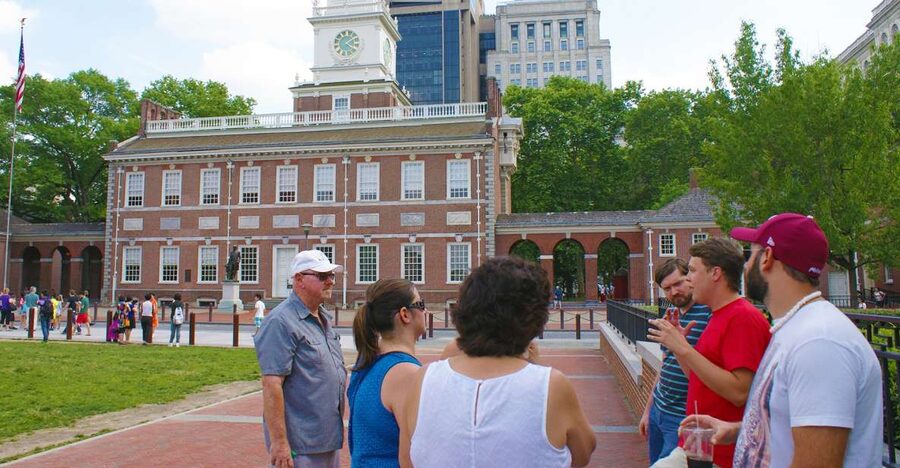
The route continues through Independence Mall and Independence National Historical Park. This is the grandest part of the setting, with open spaces and carefully preserved buildings that give the area a clear sense of place.
You pass Independence Hall, where the Declaration of Independence and the United States Constitution were created. The tour does not present a full interior visit to Independence Hall, so anyone wanting to see the rooms inside should plan that separately. The guide’s role here is to explain the debates, personalities, and events connected with the building.
Congress Hall is another important stop. It served as a meeting place for the early federal government, and seeing it beside Independence Hall helps you understand how the new nation’s political life took shape in Philadelphia.
This part of the walk is best for getting the broad framework. You hear the familiar names, but the better guides add the practical details that textbooks often skip. The experience becomes more useful when you ask questions about daily life, political disagreements, and the people who did not have an equal voice in the new system.
Meeting the Liberty Bell
The Liberty Bell is one of Philadelphia’s most recognizable sights, and the tour includes time for a photo stop and explanation. It is a brief moment, but it carries real weight. The bell has become a symbol of freedom, even though the society that created it denied freedom to many people.
That tension is part of what makes the stop worthwhile. The tour’s focus on untold stories gives the guide room to discuss the difference between revolutionary ideals and everyday life. You do not simply take a picture and move on. You get context for why the bell matters and why its meaning has changed over time.
Expect some crowding around major landmarks, especially at busy times. The guide helps you make sense of the area, but you should not expect a quiet, private encounter with the bell.
Same place, a different slice of the past:
- Charleston’s Old South Carriage Historic Horse & Carriage Tour
★ 5.0 · 10,023 reviews - Beneath The Streets Underground History Tour
★ 4.5 · 8,006 reviews - Charleston Horse-Drawn Carriage Tour: Explore Historic Charleston
★ 5.0 · 3,561 reviews - Savannah History and Haunts Candlelit Ghost Walking Tour
★ 5.0 · 3,235 reviews
Carpenters’ Hall and the political build-up
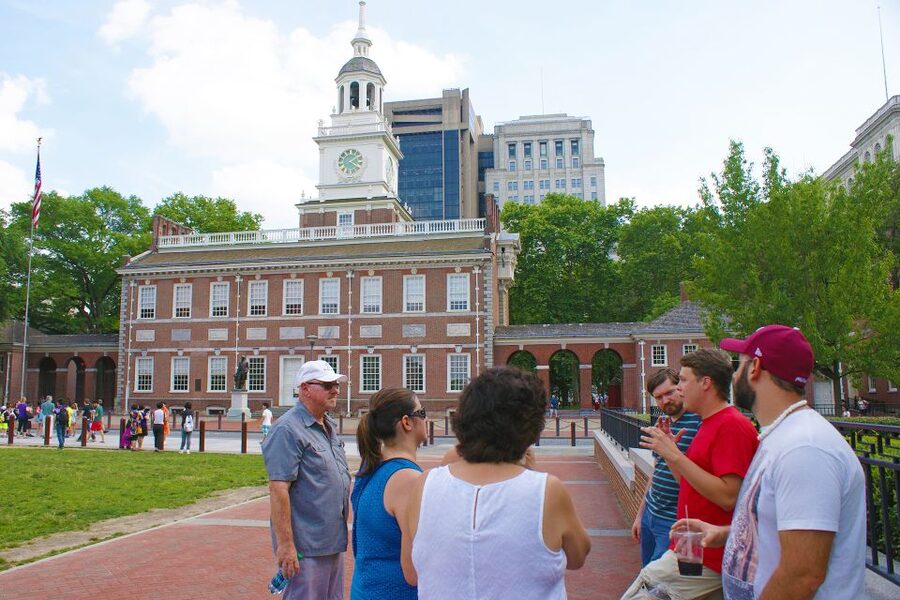
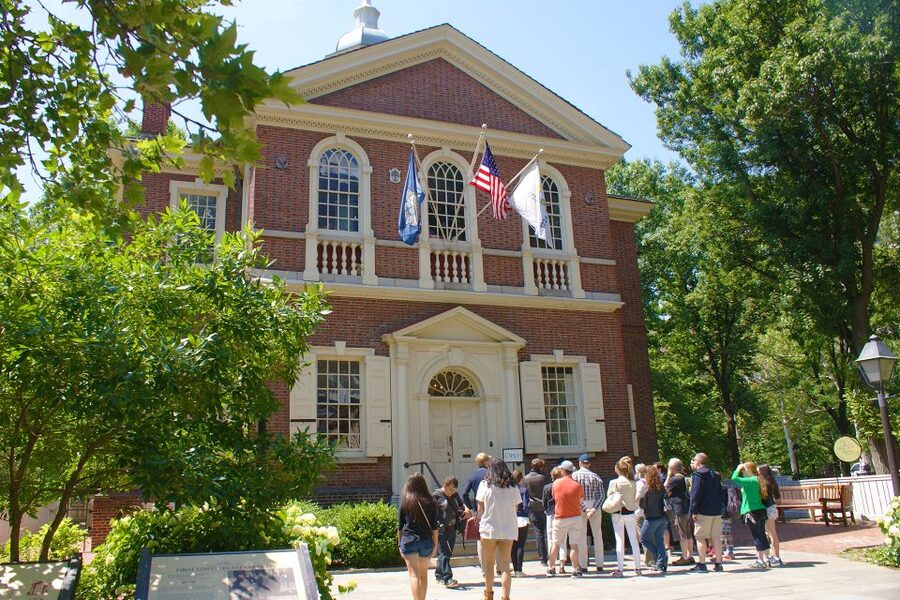
Carpenters’ Hall adds another layer to the story. It is linked to the First Continental Congress, when representatives met to respond to British policies before the Declaration of Independence was written.
This stop helps show that independence did not appear in one sudden burst of patriotic energy. It followed years of argument, organizing, protest, and uncertainty. I like this part because it gives the political story a process rather than a single dramatic moment.
The guide-led format also matters here. A plaque can tell you dates, but a skilled storyteller can explain why a meeting was risky, what the delegates were trying to achieve, and how their choices affected the next steps.
The Museum of the American Revolution presentation
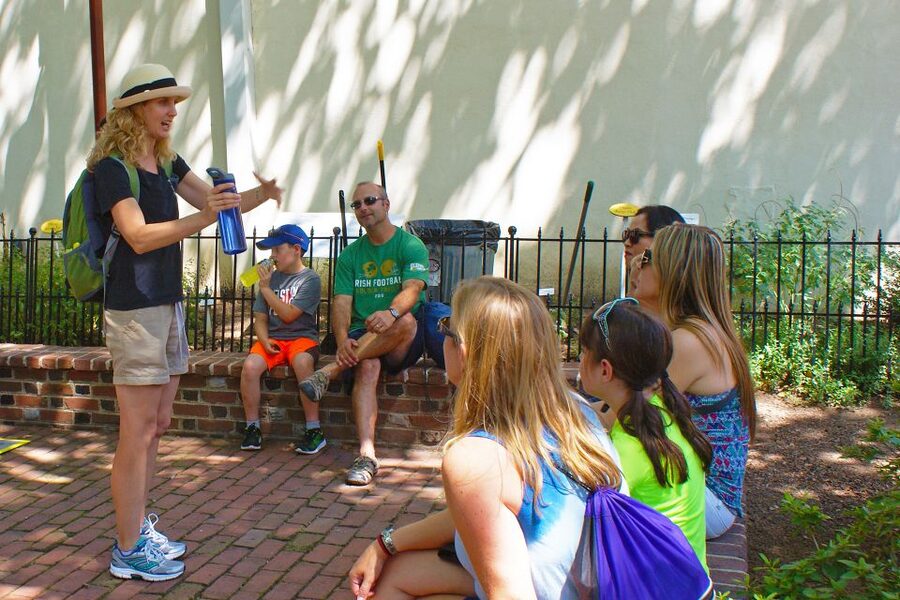
The Museum of the American Revolution is the tour’s most substantial indoor element. You receive a special presentation that features the tent George Washington used during the war. That gives the experience something tangible and personal after several exterior landmarks.
The tent is especially useful for visitors who find political history too abstract. A physical object connected to Washington’s military life helps you picture the discomfort, uncertainty, and mobile nature of the war. It also shifts the story away from speeches and documents and toward people living through difficult conditions.
The tour includes a demonstration or presentation at the museum, and you receive discounted admission if you want to return after the walk. This is an important value point. You get a focused introduction during the tour, then the option to spend more time with the museum’s wider collection later.
Do not treat the museum segment as a full museum visit. The route has several more stops afterward, so your time inside is limited. If the museum is a major priority, use the discount and plan a separate visit when you can take the exhibits at your own pace.
Elfreth’s Alley and Philadelphia’s everyday past
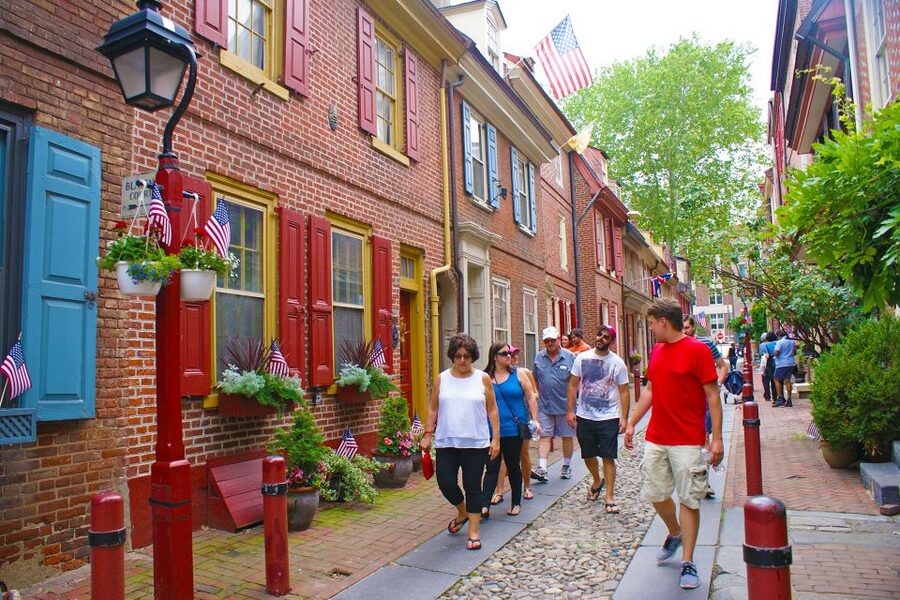
Elfreth’s Alley is one of the most memorable parts of the route. It is the nation’s oldest continuously inhabited residential street, and its narrow line of historic homes offers a sharp contrast to the formal buildings on Independence Mall.
Here, the story shifts from national documents to ordinary urban life. You can think about tradespeople, households, neighbors, and the daily routines that supported Philadelphia’s growth. The setting also makes for excellent photographs, though the street is still a residential place rather than a stage set.
I find this stop important because it prevents the tour from becoming a parade of famous men. You see where people lived, not only where leaders made speeches. The guide can help you read the architecture and understand how this part of Old City differs from the monumental spaces nearby.
Betsy Ross House and the American flag story
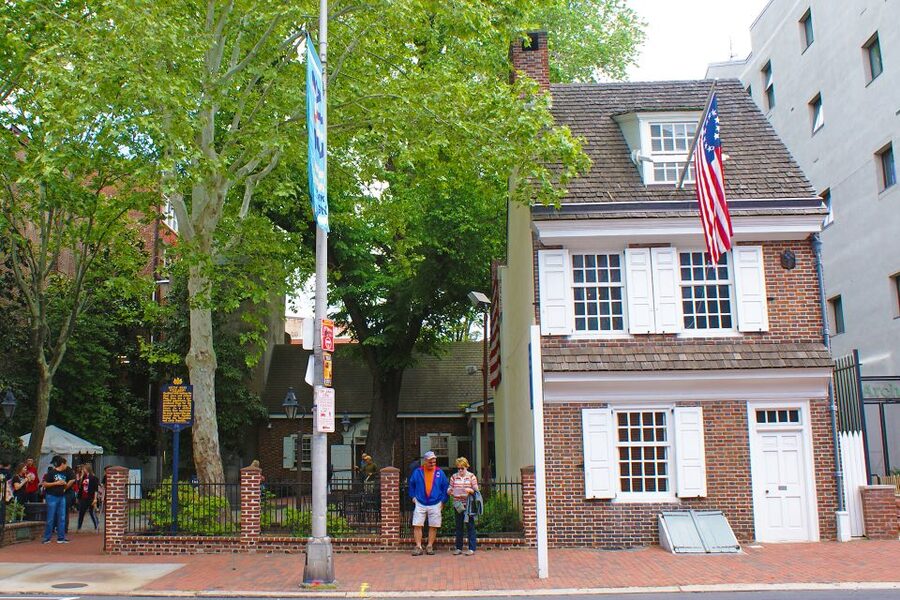
The tour continues to the Betsy Ross House, where you can take a memorable picture and hear about the upholsterer credited with creating the first American flag.
The story is familiar, but it is also a good example of how national legends form. The stop gives your guide a chance to separate documented facts from popular tradition, if the discussion goes in that direction, while still explaining why Betsy Ross remains such a lasting figure.
This is another exterior-focused point in the route, so do not expect a long private-house tour as part of the $45 price. The value is in the setting and explanation, especially when the guide connects Ross’s work to the wider role of women, artisans, and small businesses during the period.
Benjamin Franklin’s grave and the modern city
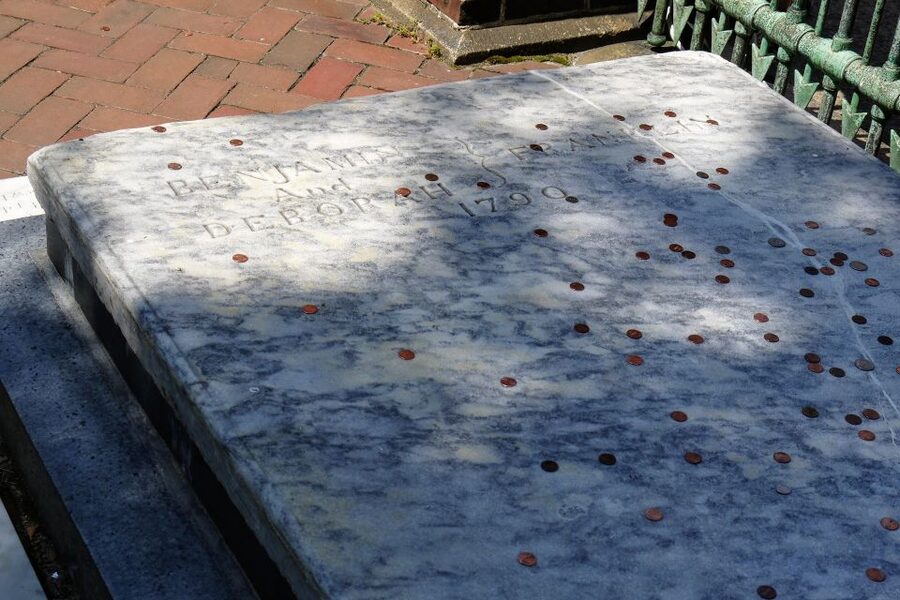
A photo stop at Benjamin Franklin’s burial site adds one of the tour’s most recognizable personalities. Franklin was a printer, writer, scientist, diplomat, and political figure, and his grave offers a quiet pause amid the busy historic district.
The tour also takes you toward North 6th Street and Market Street, bringing the modern city into view. That contrast is useful. Philadelphia is not a preserved theme park. Historic buildings sit beside working streets, shops, restaurants, and daily city life.
This section can be especially helpful if you have never visited Philadelphia. You learn where the historic core ends, where Old City continues, and how to orient yourself for the rest of your day.
The recreated President’s House and overlooked voices
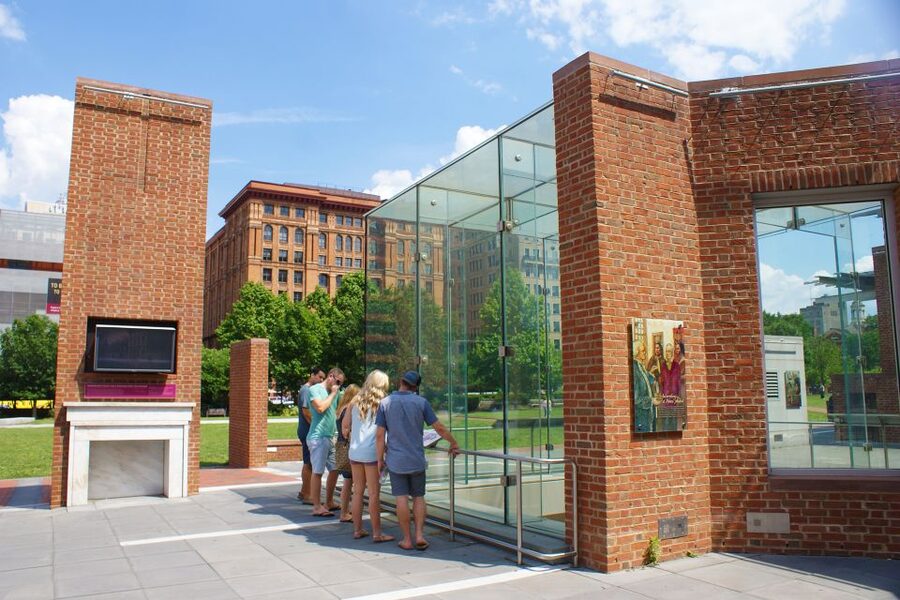
The route includes the recreated site of the President’s House, where you learn about the two leaders who lived there and the people connected with their households.
This is one of the more valuable parts of the experience because it broadens the national story. The founding era is often told through presidents, generals, and delegates. The President’s House site creates room for the enslaved people and other individuals whose work made that early political world possible.
The subject can be uncomfortable, and it should be. A useful Philadelphia tour does not present the founding as a simple tale of liberty delivered to everyone at once. This stop helps you see the contradiction between revolutionary language and the lives of people denied basic rights.
The guides make the difference
The tour is only as good as the person leading it, and the guide feedback is unusually consistent. Adam is praised for turning a history book into a conversation and for answering questions with humor. Tom is noted for bringing the period to life and keeping groups involved. David is described as articulate and well read, while Nina has been particularly effective with families and teenagers.
Other named guides, including John, Maria, Caroline, Patricia, PJ, Alex, and Peter Coë, have also been singled out for warmth, clear explanations, and good pacing. That range suggests a strong guide team rather than one lucky match.
Several details matter here. Guides have adjusted the pace for older family members, asked participants if they had a person or place they wanted to focus on, and offered restaurant suggestions after the tour. One guide even kept the experience engaging for a group that included a 14-year-old and two adult sons.
The group size is not fixed in the information provided, but several experiences were described as small-group walks. If your departure has a small group, you should have more room for questions and interaction. Still, the exact feel can vary by date and guide.
Who should book this tour?
I would choose this walk if you have a half day in Philadelphia and want a clear introduction before deciding which museums deserve more time. It is also a good fit for families, first-time visitors, history beginners, and anyone who prefers stories to audio guides.
It suits history fans too, but with one warning: you will not get an exhaustive treatment of every building or Revolutionary figure in 150 minutes. The tour gives you a well-shaped overview, then points you toward places worth revisiting.
You should be comfortable walking outdoors for two and a half hours. Wear supportive shoes, and check the weather before setting out. The route is wheelchair accessible, but historic streets and steps can still affect comfort from one section to another.
Free cancellation up to 24 hours before the start gives you useful flexibility, and you can reserve now and pay later. Those are practical benefits, but the main decision comes down to whether you value a guide. If you only want exterior photos, you can spend less. If you want the sites tied together with human stories, $45 is fair.
Should you book the Philadelphia History, Highlights & Revolution Walking Tour?
Book it if you want the best first orientation to Philadelphia’s historic center in one outing. The route covers the famous symbols, adds Elfreth’s Alley and Franklin’s grave, includes a meaningful museum presentation, and gives attention to people often left out of the standard founding story.
Skip it if you already know Old City well or plan to spend the entire day inside the Museum of the American Revolution and Independence Hall. In that case, a self-guided visit may give you more time at each site.
For most first-time visitors, I would book the tour early in a Philadelphia stay. Use it to learn the street plan, mark places you want to revisit, and ask your guide for ideas for the rest of the day. That is where this experience earns its keep: it turns a collection of famous landmarks into a connected story.
FAQ
How long does the Philadelphia history walking tour last?
The tour lasts 150 minutes, or two and a half hours.
How much does the tour cost?
The price is $45 per person.
Where does the tour begin?
Meet your guide at the Signer Statue in Signers’ Garden.
Where does the tour finish?
The tour finishes in Old City.
Is admission to the Museum of the American Revolution included?
The tour includes a special presentation at the museum, including George Washington’s wartime tent, plus discounted admission you can use after the tour. The provided details do not state that full museum admission is included in the $45 price.
Does the tour include Independence Hall and the Liberty Bell?
You pass Independence Hall and receive a guided explanation. The Liberty Bell is included as a guided sightseeing and photo stop. The details do not specify a full interior tour of Independence Hall.
Is the tour wheelchair accessible?
Yes, the activity is listed as wheelchair accessible.
What happens if I need to cancel?
You can cancel up to 24 hours in advance for a full refund. You can also reserve now and pay later.
Just added around the USA
- Raleigh Downtown: Historic Walking Tours★ 4.9 · 17 reviews
- Portland, Maine: 2-Hour Guided History Tour★ 4.9 · 127 reviews
- Portland: Walking Food Tour – Warm Donuts & History★ 4.7 · 27 reviews
- Pittsburgh: Evening Ghost & History Downtown Walking Tour★ 4.5 · 71 reviews
- Pittsburgh: Best of the Burgh History and Architecture Tour★ 4.8 · 115 reviews
- Plymouth: Plimoth Patuxet Museums – 3 tickets available★ 4.5 · 165 reviews
- Philadelphia: Revolutionary Walk Through Historic Old City★ 4.8 · 208 reviews
- Philadelphia: Guided Walking Tour of Historic District!★ 5.0 · 42 reviews
History Walking Tours, compared.

History and Hauntings of Salem Guided Walking Tour
Read our review →
Freedom Trail History Small Group Walking Tour
Read our review →
Historic Charleston Guided Sightseeing Walking Tour
Read our review →
Tapas Walking Tour with Food, Wine, and History
Read our review →
Savannah History and Haunts Candlelit Ghost Walking Tour
Read our review →
A History of Terror – Belfast City Centre Walking Tour
Read our review →Browse the lists this tour appears in