
Review · PHILADELPHIA
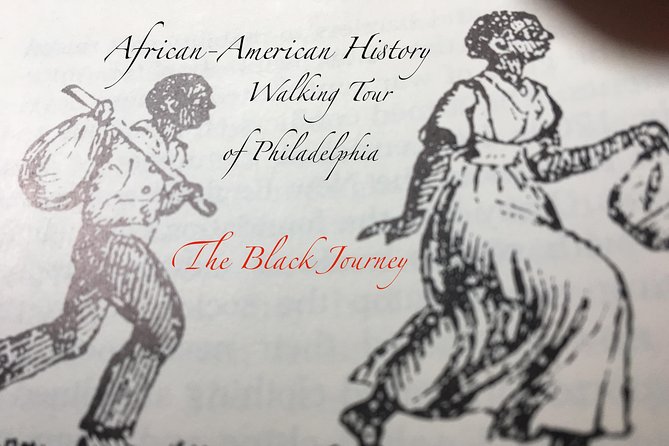
The Black Journey: An African-American History Walking Tour of Philadelphia
Philadelphia’s famous story has missing chapters. I like how this two-hour walk connects major sights such as the Liberty Bell and Congress Hall with the lives of Black Philadelphians, enslaved and free. I also like the strong storytelling, especially from guides such as Mijuel, whose local background and lively delivery earned repeated praise. The main drawback is time: two hours gives you a sharp introduction, but not room to explore every location in detail.
The $35 price is fair for an in-person guide through one of America’s most important historic districts. Come ready to walk, listen closely, and think about the gap between the nation’s promise of freedom and the lives of the people excluded from it. The tour can feel compact, and the historic core may be busy, but the subject matter gives familiar Philadelphia sights new weight.
Key points to know before you go
- The Liberty Bell gains a new meaning: The bell was later used as a symbol by the abolition movement, not only as a marker of American independence.
- The President’s House tells a difficult story: The first two presidents lived there, along with nine enslaved people.
- Black religious life is central: The tour explains the work of the Black pastor who founded the African Methodist Episcopal Church and may include discussion of Mother Bethel.
- You visit famous buildings and lost places: Congress Hall, Independence Square, Carpenter’s Hall, and the sites of a prison, Quaker meeting house, and Quaker school all help build the story.
- The group can be as large as 40 people: Some people have experienced smaller groups, but you should expect an outdoor walking tour rather than a private outing.
- You get a focused introduction for $35: The route is useful for first-time visitors and Philadelphia residents who want context often left out of standard city tours.
Why this walk changes the way you see Independence Mall
Philadelphia’s historic center is packed with icons. The Liberty Bell, Independence Hall area, Congress Hall, and First Bank of the United States can easily become a checklist of famous facades. The Black Journey asks you to slow down and ask who lived, worked, worshiped, suffered, and fought for freedom in the same streets.
That change in focus is the tour’s main strength. You are not simply hearing another version of the Revolution. You are hearing how slavery, resistance, faith, abolition, and Black community life shaped the city alongside the better-known story of the nation’s founders.
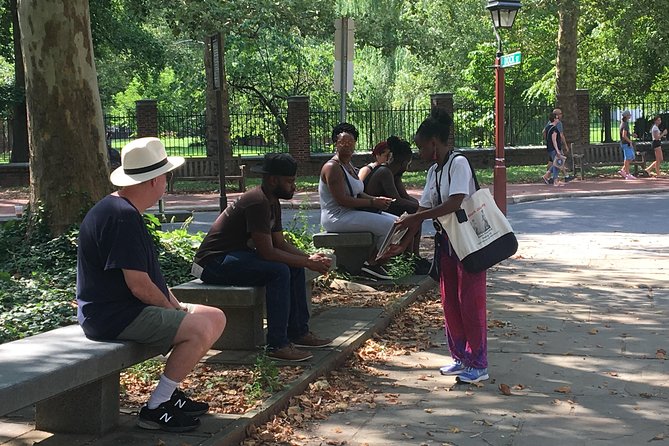
The tour begins at the Independence Visitor Center at 599 Market Street at 2:00 p.m. From there, you move through the historic district with a guide. The route ends near the Commodore John Barry Statue at 111 South Independence Mall West.
I would allow extra time before the start to find the meeting point and get settled. The tour uses a mobile ticket, and confirmation is provided when you book. Since the walk takes place outdoors and requires a moderate level of fitness, comfortable shoes are a sensible choice.
More History Walking Tours in the USA
- Philadelphia Old City Historic Walking Tour with 10+ Top Sites
★ 5.0 · 2,020 reviews - Philadelphia: History, Highlights & Revolution Walking Tour
★ 4.9 · 317 reviews - Philadelphia: Revolutionary Walk Through Historic Old City
★ 4.8 · 208 reviews
The President’s House and the people behind the presidential story
One of the most important stops is the former President’s House site. This is where the first two presidents lived, and where nine enslaved people also lived. That fact immediately complicates the polished image of the early republic.
The guide uses the site to show how national ideals and personal power could exist side by side. The young United States spoke loudly about liberty while enslaved people served inside the home of its highest officeholders. You receive about 15 minutes here, which is enough for the central story but not a long museum visit.
This stop works best if you are willing to sit with uncomfortable details. The tour does not treat slavery as a distant issue that happened somewhere else. It places slavery in the middle of the city’s political center, beside the buildings associated with American freedom.
The story of Martha Washington’s handmaid adds a more personal angle. You hear about her daring escape and the choices required to seek freedom while living under the control of a powerful household. It is the kind of detail that turns a broad historical subject into a human story.
The Liberty Bell beyond the usual patriotic photograph
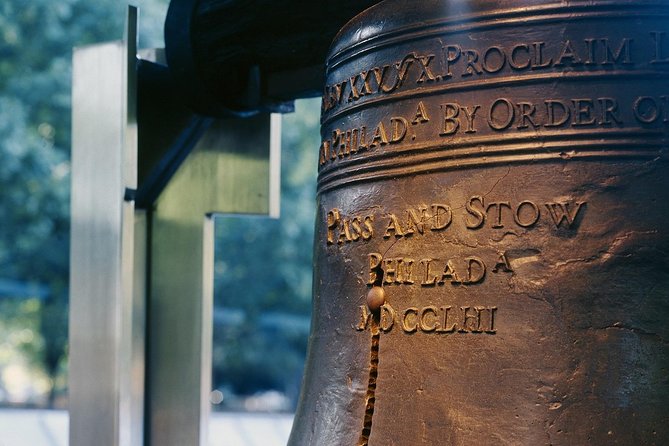
The Liberty Bell is familiar to almost everyone who visits Philadelphia. Its connection to the abolition movement gives it a second identity. It was not only a symbol of independence. Black activists and abolitionists also used its message of liberty in their fight against slavery.
That context makes the stop worthwhile even if you have already seen the bell. The guide helps you consider how different groups claimed the language of freedom for themselves.
You should not expect a long indoor presentation at every landmark. Much of the value comes from hearing the connections between sites while standing in the public spaces around them. If you want time for photographs, exhibits, or a close look at every building, plan to return after the walk.
Congress Hall, Old City Hall, and the early government
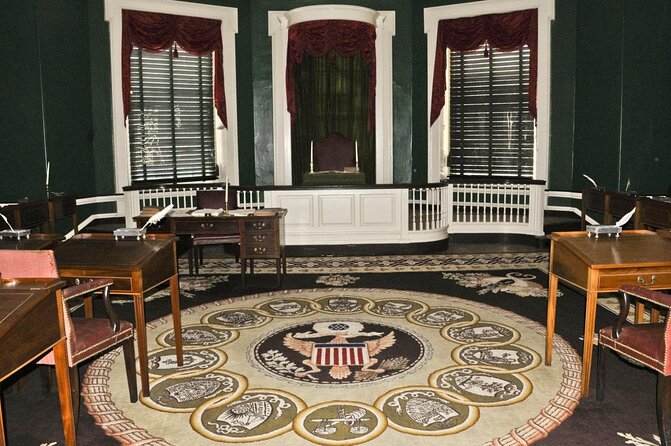
Congress Hall and Old City Hall sit within the part of Philadelphia where the new federal government took shape. The First United States Supreme Court Building adds another layer, showing how the country’s institutions developed in the same compact district.
On a standard sightseeing walk, these buildings can seem to tell one clean story about democracy. The Black Journey places them in a harder frame. You consider who could participate in that democracy, who was denied basic rights, and how Black people challenged those limits.
The route also passes the American Philosophical Society Museum, Library Hall, and the Thomas Jefferson Garden. These places bring questions about education, science, literature, and political thought into the walk. The tour’s strength is not that every stop receives equal time. Instead, the buildings serve as anchors for stories about race, freedom, and power.
More History Walking Tours in Philadelphia:
- Philadelphia Historical Independence Walking Tour
★ 4.5 · 164 reviews - Walking Tour of Historic Philadelphia
★ 5.0 · 99 reviews - Badass Women’s History Walking Tour of Philadelphia
★ 5.0 · 97 reviews - Beyond the [Liberty] Bell History Walking Tour
★ 5.0 · 73 reviews
Banks, halls, and the financial side of freedom
The First Bank of the United States and Second Bank of the United States show the financial ambitions of the early republic. Carpenter’s Hall and Independence Square add political and civic settings to the route.
These locations help you see that Black history is not limited to a few memorials or church buildings. It is tied to the same institutions that shaped business, government, labor, and law. The guide connects the city’s public achievements with the people whose work and rights were often ignored.
One especially useful theme is Philadelphia as an early center of Black enterprise. A tour participant described learning that the city was the original Black Wall Street. That phrase points to the long economic life of Black Philadelphia, although the two-hour format means you receive an introduction rather than a full study of local business history.
Washington Square and the ground beneath your feet
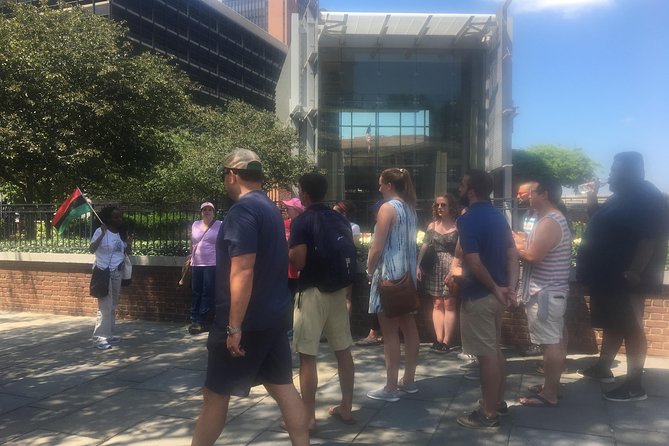
Washington Square provides one of the tour’s more sobering moments. The area includes the Tomb of the Unknown Revolutionary War Soldier and the Bicentennial Moon Tree, but the ground also carries stories of people whose names and lives were not preserved in the same way as those of famous leaders.
The tour discusses Congo Square and the thousands of people who remain buried there. This is a powerful reminder that Philadelphia’s public spaces can also be burial grounds and places of memory. You may walk across an attractive square without knowing what lies beneath it.
Washington Square also gives the guide room to discuss Black participation in the Revolutionary era and the uneven meaning of independence. The stop lasts about 10 minutes, so listen closely. The key point can pass quickly if you are distracted by traffic, other groups, or the surrounding monuments.
Homes, churches, and the growth of Black community life
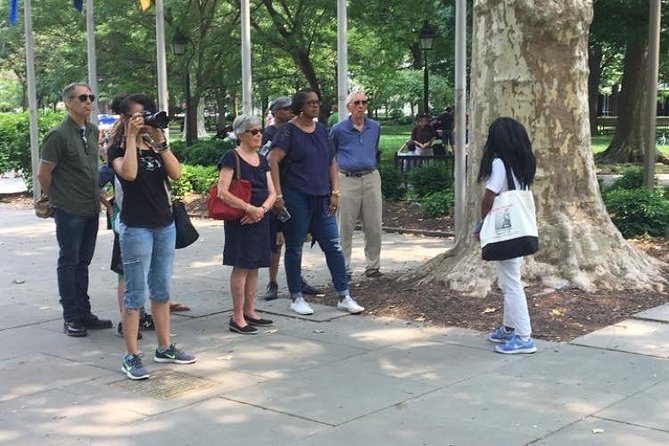
The John Todd House and Bishop White House bring the story back to private homes. These buildings help show the social world of early Philadelphia, including the sharp difference between the households of white elites and the Black people who worked within them.
The route also identifies Dock Creek, the Merchant’s Exchange, and City Tavern. These places connect the tour to commerce, politics, food, and public life. The city’s Black past was not confined to a single neighborhood. Black people worked throughout the central district, even when the historical record gave them little space.
Black religious life receives special attention. The tour explains the Black pastor who founded the African Methodist Episcopal Church, a major development in African-American religious history. Several accounts also single out Mother Bethel as a highlight, with the church’s role in Philadelphia’s Black community receiving warm praise.
Because the published route does not provide a full description of every church visit, I would treat Mother Bethel as an important part of the tour’s Black church story rather than assume a long interior visit. Ask the guide at the start if seeing the church itself is included on that day.
The subject matters because churches were more than places for worship. They offered leadership, education, organizing, mutual aid, and a place where Black Philadelphians could build institutions on their own terms. That larger context gives the stop lasting value.
The lost places that no longer appear on the map
Some of the most useful information comes from places you will not see as grand buildings. The guide identifies former sites connected to the Philadelphia Prison, Benjamin Rush’s house, a Quaker meeting house, and a Quaker school.
These vanished locations show why a guided walk is useful. Streets change, buildings disappear, and plaques rarely explain every connection. A guide can point out where something once stood and explain why that site matters to Black residents, abolitionists, religious groups, or enslaved people seeking freedom.
The Quaker sites are especially important because Quakers played a major role in antislavery work, while also belonging to a broader religious and social world with its own limits and contradictions. The tour gives you a chance to see abolition as a movement shaped by real people and institutions, not just a chapter heading.
What the guides do best
The strongest part of this experience is the guide’s delivery. Mijuel, whose name is pronounced My Jewel, is repeatedly praised for combining local roots, historical study, and a personal connection to Philadelphia. Mike is also praised for bringing strong context to the city’s Black past and its continuing effect on Philadelphia life.
The praise is specific. The guides are described as engaging, personable, and able to tell lively stories while still giving facts and figures. That balance matters on a two-hour walk. A list of dates would be tiring. Pure storytelling could leave you without a clear sense of place or scale.
The best guides also connect earlier events to modern issues without turning the tour into a lecture disconnected from the streets. You get help filling gaps often left out of school lessons, including the lives of enslaved people, the work of Black women, and the role of Black churches.
One story that made a strong impression concerns a Black woman undertaker who secretly helped move enslaved people toward freedom in caskets. It is a striking example of how ordinary work could become an act of resistance. Stories like this give the tour its human edge.
Guide quality can vary on any walking tour, so I would arrive ready to participate. Listen for names, dates, and places you may want to revisit on your own. The information comes quickly, and some people say they would happily take the tour again because there is too much to absorb in one outing.
Is $35 a fair price?
At $35 per person, the tour is priced well for an approximately two-hour guided walk in central Philadelphia. You are paying for interpretation, not admission to a long list of museums. The guide’s ability to connect separate sites is the reason to book.
The price feels strongest for a first visit, when you want to understand the historic center before exploring individual buildings. It also works for a Philadelphia resident who knows the usual landmarks but wants to hear the Black stories attached to them.
The value is less clear if you want extensive interior access or a slow study of each building. This is a moving outdoor tour, and the maximum group size is 40 people. Some participants have experienced smaller, manageable groups, but you should not count on a private setting.
The walk requires moderate physical fitness. Service animals are allowed, and the meeting point is near public transportation. Weather matters, and poor conditions can lead to a new date or a full refund. You can cancel for a full refund up to 24 hours before the start time. Last-minute changes are not accepted, so make your plans with that deadline in mind.
Who will get the most from this Philadelphia walk?
I would recommend it to first-time visitors who want more than the standard Founding Fathers story. It is also a strong choice for people of African descent, families with older children, school groups from sixth grade upward, and local residents who want a clearer understanding of Black Philadelphia.
The tour suits you if you enjoy history delivered through stories and public places. It may be less satisfying if you prefer a quiet museum, a private guide, or a tour centered on architecture alone.
Parents should consider the serious subject matter. The stories include slavery, escape, burial grounds, and the denial of basic rights. Older children and teenagers can gain a great deal from it, especially if an adult helps them connect the past to the ideals represented by the nearby landmarks.
Plan to pair the walk with extra time in the historic district. The tour gives you a framework, then you can return to the Liberty Bell, Independence Hall area, Mother Bethel, or another site for a slower visit if access is available.
Should you book The Black Journey?
Book this tour if you want Philadelphia’s famous landmarks explained through the lives of Black people who lived, worked, worshiped, resisted, and sought freedom here. Its best features are the guides, the human stories, and the way it places slavery and Black achievement beside the nation’s most celebrated symbols.
Skip it only if you want a broad tour of Philadelphia with little focus on race or social history. The route is compact, the pace can be quick, and not every listed location receives equal time. For $35, though, it gives you a thoughtful starting point and a much fuller understanding of Independence Mall than a simple photo stop can provide.
FAQ
Where does The Black Journey walking tour begin?
The tour begins at the Independence Visitor Center, 599 Market Street, Philadelphia, Pennsylvania 19106.
What time does the tour start?
The scheduled start time is 2:00 p.m.
How long does the walking tour last?
The tour lasts approximately two hours.
Where does the tour end?
The tour ends at the Commodore John Barry Statue, 111 South Independence Mall West, Philadelphia, Pennsylvania 19106.
What is included in the tour price?
The tour includes an in-person guide. The price is $35 per person.
Can I cancel for a refund?
Yes. You can cancel at least 24 hours before the start time for a full refund. Cancellations or changes made less than 24 hours before the start time are not accepted.
Just added around Philadelphia
- Badass Women’s History Walking Tour of Philadelphia★ 5.0 · 97 reviews
- Historic Sites of Philadelphia Self-Guided Walking Audio Tour★ 4.5 · 24 reviews
- Walking Tour of Historic Philadelphia★ 5.0 · 99 reviews
- Philadelphia Old City History Pub Crawl Small-Group Tour★ 5.0 · 294 reviews
- One Hour Tour Of Philadelphia Historical Sites In A Vintage Car★ 4.5 · 52 reviews
- Philly Gayborhood and LGBTQ History Walking Tour★ 5.0 · 36 reviews
- Independence Mall (Entrance to 2 Historic Sites) 2.5 Hour Walking★ 5.0 · 21 reviews
- Beyond the [Liberty] Bell History Walking Tour★ 5.0 · 73 reviews
History Walking Tours, compared.

History and Hauntings of Salem Guided Walking Tour
Read our review →
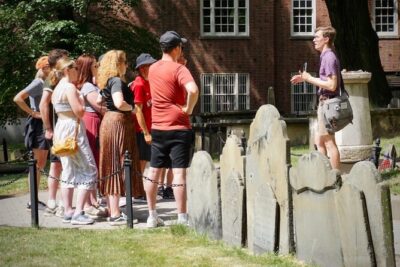
Freedom Trail History Small Group Walking Tour
Read our review →
Historic Charleston Guided Sightseeing Walking Tour
Read our review →
Tapas Walking Tour with Food, Wine, and History
Read our review →
Savannah History and Haunts Candlelit Ghost Walking Tour
Read our review →
A History of Terror – Belfast City Centre Walking Tour
Read our review →Browse the lists this tour appears in