Review · KYOTO
Kyoto: Nijo Castle World Heritage Guided Tour with Admission
Samurai power comes alive inside Nijo Castle. This 90-minute small-group tour combines castle admission with a guide who leads you through one of Kyoto’s most important historic sites. I especially like the included entry ticket, which removes one small chore, and the group limit of 10 people, which gives the visit a more personal feel than a large coach tour.
I also like the focus on both Tokugawa history and beautiful gardens. Guides named Alex, Nao, Naoya, Benjamin, and Noe have been praised for clear English, good humor, and thoughtful answers. The main consideration is time: 90 minutes is enough for the highlights, but not enough for a slow, detailed look at every corner. In winter, bring thick socks because you remove your shoes inside the palace.
Key points to know before booking
- Admission is included: You do not need to arrange a separate castle ticket.
- The tour begins at Nijojo-mae Station: The meeting point is beside Nijo Castle in Nakagyo Ward.
- The group is capped at 10 people: That is small enough for questions and easier listening.
- The focus is on Tokugawa Ieyasu and samurai rule: You get context for the castle, not just a walk past gates.
- The palace requires shoe removal: Thick socks are a smart choice in cold weather.
- Free cancellation is available up to 24 hours before departure: Changes made inside that window are not accepted.
Why Nijo Castle deserves a guided visit
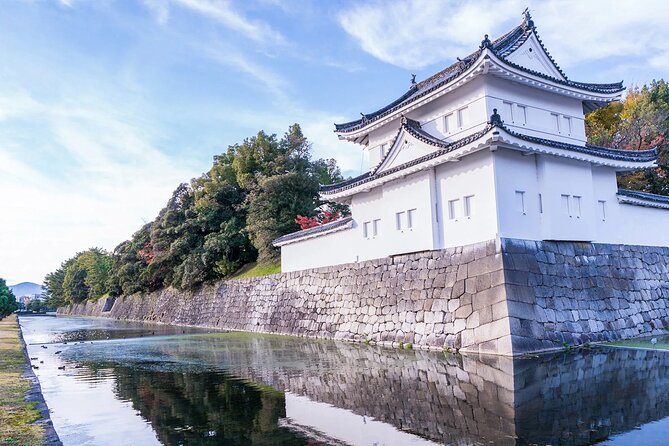
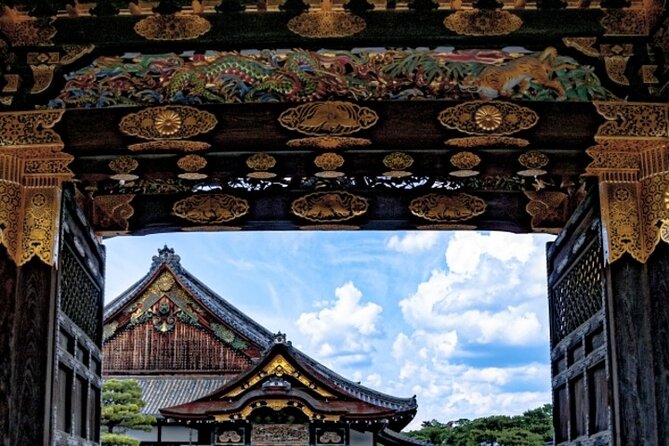
Nijo Castle is not just another grand Japanese building. It was built by Tokugawa Ieyasu, the shogun who began a samurai government that lasted about 260 years. That fact gives the site a clear purpose: this was a place where political authority was displayed, protected, and eventually challenged.
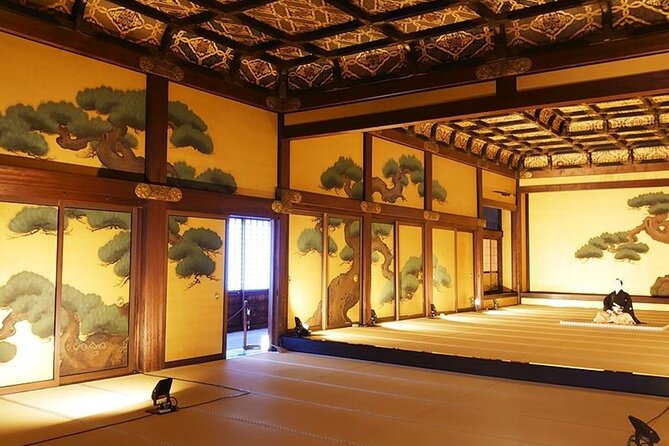
Without context, you may notice impressive gates, gardens, painted interiors, and polished wooden floors, but miss the larger story. The tour connects the castle to the rivalry between shogun and emperor. That makes the visit more than a photo stop. You begin to understand why a castle in Kyoto, the imperial capital, mattered so much.
I like this kind of short guided visit because Nijo Castle has enough parts to distract you. A guide can point out the places that matter most, explain what you are seeing, and keep the walk moving. You still have time to look around, but you are less likely to spend your entire visit wondering which building deserves your attention.
More Castle and Palace History Tours in Japan
- Tokyo: Imperial Palace and Shogun Historical Walking Tour
★ 5.0 · 2,251 reviews - Tokyo Castle & Imperial PalaceーShogun Walking Tour
★ 4.7 · 1,068 reviews - Tokyo: Imperial Palace Japanese History Walking Tour
★ 4.9 · 987 reviews
Starting at Nijojo-mae Station
The tour starts at Nijojo-mae Station, at Nijojocho in Kyoto’s Nakagyo Ward. This is a practical meeting point because it puts you right beside the castle rather than asking you to navigate several city blocks after getting off public transport.
You should arrive with the meeting location and start time clear on your phone. The booking confirmation is issued at the time of booking, and the tour uses a mobile ticket. Since this is a popular historic site, arriving early is sensible even though the admission arrangement is designed to make entry easier.
The included admission is one of the tour’s useful features. You are not buying a guided walk and then joining another ticket line on your own. The provider handles the castle entry as part of the experience, while the guide takes the lead once the visit begins.
The castle grounds and the Tokugawa story
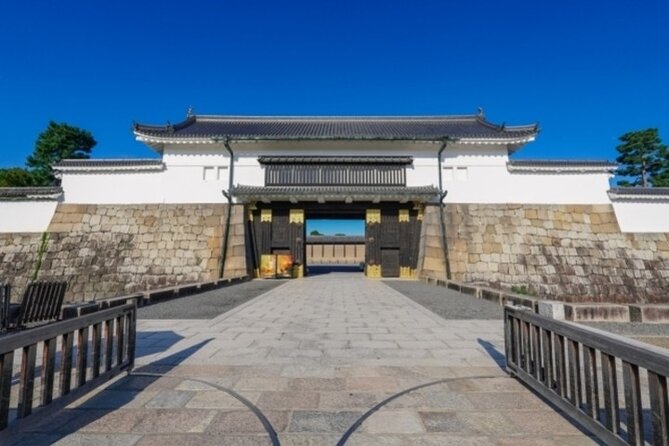
The first part of the visit takes place across the castle grounds. Expect a walk through gates, open areas, and Japanese gardens while your guide explains how Nijo Castle fits into the era of Tokugawa rule.
The key figure is Tokugawa Ieyasu. He established the samurai era that shaped Japan for roughly two and a half centuries. A guide can make that broad period easier to grasp by tying it to the physical site. The gates and fortified layout were not placed there by accident. They reflected power, security, ceremony, and rank.
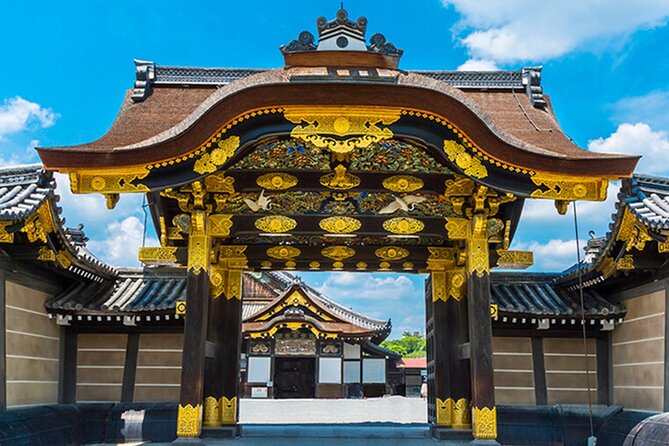
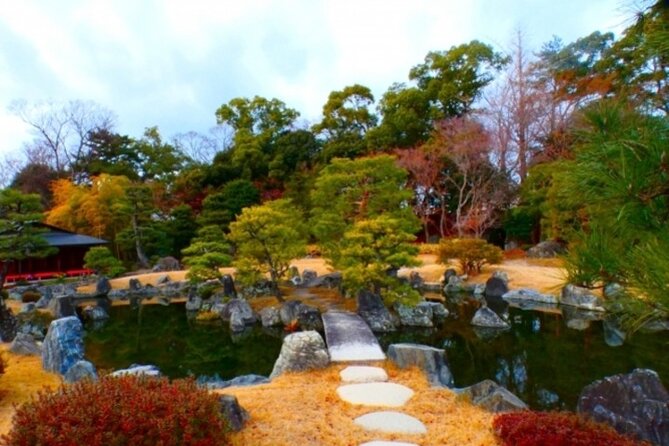
The outdoor section also gives you the best chance to take photographs. The castle’s gates and gardens are singled out as especially photogenic, so keep your phone or camera ready. Your guide may pause at attractive viewpoints, but this is still a guided walk, not a dedicated photography session. If you want quiet time for careful composition, you may need to use a few moments before or after the explanations.
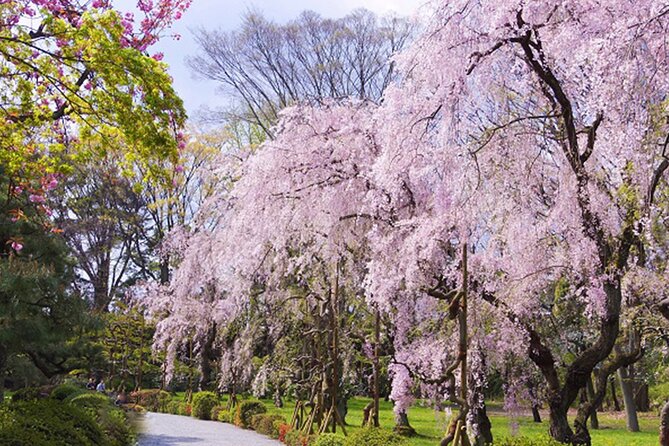
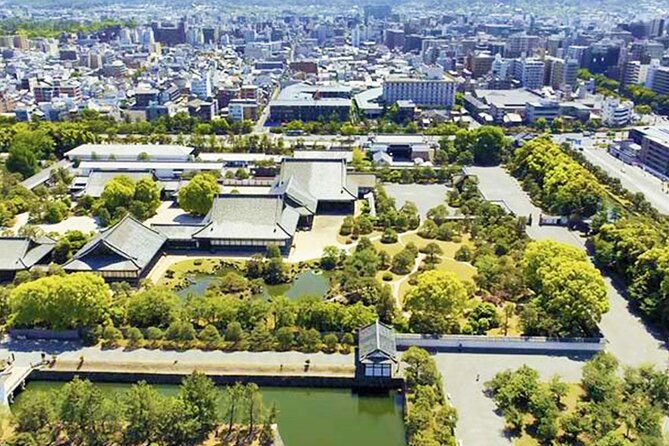
The gardens provide a welcome change from the formal buildings. They give the visit breathing room and show how Japanese design can frame political architecture with ponds, stones, trees, and carefully arranged paths. The tour does not treat the grounds as filler. They are part of the experience and help you see the castle as a complete setting.
Inside the palace, prepare to remove your shoes
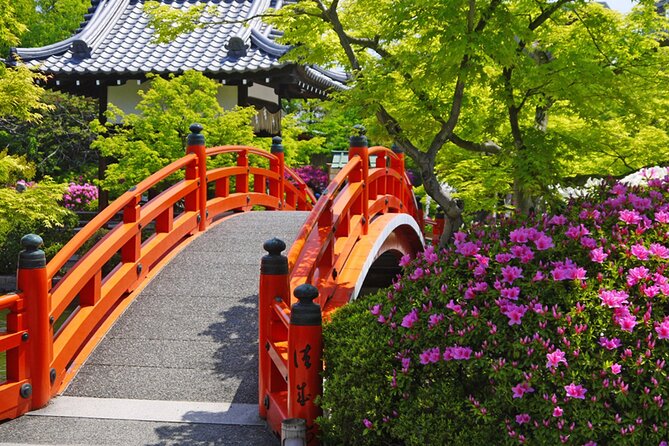
The palace interior is one of the most memorable parts of the visit, but it comes with a practical rule: shoes must be removed. This is especially important in winter, when the floors can feel cold. Thick socks are a simple but useful bit of preparation.
You will walk through the interior in socks, looking at spaces connected with the ruling family and the formal business of government. The palace gives the history a more human scale. Rather than seeing only walls and gardens, you can picture officials moving through rooms where status and ceremony mattered.
The review comments place strong emphasis on the guides’ explanations inside the castle. Naoya, in particular, is praised for clear English, friendly answers, and details that would be easy to miss when visiting alone. Alex is also praised for his humor, historical explanations, and willingness to handle many questions. These comments suggest that the value of the tour rests heavily on the individual guide assigned that day.
That is both a strength and a small uncertainty. The guide names praised include Alex, Nao, Naoya, Benjamin, Noe, and Naoja, but you should not assume that one particular person will lead your departure. The consistent theme is that the guide adds information and personality that signs alone cannot provide.
More UNESCO World Heritage Tours in Japan
- Kyoto UNESCO World Heritage Site Private Tour with a Premium Van
★ 5.0 · 20 reviews - World Heritage Shirakawa-go and Experience Tours from Kanazawa
★ 5.0 · 4,049 reviews - World Heritage Kyoto & Nara Uji Authentic Matcha Experience
★ 5.0 · 1,573 reviews - Kanazawa: World Heritage Shirakawa-go Morning Guided Tour
★ 4.9 · 988 reviews
A 90-minute route with a clear purpose
The advertised duration is about one hour and 30 minutes. That is a good fit if you want a focused introduction to Nijo Castle rather than a full morning spent on one site.
The tour covers the castle itself, its history, and the gardens. It is not presented as a long day outing, and there are no extra stops listed. The route begins and ends at the meeting point, so you can plan your next Kyoto activity without arranging a separate return transfer.
The short length also helps with busy sightseeing schedules. You might pair it with another central Kyoto attraction, a meal, or a walk through the surrounding area. At the same time, do not expect unlimited free time. A guide-led route has to keep a group together, and the castle has enough to see that 90 minutes can pass quickly.
I would choose this tour if I wanted a reliable first visit. If I had already spent a full day studying Nijo Castle or wanted to linger over every garden view, I might prefer a self-guided visit with more flexible timing. For most first-time visitors, the guided structure is likely the better use of a limited Kyoto day.
What the small group adds
The maximum group size is 10 people. That is a meaningful detail, not just a marketing phrase. A group of this size is easier to hear, easier to keep together, and more comfortable for questions than a large party.
The guides have been praised for adjusting explanations to the group’s interests. That matters at Nijo Castle because the site can appeal to people who care about architecture, Japanese gardens, samurai government, imperial history, or photography. A good guide can spend more time on the subjects that interest you instead of giving a fixed speech and moving on.
You should still expect some group limitations. If several people ask questions, the pace may slow. If your group is especially interested in one topic, another subject may receive less attention. The small size improves the odds of a personal visit, but it cannot turn a 90-minute tour into a private half-day lesson.
Guide quality is the main reason to book
The strongest praise is directed at the guides. Alex is described as easygoing, funny, and able to answer a wide range of questions. Nao is praised for making the history accessible and adding facts that a solo visit might miss. Naoya receives repeated approval for excellent English, warmth, and clear explanations.
Benjamin is praised for being informative, accommodating, and personable. Noe is described as full of information during a castle and garden visit. These details matter because Nijo Castle is a place where a guide can either bring the site to life or simply recite dates.
The overall score is 5 out of 5 from 128 reviews, with 100 percent recommending the experience. That is an unusually strong record. I would still keep expectations realistic: guide quality can vary from one departure to another, and the exact guide is not guaranteed in the information provided. Even so, the repeated praise for several different guides is a good sign.
Is $39.24 a fair price?
At $39.24 per person, this is not the cheapest way to enter Nijo Castle. The value depends on how much you want from the visit.
If you only want to walk around the grounds and take photographs, a self-guided entry may suit you better. You would save money and control the pace. The tour becomes more worthwhile when you value the included admission, prebooked date, small group, and explanations about the shogun, emperor, Tokugawa Ieyasu, and the castle’s design.
The price also buys convenience. You do not need to sort out separate admission, choose a route on your own, or read every sign while trying to keep track of the site. For a first visit to Kyoto, that can be a fair trade, especially when your schedule is tight.
I see the best value for people who enjoy history but do not want a long academic lecture. The experience is short, guided, and focused. You pay for structure and interpretation as much as for the ticket itself.
Practical tips for a smoother visit
Bring thick socks if you are visiting in winter. You will remove your shoes inside the palace, and cold floors can make the indoor portion less comfortable.
Keep your mobile ticket easy to access and use the meeting point at Nijojo-mae Station as your main navigation marker. Since the activity begins and ends there, the logistics are simpler than tours that use different arrival and departure locations.
Give yourself enough time to reach the station. The booking confirmation arrives when you reserve, and prebooking guarantees your selected date, but it does not remove the need to arrive on time.
Plan your photography around the guide’s pace. The gates and gardens are among the most attractive places for pictures, but you may not have long pauses at every viewpoint. If you want a souvenir after the visit, one guide specifically recommended stopping at the souvenir shop and trying red bean mochi soup.
Cancellation is flexible if you decide early. You can receive a full refund when you cancel at least 24 hours before the start time. A cancellation or change inside 24 hours is not accepted for a refund.
Who should book this Nijo Castle tour?
I would recommend it to first-time Kyoto visitors, history fans, couples, families, and anyone who prefers a clear route through a major site. It is also a good choice if you want to ask questions rather than rely only on signs.
The tour should suit most people because the activity is near public transportation and most people can participate. The 90-minute format is manageable for those who do not want a long walking program, though you should be comfortable moving around the castle grounds and removing your shoes indoors.
You may want to skip it if your top priority is the lowest possible admission cost, a completely private visit, or a slow photography session. A self-guided entry gives you more freedom. This guided option gives you more context and less guesswork.
Should you book it?
Book this tour if you want Nijo Castle to make sense, not just look beautiful. The included admission, small group, central meeting point, and strong guide record make $39.24 reasonable for a focused introduction.
I would give particular weight to the guide-led history. The castle connects samurai rule, Tokugawa Ieyasu, imperial authority, gardens, and palace ceremony. With a good guide such as Alex, Nao, Naoya, Benjamin, or Noe, those pieces become easier to follow and much more memorable.
For a short Kyoto schedule, this is a practical choice. Just allow for the 90-minute pace, wear warm socks in winter, and arrive ready to listen as well as look.
FAQ
How long does the Nijo Castle tour last?
The tour lasts approximately one hour and 30 minutes.
Is admission to Nijo Castle included?
Yes. The admission fee to Nijo Castle is included in the tour price.
Where does the tour begin?
The tour begins at Nijojo-mae Station, located at Nijojocho in Kyoto’s Nakagyo Ward.
Where does the tour end?
The activity ends back at the meeting point.
How many people can join the tour?
The group has a maximum of 10 travelers.
Is the tour available by mobile ticket?
Yes. The experience includes a mobile ticket.
Do I need to remove my shoes?
Yes. Shoes must be removed when entering the palace interior. Thick socks are recommended during winter.
Can I cancel for a full refund?
Yes, if you cancel at least 24 hours before the experience start time. Cancellations or changes made less than 24 hours before the start time are not accepted for a refund.
More Castle and Palace History Tours in Kyoto
- Edinburgh: Edinburgh Castle Guided History Tour with Tickets
★ 4.8 · 9,933 reviews - Madrid Essential: Historic Center, Plaza Mayor & Royal Palace
★ 5.0 · 6,416 reviews - Venice’s Best: Basilica, Doge’s Palace, Gondola & History Gallery
★ 4.5 · 2,478 reviews - Marrakech: Saadian Tombs & Bahia Palace, Medina Guided Tour
★ 4.6 · 1,989 reviews
More UNESCO World Heritage Tours in Kyoto
- From Tirana: Berat UNESCO Heritage & Belshi Lake Tour
★ 4.9 · 3,863 reviews - Bali: Tanah Lot UNESCO World Heritage Sites Full-Day Tour
★ 4.7 · 1,947 reviews - Berlin: 3-Hour World Heritage Cruise to Potsdam
★ 4.5 · 1,569 reviews - UNESCO’s Ayutthaya Historical Park: Full-Day Tour from Bangkok
★ 4.5 · 1,559 reviews
Just added around Kyoto
- Private Guided Historical Sightseeing Tour in Kyoto★ 3.5 · 24 reviews
- Kyoto Gion Historical Walking Tour★ 5.0 · 188 reviews
- Kyoto Early Bird English Tour: Fushimi-Inari and Arashiyama★ 5.0 · 198 reviews
- Authentic Kyoto Gion Geisha/Maiko Cultural Experience★ 5.0 · 48 reviews
- Private car tour Let’s uncover secrets of majestic Kyoto history★ 5.0 · 45 reviews
- Kyoto UNESCO World Heritage Site Private Tour with a Premium Van★ 5.0 · 20 reviews
- Kyoto: Historic Higashiyama Walking Tour★ 5.0 · 31 reviews
- Kyoto: Private 2.5 Hour Historical Walking Tour★ 4.9 · 121 reviews
UNESCO World Heritage Tours, compared.
World Heritage Shirakawa-go and Experience Tours from Kanazawa
Read our review →

Bali: Tanah Lot UNESCO World Heritage Sites Full-Day Tour
Read our review →World Heritage Kyoto & Nara Uji Authentic Matcha Experience
Read our review →

UNESCO’s Ayutthaya Historical Park: Full-Day Tour from Bangkok
Read our review →
Rotterdam: Kinderdijk UNESCO World Heritage Entry Ticket
Read our review →