
Review · KYOTO
Kyoto Gion Historical Walking Tour
Kyoto reveals itself one lane at a time. I like the way this three-hour walk links Gion’s geisha quarter with Higashiyama’s temples, stone paths, and hillside views. I also like the small group of up to 12, plus guides such as Jay, Ben, and Ayumi, who bring Japanese history and local stories to life in clear English.
The main drawback is the physical demand. You will walk for about half a day, climb stairs, and tackle sloping cobblestone lanes. Kiyomizu-dera admission costs extra, and the steady stream of people around Ninen-zaka and Sannen-zaka can make parts of the route feel crowded.
Key points to know before you book
- A strong first look at eastern Kyoto: The route connects Gion, Chion-in, Maruyama Park, Nene-no-Michi, Yasaka Pagoda, and Kiyomizu-dera.
- History is the main event: Guides explain religion, geisha culture, samurai, emperors, theater, and the Meiji Restoration.
- Three hours on foot means proper shoes: Expect slopes, stairs, stone paving, and very little sitting.
- The $40 price offers useful context: Admission is mostly free, but Kiyomizu-dera and food are not included.
- Guides receive the highest praise: Jay, Ben, Ayumi, Tommy, and Michel are all noted for clear English and friendly teaching.
- The route ends at Kiyomizu-dera: You can continue exploring the temple afterward, but you will need to pay its admission fee.
A practical introduction to Gion and Higashiyama
This tour works best as an opening chapter to Kyoto. You are not simply taken from one famous photo spot to another. The guide explains how the city’s religious sites, entertainment districts, imperial past, samurai politics, and modern streets fit together.
That context matters in Kyoto. A wooden gate can look impressive on its own, but it becomes more meaningful when you understand the Buddhist tradition behind it. A narrow lane in Gion becomes more than a pretty street when you hear about its connection to tea houses, theater, and geisha culture.
The walk begins at Ben’s Cookies Kyoto Shijo, at 89 Shinchō in the Shimogyo Ward. The meeting point is near public transportation, and you receive a mobile ticket after booking. The tour finishes in front of Kiyomizu-dera, at 1-chōme-294 Kiyomizu in Higashiyama.
The route is one way, which is useful. You do not spend the final part of the tour retracing your steps. Instead, the walk gradually moves from central Gion toward the eastern hills and ends at one of Kyoto’s best-known temples.
More History Walking Tours in Japan
- Kyoto Gion: 2-Hour Geisha Culture & History Walking Tour
★ 5.0 · 1,186 reviews - Kyoto: Private 2.5 Hour Historical Walking Tour
★ 4.9 · 121 reviews - Kyoto: Historic Higashiyama Walking Tour
★ 5.0 · 31 reviews
Tatsumi Bridge and the Gion Shibashi lanes
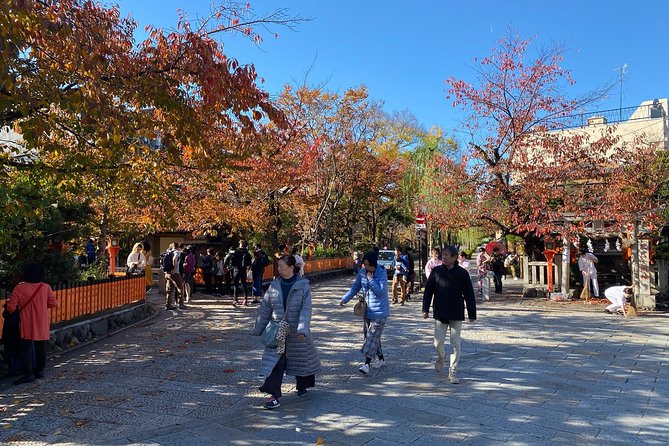
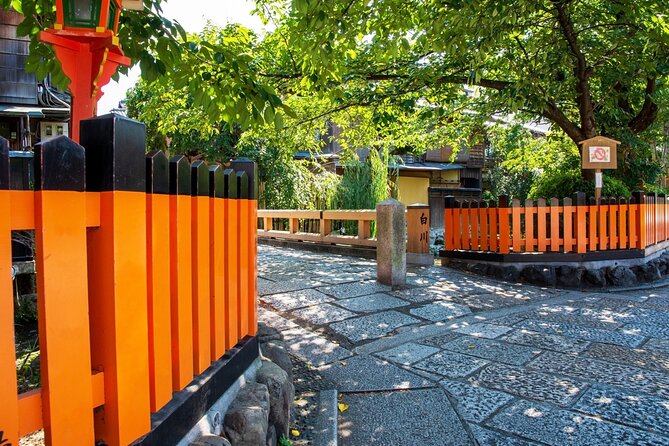
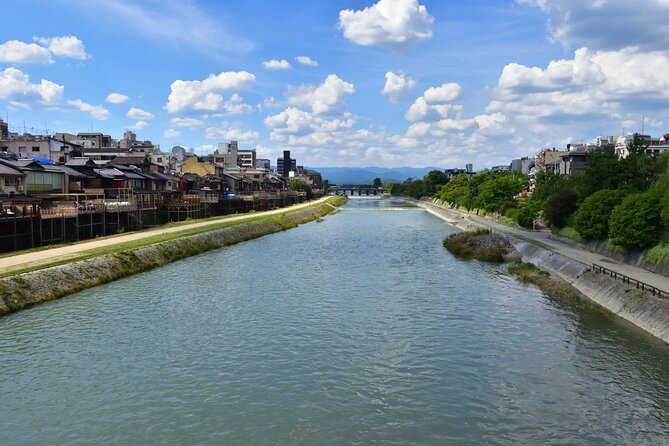
The first stop is Tatsumi Bridge, in the Gion Shibashi area. This is a gentle way to begin because the setting gives you an immediate sense of old Kyoto. The canal, traditional buildings, and narrow lanes create the kind of scene many people picture before arriving in Japan.
Your guide can help separate real tradition from movie-set expectations. Gion is not simply a place to hunt for geisha. It is a working district with a long connection to entertainment, tea houses, and formal Japanese arts.
The route also includes the Statue of Izumo-no-Okuni in the wider Gion area. Izumo-no-Okuni is linked with the early development of kabuki theater, so this part of the walk helps broaden the story beyond temples and gardens.
Do not expect a long stop here. The listed time at Tatsumi Bridge is about 15 minutes, enough for an introduction, photographs, and a short explanation before moving on.
Chion-in’s huge gate and temple grounds
Chion-in begins with its Sanmon gate, a massive wooden entrance that gives the next section of the walk a very different mood. The gate is one of the largest of its kind in Japan, and even a brief ten-minute stop helps you appreciate its scale.
The gate is not just a background for photographs. It announces the importance of the temple beyond it. Chion-in was founded in the 13th century and is one of Kyoto’s major Buddhist temples.
The temple stop lasts about 20 minutes. Your guide discusses religious life and the place of Buddhism in Japanese history, while also explaining how Kyoto’s temples connect to wider political and cultural changes.
This is one of the tour’s stronger teaching moments. Guides including Jay and Ben are praised for explaining Japanese history in a way that connects individual sites to samurai, monks, emperors, and the changing role of the capital.
You should not expect a full independent visit to every building at Chion-in. The tour gives you an introduction and orientation. If the temple catches your interest, you may want to return on your own with more time.
Maruyama Park and the shift from city to hillside

Maruyama Park offers a short change of pace after the temple grounds. It is an urban park with a calmer feel, and the ten-minute stop gives you room to notice the relationship between Kyoto’s green spaces and its old neighborhoods.
The park is also a useful bridge between the formal temple setting and the lanes that follow. You move from broad public space into smaller historic streets, where the pace becomes more about looking closely at buildings, paving, and hillside views.
The stop is brief, so I would not treat this as a full park visit. It is an orientation point rather than a long rest break. If you need water or a proper pause, plan ahead instead of counting on every stop to provide one.
More History Walking Tours in Kyoto:
- History and Hauntings of Salem Guided Walking Tour
★ 5.0 · 14,564 reviews - Lisbon: History, Stories and Lifestyle Walking Tour
★ 4.8 · 10,902 reviews - Boston: Freedom Trail History Small Group Walking Tour
★ 5.0 · 6,450 reviews - Historic Charleston Guided Sightseeing Walking Tour
★ 5.0 · 6,216 reviews
Nene-no-Michi, where the walk slows down
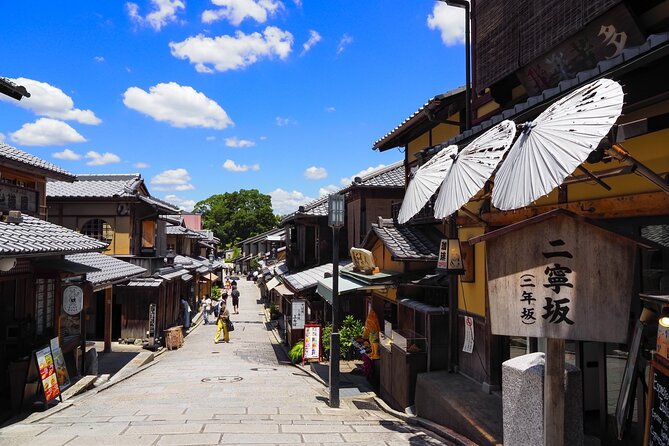
Nene-no-Michi means the Path of Nene. It is named for Nene, the wife of Toyotomi Hideyoshi, and runs through one of Kyoto’s most attractive old districts.
The stone paving and traditional buildings give this section much of its charm. It is also where comfortable shoes begin to matter more. Stone lanes and slopes are pleasant to see but less pleasant if you are wearing thin-soled shoes or footwear with poor grip.
The path is especially valuable with a guide because the scenery alone does not explain its historical connections. You learn how the neighborhood developed around temples, influential families, and Kyoto’s older streets.
This is also a good place to keep your camera ready, but remember that the route remains a public walkway. You will be sharing it with people moving through the district, and narrow lanes can become congested.
Yasaka Pagoda and the classic Higashiyama view
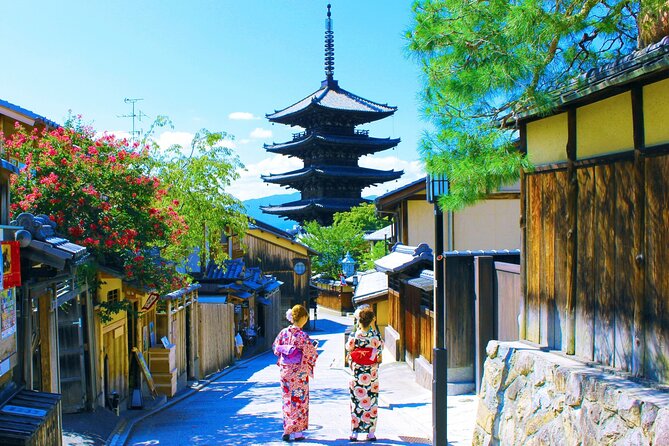
Hōkan-ji Temple, usually called Yasaka Pagoda, is one of the visual anchors of Higashiyama. Its five-story pagoda rises above the surrounding streets and has become one of Kyoto’s most recognizable views.
The stop is listed at about ten minutes. That is enough for the guide to explain the temple’s place in the district and for you to take photographs from the surrounding lanes.
The pagoda is a good example of why this tour works better than a simple checklist. You see the structure, but you also hear how Buddhist temples shaped the area around it. The setting makes the connection between religious buildings and daily neighborhood life easy to understand.
The nearby streets can be crowded, especially around the most photographed angles. Move patiently, keep your group together, and do not expect a quiet private view.
Ninen-zaka and Sannen-zaka’s stone slopes
Ninen-zaka and Sannen-zaka are two of the route’s most atmospheric sections. Both are stone-paved pedestrian slopes lined with traditional buildings, tea houses, shops, and places selling souvenirs.
Ninen-zaka means Two-Year Slope, while Sannen-zaka means Three-Year Slope. The names add a small piece of local tradition to what might otherwise be just a pretty shopping street.
The listed stops are short, about five minutes at Ninen-zaka and ten minutes at Sannen-zaka. In practice, the walk through these areas gives you more time to look around, though the tour is not designed as a shopping session.
These lanes are attractive, but they are not secret corners. You will likely encounter many other people, and the narrow paving can make the group’s movement slow. If you want to buy sweets, pottery, or souvenirs, make a note of the shops and return later.
This is also where the physical side of the tour becomes clearest. The route includes slopes and stair climbing, not just level pavement. A family can manage it, but the tour may be too long or information-heavy for some children. One family managed it with an eight-year-old, though the child lost interest in temples and shrines before the end.
Kiyomizu-dera, the final temple and city view
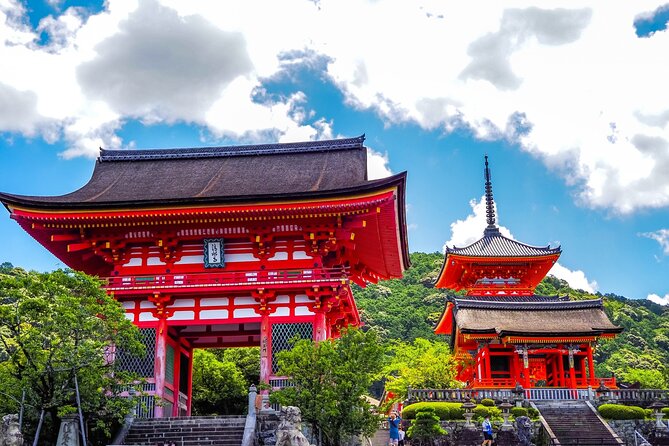
The tour ends at Kiyomizu-dera, one of Kyoto’s most important temples and a UNESCO World Heritage Site. Founded in the 8th century, it sits on a hillside above the city.
The planned stop is about ten minutes, and admission is not included. That is worth noting when you compare the $40 tour price with a self-guided walk. You may want to enter after the tour, but you will need to pay separately.
Ending here makes good practical sense. The guide leaves you at the entrance, where you can continue exploring, take photographs, or make your own way elsewhere. You are not rushed back to the original meeting point.
Ten minutes is enough for a guide’s introduction, but not enough for a complete visit to the temple grounds. If Kiyomizu-dera is high on your list, allow extra time after the tour.
What the guides add to the walk
The strongest part of this experience is the guiding. Jay is repeatedly praised for clear English, humor, historical training, and his willingness to answer questions. He has also been described as generous with practical suggestions for the rest of a Kyoto visit.
Ben receives similar praise for making the history easy to follow and for recommending gardens, temples, and interesting shops. Ayumi is noted for her energy, enthusiasm, and explanations of geisha and samurai culture. Tommy and Michel are also praised for being friendly, flexible, and well informed.
The guides do not all teach in exactly the same style, so your experience will depend partly on who leads the departure. Still, the pattern is clear: this is a history-focused walk rather than a silent escort between landmarks.
The subject matter can be dense. You may hear about theater, religion, geisha, samurai, emperors, the Meiji Restoration, and the development of Kyoto in one morning or afternoon. That suits adults who want context. It may feel like too much for young children or anyone who prefers a relaxed stroll with little narration.
Some guides have stayed longer than the advertised time when the group was interested. That can be welcome, but it may affect later reservations. If you have a dinner booking or another timed activity, tell the guide early and be ready to leave at the planned end.
Is $40 a fair price?
At $40 per person, the tour offers solid value if you want a clear introduction to Gion and eastern Kyoto. The route covers several important places, and the guide’s explanations save you the work of researching each one while walking.
Most stops do not charge an admission fee. The important exception here is Kiyomizu-dera, whose entrance fee is not included. Lunch, drinks, and gratuity are also separate.
A self-guided walk costs less in direct financial terms, but it will not give you the same continuous explanation of Kyoto’s religion, politics, theater, and traditional neighborhoods. The tour is most worthwhile during your first days in the city, when you want help understanding what you are seeing.
Eat before you start or carry a snack. One detailed account notes that there are few food stops apart from bathroom breaks. Bring water, too. Three hours of walking on slopes is not the time to discover that breakfast was too small.
Who should book this Kyoto walk?
I would choose this tour if you want to see Gion and Higashiyama in one connected route, prefer learning from a guide, and have moderate physical fitness.
It suits adults, couples, solo visitors, and older children who can walk steadily for three hours. It is especially useful for anyone who wants an introduction to Kyoto’s historical layers before exploring temples independently.
I would think twice if you have trouble with stairs, slopes, or uneven paving. I would also skip it if your main goal is shopping, quiet photography, or a slow temple visit. The route is busy in places, and the schedule gives you a short time at each major stop.
The group limit of 12 is a welcome feature. It should be easier to hear the guide and ask questions than on a large coach excursion. In quieter periods, the group may be smaller, and some departures have effectively felt private.
The tour requires good weather. If rain or other poor conditions cause cancellation, you are offered another date or a full refund. You can also cancel for a full refund up to 24 hours before the start time. Service animals are allowed, and confirmation arrives when you book.
Should you book the Gion Historical Walking Tour?
Book it if you want a well-organized first look at Kyoto’s eastern districts, with strong historical explanation and a practical finish at Kiyomizu-dera. The guides are the main reason to choose it, especially if you are fortunate enough to be led by Jay, Ben, or Ayumi.
Skip it if you want a short, easy walk. The route is three hours, includes stair climbing, and offers limited time for food or extended temple visits.
For most adults who want history, famous sights, and a useful orientation for the rest of their Kyoto stay, $40 is a sensible price. Wear real walking shoes, eat first, carry water, and leave your afternoon open after the final stop.
FAQ
How long is the Kyoto Gion Historical Walking Tour?
The tour lasts approximately three hours.
Where does the tour begin?
It begins at Ben’s Cookies Kyoto Shijo, 89 Shinchō, Shimogyo Ward, Kyoto, 600-8001, Japan.
Where does the tour end?
It ends in front of the entrance to Kiyomizu-dera at 1-chōme-294 Kiyomizu, Higashiyama Ward, Kyoto, 605-0862, Japan.
What places are included on the route?
The route includes Tatsumi Bridge, Chion-in Temple’s Sanmon gate and grounds, Maruyama Park, Nene-no-Michi, Hōkan-ji Temple, also called Yasaka Pagoda, Ninen-zaka, Sannen-zaka, and Kiyomizu-dera. The tour overview also includes the Statue of Izumo-no-Okuni.
Is admission included?
The walking tour is included, but admission fees are not. Kiyomizu-dera admission is specifically listed as not included.
Is food included?
No. Lunch is not included, and you should plan to eat before the walk or bring a snack and water.
How many people can join the tour?
The tour has a maximum group size of 12 people.
What fitness level is required?
A moderate level of physical fitness is recommended. You will walk for about three hours and may encounter slopes, stairs, and uneven stone paths.
Can I cancel for a full refund?
Yes. You can cancel at least 24 hours before the experience start time for a full refund. Cancellations or changes made less than 24 hours before the start time are not refunded.
Just added around Kyoto
- Private Guided Historical Sightseeing Tour in Kyoto★ 3.5 · 24 reviews
- Kyoto: Nijo Castle World Heritage Guided Tour with Admission★ 5.0 · 128 reviews
- Kyoto Early Bird English Tour: Fushimi-Inari and Arashiyama★ 5.0 · 198 reviews
- Private car tour Let’s uncover secrets of majestic Kyoto history★ 5.0 · 45 reviews
- Authentic Kyoto Gion Geisha/Maiko Cultural Experience★ 5.0 · 48 reviews
- Kyoto UNESCO World Heritage Site Private Tour with a Premium Van★ 5.0 · 20 reviews
- Kyoto: Historic Higashiyama Walking Tour★ 5.0 · 31 reviews
- Kyoto: Private 2.5 Hour Historical Walking Tour★ 4.9 · 121 reviews
History Walking Tours, compared.
History and Hauntings of Salem Guided Walking Tour
Read our review →
Freedom Trail History Small Group Walking Tour
Read our review →
Historic Charleston Guided Sightseeing Walking Tour
Read our review →
Tapas Walking Tour with Food, Wine, and History
Read our review →
Savannah History and Haunts Candlelit Ghost Walking Tour
Read our review →
A History of Terror – Belfast City Centre Walking Tour
Read our review →Browse the lists this tour appears in