
Review · HONSHU
Kyoto: Historic Higashiyama Walking Tour
Kyoto rewards walkers. This four-hour route ties together Fushimi Inari’s red torii gates and the old streets of Higashiyama, so you get both a major shrine and a close look at Kyoto’s traditional neighborhoods. I like the small groups, limited to 10 people, and the short train ride from Fushimi Inari to Gion keeps the route moving.
I also like that admission to Kodaiji and Kiyomizu-dera is included, with guides such as Damian, Lito, Ferdinand, and Hugo praised for clear explanations and flexible pacing. The main consideration is the amount of walking: there are hills, steps, and uneven streets, so this is not a good fit if you have limited mobility or prefer a slow, mostly flat outing.
Key points to know before you book
- The route covers three very different sides of Kyoto: a Shinto shrine, a former geisha district, and two major Buddhist temples.
- Fushimi Inari comes first: you pass through the famous vermilion torii gates and learn how the shrine fits into Shinto practice.
- A train ticket is included: the short trip from Fushimi Inari to Gion saves you from retracing your steps.
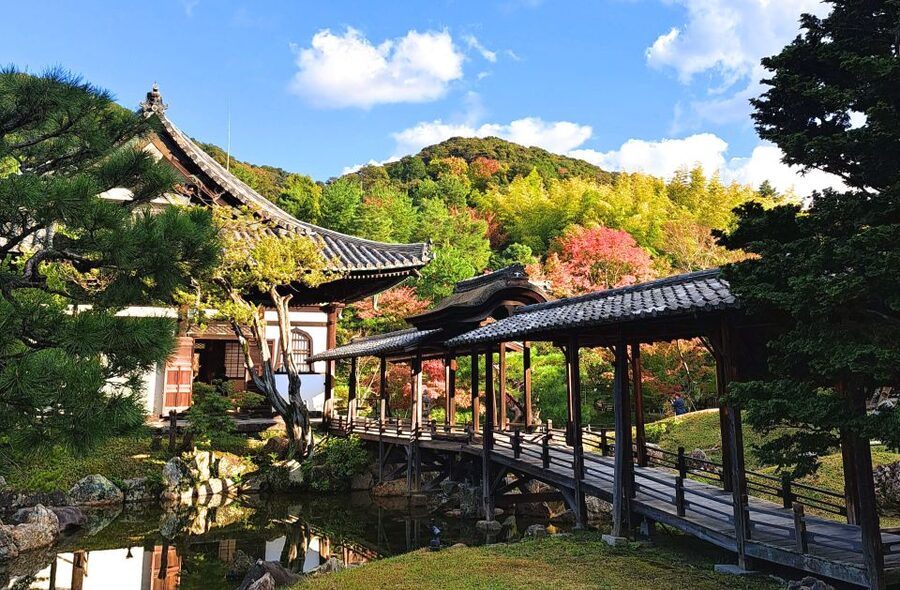
- Kodaiji offers a quieter break: its gardens and bamboo grove provide a calmer setting than the busiest streets nearby.
- Kiyomizu-dera is the grand finale: admission is included, and the tour ends there, leaving you free to stay in Higashiyama.
- Expect a real walk: comfortable shoes are essential, and large bags or luggage are not allowed.
Why this four-hour route works so well
Higashiyama means East Mountain, referring to the hills along Kyoto’s eastern edge. This tour uses that natural slope as a kind of sightseeing path, moving from Fushimi Inari in the south toward Gion, Kodaiji, and Kiyomizu-dera.
That order makes sense. You begin at one of Kyoto’s most recognizable sights, then move into older streets and temple grounds as the day continues. Instead of seeing isolated attractions by taxi or bus, you get a connected picture of this part of the city.
The tour costs $106 per person. That is not a bargain-priced walking tour, but the value is easier to see when you count the two temple admissions, the train ticket, the four-hour guiding, and the small group size. You are also paying for someone to explain what you are seeing, not just point out a famous gate and send you on your way.
The route is especially useful if you have only a short time in Kyoto. In one morning or afternoon, you see several of the city’s best-known sights without having to plan train connections between each one. The tradeoff is that the pace needs to keep moving. There is a lot to cover.
More History Walking Tours in Japan
- Tokyo: Imperial Palace and Shogun Historical Walking Tour
★ 5.0 · 2,251 reviews - Kyoto Gion: 2-Hour Geisha Culture & History Walking Tour
★ 5.0 · 1,186 reviews - Tokyo Castle & Imperial PalaceーShogun Walking Tour
★ 4.7 · 1,068 reviews
Meeting at Inari Station and getting started
The meeting point is just outside the fare gates of JR Inari Station. That detail matters. You do not want to wander around the shrine entrance trying to find a guide, especially since the station area can be busy.
Depending on your starting point in Kyoto, the Keihan train line may be convenient. From there, it is a short walk to the JR station. Check your route before setting out, and allow enough time to arrive at the station entrance rather than the shrine itself.
The tour is offered in English, French, Hebrew, or Spanish. With no more than 10 participants, the group should be small enough for questions and conversation. Some departures may be much smaller. One couple had the guide to themselves, while another group found that the guide adjusted the outing when the heat and humidity became tiring.
You should arrive ready to walk. Wear shoes with good support, and leave suitcases or large bags behind. The route includes uphill sections and many steps, though it is described as manageable rather than exceptionally steep.
Fushimi Inari and the tunnel of vermilion gates
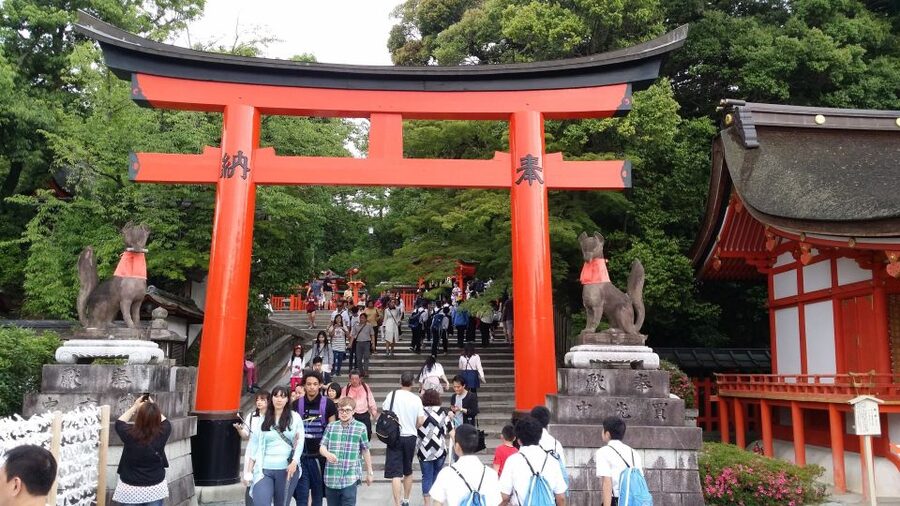
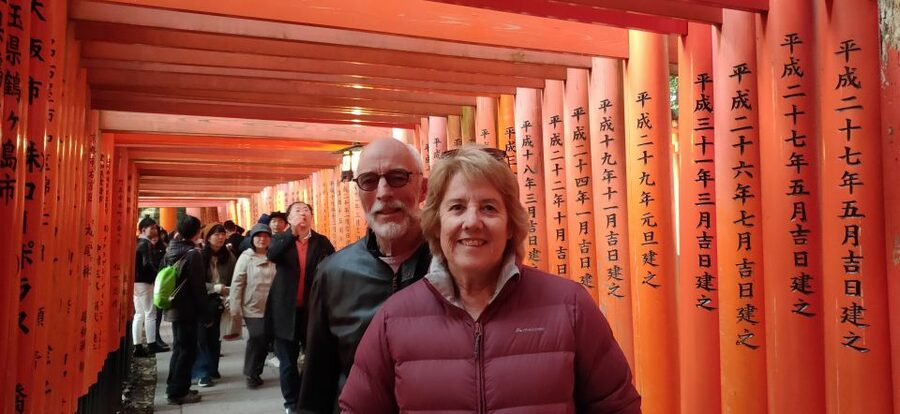
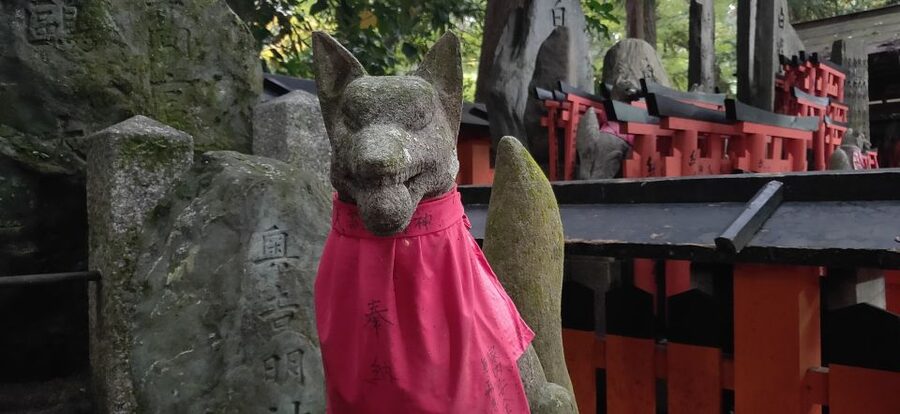
Fushimi Inari Taisha is the strongest possible opening for this route. The shrine is famous for its long rows of vermilion torii gates, which climb into the wooded foothills of the Eastern Mountains.
The gates create a striking visual effect. From a distance, they look like one continuous tunnel. Up close, you see that each gate was donated, making the passage a physical record of devotion and gratitude. The guide helps turn a beautiful photo stop into a lesson about Shinto customs and the role of Fushimi Inari.
The guided visit here lasts about an hour. You will not hike to the very top of the mountain during this tour, but you do pass through the well-known Senbon Torii section and learn about the shrine complex beyond it.
That distinction is useful. Many people arrive hoping to see the gates, take a few pictures, and leave. A guide can explain what lies behind the visual appeal, including the religious meaning of the site and the way Shinto shrines function.
Fushimi Inari is also one of the busiest places on the route. The famous lower section attracts large crowds, especially around popular photo spots. A guide cannot remove the crowds, but the small group format makes it easier to stay together and hear what is being said.
If you enjoy photography, this is a good place to take a few quick shots, but do not expect a quiet private walk through the gates. The more peaceful sections come later at Kodaiji.
The train to Gion and Kyoto’s entertainment quarter
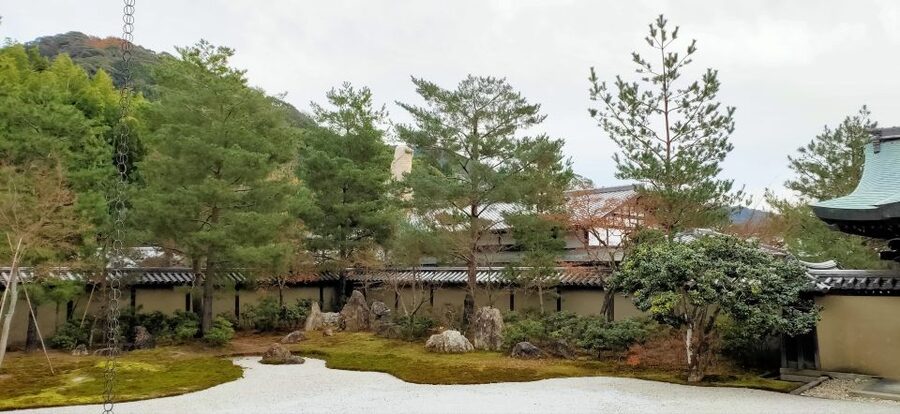
After Fushimi Inari, the group takes a short train ride to Gion. The ticket is included, which is a small but useful touch. You do not have to work out the fare or wonder which platform to use while keeping up with a group.
Gion is often introduced as Kyoto’s geisha district, but it is more than a stage set for traditional Japan. It remains part of modern local life, with restaurants, tea houses, shops, and evening entertainment. The streets can feel polished and tourist-focused, yet the district still has a working cultural role.
The guided walk through Gion lasts about 30 minutes. That is enough time for orientation and stories, but not enough for a detailed tour of every lane. You will get a sense of how the district developed and why it remains one of Kyoto’s most closely watched neighborhoods.
This is a place where good guide commentary matters. Without context, you may see wooden facades and narrow lanes but miss the difference between a historic entertainment district and a simple shopping street. Guides including Damian and Lito have been praised for explaining Japanese customs and answering questions about daily life.
Keep your expectations sensible. This is a walking introduction, not a dedicated evening geisha performance or food tour. Food and drinks are not included, though you can buy snacks later along the Higashiyama route.
Same place, a different slice of the past:
- Kyoto: Fushimi Inari, Kinkakuji, Bamboo Grove 1 Day Bus Tour
★ 4.8 · 4,316 reviews - World Heritage Shirakawa-go and Experience Tours from Kanazawa
★ 5.0 · 4,049 reviews - World Heritage Kyoto & Nara Uji Authentic Matcha Experience
★ 5.0 · 1,573 reviews - Kanazawa: World Heritage Shirakawa-go Morning Guided Tour
★ 4.9 · 988 reviews
Kodaiji’s gardens and bamboo grove
From Gion, the route continues through Higashiyama toward Kodaiji Temple. This section is one of the nicest parts of the experience because the streets gradually give way to temple grounds and calmer spaces.
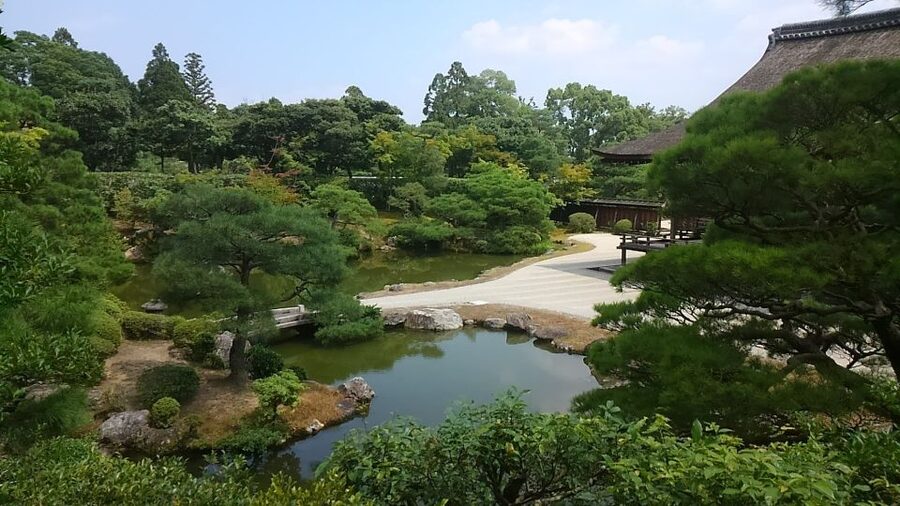
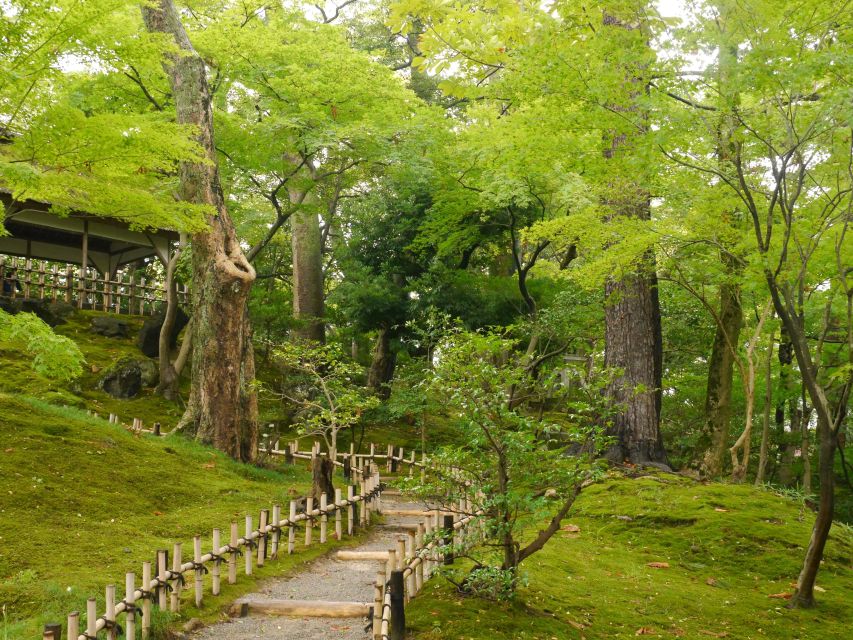
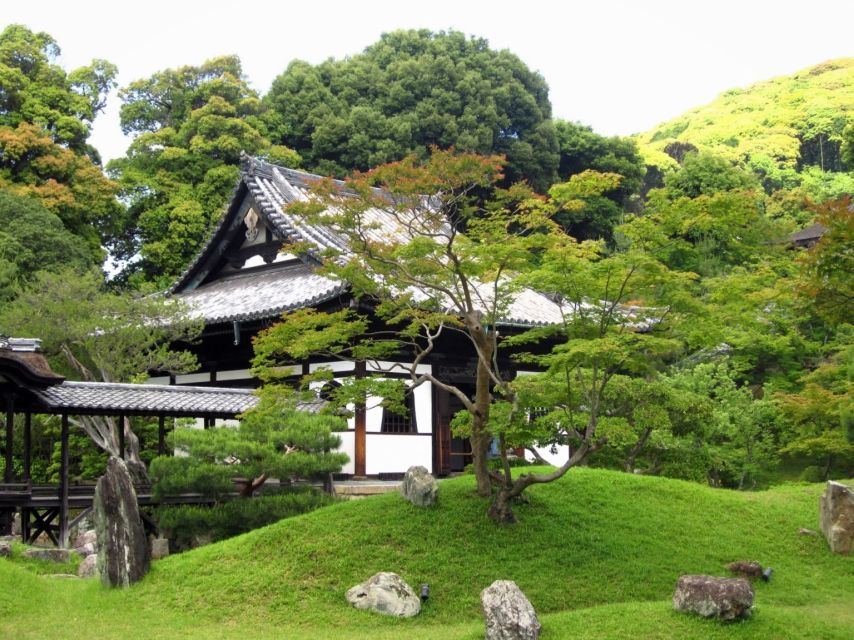
Kodaiji dates from the early 17th century. Its gardens and bamboo grove offer a welcome change after the crowds around Fushimi Inari and Gion. The bamboo is not the enormous forest experience some visitors expect from Arashiyama, but it provides shade, quiet, and a strong sense of place within a busy part of Kyoto.
The tour spends about 40 minutes here, with admission included. That is enough time to see the principal areas and hear how the temple fits into Japanese Buddhist culture. You can focus on the gardens rather than worrying about an extra entrance fee.
This stop also shows why a guided tour can be more useful than a rushed self-guided visit. Temple grounds can appear simple at first glance, with gardens, buildings, and pathways arranged in a careful pattern. A guide can point out what to notice and explain the customs connected with the site.
The route through Kodaiji also involves walking and some steps. If the weather is hot, this can be the point where fatigue begins to show. One guide adjusted the pace and route for a participant who was struggling with the heat and hills. That kind of flexibility is worth having, but you should still bring what you need for a four-hour walk.
Sannenzaka, Ninenzaka, and the climb toward Kiyomizu-dera
After Kodaiji, you continue through Higashiyama’s traditional lanes, including the Sannenzaka area. These streets are lined with shops selling snacks, sweets, souvenirs, and local products.
This is a good place to pause for a small purchase, but remember that the tour has a schedule. If you stop at every shop, you may end up rushing the temple visit. I would save serious shopping for the end, when the tour finishes near Kiyomizu-dera and you are free to explore on your own.
The streets are attractive because they preserve the feel of old Kyoto, but they are also among the busiest parts of the city. Expect steps, slopes, crowds, and narrow lanes. Comfortable shoes are not just a suggestion here.
The guide helps you read the area beyond its souvenir shops. You see how the approach to a major temple became a destination in its own right, with food and craft businesses serving people on pilgrimage and sightseeing trips.
Families can manage this section if everyone is comfortable walking. An 11-year-old and an 18-year-old both stayed engaged on one outing because the guide connected the temples with stories about wishes, luck, and traditional rituals. Younger children may find the four-hour length and uphill sections tiring, so consider your family’s walking habits honestly.
Kiyomizu-dera and the view over Kyoto
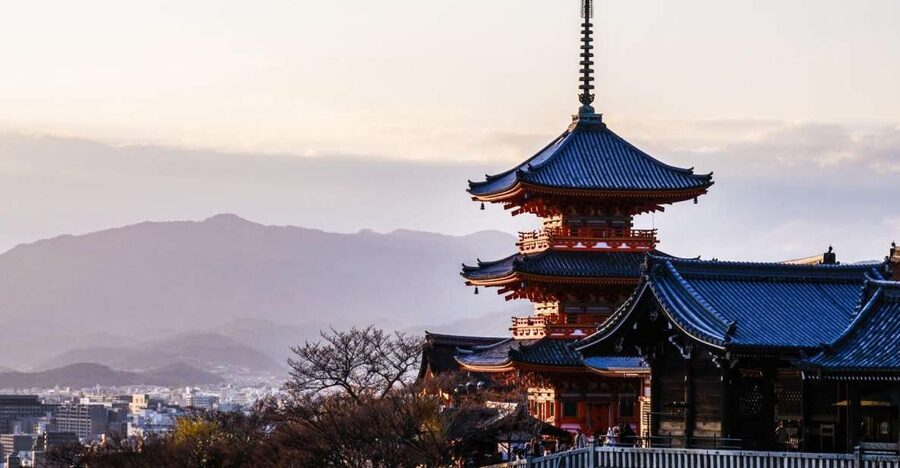
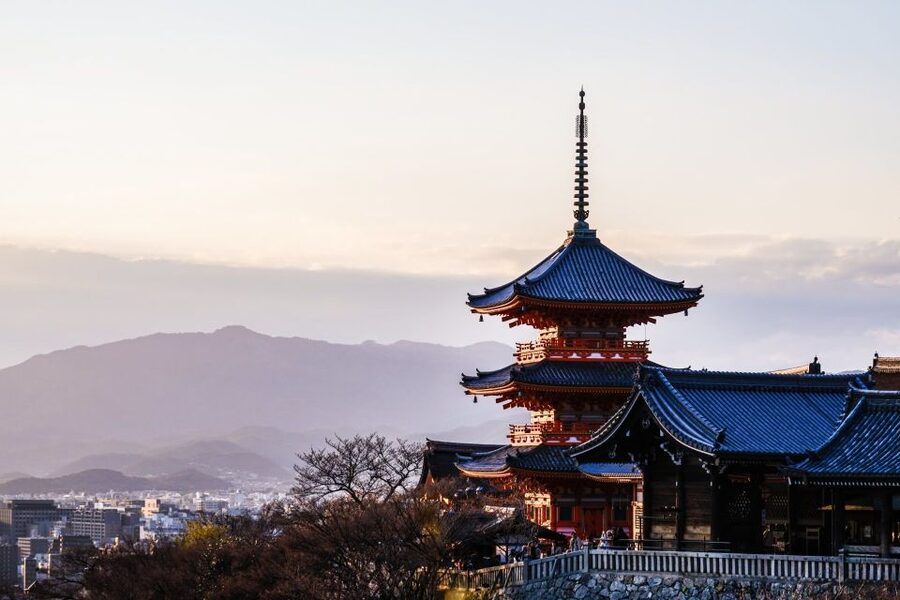
Kiyomizu-dera is the final major stop, and it earns its place. The temple is known for its dramatic position on the eastern hills and for the clear water flowing from the Otowa Waterfall.
Admission is included, and the guided visit lasts about 30 minutes. The guide explains the temple’s customs and points out the waterfall, where three streams are associated with health, wealth, or happiness. The old warning is that choosing all three is greedy, so choose carefully.
That small ritual gives the visit a playful edge. You are not just looking at a famous temple building. You are taking part in a custom that connects the site to everyday hopes and worries.
The views over Kyoto are another reason this stop works as the finale. After climbing through Higashiyama, you reach a broad outlook over the city. The exact view depends on weather and crowd levels, but the setting gives you a clear sense of how Kyoto sits between its surrounding hills.
The tour ends after the group visit to Kiyomizu-dera. This is a practical advantage. You do not have to hurry back to the station with the guide. You can stay in the area, revisit a shop, continue to another temple, or simply find a snack and rest.
The guides and the value of a small group
The guide is the part of this experience that determines how much you get from it. Damian has been praised for his strong grasp of Japanese history, customs, and culture. Lito added useful suggestions about places to eat and helped children stay interested in temple stories and rituals.
Ferdinand was described as energetic, friendly, and ready to answer questions about Kyoto and Japan more broadly. Hugo was flexible when a group arrived late and adapted the visit to match its needs.
Those details point to an important strength: this is not a rigid audio-guide walk. The best version of the tour depends on asking questions and telling your guide what interests you. If you care more about religion than shopping, say so. If the heat is wearing you down, speak up early.
A maximum of 10 people gives the guide room to respond. It also makes it easier to hear explanations in narrow streets and crowded temple grounds. You will not have the total freedom of walking alone, but you gain orientation and context.
Who should book this Higashiyama walk?
I would choose this tour if you are visiting Kyoto for the first time and want a strong introduction to the eastern side of the city. It suits you especially well if you prefer seeing several major sites in one organized outing rather than sorting out transport and entrance fees yourself.
It is also a good match for families with older children and for anyone who likes cultural explanation along with sightseeing. The stories about Shinto, Buddhism, wishes, luck, and local customs keep the temples from becoming a blur of roofs and statues.
I would hesitate if you dislike group schedules, want to spend a long time at one temple, or have trouble with hills and steps. The route is not exceptionally demanding, but four hours on foot adds up. People with mobility impairments should not book this activity.
At $106, the cost is reasonable for a small group with a live guide, two included admissions, and transport between the southern shrine and Gion. It is less attractive if you already know the sites well or are happy to explore them without explanations.
Practical details that affect your day
The tour lasts four hours, but you should plan extra time afterward if you want to shop or eat around Kiyomizu-dera. The ending location is useful because Higashiyama has more to offer once the formal tour is over.
Food and drinks are not included. Bring what you need for the walk, and plan to buy snacks in the Sannenzaka area if you want a break.
Free cancellation is available up to 24 hours before the start time, and you can reserve now and pay later. Starting times vary, so check availability when choosing your date.
Should you book it?
Book this tour if you want an efficient, well-explained introduction to Kyoto’s eastern foothills. The combination of Fushimi Inari, Gion, Kodaiji, Sannenzaka, and Kiyomizu-dera gives you a wide sample of the city in four hours, and the included admissions remove a few small hassles.
Skip it if you want a quiet, unhurried temple day or cannot manage sustained walking. For most first-time visitors who can handle hills and steps, though, the route offers good coverage, useful cultural context, and enough free time at the end to keep exploring on your own.
FAQ
Where does the Kyoto Higashiyama Walking Tour begin?
It begins just outside the fare gates of JR Inari Station. Depending on where you are staying, you may find it convenient to use the Keihan train line and walk a few minutes to the JR station.
How long does the tour last?
The tour lasts four hours. Starting times vary, so you need to check availability for your chosen date.
Which sights are included?
The route includes Fushimi Inari Taisha, the Senbon Torii gates, Gion, Kodaiji Temple, the Sannenzaka area, and Kiyomizu-dera.
Are entrance fees included?
Admission to Kodaiji Temple and Kiyomizu-dera is included. The train ticket from Fushimi Inari to Gion is also included.
What languages are available?
The tour is offered with a live guide in English, French, Hebrew, or Spanish.
Is the tour suitable for people with mobility impairments?
No. The tour includes uphill walking, steps, and extended walking, and it is not suitable for people with mobility impairments. Comfortable shoes are recommended, and luggage or large bags are not allowed.
Just added around Japan
- Kyoto: Private 2.5 Hour Historical Walking Tour★ 4.9 · 121 reviews
- Kyoto/Osaka: Kobe & Himeji Journey Through Culture & History★ 3.7 · 18 reviews
- Kyoto/Osaka: Kyoto and Nara Sites & History Day Trip★ 4.5 · 32 reviews
- Kyoto Early Bird English Tour: Fushimi-Inari and Arashiyama★ 5.0 · 17 reviews
- Kyoto: Gion Hidden Gems & Geisha Culture Tour★ 4.9 · 126 reviews
- Kyoto: Nijo Castle World Heritage Guided Tour with Admission★ 4.9 · 37 reviews
- Kanazawa: World Heritage Shirakawa-go & Two Local Experience★ 4.9 · 274 reviews
- Historic Kanda Sake Tasting at Tokyo’s Oldest Shop (1596)★ 4.9 · 33 reviews
History Walking Tours, compared.

History and Hauntings of Salem Guided Walking Tour
Read our review →
Freedom Trail History Small Group Walking Tour
Read our review →
Historic Charleston Guided Sightseeing Walking Tour
Read our review →
Tapas Walking Tour with Food, Wine, and History
Read our review →
Savannah History and Haunts Candlelit Ghost Walking Tour
Read our review →
A History of Terror – Belfast City Centre Walking Tour
Read our review →Browse the lists this tour appears in