
Review · HONSHU
Kyoto: Private 2.5 Hour Historical Walking Tour
Kyoto makes more sense with context. This private walk links Yasaka Shrine, a Zen temple, Yasaka Pagoda, and Kiyomizu-dera in a compact route through Gion’s old streets. I like the personal guide format, especially for first-time visitors who want customs and history explained without joining a large group. I also like the use of hand-drawn maps and illustrations by guides such as Hisako and Hiroko, which can make difficult subjects easier to follow.
The main consideration is pace. The route includes stone steps, temple grounds, and several uphill sections, and admission fees are extra. The experience is advertised as 2.5 hours, while some details describe it as 2 hours, so allow a little flexibility. If you want a quick photo walk, this may feel too talkative. If you want to understand what you are seeing, it offers very good value at $80 for up to five people.
Key details before you book
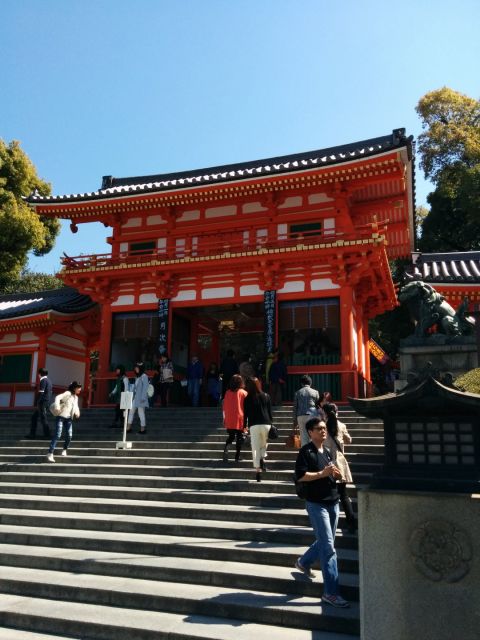
- Start at Yasaka Shrine’s red west gate, an easy landmark near Gion.
- Learn shrine etiquette first, including how to worship at a Shinto shrine.
- Visit Entoku-in for about 40 minutes, with dry gardens, traditional rooms, and painted sliding doors.
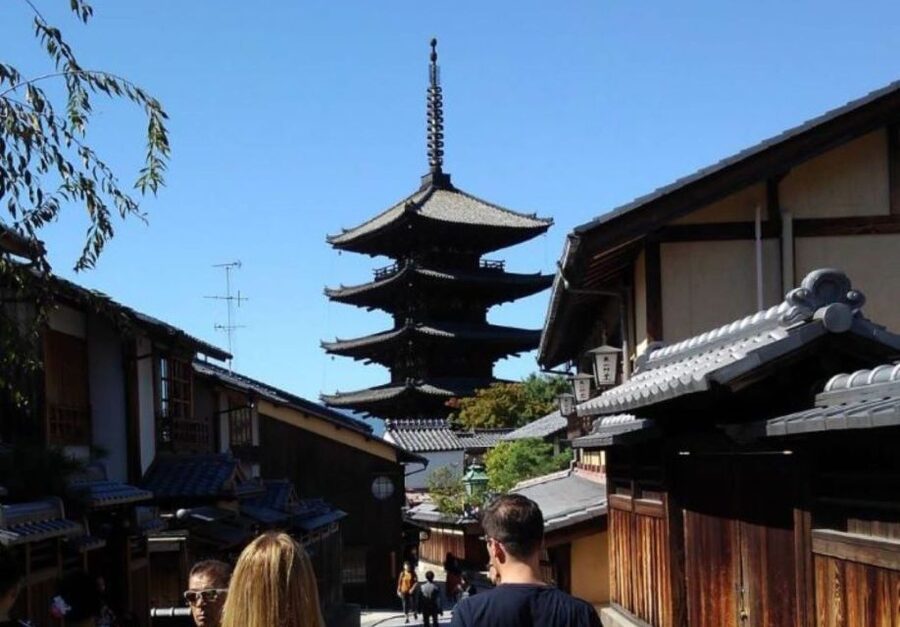
- See Yasaka Pagoda from the outside, with time for one of Kyoto’s classic street photographs.
- Finish at Kiyomizu-dera, including the wooden stage, Koyasu Pagoda view, sacred water, and Jishu Shrine.
- Bring comfortable shoes and budget for temple admission, since tickets are not included.
Why this short walk works so well in Kyoto
Kyoto can be confusing at first. A shrine may look like a temple, a Buddhist image may appear inside a Shinto setting, and a street that seems built for photographs can carry centuries of political and religious history. This tour gives you a basic map of Kyoto before you begin, then puts that background to work at each stop.
The private format matters. Your guide can pause when you have questions, adjust the amount of detail, and give you time for photographs. Several guides, including Hisako, have used folders with their own drawings, maps, and short notes. That is a useful touch. Japanese history includes imperial families, shoguns, samurai, Buddhism, Shinto, and changing political centers. A simple drawing can help you keep the names and connections straight.
The strongest praise for this experience centers on the guides’ clear explanations and warm manner. Hisako is repeatedly singled out for answering questions patiently and connecting religion with daily customs. Takayuki Ishii has been appreciated for keeping a steady pace without rushing photographs. Hiroko and other guides have also used visual material to explain architecture and history in plain English.
This is not a tour designed to race through every famous sight in Kyoto. It focuses on a small section of eastern Kyoto and gives you a framework you can use for the rest of your trip.
More History Walking Tours in Japan
- Tokyo: Imperial Palace and Shogun Historical Walking Tour
★ 5.0 · 2,251 reviews - Kyoto Gion: 2-Hour Geisha Culture & History Walking Tour
★ 5.0 · 1,186 reviews - Tokyo Castle & Imperial PalaceーShogun Walking Tour
★ 4.7 · 1,068 reviews
Meeting at Yasaka Shrine’s red west gate
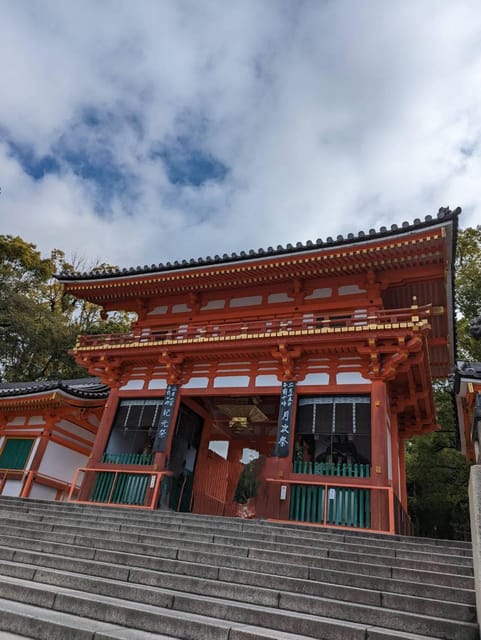
The tour begins at the west gate of Yasaka Shrine, also called the red gate. This is a practical meeting point near Gion. From Gion-Shijo Station on the Keihan Line, or Kawaramachi Station on the Hankyu Line, walk east along Shijo Street, then climb the stone steps toward the gate. By bus, get off at the Gion stop and look for the steps before the red gate.
Your guide begins with a map of Kyoto. That opening is more useful than it sounds. You get a sense of how the old city is arranged and where the major districts sit in relation to one another. You also avoid the common problem of seeing famous places as isolated monuments with no connection to the city around them.
The first lesson covers how to worship at a Shinto shrine. You can learn what Yasaka Shrine represents and how shrine customs differ from Buddhist temple practices. This is a good place to begin because the rest of the walk moves between Shinto and Buddhist sites.
Yasaka Shrine can be busy, especially around popular visiting hours and festivals. The private guide helps you focus on the details rather than simply moving through the grounds with the crowd.
Through Maruyama Park and along Nene-no-michi
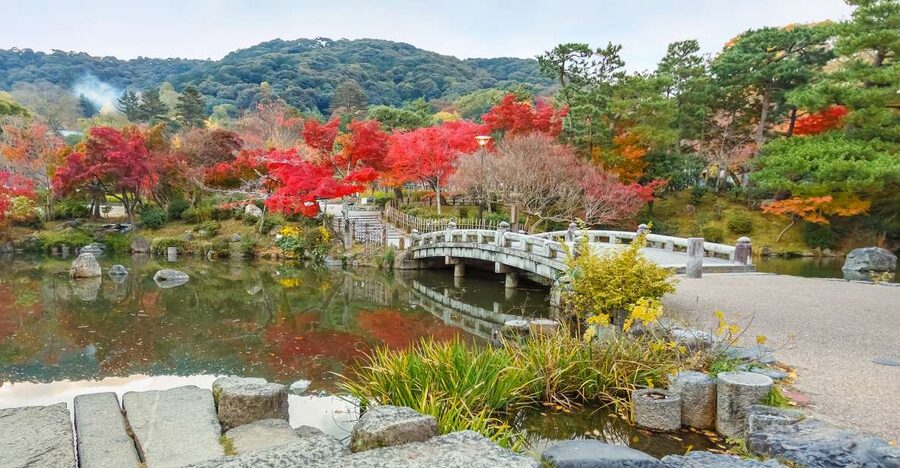
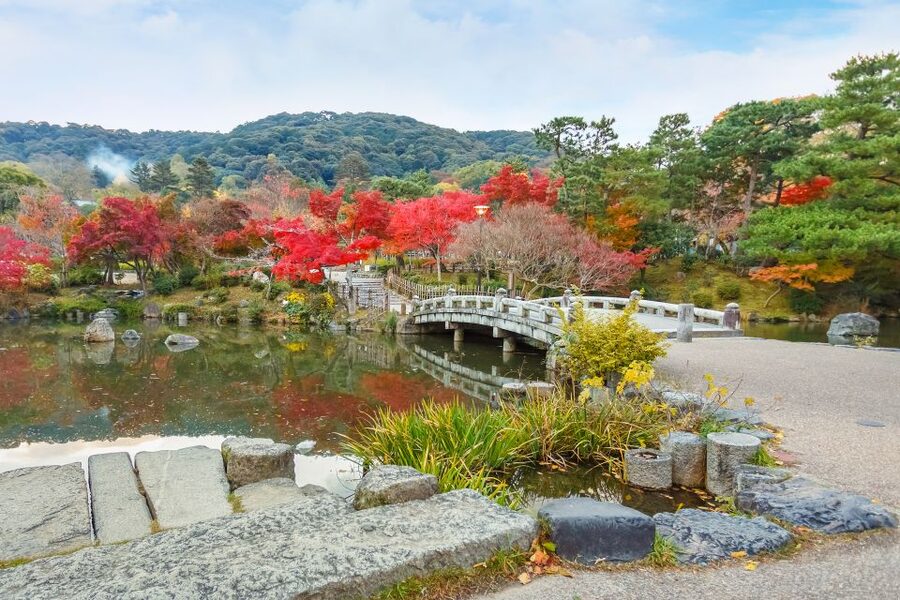
From Yasaka Shrine, the route passes through Maruyama Park and continues toward Nene-no-michi. The walk takes about 10 minutes at this stage, though the actual pace can vary with photographs and questions.
The name Nene-no-michi refers to Nene, the wife of Toyotomi Hideyoshi, one of Japan’s major political figures in the late 16th century. That connection gives the street more meaning than its attractive paving and traditional buildings alone. Your guide explains the people and events behind the names you encounter.
This section is also a useful transition. You leave the broad shrine approach and enter narrower lanes associated with Kyoto’s old eastern districts. The route is visually appealing, but the goal is not just to collect attractive backdrops. The guide helps explain why these lanes, temples, and residences are linked to the city’s religious and political past.
Entoku-in: a quiet Zen stop with dry gardens
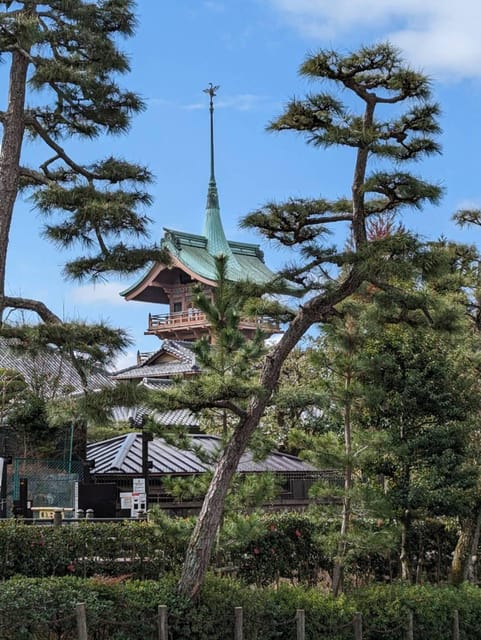
Entoku-in is scheduled for about 40 minutes, making it the longest stop before Kiyomizu-dera. It is a Zen temple associated with Nene, and it offers a calmer counterpoint to the larger, busier sights nearby.
The main appeal is the dry landscape gardens, where arranged rocks, gravel, and carefully shaped plants create a scene without flowing water. Your guide can explain how to look at the garden rather than treating it as a simple photo stop. You can also see traditional Japanese rooms and painted images on sliding doors.
This is where the tour’s slower pace pays off. You have time to sit or pause, look closely, and ask questions about Zen, Japanese aesthetics, and temple design. One guide has also included a calligraphy experience on some tours, though you should confirm whether that is available for your booking rather than assume it is part of every visit.
Entoku-in is likely to be the emotional high point for visitors who prefer quiet spaces to famous viewpoints. It is also the place where your guide’s illustrations and explanations may be most helpful. The garden can look simple at first, but the visual language is not always obvious to someone seeing it for the first time.
The drawback is that temple entry costs extra. The tour price covers the guide, not admission tickets. You should also expect floors, steps, and the need to remove shoes in traditional rooms if required by the temple.
More Private History Tours in Japan
- From Tokyo: Nikko World Heritage Site Private Full-Day Trip
★ 4.9 · 243 reviews - 2.5 Hour Private History and Culture Tour in Himeji Castle
★ 5.0 · 185 reviews - Tokyo: Nikko World Heritage Private Day Trip Hotel Pick-up
★ 4.8 · 145 reviews - From Tokyo: Nikko World Heritage Sight Full Day Private Tour
★ 4.9 · 127 reviews
Yasaka Koshin-do and the outside view of Yasaka Pagoda
After Entoku-in, you walk for about 10 minutes to Yasaka Koshin-do, with around 15 minutes set aside for the visit. This small temple is a change of scale from the larger sites and offers another chance to discuss Japanese religious practice.
Nearby, you see the five-storied Yasaka Pagoda, commonly called Yasaka-no-to. The tour views it from outside rather than taking you into the pagoda. That distinction matters if you are expecting an interior visit. The nearby street is a well-known photo location, so you can take pictures of the pagoda framed by the old neighborhood.
The stop is brief, but it connects architecture with the street. Five-storied pagodas are Buddhist structures, and the guide can help you notice their proportions and religious role rather than seeing only a tall, elegant tower.
The lane around the pagoda may be crowded and narrow. Be respectful when photographing, and do not expect a long period of quiet here. The value lies in the guide’s explanation and the chance to understand how a major landmark fits into the surrounding neighborhood.
Kiyomizu-dera: the grand finish
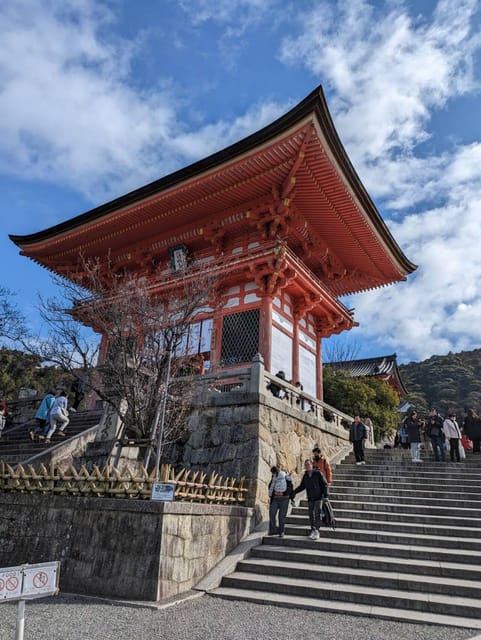
The final walk takes about 15 minutes and leads uphill toward Kiyomizu-dera. Allow around 35 minutes inside the temple, although the exact time can change with crowds, photographs, and the questions you ask.
Kiyomizu-dera was originally built in the eighth century and is one of Kyoto’s best-known temples. Its main object of worship is Kannon Bodhisattva, and the grounds include Buddhist statues and several important structures.
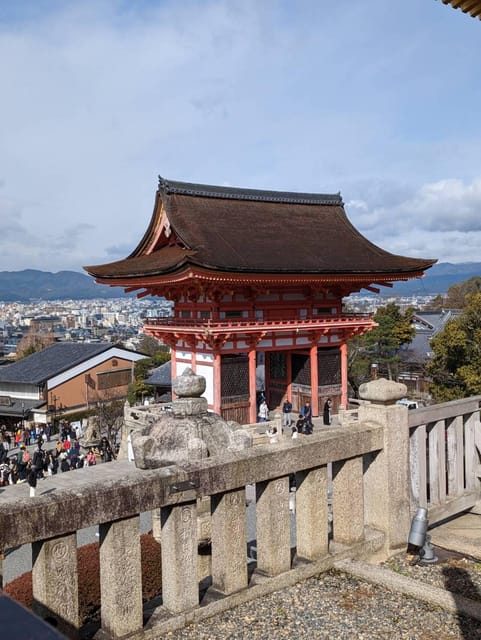
The famous wooden stage attached to the main hall is the centerpiece. It was built without nails, and the view from it reaches across the surrounding scenery toward the three-storied Koyasu Pagoda. Koyasu means easy birth, and women traditionally visit the pagoda to pray for a safe delivery.
The stage is impressive, but the guide adds the details that a photograph cannot provide. You learn what the temple represents, why Kannon matters, and how the structures relate to Buddhist practice. The setting can be crowded, so a guide who knows when to pause and when to move on is useful.
Kiyomizu means pure water. A stream from the mountain behind the temple continues to run, and many people line up to drink from it. The tour also points out an iron stick and iron clogs donated to the temple. The iron stick is very heavy, and you can try lifting it if the area is open and conditions allow. It is a small physical moment, but it helps turn a historical explanation into something memorable.
The tour ends after leaving the main hall. Before you go, the guide explains Jishu Shrine, associated with matchmaking. This final stop adds a lighter, familiar part of local religious culture after the more formal discussion of temples, shrines, and history.
The guides are the real value
The route is attractive, but the guide determines how much you gain from it. The most praised guides are Hisako, Hiroko, and Takayuki Ishii, though the assigned guide can vary.
Hisako is known for using her own drawings and prepared notes to explain Japan’s religious and political past. Her style appears especially well suited to curious visitors who want to ask about imperial history, shogunates, gender roles, language, philosophy, and aesthetics. She has also offered suggestions for places to visit in Kanazawa and other parts of Japan when those subjects came up.
Some guides keep the walk more focused, while others allow a wide-ranging conversation. This is a strength of a private tour, but it also means the experience may feel more like a personal history lesson than a tightly scripted sightseeing product.
English is the stated tour language. The guide’s ability to explain complex subjects clearly is one of the biggest reasons to choose this experience. Families can also request a slower or simpler explanation, though you should discuss language needs when booking.
Price, timing, and practical value
At $80 per private group of up to five people, the price is attractive for a family or small group. Split among five people, it costs $16 each before temple admission. For two people, it is less of a bargain per person, but you gain a private guide and the chance to shape the conversation.
The advertised duration is 2.5 hours, while other details describe the activity as 2 hours. The listed walking and visit times add up to roughly 2 hours and 5 minutes, before pauses and questions. In practice, plan for about two to three hours and avoid scheduling a train, meal, or timed admission immediately afterward.
Transportation to Yasaka Shrine is not included. Meals, drinks, temple admission, and insurance are also excluded. You will need comfortable shoes, since the route includes walking between sites, stone steps, temple grounds, and the climb toward Kiyomizu-dera.
Free cancellation is available up to 24 hours before the start time, and you can reserve without paying immediately. Those terms are useful when your Kyoto schedule is still changing, but they do not replace checking the exact start time and meeting instructions after booking.
Who should choose this Kyoto walk?
I would recommend it to first-time visitors who want a clear introduction to Kyoto’s religious customs and historical figures. It also suits families, couples, and small groups who prefer questions and conversation over a fixed group script.
Choose this tour early in your stay if possible. The explanations about shrines, temples, worship, and architecture can help you understand places you visit later in Kyoto. Several people have found that the walk gave them a better way to interpret other sites during the rest of their trip.
It is less suitable if you want to visit the interiors of every landmark, avoid walking uphill, or spend most of your time taking photographs. The pagoda is viewed from outside, admission fees are extra, and the guide may spend substantial time on history.
Should you book it?
Book this tour if understanding Kyoto matters as much as seeing it. The route covers major sights, but its real strength is the bridge between them: Shinto customs at Yasaka Shrine, Zen design at Entoku-in, Buddhist architecture near Yasaka Pagoda, and the devotional world of Kiyomizu-dera.
At $80 for up to five people, it is a sensible choice for a small group. Bring good shoes, allow extra time, and arrive ready to ask questions. Skip it only if you want a fast, self-guided photo route or prefer to explore each temple without a guide’s commentary.
FAQ
Where does the tour begin?
It begins at the west gate, also called the red gate, of Yasaka Shrine.
Where does the tour finish?
The tour finishes at Kiyomizu-dera after the visit to the main hall and an explanation of Jishu Shrine.
How long does the tour last?
The experience is advertised as 2.5 hours, while some activity details state 2 hours. The planned route includes roughly 2 hours and 5 minutes of walking and visits, so allow extra time for questions and photographs.
What language is the tour conducted in?
The live tour guide conducts the experience in English.
Is this a private tour?
Yes. It is a private group experience for up to five people.
Are temple admission fees included?
No. Admission fees to the temples are not included in the tour price.
Can I see the inside of Yasaka Pagoda?
No. The route includes an outside view of the five-storied Yasaka Pagoda.
What should I bring?
Bring comfortable shoes. Transportation to the meeting point, meals, drinks, and insurance are not included.
Just added around Japan
- Kyoto: Historic Higashiyama Walking Tour★ 5.0 · 31 reviews
- Kyoto/Osaka: Kobe & Himeji Journey Through Culture & History★ 3.7 · 18 reviews
- Kyoto/Osaka: Kyoto and Nara Sites & History Day Trip★ 4.5 · 32 reviews
- Kyoto Early Bird English Tour: Fushimi-Inari and Arashiyama★ 5.0 · 17 reviews
- Kyoto: Gion Hidden Gems & Geisha Culture Tour★ 4.9 · 126 reviews
- Kyoto: Nijo Castle World Heritage Guided Tour with Admission★ 4.9 · 37 reviews
- Kanazawa: World Heritage Shirakawa-go & Two Local Experience★ 4.9 · 274 reviews
- Historic Kanda Sake Tasting at Tokyo’s Oldest Shop (1596)★ 4.9 · 33 reviews
History Walking Tours, compared.
History and Hauntings of Salem Guided Walking Tour
Read our review →
Freedom Trail History Small Group Walking Tour
Read our review →
Historic Charleston Guided Sightseeing Walking Tour
Read our review →
Tapas Walking Tour with Food, Wine, and History
Read our review →
Savannah History and Haunts Candlelit Ghost Walking Tour
Read our review →
A History of Terror – Belfast City Centre Walking Tour
Read our review →Browse the lists this tour appears in