
Review · HIROSHIMA
Walking Through History: Hiroshima’s Path to Peace
History feels close here. This two-hour Hiroshima walking tour links the Atomic Bomb Dome, Peace Memorial Park, key monuments, and the Peace Memorial Museum with help from a PhD scholar. I like the small group size, capped at eight, and the route’s clear focus on people, memory, and peace rather than a quick photo stop. I also like that the museum ticket is arranged in advance, saving you the trouble of waiting in the main line.
The main drawback is the pace. Nine stops in two hours leaves limited time at several places, and the museum portion is especially brief at about 10 minutes with the guide. You will walk on mostly flat ground, but it is still a lot of pavement, and Hiroshima’s heat can make the route tiring. This tour works best as a carefully guided introduction, not as your only visit to the park.
The guides, including Ghani, Sheraz, Shiraz, Cva, and Sharain, have earned praise for clear explanations, patience, and an easy way with questions. Ghani slowed the pace for a person with a knee injury, while another guide used shade breaks during a very hot day. I would plan on comfortable shoes, water, and enough quiet time afterward to process what you have seen.
Key points to know before booking
- A small group capped at eight: You get a more personal walk than on a large coach tour, with room to ask questions and adjust the pace.
- Nine meaningful stops in two hours: The route covers the Atomic Bomb Dome, peace monuments, the memorial hall, museum, and Gates of Peace.
- Museum admission is included: Your entry ticket is purchased ahead of time, but the guide cannot speak inside the museum.
- A thoughtful historical focus: The walk includes the Monument to Korean Victims and Survivors, an important part of Hiroshima’s wartime story.
- Mostly flat walking: The route is manageable for most people, though reviews stress that you will cover plenty of ground.
- A guide-led introduction, not a full museum visit: The short schedule gives you context and orientation, then leaves you to explore the museum on your own.
Why this two-hour Hiroshima walk works
Hiroshima’s Peace Memorial Park can feel confusing at first. Monuments are spread across open paths, and their meaning is not always obvious from a plaque alone. This tour gives you a route and a human guide, so you are not simply moving from one landmark to the next with a camera in hand.
The price is $31.63 per person, which is fair for a two-hour private-feeling walk in a group of no more than eight. All outdoor stops are free, and museum admission is included. The value comes mainly from the explanations, the order of the route, and the chance to ask questions as the memorials come into view.
I especially like the way the itinerary moves from the physical remains of the bombing toward wider questions of remembrance and peace. You begin with the Atomic Bomb Dome, then see bells, monuments, flames, names, survivor accounts, and finally the Gates of Peace. That sequence gives the walk a sense of direction without turning it into a lecture.
The guide’s role matters here. Several guides have received praise for being clear, warm, and willing to answer questions. Ghani and Sheraz are named repeatedly in the feedback, while Shiraz, Cva, and Sharain also receive strong praise. The most useful pattern is not one particular name, but the consistent reports of careful pacing and strong preparation.
More History Walking Tours in Japan
- Hiroshima Historical Walking Tour – Why A-Bomb was Dropped
★ 4.8 · 893 reviews - Hiroshima Peace (Heiwa) Walking Tour at World Heritage Sites
★ 5.0 · 872 reviews - Miyajima Half-day Trip Historical Walking Tour
★ 5.0 · 284 reviews
Starting at the Atomic Bomb Dome
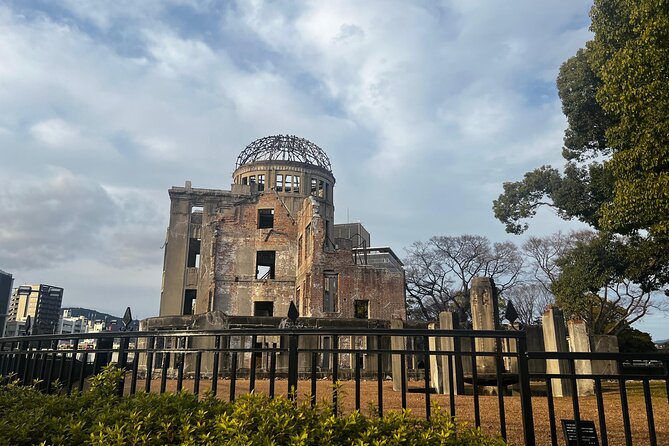
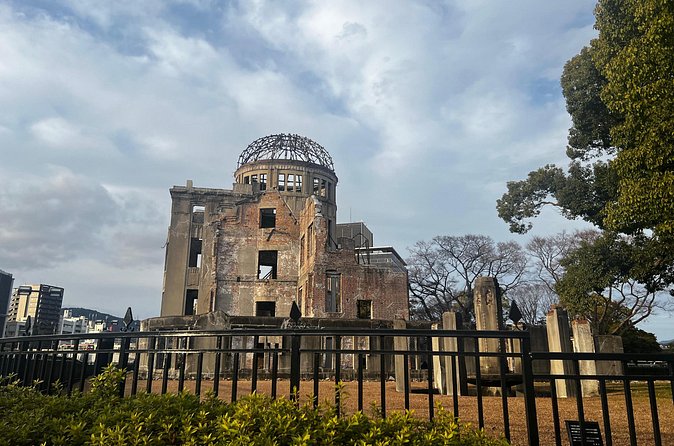
The walk begins at 1-chōme-10-1 Ōtemachi in Hiroshima’s Naka Ward, near the Peace Memorial Park area. The first stop is the Atomic Bomb Dome, where you have about 20 minutes.
This is the right place to begin. The damaged building gives the tour a direct physical connection to the bombing of August 6, 1945. Its exposed structure and incomplete walls make the event feel less remote than it might in a book or museum display. The Dome is also a UNESCO World Heritage Site, so you receive both the historical setting and the international importance of the site.
Your guide explains what happened and why the building remains. The stop is not just a photograph in front of old ruins. It introduces the central themes of the walk: loss, memory, survival, and the hope that such destruction will not happen again.
Twenty minutes is enough for an explanation and some time to look closely. If you want a long pause for photographs or personal reflection, you may wish you had more time. The tour’s schedule is firm, so use this opening stop to listen first, then take pictures when the guide finishes.
Bells, flames, and the meaning of peace
The next stops move through several symbols that can seem simple until someone explains them.
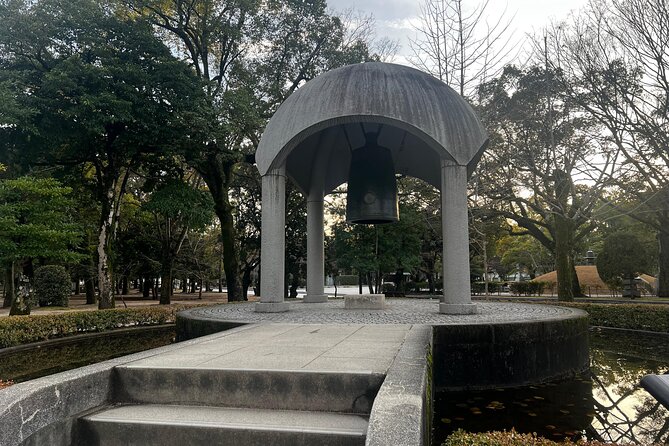
You spend about 10 minutes at the Peace Bell. Its sound represents harmony and a world without nuclear weapons. The guide helps connect the bell to Hiroshima’s broader peace message, rather than treating it as another decorative feature in the park.
The Peace Flame receives another 10 minutes. It has burned continuously since 1964 and is intended to remain lit until nuclear weapons have been abolished. That detail gives the flame a particular force. It is not only a memorial to the past, but also a statement about the future.
These stops are short, and their meaning may not fully sink in while the group is moving. I would resist the urge to rush from one symbol to the next. Listen to the explanation, then take a quiet moment before continuing. The route gives you enough time for that if the group stays together and the weather is reasonable.
The Korean Victims monument adds needed context
The Monument to Korean Victims and Survivors receives about 10 minutes, but its importance reaches beyond the short stop.
This memorial recognizes Koreans who were killed or survived the atomic bombing and acknowledges their place in Hiroshima’s story. It adds a wider view of the people affected by the bombing, including those who had been brought to Japan under Japan’s wartime system.
That context matters. Hiroshima’s peace message is powerful, but it should not erase the complicated wartime setting in which the bombing occurred. One piece of feedback specifically wished for more attention to Japan’s role as an aggressor and its alliance with Germany. That is a fair consideration when choosing this tour.
The walk does not appear to be designed as a full study of Japanese wartime expansion. Its main purpose is to explain the memorials and the human cost of the bombing. Still, the Korean Victims monument gives you an opportunity to ask direct questions and seek a fuller account. I recommend doing so if you want a balanced understanding of the period.
More History Walking Tours in Hiroshima:
- Hiroshima: History of Hiroshima Group Walking Tour
★ 4.8 · 266 reviews - Hiroshima: Peace Walking Tour of World Heritage Sites
★ 4.9 · 190 reviews - Hiroshima: Miyajima Half-day Historical Walking Tour
★ 4.7 · 100 reviews - History of Hiroshima Group Walking Tour
★ 5.0 · 23 reviews
Sadako and the Children’s Peace Monument
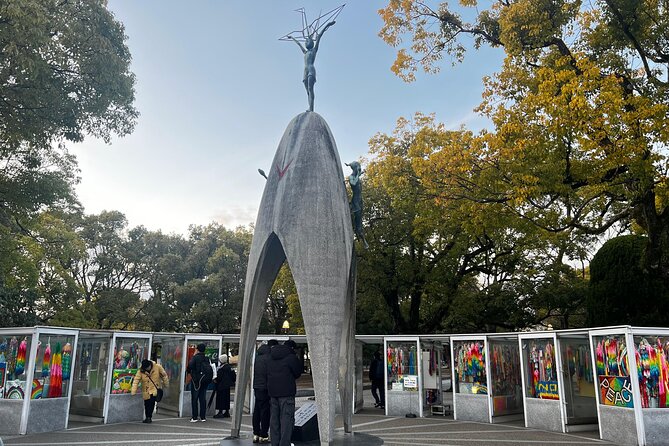
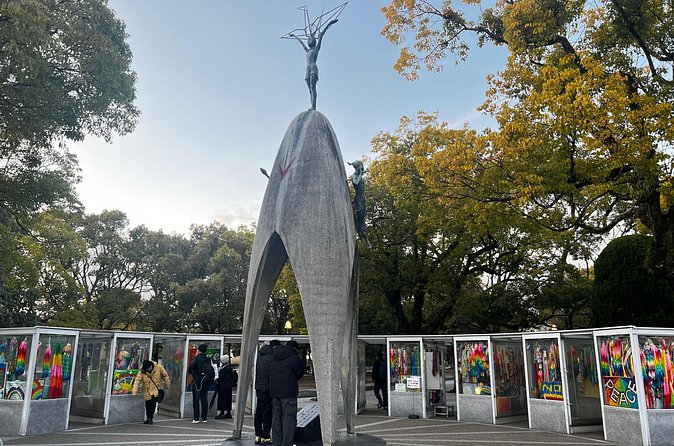
The Children’s Peace Monument is another 10-minute stop. It honors children who died because of the bombing and is linked to Sadako Sasaki, the young girl whose paper-crane story became known around the world.
The monument brings a child’s experience into the park. That can make the history especially painful, but the guide’s explanation gives the stop a clear purpose. You learn how Sadako’s story inspired the monument and why the surrounding paper cranes have become part of Hiroshima’s public memory.
This is one of the places where the guide’s tone matters most. A good explanation should leave space for silence, and the feedback suggests that the guides generally understand that. One guide was praised for giving the group time and room at each stop, rather than filling every second with speech.
A quiet pause at the memorial hall
The Hiroshima National Peace Memorial Hall for the Atomic Bomb Victims receives about 20 minutes, making it one of the longer stops outdoors and indoors.
The hall presents personal stories, photographs, and survivor testimonies. That focus on individual lives helps move the subject away from numbers alone. You are encouraged to think about people, families, and ordinary days interrupted by a single event.
Twenty minutes offers an introduction rather than a full visit. If personal accounts are the part of memorial sites that affects you most, you may want to return later with more time. The tour gives you a useful first look and points you toward material worth revisiting at your own pace.
The Cenotaph and its powerful inscription
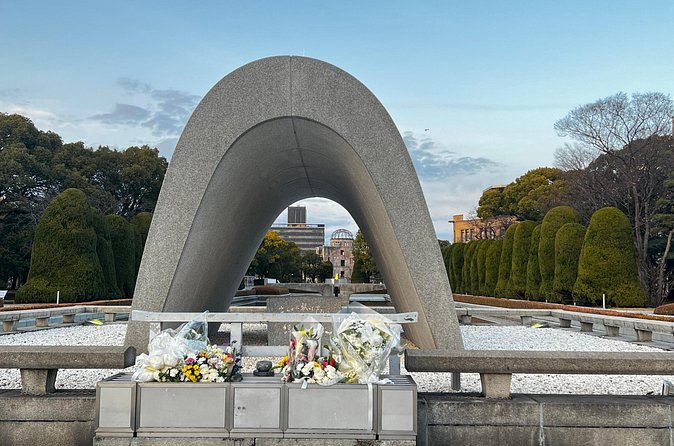
The Hiroshima Peace City Monument, also called the Cenotaph for the Atomic Bomb Victims, receives about 10 minutes.
Its arched form aligns with the Peace Flame and the Atomic Bomb Dome. The monument holds the names of known victims and carries the words, Let all the souls here rest in peace, for we shall not repeat the evil.
This is a short stop, but it may be one of the most important on the route. The shape, inscription, and alignment create a clear visual connection across the park. Your guide can explain how these parts relate, helping you understand the design rather than seeing it as an isolated monument.
The language of the inscription also deserves thought. It directs attention toward peace and a refusal to repeat the evil, while leaving room for serious questions about responsibility and war. If you want to discuss that balance, this is a good place to ask.
The Peace Memorial Museum: useful entry, limited time
The tour includes admission to the Hiroshima Peace Memorial Museum. The guide purchases your ticket in advance, which can help you avoid the long entry line.
There is an important limitation. Guides are not allowed to speak inside the museum, and the schedule lists about 10 minutes for the visit. That is not enough time for a careful museum visit. Think of this part as a brief, independent look rather than the complete museum experience.
The practical advantage is still real. You enter with your ticket already arranged, then view the exhibits on your own. You may find that the museum needs at least another visit or a separate block of time, especially if you want to read the displays and consider the survivor testimonies without checking the clock.
I would treat the guided walk and museum as two connected but different experiences. The guide gives you a map of the memorial area and the background needed to understand what you see. The museum then provides a more concentrated encounter with objects, photographs, and personal accounts. If your day allows it, return after the tour and give the museum the time it deserves.
Ending at the Gates of Peace
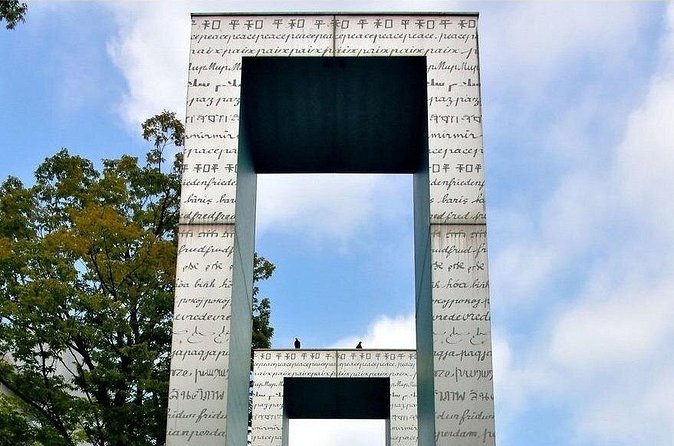
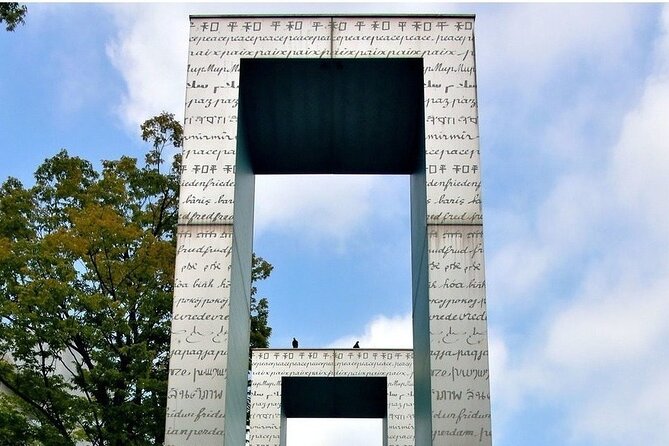
The route ends at the Gates of Peace at 4-15 Nakajimachō. You spend about 20 minutes here, making it the final major stop.
The site contains ten glass gates, each inscribed with the word peace in different languages. After the heavier memorials, the gates offer a broader message. Hiroshima’s appeal is not limited to one country or one language. The design points outward, toward a shared hope for a world without nuclear weapons.
Ending here gives the walk a forward-looking tone. The Atomic Bomb Dome begins with destruction; the Gates of Peace close with a message aimed at the wider world. It is a fitting finish, though you may also want to pause privately before leaving the park.
Pace, group size, and physical comfort
The walk is described as an easy walk on flat ground, and most people can participate. Still, do not confuse flat with effortless. You visit nine stops in about two hours, and the total route involves plenty of walking. Comfortable shoes are essential.
The small group limit of eight is a major advantage. You are less likely to lose the guide, and questions are easier to manage. The guides have also adjusted the pace for individual needs. Ghani slowed down for a person with a knee injury, and another guide made a point of stopping in the shade during a very hot day.
Hiroshima can be oppressively hot, so weather will affect your experience. The tour is outdoors for much of its length, with some indoor time at the memorial hall and museum. Bring water, protect yourself from the sun, and avoid scheduling this immediately before another demanding activity.
Service animals are allowed, and the meeting area is near public transportation. Confirmation arrives at booking. Since the experience is commonly booked about 14 days ahead, reserving early is sensible if your dates are fixed, especially if you want the small group format.
Who will get the most from this tour
I would recommend this walk to a first-time visitor who wants structure and context. It is also a good choice if you are making a day trip from Kyoto and need to use your time carefully. One family made that journey and felt the tour made the trip worthwhile.
It suits people who prefer conversation over a recorded audio guide. The guides welcome questions, and one uses questions for the group to make the walk more interactive. That can help you stay alert during a serious subject.
This is less suitable if you want a long, unhurried museum visit or an academic study of Japan’s wartime actions. The guide can provide useful background, but the route focuses on Hiroshima’s memorials and peace message. For a fuller account, pair it with extra museum time and your own reading.
Should you book Walking Through History?
Book it if you want a compact, thoughtful introduction to Hiroshima’s Peace Memorial Park, especially if you value a small group and a live guide. The $31.63 price is reasonable because it includes museum admission, a planned route, and access to guides who have been praised for patience, clear explanations, and attention to the group’s pace.
Do not book it expecting two full hours inside the museum or a complete account of Japan’s wartime history. The strongest plan is to use the walk for orientation, questions, and the meaning behind the monuments, then return to the museum or park on your own.
For most first visits, I think the format works very well. It gives you the landmarks, the human stories, and the difficult questions in a manageable two-hour route. Just wear good shoes, allow time for reflection, and remember that this is an introduction to Hiroshima, not the last word on it.
FAQ
How long does the Hiroshima peace walking tour last?
The tour lasts approximately two hours.
How much does the tour cost?
The listed price is $31.63 per person.
How many people can join the tour?
The group has a maximum of eight participants.
Is admission to the Peace Memorial Museum included?
Yes. The guide purchases the museum entrance ticket in advance. You visit the museum on your own because guides are not allowed to speak inside.
Where does the tour begin and end?
The tour begins at 1-chōme-10-1 Ōtemachi, Naka Ward, Hiroshima, 730-0051, Japan. It ends at the Gates of Peace at 4-15 Nakajimachō, Naka Ward, Hiroshima, 730-0811, Japan.
Can I cancel for a full refund?
Yes. You can cancel at least 24 hours before the experience start time for a full refund. Cancellations or changes made less than 24 hours before the start time are not accepted for a refund.
Just added around Hiroshima
- Morning Hiking Tour: Mt. Futaba & Hiroshima’s History★ 5.0 · 25 reviews
- History of Hiroshima Group Walking Tour★ 5.0 · 23 reviews
- Hiroshima & Miyajima: Private Full-Day Tour with a Local Guide★ 5.0 · 39 reviews
- The history of Hiroshima “the event that shape the history”★ 4.9 · 18 reviews
- Hiroshima: Miyajima Half-day Historical Walking Tour★ 4.7 · 100 reviews
- Hiroshima: Peace Walking Tour of World Heritage Sites★ 4.9 · 190 reviews
- Hiroshima: History and Hidden Gems Tour★ 4.9 · 81 reviews
- Hiroshima & Miyajima Island Private Tour: History & Culture★ 5.0 · 26 reviews
History Walking Tours, compared.
History and Hauntings of Salem Guided Walking Tour
Read our review →
Freedom Trail History Small Group Walking Tour
Read our review →
Historic Charleston Guided Sightseeing Walking Tour
Read our review →
Tapas Walking Tour with Food, Wine, and History
Read our review →
Savannah History and Haunts Candlelit Ghost Walking Tour
Read our review →
A History of Terror – Belfast City Centre Walking Tour
Read our review →Browse the lists this tour appears in