
Review · CHUGOKU REGION
Hiroshima: Miyajima Half-day Historical Walking Tour
Miyajima rewards a slower look. This 5.5-hour walking tour combines the island’s famous sights with fresh oysters and fried momiji dumplings, then adds smaller cultural stops you could easily miss alone. I like the small groups, limited to seven, and the way guides such as Yuji, Kiki, Eri, Hika, and Shun bring daily Japanese life into the story.
The ferry ride gives you a fine first view of the Seto Inland Sea and the O-Torii Gate. I also like that lunch, shrine and temple admission, museum entry, and tour photos are covered in the $106 price. The catch is the walking: some paths are uneven, the schedule can run long if lunch service slows, and the tour is not suited to anyone with low fitness, back or heart problems, or gluten intolerance.
Key points at a glance
- Small groups make the day personal: The tour accepts no more than seven people, and some departures may feel almost private.
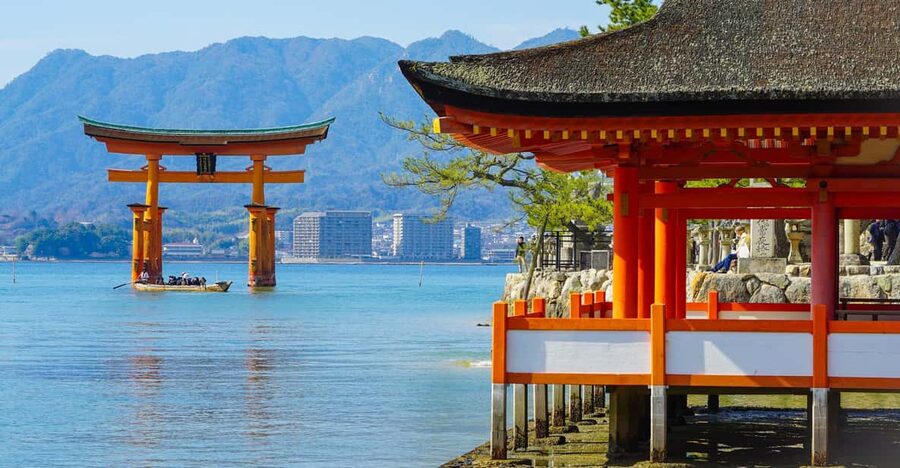
- The ferry is part of the experience: You see Miyajima and the O-Torii from the water before setting foot on the island.
- Food is more than a quick snack: Lunch includes Hiroshima Prefecture ingredients, with local oysters and fried momiji dumplings among the treats.
- Itsukushima Shrine gets proper attention: Your guide explains its Heian-period design and how it works with the changing tides.
- Daisho-in is the quieter reward: The 1,200-year-old temple complex offers mountain paths, statues, gardens, and a look at Buddhist practice.
- The tour covers a lot of ground: Expect roughly 330 minutes of walking, stops, food, ferry travel, and conversation.
Why this tour works well for a first Miyajima visit
Miyajima is often treated as a quick side trip from Hiroshima: ferry over, photograph the red gate, eat something, ferry back. That plan gets you a famous picture but not much understanding. This tour gives the island a clear shape, from its sacred shoreline to its temple paths and ordinary town life.
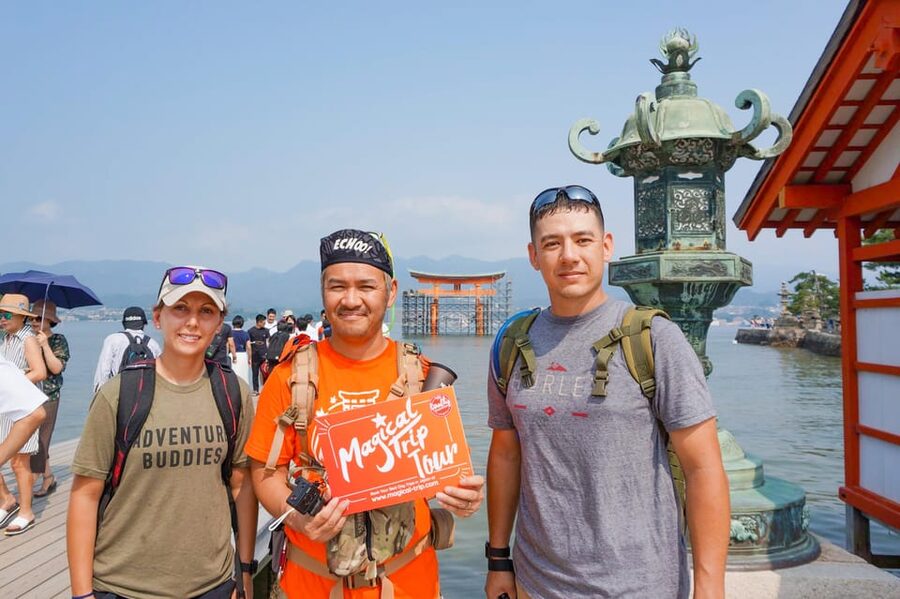
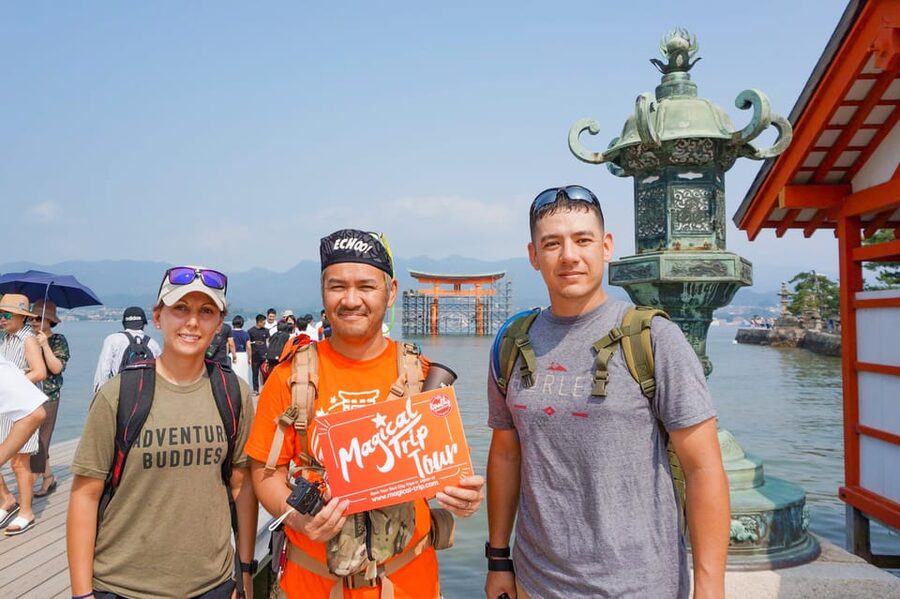
You meet in front of the coin-operated lockers outside JR Miyajimaguchi Station. From JR Hiroshima Station, the Sanyo Line takes about 30 minutes to reach Miyajimaguchi. Your guide holds a MagicalTrip board, which makes the meeting point easier to spot.
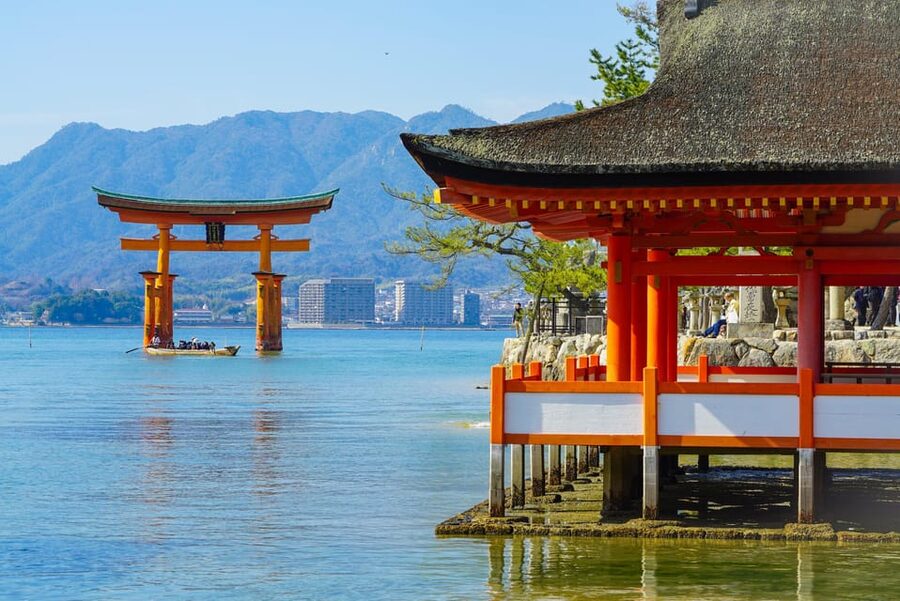
The ferry crossing is short, but do not treat it as dead time. You get views of the Seto Inland Sea, the island’s wooded slopes, and the O-Torii Gate sitting offshore. On arrival, the island’s deer may greet you. They are accustomed to people, but they are still wild animals, so give them space and keep food away from them.
The small-group format matters here. With seven or fewer people, you can ask about Shinto, Buddhism, Japanese customs, food, or whatever catches your eye. Several guides have been praised for adjusting the pace, taking rest breaks, and answering questions without making the day feel like a march.
More History Walking Tours in Japan
- Tokyo: Imperial Palace and Shogun Historical Walking Tour
★ 5.0 · 2,251 reviews - Kyoto Gion: 2-Hour Geisha Culture & History Walking Tour
★ 5.0 · 1,186 reviews - Tokyo Castle & Imperial PalaceーShogun Walking Tour
★ 4.7 · 1,068 reviews
Itsukushima Shrine and the gate shaped by the tides
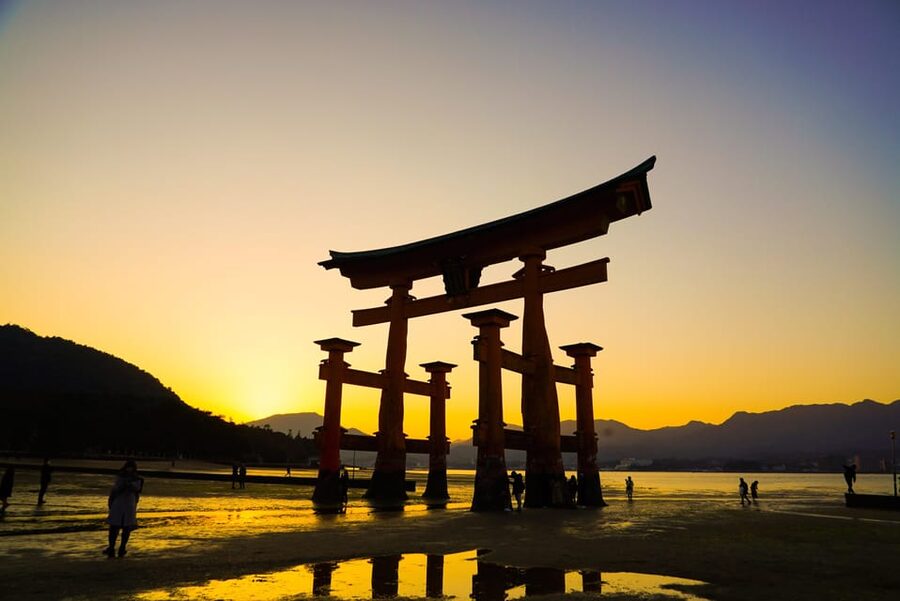
The O-Torii is Miyajima’s postcard image, but the gate makes more sense once you see its place in the wider shrine complex. The tour first follows the coast toward the gate, then continues to Itsukushima Shrine, the island’s best-known sacred site.
Itsukushima Shrine was built in the Heian period, from 794 to 1192. Its distinctive design sits over the water and responds to the rise and fall of the tide. Your guide explains why the buildings were arranged this way and how the changing water level affects the way you see the shrine and gate.
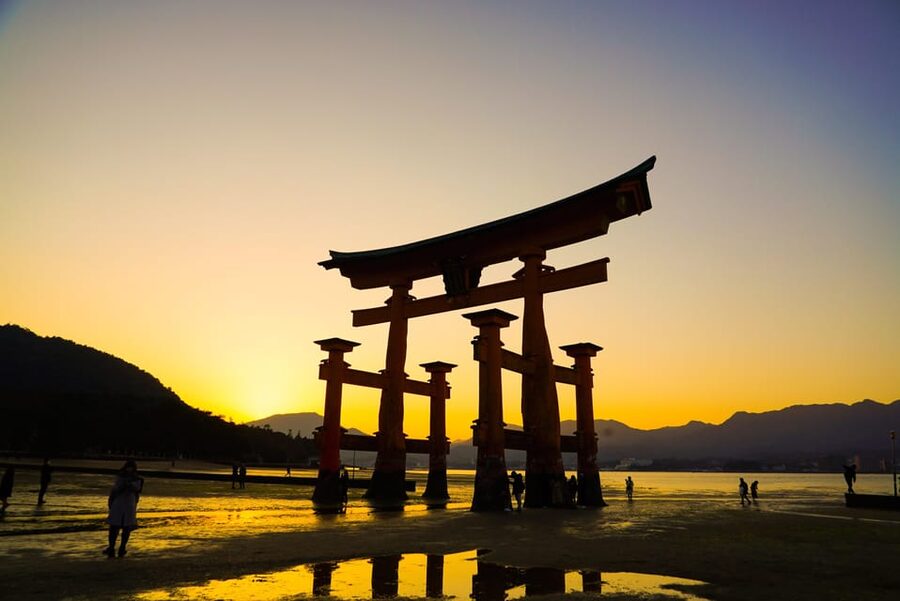
Timing can change the view. At high tide, the O-Torii appears to float offshore. At low tide, you may be able to see the exposed ground around it. One particularly useful detail from the tour feedback is that a guide timed the visit so the group saw both conditions. That will not happen on every departure, but it shows why a guide can add value beyond directions and historical dates.
Allow 40 minutes at the shrine, though your total stop can feel longer when you include the approach, photographs, and explanations. The area can be crowded, especially at popular times, so patience helps. The tour gives you a framework for looking closely instead of simply moving through with the crowd.
Lunch with oysters, local flavors, and a few limits
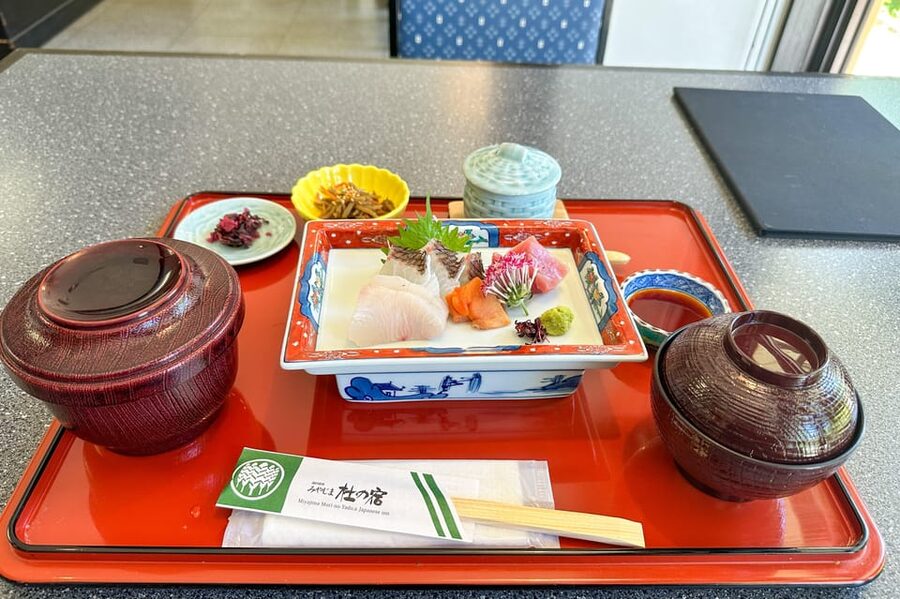
Food is one of the strongest parts of this experience. Lunch uses ingredients from Hiroshima Prefecture, and Miyajima is especially associated with oysters. Depending on the restaurant and the day, you may taste oysters prepared in a local style, including grilled oysters with butter and soy.
Fried momiji dumplings are another island specialty. A momiji manju is a maple-leaf-shaped sweet, and the fried version gives it a crisp outside. The tour also includes local snack stops, and one past group enjoyed ice cream as an extra treat.
The guides add value at the table. One guest found that eating lunch together helped explain Japanese dining customs, including how to finish a meal properly. That sort of practical lesson is easy to miss when you eat alone at a busy food stall.
There are limits. Vegetarian and vegan lunches are available, but choices are limited. The operator cannot promise an allergy-free meal or accommodate every dietary restriction because the food is prepared in outside kitchens. Gluten intolerance is listed among the reasons this tour may not suit you. If food allergies or strict dietary needs affect your booking, ask before paying rather than hoping for substitutions on the day.
Food and drinks beyond the planned meal are not included. Bring cash for extra snacks, drinks, and the ferry.
The museum and everyday Miyajima
The tour includes a museum visit focused on Miyajima’s life and culture. This gives you a useful change of pace after the shrine. Instead of looking only at sacred buildings, you learn how people lived on the island from the Edo period to the present.
That ordinary-life angle is important. Miyajima is not just a religious site or a photo stop. It is also a lived-in island with food traditions, local crafts, homes, customs, and work shaped by its setting. The guide helps connect what you see in the museum with the streets and buildings outside.
The museum stop is especially useful if you like context but do not want a formal lecture all day. Guides have been praised for explaining Japanese daily life alongside the history of shrines and temples. Hika, Yuji, Eri, and Shun are among the guides singled out for clear explanations and friendly conversation, though the guide assigned to your date can vary.
Same place, a different slice of the past:
- Kyoto: Fushimi Inari, Kinkakuji, Bamboo Grove 1 Day Bus Tour
★ 4.8 · 4,316 reviews - World Heritage Shirakawa-go and Experience Tours from Kanazawa
★ 5.0 · 4,049 reviews - World Heritage Kyoto & Nara Uji Authentic Matcha Experience
★ 5.0 · 1,573 reviews - Kanazawa: World Heritage Shirakawa-go Morning Guided Tour
★ 4.9 · 988 reviews
Daisho-in, the island’s oldest temple complex
The walk to Daisho-in takes you away from the busiest shoreline and onto a mountain path. This is where comfortable shoes matter most. Rain can make parts of the route muddy, and the tour includes locations that are not suitable for wheelchairs or strollers.
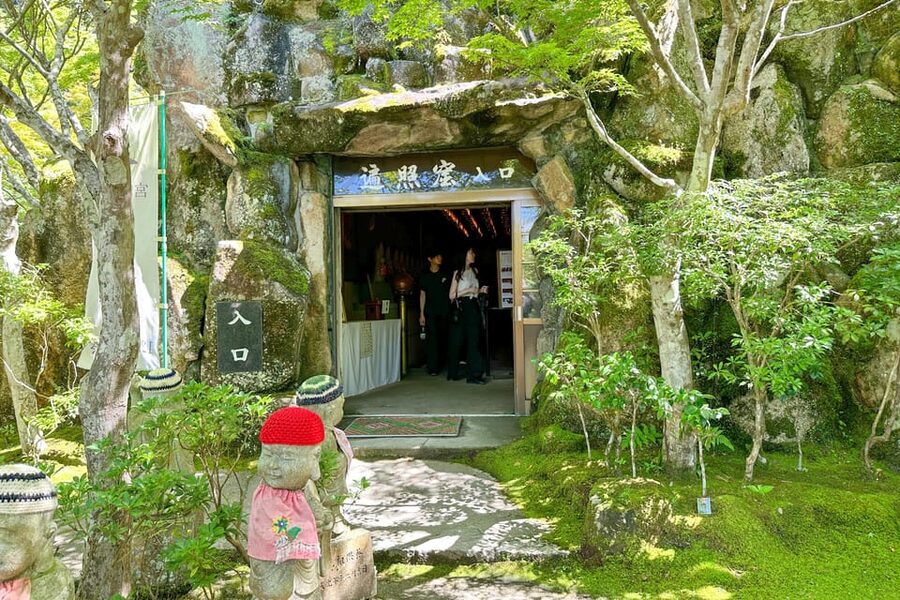
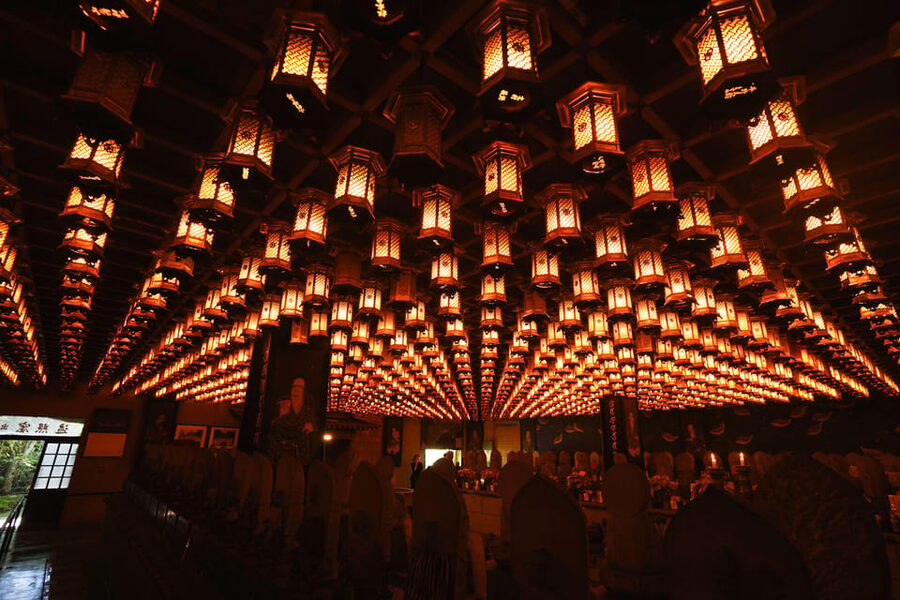
Daisho-in is described as the oldest temple on Miyajima, with about 1,200 years of history. Plan on about an hour here. The complex includes several temples, gardens, and statues, giving you a much broader look at island religion than a single shrine visit can provide.
Your guide explains how faith developed on Miyajima and how Buddhist and Shinto practices relate to the places you are seeing. The value is not only in the age of the buildings. It is in learning how visitors use the complex, what the statues represent, and why the mountain setting matters.
Many people find Daisho-in more rewarding than they expect. The shrine is the essential sight, but the temple offers more room to pause and look. You may see small details, quiet corners, and rows of statues that would mean little without explanation. Guides such as Shun and Hika have been praised for taking groups beyond the obvious sights and talking about Buddhism, Shinto, and Japanese culture in a natural way.
The path does involve effort. If you have a low level of fitness, high or low blood pressure, back trouble, or heart problems, this is not an easy outing. The tour is not designed as a gentle, fully accessible stroll.
Momijidani, Senjokaku, and the extra stops
The schedule also includes short visits to Momijidani and Senjokaku Pavilion. Momijidani is listed as a 10-minute stop, so expect a brief look rather than a long walk through the area. The name connects with the island’s maple trees, and the stop adds a bit of greenery and breathing room between major sites.
Senjokaku Pavilion receives about 20 minutes. Its broad interior and traditional architecture offer a different feel from the shrine’s water-based design. The stop is short, but it helps round out the picture of Miyajima as a place of religious buildings, gardens, wooded paths, and local traditions.
The schedule also includes an hour at a less obvious location. Exact details are not fixed in the information provided, so do not book this expecting a specific named attraction. Think of it as time for your guide to show you a quieter part of the island or add a local stop based on the day’s conditions.
The tour finishes with tea or coffee and returns to the souvenir-shop street. This is a pleasant ending after the uphill sections. It also gives you a chance to browse on your own before returning by ferry.
How much value do you get for $106?
At $106 per person, this is not the cheapest way to see Miyajima. You can reach the island independently and visit the public sights without paying for a guide. The question is what you want from the day.
The price includes a local guide, admission to the shrines, temples, and museum included in the route, lunch, and tour photos. It also saves you the work of planning a route through several places that are spread between the shore, town, and mountain side. For a first visit, that combination makes the price reasonable, especially if your group is small and you use the guide well.
The food helps the value. You are not simply paying for transport and commentary, then buying lunch on top. You get a local meal and chances to try island specialties. The tour photos are a nice extra for solo visitors or couples who want pictures without constantly setting up a phone.
The ferry is not included. The supplied information gives two different amounts, JP¥500 in one place and JP¥360 in another, so bring cash and confirm the current fare. You should also budget for extra drinks and snacks.
The tour lasts 330 minutes, or five and a half hours. That is long enough to see the key sights without turning Miyajima into a rushed checklist. Food service delays can push the day beyond the planned finish, so avoid booking a tight onward connection.
Who should book this walking tour?
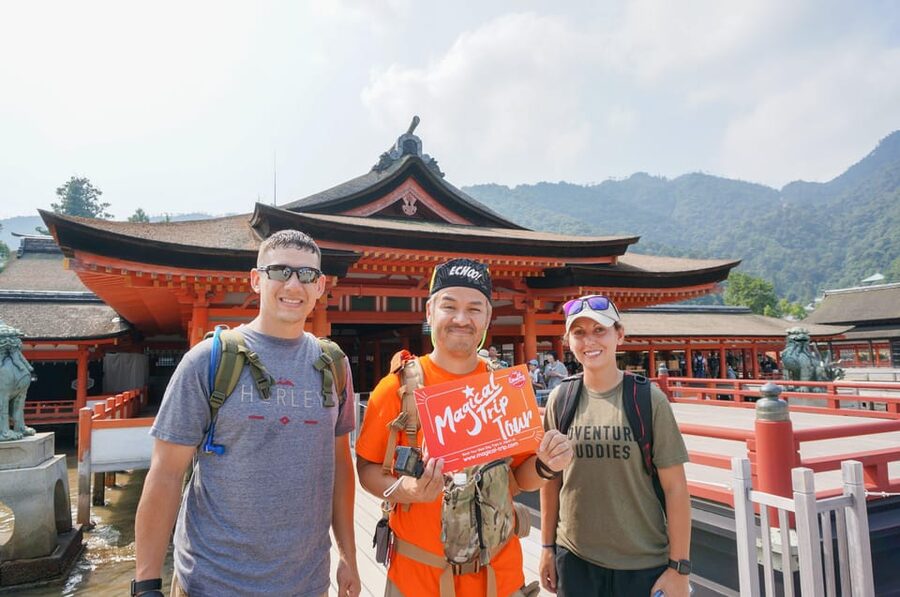
I would recommend it to first-time Miyajima visitors who want the main sights plus food, temple history, and local context. It is also a good match for solo visitors. One departure became a solo experience with the guide, while other groups had only a handful of people, creating a friendly and flexible feel.
Families with older children or adult children may enjoy it, especially if everyone can handle a fair amount of walking. One family praised Eri for mixing history, culture, and fun while choosing a good lunch spot. Couples and small groups should also appreciate the relaxed pace and guide conversation.
You should think twice if you need a wheelchair or stroller-friendly route, have serious mobility concerns, dislike boats, or have a strict gluten-free or allergy-safe diet. Babies under one year old are not accepted, and the tour is not suitable for people prone to seasickness.
Summer requires extra care. Japan can be very hot and humid, so bring water and wear a hat. Good walking shoes are useful in every season, especially after rain.
For cancellation, you can cancel up to 24 hours before the tour for a full refund. You can also reserve now and pay later, which helps if your Hiroshima plans are still moving around.
Should you book it?
Book this tour if you want Miyajima to feel like more than a red gate and a quick lunch. The strongest reasons are the small group, the local meal, the careful explanation of Itsukushima Shrine, and the quieter hour at Daisho-in. The guides have repeatedly been praised for warmth, clear English, flexibility, and a willingness to share everyday Japanese customs rather than recite facts.
Skip it if you prefer complete independence, need an easy flat route, or cannot manage the food limitations. For most fit visitors making a first Miyajima trip, though, $106 buys a well-filled half-day and a much better understanding of why this small island matters.
FAQ
How long does the Miyajima walking tour last?
The tour lasts 330 minutes, or about five and a half hours. Food service delays may make the day run longer.
Where is the meeting point?
Meet in front of the coin-operated lockers outside JR Miyajimaguchi Station. Your English-speaking guide will hold a MagicalTrip sign.
How do I reach JR Miyajimaguchi Station from Hiroshima?
The Sanyo Line takes about 30 minutes from JR Hiroshima Station to JR Miyajimaguchi Station.
Is the ferry ticket included?
No. The ferry ticket is separate, and you should bring cash. The supplied details list both JP¥360 and JP¥500, so confirm the current fare before departure.
Is lunch included?
Yes. A local lunch using ingredients from Hiroshima Prefecture is included, along with opportunities to try Miyajima specialties such as oysters and fried momiji dumplings.
Are vegetarian and vegan meals available?
Vegetarian and vegan options are available but limited. Allergy-free meals and every dietary substitution cannot be guaranteed because outside restaurants prepare the food.
Is the tour wheelchair or stroller accessible?
No. Some locations on the route are not accessible by wheelchair or stroller.
Is the tour conducted in English?
Yes. The tour has a live English-speaking guide.
What happens if I need to cancel?
You can cancel up to 24 hours in advance for a full refund. Reserve now and pay later is also available.
More Half-Day Tours in Japan
- Miyajima Half-day Trip Historical Walking Tour
★ 5.0 · 284 reviews - Nara: Half-Day UNESCO Heritage & Local Culture Walking Tour
★ 4.8 · 250 reviews - Shirakawa-go UNESCO Half-Day Tour from Takayama
★ 4.6 · 47 reviews - Lima’s Vibrant Heritage: Exploring the City’s Landmarks Half-day
★ 4.5 · 581 reviews
Just added around Japan
- Kyoto: Historic Higashiyama Walking Tour★ 5.0 · 31 reviews
- Kyoto: Private 2.5 Hour Historical Walking Tour★ 4.9 · 121 reviews
- Kyoto/Osaka: Kobe & Himeji Journey Through Culture & History★ 3.7 · 18 reviews
- Kyoto/Osaka: Kyoto and Nara Sites & History Day Trip★ 4.5 · 32 reviews
- Kyoto Early Bird English Tour: Fushimi-Inari and Arashiyama★ 5.0 · 17 reviews
- Kyoto: Nijo Castle World Heritage Guided Tour with Admission★ 4.9 · 37 reviews
- Kyoto: Gion Hidden Gems & Geisha Culture Tour★ 4.9 · 126 reviews
- Kanazawa: World Heritage Shirakawa-go & Two Local Experience★ 4.9 · 274 reviews
History Walking Tours, compared.
History and Hauntings of Salem Guided Walking Tour
Read our review →
Freedom Trail History Small Group Walking Tour
Read our review →
Historic Charleston Guided Sightseeing Walking Tour
Read our review →
Tapas Walking Tour with Food, Wine, and History
Read our review →
Savannah History and Haunts Candlelit Ghost Walking Tour
Read our review →
A History of Terror – Belfast City Centre Walking Tour
Read our review →Browse the lists this tour appears in