
Review · CHUGOKU REGION
The history of Hiroshima “the event that shape the history”
The hardest history deserves a careful guide. This two-hour Hiroshima tour brings the city’s wartime past into focus through the Atomic Bomb Dome, Peace Memorial Park, and the people affected by August 6, 1945. I like the clear route through major monuments, and I like that the museum entrance is included rather than left as an extra task for you to arrange. The main drawback is time: nine stops plus the Peace Memorial Museum make this a brisk introduction, not a slow, private study of every site.
You meet near the Peace Memorial Museum and walk with a local guide who explains the symbolism, wartime setting, and postwar rebuilding of Hiroshima. Guides including Maria, James, and Ali have been praised for answering questions patiently and making a difficult subject easier to absorb. At $38 per person, the tour offers good value if you want context and a human story, though visitors who prefer to read every museum display at their own pace may need extra time afterward.
Key points at a glance
- The Atomic Bomb Dome and hypocenter: See the city’s best-known reminder of the bombing and visit the place identified as the blast’s center.
- A human account of Hiroshima: Stories of hibakusha, civilians, and children keep the history connected to real lives.
- Peace Memorial Museum included: Your admission is covered, and the tour helps prepare you for the museum’s difficult displays.
- Nine stops in two hours: The route is efficient, but the pace may feel quick if you want long pauses at every monument.
- Several guide languages: Tours are offered in English, Hindi, and Urdu.
- Flexible booking: You can cancel up to 24 hours ahead for a full refund and reserve now while paying later.
Why this Hiroshima tour is worth your time
Hiroshima is easy to visit on your own. You can walk into Peace Memorial Park, find the Atomic Bomb Dome, and enter the museum. The harder part is understanding what you are seeing, how the sites connect, and how to think about a city that was changed in a single morning.
That is where this tour earns its price. Your guide provides a timeline from prewar Hiroshima to the bombing, then follows the city through recovery and its continuing work for nuclear disarmament and peace education. You are not simply shown a row of monuments. You are given the reasons they exist and the people they remember.
I especially like the balance between public history and personal accounts. The tour covers the Second World War and the Pacific conflict, but it also makes room for survivors, children, families, and ordinary civilians. That approach matters in Hiroshima. Dates and military decisions explain part of the story. Personal loss explains another part.
The experience also avoids treating the bombing as an isolated event. You learn about Hiroshima as a functioning city before 1945, the immediate effects of the atomic bomb, and the long work of rebuilding afterward. The result is a more complete picture than a quick photo stop at the Dome.
A few more history tours around Japan worth a look
- World Heritage Shirakawa-go and Experience Tours from Kanazawa
★ 5.0 · 4,049 reviews - Tokyo: Imperial Palace and Shogun Historical Walking Tour
★ 5.0 · 2,251 reviews - World Heritage Kyoto & Nara Uji Authentic Matcha Experience
★ 5.0 · 1,573 reviews
Starting near 1-2 Nakajimachō
The meeting point is a taxi stand near the Peace Memorial Museum, at approximately 34.3915047, 132.4530738. This is a practical starting place because the tour begins close to the central memorial area rather than sending you across the city first.
You should allow a little time to locate the guide and gather your bearings before the scheduled start. The tour finishes back at 1-2 Nakajimachō, so the route is compact and easy to combine with more time in the park afterward.
The guide leads on foot. That matters because the meaning of Hiroshima is tied to the places themselves. You move from gates and memorials to the Dome, the hypocenter, and finally the museum, rather than looking at the city through a vehicle window.
Gates of Peace: an opening lesson in symbolism
The Gates of Peace are the first formal stop, with about 15 minutes for a visit, photographs, and explanation. They provide a fitting introduction because the tour is not only about what happened in 1945. It is also about Hiroshima’s message to the future.
Expect your guide to explain the meaning behind the site and connect it to the city’s peace work. This opening gives you a framework before the tour reaches the more emotionally demanding memorials.
Fifteen minutes is enough for orientation and photographs, but not for a long philosophical discussion. If you have a particular question about the gates, ask early. Guides such as Maria and Ali have been praised for making time for questions, but a two-hour schedule still requires some discipline.
The Cenotaph for the A-bomb Victims
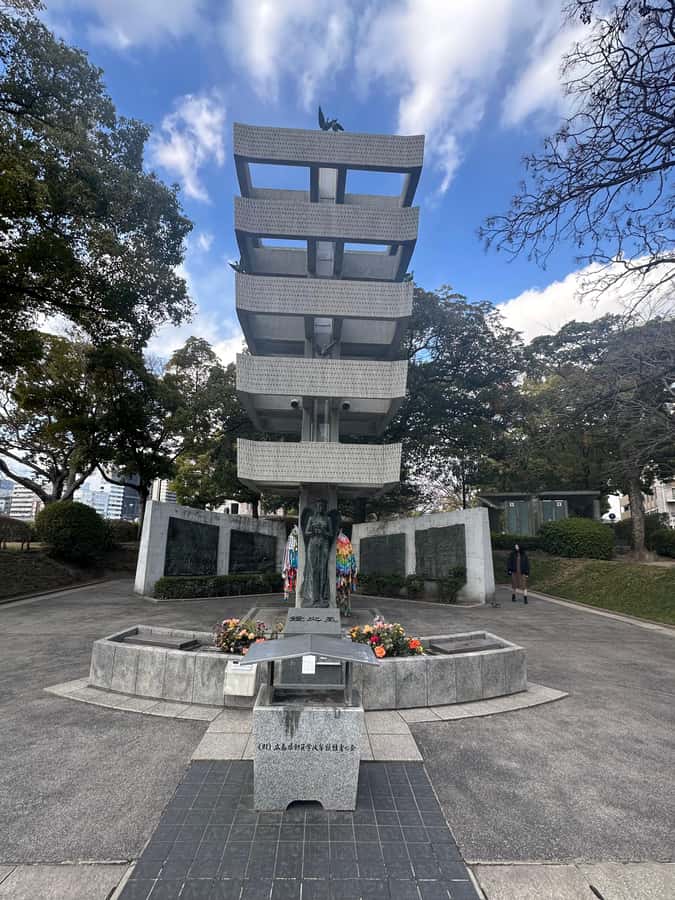
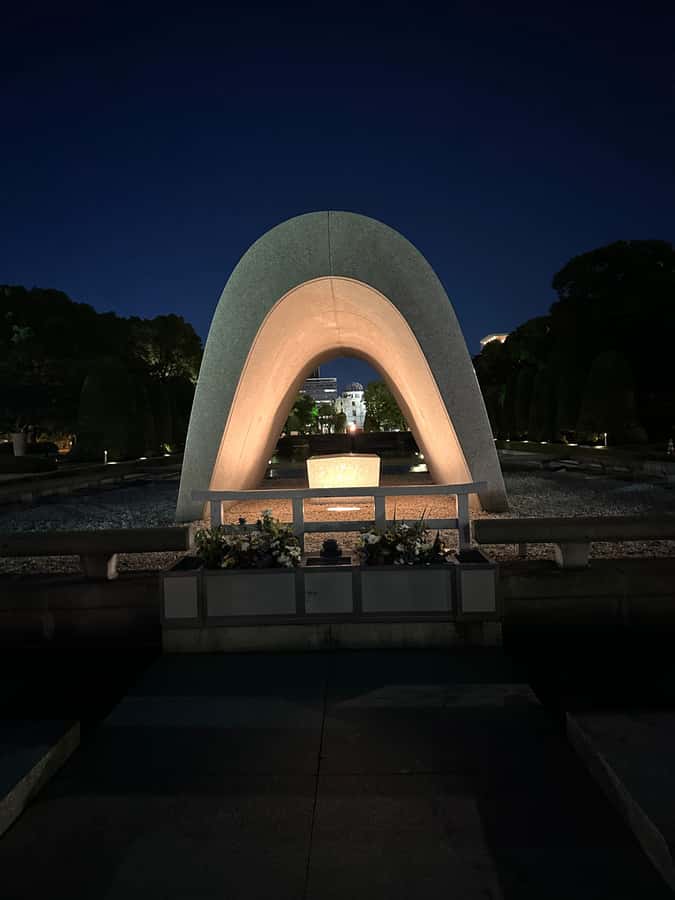
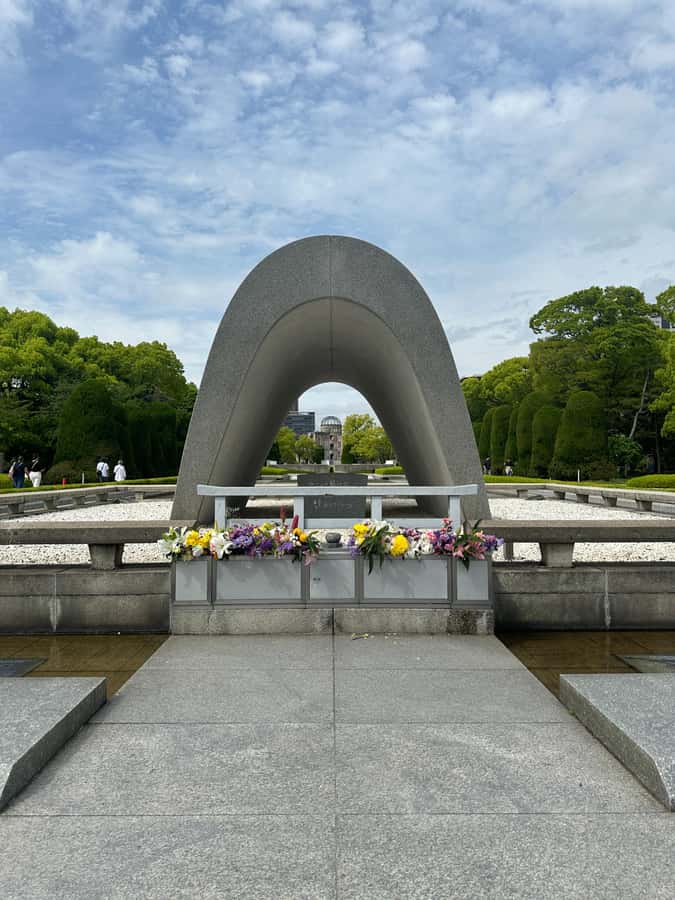
The Hiroshima Victims Memorial Cenotaph is one of the central places of remembrance in Peace Memorial Park. Here, the guide explains the purpose and symbolism of the monument, helping you understand why the park is designed around memory, mourning, and hope for peace.
This stop is more than a quick photograph. It is a chance to consider how Hiroshima remembers those who died, including people whose names and personal stories were not widely known beyond their families.
You will have about 15 minutes for the guided visit. That is a useful amount of time for an initial explanation, though you may want to return later on your own. The park rewards a second, quieter walk after the formal tour has ended.
Same place, a different slice of the past:
- Kyoto: Fushimi Inari, Kinkakuji, Bamboo Grove 1 Day Bus Tour
★ 4.8 · 4,316 reviews - Kyoto Gion: 2-Hour Geisha Culture & History Walking Tour
★ 5.0 · 1,186 reviews - Tokyo Castle & Imperial PalaceーShogun Walking Tour
★ 4.7 · 1,068 reviews - Kanazawa: World Heritage Shirakawa-go Morning Guided Tour
★ 4.9 · 988 reviews
The Korean Atomic Bomb Victims Cenotaph
The Korean Atomic Bomb Victims Cenotaph adds an important part of the story that can be missed on a general sightseeing walk. It remembers Korean victims of the atomic bombing and broadens your understanding of who was living in Hiroshima at the time.
This stop shows why a local guide can add value. A short label or map may identify the monument, but the historical setting and human meaning are easier to grasp when someone explains them in place.
Plan on another 15-minute guided visit. The repeated rhythm of monument, story, and questions may feel structured, but it prevents the park from becoming a blur of names and stone. You leave with a clearer sense of the different communities affected by the bombing.
Peace Bell and Children’s Peace Monument
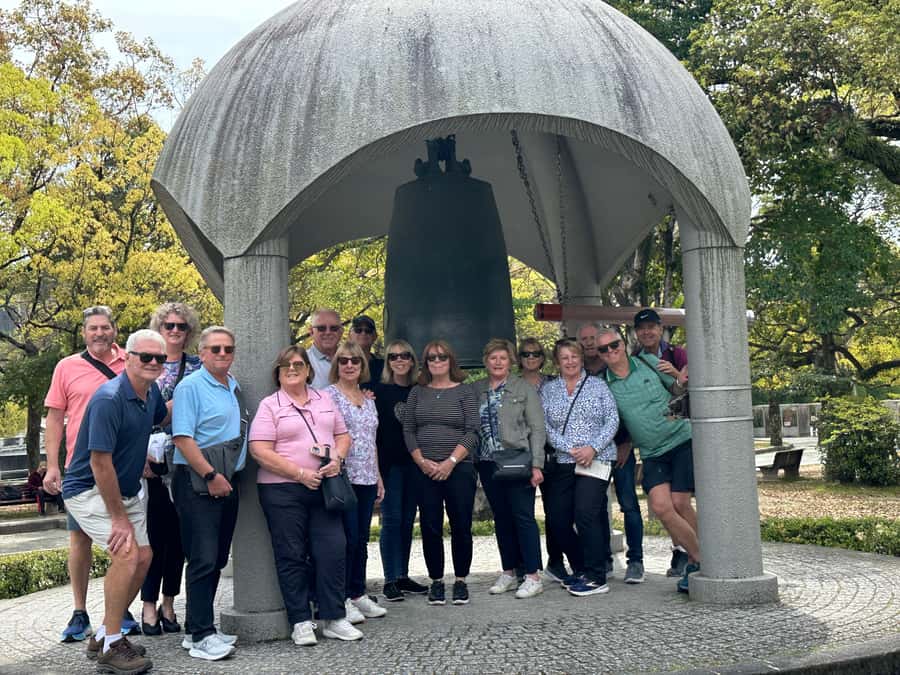
The Bell of Peace introduces another form of remembrance. Your guide explains its message and place within the park’s broader call for peace. It is a brief stop, but the sound and symbolism give the walk a different mood from the more formal cenotaphs.
The Children’s Peace Monument is especially moving because it brings the story of Hiroshima to children and young people. The tour shares accounts of children affected by the bombing and shows how later generations have helped keep those memories alive.
These stops can be emotionally heavy, yet the 15-minute format keeps the experience from becoming overwhelming. Several guide comments praise the way the subject was handled with care and clarity rather than dramatized. That is an important distinction. Hiroshima does not need theatrical presentation. The facts and individual stories are already powerful.
Hiroshima Peace Park Rest House
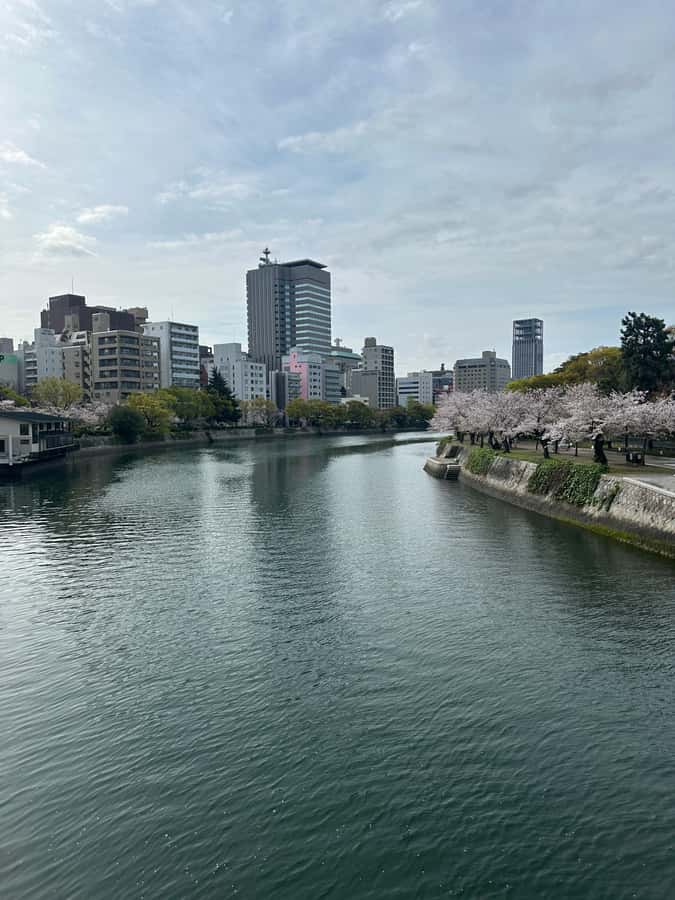
The Hiroshima Peace Park Rest House gives the tour another place to pause and place the surrounding area in context. It is included among the guided stops and helps connect the individual monuments to the wider park.
Your guide may point out details you would otherwise pass without noticing. The value here is not a long indoor visit, but the chance to ask questions while the story of the park is still fresh.
Because the schedule is tight, do not expect every location to receive equal attention. The main purpose is to build a connected route toward the Dome and museum. If a particular monument matters to you, tell the guide so you can use the available time well.
The Atomic Bomb Dome and the hypocenter
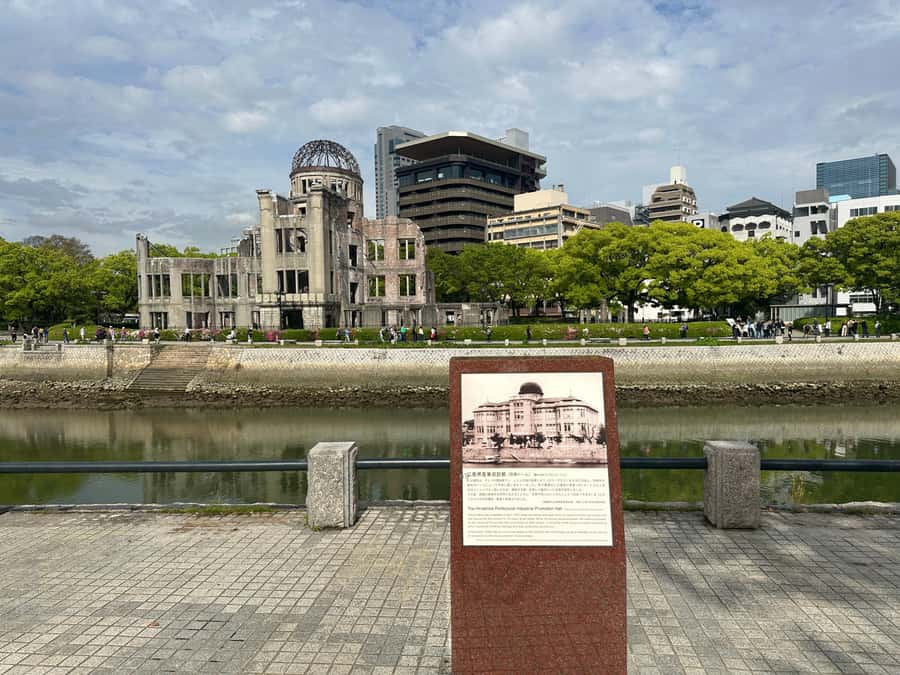
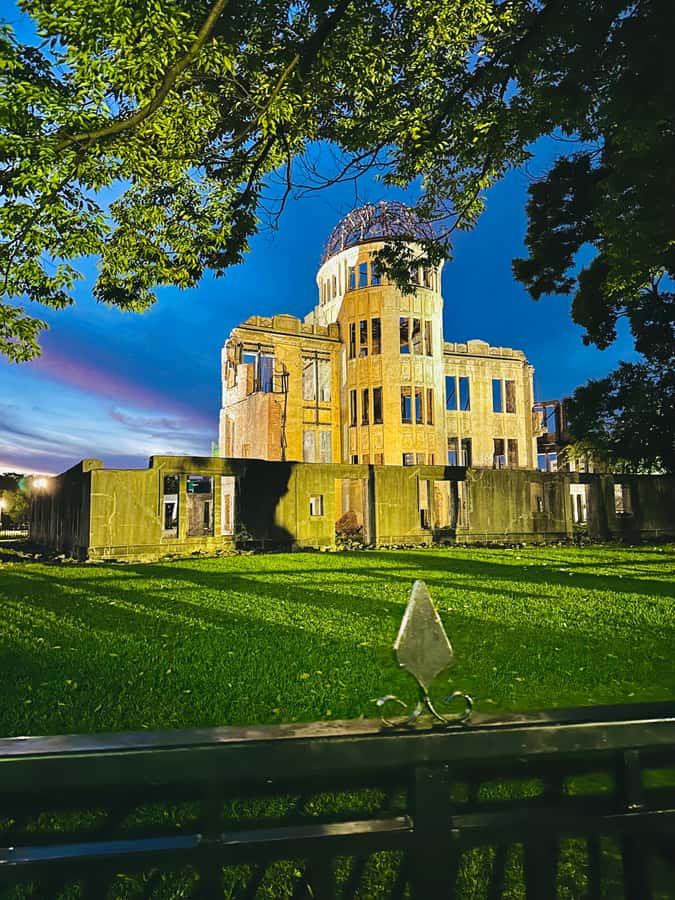
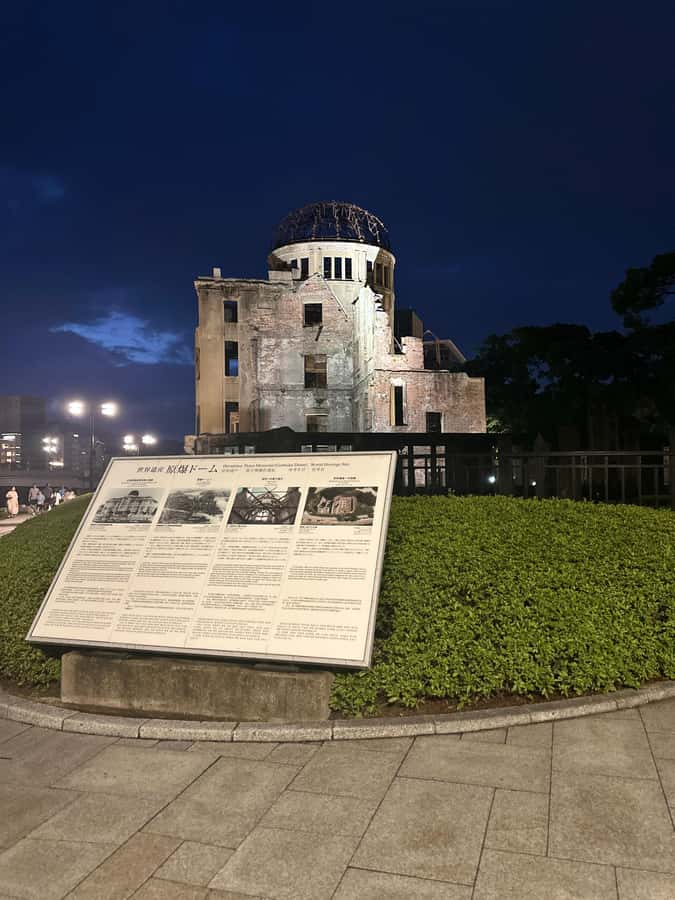
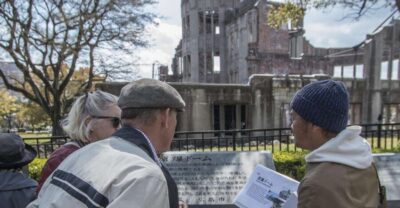
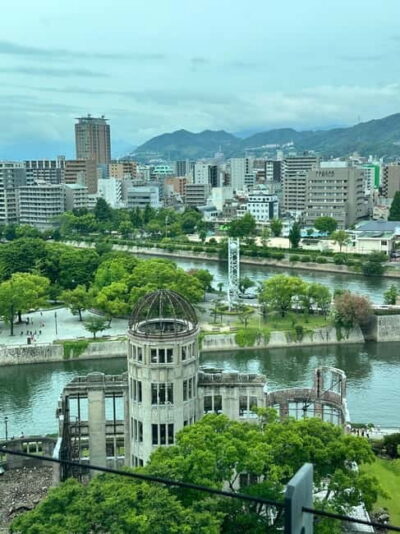
The Atomic Bomb Dome is the visual center of most Hiroshima visits. Its damaged structure has become an international symbol of the bombing and of the city’s decision to preserve memory rather than erase every trace of destruction.
Your guide explains the building’s history and what it represents. The stop is listed as a photo opportunity and guided visit, but it should not be reduced to a backdrop. The Dome carries the physical evidence of the event in a way that museum objects cannot.
The next stop is the hypocenter, the location identified as the center of the atomic blast. Visiting it changes the scale of the story. The Dome is a recognizable structure; the hypocenter asks you to think about the event in terms of place and distance.
Together, these two stops are among the strongest parts of the route. They give you something visible and specific to connect with the wider history. They can also be difficult, so take the guide’s explanation at your own pace and ask for clarification if the technical or historical details are unfamiliar.
Hiroshima Peace Memorial Museum
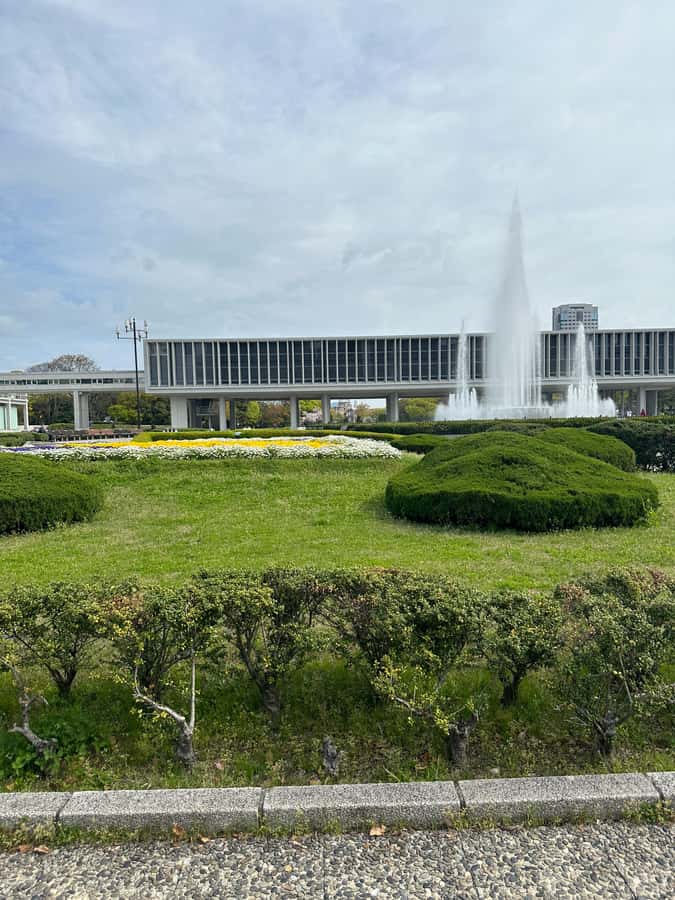
The tour includes entrance to Hiroshima Peace Memorial Museum, which is a major advantage at this price. The museum presents the bombing, the lives of victims, the physical effects, and the continuing issue of nuclear weapons through objects, photographs, testimony, and explanations.
The guide’s earlier commentary helps prepare you for the museum. Without context, the displays can arrive as a series of painful fragments. After walking through the park and hearing about the city before and after the bombing, you have a clearer structure for what you see.
The museum can be crowded. One guide is specifically praised for helping the group visit before the crowds became too difficult, and another account describes the museum as busy enough that preparation made a real difference. The exact crowd level can change, so do not count on having a quiet, empty visit.
The museum portion is also where the two-hour duration becomes important. The route includes the museum, but the available time may not allow you to read every panel or stop at every display. If you want a slow museum visit, plan to return later or stay on after the guided portion if the arrangements allow. The tour gives you a strong introduction, not a substitute for unlimited museum time.
How the guides shape the experience
The strongest pattern in the guide feedback is personal attention. Maria is praised for clear storytelling, friendly conversation, local information, and answers that kept the group engaged. James is described as adding useful detail even for people who already knew the basic story. Ali is praised for not rushing, getting to know the group, and allowing plenty of questions.
That matters because Hiroshima is not a subject that benefits from a memorized speech delivered at speed. You need room to ask why a monument exists, how the city rebuilt, and how personal stories fit within the larger account of the war.
The guides speak English, Hindi, and Urdu. The exact guide depends on the day, but the experience is designed around live explanation rather than an audio recording or self-guided route.
A private tour may sometimes be available, as one booking became private, but you should not assume that every departure is private. The supplied information confirms a private guide, not a guaranteed private group size. If privacy is important to you, check the specific booking details before paying.
Price, pace, and who gets the best value
At $38 per person, this is a fair price for a two-hour guided walk with museum admission included. You are paying for a guide who connects the sites, plus the convenience of having the museum ticket handled for you.
The value is strongest for first-time visitors, families, and anyone who wants historical context without spending half a day planning a route. It also suits you if the subject feels difficult and you would rather have a calm person explain the monuments as you encounter them.
The pace may not suit everyone. You visit nine named locations, then the museum, all within two hours. That is efficient, but it leaves limited time for lingering, photography, long conversations, or a full museum reading session.
I would choose this tour early in a Hiroshima stay. It gives you a useful map of the memorial area and makes a later independent visit more meaningful. If you already know the history well and prefer to move alone, the included admission may be less valuable than the freedom of a self-guided visit.
The booking terms add useful flexibility. You can cancel up to 24 hours before the tour for a full refund, and you can reserve now while paying later. Starting times vary, so check availability for the date you want.
Small practical details that matter
Wear comfortable shoes. The tour is a walking route through the park and memorial area, with stops that involve standing, listening, and moving between sites.
Keep your expectations respectful. This is not a light sightseeing walk with a few historical facts added. It deals with death, war, nuclear weapons, and civilian suffering. The guides are praised for making the subject manageable, but the material remains serious.
The meeting point is near the museum’s taxi stand, not necessarily at the museum entrance itself. Use the supplied coordinates when planning your arrival, especially if you are coming by taxi.
After the tour, consider allowing more time for the museum and Peace Memorial Park. The two-hour route gives you the structure. Your own quiet time gives you space to think.
Should you book this Hiroshima history tour?
Book it if you want a clear, respectful introduction to Hiroshima’s wartime past and postwar peace work. The strongest reasons are the local guide, the connected route through the park, and museum admission included in the $38 price.
It is particularly useful if you are unsure how to approach the memorials or if you want personal stories alongside the military history. Maria, James, and Ali have each been praised for clear explanations, patience, and thoughtful answers.
Skip it if you already have a detailed plan, prefer complete independence, or want several hours inside the museum alone. The schedule is compact, and nine stops plus the museum will feel quick to some people.
For most first-time visitors, I would book it near the beginning of a Hiroshima visit, then return to the museum or park afterward. That combination gives you both the guide’s context and your own time for reflection.
FAQ
How much does the Hiroshima history tour cost?
The tour costs $38 per person.
How long does the tour last?
The tour lasts two hours.
Where does the tour meet?
The meeting point is at a taxi stand near the Peace Memorial Museum, close to 1-2 Nakajimachō. The supplied coordinates are 34.3915047, 132.4530738.
Where does the tour finish?
The tour returns to 1-2 Nakajimachō.
Is the Peace Memorial Museum entrance included?
Yes. The tour includes entrance to the Hiroshima Peace Memorial Museum and the museum ticket.
Which languages are available?
Live guides are available in English, Hindi, and Urdu.
Which places are visited?
The route includes the Gates of Peace, Hiroshima Victims Memorial Cenotaph, Korean Atomic Bomb Victims Cenotaph, Bell of Peace, Children’s Peace Monument, Hiroshima Peace Park Rest House, Atomic Bomb Dome, hypocenter, and Hiroshima Peace Memorial Museum.
Can I cancel the booking?
Yes. You can cancel up to 24 hours in advance for a full refund.
Can I reserve now and pay later?
Yes. The activity allows you to reserve your place and pay later.
Just added around Japan
- Private Tour Through the Tokyo National Museum & Ukiyo-e★ 4.7 · 17 reviews
- Tokyo: Imperial Palace, the history of Japan (ENGLISH GUIDE)★ 5.0 · 77 reviews
- Tokyo: Customized Private Historical Guided Photoshoot Tour★ 5.0 · 25 reviews
- Tokyo: Edo Castle & East Garden of the Imperial Palace Tour★ 4.7 · 112 reviews
- (Ticket Included) Explore Osaka Castle & Museum of History★ 4.8 · 21 reviews
- Shuri+Naha: Cycling Tour Explore Water Heritage with E-Bike★ 4.9 · 22 reviews
- Tokyo: Nagano Snow Monkeys and Zenkoji Tour with Temples★ 4.9 · 19 reviews
- Osaka: Kyoto & Nara & Uji Historical and Scenic One-Day Tour★ 4.7 · 21 reviews
Hiroshima History Tours, compared.
Hiroshima Historical Walking Tour – Why A-Bomb was Dropped
Read our review →
Hiroshima Peace (Heiwa) Walking Tour at World Heritage Sites
Read our review →
Miyajima Half-day Trip Historical Walking Tour
Read our review →
Hiroshima & Miyajima Island Private Tour: History & Culture
Read our review →Browse the lists this tour appears in