
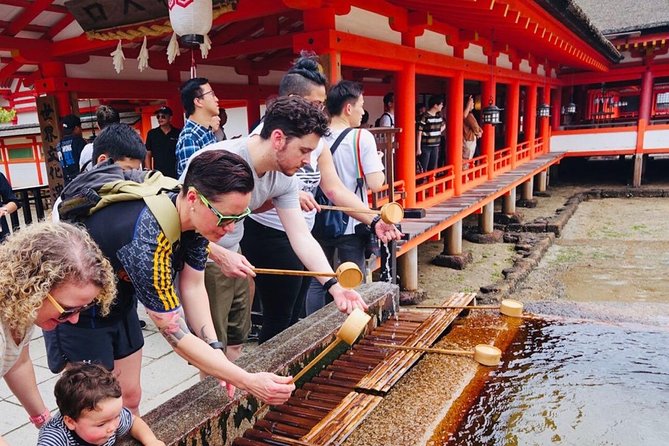
Review · HIROSHIMA
Miyajima Half-day Trip Historical Walking Tour
Miyajima rewards a slower look. This five-and-a-half-hour walking tour links the island’s famous sights with its spiritual side, local food, and small details that are easy to miss alone. I especially like the six-person group limit and the included Hiroshima lunch, with oysters and momiji dumplings. The main catch is that the ferry costs an extra 500 yen round-trip, and the walking can feel demanding in Japan’s heat.
I also like how the route moves beyond the famous Otorii Gate. Daishoin Temple, Momijidani Park, Senjokaku, and the food stalls along Omotesando give you a fuller picture of Miyajima. Guides such as Hika, Hiro, Eri, Kaori, Yuji, and Meri have been praised for patient explanations and excellent photo help, but one serious booking failure was reported, so confirm your arrangements before setting out.
What makes this Miyajima tour worth considering
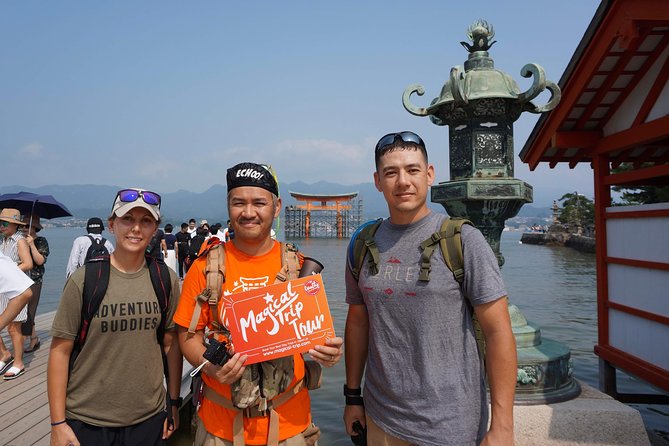
- The Otorii Gate by ferry: You get sea views on the approach, with a chance to see Miyajima’s great orange gate from the water.
- A small group of six: The format allows more questions, easier pacing, and better access to your guide.
- Daishoin Temple: This Buddhist temple is often the emotional high point, with explanations of its statues and teachings.
- Lunch included: Fresh or grilled oysters and momiji dumplings give the tour a clear local-food angle.
- Good photo support: Guides have helped with camera angles, shrine backdrops, and personal photos.
- A route beyond the postcard view: The tour adds temples, parks, shopping streets, and island traditions to the main shrine visit.
Why Miyajima works best with context
Miyajima can look simple at first: ferry, deer, gate, shrine, snacks. Yet the island carries a strong spiritual identity, and its buildings make more sense when someone explains how Shinto and Buddhism shaped the place.
That is the tour’s main value. You could reach Itsukushima Shrine on your own, but a guide can explain why the shrine was built beside the water, what makes its architecture unusual, and how the island’s sacred status affects the way it is experienced.
The format is intimate rather than grand. With a maximum of six people, your guide can answer questions without turning every stop into a speech for a crowd. Several guides have also adjusted the pace for hills, stairs, rain, or private groups. That flexibility matters on an island where weather and tide can change the feel of the day.
The tour costs $109.43 per person. That is not a bargain for a short excursion, especially since the 500 yen ferry fee is separate. Still, the price includes a certified MagicalTrip guide, shrine and temple entrance fees, tour photos, and lunch. If you would otherwise pay for a meal and a separate guide, the package offers fair value. If you prefer to wander silently and choose your own food, it may feel expensive.
More History Walking Tours in Japan
- Tokyo: Imperial Palace and Shogun Historical Walking Tour
★ 5.0 · 2,251 reviews - Kyoto Gion: 2-Hour Geisha Culture & History Walking Tour
★ 5.0 · 1,186 reviews - Tokyo Castle & Imperial PalaceーShogun Walking Tour
★ 4.7 · 1,068 reviews
Reaching Miyajima by ferry
The meeting point is at 1-chōme-3-26 Miyajimaguchi in Hatsukaichi, near public transportation. From there, the group boards a ferry for the short crossing to Miyajima.
The ferry ride is part of the experience, not just a transfer. You get views across the Seto Inland Sea and the first sight of the Otorii Gate, Miyajima’s most recognizable symbol. Keep your camera ready, but do not spend the entire crossing looking through it. The approach gives you useful scale: the gate, shrine buildings, forested hills, and shoreline begin to fit together.
The ferry is not included in the tour price. The stated cost is 500 yen round-trip, or about $4. Keep that extra amount in mind when comparing this tour with a self-guided visit.
The day ends back at the meeting point. That makes the tour easier to fit around a Hiroshima schedule, though you should avoid planning a tight connection immediately afterward. The advertised duration is about five hours and 30 minutes, and weather, crowds, tide, or group pace can affect the timing.
Walking to the Otorii Gate and Itsukushima Shrine
After arriving, the route follows the coast toward the Otorii Gate. This opening walk lets you see the gate in relation to the sea and the shrine, rather than treating it as an isolated photo prop.
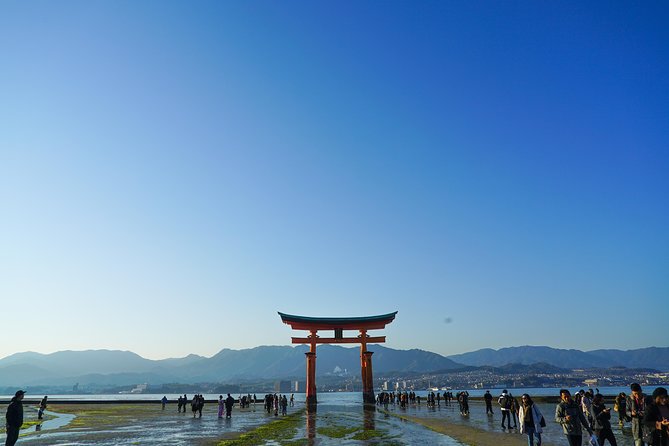
Tide conditions change the experience. At low tide, you may be able to walk close to the gate and see its weathered surface from ground level. In deeper water, the gate appears to float offshore, which is the classic Miyajima view. Your guide can help you understand why the sight looks different from one visit to the next.
The next stop is Itsukushima Shrine, built during the Heian period from 794 to 1192. Its distinctive design was made to work with the tides, giving the shrine an unusual relationship with the sea.
Plan on about an hour around the shrine. You will have time for photographs, but the guide’s explanation is what gives the visit weight. The emphasis is on Japanese spirituality and the meaning of the site, not just on collecting another famous image.
The shrine entrance is included. That matters because the cost is already built into the tour, and you do not need to stop and handle separate admission during the walking route.
Daishoin Temple, the spiritual heart of the route
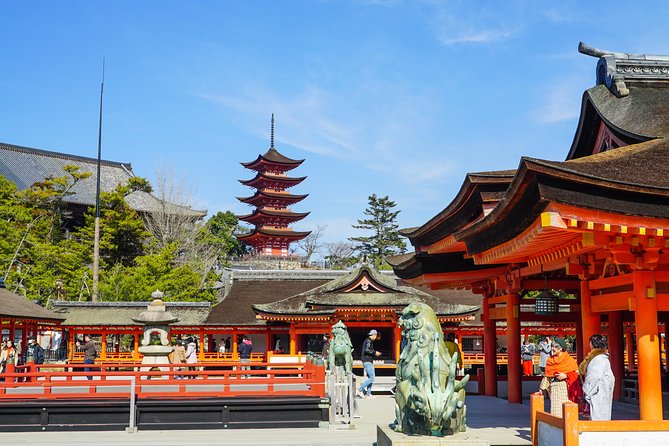
Daishoin Temple receives about 30 minutes, but many people find it the most memorable stop. It is the main temple of the Omuro school of Shingon Buddhism, and your guide explains the Buddhist statues and their place in the temple.
This is a different mood from Itsukushima Shrine. The shrine is open, coastal, and closely tied to the tides. Daishoin feels more contemplative, with religious imagery that rewards a slower look. You do not need prior knowledge of Buddhism to appreciate the visit. The guide’s job is to give you enough background to see what you are looking at.
There are stairs and uphill walking in parts of the route. Guides have made a point of allowing breaks, and one family described the pacing as patient. Still, comfortable walking shoes are essential. If you have trouble with stairs or hills, tell the guide early so the pace can be adjusted where possible.
The temple is also a useful reason to book rather than simply follow the busiest path from the ferry. Without context, it is easy to pass through, take a photo, and move on. With a guide, the statues and setting become part of the island’s larger religious story.
Same place, a different slice of the past:
- Kyoto: Fushimi Inari, Kinkakuji, Bamboo Grove 1 Day Bus Tour
★ 4.8 · 4,316 reviews - World Heritage Shirakawa-go and Experience Tours from Kanazawa
★ 5.0 · 4,049 reviews - World Heritage Kyoto & Nara Uji Authentic Matcha Experience
★ 5.0 · 1,573 reviews - Kanazawa: World Heritage Shirakawa-go Morning Guided Tour
★ 4.9 · 988 reviews
Momijidani Park and Senjokaku

Momijidani Park is a 30-minute photo stop. It gives you a change of pace after the shrine and temple visits, with room to pause and take in the island scenery.
The park is especially useful for anyone who enjoys photography but does not want every minute filled with formal explanation. Your guide can point out good places for pictures and help take photos of you, a service praised repeatedly by people who ended up with private or nearly private tours.
Senjokaku is the common name for the main hall of Toyokuni Shrine, also known as the Terminal Shrine of Itsukushima Shrine. The tour allows about 30 minutes for an explanation and a look around.
This stop adds another layer to Miyajima’s religious architecture. It also breaks up the route nicely. Instead of spending the entire half-day inside one major shrine complex, you see several different kinds of sacred spaces.
The itinerary does not promise a long stay at every site. That is both a strength and a limit. You get a well-organized introduction to the island, but anyone wanting extended time for sketching, photography, or quiet reflection may find the schedule brisk.
Lunch with oysters and momiji dumplings
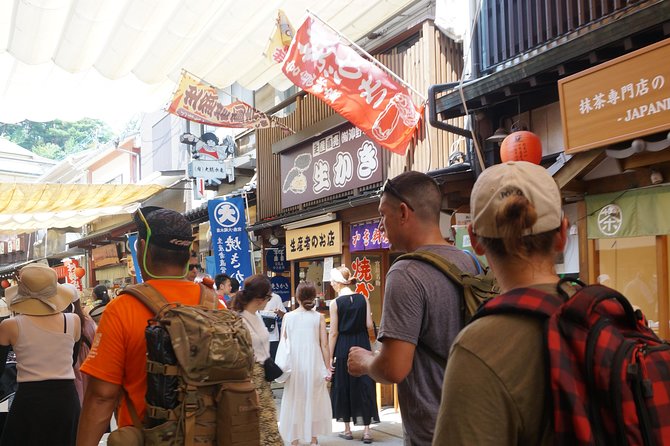
Food is one of the strongest practical reasons to choose this tour. The included Hiroshima local lunch features fresh or grilled oysters and momiji dumplings, a maple-leaf-shaped Miyajima sweet.
The meal gives you a chance to try local specialties without spending time choosing among unfamiliar stalls. Guides have also taken groups for foods such as fried oysters and unagi, with soft-serve ice cream or a favorite café sometimes appearing as an extra treat. Additional food and drinks are available for purchase, but they are not included.
You should treat the food policy seriously if you have allergies or dietary restrictions. The meals are prepared in kitchens that do not belong to MagicalTrip, so allergy-free preparation cannot be guaranteed. Vegetarian and vegan options are limited, and gluten-free lunch is not available.
Tell the operator about dietary needs at least one day before the tour. Same-day requests cannot be accommodated, and substitutions may not be possible at every stop. The guide may try to make up for limitations at another stop, but you should not book this lunch assuming a fully customizable menu.
Omotesando Street and the final hour
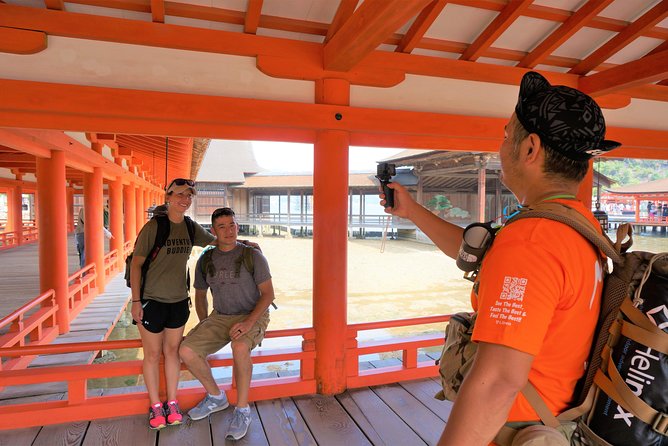
The final major stop is Miyajima Omotesando Shopping Street, a busy strip of souvenir shops and food stalls. The tour allows about an hour here, which is enough time to browse, buy snacks, and try more island food if you wish.
This is where the tour feels least formal. After the shrine and temple explanations, you can look at local sweets, oysters, and other delicacies. Momiji manju, the island’s maple-leaf-shaped cake, is an obvious choice, and one guide recommended a particularly good place for it.
Do not expect a quiet old lane throughout. Omotesando is a commercial area, and it can be crowded. That is not a flaw, but it is a different experience from Daishoin or the shoreline. Your guide can help you avoid wasting time on ordinary souvenir stops and point you toward food worth trying.
The tour then returns to the meeting point. Since the experience finishes where it began, you can continue exploring if your schedule allows, though that extra time is not part of the guided program.
The guides make the difference
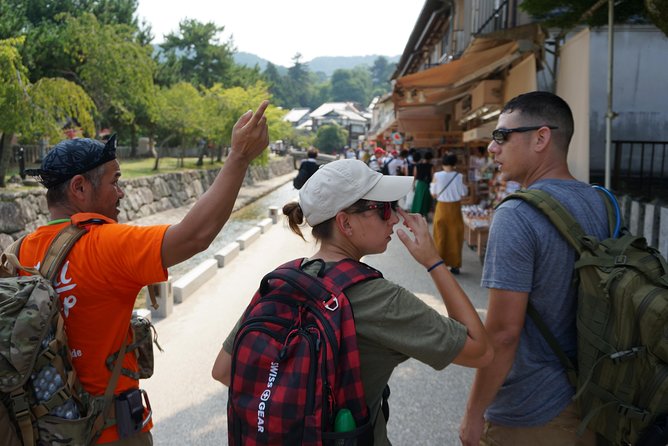
The strongest pattern in the feedback is the quality of the guiding. Mariko was praised for making Miyajima understandable to first-time visitors. Hiro was described as friendly, professional, and good at making a small group feel like friends exploring together.
Hika appears repeatedly in positive accounts, with praise for history, patience, family-friendly pacing, and good lunch choices. Eri received especially strong approval for personal warmth and clear explanations, while Kiki was praised for adding lesser-known corners and local stories to the expected sights.
Rain has not ruined every outing. Guides such as Meri, Hika, and Candy have adapted the route and kept the day moving during wet weather. Meri also handled a request to meet directly on the island and added a favorite café at the end.
The one serious warning is worth taking seriously: one booking was affected by a failure to check the reservation system, leaving the customer alone at the meeting point. This appears to be an isolated complaint among a very high number of positive ratings, but I would still save your confirmation, arrive at the stated meeting point, and contact the operator promptly if the guide is not there.
Weather, walking, and who should book
Summer in Japan can be extremely hot and humid, with stated summer highs reaching 40°C, or 110°F. Bring water, wear a hat, and use sun protection. Winter can also be cold, with possible lows of -5°C, or 20°F, so dress for the forecast rather than assuming an island climate will be mild.
Rain is possible, and the route still works in wet weather, though the Otorii Gate and open-air sections may be less photogenic. Comfortable shoes matter more than stylish ones. You will walk for several hours, with stairs and hills around temple areas.
This tour suits:
- First-time visitors to Miyajima
- People who want religious and historical context
- Families that prefer a guided pace
- Solo visitors who want company and help with photos
- Food lovers interested in oysters and momiji dumplings
- Anyone with only half a day available
It is less suited to people who want a completely independent day, a gluten-free included meal, or a slow photography outing with long periods at each location.
Should you book the Miyajima walking tour?
I would book it if Miyajima is new to you and you want the island to make sense, not just look beautiful. The small group, included lunch, shrine and temple admissions, and strong guide feedback make the $109.43 price reasonable for a structured half-day.
You can skip it if you are comfortable arranging the ferry, finding Itsukushima Shrine and Daishoin yourself, and choosing your own food. The island is accessible without a guide. But you will give up the personal explanations, photo help, and local food guidance that form the heart of this experience.
Book at least 24 hours ahead if you need to cancel safely, since free cancellation ends at that point. Most of all, bring water, good shoes, and an appetite for oysters. Miyajima gives you the famous gate, but this tour helps you notice what lies beyond it.
FAQ
How long does the Miyajima walking tour last?
The tour lasts approximately five hours and 30 minutes.
Where does the tour meet?
The meeting point is 1-chōme-3-26 Miyajimaguchi, Hatsukaichi, Hiroshima 739-0411, Japan.
Is the ferry to Miyajima included?
No. The ferry costs 500 yen round-trip, approximately $4, and is paid separately.
What food is included?
The tour includes a Hiroshima local lunch featuring fresh or grilled oysters and momiji dumplings. Extra food and drinks can be purchased separately.
Are vegetarian, vegan, or gluten-free meals available?
Vegetarian and vegan options are available but limited. Gluten-free lunch is not available. Allergy-free preparation and dietary substitutions cannot be guaranteed.
How many people can join the tour?
The maximum group size is six people.
Can I cancel for a full refund?
Yes, if you cancel at least 24 hours before the experience start time. Cancellations or changes made less than 24 hours ahead are not refunded or accepted.
More Day Trips in Japan
- From Tokyo: Nikko World Heritage Site Private Full-Day Trip
★ 4.9 · 243 reviews - Tokyo: Nikko World Heritage Private Day Trip Hotel Pick-up
★ 4.8 · 145 reviews - Nikko Heritage & Nature Day Trip from Tokyo
★ 4.8 · 94 reviews - From Tokyo: Private Nikko World Heritage Sights One Day Trip
★ 4.7 · 52 reviews
More Half-Day Tours in Japan
- Nara: Half-Day UNESCO Heritage & Local Culture Walking Tour
★ 4.8 · 250 reviews - Hiroshima: Miyajima Half-day Historical Walking Tour
★ 4.7 · 100 reviews - Shirakawa-go UNESCO Half-Day Tour from Takayama
★ 4.6 · 47 reviews - Lima’s Vibrant Heritage: Exploring the City’s Landmarks Half-day
★ 4.5 · 581 reviews
Just added around Japan
- Private sake pairing@ancient underground★ 5.0 · 27 reviews
- [30 minutes] Rickshaw tour around Asakusa [History, sightseeing, Tokyo Skytree]★ 5.0 · 38 reviews
- Tokyo: Asakusa & Sensoji ー Oldest Temple Walking Tour (2hrs)★ 5.0 · 213 reviews
- Tokyo: Mount Fuji Private Full-Day Trip with Hotel Pickup★ 5.0 · 18 reviews
- Private Tour Through the Tokyo National Museum & Ukiyo-e★ 4.7 · 17 reviews
- Tokyo: Imperial Palace, the history of Japan (ENGLISH GUIDE)★ 5.0 · 77 reviews
- Tokyo: Customized Private Historical Guided Photoshoot Tour★ 5.0 · 25 reviews
- Tokyo: Edo Castle & East Garden of the Imperial Palace Tour★ 4.7 · 112 reviews
History Walking Tours, compared.
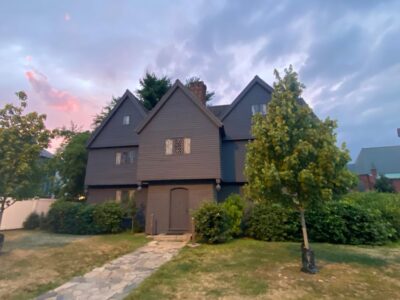
History and Hauntings of Salem Guided Walking Tour
Read our review →
Freedom Trail History Small Group Walking Tour
Read our review →
Historic Charleston Guided Sightseeing Walking Tour
Read our review →
Tapas Walking Tour with Food, Wine, and History
Read our review →
Savannah History and Haunts Candlelit Ghost Walking Tour
Read our review →
A History of Terror – Belfast City Centre Walking Tour
Read our review →Browse the lists this tour appears in