
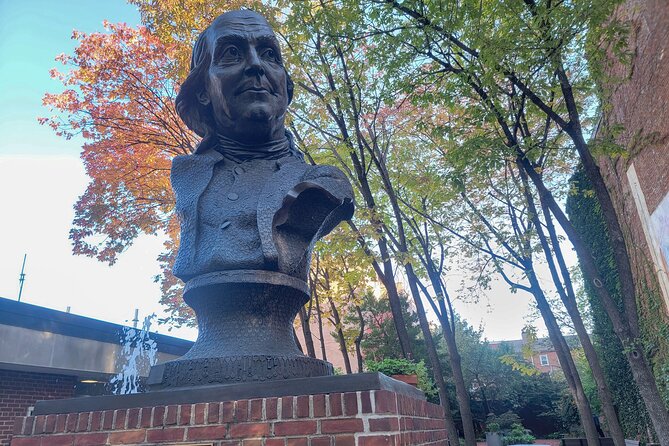
Review · PHILADELPHIA
Walking Tour of Historic Philadelphia
Philadelphia’s past is hiding in plain sight. This 90-minute walk packs Independence Hall, the Liberty Bell, Franklin Court, Elfreth’s Alley, and 16 other historic stops into one lively introduction to the city. I like the focus on stories guidebooks often skip, especially the real reason behind the Liberty Bell’s crack. I also like the chance to ask questions as you go. The main drawback is that every site is viewed from outside, so you will need extra time and separate tickets if you want to enter museums or historic buildings.
The tour costs $25 per person, which is a fair price for a guided orientation to Old City Philadelphia. Tom is the guide most often named in the feedback, and his teaching background, humor, clear explanations, and patience with slower walkers make the experience especially appealing to families and first-time visitors. Plan for about 3,500 steps, good walking shoes, and weather suitable for an outdoor tour.
Key things to know before you book
- The Liberty Bell story goes beyond the famous crack: You learn why the bell stopped ringing, how it got its name, and why the visible crack is not the break that ended its use.
- Twenty historic stops fit into 90 minutes: The route covers the main sights around Independence Mall and Old City without asking you to spend half a day on your feet.
- Every location is viewed from outdoors: The $25 fee covers the guide and walking tour, not admission to the buildings or museums.
- The guide makes the difference: Tom is praised for clear storytelling, humor, patience, and keeping both adults and children interested.
- Optional admission can add up: Adult entry fees listed for the paid stops total $51 if you visit all five, so choose your indoor stops with care.
- The group is limited to 20 people: That gives you a better chance to hear the guide and ask questions than you would on a very large city tour.
Starting at America’s Most Historic Square Mile
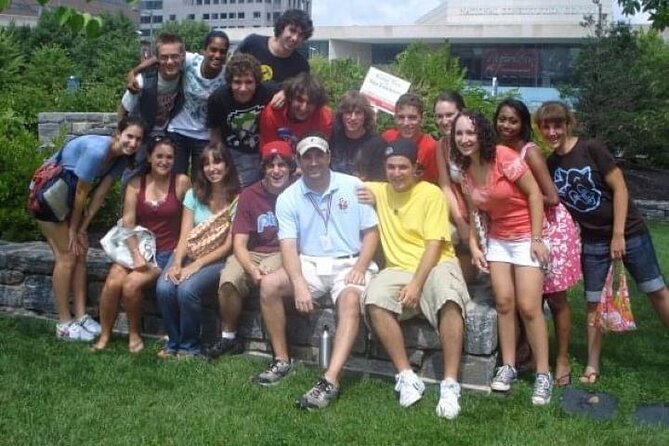
Meet at the Liberty View at the Independence Visitor Center, at 599 Market Street. The guide begins with a short welcome and explains how Philadelphia grew into a center of American political life.
The first stop is Independence National Historical Park, often called America’s Most Historic Square Mile. That name makes sense once you see how many key locations sit close together. The opening ten minutes help you understand the layout before the walk moves from landmark to landmark.
This introduction is useful because Philadelphia’s historic core can feel like a collection of separate buildings. A good guide connects the places. You begin to see the area as one working city, not just a row of famous photo stops.
More History Walking Tours in the USA
- Philadelphia Old City Historic Walking Tour with 10+ Top Sites
★ 5.0 · 2,020 reviews - Philadelphia: History, Highlights & Revolution Walking Tour
★ 4.9 · 317 reviews - Philadelphia: Revolutionary Walk Through Historic Old City
★ 4.8 · 208 reviews
Independence Hall and the Liberty Bell
The tour pauses for about five minutes at Independence Hall. This is where the Declaration of Independence was signed, and the guide uses the building to explain major moments involving the founding fathers.
Because the stop is outside, you will not receive the full interior experience. If you want to see the Assembly Room, you need a separate visit and admission arrangements. Still, a short explanation here gives you the basic setting before you decide how much more time to spend inside.
Next comes the Liberty Bell Center, another brief outdoor stop. The guide explains why the bell no longer rings, how it earned its name, and why the crack visible today is not the damage that originally ended its use.
That last detail is exactly the kind of correction that makes a guided walk worthwhile. Most people arrive knowing the bell cracked. Fewer know that the familiar line on the bell does not tell the whole story. The tour turns a familiar symbol into a more complicated object with a longer story.
Declaration House, Congress Hall, and Old City Hall
At Declaration House, also called Graff House, the guide explains why Thomas Jefferson worked there and who helped him with the writing. The stop lasts only about three minutes, but it adds a human detail to the story of the Declaration.
The house was not chosen simply because it looked important. Its connection to Jefferson gives you a reminder that major political documents were created in ordinary working settings, surrounded by practical concerns and other people.
Congress Hall follows. Here, you learn which states joined the union in this building, where the two houses of Congress met, and why one of its most important achievements cannot be seen with the naked eye. The guide’s job is especially useful at a place like this, where the building itself may not explain why it matters.
Old City Hall gets another short stop. It was not only a city hall. It also housed the Supreme Court, although this was not the Supreme Court system in the form you know today.
These three stops move quickly. That is helpful if you want a broad orientation, but it may feel brief if you already know the basics and want long discussions at each site. Think of this section as a set of historical signposts.
Carpenters’ Hall and the start of independence
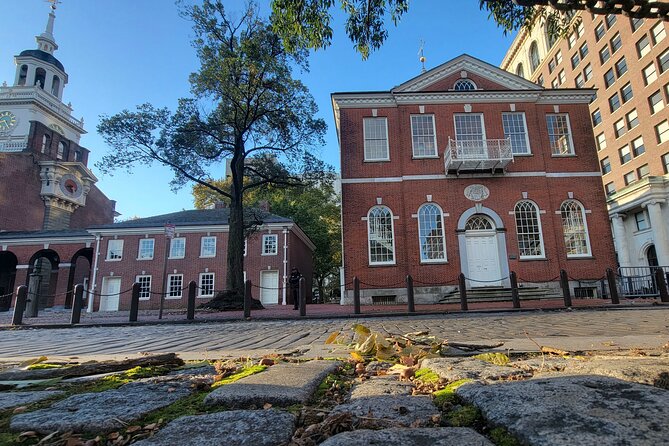
Carpenters’ Hall receives eight minutes, making it one of the longer stops early in the route. The guide explains why the building is tied to the start of the American independence movement, which famous words were spoken there, and what happened in a second-floor conspiracy.
That last topic gives the stop some personality. Philadelphia’s political history was not only speeches and grand declarations. It also involved private meetings, arguments, plans, and competing ideas. The story helps you picture the people behind the polished version of the Revolution.
The building is free to view from outside, but the tour does not enter it. If Carpenters’ Hall catches your interest, you can return later for a closer look.
More History Walking Tours in Philadelphia:
- Philadelphia Historical Independence Walking Tour
★ 4.5 · 164 reviews - Badass Women’s History Walking Tour of Philadelphia
★ 5.0 · 97 reviews - The Black Journey: An African-American History Walking Tour of Philadelphia
★ 5.0 · 76 reviews - Beyond the [Liberty] Bell History Walking Tour
★ 5.0 · 73 reviews
Franklin Court and Christ Church
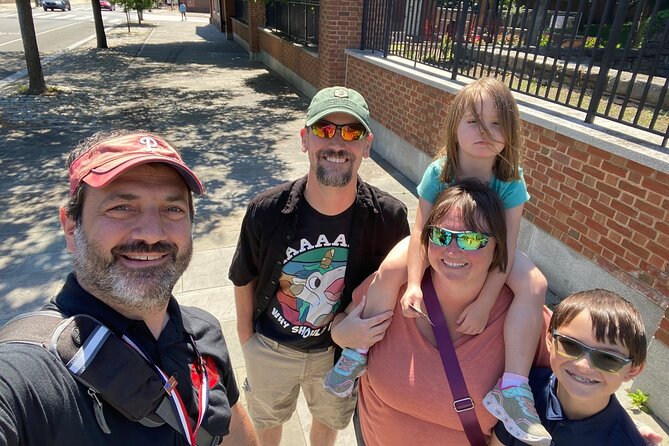
Franklin Court is one of the most rewarding stops for understanding Benjamin Franklin as a practical city resident rather than only a famous founding father. You hear about his home and workshops, why the house no longer survives, and why the post office at the end of the court still matters in American history.
The ten-minute stop gives the guide room to connect Franklin’s work, inventions, public service, and Philadelphia life. It also explains why an empty space can tell you something important. The absence of the house is part of the story.
Christ Church follows with about five minutes. It was once the tallest building in America and now functions as both a church and a museum. The guide points out an easily missed item, which gives you a reason to look more closely instead of simply taking a picture of the facade.
Admission is listed at $5 for adults and $2 for children. Since the outdoor tour does not include entry, you may want to return at a quieter time if the church becomes one of your priorities.
Elfreth’s Alley and the Betsy Ross House
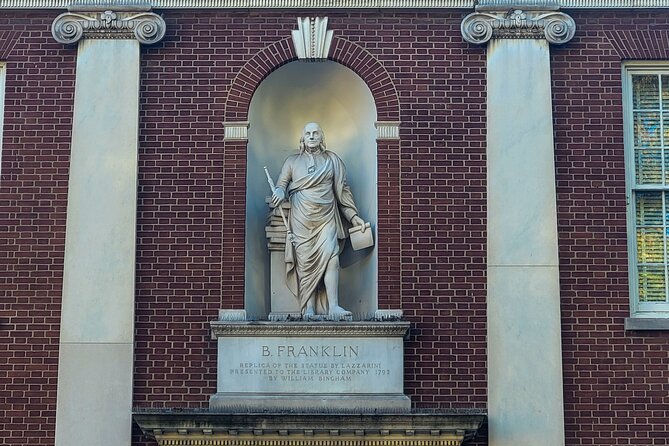
Elfreth’s Alley is one of the most atmospheric sections of the walk. It is identified as the oldest continually lived-on street in America, and the guide explains how it got its name and points out small features on the houses that other tours may pass without comment.
The route does not treat the street as a movie set. It draws attention to the practical details that helped residents live and work there. That approach is valuable because historic streets are easy to admire without understanding how people actually used them.
The museum admission is listed at $3 for adults and $2 for children. The outdoor portion is included, but the indoor museum requires its own ticket.
At the Betsy Ross House, the guide discusses Betsy Ross and the surprising parts of her legacy, including the question of whether she really sewed the first American flag. The stop itself lasts only about three minutes, so you should not expect a full examination of the house or the evidence surrounding the story.
Admission is listed at $10 for adults and $8 for children. This is one of the stops where the guided explanation may help you decide if the interior visit is worth the added cost.
Money, museums, and the modern city
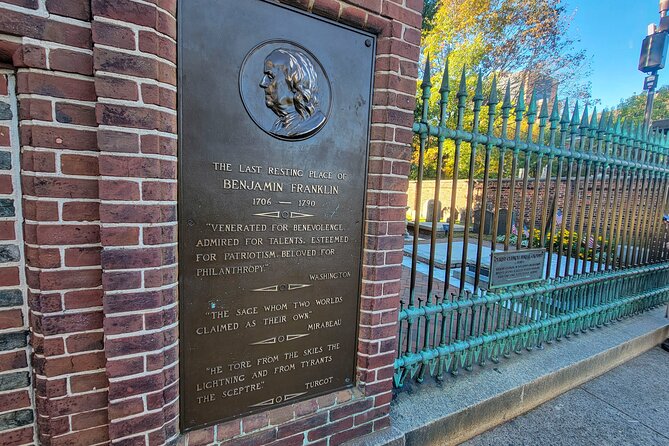
The Federal Reserve Bank of Philadelphia is a quick two-minute stop. The guide explains why it is called the Bank of Banks and how its work connects with daily life.
That is a useful change of subject. The route is not limited to colonial buildings. It shows how Philadelphia’s financial institutions still connect the historic district to the present day.
The African American Museum in Philadelphia gets about three minutes from outside. It was the first museum of its kind in America and has operated as a center for research and education since 1976. The museum contains thousands of exhibits.
Adult admission is listed at $14 and children’s admission at $10. You will not see the exhibits during this walking tour, so plan a separate visit if African American history is a main reason for coming to Philadelphia.
The American Philosophical Society Museum comes next. The guide explains its connection to leading scholars and the rare antiquities housed there. The building is free to view from outside, but the brief stop is more of an introduction than a museum visit.
Library Hall adds another layer to the story. You hear about who studied there for an important journey and how its founder accidentally helped make the world more educated. The stop is short, but it places books, study, and public learning alongside Philadelphia’s political history.
Banks, military buildings, and Quaker simplicity
The Second Bank of the United States raises an obvious question: why was there a second bank? The guide explains why the first bank needed to be replaced and points out that the building served more than one important role.
New Hall Military Museum is described as the colonial version of the Pentagon. You learn about its connection to military organization and the attractions related to the 18th and 19th centuries. The building is easy to overlook, which is exactly why a guide adds value here.
Arch Street Meeting House looks plain from the outside, but that simplicity is the point. The guide explains why the building’s appearance reflects its role as a house of worship.
These stops offer a useful contrast. You move from national finance to military planning to a restrained religious building, all within the same historic district. The route keeps asking you to look again at places that might otherwise seem ordinary.
The United States Mint and Constitution Center
The United States Mint receives only about two minutes. The guide explains that almost half the coins in your pocket are made there and discusses other famous and valuable items connected with the building.
Do not expect a working tour of the mint. The value here is context. You see how a place tied to everyday money fits into the larger story of the nation.
The final major stop is the National Constitution Center. It is the only museum in the country dedicated solely to the Constitution, according to the tour information. The guide points out features such as the presidential oath and displays that let you compare the height of different founding fathers.
Admission is listed at $19 for adults and $15 for children. The outdoor explanation lasts only about two minutes, so anyone interested in constitutional questions should plan a separate museum visit.
The activity ends back at the meeting point. That makes the tour easy to fit into a first morning in Philadelphia. You can continue sightseeing nearby or return to one of the sites that deserved more time.
What the $25 price really gets you
At $25, you are paying for orientation, storytelling, and the chance to ask questions, not for museum admission. That is a good deal if you are new to Philadelphia and want the historic center to make sense before choosing which buildings deserve a longer visit.
The possible indoor admissions add up quickly. For one adult, entering Christ Church, Elfreth’s Alley Museum, the Betsy Ross House, the African American Museum, and the National Constitution Center would cost $51 at the listed rates. You do not need to visit all of them, and the tour does not require you to do so.
The strongest value comes from using this as a first look. Let the guide point out the places that fit your interests, then return on your own for the indoor visits.
The guide, pace, and group size
Tom receives repeated praise for making history clear, funny, and easy to follow. His background as a history teacher helps explain why children, teenagers, and adults can stay engaged during the full 90 minutes.
He is also noted for speaking clearly, facing the group while explaining sites, and helping slower walkers keep up. Those details matter on an outdoor tour, especially when city noise or cold weather makes listening harder.
The group can include up to 20 people. That is not a private tour, but it is small enough for questions to be practical. Private tours are available for an added cost if you want a more personal schedule.
The experience is offered in English. Foreign-language tours in Spanish, French, or Italian require advance notice.
Who should book this Philadelphia walk?
I would recommend it most strongly to first-time visitors, families, history fans, and anyone who wants a quick introduction before spending more time in museums. The length is sensible, and several comments describe it as a good way to begin a Philadelphia visit.
It also works well for mixed-age groups. Children do not need to absorb every date to enjoy the stories, and the guide can connect famous people and buildings to memorable details.
You should choose another format if you want to enter several historic buildings during the same outing. This is an outside overview, not a museum tour. You also need to be comfortable walking for about 90 minutes, and the tour requires good weather. Service animals are allowed, and the meeting point is near public transportation.
Free cancellation is available up to 24 hours before the start time. If poor weather cancels the experience, you are offered another date or a full refund.
Should you book it?
Book this tour if you want Philadelphia’s historic district explained by a lively guide instead of read from plaques. The best parts are the Liberty Bell corrections, the lesser-known stories about the founding fathers, and the guide’s ability to connect 20 separate sites into one readable story.
Skip it if your main goal is extensive time inside museums or historic rooms. For everyone else, $25 is a reasonable way to get your bearings, ask questions, and learn which sites deserve a second visit. The 90-minute length keeps the experience focused, and the outdoor format leaves the rest of your day open.
FAQ
Where does the tour begin?
It begins at the Liberty View at the Independence Visitor Center, 599 Market Street, Philadelphia, Pennsylvania 19106.
Where does the tour end?
The activity ends back at the meeting point.
How long does the tour last?
The walking tour lasts approximately 1 hour and 30 minutes.
How much does the tour cost?
The listed price is $25 per person.
Are admission tickets included?
No. The tour visits the sites from outside, and admission to historic buildings and museums is not included.
Which sites have listed admission fees?
Christ Church, Elfreth’s Alley Museum, the Betsy Ross House, the African American Museum in Philadelphia, and the National Constitution Center have listed admission fees.
Is the tour offered in languages other than English?
The tour is offered in English. Spanish, French, and Italian tours require advance notice.
How large can the group be?
The activity has a maximum group size of 20 people.
Is the tour suitable for most people?
Most people can participate, and the route is near public transportation. You should be prepared for about 90 minutes of walking.
What happens if the weather is poor?
The tour requires good weather. If it is canceled because of poor weather, you are offered a different date or a full refund.
Just added around Philadelphia
- Badass Women’s History Walking Tour of Philadelphia★ 5.0 · 97 reviews
- Historic Sites of Philadelphia Self-Guided Walking Audio Tour★ 4.5 · 24 reviews
- The Black Journey: An African-American History Walking Tour of Philadelphia★ 5.0 · 76 reviews
- Philadelphia Old City History Pub Crawl Small-Group Tour★ 5.0 · 294 reviews
- One Hour Tour Of Philadelphia Historical Sites In A Vintage Car★ 4.5 · 52 reviews
- Philly Gayborhood and LGBTQ History Walking Tour★ 5.0 · 36 reviews
- Independence Mall (Entrance to 2 Historic Sites) 2.5 Hour Walking★ 5.0 · 21 reviews
- Beyond the [Liberty] Bell History Walking Tour★ 5.0 · 73 reviews
History Walking Tours, compared.
History and Hauntings of Salem Guided Walking Tour
Read our review →
Freedom Trail History Small Group Walking Tour
Read our review →
Historic Charleston Guided Sightseeing Walking Tour
Read our review →
Tapas Walking Tour with Food, Wine, and History
Read our review →
Savannah History and Haunts Candlelit Ghost Walking Tour
Read our review →
A History of Terror – Belfast City Centre Walking Tour
Read our review →Browse the lists this tour appears in