Review · BERLIN (STATE)
Berlin: History of the Third Reich Guided Walking Tour
Berlin’s darkest past is hiding in plain sight. This two-hour walking tour makes sense of the Nazi rise to power by linking surviving buildings, memorials, ruins, and battlefield sites across central Berlin. I like its clear historical sequence and the way it takes you beyond the familiar Brandenburg Gate. I also like that guides such as Dani, India, Theo, and Elizabeth have been praised for turning difficult material into clear, engaging stories. The main consideration is that you will spend much of the tour on foot, and the route requires an AB public transport ticket.
The $30 price is fair for a live English guide and a focused look at places that are easy to miss alone. You should expect a serious experience, not a light sightseeing stroll. The subject includes dictatorship, persecution, war, mass murder, and the destruction of Berlin, so this tour suits visitors ready to listen carefully.
Key points to know before you book
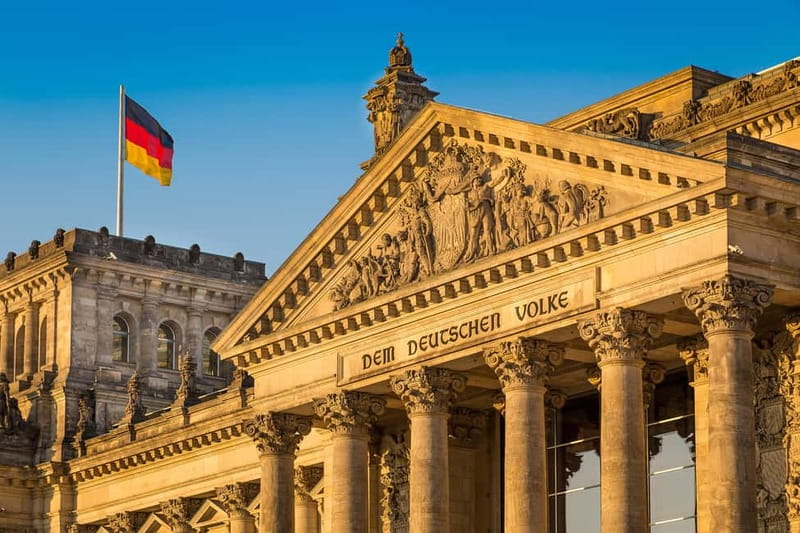
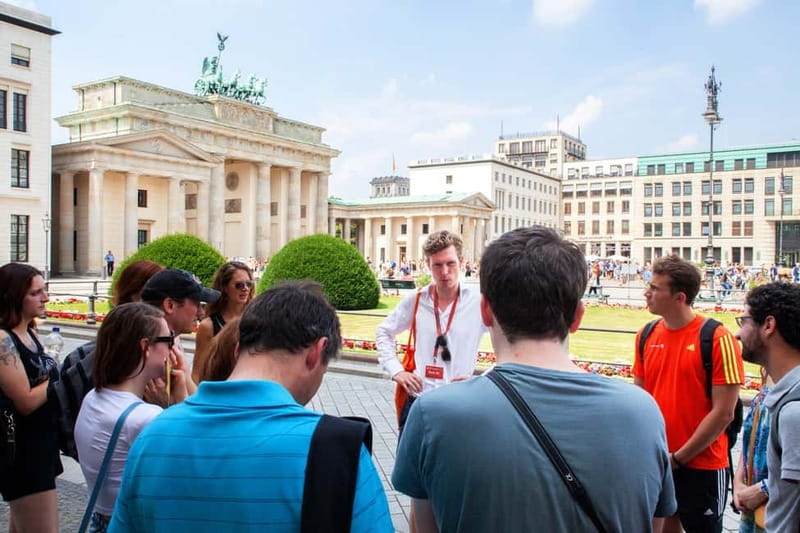
- The route begins near Brandenburg Gate: Meet the guide outside the Starbucks Café, where the tour team uses red shirts and red umbrellas.
- The Luftwaffe headquarters still shows Nazi-era design: Hermann Göring’s huge former headquarters survived the bombing and offers a powerful lesson in Nazi architecture.
- The former SS and Gestapo district includes an important exhibition: Basement remains and displays explain how the Nazi state seized and held power.
- The bunker site has no surviving bunker interior: You stand above the former location, an understated place where the Nazi regime came to an end.
- Public transport is part of the route: Bring money or a valid AB ticket, since the walk is not entirely on foot.
- Children up to age 13 join free: The local operator may request identification for children.
Starting near Brandenburg Gate
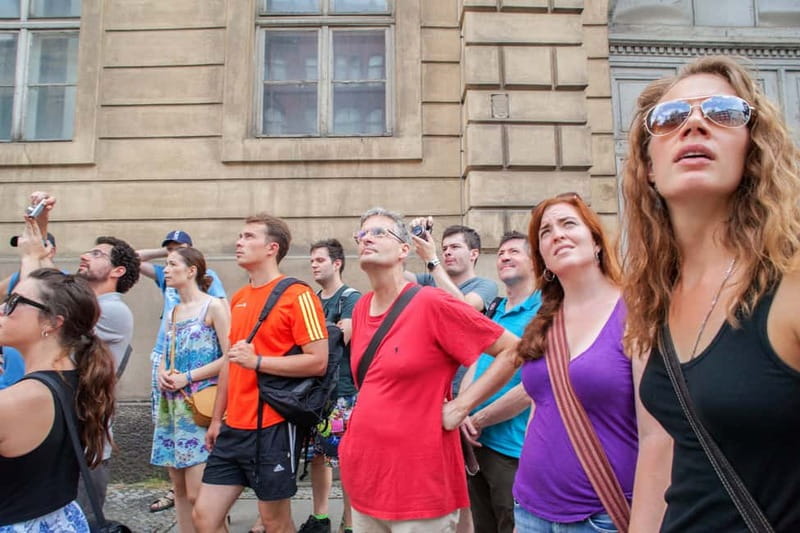
The meeting point is in front of the Starbucks Café near Berlin’s historic Brandenburg Gate. Look for the local team in red shirts and carrying red umbrellas. This is a practical arrangement in a busy part of the city, though you should arrive with enough time to locate the group.
The tour is listed as lasting two hours. It includes a live English-speaking guide and walking, but not food, drinks, entrance fees, or public transport. A break is planned partway through, which helps on a route covering such heavy material.
The route may change slightly according to the guide and the needs of the group. That flexibility can be useful, since outdoor conditions, group size, or the best order of stops may affect the day. It also means you should not expect every tour to follow precisely the same script.
More History Walking Tours in Berlin
- Berlin Historical Highlights Walking Tour
★ 4.9 · 657 reviews - Berlin Private Complete History All Day Walking Tour
★ 5.0 · 474 reviews - Berlin: Charité Hospital Walking Tour of Medical History
★ 4.9 · 276 reviews
Reading the Third Reich in Berlin’s buildings
The tour’s great strength is its use of place. Instead of treating Nazi history as a list of dates and names, the guide connects political decisions with the streets and buildings where they happened.
Berlin can feel confusing if you only visit its major landmarks. A plain-looking office block may have been part of the machinery of dictatorship. A patch of pavement may mark a destroyed building that once shaped the fate of Europe. A good guide helps you notice these details and explains why they matter.
Several people who took the tour singled out the storytelling. Dani was praised for answering a steady stream of questions and explaining how the Nazi system gained power. India was praised for making complex events clear and easy to follow. Theo was described as both highly informed and lively, while Elizabeth received credit for explaining difficult material in a calm, detailed way.
That range of guide styles matters. This is not simply a tour where you are pointed toward a building and given a date. The best version of the experience gives you a chronological story: how the Nazis entered government, how they removed opposition, how propaganda shaped public life, and how the war ended in ruins.
The Luftwaffe headquarters and Nazi architecture
One of the first major stops is the former Luftwaffe Air Force headquarters, associated with Hermann Göring. The massive building survived Allied bombing and remains one of the clearest examples of Third Reich architecture in Berlin.
You do not need to admire the building to learn from it. Its size and severe design communicate something about the Nazi state: power was presented through scale, order, authority, and control. The building is useful evidence of how architecture served politics.
This stop also helps separate the Nazi government from the familiar image of Adolf Hitler alone. The regime relied on competing offices, ministries, armed forces, party structures, police bodies, and propaganda institutions. A guide can show you how these parts worked together, and how their rivalry still served the dictatorship.
The drawback is that this is an exterior-focused historical stop rather than a grand indoor attraction. If you expect a preserved command center with rooms open for touring, adjust your expectations. The value comes from the setting and the explanation.
Goebbels’ Propaganda Ministry and the machinery of control
The next part of the route examines Joseph Goebbels’ Propaganda Ministry. Before the war, the building served as the Berlin Press Office. The Nazis quickly turned it into the center of their propaganda operation.
This is one of the most useful stops for understanding how dictatorship lasts. Seizing government is only the first step. The Nazis then worked to control newspapers, public messages, culture, and the information available to ordinary people.
I find this section especially valuable because it moves the story beyond battlefield history. You learn not just what happened, but how a political movement worked to make its version of events seem normal, patriotic, and unavoidable.
The building itself may not look dramatic to a casual passerby. That is exactly why a guided walk helps. Without context, you could walk past it without realizing its importance. With context, an ordinary urban setting becomes part of the story of censorship and political control.
More History Walking Tours in Germany
- Berlin Private Half-Day Walking Tour: Discover the German Capital’s History
★ 5.0 · 244 reviews - Berlin History Walking Tour with a French-Speaking Guide
★ 5.0 · 240 reviews - The History of Berlin: WWII PRIVATE Walking Tour With Locals
★ 5.0 · 209 reviews - Berlin: Historic Center Walking Tour with a Real Berliner
★ 5.0 · 134 reviews
The SS and Gestapo headquarters
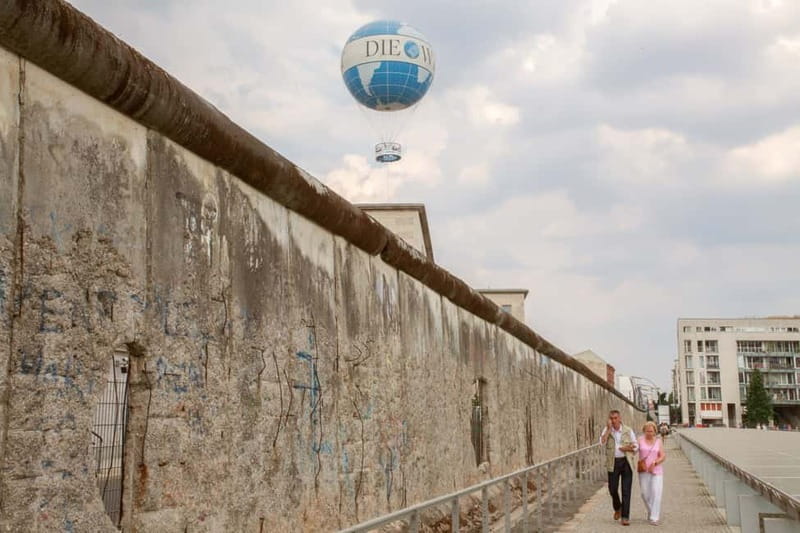
The route continues to the former address of the SS and Gestapo, once among the most feared places in Nazi Germany. Old Prinz-Albrecht-Straße also contains one of the few remaining stretches of the Berlin Wall.
The combination is striking. Two separate dictatorships left marks in the same city, and this section lets you consider both without confusing them. The Nazi regime and the later East German state were different systems, but Berlin’s physical remains often place those histories close together.
The basement remains of the former SS and Gestapo buildings now form part of an exhibition documenting the Nazi rise to power. This is an important change of pace from simply looking at façades. You get a more direct explanation of the police and security system used to intimidate opponents and enforce Nazi rule.
This portion can be emotionally demanding. The sites are tied to imprisonment, interrogation, terror, and persecution. The guide’s tone matters, and the strongest guides described in the supplied feedback handled the subject with care while keeping the explanation understandable.
You should also remember that the tour price does not include entrance fees. If the group enters a paid exhibition or site, that cost is separate. The supplied information does not specify which entrance fees may apply, so carry some extra money and check the arrangements when booking.
The Battle of Berlin and a Soviet memorial
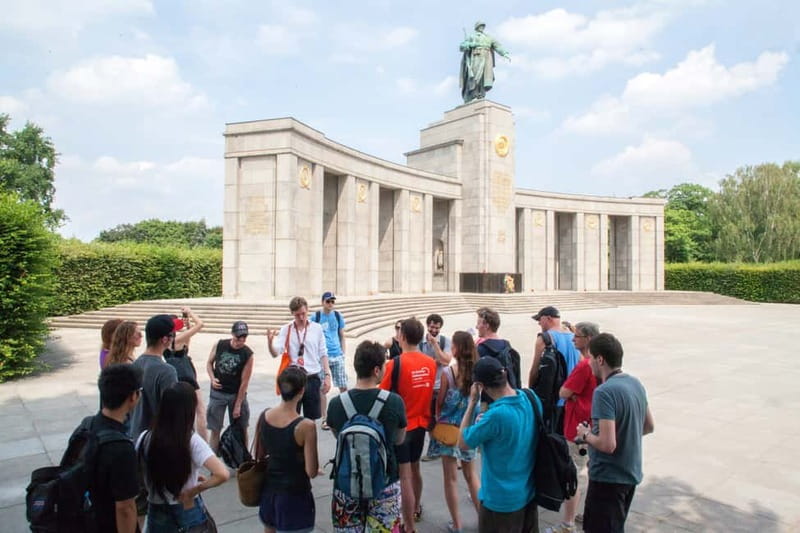
The tour also addresses the final battle for Berlin and the more than 80,000 Soviet soldiers who lost their lives liberating the city. At one Soviet Memorial, you see two artillery pieces and two tanks placed as silent reminders of the fighting.
This stop gives the end of the war a physical setting. By this point in the route, you have heard how the Nazi system gained power and how it used force. The Soviet memorial helps explain the military cost of defeating that system and the scale of the final battle.
The memorial is also a reminder that Berlin’s wartime story cannot be told from a single national viewpoint. German civilians, Nazi forces, Allied armies, and Soviet soldiers all formed part of the city’s final months in 1945. A strong guide can keep those perspectives connected without turning the tour into a simple victory story.
The outdoor setting means weather can affect your comfort. One guide received praise for staying cheerful during cold rain, but you should still prepare for Berlin’s changeable conditions. Wear comfortable shoes, bring a waterproof layer when needed, and dress warmly in winter.
Hitler’s bunker site and the quiet ending
The final major stop is the site of Hitler’s former bunker. You stand above the location where Hitler ended his life as Soviet forces closed in and Nazi Germany collapsed.
There is no grand ruin to inspect. The site is deliberately understated, and that can feel surprising if you expect a dramatic memorial or visible bunker entrance. The absence of a prominent monument is part of the experience. The guide supplies the context, while the ordinary surroundings force you to think about how a regime that claimed historical greatness ended in destruction.
This is a strong closing point because it brings the story back to the people at the top of the Nazi government and the consequences of their decisions. The tour begins with institutions and propaganda, moves through police terror and war, and ends at the physical location of the regime’s collapse.
The bunker site can also correct popular misconceptions. Berlin contains many sites associated with the Nazi leadership, but not all remain intact or accessible. You are visiting a location, not walking through a preserved underground headquarters.
Group size, guides, and the quality of the storytelling
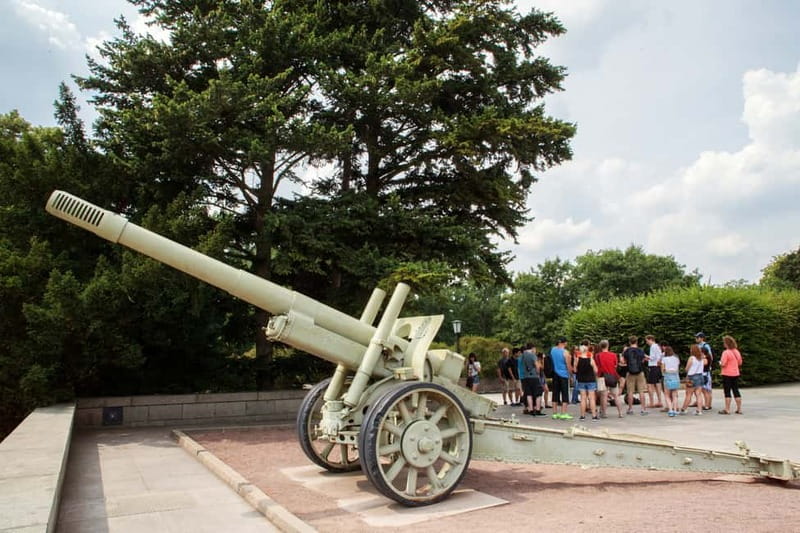
The guide is the biggest variable in this experience. The supplied feedback repeatedly praises Dani, India, Theo, Elizabeth, Liz, Maria, Chris, Martin, and others for clear explanations, enthusiasm, humor, and strong storytelling.
That does not mean every guide will use the same style. Some may focus more on political history, while others may spend more time on architecture, the war, or personal stories. The route can also change slightly depending on what the guide thinks works best for the group.
Group size has varied. Some people described groups of about 12, while another group became larger after a guide was ill and had to be split. Small groups make it easier to ask questions and hear the guide, especially at crowded outdoor locations. Larger groups can still work well when the guide has a strong voice and good control of the route, but you may need to stay close.
The tour has earned a 4.7 rating from 791 reviews, with especially strong praise for the guides’ storytelling and command of the subject. The recurring positive qualities are clear explanations, an easy-to-follow timeline, patience with questions, and the ability to add humor without making light of the subject.
Is $30 good value for two hours?
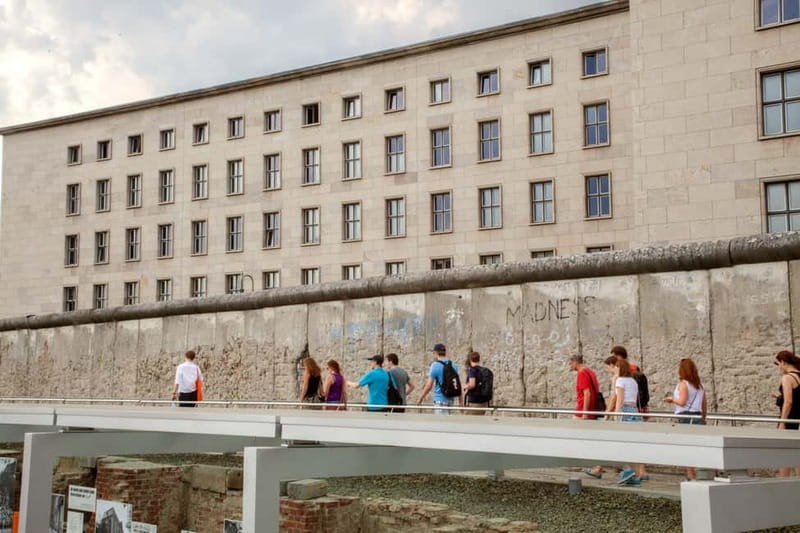
At $30 per person, this is a reasonable price for a live, focused history walk in central Berlin. You are paying for interpretation and structure, not expensive admission tickets or transport. The guide helps you connect sites that might otherwise feel scattered and ordinary.
The value is strongest if you are visiting Berlin for the first time or if you want a clear foundation before visiting museums and memorials on your own. You can use the tour to identify places worth returning to, including the documentation center around the former SS and Gestapo headquarters.
The price is less attractive if you prefer to explore at your own speed, dislike group tours, or already have a strong command of Berlin’s Nazi history. You will also pay separately for an AB transport ticket and any entrance fees. Food and drinks are not included, although the planned break gives you a chance to buy something yourself.
Free cancellation up to 24 hours before the tour and the option to reserve now and pay later make the booking less risky. These policies are useful when Berlin plans are still shifting.
Who should take this tour?
I would recommend it to adults and older children interested in World War II, modern German history, political movements, memorial culture, and the way cities remember painful events. Children up to age 13 may join free, and the tour is wheelchair accessible, but the walking format and serious content still deserve consideration for younger participants.
It is also a good choice if you want a starting point for a wider Berlin history program. Pair it with additional museum visits or memorials later in your stay, since two hours can introduce the subject but cannot cover every aspect of Nazi persecution and the Holocaust.
You should choose another activity if you want a relaxed sightseeing walk, a museum-heavy tour, or a visit inside Hitler’s bunker. This experience is mostly about outdoor locations, explanation, and movement through the city.
Practical advice for a better experience
Wear comfortable shoes. The route includes walking, and several people specifically stressed the importance of footwear.
Bring an AB transport ticket or be ready to purchase one. Transportation is not included, and the route is not presented as a completely self-contained walk.
Arrive early at the Starbucks Café near Brandenburg Gate and look for the red shirts and red umbrellas. In a busy square, those details will save time.
Plan for a break in the middle, but do not assume food or drinks are supplied. Bring a small bottle of water and dress for the forecast.
Keep your questions for the guide. Several of the strongest guide experiences came from the ability to explain misconceptions, clarify confusing events, and respond to detailed questions.
Should you book the Third Reich walking tour?
Book it if you want a structured, serious introduction to Nazi Berlin and prefer real locations over a classroom-style lecture. The route covers the Luftwaffe headquarters, Propaganda Ministry, SS and Gestapo district, a Soviet memorial, and the former bunker site, giving you a useful framework for understanding the city.
I would especially choose it early in a Berlin visit. The guide can help you recognize significant places later, and the chronological approach makes the city easier to read.
Skip it if you want a gentle sightseeing outing or a long indoor museum visit. For most history-focused visitors, though, $30 is a fair price for two hours of clear guidance, difficult but necessary context, and a route that reveals how much of Berlin’s Nazi past remains beneath the everyday city.
FAQ
Where does the tour meet?
Meet in front of the Starbucks Café near Berlin’s historic Brandenburg Gate. The local tour team wears red shirts and carries red umbrellas.
How long does the tour last?
The stated duration is two hours.
What language is the tour conducted in?
The live guided tour is conducted in English.
Is public transportation included?
No. You need to purchase an AB public transport ticket for the tour.
Are entrance fees included?
No. Entrance fees are not included in the tour price.
Is food or drink included?
No. Food and drinks are not included. There is a break during the tour.
Can children join the tour?
Yes. Children up to 13 years old can join free. The local partner may ask for valid identification.
Is the tour wheelchair accessible?
Yes, the activity is listed as wheelchair accessible.
More WWII and D-Day Tours in Berlin
- Vienna: World War II Historical Walking Tour
★ 4.8 · 1,772 reviews - Zagreb: City & History Walking Tour & WW2 Tunnels
★ 4.9 · 1,202 reviews - Pearl Harbor History Remembered Tour from Ko Olina
★ 5.0 · 1,009 reviews - Hiroshima Peace (Heiwa) Walking Tour at World Heritage Sites
★ 5.0 · 872 reviews
More WWII and D-Day Tours in Germany
- Berlin: Guided Bike tour of the Berlin Wall and Third Reich
★ 5.0 · 160 reviews - Berlin: Nazi History Walking Tour
★ 4.8 · 33 reviews - Private Berlin WWII and Cold War History Tour with Local Expert Guide
★ 5.0 · 28 reviews - Berlin: Private Bike Tour of the Berlin Wall and Third Reich
★ 5.0 · 23 reviews
Just added around Berlin
- Historic center of Berlin – Tour in Italian★ 5.0 · 143 reviews
- Berlin Food & Cultural Tour: Must-Try German & Berliner Classics★ 5.0 · 51 reviews
- Private Berlin WWII and Cold War History Tour with Local Expert Guide★ 5.0 · 28 reviews
- Private Tour: Jewish Heritage Walking Tour of Berlin★ 5.0 · 29 reviews
- Small-Group Historical Bike Tour in Berlin★ 4.5 · 103 reviews
- Explore Berlin History and Highlights Sightseeing Walking Tour★ 5.0 · 81 reviews
- Berlin: Private Bike Tour of the Berlin Wall and Third Reich★ 5.0 · 23 reviews
- East Berlin Food & History Tour with Eating Europe★ 5.0 · 204 reviews
WWII & D-Day Tours, compared.
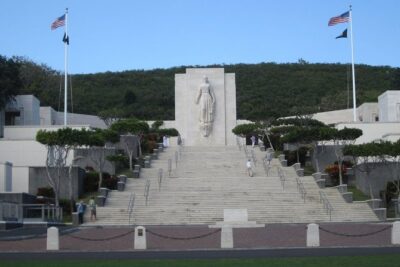
Pearl Harbor History Remembered Tour from Ko Olina
Read our review →
Hiroshima Peace (Heiwa) Walking Tour at World Heritage Sites
Read our review →![Pearl Harbor & USS Arizona Small-Group Tour [Early Access]](https://4.historywanderer.com/wp-content/uploads/pearl-harbor-uss-arizona-small-group-tour-early-access-400x266.jpg)
Pearl Harbor & USS Arizona Small-Group Tour [Early Access]
Read our review →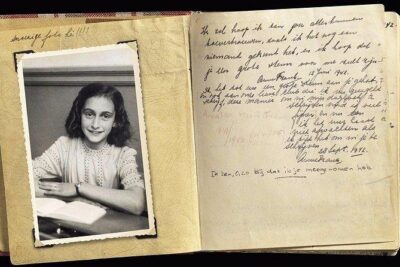
Anne Frank and the Jewish History of Amsterdam Private Tour
Read our review →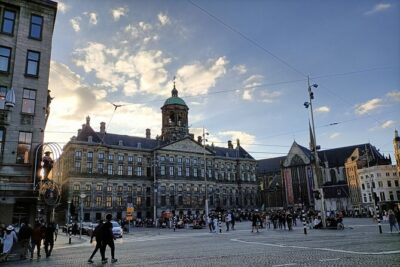
Anne Frank and Amsterdam Jewish History Walking Tour
Read our review →