
Review · BERLIN
Berlin History Walking Tour with a French-Speaking Guide
Berlin’s past is never far away. This three-hour walk links Potsdamer Platz, Checkpoint Charlie, Hitler’s Bunker, the Holocaust Memorial, Unter den Linden, and the Brandenburg Gate in a clear morning route. I especially like the French-speaking guide and the way the tour connects famous sights to the events that shaped them. The 10 a.m. departure also leaves you free for lunch and an afternoon museum visit. The main drawback is simple: it is a fully outdoor walking tour, and there are no audio headsets if the group spreads out.
You begin at Potsdamer Platz and finish near Museum Island, a useful route for a first look at central Berlin. Guides such as Anouk, Martin, Arthur, Paul, and Céline have been praised for clear explanations, warmth, humor, and good answers to questions. Still, one past assessment pointed to occasional historical inaccuracies, so I would treat the tour as a strong introduction rather than your final word on every detail.
Key points to know before you book
- French-language history lesson: The entire tour operates in French, with a professional local guide.
- Eight central Berlin stops: The route covers Nazi, Cold War, imperial, and reunification-era landmarks.
- A sober look at difficult subjects: Hitler’s Bunker and the Memorial to the Murdered Jews of Europe receive serious attention.
- Morning timing works well: Start at 10 a.m., walk for about three hours, then continue near Museum Island.
- Walking is the transport: Getting to and from the tour is your responsibility, and you should be comfortable on foot.
- Good value at $27.81: For a small admission price, you get a guided overview rather than a string of unconnected photo stops.
Why this Berlin walk works for first-time visitors
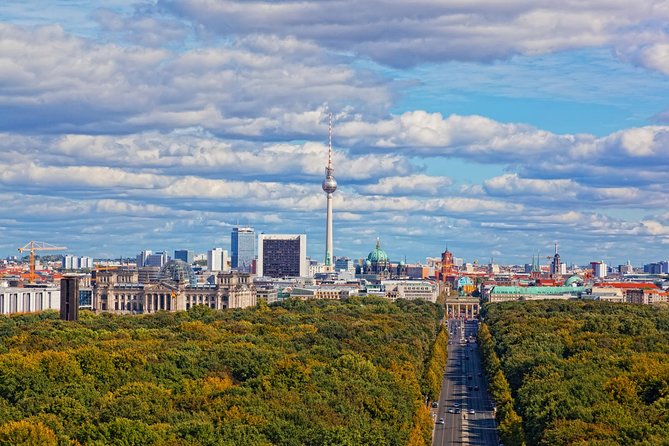
Berlin can be hard to read at street level. A plain-looking office block may sit above a former Cold War border crossing, while an ordinary parking area can mark one of the most infamous places in modern European history. This tour gives you the basic map and timeline you need before tackling the city on your own.
I like the route because it does not focus on just one period. You move from the rebuilt modern center to Nazi Germany, then through the old royal avenue and toward Museum Island. That broad sweep helps you see Berlin as a city shaped by several breaks, not as a collection of isolated monuments.
The French language is the central reason to choose this experience. If you understand historical ideas more easily in French, a live guide can explain cause and effect in a way a translation app or printed panel cannot. The guides are also encouraged to answer questions, and the best feedback highlights precise explanations, humor, and an ability to adjust the pace to the group.
The group can include up to 25 people. That is not an intimate private walk, but it is still manageable for a city tour. Since no audio equipment is provided, stay close to the guide, especially beside busy roads or in open squares. This is one small weakness of the format, and it matters more if you have hearing difficulties or prefer to wander at the back.
More History Walking Tours in Berlin
- Berlin: History of the Third Reich Guided Walking Tour
★ 4.7 · 791 reviews - Berlin Historical Highlights Walking Tour
★ 4.9 · 657 reviews - Berlin Private Complete History All Day Walking Tour
★ 5.0 · 474 reviews
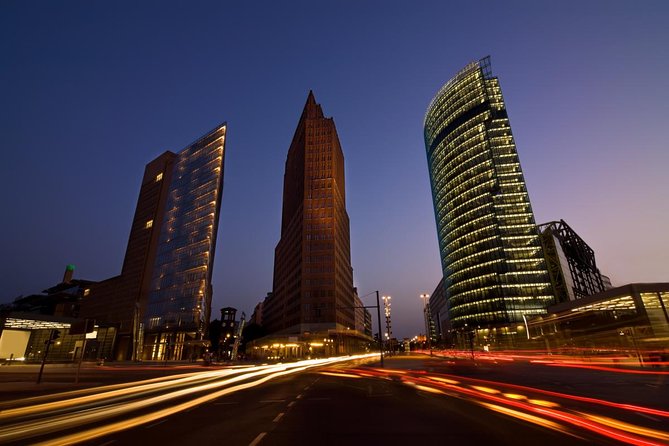
Potsdamer Platz: Berlin’s modern starting point
The meeting point is at Potsdamer Platz 10, on the corner of Gabriele-Tergit-Promenade. This is a useful place to begin because it shows Berlin’s postwar reinvention before the tour turns toward older and darker chapters.
Potsdamer Platz was once split by the Berlin Wall and later rebuilt as a modern business and entertainment district. The tour gives you a chance to see the contrast between the contemporary buildings and the political divisions that once cut through this area.
You receive roughly ten minutes here, so do not expect a long architectural survey. Instead, use this opening to listen for the basic story of Berlin’s division and rebuilding. If you arrive early, take care of coffee or a restroom stop before the walk begins, since the group moves through several major sites afterward.
Checkpoint Charlie and the Cold War divide
The next stop is Checkpoint Charlie, one of Berlin’s best-known Cold War symbols. The crossing point once marked the confrontation between East and West, and its name has become shorthand for the divided city.
The site is visually busy and surrounded by modern commercial activity. That can make it feel less solemn than the history deserves. A guide is especially useful here because the physical setting alone does not explain how tense the border could be, or why this particular checkpoint became so famous.
The stop lasts about ten minutes. You will not get a full Cold War lecture, but you should come away with a clearer sense of how Berlin functioned as a frontline city. I appreciate this kind of brief stop because it prevents the tour from getting stuck in one era.
Hitler’s Bunker: explaining an absent place
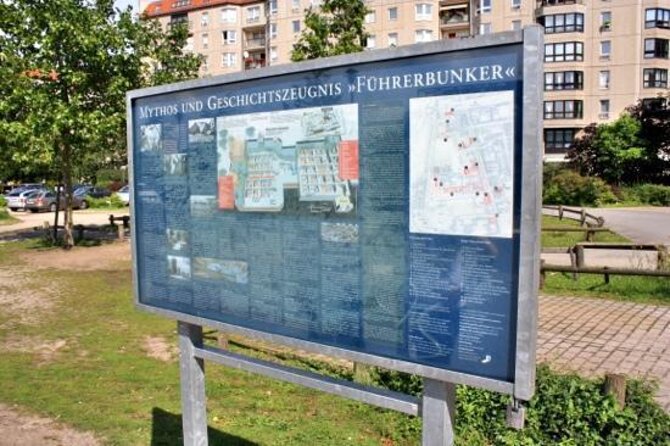
The former Führerbunker is one of the tour’s most important stops, even though there is no dramatic entrance to explore. The bunker site is now marked by its absence. Your guide explains where it was, what happened there during Hitler’s final days, and why the location has not been turned into a conventional monument.
That lack of a grand memorial is part of the story. Berlin has often chosen restrained or deliberately plain ways to mark places connected with Nazi crimes. The guide’s role is to explain the site without turning it into a spectacle.
The advertised tour includes the bunker stop, but you should understand what that means in practice: this is an outdoor location and historical explanation, not a furnished underground visit. Allow about ten minutes. The subject is grim, so this portion may feel abrupt if you expect a traditional sightseeing stop.
More History Walking Tours in Germany
- Berlin: Charité Hospital Walking Tour of Medical History
★ 4.9 · 276 reviews - Berlin Private Half-Day Walking Tour: Discover the German Capital’s History
★ 5.0 · 244 reviews - The History of Berlin: WWII PRIVATE Walking Tour With Locals
★ 5.0 · 209 reviews - Berlin: Historic Center Walking Tour with a Real Berliner
★ 5.0 · 134 reviews
The Holocaust Memorial and its difficult silence
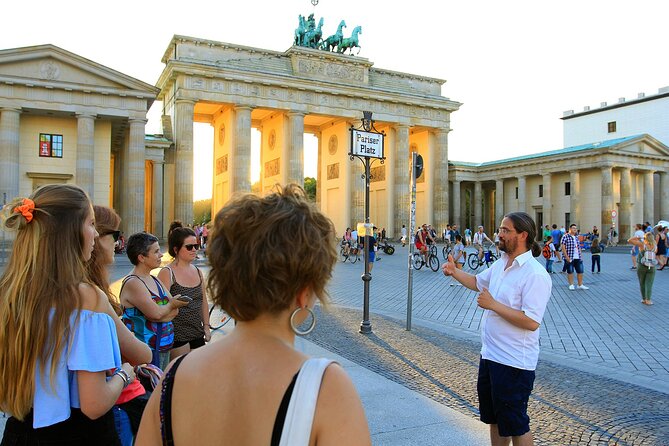
The Memorial to the Murdered Jews of Europe is given about 15 minutes. Its field of concrete blocks creates a powerful setting, but the design does not tell you one simple story. The guide helps supply the historical context and explains why the memorial occupies such a prominent place in central Berlin.
This is a point where a good guide makes a real difference. You will hear about the crimes committed by the German state under Nazism and the need to remember the Jewish victims. The conversation should remain respectful and serious.
Do not treat the memorial as just a photo opportunity. The layout encourages you to notice changes in height, space, and perspective as you walk through it. The tour’s short visit will introduce the site, but you may want to return later if you want more time to reflect.
For me, this is one of the strongest parts of the route because the memorial sits close to everyday Berlin. Cafés, traffic, government buildings, and tourist streets continue around it. That closeness makes the city’s effort to confront its past feel present rather than separated behind museum walls.
Unter den Linden: reading Berlin through one avenue
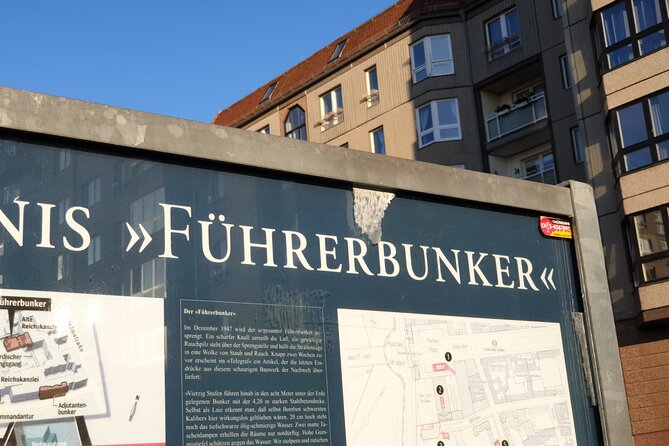
Unter den Linden gives the tour a change of pace. This broad avenue once led toward the Prussian and imperial center of Berlin, and its buildings show several layers of construction, destruction, and repair.
Your guide points out how to recognize different building periods and where wartime damage remains visible. The avenue is valuable not just for its grand façades, but for the way it connects political power, education, religion, and public life.
The walk here lasts around 20 minutes, making it one of the longer stops. Wear comfortable shoes and bring water, since the route is entirely on foot and operates in all weather. Berlin’s weather can change quickly, so a light waterproof layer is a sensible choice even on a pleasant morning.
This portion also helps balance the heavy Nazi and Holocaust material. You are still learning about political history, but now through urban design and architecture rather than only through sites of atrocity.
Bebelplatz, where culture became a target
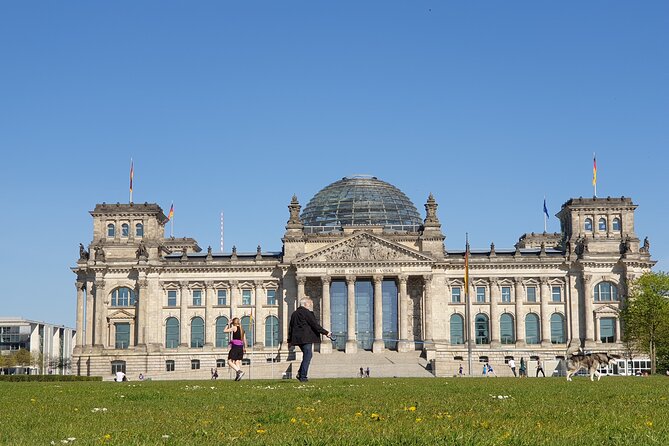
Bebelplatz is a compact square with a disturbing history. It was the site of the Nazi book burning, where works judged politically or culturally unacceptable were destroyed in public.
The square also contains Humboldt University and the Catholic Cathedral, which gives the stop a striking contrast. Learning, religion, and state power meet in one place, and the guide can show how the square’s role changed over time.
You spend about ten minutes here. That is enough for an explanation and a look at the memorial, but not enough for a detailed visit to the surrounding institutions. If you return later, you can give the square more time and examine the memorial at your own pace.
This is a useful stop for understanding that Nazi repression was not limited to prisons and battlefields. It also targeted ideas, books, writers, artists, and universities. The setting makes that point without needing a large museum display.
The Brandenburg Gate and the meaning of reunification
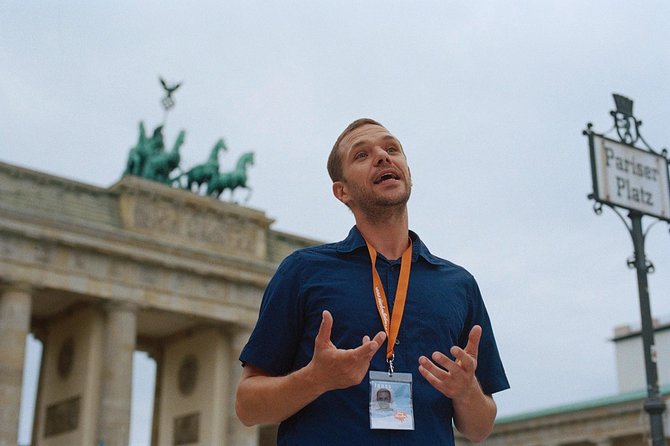
The Brandenburg Gate is the most instantly recognizable landmark on the route. It began as a symbol of royal power, later became linked with division, and now represents German reunification.
The guide traces those changing meanings rather than presenting the gate as a timeless postcard. That approach is important in Berlin, where monuments have often been reused by different governments for different messages.
You spend about ten minutes here. The gate can be crowded, and photographs are easy, but the historical explanation gives the stop more value than a quick picture. Listen for how the gate shifted from an entrance to the city, to a Cold War symbol, to an emblem of a united Germany.
This is also a natural point to ask questions about the Wall, reunification, or modern Berlin. Guides praised for their humor and clear speaking, including Arthur and Anouk, seem particularly well suited to making a familiar landmark feel less routine.
Museum Island and the end near Alexanderplatz
The tour concludes near Museum Island, around the Berliner Dom and the rebuilt Humboldt Forum, with Alexanderplatz nearby. This is a practical ending because you can continue sightseeing without returning to the starting point.
Museum Island is one of Berlin’s main cultural areas, but this tour does not include museum admission. The focus is on the exterior setting, the Protestant cathedral, and the reconstructed Humboldt Forum. Your guide offers a glimpse of Berlin’s architectural heritage and the way the city has rebuilt and reinterpreted its center.
The ending is especially useful if you plan to visit museums later in your trip. You will already have a sense of the area’s layout, though you should check separate opening information and admission arrangements for any museum you want to enter.
The official schedule gives this final stop about 15 minutes. Since the whole walk is described as about three hours, the actual finish can run longer. One account describes a three-and-a-half-hour experience, so do not schedule a tight appointment immediately afterward.
Price, pace, and practical value
At $27.81 per person, this is a sensible price for a guided introduction to central Berlin. You are paying for a local professional guide, French-language interpretation, and a carefully connected route through major sites. Food, drinks, and transport are not included.
The value is strongest if this is your first visit or if Berlin’s history feels confusing. In three hours, you receive a framework for later exploring the Wall, museums, government district, and memorials on your own.
It is less suitable if you want deep time at each location. Most stops last between ten and 20 minutes, and the tour covers a lot of ground. You get breadth, context, and direction rather than long periods of quiet reflection.
The walk requires a moderate level of fitness. There is no bus transfer between stops, and the tour runs in all weather. Service animals are allowed, and the meeting point is close to public transportation, but you must arrange your own route to Potsdamer Platz and from Museum Island.
Free cancellation is available up to 24 hours before the 10 a.m. start time. After that cutoff, the payment is not refunded, and late changes are not accepted. Dress for the forecast and wear shoes you can comfortably use for several hours.
Who should book this French-language tour?
I would choose this tour if you want a clear introduction to Berlin before exploring by yourself. It suits French-speaking couples, solo visitors, and families with older children who can manage a serious history-focused walk.
It is also a good fit if you want human explanation rather than an audio guide. The most praised qualities are the guides’ friendliness, clear speech, precision, humor, and willingness to answer questions. Martin, Arthur, Paul, Anouk, and Céline are all named positively in feedback, though your actual guide depends on the date.
I would think twice if you dislike group walking, need frequent sitting breaks, or want to enter several museums during the tour. The route is outdoor, the group may reach 25 people, and the lack of audio headsets means you need to stay near the guide.
One caution is worth keeping in mind: at least one assessment found some historical details imprecise. That does not erase the tour’s value, but I would use it as your first chapter in understanding Berlin, then check more specialized museums and memorial exhibits for finer points.
Should you book it?
Book this walk if you want a French-language introduction to Berlin’s central landmarks, especially on your first morning in the city. The route gives you the essential political story, from imperial Berlin through Nazism and the Cold War to reunification, and the morning finish leaves plenty of time for lunch and museums.
Skip it if you prefer slow, quiet visits or already know Berlin’s history well. For most first-time visitors who want orientation, context, and a friendly guide at a reasonable price, this is a strong start.
FAQ
How long does the Berlin History Walking Tour last?
The tour lasts approximately three hours, though it can run longer. One described experience lasted about three and a half hours.
What time does the tour start?
The tour starts at 10 a.m.
Where does the tour begin?
The meeting point is Potsdamer Platz 10, 10785 Berlin, Germany, at the corner of Gabriele-Tergit-Promenade.
Where does the tour end?
The tour ends next to Museum Island, near the Berliner Dom and the rebuilt Humboldt Forum. Alexanderplatz is also nearby.
Is the tour conducted in French?
Yes. The tour operates in French and includes a professional French-speaking local guide.
Is transportation between the stops included?
No. The experience is a walking tour, and transportation to and from the attractions is not included.
Is food or drink included?
No. Food and drinks are not included in the price.
How many people can join the tour?
The group can have a maximum of 25 people.
Does the tour operate in bad weather?
Yes. The tour operates in all weather conditions, so you should dress appropriately.
What is the cancellation policy?
You can cancel for a full refund up to 24 hours before the experience starts. Cancellations or changes made less than 24 hours before the start time are not accepted for a refund.
Just added around Berlin
- Historic center of Berlin – Tour in Italian★ 5.0 · 143 reviews
- Berlin Food & Cultural Tour: Must-Try German & Berliner Classics★ 5.0 · 51 reviews
- Small-Group Historical Bike Tour in Berlin★ 4.5 · 103 reviews
- Private Berlin WWII and Cold War History Tour with Local Expert Guide★ 5.0 · 28 reviews
- Private Tour: Jewish Heritage Walking Tour of Berlin★ 5.0 · 29 reviews
- East Berlin Food & History Tour with Eating Europe★ 5.0 · 204 reviews
- Explore Berlin History and Highlights Sightseeing Walking Tour★ 5.0 · 81 reviews
- Berlin: Private Bike Tour of the Berlin Wall and Third Reich★ 5.0 · 23 reviews
History Walking Tours, compared.
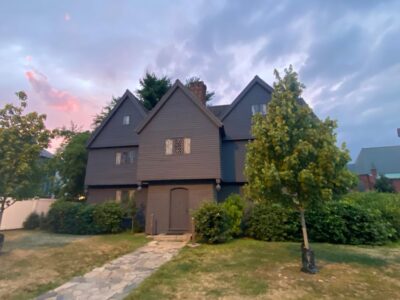
History and Hauntings of Salem Guided Walking Tour
Read our review →
Freedom Trail History Small Group Walking Tour
Read our review →
Historic Charleston Guided Sightseeing Walking Tour
Read our review →
Tapas Walking Tour with Food, Wine, and History
Read our review →
Savannah History and Haunts Candlelit Ghost Walking Tour
Read our review →
A History of Terror – Belfast City Centre Walking Tour
Read our review →Browse the lists this tour appears in