Review · BERLIN
Berlin Private Complete History All Day Walking Tour
Berlin rewards anyone willing to walk through its difficult past. This six-hour private tour connects the Brandenburg Gate, Holocaust Memorial, Checkpoint Charlie, Museum Island, and Alexanderplatz in one long day. I like the route’s strong focus on World War II and the Cold War, and I like having a guide who can adjust the pace and answer questions without a large group slowing things down. The main drawback is simple: this is a serious walk, not a gentle stroll.
The tour costs $253.95 per person, so it makes the most sense for couples, families, or small groups who want a private introduction to central Berlin. You will cover a huge amount of ground, often close to 5.5 miles, and the day includes no food, drinks, or vehicle transportation. Still, guides such as Ciaran, Rhys, Paul, Beth, and Ken have earned especially strong praise for making complex history clear, personal, and easy to follow.
Key points to know before booking
- Twenty-two central sights in six hours: The route moves from the Brandenburg Gate and Reichstag to Alexanderplatz, covering Berlin’s main historical core.
- A private guide changes the experience: Your guide can answer your questions, slow down for your group, and shift the emphasis toward Nazi Germany, the Cold War, architecture, or religion.
- World War II receives serious attention: The Reichstag, Führerbunker site, Topography of Terror, Holocaust Memorial, and former Aviation Ministry create a powerful sequence.
- You walk across Berlin’s political heart: There is no private transport, and one outing was measured at roughly 5.5 miles.
- The tour ends in the former East Berlin: Alexanderplatz gives the route a clear Cold War and German Democratic Republic finish.
- The pace is flexible, but the day is full: You may have time for a lunch break, but food and drinks are not included.
Why this private Berlin walk works so well
The great strength here is connection. Berlin’s sights can feel scattered when you visit them one by one. A good guide turns those separate buildings and memorials into a story about power, dictatorship, war, division, and reunification.
You begin near Ebertstraße, close to the Brandenburg Gate, and finish at Alexanderplatz. That is a smart route. It takes you from Prussian and modern German symbolism through Nazi terror, the Berlin Wall, Cold War division, and the rebuilt capital of the former East Germany.
I especially like the private format. Guides have tailored the day to groups ranging from teenagers to people in their eighties. One guide even gave younger members a short break at a shopping mall slide, a small but telling example of how a private outing can remain human during a long day of serious history.
The tour is offered in English, and the guide is the main attraction. Ciaran has been praised for turning difficult subjects into clear stories. Rhys is often described as funny, patient, and easy to spend six hours with. Paul has handled detailed questions about German history, language, and culture, while Beth has adjusted the route to suit different interests.
That flexibility matters. You are not simply standing in front of a building while someone recites dates. You can ask why a site matters, how Berlin changed after 1945, or what remains disputed. The quality of your day will depend heavily on the guide assigned to you, but the range of strong guide feedback is encouraging.
More History Walking Tours in Berlin
- Berlin: History of the Third Reich Guided Walking Tour
★ 4.7 · 791 reviews - Berlin Historical Highlights Walking Tour
★ 4.9 · 657 reviews - Berlin: Charité Hospital Walking Tour of Medical History
★ 4.9 · 276 reviews
Brandenburg Gate, Reichstag, and the Soviet memorial
The Brandenburg Gate is a fitting starting point. Your guide explains why the gate was built and how its meaning changed as Berlin and Germany changed around it. It became a symbol of division during the Cold War, then a symbol of reunification.
You have about 15 minutes here, enough to take photographs and get the basic story without lingering too long. Ask your guide for a group photo. The tour is private, so there is no need to feel shy about requesting one.
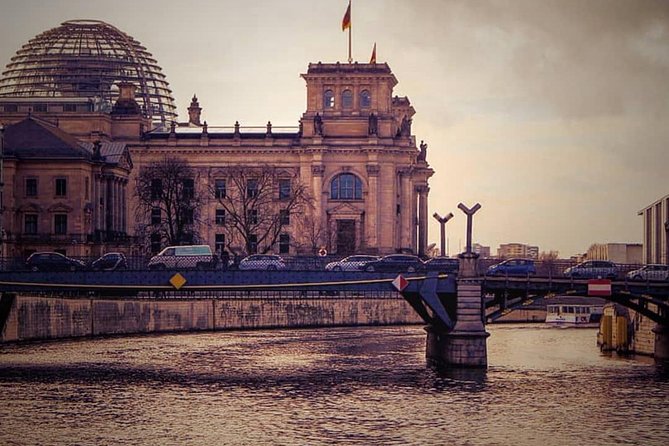
The nearby Reichstag Building receives another 15-minute introduction. You learn about the Hohenzollerns, the building’s construction, its role in the early Nazi dictatorship, the savage fighting during the 1945 Battle of Berlin, and its later place in reunited Germany.
This is not a visit inside the Reichstag dome. The itinerary describes an exterior stop, so you should arrange a separate visit if entering the building is important to you.
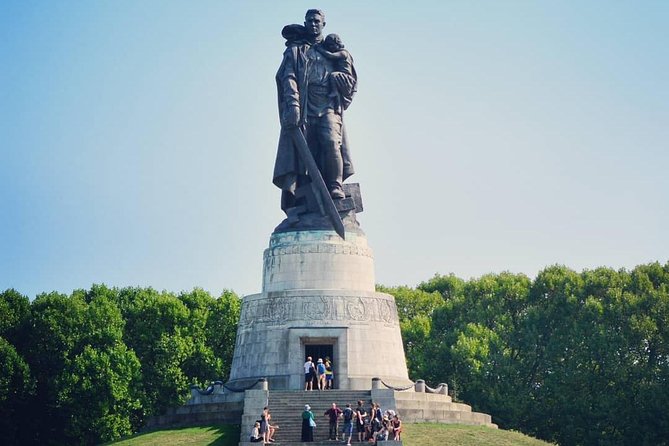
The route then cuts through the Tiergarten to the Soviet Memorial. This is one of the more unusual early stops because it was built in West Berlin, even though it commemorates Soviet soldiers. Your guide explains the origin of its building materials, its symbolism, and the controversies surrounding it.
A short walk through the Tiergarten follows. You hear how this large park developed from medieval hunting grounds and how war and political change affected it. The Victory Column is viewed from a distance, with a quick explanation of its original location and purpose.
These stops provide useful variety. You get grand architecture, military memory, a city park, and Cold War politics before the tour reaches its darkest subjects.
Holocaust Memorial and the Führerbunker site
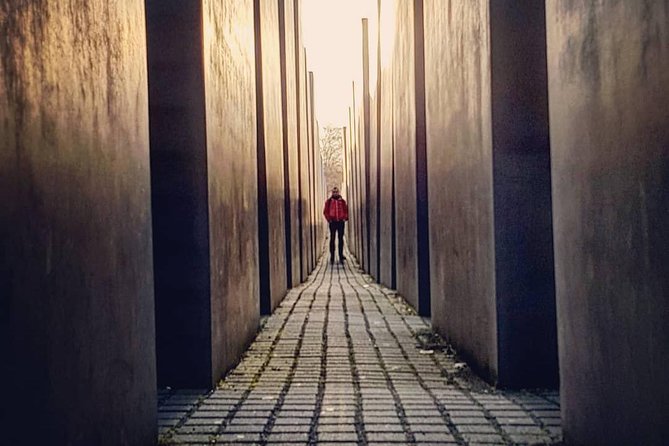
The Memorial to the Murdered Jews of Europe is one of Berlin’s most serious places. The field of concrete slabs changes as you walk through it, and the experience is best approached with quiet attention rather than hurried photography.
Your guide can explain the memorial’s purpose and help place it within Berlin’s wider effort to confront Nazi crimes. You have about 15 minutes here, which may feel brief if you want to explore every part of the memorial and its information center. The tour’s aim is to provide context, not to replace a longer museum visit.
The next stop is the former Führerbunker site. Today, it is an ordinary car park, which makes the location especially striking. There is no grand ruin or dramatic entrance. The plain setting forces you to think about how a place connected to Hitler’s final days has disappeared into everyday Berlin.
This stop works best with a guide who can explain the surrounding events without turning the site into a spectacle. The itinerary uses blunt language about the dictatorship, but the tone of the experience appears intended to be serious and educational.
Nearby, the Johann Georg Elser sculpture tells the story of a man who nearly changed German history by attempting to kill Hitler. It is a short stop, but it adds an important personal angle. The history here is not only about governments and armies. It is also about individual resistance and the risks taken by people who opposed the regime.
Nazi Berlin at the Aviation Ministry and Topography of Terror
The former Aviation Ministry is an imposing building that has been in continuous use since 1936. Your guide explains its Nazi-era role and how the structure survived the political storms of the twentieth century.
The building also helps you understand how much Nazi Berlin remains part of present-day urban life. Some sites were destroyed, some became memorials, and others continued serving practical purposes under entirely different governments.
At the Topography of Terror, the tour enters the former headquarters of the SS, Gestapo, and SD. This is one of the most important stops for understanding how Nazi repression worked.
The site focuses on institutions, records, and the machinery of persecution. Your guide discusses what happened there during the Nazi period and how the location was treated after the war. Allow extra time here if you want to read every panel, since the tour’s planned stop is around 15 minutes.
I would not expect this day to replace a full visit to Berlin’s museums. Instead, it gives you a map of the city’s key sites and enough background to decide where you want to return. That is one reason this works well on your first full day.
More History Walking Tours in Germany
- Berlin Private Half-Day Walking Tour: Discover the German Capital’s History
★ 5.0 · 244 reviews - Berlin History Walking Tour with a French-Speaking Guide
★ 5.0 · 240 reviews - The History of Berlin: WWII PRIVATE Walking Tour With Locals
★ 5.0 · 209 reviews - Berlin: Historic Center Walking Tour with a Real Berliner
★ 5.0 · 134 reviews
The Berlin Wall and Checkpoint Charlie
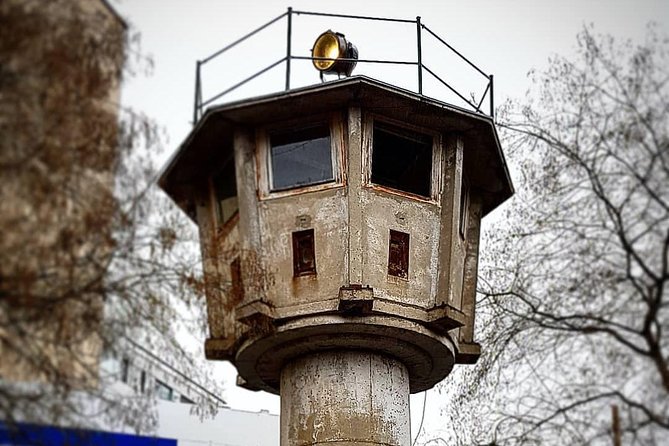
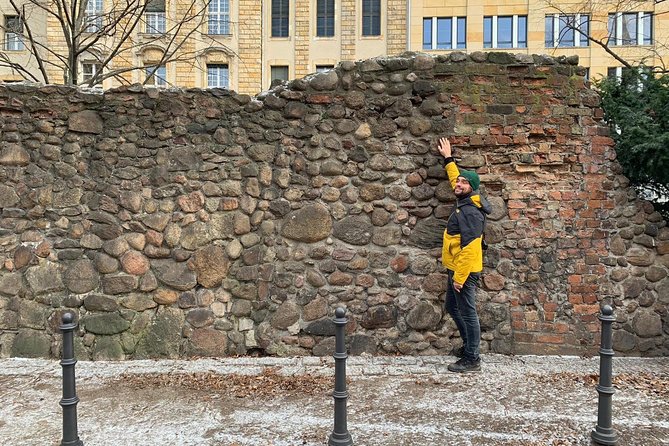
The Wall Memorial section brings the Cold War into sharper focus. You visit a remaining section of the Berlin Wall and learn why it was built, how it divided the city, and what happened to people who tried to cross it.
The stories of escape attempts and deaths make the Wall more than a concrete structure. Your guide can help you see how border controls affected ordinary families, workers, students, and entire neighborhoods.
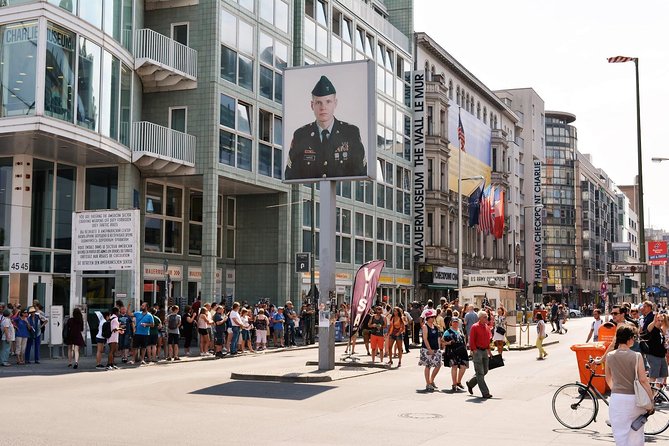
Checkpoint Charlie comes next. It is one of Berlin’s most famous Cold War locations, though the modern checkpoint display can feel more theatrical than authentic. That is precisely why the guide’s context matters. You learn what the crossing represented and how the surrounding area has changed.
The stop lasts about 10 minutes, so you should not expect a long museum visit. You will have time to see the site, take a picture, and ask questions. If you want a fuller Cold War experience, use this tour to identify places worth revisiting later.
Friedrichstrasse follows, with its connection to Berlin’s former cabaret district. This short stroll adds a lighter cultural note after the heavy Wall and Nazi history.
Gendarmenmarkt, Bebelplatz, and Humboldt University
Gendarmenmarkt is one of the prettiest squares in central Berlin. The tour explains how it developed and points out the architecture that gives the square its formal character.
The 15-minute visit is enough for an overview, though restoration work or events could affect what you see on a particular day. The guide’s role is useful here because the square’s beauty can otherwise distract from its long political and social story.
Bebelplatz brings the tone back to darker ground. You look at St. Hedwig’s Cathedral, Humboldt University’s law faculty, and the State Opera House, then discuss the Nazi book burning that took place in the square.
The memorial beneath the pavement is deliberately understated. It asks you to look down into an empty underground library, a powerful reminder of what was destroyed. Your guide explains the event and the meaning of the memorial.
Humboldt University follows with its story of the institution and the Humboldt family. This section helps balance the tour’s focus on war and dictatorship by showing Berlin as a center of education and ideas, while also acknowledging how institutions can exist under changing political systems.
Neue Wache, Museum Island, and the Humboldt Forum
Neue Wache is one of the most moving buildings on Unter den Linden. It has served different political purposes over time and now functions as a memorial. The interior is stark, quiet, and worth seeing if it is open during your visit.
The tour then pauses outside the German Historical Museum, housed in the oldest surviving building on Unter den Linden. This is an exterior explanation rather than a full museum visit, so you will need a separate ticket and more time if you want to explore the collections.
Museum Island receives about 15 minutes. Your guide explains how the island developed, introduces its major museums and cathedral, and points out the architects who shaped the area.
The UNESCO designation is useful context, but the real value is practical. You learn which museums interest you and how the island fits into Berlin’s wider story. You may want to return later when your feet are fresh.
The Humboldt Forum has a complicated and surprisingly recent history. A guide can explain the building’s modern reconstruction and the debates surrounding its identity and collections. Again, treat this as an introduction rather than a full museum visit.
St. Mary’s Church and Alexanderplatz finish the day
St. Mary’s Church is described as the oldest church in Berlin that has remained in continuous use. If possible, the tour goes inside. It is an architectural survivor and gives the route a glimpse of Berlin before the modern capital took shape.
The final stop is Alexanderplatz. This broad square was rebuilt after the war as a showcase of the German Democratic Republic. It feels very different from the Prussian avenues and Nazi-era buildings earlier in the day.
Ending here gives the route a strong arc. You begin with the Brandenburg Gate, a symbol of national power and reunification, and finish in a space shaped by East German planning and post-war politics.
Alexanderplatz is also a useful place to continue independently. The tour ends here, with no return transport included, but public transportation is nearby.
Walking, timing, and the price
At six hours, this is a full day outdoors. The listed stops add up to several hours of short explanations, but the rest of the time goes to walking between them. One recorded outing covered about 5.5 miles.
Wear comfortable shoes and plan for changing weather. The tour follows the pace of your group, but you should still be comfortable walking for long stretches. Most people can participate, and service animals and pets are allowed according to the tour details.
The price of $253.95 per person is high compared with a large group walk. The value comes from the private format, the guide’s attention, and the number of major sites covered without wasting time on transport.
For two people, the total cost is substantial. For a family or small group, group discounts may improve the value. The tour also saves you from piecing together separate walks across Mitte, the government district, the Wall sites, and Museum Island.
Food and drinks are not included. Some guides have included a lunch break, but you should budget for your own meal and ask your guide where to stop. Pickup is on foot, and no private vehicle is used.
Free cancellation is available until 24 hours before the start time. The tour is often reserved well ahead, with an average booking lead time of 74 days, so popular dates may require planning.
Who should book this Berlin tour?
I would choose this tour if you have one main day for Berlin and want the city’s major historical sights explained in a connected way. It also suits first-time visitors who want help deciding which museums and memorials deserve a longer return visit.
It is especially good for couples, families, and small groups with different interests. A private guide can spend more time on World War II for one group, architecture for another, or the Cold War and reunification for everyone.
I would think twice if you dislike long walks, want extensive museum interiors, or prefer a slow day with only a few sights. The schedule is broad by design. You see many locations, but most receive 10 to 15 minutes.
Should you book it?
Book this tour if you want a serious, efficient introduction to Berlin and value conversation with a private guide. The strongest part is not simply the number of stops. It is the chance to connect the Reichstag, Nazi headquarters, memorials, Wall sites, royal avenues, and East German planning into one understandable story.
Skip it if $253.95 per person feels too steep or if six hours on foot sounds exhausting. For everyone else, especially on your first full day, it offers a practical way to get your bearings and make better choices for the rest of your stay.
FAQ
How long is the Berlin private history tour?
The tour lasts approximately six hours.
Where does the tour start and finish?
It starts at Ebertstraße 24, 10117 Berlin, near the Brandenburg Gate area, and finishes at Alexanderplatz, 10178 Berlin.
Is private transportation included?
No. This is entirely a walking tour, and pickups take place on foot with the guide.
Is the tour private?
Yes. Only your group participates, and the guide can adjust the pace and discussion to your interests.
Is food included?
No. Food and drinks are not included, although a guide may arrange time for a lunch break during the day.
Is the tour offered in English?
Yes. The tour is offered in English.
Can I cancel for a full refund?
Yes, if you cancel at least 24 hours before the experience start time. Cancellations made less than 24 hours before the start time are not refunded.
More Private History Tours in Germany
- Nuremberg: 1.5-Hour Private Tour through Historical Old Town
★ 4.8 · 283 reviews - Eagle’s Nest-Berchtesgaden-Obersalzberg Private Half Day WWII Historical Tour
★ 5.0 · 64 reviews - Quedlinburg UNESCO World Heritage Group Tour (private)
★ 4.6 · 32 reviews
More Private History Tours in Berlin
- Private Taxi Tour City East & West History and Architecture 3-4h
★ 5.0 · 42 reviews - Private Tour: Jewish Heritage Walking Tour of Berlin
★ 5.0 · 29 reviews - Private Berlin WWII and Cold War History Tour with Local Expert Guide
★ 5.0 · 28 reviews - Berlin: Private Bike Tour of the Berlin Wall and Third Reich
★ 5.0 · 23 reviews
Just added around Berlin
- Historic center of Berlin – Tour in Italian★ 5.0 · 143 reviews
- Berlin Food & Cultural Tour: Must-Try German & Berliner Classics★ 5.0 · 51 reviews
- Private Berlin WWII and Cold War History Tour with Local Expert Guide★ 5.0 · 28 reviews
- Private Tour: Jewish Heritage Walking Tour of Berlin★ 5.0 · 29 reviews
- Small-Group Historical Bike Tour in Berlin★ 4.5 · 103 reviews
- East Berlin Food & History Tour with Eating Europe★ 5.0 · 204 reviews
- Explore Berlin History and Highlights Sightseeing Walking Tour★ 5.0 · 81 reviews
- Berlin: Private Bike Tour of the Berlin Wall and Third Reich★ 5.0 · 23 reviews
History Walking Tours, compared.
History and Hauntings of Salem Guided Walking Tour
Read our review →
Freedom Trail History Small Group Walking Tour
Read our review →
Historic Charleston Guided Sightseeing Walking Tour
Read our review →
Tapas Walking Tour with Food, Wine, and History
Read our review →
Savannah History and Haunts Candlelit Ghost Walking Tour
Read our review →